

Key Takeaways
Treat reality as information first, but keep simulation a hypothesis.
A designer’s question. Rizwan Virk’s fascination began with a racing game: the track was visible, but what about the unseen landscape beyond it? Years later, while playing virtual table tennis, he nearly leaned on a table that existed only in the headset. Such moments suggest how convincingly a constructed world can feel real, but they do not show that our world is constructed.
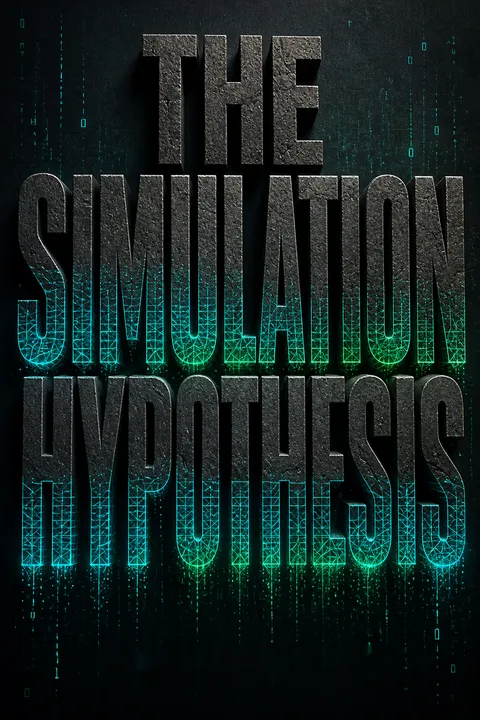
The book’s central proposal. The Simulation Hypothesis treats reality as information processed and rendered, much as a video game builds a world from data. Virk calls the imagined, shared, lifelike world the Great Simulation. He argues that this framework can connect computer science, physics, and spiritual traditions. Its reach is ambitious; its claims range from plausible technological forecasts to controversial interpretations of quantum experiments and mystical reports.
The most productive move is to ask what a model of reality explains, rather than dismissing it because it sounds like science fiction. Information-centered approaches already organize work across physics, biology, and computing. But a useful analogy is not automatically a literal account of the universe. A game renders scenes because an engineered computer has known constraints and purposes. Showing that physical theories can be described computationally is a starting point, not evidence of an external programmer.
Follow the technology ladder from text adventures to mind-level immersion.
From words to worlds. Virk arranges game history as a path toward a fully convincing simulated environment. Early text adventures such as Colossal Cave Adventure built expansive worlds in players’ imaginations. Arcade games added real-time graphics; role-playing games added characters, quests, and persistent world states; online games connected many players in shared worlds. No Man’s Sky used algorithms to generate a universe said to contain 18 quintillion planets, rather than handcrafting each one.
The speculative steps. Virk projects this development through virtual and augmented reality, realistic objects, mind interfaces, implanted memories, humanlike artificial characters, and downloadable consciousness. The Simulation Point is his name for the threshold at which a civilization could create a world difficult to distinguish from physical reality. The early stages exist; the more radical ones remain forecasts, not demonstrated capabilities.
This technological history gives the hypothesis a concrete shape: greater immersion depends on more than sharper images. A convincing world also needs persistent records, responsive characters, sensory feedback, and believable interaction. The ladder is useful for identifying separate engineering problems that science fiction tends to bundle together. Still, progress in graphics does not guarantee progress in consciousness transfer. A photorealistic avatar can imitate a person without establishing that it feels or experiences anything.
Read Bostrom’s simulation odds as conditional logic, not a scientific verdict.
A three-way argument. Philosopher Nick Bostrom’s Simulation Argument considers three possibilities: civilizations never gain the ability to create realistic ancestor simulations; they gain that ability but choose not to use it; or they create many simulations. An ancestor simulation is a computer-generated world populated by beings meant to resemble earlier people or civilizations.
The numbers depend on assumptions. If advanced civilizations make numerous simulations containing conscious beings, simulated observers could greatly outnumber observers in the original world. On that assumption, a randomly selected observer might more likely be simulated. But the argument does not establish that advanced civilizations will arise, that they will run such simulations, or that simulated characters are conscious. It clarifies what follows from certain premises; it does not prove the premises or identify our world as simulated.
Bostrom’s reasoning is powerful because it turns a cinematic suspicion into a conditional probability argument. It also exposes where disagreement belongs: not in arithmetic alone, but in assumptions about future civilizations, their motives, and the status of simulated minds. The comparison to a randomly selected observer has an additional subtlety: observers may not be interchangeable across simulated and base worlds. The argument is best read as a disciplined way to frame uncertainty, not as a measured probability that scientists have established.
Use video-game rendering to illuminate quantum puzzles, not settle them.
The rendering analogy. In a three-dimensional game, the computer usually calculates only what the player can see. The rest of the world may be stored as models and data, then rendered when needed. Virk compares this conditional rendering with quantum indeterminacy, the fact that quantum theory predicts probabilities for measurement outcomes rather than always assigning a single definite result in advance.
A disputed interpretation. The double-slit experiment shows that quantum objects produce different patterns depending on how they are measured. Virk suggests that observation resembles a player’s view triggering a rendered scene. Yet “observation” in physics does not necessarily mean a conscious human watching; measurement and interactions with the environment matter, too. The comparison makes the puzzle imaginable, but it is an analogy, not an established mechanism for why quantum outcomes occur.
The analogy succeeds as a teaching device because it makes “unobserved” mean something more precise than “nonexistent”: a world can be encoded without being displayed in detail. That distinction is useful in debates about what quantum theory says reality is. The limitation is that video-game rendering is a design choice, while quantum measurement is described by mathematical theories that do not require a cosmic viewer. Confusing the two can make an evocative comparison look like an experimental result.
Separate a map of possible futures from proof of parallel worlds.
Choices and branches. Quantum theory permits descriptions in which outcomes remain probabilistic until measurement. The Many Worlds Interpretation, or MWI, offers one way to understand this: outcomes occur in different branches rather than one probability wave collapsing to a single result. Another puzzle, the delayed-choice experiment, varies how a quantum system is measured after it has begun its journey, producing results that challenge everyday intuitions about when its properties are determined.
The game-design connection. Virk compares possible outcomes to branches in a game-playing algorithm. A program can evaluate different future moves and choose one without physically creating a new world for every option. This makes simulated branching easy to picture, but does not establish that parallel universes exist, or that the future changes the past. Those are interpretations of difficult experiments, not settled conclusions.
Thinking in branches helps separate two questions that are often blurred: whether a theory calculates multiple possible outcomes, and whether each outcome describes a world that physically exists. Game algorithms make the distinction intuitive because they explore options computationally without building a universe for every move. The analogy also has limits: an algorithm’s scoring rule is designed by someone, while physical laws need not have a goal or evaluator. The model clarifies possibilities, but cannot decide among interpretations by itself.
Treat quantization and fractals as computational hints, not digital fingerprints.
A granular universe? Virk links the pixels of a screen to quanta, the discrete quantities found in physics. He discusses the Planck length, a scale below which familiar ideas about measurable distance may fail, and the Planck time, derived from the time light takes to cross that length. He proposes that these scales resemble the spatial pixels and clock steps of a simulation. Physics has not established that space and time are literally pixels or that the Planck scales reveal a computer’s resolution.
Patterns that can be computed. Fractals, repeating patterns that appear at different scales, can model coastlines, branching trees, and other natural forms. Virk also draws on computational irreducibility: some systems’ outcomes cannot be known without running their steps. Together, these ideas support an information-based picture of nature, though they do not by themselves identify a simulation.
The shift from “matter as little solid things” toward descriptions based on relations, fields, and information is intellectually fertile. Fractals show how compact rules can generate intricate forms, while computational irreducibility explains why simulation can be necessary even when rules are known. Yet a discrete mathematical description does not prove a discrete substrate, just as a map’s grid does not imply that the terrain is made of map squares. The distinction between a model’s structure and reality’s structure is crucial here.
Let dreams challenge certainty without declaring waking life unreal.
Dreams as small simulations. During a dream, images and sounds arise without the dreamer’s ordinary sensory surroundings, and the experience can feel convincing until waking. Virk uses this as a model for how a larger simulated world might work. In Tibetan Buddhist Dream Yoga, practitioners train to recognize the dreamlike quality of experience and, in lucid dreams, become aware that they are dreaming. Its spiritual purpose is broader than controlling an entertaining dream: it is a practice for questioning assumptions about waking reality.
A claim, not a demonstration. Virk suggests that dreaming already resembles advanced simulation technology, including immersion, mind-based input, and dream characters. He also notes that traditions interpret dreams in many ways, from memory processing to contact with other realms. The analogy invites reflection on perception and consciousness; it cannot establish that waking life is a dream.
Dreams are a powerful comparison because they show that vivid experience does not, by itself, certify an external world. They also invite a serious question about consciousness: experience can persist while ordinary sensory input is greatly reduced. But waking life has a stable, shared structure that dreams often lack, and that difference matters. Dream Yoga can deepen attention to perception without requiring a literal simulation theory. Its practical value need not depend on accepting the book’s metaphysical interpretation.
Translate karma into quests only as a model, not a religious proof.
A quest ledger. In Hindu and Buddhist traditions, karma concerns how actions shape experience, while reincarnation describes repeated lives. Virk compares this to a game in which a player inhabits successive characters and carries unresolved tasks between them. He imagines a “quest engine” that tracks prior actions, creates encounters, and records whether a task has been resolved. In this analogy, karma is stored information and life events become opportunities to work through it.
A broader religious parallel. Virk also connects this bookkeeping image to Western traditions that describe angels recording deeds, judgment after death, and a review of one’s life. The comparison offers a shared vocabulary for spiritual and computational ideas. It does not show that karma is literally an algorithm, or that religious accounts confirm a simulation. Traditions differ, and their teachings deserve more than a software translation.
The quest metaphor gives an abstract idea a memorable mechanism: actions create consequences, records persist, and new situations can involve other people. It can help readers think about accountability without reducing karma to simplistic payback. Its danger is flattening distinct traditions into one game system. Buddhist teachings, Hindu accounts of the self, and Abrahamic beliefs about judgment do not make identical claims. The analogy is most respectful when treated as a bridge for comparison, not a replacement for each tradition’s own meaning.
Ask for tests that distinguish simulation from ordinary physics.
Candidate clues. The book reviews proposed searches for computational structure: evidence of conditional rendering in quantum experiments, lattice-like patterns in high-energy cosmic rays, error-correcting codes in physical equations, and algorithmic patterns such as fractals in nature. It also discusses near-death experiences, out-of-body reports, UFO sightings, and meaningful coincidences as phenomena the simulation framework might accommodate.
Accommodation is not confirmation. A framework that can explain many things after the fact may still lack a distinctive prediction. Proposed computational clues are intriguing, but the interpretations described in the book are not definitive proof that reality is simulated. Nor do anomalous experiences establish their own explanation. The strongest test would produce an observation expected under the simulation hypothesis but unlikely under competing accounts. Virk acknowledges that no single experiment can presently settle the question.
A good scientific hypothesis must risk being wrong. That standard is especially important when a theory can reinterpret almost any result as a feature of the simulation, from quantum uncertainty to an unusual personal experience. The book’s survey is valuable as a map of proposed research, but the evidence varies greatly in quality and relevance. Separating established measurements from speculative interpretations prevents genuine mysteries from becoming automatic support for one favored explanation.
Preserve moral seriousness whether minds are players, code, or both.
Who is conscious? Games distinguish player characters controlled by people from non-player characters controlled by software. Virk leaves open whether beings in a possible Great Simulation are conscious players, artificial characters, or a mixture. Advances in AI and the prospect of digitally reproducing a person’s patterns make that distinction ethically urgent. A convincing imitation, however, is not proof of inner experience.
Meaning inside the world. Plato’s cave offers the book’s closing image: people may mistake limited appearances for all of reality. Virk considers many possible creators, from future humans and machines to beings interpreted as gods. None can be confirmed from inside the proposed simulation. Even if the world were computational, relationships, suffering, and choices would remain real to those experiencing them. Uncertainty about the world’s substrate is no excuse to treat its inhabitants as unreal.
This is the hypothesis’s most consequential ethical question. If artificial systems might someday have experiences, uncertainty should encourage careful moral consideration rather than casual dismissal. The same principle applies to people in a hypothetical simulation: their experiences would matter even if their world had an external substrate. At the same time, resemblance to human behavior cannot settle whether a system is conscious. The book’s player-versus-character distinction frames the issue clearly, but consciousness remains the hardest question, not a solved engineering milestone.
Analysis
The book’s strongest contribution is its organizing metaphor. By treating reality as a potentially computed world, Virk places game design, quantum puzzles, religious images, and reports of unusual experience in one conversational frame. This makes abstract ideas accessible: persistent worlds illuminate memory and identity; rendering makes conditional visibility imaginable; quests give karma a procedural form. The same breadth creates the central weakness. A metaphor that can accommodate quantum measurement, dreams, angels, UFOs, and coincidence may explain little unless it produces predictions that rival explanations do not.
Three distinctions help preserve the book’s value. First, technological possibility is not evidence of actuality. A future civilization might build immersive simulations, but that does not establish that one created us. Second, mathematical descriptions using information or computation do not prove that the universe runs on an external computer. Third, quantum measurement should not be casually equated with conscious observation. The book’s account captures a provocative interpretation, but physics does not require the human mind to watch a particle for measurement effects to occur.
Bostrom’s argument is best understood as conditional reasoning, not a probability measured from data. Its conclusion depends on how many civilizations survive, what they choose to simulate, and whether simulated beings count as conscious observers. Those assumptions are philosophical and empirical questions, not details that arithmetic can settle.
Despite these limits, the hypothesis serves as a useful thought experiment about the boundaries of knowledge. It asks whether “real” means fundamental, or whether a stable, shared world can be real for its inhabitants even if implemented by something else. The soundest reading is neither credulous nor dismissive: keep the computational analogy, distinguish it from evidence, and ask what observation could genuinely decide between it and ordinary physical explanations.
Review Summary
The Simulation Hypothesis presents the idea that our reality may be a computer simulation. Virk draws parallels between video game technology, physics, and religious concepts to support this theory. While some readers found the arguments compelling, particularly regarding quantum mechanics, others criticized the book's reliance on speculative connections and lack of scientific rigor. Many appreciated the accessible explanations of complex topics, but some felt the religious and paranormal elements weakened the overall argument. Despite mixed reviews, the book stimulated thought and discussion about the nature of reality.
People Also Read






Glossary
Simulation Point
Threshold for lifelike simulationsVirk’s term for the technological threshold at which a civilization can create simulations difficult to distinguish from physical reality. The imagined capability includes a large shared world, realistic sensory rendering, responsive artificial characters, extensive records of individual experiences, and ways to connect players’ minds to the simulation. The book presents reaching this point as a projected possibility, not an achieved milestone.
Great Simulation
The proposed shared virtual realityVirk’s name for the hypothesized, highly realistic world in which people live. In his model, it combines features of a persistent multiplayer game with information processing, simulated environments, and potentially conscious players or artificial characters. The term describes the book’s proposed account of reality; it does not refer to an experimentally confirmed structure of the universe.
Simulation Argument
Conditional case for simulated observersNick Bostrom’s argument that at least one of three possibilities holds: civilizations fail to reach the ability to create ancestor simulations, they reach it but do not create them, or they create many. If the third possibility is common and simulated beings are conscious, simulated observers could greatly outnumber observers in original civilizations. The argument depends on these assumptions and does not prove that our world is simulated.
conditional rendering
Rendering only what is neededA computer graphics technique in which a system generates the visible parts of a scene from a player’s current position, instead of fully drawing every part of the world at once. Virk uses it as an analogy for quantum measurement, suggesting that unobserved physical outcomes may remain possible until a particular result is measured. The analogy is not an established explanation of quantum physics.
quantum indeterminacy
Unfixed outcomes before measurementThe quantum-mechanical feature that a system may be described by probabilities for different measurement outcomes rather than by one definite outcome in advance. Virk compares this to a game world that is not fully rendered until a player encounters it. Quantum indeterminacy is part of physics; the further claim that it reflects computational optimization or requires conscious observation is an interpretation, not a settled result.
computational irreducibility
Outcomes requiring step-by-step computationA concept associated in the book with Stephen Wolfram: for some complex systems, knowing the rules and starting conditions is not enough to predict the final state efficiently. The system must be run through its successive steps, often by computation or simulation. Virk connects this idea to chaotic natural processes and to the possibility that a universe’s development cannot be shortcut by a simple formula.
ancestor simulations
Simulations of earlier civilizationsBostrom’s term for detailed simulations created by technologically advanced descendants to represent their ancestors or people like them. If many such simulations contain conscious beings, their populations could exceed the number of observers in the original civilization. Whether civilizations would create them, and whether simulated characters would be conscious, are open assumptions in the argument.
Dream Yoga
Practice of recognizing dreamlike experienceA Tibetan Buddhist practice described by Virk as training awareness through sleep and dreams. Practitioners cultivate the ability to recognize that they are dreaming and use that recognition to investigate the nature of experience. The practice is related to lucid dreaming, but its spiritual aim is broader than dream control: it uses dreams to question assumptions about waking reality.
quest engine
System assigning and tracking tasksVirk’s analogy for a computational process that could track accumulated karma and generate life situations connected to unresolved actions or relationships. Like a game system that assigns tasks to characters and records their completion, this imagined engine would maintain a record across lives and produce encounters. It is a speculative model for comparing game design with religious accounts of karma, not a traditional definition of karma.
FAQ
What's The Simulation Hypothesis by Rizwan Virk about?
- Reality as a Simulation: The book explores the idea that our reality might be a sophisticated computer simulation, similar to a video game.
- Interdisciplinary Approach: It combines insights from computer science, quantum physics, and Eastern mysticism to explore this hypothesis.
- Cultural References: References to popular culture, such as The Matrix, are used to illustrate the concept of living in a simulated reality.
Why should I read The Simulation Hypothesis by Rizwan Virk?
- Thought-Provoking Concepts: The book challenges readers to reconsider their understanding of reality and existence.
- Blend of Science and Mysticism: It offers a unique combination of technical computer science aspects with mystical traditions.
- Engaging and Accessible: Virk's writing is engaging, using relatable examples from video games and popular culture.
What are the key takeaways of The Simulation Hypothesis by Rizwan Virk?
- Reality as Computation: The universe may operate like a video game with rules and algorithms.
- Quantum Physics Connection: Quantum indeterminacy and the observer effect support the simulation hypothesis.
- Philosophical Implications: Raises questions about consciousness, identity, and existence.
How does Rizwan Virk connect video games to the simulation hypothesis?
- Game Development Insights: Uses his background in game design to illustrate parallels between video games and potential simulations.
- Conditional Rendering: Explains how video games render only what is necessary, similar to how reality may manifest when observed.
- NPCs and AI: Discusses non-player characters as analogs for artificial consciousness.
How does The Simulation Hypothesis by Rizwan Virk relate to quantum physics?
- Quantum Indeterminacy Explained: Particles exist in a state of probability until observed, paralleling video game rendering.
- Observer Effect: Reality may only manifest when perceived, similar to game worlds rendered for players.
- Many Worlds Interpretation: Explores the idea of parallel universes, akin to branching paths in a video game.
What role do Eastern mysticism and philosophy play in The Simulation Hypothesis by Rizwan Virk?
- Illusion of Reality: Eastern philosophies suggest the physical world is an illusion, aligning with the simulation idea.
- Karma and Reincarnation: Draws parallels between these concepts and video game mechanics.
- Consciousness Exploration: Mystical traditions offer insights into consciousness and existence.
What are the best quotes from The Simulation Hypothesis by Rizwan Virk and what do they mean?
- “Reality is merely an illusion...”: Reflects the theme that our perceived reality may not be as solid as we think.
- “We are living in a computer-programmed reality.”: Suggests our experiences may be part of a larger simulation.
- “Everything is information.”: Asserts that the universe operates on informational principles.
How does The Simulation Hypothesis by Rizwan Virk challenge traditional views of reality?
- Reality as a Construct: Argues that reality may be a constructed simulation, challenging the notion of an objective universe.
- Interconnectedness of Observers: Suggests observers shape reality, blurring lines between subject and object.
- Reevaluation of Existence: Encourages reevaluation of beliefs about life, consciousness, and the universe.
What is the Simulation Argument by Nick Bostrom as discussed in The Simulation Hypothesis by Rizwan Virk?
- Three Possibilities: Civilizations never reach the simulation point, reach it but don't create simulations, or create many ancestor simulations.
- Statistical Likelihood: If simulations are created, simulated beings would outnumber real beings, making it likely we are in a simulation.
- Philosophical Implications: Raises questions about existence and consciousness.
How does The Simulation Hypothesis by Rizwan Virk address the concept of consciousness?
- Consciousness as Information: Posits that consciousness can be viewed as information that can be downloaded or simulated.
- Digital vs. Spiritual Consciousness: Contrasts materialist views with spiritual perspectives on consciousness.
- Implications for AI: Discusses the potential for creating sentient beings within a simulation.
What are the implications of reaching the simulation point according to The Simulation Hypothesis by Rizwan Virk?
- Existential Questions: Raises questions about existence, identity, and the purpose of life.
- Ethical Considerations: Discusses ethical dilemmas regarding the treatment of simulated beings.
- Philosophical Reflections: Invites reflection on free will, determinism, and interconnectedness.
How does The Simulation Hypothesis by Rizwan Virk relate the simulation hypothesis to religious and mystical traditions?
- Bridging Science and Spirituality: Provides a framework connecting scientific inquiry with spiritual beliefs.
- Eastern Mystical Traditions: Aligns with philosophies describing the world as an illusion.
- Western Religious Concepts: Explores interpretations of God, angels, and the afterlife through the simulation lens.
About the Author
Other books by Rizwan Virk
Download PDF
Download EPUB
.epub digital book format is ideal for reading ebooks on phones, tablets, and e-readers.








