

Plot Summary
The First Body Calls
At dawn, animator and vampire executioner Anita Blake meets Jeremy Ruebens and Karl Inger, leaders of Humans First. Their group has abandoned political persuasion for the extermination of every vampire, and they want the daytime address of Jean-Claude, St. Louis's Master Vampire. Anita refuses to supply it, warning that she will defend herself if they threaten her.
The men leave without an answer, but their certainty that she knows Jean-Claude makes the meeting more than a business nuisance. Her police pager sounds before she can go home to sleep. Detective Dolph Storr reports a suspected vampire murder in Arnold, so Anita trades rest for a drive toward a body whose killer may feed again.
The opening gives Anita two competing obligations before the murder investigation begins. Humans First treats her expertise as a tool for killing, while the police need it to prevent further deaths. Her refusal is not an endorsement of vampires; she still executes dangerous ones. Instead, she resists turning knowledge into indiscriminate violence. The immediate pager call makes this distinction consequential: Anita is not protecting a monster from accountability so much as trying to keep one faction from deciding that every vampire is guilty. Her exhaustion also matters. The job's moral demands arrive in a body already running beyond its limits.
Five Mouths, One Grave
The dead man lies bloodless on a suburban lawn, his body marked by at least five distinct vampire bites. Anita explains to Dolph and investigator Zerbrowski that vampires usually hunt alone; a pack feeding together suggests a master controlling them, and the public disposal of the body suggests that master is dangerously reckless.
She can raise the victim as a zombie after the required interval, but the confused dead may not identify their attackers. Waiting risks another body.
St. Louis has two known master vampires: Jean-Claude and Malcolm, the leader of the Church of Eternal Life. Anita decides to approach Jean-Claude because he may know whether a rival has entered his city. She knows the visit will bring her close to a vampire whose influence she has tried to escape.
The corpse functions as evidence and as a measure of the investigation's moral cost. Anita reads the bites as a pattern, but her knowledge cannot immediately name a culprit or prevent the next attack. Raising the victim offers a route to testimony, yet even that procedure promises only partial, traumatized memory. The scene also shows how legal recognition has altered vampire hunting: Anita cannot simply kill on suspicion, so she must negotiate with the very powers she is investigating. Her decision to contact Jean-Claude is therefore not trust. It is a risky use of access, made because institutional procedure moves slower than a predator.
The Cobra Leaves Its Ring
At the Circus of the Damned, shapeshifter Stephen guides Anita to Jean-Claude's quarters, where the vampire Yasmeen provokes a fight between Anita and her jealous human servant, Marguerite.
Anita incapacitates Marguerite without killing her, but Yasmeen's attack makes Anita's blessed cross flare against both women, burning them. Before Anita can leave, the enormous cobra performing in the circus escapes and kills its trainer. As panic sweeps the stands, Anita turns back toward the ring instead of fleeing.
She shoots the creature's mouth, then is pinned beneath its coils while Jean-Claude tears into its body. Their minds and bodies seem to move together as they kill it. The experience leaves Anita shaken by a new intimacy with Jean-Claude's power.
The circus puts violence on display as entertainment, then makes its consequences impossible to keep theatrical. Anita first has to navigate the vampires' coercive games, where refusing a claim can be recast as a challenge. The cobra's escape abruptly shifts the danger from private manipulation to a crowd of civilians. Her return to the ring is consistent with her professional ethic, but it also exposes the intimacy Jean-Claude can impose through their existing marks. They save lives together, yet the shared power does not equal consent. The distinction becomes central to their relationship: an act can be protective and still violate Anita's boundaries.
A Date Among Monsters
After police question the survivors, Anita learns that Richard Zeeman is a junior high science teacher and Stephen's friend. Richard drives no car of his own that night, so Anita takes him and the exhausted werewolf home. On the ride, Richard asks about the parts of her life that have nothing to do with corpses.
Anita admits that she keeps little room for ordinary relationships, partly because people she loves have died or disappeared. Richard asks her out caving, and she accepts despite her suspicion that closeness will make her vulnerable. The invitation gives her a prospect outside her entanglement with Jean-Claude, but the supernatural world follows her home. Edward, a lethal vampire hunter, is waiting at her apartment stairs.
Richard's invitation is significant because it asks Anita to imagine a self beyond emergency work, not because it instantly cures her guardedness. She can joke and flirt, but her admission about loss reveals why a date feels like a risk rather than a simple pleasure. The contrast with Jean-Claude is also carefully drawn: Richard is alive and apparently ordinary, yet he already moves among monsters. That makes him neither an uncomplicated escape nor a clean alternative. Edward's appearance at Anita's door interrupts the tentative opening and reminds her that every personal choice in this world can acquire lethal consequences.
Edward Names His Price
Edward says he has been hired to kill St. Louis's new Master Vampire and followed Anita to the Circus to identify his target. He wants the master's name. Anita refuses, even though she knows Edward could probably kill the vampire and make her life simpler. Edward reminds her that their past rescues do not cancel his obligation to finish a contract, then gives her until full dark to reconsider.
Anita realizes that silence will not make the danger go away; it only leaves her between a friend who treats killing as work and a vampire who claims a place in her life. She still will not hand one over to the other. Before Edward leaves, he makes clear that he intends to ask again.
Edward's threat tests whether friendship can restrain a person who has built his identity around completing a job. Anita knows his danger is not theatrical. His willingness to harm her follows the same rule-bound logic that makes him dependable in other circumstances. Her refusal, meanwhile, is not simple loyalty to Jean-Claude. She resists making a human life disposable even when Edward's target is a monster. This creates a moral trap with no harmless answer: protecting Jean-Claude may endanger humans, while exposing him may unleash an assassin. Anita's choice reveals that she understands responsibility as something she cannot delegate away.
The Second Corpse Wakes
Dolph identifies the first victim as Calvin Rupert, and Anita's workout partner Ronnie recognizes the name from Humans Against Vampires. Before the connection can be investigated, police find a second drained victim, a blond woman whose body has been restrained and mutilated.
As darkness falls, the corpse changes: its skin takes on an unnatural sheen and it begins to look less like a body than a sleeper about to rise. Anita realizes that the first victim, now entering his third night dead, may also become a vampire despite the multiple attackers.
She warns Dolph that the morgue must be evacuated, but Calvin's body has already been sent to the city's vampire facility. When the hospital does not answer its phone, the police rush there rather than wait for special forces.
The investigation's rules fail in a precise and frightening way. Anita has relied on the distinction between a single vampire's repeated feeding and a pack's mass feeding to predict which victims rise. The second body's transformation shows that exceptional power can override that practical rule. Her expertise remains useful, but it is no longer sufficient to guarantee safety. The victims' possible ties to an anti-vampire group add a political dimension without yet proving motive. Meanwhile, the empty phone line turns abstract urgency into a rescue operation. The dead are no longer evidence waiting for examination; one may soon become an active threat.
The Vault Gives Way
At the abandoned St. Louis City Hospital, Anita leads Dolph, Zerbrowski, and uniformed officers through the corridors. A security guard Anita once knew lies dead, followed by another guard whose body has been burned from within by her melting cross.
The animalistic vampire has no human restraint and is strong enough to smash through the steel vault door. When it attacks the group, its bullets wounds mean little. The rookie officer is seized and killed before Anita can drag him clear.
She puts silver rounds into the vampire's skull and mouth, then fires into its chest; John Burke stakes the fallen creature to ensure it stays down. The vampire counselor and the animals in the feeding tank are also dead. Anita understands that her mistaken assurance helped leave the vault unprepared.
The morgue sequence makes professional confidence costly. Anita's earlier prediction was reasonable, but people relied on it, and the dead guards make that reliance visible. She does not evade her responsibility by insisting that the vampire broke rules. At the same time, the police team demonstrates a form of shared courage: Dolph leads from the front, Zerbrowski stays, and even a frightened rookie continues until the attack overwhelms him. The scene refuses to make bravery a guarantee of survival. Anita's guilt is not abstract; it attaches to specific people, especially the guard whose safety she thought the vault would provide.
Larry's First Grave
Animators, Inc. sends new hire Larry Kirkland to raise a third zombie on his first night. The exhausted student succeeds in bringing Andrew Doughal out of the grave, then loses control of him.
Anita arrives late from the morgue, breaks the blood circle, and offers her own wrist so the zombie will obey; Larry helps free her when it clings to her blood. After Doughal gives his family the will they wanted, the relatives leave him behind, and Anita lays him back in the grave. Shadows close around the cemetery.
Humans First gunmen attack, and Anita shoots a path to Larry's car. Larry drives through Ruebens, who moves aside at the last instant. They escape, but Larry has learned that animation and vampire hunting are not safely separate from violence.
Larry's first job exposes the danger of treating technical ability as readiness. He can summon the dead, but he has not yet learned how control can fail or what a frightened corpse may do. Anita saves the ceremony by spending her own blood, then has to protect the novice from human extremists. The family leaving Andrew after securing his will gives the scene a second, quieter cruelty: the law can recognize a dead person's words while the living refuse his presence. Larry's shock marks the beginning of experience, but not wisdom. Anita cannot keep him innocent simply by warning him.
Blood on the Road
As Larry drives away, the pair strike a child on a bicycle and stop to help. The child is a vampire, using a knife to hold Anita while an older vampire attacks Larry. A second woman joins the assault, and a powerful vampire named Alejandro demands the identity of Anita's master. Humans First gunmen, still nearby, fire into the darkness; Alejandro's followers withdraw to confront them.
Ruebens and Inger then claim the credit for saving Anita and Larry, and Anita does not expose their earlier attack. She learns the attackers were seeking Jean-Claude and that Alejandro can overwhelm her mind. The opposing factions form a temporary alliance around their shared enemy, though neither Anita nor the extremists trust the other.
The roadside encounter collapses the distinction between rescuers and attackers. Humans First have just tried to kill Anita, yet their gunfire disrupts a vampire assault that might have killed her and Larry. Anita accepts their help without granting them moral innocence. Alejandro's demand also sharpens the political stakes: the murders and the attacks on Anita are part of a challenge to Jean-Claude's authority. His mental power is especially disturbing because it bypasses the ordinary signs Anita uses to judge danger. The scene leaves her alive but less certain that either weapons or instinct can protect her.
A Lie for Edward
Edward returns to Anita's apartment and admits that he followed her to the Circus because his contract is still active. This time, Anita tells him Alejandro is the Master of the City, a deliberate lie intended to keep Edward from targeting Jean-Claude.
She describes Alejandro as the rogue vampire behind the killings and agrees to join Edward if he finds the faction's resting place. The next morning, reporter Irving tells her that Ruebens is publicly claiming Humans First saved her from the Master.
Anita confirms enough of the story to preserve her own cover, while urging Irving not to identify Jean-Claude as the real master. Her falsehoods now serve as a defensive strategy, but each one steers another armed player toward a dangerous target.
Anita's deception is an attempt to redirect violence, not to avoid responsibility for it. She gives Edward a false name because she fears what he will do with the truth, then manages the public account because Humans First have already made their version news. Yet lying does not restore control. Edward may still reach the wrong target, and Ruebens can turn a rescue into propaganda. The sequence complicates Anita's usual insistence on honesty: information is dangerous in itself, and withholding it can protect people. But once she manipulates several factions at once, she inherits the risk that each will act on a different version of events.
Oliver Offers a Crown
Inger takes Anita to meet Mr. Oliver, a small, composed vampire whose voice makes her feel trust before she has chosen it. Oliver reveals that he wants Jean-Claude's name and daytime refuge so he can take the city.
He argues that vampires are predators and that legal citizenship will let them gain power faster than violence could. He intends to dismantle Malcolm's Church of Eternal Life and restore restrictions on vampires, and Anita finds his reasoning uncomfortably persuasive. She still refuses to supply Jean-Claude.
On her way out, Oliver's companion Melanie attacks her and begins to transform into a lamia, a serpent-bodied creature. Oliver stops Melanie, and Inger escorts Anita away. The meeting leaves Anita unsure whether Oliver's political argument disguises a worse danger.
Oliver is dangerous partly because he does not ask Anita to agree with a plainly monstrous argument. He appeals to her own fear that unchecked vampire influence may endanger humans, then offers authoritarian control as the remedy. His persuasive voice makes the encounter a test of agency: Anita has to distinguish her considered judgment from a feeling he may be inducing. Melanie's transformation punctures the calm of Oliver's office, showing that his household contains forces even his authority must manage. The scene makes political agreement insufficient grounds for trust. A diagnosis of danger does not tell Anita who should be given power to cure it.
Victims With Wills
Ronnie recognizes the second victim as Reba Baker, another client of a lawyer who prepared dying wills for people afraid of becoming vampires. Calvin Rupert and Reba both wanted to be staked and cremated if vampire bites killed them, and both had ties to anti-vampire circles. Dolph investigates the lawyer's files and discovers that a paralegal has been feeding information to the killers, apparently without a clear memory of doing so.
Anita suspects that a vampire has manipulated the paralegal's mind. The clue gives the police a way to trace the victims' selection, but it also shows that the attackers are exploiting the very legal precautions meant to protect people after death. The murders are targeted, not random.
The dying wills turn a private fear into a public vulnerability. Their authors try to retain control over what happens to their bodies, but the paperwork creates a list that someone can weaponize. This is not a failure of the victims' judgment so much as a failure of the systems around them to protect sensitive information. The paralegal's apparent memory gaps further complicate ordinary ideas of complicity: a person may transmit information under supernatural coercion and not know it afterward. Anita's work therefore crosses forensic and psychological territory. Evidence must explain not only who had access, but whether that person had meaningful control.
Two Masters, One Servant
Irving summons Anita to the Circus before dawn, and she brings Larry despite trying to keep him away from the Master. In Jean-Claude's underground rooms, Yasmeen challenges his authority and uses Larry as leverage. Richard and Irving intervene, the latter revealing his wolf form as the struggle turns physical.
Once the crisis is contained, Anita tells Jean-Claude what Alejandro did during the roadside attack. Jean-Claude examines her and discovers that Alejandro has placed his first mark on her, although Jean-Claude has already marked her twice.
The impossible overlap means the two masters are competing through her. Jean-Claude explains that Alejandro wants to weaken him by taking her, while Anita insists she belongs to neither vampire. She leaves with the conflict no longer merely political.
Anita's body becomes contested territory before she has consented to any alliance. The discovery of Alejandro's mark transforms earlier attacks into a strategy directed at Jean-Claude, but it also threatens Anita's own sense of self-determination. The scene's smaller revelations sharpen that pressure: Richard's physical courage and Irving's transformation show that the people around her have capacities she does not fully know. Yasmeen's use of Larry demonstrates how quickly personal attachments become leverage in vampire politics. Anita can identify the mechanism of control, yet naming it does not immediately free her from it.
The Cave Beneath the Hill
Melanie arrives with three male companions and takes Anita to Oliver's new hideout, a cave outside town. Alejandro is waiting instead. He has recruited Melanie by promising freedom and arranged for Oliver to be absent.
When the lights go out, Anita shoots one attacker and wounds Alejandro, then flees through the flooded passages as Melanie completes her lamia transformation. She retrieves her gun, kills two of the men, and injures Raju, Melanie's serpent-bodied mate.
Alejandro's second mark reaches her through a warm, flower-scented presence as she swims through a tunnel with almost no air above the water. Anita forces herself through a rock crack into daylight; the sun drives Alejandro back, while Melanie cannot squeeze through. Edward finds Anita beside the road.
The cave removes the safeguards Anita depends on: sight, clear distances, reliable ammunition, and help from the police. Her survival comes through physical judgment and persistence rather than mastery of supernatural rules. The second mark is imposed at a moment when she is already fighting for air, making the symbolic invasion inseparable from bodily danger. Melanie's turn from Oliver's controlled companion to Alejandro's ally also reveals that promises of liberation can serve a competing master's strategy. Anita escapes because the cave has an exit and daylight limits Alejandro, not because she defeats the faction outright. Survival buys time, not safety.
A Third Mark Given
Edward cleans and bandages Anita after the cave, then leaves her to meet Richard for their postponed date. The lamia's bite initially seems harmless, but Anita suddenly develops swelling, pain, and internal bleeding.
Richard takes her to Jean-Claude because no ordinary treatment can counter a supposedly extinct creature's venom. While Anita is unconscious and dying, Jean-Claude cuts her wrist and drinks her blood, giving her a third mark so the poison cannot kill her.
She wakes in his rooms furious that Richard brought her to him and Jean-Claude used the crisis to deepen their bond. Richard insists he could not watch her die. Jean-Claude says the new mark grants Anita greater resistance to harm, but she hears chiefly that he acted without permission.
The rescue is deliberately morally unstable. Jean-Claude saves Anita, and the new mark gives her real protection, but he also uses her unconsciousness to cross a boundary she has defended throughout the story. Richard's choice is loving in intention and still violates her stated preference to die rather than become a vampire's servant. The scene distinguishes outcome from consent: survival does not retroactively make the decision hers. Anita's anger therefore protects more than pride. It is an effort to preserve ownership of her body and future when both men have acted as if urgency gave them that authority.
The Warning Before Halloween
Anita calls Oliver and gives him Jean-Claude's identity, choosing freedom from the marks over loyalty to the Master. She also warns Oliver that Melanie has joined Alejandro and that the lamia has been trying to produce offspring. On Halloween, Dolph reports that the vampire faction plans to provoke a citywide slaughter and discredit legal vampirism.
Anita realizes Oliver intends to seize power in time to carry out that plan. She calls Jean-Claude, tells him that Oliver knows his identity and resting place, and explains the threat to civilians. Then she recruits Edward and takes Larry toward the Circus. Her betrayal is now exposed to Jean-Claude, but she moves to prevent Oliver from turning political fear into a massacre.
Anita's choice to give up Jean-Claude's name is not a clean turn from loyalty to self-interest. She wants release from an imposed bond, but Oliver's political aims have always carried a warning sign: he believes control is justified by the danger he sees. Once she learns that Halloween could become a mass killing, she alerts Jean-Claude despite having already endangered him. Her reversal is not indecision so much as an attempt to correct a decision made with incomplete knowledge. The sequence also shows how rapidly private coercion becomes public policy when supernatural powers can mobilize crowds.
The Circus Chooses
Jean-Claude and Oliver stage their contest at the Circus, promising the audience that only combatants will be put at risk. Oliver's voice nearly draws spectators into the ring, while shapeshifters and vampires reveal themselves under the lights.
The agreed spectacle collapses into a real battle. Alejandro kills Yasmeen, and Oliver's forces wound Jean-Claude; Richard appears to die when Oliver tears open his throat. Alejandro takes Anita's fourth mark by forcing her to drink his blood.
When Oliver orders her to stake Jean-Claude, Anita pretends to comply, then drives the stake into Oliver and tears away his head. She turns on Alejandro as well, crushes his heart, and falls beside him, overwhelmed by the bond. Edward survives the battle and tries to keep her alive.
The circus makes spectatorship part of the danger: the audience comes expecting staged horror and finds that performance cannot contain real violence. Oliver's rhetoric and Jean-Claude's theatrical control both treat the crowd as an instrument, although they claim to protect it. Anita's decisive act breaks the role both masters assign her. She refuses to kill Jean-Claude on Oliver's command, then uses the offered stake against Oliver. After taking Alejandro's mark, she still attacks him, demonstrating that supernatural bonds complicate agency without erasing it. Her victory is costly and incomplete; the people she loves are injured, and she cannot know whether she will survive.
Freedom Has Teeth
Anita wakes in a hospital after three days in a coma. Richard is alive, and she learns that he is a lycanthrope who can pass as human; his body survived Oliver's attack. Jean-Claude also lives, and his marks have been canceled by Alejandro's, leaving Anita free of both masters.
Oliver and his human servant Inger are dead, and the Circus is temporarily closed while authorities sort through conflicting witness accounts. The lamia survives and later works at the Circus.
Anita returns to Animators, Inc.; Larry stays and begins learning vampire hunting under her supervision. Richard and Anita finally manage a conventional date, while Jean-Claude continues sending gifts that she refuses. She remains attracted to him, but chooses to keep the freedom she fought to recover.
The ending resolves the external contest without pretending that survival restores everything to its former state. Anita is free of the marks, but she has learned that rescue and domination can arrive together, and that intimacy with the supernatural carries real costs. Richard's hidden nature revises her idea of what makes someone a monster, while his survival gives their relationship a chance without making it effortless. Larry's continued training extends Anita's protective role into the future: she cannot prevent danger, but she can teach judgment. Her refusal of Jean-Claude's gifts is a small, repeated act of agency after a story in which others repeatedly tried to decide for her.
Analysis
Circus of the Damned treats control as the central problem of both supernatural politics and intimate life. Jean-Claude, Alejandro, and Oliver each claim authority for different reasons: attraction, rivalry, or the supposed protection of humanity. Their motives differ, but all three try to make other people instruments of a larger design. Anita's resistance is therefore more than refusal to become a vampire's servant. She insists that good intentions, political necessity, and even rescue do not erase the need for consent.
The mystery plot gives this argument practical stakes. A vampire pack selects victims through private legal records, turns them into bodies and possible weapons, and exposes the limits of law when supernatural coercion can erase memory. Anita's expertise helps, but it cannot prevent every death. Her incorrect prediction about the first victim's rising leaves police officers dead, and the book makes her accountability part of the emotional cost rather than allowing competence to become invulnerability.
The relationships complicate any simple division between human and monster. Anita's attraction to Jean-Claude persists alongside her judgment that his power over her is unacceptable. Richard appears to offer a more ordinary connection, yet he also keeps important parts of himself hidden. Larry's ambition echoes Anita's own history while forcing her to face the danger of recruiting someone inexperienced into her work. These characters do not resolve the tension between intimacy and safety; they make Anita negotiate it repeatedly.
The circus is the book's clearest image of political persuasion: costumes and spectacle invite the audience to watch, while magical rhetoric nearly turns spectators into participants. The final battle strips away the protection of performance. Anita survives not by choosing a perfect side, but by refusing the roles both vampire masters assign her. Her victory is physical, ethical, and incomplete. She returns to work, loves remain complicated, and the question of how much danger she can endure is still open.
Review Summary
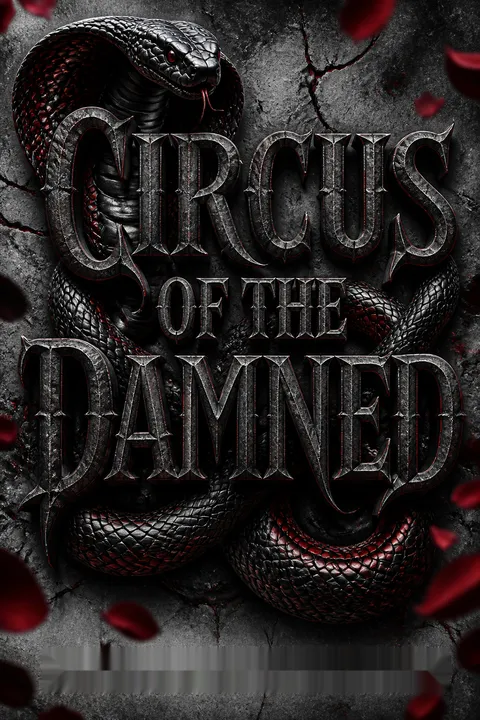
Circus of the Damned receives mixed reviews, with readers praising its action-packed plot and interesting characters, particularly Jean-Claude and Edward. However, many criticize Anita's abrasive personality and the repetitive descriptions. Some enjoy the vampire lore and Anita's necromancy, while others find the romance subplot frustrating. Readers appreciate the fast pace but note inconsistencies in character development and plot. The book introduces new characters like Richard and Larry, which garner mixed reactions. Overall, opinions vary on whether this installment improves upon or falls short of previous entries.
People Also Read



Characters
Anita Blake
Necromancer and executionerAnita raises the dead for a living and legally executes vampires when the evidence warrants it. Her expertise makes her useful to the police, but it also keeps her close to creatures she distrusts and people who want to use her knowledge. She approaches danger with preparation, blunt humor, and a strong refusal to be bullied. Beneath that self-command is a fear of attachment sharpened by early loss and repeated exposure to violence. Anita's moral instincts are not simple: she can kill, but she resists indiscriminate vengeance and tries to protect even those who hate her. Her central struggle is to remain responsible for her choices when supernatural powers and human institutions both pressure her to surrender control.
Jean-Claude
Seductive city masterJean-Claude rules the vampires of St. Louis and owns the Circus of the Damned and the vampire club Guilty Pleasures. He combines cultivated charm with an instinct for command, often treating emotional resistance as a problem to negotiate around. His attraction to Anita is entangled with the supernatural bond between them, which makes his attentions difficult to separate from coercion. He can protect others and act strategically, but he is also accustomed to arranging circumstances to suit his aims. The uncertainty surrounding his strength and political position makes him a vulnerable ruler despite his apparent composure. Jean-Claude's relationship with Anita tests whether affection can be meaningful when one person holds power the other has not freely granted.
Richard Zeeman
Teacher in monster territoryRichard is a junior high science teacher with a degree in preternatural biology and a close friendship with Stephen. He is curious about Anita as a person, not only as the executioner whose work puts her in danger. His humor and patience make him seem unusually easy to approach, while his knowledge of supernatural communities suggests that his ordinary public life has complications. Richard wants closeness but does not always disclose everything that might affect another person's trust. His dynamic with Anita brings a possible life beyond violence into view, without pretending that attraction makes their risks disappear. He is considerate, physically capable, and still learning how to reconcile private loyalties with honesty.
Edward
Professional monster hunterEdward is a highly skilled assassin whose specialty is killing vampires and other supernatural beings. He and Anita share a history of surviving violent encounters, and their friendship operates under an unsettling condition: each knows the other may one day become a target. Edward's code is practical rather than conventional; he prioritizes finishing a contract but does not pretend that this makes him harmless. His calm, dry humor can conceal how quickly he shifts into lethal work. He respects competence and understands Anita's choices better than most people do, yet his professional detachment leaves little room for ordinary reassurance. Edward embodies the version of survival that turns danger into a craft.
Oliver
Ancient political predatorOliver is an extraordinarily old vampire who presents himself as thoughtful, composed, and concerned with the future of both humans and vampires. He opposes vampire legal recognition because he believes the undead are too dangerous to participate in human political life. His argument has enough force to trouble Anita, who also fears unchecked vampire power. Oliver's soothing manner can shape the feelings of people listening to him, making trust itself a potential instrument. He values order and sees himself as qualified to impose it, a conviction that leaves little room for the consent of those he governs. His polished appearance contrasts with the scale of his ambition.
Alejandro
Rival master vampireAlejandro is an ancient vampire who enters the conflict as a rival to Jean-Claude and seeks access to Anita's connection with the Master of the City. He can manipulate minds and treats people as leverage in a struggle for control. Unlike Jean-Claude, he does not rely chiefly on seduction or political performance; his methods are direct, patient, and physically overwhelming. His interest in Anita is bound to what she represents within the vampire hierarchy, not simply to her as an individual. Alejandro's age makes him difficult to injure, but his determination to control the city also makes him vulnerable to the unpredictable choices of the people he tries to command.
Larry Kirkland
Apprentice with ambitionLarry is a twenty-year-old university student hired as an animator during the busiest stretch of Anita's work year. He is powerful enough to raise several zombies, but his first job shows that ability and judgment do not arrive together. Earnest, stubborn, and eager to help people, he is drawn to vampire hunting as well as animation. His first encounters with violence leave him frightened, but he does not immediately abandon the work. Anita sees both his promise and his inexperience, and her protectiveness often clashes with his desire to be treated as an adult. Larry's role asks whether courage can mature into skill before the dangers around him exact too high a price.
Dolph Storr
Preternatural police commanderDolph leads the Regional Preternatural Investigation Team and relies on Anita's expertise when supernatural crimes exceed ordinary police knowledge. He is disciplined, direct, and willing to put himself beside his officers rather than command from safety. His professional reserve does not prevent grief when the case reaches someone he knows. Dolph accepts Anita's judgment, but he still has to work within laws and departmental limits that cannot always keep pace with the supernatural threat.
Zerbrowski
Irreverent police investigatorZerbrowski works with Dolph on the preternatural police team and often uses jokes to cut through the strain of grisly scenes. His humor is not indifference; he continues into danger and supports his colleagues when the case becomes personal. He and Anita trade teasing easily, giving the investigation moments of human warmth without softening the violence they face.
Jeremy Ruebens
Militant anti-vampire leaderRuebens leads Humans First, a faction that has turned opposition to vampire rights into a campaign of extermination. He is angry, dogmatic, and convinced that the cause justifies methods Anita considers murder. His hostility toward her coexists with an ability to cooperate when their enemies overlap, making his politics opportunistic as well as sincere. Ruebens represents the danger of turning fear into a license for violence.
Karl Inger
Polished extremist organizerInger is a large, courteous man who helps bring Humans First's requests to Anita. Unlike Ruebens, he is measured and persuasive, preferring to explain a plan rather than insult her into compliance. His calm manner makes him easier to hear, but it does not erase the group's lethal purpose. Inger's ability to move between extremist politics and personal courtesy makes him a more subtle presence than Ruebens.
Yasmeen
Vampire provocateurYasmeen is an old vampire with a taste for testing boundaries and stirring jealousy in her human servant, Marguerite. She is physically formidable and enjoys using desire and intimidation as forms of control. Her history with Jean-Claude gives her standing in his world, but she is not content to remain merely an observer of his authority. Yasmeen's playfulness can turn dangerous without warning.
Marguerite
Jealous human servantMarguerite is Yasmeen's human servant, intensely attached to her and quick to see other women as rivals. Yasmeen's provocations feed her jealousy and make her loyalty volatile. She is emotionally exposed in a world where her vampire companion controls far more than she does.
Melanie
Oliver's guarded companionMelanie lives in Oliver's household and moves between human appearance and a far older, more dangerous nature. She is frustrated by the limits Oliver places on her and longs for freedom from his control. Her relationship with him is not simple obedience: she can be charming, violent, and driven by desires that even her master struggles to contain.
Stephen
Shapeshifter and performerStephen is a shapeshifter who works at the Circus of the Damned and is friends with Richard. He is attractive and gentle, but his sensitivity to how others perceive him is easy to wound. His physical abilities come with real costs, including exhaustion after changing shape. Stephen's experiences reveal how prejudice can make even ordinary employment difficult for supernatural beings.
Ronnie Sims
Anita's private-eye friendRonnie is a private investigator and Anita's workout partner. She is observant, practical, and willing to use her professional contacts to help with a police case. Her friendship gives Anita someone outside the supernatural world to confide in, while her investigative skills turn casual recognition into useful evidence.
Irving Griswold
Reporter near the monstersIrving is a journalist who covers the supernatural and has built a friendly working relationship with Anita. He wants a strong story but respects her requests about what not to publish. His access to Jean-Claude's world brings professional opportunity and personal risk into uncomfortable proximity.
John Burke
Veteran vampire executionerJohn is an animator and vampire executioner who works for Animators, Inc. He knows how to use the traditional tools for killing vampires and joins the police at the hospital. He and Anita have a complicated history that makes their professional encounters less comfortable than his competence might suggest.
Malcolm
Church leader for vampiresMalcolm leads the Church of Eternal Life, which offers people a route into vampirism and promises life beyond ordinary mortality. His growing religious and political influence makes him one of the city's known master vampires, and a source of Anita's concern about vampire power.
Calvin Rupert
First identified victimCalvin, known to friends as Cal, is a young insurance broker whose body is found drained in a residential yard. His connection to anti-vampire politics and his preparations for a possible vampire death make him central to the first clues in the investigation.
Reba Baker
Second identified victimReba is a young blond woman found dead in circumstances that resemble Calvin Rupert's murder. Her dying-will arrangements and absence from work help Ronnie and the police identify her and connect the killings.
Rashida
Shapeshifter at the CircusRashida is a shapeshifter associated with the Circus of the Damned. She takes part in its performances and helps guide Anita through the crowded attraction. Her rapid healing demonstrates how different supernatural bodies can recover from injuries that would disable a human.
Plot Devices
The Vampire Marks
Bond, leverage, and powerA master vampire can mark a human servant through a series of supernatural bonds that alter power and access between them. Anita already bears two marks from Jean-Claude when Alejandro adds his own, creating an unprecedented conflict. The marks allow the vampires to affect her at a distance, and they also give Anita increased resistance to danger as the bond deepens. Because the marks are placed without her consent, they function as both magical mechanism and bodily violation. Their effects drive the romantic tension, the political conflict, and Anita's struggle to protect her autonomy.
Necromancy and Blood
The dead become witnessesAnita's work as an animator depends on raising corpses with ritual, blood, and controlled magical circles. A successful raising can allow a dead person to answer questions, but the process is unreliable: violent death leaves confused memories, and an inexperienced animator can summon a zombie without controlling it. Blood can restore a corpse's ability to speak, but it can also make the danger immediate and physical. The practice links Anita's occupation to the murder investigation while giving Larry's first job a concrete demonstration of the gap between academic knowledge and professional control.
Dying Wills
Victims leave a paper trailPeople worried about becoming vampires can prepare legal instructions to have their bodies staked and cremated if they die from vampire bites. Calvin Rupert and Reba Baker both made such arrangements, which gives the police a connection between their deaths and helps them identify how the killers selected victims. The documents are meant to preserve control after death, but their private details become vulnerable when someone with access passes information to the vampires. The wills turn the investigation toward a compromised law office and show how a protective system can become a map for an attacker.
Crosses and Silver
Protection with limitsBlessed crosses and silver ammunition are among Anita's most practical defenses against vampires. Their effectiveness depends on the creature: newer vampires may be badly harmed by them, while ancient or unusually powerful beings can resist, heal, or endure pain that would stop another vampire. The damaged cross that burns through a victim's body reveals that even familiar protections can fail against an animalistic vampire. Anita therefore treats every defensive tool as an advantage, not a guarantee. The changing limits of these weapons force her to improvise with close combat, environmental conditions, and information about each opponent.
The Circus of the Damned
Spectacle becomes battlegroundJean-Claude's circus is both a public entertainment venue and a gathering place for vampires, shapeshifters, and humans. Its performances let supernatural beings move openly among visitors who may mistake them for costumed performers. The arena's lights, curtains, and audience make it a natural stage for the final confrontation between rival masters. That theatrical framing does not make the danger unreal: the crowd is nearly drawn into Oliver's power, and the battle turns from controlled spectacle into lethal combat. The Circus joins the book's questions about performance, persuasion, and the thin boundary between watching violence and being caught in it.
Anita Blake, Vampire Hunter Series





About the Author
Other books by Laurell K. Hamilton
Download PDF
Download EPUB
.epub digital book format is ideal for reading ebooks on phones, tablets, and e-readers.








