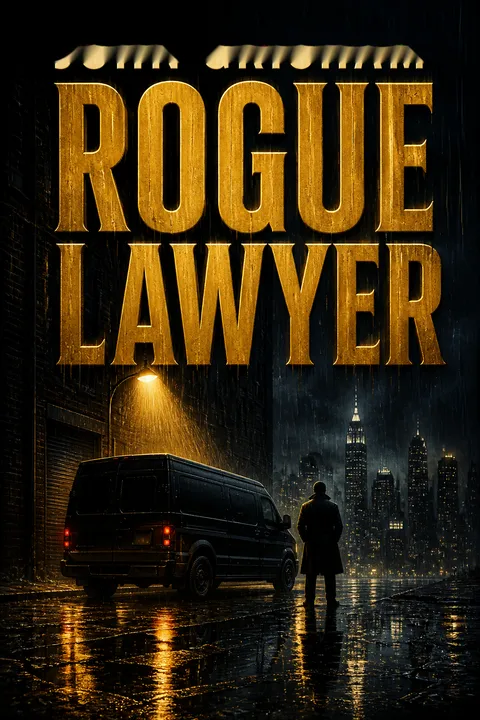


Plot Summary
Milo Wants Gardy Dead
Sebastian Rudd makes his living defending clients whom respectable lawyers avoid. In Milo, he is representing Gardy Baker, an eighteen-year-old with brain damage who faces execution for drowning two young sisters.
The town decided Gardy was guilty as soon as police arrested him, and local officials have built their case from fabricated testimony, including a jailhouse informant’s invented confession. Rudd knows the state has no physical evidence, but the judge admits the prosecution’s witnesses and the jury arrives under the weight of public hatred.
His quiet, heavily armed assistant, Partner, escorts him through a hostile crowd each day. For Rudd, the case is not a referendum on whether Gardy is likable. It is a fight to make the court examine what the authorities have done.
Milo’s certainty is not merely prejudice; it is a civic performance. Residents, officials, and jurors all gain a place in the town’s story by treating Gardy as its monster, while doubt would force them to question the police and the justice they celebrate. Rudd’s defense exposes the gap between a formal right to counsel and a community’s willingness to tolerate a meaningful defense. His own roughness and cynicism complicate his role: he does not need his client to be admirable in order to insist that the state prove its case.
Rudd Takes the Fall
At an arena, a juror’s daughter approaches Rudd and says her mother believes the state’s witnesses are lying. Rudd tells her the case lacks credible proof, a careless exchange the prosecutor turns into an accusation of jury tampering. Rudd demands a hearing, exposes that the daughter and prosecutor arranged a false affidavit, and gets juror Glynna Roston removed.
Judge Kaufman nevertheless holds him in contempt and sends him to jail overnight. The next morning, federal court pressure forces Kaufman to vacate the order. The state then rests, and Rudd calls six witnesses who place Gardy at the Pit, a hideout miles from the pond. The witnesses tell the truth, but their poverty, drug use, and appearance make the jury distrust them.
Rudd’s courtroom aggression is both a weapon and a liability. He provokes the judge because the record may matter later, yet the act of confronting corruption lets the authorities recast him as the threat. His jail stay makes that imbalance physical: a lawyer defending due process can be punished by the very court he is asking to follow it. The alibi witnesses deepen the book’s critique of credibility. Their testimony is discounted not because it fails to explain Gardy’s whereabouts, but because the town has already assigned moral authority to people in uniforms.
Peeley Leaves a Trace
Rudd has long suspected Jack Peeley, the former boyfriend of the girls’ mother, but police ignored him once Gardy became their preferred suspect. A strand of dark hair found with one girl’s shoelaces was presented as a match to Gardy, though Rudd knows the method is unreliable. He secretly sends the hair to a laboratory alongside blood Tadeo Zapate collected by punching Peeley in a bar.
The samples match. Rudd confronts the prosecutor and judge with the result, forcing them to arrest Peeley and dismiss the charges against Gardy behind closed doors. Gardy leaves after a year in jail, stunned and uncertain where to go. Outside, Milo’s crowd still blames him, pelting Rudd’s van as he escapes.
The DNA result restores a fact the trial had buried, but it does not restore Gardy’s lost year or the town’s trust in him. The contrast is deliberate: scientific evidence changes the official case, while communal belief remains stubbornly intact. Rudd’s choice to obtain the sample through an improvised, ethically dubious chain mirrors the corruption he opposes. The novel does not present procedure as cleanly virtuous; it shows a lawyer bending rules because the lawful channels have already failed, then asks what that necessity costs.
Link Escapes the Needle
Rudd visits Link Scanlon, a gangster scheduled for execution for ordering the murder of Judge Nagy. Link’s last appeals fail, and he refuses a spiritual adviser or family visitors. As the hour approaches, bombs strike courthouses and the prosecutor’s office, fires break out at the prison, and inmates launch a coordinated riot.
Link admits he arranged much of the chaos, exploiting the prison’s obsession with the execution ritual. A blackout then lets an accomplice enter through the ceiling crawlspace and haul him to the roof, where a helicopter lifts him away. Rudd is arrested as a possible accomplice, but investigators later discover how the old Boom Boom Room connected to the roof. The escape leaves Link free and Rudd under suspicion.
Link’s escape turns the state’s ceremony of control into the opening he needs. Prison officials concentrate guards, weapons, and attention around the condemned man, and that spectacle helps distract them from the vulnerabilities in their own building. Link understands institutions as systems of habit that can be manipulated. Rudd, meanwhile, remains close to dangerous clients without pretending he can control them. His professional proximity to violence gives him access and insight, but it also makes every consequence look like something he might have arranged.
The Wrong House Raided
Police trace online drug sales to the home of Doug and Kitty Renfro, a retired couple whose unsecured wireless connection their teenage neighbor, Lance, has been using. Instead of knocking, an eight-man SWAT team storms the house at three in the morning. Officers shoot the Renfros’ elderly dog; Doug fires at shadowy intruders, unaware they are police, and is wounded.
Kitty is killed, as is the couple’s other dog, while an officer is also hit. Investigators soon learn Lance is the dealer, but the department conceals that fact and portrays Doug as a drug suspect who attacked officers. Rudd approaches the family and urges them to pursue a civil suit, knowing the police will prosecute Doug and protect their own.
The raid converts technological ignorance into apparent criminality, then turns police error into a story that protects police. The Renfros’ lack of a password becomes evidence against them only because officials treat an address as a person and a tactical operation as proof of its own necessity. Rudd recognizes that truth alone will not correct the record; it must be preserved through litigation, publicity, and discovery. His intervention is practical rather than consoling, a response shaped by experience with institutions that move quickly to defend themselves.
Tadeo Turns on the Referee
Rudd’s mixed-martial-arts investment, Tadeo Zapate, enters a bout with Crush while Rudd’s eight-year-old son, Starcher, watches from ringside. Tadeo fights through three punishing rounds, but the judges award Crush a split decision. Tadeo punches Crush after the result, then attacks referee Sean King, striking him repeatedly before his corner pulls him away.
The crowd erupts into a brawl, and Partner gets Starcher out through the chaos. Rudd brings his son home safely, but a newspaper photograph reveals their presence to Judith, Rudd’s ex-wife. King remains critically injured, and Tadeo is arrested. When King dies, the charge becomes murder, and Rudd must defend a client whose violence was captured on video.
The fight fuses Rudd’s private and professional lives in a way he cannot manage away. His appetite for cage fighting has been an adult refuge and business venture; now his son has witnessed its worst consequence, and Judith has concrete grounds to question Rudd’s judgment. Tadeo’s attack begins in humiliation at a decision he believes is unjust, but his trained body makes a moment of rage irreversible. The scene also exposes the sport’s unstable moral boundary: violence is licensed inside the cage until the referee’s authority, rather than the fighter’s, defines when it must stop.
Renfro Faces His Jury
Rudd’s civil case proceeds as the City’s criminal charge against Doug Renfro goes to trial. The law says a homeowner who shoots an officer entering his home can be guilty even when police raid the wrong address.
Rudd counters with the facts the department tried to bury: the officers wore combat gear and face paint, entered without warning, and killed the family’s dogs. Cross-examination reveals poor planning, weak training, and officers who played violent home-invasion video games.
Doug testifies that he believed armed criminals had broken in; jurors cry as he recounts Kitty’s death. The jury refuses to deliberate, finds him not guilty, and asks why the officers are not on trial. The civil suit remains unresolved, leaving Rudd to seek accountability another way.
The acquittal depends on a distinction the statute tries to erase: firing at a person one believes to be an intruder is not the same as knowingly attacking a police officer. Rudd makes the jury see the night through Doug’s limited knowledge, while the prosecution can offer only the uniformed authority of the state. Doug’s testimony does not erase his act; it gives that act its context. The jury’s question about the officers punctures the legal frame entirely, exposing how law can define a victim as a defendant while insulating the people who created the danger.
Swanger Hires Rudd
After the Renfro verdict, Rudd is approached by police suspect Arch Swanger, who has been questioned about the disappearance of Jiliana Kemp, the daughter of an assistant police chief. Jiliana vanished while pregnant, and investigators have little physical evidence. Swanger asks Rudd to represent him, then admits he knows where she is buried and who killed her, without identifying either person.
His mother’s five-thousand-dollar check bounces, clouding whether Rudd is truly his lawyer, but Swanger has already trusted him with the secret. In a later call, he names a vasectomy billboard beside a cornfield as the burial site. Rudd visits the location and finds no body, while Swanger tells police that Rudd knows the secret.
Swanger weaponizes the very protection Rudd offers clients: confidentiality becomes a burden when the secret may concern a missing woman. The bounced check gives Rudd a technical reason to deny representation, but the human reality is less tidy; Swanger believed he was speaking to his lawyer. Rudd’s uncertainty is not abstract professional angst. It is sharpened by the Kemp family’s unresolved grief and by the possibility that Swanger is manipulating him. The false burial site makes his information dangerous precisely because it can be both intimate and unreliable.
Starcher Is Taken
During a visit to a city park, Rudd’s mother watches Starcher’s model boat while Rudd waits nearby. Gunfire erupts, and in the brief panic a man grabs Starcher from the restroom area. Police later reveal that Roy Kemp’s associates took the boy to force Rudd to disclose the alleged burial site.
Rudd gives them Swanger’s information, and officers search beneath the billboard through the night, finding nothing. They then direct Rudd to a truck stop, where Starcher sits safely with two adults who have cared for him. The boy says his captors claimed they were taking him to his grandmother. Kemp’s people conceal their role, and Judith chooses not to pursue an investigation, fearing further danger.
Rudd’s professional code collapses under a parent’s most immediate obligation. He does not know whether Swanger’s claim is true, yet the possibility of recovering his son outweighs the duty to keep the secret. The exchange is coercive on every side: Kemp’s grief does not excuse the abduction, and Rudd’s disclosure may endanger Swanger, but neither man can pretend the choice is clean. Starcher’s calm return makes the episode more unsettling, not less. Adults have converted a child into leverage and then tried to call the outcome a rescue.
Two Million for Renfro
Rudd refuses to let the Renfro case disappear after Doug’s acquittal. The City faces a civil trial, and Rudd tells Mayor Woody Sullivan and city attorney Moss Korgan that he can expose Roy Kemp’s role in Starcher’s abduction. He demands two million dollars for Doug, termination of the SWAT officers and police chief, and a public apology.
The mayor eventually accepts the settlement and announces the firings, ending the civil case before trial. Rudd reduces his fee so Doug can leave town with more money, but Doug remains consumed by Kitty’s death and sells the house. He plans to start again abroad. The settlement buys financial relief and official consequences, not the justice or peace Doug wanted.
Rudd’s settlement is a bargain made from two injuries, not a clean legal victory. He uses the City’s exposure over Starcher’s kidnapping to secure compensation for Doug, folding one family’s vulnerability into another family’s claim. The tactic is effective because public institutions fear scandal more than they value confession. The mayor fires the officers and chief, but the apology and money cannot restore Kitty or make Doug feel safe in his home. The ending of the civil dispute therefore exposes the difference between institutional closure and personal recovery.
A Van Becomes a Target
Link’s men demand a hundred-thousand-dollar refund for the defense that failed to save him. When one threatens Starcher, Rudd punches him and Partner knocks down the second man with a baton. Soon afterward, a bomb destroys Rudd’s van while Partner is inside; Partner survives with burns. Rudd suspects Link arranged the attack and asks Tadeo’s brother, Miguel, to warn the collectors away.
Later, police find the two men dead in a landfill, and Detective Reardon questions Rudd because he was their last known opponent. Rudd denies killing them but fears Miguel’s gang may have treated his request as permission. Then Swanger calls again, claiming Jiliana is alive and trapped in a trafficking ring.
Rudd’s cultivated closeness to the criminal underworld stops being a source of leverage and becomes an environment that answers his requests in ways he cannot govern. He asks Miguel for intimidation, not murder, but street protection operates by its own logic of escalation. The burned van makes the consequences bodily: Partner, the person Rudd trusts most, nearly pays for Rudd’s enemies. Swanger’s return interrupts Rudd’s fear with a new moral emergency, forcing him to decide whether he can still act when every route to help passes through compromised people.
Swanger Names Atlas
Swanger meets Rudd again and claims Jiliana was sold into a sex-trafficking operation, forced into drug dependence, and made to work in a brothel disguised as Atlas Physical Therapy near Atlanta. He says her baby was sold and that other abducted women are held with her. Rudd brings the information to Moss Korgan and Detective Nate Spurio, seeking both a reduced sentence for Tadeo and a response to the murders of Link’s collectors.
The mayor’s office agrees to a five-year manslaughter deal for Tadeo and helps provide fifty thousand dollars. Rudd meets Swanger, pays him, and gets the Atlanta location. Federal agents raid Atlas, rescue Jiliana and five other women, and arrest three men. Swanger escapes into a cornfield.
Rudd’s bargain turns legal work into a marketplace of outcomes: information about a captive woman becomes leverage for a client who may still refuse the deal. Yet the exchange also produces something the formal investigation had failed to obtain, a usable location and an immediate rescue. Swanger remains morally repellent, demanding money for information about a crime he helped enable, while Rudd’s motives are mixed with professional ambition and loyalty to Tadeo. The rescue complicates any simple account of justice: Jiliana is found alive, but her child is missing and her captivity has left lasting harm.
Tadeo Rejects the Deal
Tadeo refuses the five-year manslaughter offer, convinced he can win with an insanity defense. Rudd’s expert argues that blows to Tadeo’s head left him unable to control himself, but prosecutor Max Mancini counters with slow-motion footage of the attack and a video of Tadeo starting a fight after an earlier disputed boxing decision.
The old footage destroys the claim that his outburst was unprecedented. Tadeo testifies against Rudd’s advice and struggles under cross-examination. Meanwhile, Miguel secretly pays juror Esteban Suarez, who is wearing a wire.
The jury finds Tadeo guilty of second-degree murder, and police arrest Miguel for bribery and jury tampering. Rudd leaves the City after the verdict, exhausted by his clients, his enemies, and the law he keeps choosing.
Tadeo’s refusal of a plea is not simply bravado; it reflects a belief that a compelling personal story can overpower visible evidence. The videos deny him that control, showing repetition where he claims exception and intention where his defense needs incapacity. Miguel’s bribe repeats the corruption Rudd has spent the novel condemning, but this time it comes from the defense side and threatens to compromise the case further. Rudd’s departure offers no triumph. He has helped save Jiliana and free Gardy, yet Tadeo’s conviction and his own entanglement in violence leave him unsure whether retreat is escape or surrender.
Analysis
Rogue Lawyer is structured as a sequence of cases that accumulate into a portrait of one man’s work and the private life it keeps disrupting. Gardy’s trial establishes the central conflict: legal procedure can survive on paper while public certainty, political ambition, and police testimony hollow it out. The later cases widen the field. The Renfro raid shows state power invading an innocent home; Tadeo’s prosecution asks whether a visible act of violence can be understood through injury and impulse; Jiliana’s rescue reveals how institutional failure can coexist with an effective, if compromised, response.
Rudd is not a reformer standing outside the system. He earns money inside it, enjoys attention, takes morally risky shortcuts, and uses his contacts among criminals and officials. That makes the novel’s ethical problem sharper than a simple contest between a good lawyer and bad institutions. Rudd’s methods sometimes resemble the abuses he condemns: he pressures, deceives, threatens, and trades information. The difference is not that he is pure, but that he remains alert to the person who will bear the consequence.
The recurring question is who receives the benefit of the doubt. Gardy’s appearance and poverty make truth difficult for the jury to hear; the Renfros’ respectable lives fail to protect them from a SWAT team; Tadeo’s fame and confidence cannot outweigh a video; and Jiliana’s family must wait while officials decide what can be admitted. Meanwhile, Rudd’s relationships expose what his professional identity costs. He wants to be a father, a friend, and someone capable of loyalty, yet he repeatedly brings danger into the lives closest to him. His final retreat is not a resolution of that contradiction. It is a pause taken by a man who has won some battles, lost others, and cannot tell whether leaving town will make him safer or merely postpone the next case.
Review Summary
Rogue Lawyer received mixed reviews, with ratings ranging from 1 to 5 stars. Many readers found it entertaining and fast-paced, praising Grisham's storytelling and the unique protagonist, Sebastian Rudd. Some criticized the book's structure, likening it to a series of short stories rather than a cohesive novel. While some enjoyed Rudd's character, others found him unlikable. The legal aspects and commentary on the justice system were generally well-received, though some felt the plot lacked depth compared to Grisham's earlier works.
People Also Read






Characters
Sebastian Rudd
The streetwise defense lawyerRudd is a criminal defense lawyer who works without a conventional office, often from a customized van, and accepts clients other attorneys avoid. He is combative, funny, resourceful, and deeply suspicious of institutions, but his bravado sits beside a persistent need for loyalty and human connection. He bends rules when he believes the system has already rigged the outcome, a habit that can protect a client while putting others at risk. His relationship with his son, Starcher, is restricted and awkward, and he knows his own work makes him difficult to trust. Rudd measures himself by whether he will stand beside the accused, even when he cannot control what that choice costs.
Partner
Rudd’s quiet protectorPartner is Rudd’s driver, bodyguard, paralegal, and closest companion. Rudd gave him work after successfully defending him against a murder charge, and Partner repays that trust with watchfulness and practical competence. He speaks sparingly, but his silences are not emptiness; they are a deliberate way of moving through a world where words can create danger. His loyalty to Rudd coexists with the burdens of fatherhood and the worry he carries for his imprisoned son. Partner’s steady presence gives Rudd a form of friendship he rarely knows how to ask for directly.
Judith Whitly
Rudd’s formidable ex-wifeJudith is a sharp, disciplined lawyer who shares a son with Rudd and has little patience for his disorderly life. Their marriage ended amid betrayal and resentment, leaving each alert to the other’s weaknesses. She protects Starcher through structure and caution, while Rudd sees her rules as another way of excluding him. Her aggression is not only personal hostility; she is trying to control risk in a family arrangement that has never become emotionally safe. She can be cruel in argument, but her fear for her child is real, and the two motives are often difficult for Rudd to separate.
Starcher Whitly
Rudd’s young sonStarcher is Rudd and Judith’s bright, observant son, raised between his mother’s household and his maternal grandparents. His limited time with Rudd makes their relationship tentative, yet he is curious about his father’s interests and eager for experiences his mothers usually restrict. He is still young enough to treat frightening events with startling directness, but he also notices the tension among the adults around him. Starcher becomes the point where Rudd’s professional danger meets his private responsibilities. His presence forces Rudd to consider not only whether he can protect a client, but whether he can be a dependable father.
Gardy Baker
The condemned innocentGardy is an eighteen-year-old dropout with an IQ near the threshold for prosecution, a frightening appearance, and little ability to present himself as sympathetic in court. His tattoos and piercings make Milo’s assumptions about him easy, while his confusion and quiet distress are mistaken for guilt. Gardy cannot perform the polished behavior Rudd urges him to adopt, and he struggles to understand how the trial can proceed on testimony he knows is false. His case reveals the distance between innocence and the appearance of innocence, especially for people whose social position makes them easy to condemn.
Link Scanlon
The imprisoned crime bossLink is a career gangster who has built his identity around power, control, and the performance of fearlessness. He treats prison as another territory to manage and sees people as pieces in a plan, including the lawyer hired to defend him. His conviction for ordering a judge’s murder places him in conflict with the institutions he has spent his life challenging. Rudd understands Link’s intelligence but does not mistake it for remorse or trustworthiness. Link’s presence tests the limits of Rudd’s professional loyalty, especially when a client expects a lawyer to guarantee an outcome no lawyer can promise.
Tadeo Zapate
The gifted cage fighterTadeo is a talented mixed-martial-arts fighter whose discipline in training grows from a childhood shaped by street violence and economic hardship. He hopes his success can support his large family and give them a route out of poverty. In the cage, confidence and aggression serve him; outside it, the same instincts can make him impulsive and difficult to reach. Tadeo trusts his own account of events more than legal probabilities, and he sees a lawyer’s caution as doubt in his character. His relationship with Rudd mixes affection, dependence, and suspicion.
Arch Swanger
The slippery suspectSwanger is a drifter and petty criminal with a talent for disguise, manipulation, and making himself seem more foolish than he is. He enjoys controlling what other people know and treats information as a commodity, even when it concerns a missing woman. His charm is calculated, and his need for money repeatedly collides with his instinct to keep secrets. Swanger seeks Rudd because he wants a lawyer who understands the criminal world, but his shifting stories make trust nearly impossible. He is both a source of crucial information and a person whose claims demand constant verification.
Douglas Renfro
The retired veteranDoug is a retired soldier and salesman who has built a quiet life with his wife, Kitty, and their children. He is accustomed to rules, responsibility, and protecting his home, which makes a sudden armed invasion especially disorienting. After tragedy strikes, he must navigate a legal system that treats his reaction as a crime while failing to acknowledge the officers’ mistakes. Doug does not seek a public crusade; he wants the truth recognized and a chance to leave a place that has become inseparable from his loss. His dignity is grounded in restraint rather than courtroom performance.
Kitty Renfro
Doug’s devoted wifeKitty is a retired insurance claims adjuster, a volunteer, and Doug’s partner through decades of ordinary life. Her marriage, family, and community ties establish the human cost of a raid that police initially describe as a successful operation. She is not a public figure or a participant in the drug investigation; she is simply at home when armed officers enter. Her presence in Doug’s memories gives his legal struggle its intimate center.
Roy Kemp
A grieving police officialKemp is a senior police official and the father of Jiliana, whose disappearance has devastated his family. His career gives him influence inside the department, while his grief weakens his judgment. He is both a father desperate for information and a public servant whose actions affect other families. Rudd recognizes the pain driving Kemp without treating pain as permission to coerce or harm.
Jiliana Kemp
The missing police chief’s daughterJiliana is the daughter of a senior police official and a young woman whose disappearance leaves her family suspended between hope and mourning. The limited information available about her initially makes her a case file, but the search gradually reveals the human stakes concealed behind that file. Her situation draws Rudd into a conflict between client confidentiality, family grief, and the possibility of rescuing other victims.
Landy Reardon
The candid homicide detectiveReardon is an experienced homicide detective nearing retirement, known for following evidence rather than charging suspects to satisfy public pressure. He is blunt with Rudd and does not share his respect for defense lawyers, but his honesty makes him a valuable point of contact. Reardon’s loyalty to the police department is complicated by his preference for facts over institutional pride.
Nate Spurio
The honest police sourceSpurio is a long-serving officer who has been passed over because he refuses to play departmental politics. He shares information with Rudd not for money but because he dislikes what the force has become. Their connection began when Rudd was a young man in trouble, giving their later exchanges a history of mutual recognition. Spurio is cautious, morally serious, and aware that honesty inside a compromised institution can carry its own cost.
Miguel Zapate
Tadeo’s gang-connected brotherMiguel is Tadeo’s older brother and a street-gang leader involved in drug dealing. He cares about his family and wants Tadeo’s success to benefit them, but he interprets loyalty through the coercive logic of the streets. That makes him an unreliable partner for Rudd, whose requests for help can be understood as invitations to escalate. Miguel’s choices expose how family devotion and criminal power can become difficult to disentangle.
Naomi Tarrant
Starcher’s perceptive teacherNaomi is Starcher’s teacher, a recently divorced woman with a careful sense of professional boundaries and a genuine interest in her students. She becomes curious about Rudd despite his danger and emotional baggage, and their connection grows through cautious meetings and shared observations about Starcher. Naomi is neither a rescuer nor a cure for Rudd’s loneliness; she is a person with her own history who decides how close she is willing to get.
Max Mancini
The camera-ready prosecutorMancini is an ambitious chief prosecutor who values public recognition and a strong conviction record. He is capable in court and knows how to use evidence and timing to shape a jury’s attention. His confidence can become theatrical, but he understands the political rewards of high-profile cases. Rudd sees him as a familiar institutional adversary, though their contests are not always governed by the same degree of dishonesty.
Jimmy Bressup
The Milo courthouse insiderKnown to Rudd as the Bishop, Bressup is a local defense lawyer with a drinking problem, a foul mouth, and a deep knowledge of Milo’s legal machinery. He passes information through Partner because he fears the consequences of being seen helping Gardy’s defense. His rough manner conceals a willingness to take risks when he believes the system has chosen the wrong target.
Miss Luella
Partner’s steadfast motherMiss Luella is Partner’s mother, a disabled woman who keeps their modest apartment warm and orderly. She answers Rudd’s calls as his informal receptionist and treats the job with professional pride. Her presence gives Partner a home life outside Rudd’s mobile, guarded world.
Jameel
Partner’s imprisoned sonJameel is Partner’s nineteen-year-old son, serving a prison sentence for a gang-related drug offense. He was once a promising basketball player, but drugs and street pressures redirected his life. His monthly visits with Partner reveal a father’s fear that love alone may not undo the damage of incarceration.
Moss Korgan
The wary city attorneyKorgan is the City’s attorney and a former law-school classmate of Rudd. Their old antagonism remains, but Korgan can recognize political opportunity when Rudd lays out a possible bargain. He represents the administrative side of the city, where legal risks and public image are often treated as problems to contain.
Judge Kaufman
The pliant Milo judgeKaufman presides over Gardy’s trial while facing reelection and intense pressure from Milo’s public. His rulings repeatedly favor the prosecution, and his inexperience becomes visible when Rudd challenges him over the juror scandal. He embodies the danger of a judge who mistakes local approval for impartiality.
Judge Fabineau
The cautious trial judgeFabineau presides over Tadeo’s case and is known for moving slowly and avoiding procedural mistakes. She allows the trial to proceed despite heavy public attention and weighs the evidence with deliberate care. Her caution makes her an obstacle to Rudd’s preferred pace, but it also gives the courtroom a measure of procedural steadiness.
Plot Devices
The mobile law office
Safety through mobilityRudd’s customized van functions as office, meeting room, transport, and occasional refuge. Bulletproof windows, communications equipment, and concealed firearms reflect the threats produced by his work, while the vehicle also allows him to avoid the fixed address of a conventional practice. Its visibility makes it a target, and its destruction demonstrates that mobility can reduce exposure without making Rudd or Partner safe. The later rented U-Haul turns the same strategy into a disguise, showing how Rudd adapts his working life to danger.
The DNA comparison
A buried truth becomes evidenceA hair strand found bound to one Fentress girl’s shoelaces is treated as a match to Gardy, despite the limitations of hair analysis. Rudd sends it to a laboratory alongside Jack Peeley’s blood, which Tadeo collects during a planned bar fight. The comparison overturns the prosecution’s central assumption and forces the case’s dismissal. The device depends on earlier clues about Peeley’s relationship with the girls and his presence near the scene, converting Rudd’s suspicion into evidence strong enough to change the official record.
The courtroom video
Violence without interpretationFootage of Tadeo’s attack on referee Sean King gives the prosecution evidence that cannot be softened by courtroom testimony. Rudd tries to complicate the image with an insanity defense based on blows Tadeo absorbed, while Mancini counters with slow-motion playback and an earlier recording of Tadeo reacting angrily to a disputed decision. The videos become more than proof of what happened; they test whether a jury will accept a psychological explanation when the visible actions appear deliberate.
Attorney-client confidentiality
A secret becomes a moral trapSwanger tells Rudd that he knows the whereabouts of Jiliana Kemp, believing that a lawyer cannot repeat a confidential disclosure. Rudd is uncertain whether Swanger’s bounced check voids their agreement, but their meetings and Rudd’s advice have created the substance of a lawyer-client relationship. The rule forces Rudd to weigh professional duty against a family’s anguish and, later, his son’s safety. It gives Swanger leverage over Rudd while exposing the limits of ethical absolutes in a situation where the information may be false or lifesaving.
The negotiated exchange
Information purchases a rescueRudd repeatedly turns information into leverage: first, Roy Kemp’s associates use his knowledge of Swanger’s supposed burial site to coerce him; later, Rudd uses Swanger’s trafficking information to negotiate a better plea for Tadeo. The final arrangement sends cash to Swanger in return for the location of Atlas Physical Therapy, enabling federal agents to rescue Jiliana and other captives. The device links Rudd’s professional bargaining instinct to the novel’s moral unease, since the rescue depends on compromised motives and a criminal who expects payment.
FAQ
"Rogue Lawyer" by John Grisham
Summary
"Rogue Lawyer" follows Sebastian Rudd, an unconventional defense attorney who takes on unpopular clients and operates out of a customized bulletproof van. The novel is structured as a series of interconnected cases and personal crises, exploring themes of justice, corruption, and moral ambiguity in the legal system.
Key Elements
- Nonlinear, episodic narrative structure that weaves together multiple cases and personal storylines
- First-person, confessional voice that provides insight into Rudd's cynical worldview
- Exploration of controversial legal and social issues, including police brutality, wrongful convictions, and the ethics of criminal defense
- Complex, morally ambiguous characters who challenge traditional notions of right and wrong
Main Characters
- Sebastian Rudd: The protagonist, a street lawyer who takes on difficult cases and operates outside conventional legal norms
- Partner: Rudd's bodyguard, driver, and confidant, whose real name is never revealed
- Judith: Rudd's ex-wife and frequent legal adversary
- Starcher: Rudd's young son, caught in the middle of his parents' conflicts
Detailed Analysis
Narrative Structure and Style
"Rogue Lawyer" employs a nonlinear, episodic narrative structure that mirrors the chaotic nature of Rudd's life and practice. The novel is divided into sections that focus on different cases and personal crises, gradually building a complex portrait of Rudd's world.
Grisham uses a first-person, confessional voice that allows readers to experience events through Rudd's cynical perspective. This narrative choice creates intimacy but also raises questions about reliability, as Rudd's biases and self-justifications color his account.
Themes and Social Commentary
-
Corruption and Injustice: The novel exposes systemic corruption in law enforcement and the legal system, highlighting how power can be abused and justice subverted.
-
Moral Ambiguity: Rudd often operates in ethically gray areas, challenging readers to consider the limits of justice and the role of defense attorneys in an imperfect system.
-
Violence and Its Consequences: From cage fighting to police brutality, the novel explores how violence permeates society and the legal system.
-
Family and Personal Cost: Rudd's strained relationships with Judith and Starcher illustrate the personal toll of his chosen path.
Key Cases and Plot Points
-
The Wrongful SWAT Raid: Rudd defends Doug Renfro, an innocent man whose life is destroyed by a mistaken police raid, highlighting issues of police militarization and accountability.
-
The Cage Fighter's Trial: The case of Tadeo Zapate, a fighter who kills a referee, explores themes of violence, justice as spectacle, and the complexities of self-defense.
-
The Death Row Escape: Rudd becomes entangled with Link Scanlon, a charismatic death row inmate who orchestrates a daring escape, leading to a series of dangerous confrontations.
-
The Kidnapping Crisis: When Starcher is kidnapped, Rudd must navigate personal and professional crises, confronting the consequences of his choices and enemies.
Character Analysis
Sebastian Rudd is a complex protagonist whose cynicism and willingness to bend rules stem from his experiences with a corrupt system. His development throughout the novel is marked by increasing isolation and moral compromise, even as he strives for justice in his own way.
Partner serves as a loyal counterpoint to Rudd, offering stability and support in a chaotic world. His backstory and the hints of his own legal troubles add depth to their relationship.
Judith and Starcher represent the personal costs of Rudd's choices, with their strained relationships highlighting the tension between his professional mission and personal responsibilities.
Conclusion
"Rogue Lawyer" is a gritty, provocative exploration of the American legal system's darker corners. Through its nonlinear structure, morally complex characters, and unflinching look at systemic issues, Grisham challenges readers to consider the nature of justice and the role of lawyers in society. The novel's blend of legal thriller and social commentary offers a compelling, if unsettling, portrait of contemporary America.
About the Author
Other books by John Grisham





Download PDF
Download EPUB
.epub digital book format is ideal for reading ebooks on phones, tablets, and e-readers.








