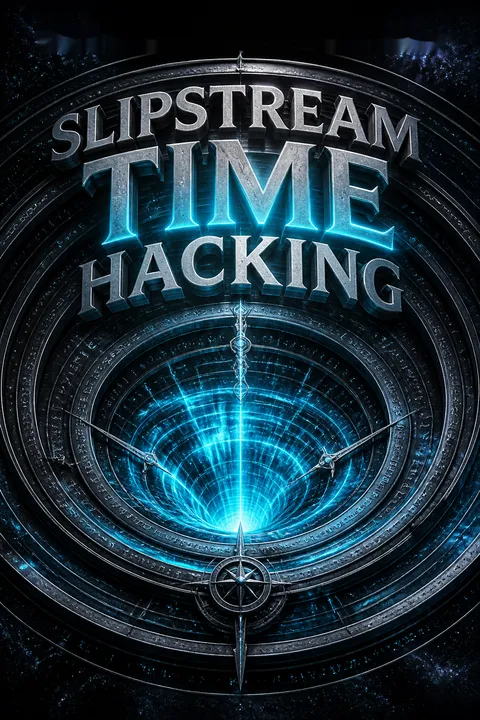


Key Takeaways
Measure your life by meaningful distance, not hours merely endured.
A different clock. Hardy asks readers to judge time by how much meaningful change and experience they accumulate, rather than by the hours on a calendar. He calls a fast, personally relevant route toward a desired future a slipstream. His own example is a sudden improvement in financial stability after marriage: he felt he had reached a point that his earlier life path might have taken decades to reach.
A metaphor, not physics. The book borrows wormholes, time dilation, and light-speed from physics to describe dramatic personal change. A wormhole, in this usage, is a shortcut such as a mentor, opportunity, or insight that moves someone toward a desired future unusually quickly. The promise is a richer experience of a finite lifespan, not literal extra years.
What's useful here is the distinction between clock time and the amount of life a person can recall having lived. Novelty, attention, and meaningful change can make periods more memorable, while repetitive days often blur together in hindsight. The physics language makes the contrast vivid, but it needs a firm boundary: special-relativistic time dilation depends on velocity and gravity, not ambition or productivity. A purposeful career does not literally slow a person's clock. The metaphor remains valuable when understood as a claim about experience, memory, and opportunity rather than an escape from biological time.
Choose a destination worth reaching, then shorten the route deliberately.
Let importance set the pace. Parkinson's law, as Hardy applies it, says work tends to expand to fill the time available. A deadline can therefore shape not only when a task gets done, but how much time it consumes. If a long-delayed trip matters, replace a vague plan to go in fifteen years with a concrete, nearer date and break the preparation into manageable steps.
Make the experience count. Hardy recounts his father-in-law's long-held wish to visit Hawaii. A low-cost timeshare offer made the trip possible; the family spent months anticipating it, and the father-in-law later remembered it vividly. His brother, who backed out, barely remembered what he did during that same week. The contrast suggests that choosing and preparing for a meaningful experience can make time feel richer.
A shorter deadline can expose which parts of a task are essential and stop preparation from becoming an elaborate substitute for action. This resembles implementation planning: a goal becomes more actionable when translated into specific steps and dates. Yet urgency is not automatically useful. Some work needs incubation, and unrealistic deadlines can produce stress or sloppy decisions. The stronger lesson is to distinguish avoidable delay from necessary time, then set a pace that brings a valued experience closer without pretending every worthwhile goal can be rushed.
Trade impressive possessions for hours you can give back to life.
Price things in hours. Hardy argues that money matters chiefly because it can buy time, freedom, and experiences. A large mortgage or expensive car has a hidden price: the work hours required to pay for it. He estimates that a family choosing a $150,000 home instead of a $300,000 one could avoid more than 7,000 work hours for the father, using his example of 50-hour workweeks and 2,550 hours worked per year.
Count the trade honestly. The calculation is illustrative, not universal: income, taxes, interest, and actual working hours change the result. Still, it shifts the question from whether a purchase is affordable to whether the hours it costs are worth giving up. Hardy contrasts this with people who earn well but feel trapped by costly lifestyles and postpone the life they want until retirement.
Thinking in hours makes opportunity cost concrete. Behavioral economics uses that term for the value of the best alternative surrendered when a choice is made. A purchase can be financially manageable and still be expensive in time, attention, or flexibility. The book's arithmetic is deliberately rough, so readers should calculate their own trade-offs rather than adopt its numbers as a forecast. And reducing spending is not always the answer: housing, transport, and care costs are constrained by circumstances. The useful practice is to ask what a purchase displaces, not to moralize about owning things.
Narrow your commitments until effort builds momentum instead of drag.
An attractive path can be wrong. Hardy was offered a financial-advising job with successful bosses, flexible schedules, and the prospect of a lucrative career. He recognized that it did not fit his own ambitions, yet found it difficult to turn down because others called it an exceptional opportunity. Its appeal did not make it the right route for him.
Choose, then prune. The book urges readers to define a destination, limit competing priorities, and stop treating every open door as an obligation. Hardy suggests a small number of major life areas rather than a crowded list of goals. He also uses the image of an aircraft repeatedly correcting its course: small deviations matter when left unattended. Periodically comparing daily choices with a chosen direction helps prevent busy effort from carrying someone somewhere they never intended to go.
Focus is not simply doing fewer things; it is protecting attention for choices that reinforce one another. In cognitive terms, frequent task switching carries costs, while consistent practice can build expertise and momentum. The job story also shows why social approval is a poor substitute for personal fit. Still, a narrow plan should not become a rigid identity. People often discover what they value by trying unfamiliar work, and responsibilities can limit choice. A sound approach combines a clear direction with regular course checks, allowing commitment without confusing persistence with stubbornness.
Use full commitment to quiet the daily courtroom of negotiation.
Pre-decide where it helps. Hardy describes repeatedly allowing himself sweets while trying to follow a healthier diet, then renegotiating the rule whenever temptation appeared. He found that a firm boundary reduced the daily debate and the effort of relying on willpower. The same logic appears in his account of becoming a foster parent: after an initially difficult adjustment, he chose to treat the children with lasting care, which helped build trust and connection.
Commitment has stages. Drawing on Jeff Goins, Hardy describes commitment progressing from exploration, to a defined season of effort, to a durable dedication to a calling or relationship. The point is not that every decision deserves an irreversible pledge. It is that some worthy responsibilities require acting with seriousness even when the outcome or duration is uncertain.
Pre-commitment can reduce decision fatigue by settling a choice before the tempting moment arrives. It is especially useful when a person knows that repeated bargaining reliably undermines a goal. But an all-or-nothing rule is not universally easier, and willpower is not a simple tank that empties identically for everyone. Nor should commitment become a trap: sunk-cost bias can keep people investing in a harmful path just because they have already invested. The key distinction is between closing unhelpful loopholes and refusing to update when new evidence shows that a commitment is damaging.
Draft behind mentors and generous teams to travel farther with less resistance.
Borrow momentum. In cycling, a rider can use the reduced air resistance behind another cyclist to keep pace with less effort. Hardy turns this into an analogy for mentorship: an experienced guide can share perspective, access, and knowledge that would take a learner years to acquire alone. After earlier research work that brought little progress toward his goals, Hardy found a mentor and says that fifteen manuscripts were submitted within five months.
Choose the group's culture. Hardy contrasts competitive groups, where members guard knowledge and pursue individual status, with collaborative groups that connect people and combine their skills. A generous team can make the whole group more capable, not merely help one member advance. The practical test is whether relationships create shared progress or treat people as disposable tools.
Mentorship is powerful partly because it compresses feedback cycles. A knowledgeable person can help a learner avoid predictable errors, find useful opportunities, and see standards that are otherwise hard to infer. Collaboration adds another advantage: connected expertise can solve problems no individual member could handle as efficiently. The manuscript example is an author's report, not proof that every mentor produces similar results. Access also matters, since high-status networks are unevenly available. Readers can apply the principle at smaller scales by seeking reciprocal peers, clear feedback, and communities where useful knowledge circulates.
Add meaningful novelty, but don't confuse turbulence with progress.
Give memory something to hold. Hardy argues that new and emotionally significant experiences make periods easier to remember. At eighteen, he was spending much of his day playing video games. A brief period of running with his cousin led to regular late-night runs, which gave him time to reflect and changed how he saw his own possibilities. He describes the activity as a turning point, not because running magically solved his problems, but because it interrupted a numbing routine.
Use change with direction. Hardy also recounts a two-month trip to Ireland with his wife, including work on a farm, as a disruption that clarified what mattered to him. His later advice includes using small personal cues, such as a consistent song or writing ritual, to enter a focused state. Novelty helps most when it deepens attention or moves a person toward a valued life.
Memory research distinguishes the experience of time as it unfolds from the duration people remember afterward. Novel, distinctive events can leave more memory landmarks, making a period seem fuller in retrospect; repetitive routines may be compressed into a vague blur. That supports the book's emphasis on memorable experience, but not the claim that constant change is inherently beneficial. Stability supports skill, recovery, and dependable relationships. The practical balance is to retain routines that serve important work while deliberately making room for experiences that invite attention, learning, and emotional presence.
Build with people and tools that multiply your reach, not your workload.
Notice unused openings. Hardy tells how Steve Jobs saw a demonstration at Xerox PARC of a computer interface using a mouse, icons, and windows. Xerox did not turn that opportunity into a successful personal computer, while Jobs and Apple developed it into the Macintosh. The story's lesson is to recognize useful possibilities that others have not acted on, then improve and apply them.
Leverage what others do well. Hardy also recommends delegation, outsourcing, and technology that lets small groups reach large audiences. He cites Kodak's collapse alongside Instagram's rise as an illustration of how rapidly technology can change an industry. His discussion of exponential change describes tools becoming digital, cheaper, less tied to physical products, and more widely accessible. These forces create openings, but only when someone puts them to purposeful use.
The Xerox story captures a durable feature of innovation: invention and adoption are different achievements. A useful idea creates value only when a team recognizes it, develops it, and reaches users. Digital tools can lower the cost of distributing knowledge or coordinating work, giving small organizations opportunities once limited to large institutions. But technology does not erase unequal resources, and a vivid winner such as Instagram can make success look more predictable than it is. The practical goal is not to chase every new tool, but to use leverage where it advances a clearly chosen purpose.
Count success by the time and care your choices return to people.
Time is the real currency. Hardy treats income and possessions as means, not final measures of a life. His friend Claire's career success enabled her husband, Steve, to retire early. Steve then spent years with his grandchildren and time with his father near the end of his father's life. The value of that arrangement was not just financial efficiency; it was time spent present with people who mattered.
Let values set the destination. The book's closing perspective is that character and relationships reveal more about a person's life than status or possessions. Hardy grounds this view in his religious belief that God and light stand beyond ordinary human time. Readers need not share that theology to follow the practical point: pursuing a goal is hollow if it requires neglecting the relationships and principles that make the goal worthwhile.
This ending corrects a common productivity mistake: treating every saved hour as raw material for more output. Time has value because of what it makes possible, including care, friendship, rest, and meaningful work. Research on well-being often distinguishes material resources from social connection and autonomy, which helps explain why higher income alone does not guarantee a satisfying life. The book's theological account of light and eternity is a personal framework rather than a shared empirical conclusion. Its grounded ethical question travels more widely: does a faster path leave room for the people it is meant to serve?
Analysis
The book's most durable idea is not that people can literally bend time by working faster. It is that a life can feel larger when its hours contain memorable experience, purposeful change, and relationships chosen with care. The science-fiction vocabulary gives this argument a vivid shape: a slipstream is a route that reduces resistance, while a wormhole is an opportunity that appears to shorten the journey. The metaphor is strongest when attached to concrete choices, such as declining prestigious work that does not fit, finding a capable mentor, or exchanging expensive habits for time with family.
Its central weakness is the repeated blending of three different meanings of time: physical duration, subjective experience, and retrospective memory. Special relativity does not imply that an ambitious person gains subjective years or that productivity slows physical aging. The book's claims about exponential increases in personal time are best read as rhetoric for compressed learning, expanded opportunity, or a richer autobiographical record. That distinction matters because over-literal readings can make extraordinary outcomes seem guaranteed or ordinary constraints seem like failures of belief.
The most useful practical method is therefore more modest and more credible than the cosmic language suggests: identify a personally meaningful destination, remove commitments that compete with it, seek people and tools that increase learning, and review whether the route remains worth the cost. The text also recognizes that commitment can misfire, though its enthusiasm for bold leaps sometimes risks romanticizing irreversible decisions. A careful reader pairs ambition with experiments, feedback, and the ability to change course. Ultimately, the book's own strongest corrective is that speed is not the point. A life devoted to efficiency but emptied of presence would miss its stated purpose. The meaningful measure is not how much was accomplished per hour, but whether the hours were spent becoming someone and caring for people the reader genuinely values.
Review Summary
Slipstream Time Hacking receives mixed reviews, with an average rating of 3.79/5. Readers appreciate the unique perspective on time management and productivity, finding the concepts of slipstreams and wormholes intriguing. Some praise the book for its thought-provoking ideas and potential to change one's perception of time. However, critics point out repetitive content, lack of concrete advice, and occasional poor writing. The book's religious undertones and male-centric approach are also criticized. Overall, readers find value in the core concepts but desire more practical applications.
People Also Read






Glossary
Slipstream
A low-friction path forwardHardy redefines slipstream as an optimal route toward a desired destination. It can consist of a focused plan, a mentor, a community, or a new opportunity that reduces resistance and speeds meaningful progress. The term borrows from cycling, where a rider can conserve effort by following another rider through the pocket of reduced air resistance.
Wormholes
Shortcuts created through opportunityIn the book, a wormhole is a metaphorical shortcut through personal space and time. Examples include encountering a mentor, landing a fitting job, or reading something that changes a person's direction. Hardy describes such opportunities as luck that can be cultivated by actively looking, preparing, and taking risks, not as literal physical tunnels.
Time hacking
Shaping meaningful timeTime hacking is Hardy's term for arranging goals, choices, relationships, and work so that a person reaches personally important destinations sooner and experiences life as fuller. It includes narrowing priorities, seeking leverage through other people, and choosing memorable experiences. Despite its physics imagery, it concerns perceived meaning and life structure, not literal control over elapsed time.
Momentum diffusion
Shared forward movementHardy uses momentum diffusion to describe how a person can benefit from the movement and reduced resistance created by someone ahead of them. The image comes from a moving object leaving a wake, and from cyclists who draft behind a lead rider. In personal development, a mentor or capable group can offer similar momentum through knowledge, access, and support.
Four Stages of Time Hackers
A progression in perceived agencyThis framework describes a progression from seeing life-changing opportunities as rare and external, to becoming open to them, then believing one can help create them, and finally interpreting possibility through spiritual unity and service. The stages express Hardy's changing beliefs about agency and opportunity. They are a philosophical model, not a validated psychological scale.
Six D's
A model of technology's spreadAttributed in the book to Peter Diamandis, the Six D's framework describes how technologies can move from digital beginnings and initially subtle growth toward disruption, replacement of physical products, lower costs, and wider access. Hardy uses it to argue that exponential technologies can create openings for small, adaptive groups and individuals that established institutions may miss.
Tribal culture
A group's shared operating normsHardy uses tribal culture to describe the shared language, beliefs, values, and goals that shape how a group works. He contrasts competitive groups, where members protect information and seek individual advantage, with collaborative groups that connect people and combine their strengths. The culture, in this account, affects whether a community helps or obstructs collective progress.
FAQ
1. What is "Slipstream Time Hacking" by Benjamin P. Hardy about?
- Core Premise: The book explores how to "cheat time" by moving faster toward your goals, thereby experiencing more life and happiness within the same chronological years.
- Time as Distance: Hardy reframes time not as a fixed duration but as the distance traveled toward meaningful destinations, drawing on Einstein’s theory of relativity.
- Practical and Philosophical: It blends speculative science, self-help, and practical strategies to help readers compress more quality and meaning into their lives.
- Unique Approach: The book uses metaphors from science fiction (like slipstreams and wormholes) to illustrate how people can make quantum leaps in personal growth and achievement.
2. Why should I read "Slipstream Time Hacking" by Benjamin P. Hardy?
- Transform Your Perspective: The book challenges conventional views of time, productivity, and success, offering a paradigm shift that can lead to greater fulfillment.
- Actionable Strategies: It provides practical advice for accelerating progress toward your goals, making the most of your time, and living more intentionally.
- Inspirational Stories: Hardy shares personal experiences and examples from well-known figures to illustrate how rapid, meaningful change is possible.
- For Seekers of More: If you feel stuck, want to live more fully, or are searching for ways to maximize your impact and happiness, this book offers a roadmap.
3. What are the key takeaways from "Slipstream Time Hacking"?
- Time is Relative: Your experience of time depends on the speed and direction of your progress toward meaningful goals, not just the passage of hours or years.
- Wormholes and Slipstreams: Life-changing opportunities (wormholes) and optimal pathways (slipstreams) can dramatically accelerate your journey if you recognize and seize them.
- Narrow Focus, Greater Progress: Reducing distractions and focusing on a few key priorities allows you to move faster and experience more life.
- Stage 4 Tribal Culture: Surrounding yourself with collaborative, growth-oriented people (Stage 4 tribes) can exponentially increase your progress and happiness.
4. How does Benjamin P. Hardy define "slipstream" and "wormhole" in the context of time hacking?
- Slipstream: Borrowed from science fiction and cycling, a slipstream is an optimal, high-velocity pathway toward a desired destination, reducing resistance and increasing speed.
- Wormhole: A metaphor for shortcuts or quantum leaps—unexpected opportunities or decisions that can instantly propel you years ahead in your personal or professional life.
- Not Just Luck: Hardy argues that wormholes are not just luck but are often the result of seeking, recognizing, and acting on opportunities.
- Risk and Focus: Both concepts involve risk, focus, and the willingness to leave comfort zones for greater rewards.
5. How does "Slipstream Time Hacking" reframe our understanding of time?
- Distance Over Duration: Time is better measured by the distance you travel toward your goals, not by the number of years or hours elapsed.
- Relativity Applied to Life: Drawing from Einstein’s relativity, Hardy shows that moving faster toward meaningful destinations makes time feel slower and life richer.
- Nonlinear Progress: Change and growth can be discontinuous and exponential, not just linear and incremental.
- Subjective Experience: Each person’s experience of time is unique, shaped by their choices, focus, and the meaning they assign to their journey.
6. What practical methods does "Slipstream Time Hacking" recommend for accelerating personal growth and happiness?
- Set Clear, Narrow Goals: Focus on a few vital priorities to reduce resistance and increase momentum.
- Seek Mentorship and Masterminds: Leverage the experience and networks of others to move faster and avoid common pitfalls.
- Embrace Change and Novelty: Pursue new experiences and quantum changes to create lasting memories and slow down your perception of time.
- Delegate and Specialize: Outsource tasks outside your strengths to free up time and energy for what matters most.
7. What is the significance of "Stage 4 Tribal Culture" in "Slipstream Time Hacking"?
- Collaboration Over Competition: Stage 4 tribes focus on collective success and synergy, rather than individual competition (Stage 3).
- Faster Progress: Being part of a collaborative, supportive group accelerates your journey and opens up more opportunities (slipstreams and wormholes).
- Networking is Power: In Stage 4, knowledge is shared, and connections are leveraged for the benefit of all, not hoarded for personal gain.
- Foundation for Innovation: Only Stage 4 tribes can occasionally reach Stage 5, where world-changing innovation and exponential progress occur.
8. How does "Slipstream Time Hacking" address the concept of opportunity cost and decision-making?
- Every Choice Has a Cost: Entering one slipstream means forgoing others; decisions inherently involve opportunity costs.
- Essentialism: Hardy advocates for essentialism—making fewer, better choices and closing doors that don’t align with your true goals.
- Commitment is Key: 100% commitment to the right path is easier and more effective than partial commitment to many paths.
- Course Correction: Regularly reassess your direction to ensure you’re on the optimal path, as even small deviations can lead far off course over time.
9. What role do "quantum change" and "wormholes" play in achieving rapid progress, according to Benjamin P. Hardy?
- Quantum Change Defined: Sudden, discontinuous leaps in growth or circumstance, often resulting from new experiences, risks, or major decisions.
- Wormholes as Accelerators: These are opportunities or events that can instantly move you years ahead, such as finding the right mentor, job, or insight.
- Create Your Own Luck: By seeking out and being open to wormholes, you increase the likelihood of experiencing quantum change.
- Embrace Discomfort: Quantum leaps often require stepping into discomfort, uncertainty, or even chaos, but yield the greatest rewards.
10. How does "Slipstream Time Hacking" suggest readers measure success and happiness?
- Alignment with True Desires: Success is living congruently with your authentic self and highest priorities, not external measures like wealth or status.
- Quality Over Quantity: The goal is to maximize the quality and meaning of your time, not just the amount.
- Present-Moment Focus: Happiness is found in the present, not in deferred goals or future achievements.
- Relationships Matter Most: At the end of life, the depth and quality of your relationships are the true measure of distance traveled and happiness achieved.
11. What are some of the most impactful quotes from "Slipstream Time Hacking" and what do they mean?
- "The faster you move, the slower time passes, the longer you live." — Peter Diamandis. This encapsulates the book’s core idea that rapid progress toward meaningful goals stretches your experience of life.
- "The man who has lived the most is not he who has counted the most years but he who has most felt life." — Jean-Jacques Rousseau. Emphasizes quality and depth of experience over mere longevity.
- "Most people don’t know why they’re doing what they’re doing. They imitate others, go with the flow, and follow paths without making their own." — Derek Sivers. Highlights the importance of intentionality and authenticity.
- "It’s easier to hold to your principles 100 percent of the time than it is to hold to them 98 percent of the time." — Clayton Christensen. Stresses the power of full commitment to your chosen path.
12. How can readers apply the lessons from "Slipstream Time Hacking" to their own lives?
- Clarify Your Vision: Define where you truly want to go and what matters most to you, then align your actions accordingly.
- Seek and Enter Slipstreams: Find mentors, tribes, and opportunities that accelerate your progress and reduce resistance.
- Be Open to Wormholes: Stay alert for life-changing opportunities and be willing to take bold, decisive action when they appear.
- Live Presently and Intentionally: Focus on creating memories, nurturing relationships, and spending your time on what truly matters to slow down and enrich your experience of life.
About the Author
Other books by Benjamin P. Hardy

Download PDF
Download EPUB
.epub digital book format is ideal for reading ebooks on phones, tablets, and e-readers.








