


Plot Summary
Jerusalem Meets War
Thirteen years after the Horsemen crippled technology and shattered ordinary life, Miriam Elmahdy survives by making weapons from salvaged wood and glass. Her days are haunted by the boat explosion that separated her from her mother and sister, and her nights by the fear that keeps her vigilant.
After killing a man who followed her through Jerusalem, she hears hoofbeats outside an abandoned house and sees a towering rider on a blood-red horse. The rumors prove true: War has arrived with thousands of armed followers. Miriam could flee west and protect herself. Instead, she returns toward the city, carrying her bow and the old conviction that courage matters even when survival argues otherwise.
Miriam’s opening choice establishes that bravery is not a stable virtue but a decision made against the body’s sensible alarms. Her craft turns the remains of modern life into tools of survival, while the city’s collapsed infrastructure makes self-reliance necessary rather than romantic. The first man she kills also shows the cost: violence has become easier, and she recognizes this as a danger to herself. Returning to Jerusalem does not make her a conventional savior. It exposes the unresolved bond between personal survival and responsibility to people who may never repay her.
The Wife He Spares
Jerusalem is already burning when Miriam begins shooting War’s soldiers, rescuing a fleeing woman and child before trying to strike the horseman himself. War turns his attention from the city to her, defeats her in the Old City, then pauses when he sees the scar at her throat. He declares her his wife and carries her out of the slaughter.
At his mountain camp, captives are offered death or allegiance. Miriam chooses death rather than join the army, but War stops the executioner, cuts her bonds, and gives her a tent and his dagger. He calls her wife with certainty she cannot understand. The title offers protection, but it also marks the beginning of her captivity.
War’s first interruption of violence is selective, not merciful in any general sense. He spares Miriam because he believes she belongs to him, turning intimacy into a claim made without her consent. Her refusal of allegiance preserves a moral boundary even when survival would reward surrender. The camp’s forced choice reveals how catastrophe can make complicity look like the only practical option. Miriam’s resistance is therefore more than defiance of War: it is an attempt to avoid becoming an instrument of the same violence that has destroyed her home.
A Tent Beside His
Miriam tries to leave camp, but a guard catches her and her claim that War authorized the escape only makes matters worse. To avoid punishment, she admits she can make bows and arrows, turning a false excuse into assigned work. War retrieves her tools from her ruined apartment, along with a photograph of her family, and orders her to ride beside him as the army moves west.
On the road, he explains that he can speak every language, but uses forgotten tongues to make humans fear what they cannot understand. He also admits that Pestilence was stopped, though he withholds how. Miriam begins to suspect the Horsemen are not invincible, even as War insists his own destruction cannot be prevented.
The returned tools and photograph create a fragile form of intimacy without resolving the coercion beneath it. War notices what Miriam values, but his attention remains entangled with ownership. Her weapon-making gives her a role inside the army while also sharpening the contradiction in her position: the skill that has kept her alive may now serve the force destroying others. The revelation about Pestilence changes the plot’s horizon. Defeat is no longer merely a human fantasy, but War’s refusal to explain it leaves Miriam with a possibility she cannot yet act upon.
Ashdod's Dead Rise
In Ashdod, Miriam rides into the invasion and sees War’s soldiers destroy the aviaries that might have warned other cities. She saves a mother and her children, then takes a bow from a dead soldier and shoots attackers from an upstairs window. A local woman, Zara, fires repeatedly at War, who survives every bullet.
Miriam steps between them and persuades him to spare Zara, then watches the wounded woman leave with a soldier. After the battle, War lifts the dead from unmarked graves and sends them into Ashdod, where they kill the last survivors. Miriam begs him to stop, but he calls the massacre divine judgment. She runs back into the city, hoping to escape, and encounters the still-moving dead.
Ashdod dismantles the comforting distinction between fighting and saving. Miriam can rescue individual people, but War’s strategy targets communication and then uses the dead to erase survivors who might carry news. Her intervention for Zara demonstrates that moral attention can still alter a single fate, though not the larger campaign. The undead make War’s violence persist beyond the battlefield: death becomes a second army, preventing defeat from leaving witnesses. Miriam’s escape attempt is therefore not simply fear. She is trying to find a world in which her choices can matter at a human scale.
The Tent Attack
As Miriam struggles through Ashdod’s undead, War finds her and carries her back to camp. She later befriends Zara, who has survived the invasion by swearing allegiance, and admits that War considers Miriam his wife. That night, several men enter Miriam’s tent and assault her. She fights back with War’s dagger, killing one attacker before the others beat her nearly unconscious.
War hears her cries, tears the men away, and brings her to his tent. He stays beside her, feeds her, and uses his power to heal her bruises and broken injuries. When she refuses to execute the surviving attackers, War kills them himself. The rescue protects Miriam, but his revenge leaves her confronting how closely justice resembles the violence she opposes.
The assault exposes the camp’s ordinary human brutality, which cannot be excused as supernatural destiny. War’s intervention matters because he responds to Miriam’s pain as particular and immediate, while his army treats her as vulnerable property. Yet his answer to harm is execution, reproducing the camp’s logic of domination under the name of justice. Miriam’s refusal to kill the attackers preserves a distinction between self-defense and state punishment. Her gratitude toward War is real, but it does not erase the fact that he created the violent system in which the attack became possible.
A Bargain for Birds
After healing, Miriam returns to making arrows and learns from War that he can both raise the dead and heal the living. Their attraction grows, but she remains unable to accept his massacres. Before the army attacks Arish, she visits War’s tent and offers intimacy in exchange for one concession: he must not order the city’s aviaries destroyed.
War refuses her demand to stop the killing, but agrees not to target the bird houses. Miriam accepts the limited bargain, hoping that carrier pigeons can warn other communities. In Arish, she reaches the city on foot, finds one aviary standing with its cages empty, and keeps moving through the battle toward Zara’s family. The warning system survives, but the people it might save remain in danger.
The bargain makes intimacy a political instrument, but Miriam’s decision is not reducible to sexual manipulation. She uses the only leverage available to her to preserve a communication network, choosing an imperfect chance of warning over helpless protest. War’s counteroffer shows that he can distinguish between an order and an omission, granting a narrow concession without relinquishing his purpose. The empty cages in Arish embody both success and limitation: birds may have escaped, yet Miriam cannot know whether messages will arrive. Her agency is real, but it operates within terms set by overwhelming power.
Mamoon Survives Arish
Zara asks Miriam to help her reach her sister’s family in Arish, and Miriam gives her a horse so she can arrive ahead of the foot soldiers. The invasion has already reached the family. Zara finds her sister and brother-in-law dead, while her young nephew, Mamoon, is barely alive with an arrow through his chest. Miriam brings War to them, insisting that he can save the child.
Furious at being pulled from battle, he nevertheless removes the arrow and heals Mamoon enough to survive. Miriam then steals another horse for Zara and Mamoon, but a Phobos rider threatens her. She kills him with arrows, is captured for the killing, and faces execution. War publicly releases her and kills a rider who challenges his decision.
Mamoon’s rescue is a decisive test of whether Miriam’s influence can reach beyond War’s private desire. She does not ask him to spare an abstract population; she places one injured child before him and makes mercy concrete. War’s help does not undo Zara’s losses, and his demand for loyalty afterward reveals that compassion remains entangled with control. Miriam’s theft and killing show how quickly care becomes criminal in a militarized world. Her survival depends on War’s intervention, but the public dispute also makes her increasingly visible and vulnerable within his ranks.
Mansoura's Warning
After traveling through Egypt with War, Miriam sees the corpses and bone piles left by his undead. She and War grow physically close, and she eventually gives in to his demand for surrender, though she privately intends to keep resisting.
When the army approaches Mansoura, she slips away at night on Deimos and warns the city’s soldiers that War is coming. They believe her and begin evacuating residents. War catches up and raises the dead beneath the fleeing crowd. The massacre destroys the escape she arranged.
Miriam confronts him, then later threatens him with his own sword, demanding an end to the raids. War reveals that the scar at her throat signifies surrender in his language. She refuses to accept his interpretation, and their conflict becomes personal as well as moral.
Miriam’s warning is the first attempt to convert private knowledge into collective protection. It succeeds briefly because she gives the city concrete evidence, not merely a frightening rumor. War’s response turns that success into a demonstration of his reach: escape routes, warnings, and human solidarity can all be overtaken by the dead. Their intimacy has not made Miriam passive, but it has complicated her capacity to judge him clearly. The scar’s meaning introduces a dangerous ambiguity between destiny and consent. War treats a mark as proof of a claim; Miriam insists that bodily history cannot substitute for a freely chosen decision.
The Camp Is Punished
Miriam’s attempt to force War’s surrender fails. He removes weapons from his tent and keeps her under guard, but her defiance has already become a threat to his authority. The next day, War summons the dead and turns them on his own camp, killing most of the people who had followed him. He frames the massacre as punishment for Miriam’s betrayal.
Zara and Mamoon are among the few survivors, spared because War has judged them differently. Miriam is made to witness the destruction, then withdraws from War and moves into an empty tent. Their separation lasts for weeks. She grows exhausted and unable to eat; when War finally comes to her, she admits she cares for him, and he carries her back to his tent.
War’s retaliation reveals the limit of his emerging tenderness: when he feels betrayed, he still reaches for collective punishment. By making Miriam witness the deaths, he tries to turn love into a mechanism of discipline. The survivors complicate any easy claim that he is simply incapable of mercy, but they also intensify her grief, since she cannot separate his protection of a few from the killing of many. Their estrangement is not a pause in the romance alone. It forces Miriam to recognize attachment without mistaking attachment for moral approval.
A Child Between Them
Once Miriam returns to War, their intimacy resumes, but she remains wary of what he would do with a child. Her nausea, fatigue, food aversions, and missed period lead her to suspect she is pregnant. Rather than tell War, she leaves camp in the night, followed by one of his undead guards. War finds her on the road and begs her to return, finally admitting that he loves her and promising to change.
Miriam tells him she is pregnant. War responds with joy, vows to protect her and their child, and accepts her as his wife without demanding a bargain. From then on, he begins sparing children and other people he judges innocent, and he eventually prepares to free the captives who remain in his camp.
Pregnancy forces the couple’s conflict out of the realm of erotic negotiation and into questions of responsibility, vulnerability, and future time. Miriam’s flight is a survival calculation shaped by her history of losing family, not a rejection of love. War’s declaration and vow matter because they answer a fear she has not voiced, but his promise is only meaningful if his conduct changes. The gradual sparing of civilians supplies that evidence. A potential child becomes a moral mirror: War begins to recognize human futures as something more than obstacles to his assigned purpose.
War Lays Down Arms
War increasingly spares children, elderly people, and civilians he considers innocent, while Miriam’s warnings help some towns prepare to resist. When an ambush wounds her, War retreats with her rather than continue the attack, then heals her and removes the arrow from his own armor. The two begin caring for each other rather than treating tenderness as a debt.
War brings rescued children and adults into camp, asks Miriam to marry him without coercion, and gives her a ruby ring and a new hamsa bracelet. He then announces that he will release the remaining captives, including Zara and Mamoon, in Dongola. Miriam says goodbye to her friend as War dismantles the camp and turns away from the campaign that had defined him.
War’s change becomes credible through costly choices rather than declarations alone. Retreating from battle to protect Miriam reverses his old hierarchy of values, while sparing civilians extends that reordering beyond the marriage. His proposal matters because it explicitly removes the bargain structure that has governed their intimacy. The hamsa links his new place in Miriam’s life to her father’s memory without replacing that loss. Releasing the camp is a larger relinquishment: War begins to surrender not merely violence in isolated moments, but the machinery that made violence his daily identity.
The Riders Betray War
After War takes his remaining Phobos riders toward Karima, Miriam discovers a map that seems to place the ambush near their own camp. The ground erupts with dead, then the undead suddenly collapse, signaling that War’s control has ended. Miriam arms herself and rides after him. A rider confirms that War is dead, and she finds his severed head in a blood-soaked saddlebag.
Instead of stopping to mourn, she attacks the returning conspirators, killing or wounding several, including Hussain, the rider who had once warned her to be careful. Hussain admits the soldiers feared being left behind when War ended his campaign. Miriam follows the trail of bodies into the desert and finds War’s headless body in a grave surrounded by explosives.
The mutiny grows from the same survival logic that once shaped Miriam’s own decisions, but the riders convert fear into preemptive murder. Their betrayal exposes the instability of an army held together by submission rather than trust. Miriam’s response is not a clean heroic victory: she kills people she once knew and refuses a final blow against the dying Hussain. Her changing relationship to violence is measured by that hesitation. The grave shifts the problem from defeating War to deciding whether love can justify risking another life, especially the unborn child she has not yet revealed.
The Sword Is Surrendered
Miriam climbs into the explosive-filled grave and tries to secure War’s body to Deimos, but a shifting arm triggers the blasts. War awakens amid the wreckage and finds Miriam dead beside him. He carries her to Death and asks for her return. Death agrees only if War surrenders his sword, the emblem and instrument of his purpose.
War accepts, insisting that their unborn daughter return too. The bargain strips him of immortality and releases him from his divine mission. Miriam wakes alive, learns she died briefly, and discovers that War is now mortal. Their child has survived as well. War has not defeated the Horsemen by force; he has relinquished the power and identity that made him one of them.
The climax literalizes surrender as a reciprocal act. Miriam risks herself to recover War, while War gives up the sword that has embodied his identity for millennia. The exchange does not make prior violence disappear; it makes transformation costly enough to be credible. Death’s condition also reframes the scar that once seemed to assign Miriam a fate: the decisive choice belongs to War, who must surrender freely rather than demand surrender from her. Mortality becomes both consequence and possibility, placing him inside the fragile human future he had once judged from outside.
Family Found in Crete
Two years later, Miriam and War travel with their daughter, Maya, to a blue-doored house in Crete. Miriam has spent years searching for the family separated from her in the boat explosion. Her mother opens the door and recognizes her; moments later, Miriam’s sister Lia appears, alive and grown.
The reunion turns years of unanswered grief into an embrace, though War’s imposing presence initially makes the family cautious. Miriam introduces him as her husband and explains that he no longer carries out his former mission. Her mother holds Maya, welcomes War into the family, and thanks him for bringing Miriam home. His final understanding of love is simple: caring for someone means helping them find their way back.
The reunion resolves the novel’s deepest personal wound, not through supernatural power alone but through endurance across years of uncertainty. Miriam’s family is not restored to its old shape: they meet as people altered by separation, war, and time. War enters this reunion as both the cause of vast loss and a changed participant in a human family, a contradiction the scene does not erase. Maya gives the household a future, while Miriam’s mother’s welcome grants War a place he has never known. Home becomes a relationship rebuilt, not a return to what was.
Epilogue
In the sixteenth year of the Horsemen, an earthquake shakes the world and enormous waves batter coastlines. Pestilence recognizes the signs as another apocalypse beginning.
Famine wakes and foretells mass starvation, while a creature sleeping in a crypt opens its eyes and smiles. The world War left behind may have been spared his campaign, but the remaining Horsemen are stirring.
The epilogue refuses to let the couple’s hard-won peace stand for the world’s rescue. Its rapid sequence of disaster signals that War’s surrender ended one catastrophe, not the larger system of judgment represented by the Horsemen. The shift away from Miriam and War’s intimate perspective restores the planetary scale they had briefly escaped. Famine’s awakening is especially ominous because the threat begins as a prediction of bodily deprivation, a catastrophe that will make survival itself the central struggle again. The ending preserves hope in individual change while denying any easy promise that love has made humanity safe.
Analysis
War builds its romance inside a moral emergency rather than beside one. Miriam’s attraction to War is never allowed to become an uncomplicated reward: the man who heals her is also responsible for the deaths around her, and every moment of tenderness occurs within a structure of captivity, coercion, and unequal power. Her resistance is therefore not a simple obstacle to love. It is the means by which the story tests whether love can alter conduct without asking the harmed person to forget what happened.
The novel’s central conflict concerns how moral judgment is exercised. War initially believes that judging human hearts licenses him to kill, while Miriam insists that the possibility of cruelty does not cancel the possibility of change. Her repeated interventions are small beside the scale of the apocalypse, but they are specific: preserve an aviary, spare a woman, heal a child, warn a town. These requests make mercy observable. War’s transformation becomes persuasive only when it changes his behavior toward people who are not Miriam.
The dead sharpen the novel’s argument about violence. War’s undead preserve the consequences of killing beyond the moment of battle, erasing the usual boundary between victory and aftermath. His power turns the past into an active weapon. Against that force, Miriam’s craft is modest and reparative: she salvages, repairs, and warns. Her weapons can kill, but they also give her a means to protect those targeted by War’s army. The book does not make her morally pure; it makes her accountable to what her actions serve.
Finally, the romance is structured as a struggle between possession and reciprocity. War begins by claiming a wife through divine certainty, but his eventual surrender requires him to relinquish the sword and immortality that define him. The ending does not erase his past or promise that the other Horsemen will change. It offers a narrower, harder hope: a person can become responsible for what they have done, and love can matter when it changes the use of power.
Review Summary
War receives mostly positive reviews, with readers praising the unique storyline, character development, and intense romance. Many found it an improvement over the first book, Pestilence. Critics appreciated the complex relationship between War and Miriam, as well as the exploration of morality and humanity. Some readers felt the book was too long and repetitive, while others had issues with the setting and portrayal of certain themes. Despite mixed opinions, most fans eagerly anticipate the next installment in the Four Horsemen series.
People Also Read




Characters
Miriam Elmahdy
The salvage-born survivorMiriam is a young weapons maker in Jerusalem, where the Horsemen’s arrival has left people living without dependable technology or safety. She supports herself by turning scavenged materials into bows and arrows, and she trusts practical skills more readily than promises. Her Jewish mother and Muslim father raised her amid different traditions, giving her a broad sense of human kinship even as violence repeatedly tests it. A childhood boat disaster and the loss of her family have left her with grief she rarely voices. Miriam’s survival rules protect her, but her defining struggle is whether she can remain compassionate without surrendering her judgment or becoming numb to the people around her.
War
The red horsemanWar is one of the Four Horsemen, a supernatural commander who enters Jerusalem astride a blood-red horse and leads an army of human followers. He is physically imposing, wears glowing markings, and can speak every language, heal injuries, and raise the dead. He judges people’s hearts but initially interprets his own purpose as absolute, making him both powerful and difficult to reason with. His interest in Miriam is immediate and possessive, yet he is also fascinated by the human experiences he has only recently begun to feel. His struggle centers on the tension between a divine task and the emotional life that task has kept beyond his reach.
Zara
The stubborn survivorZara is a woman from Arish who fights War during the invasion and survives by swearing allegiance to his army. She is angry, watchful, and unwilling to mistake survival for acceptance. Her family ties shape her decisions, and her care for her young nephew reveals a tenderness she does not easily display. Zara becomes Miriam’s closest friend in camp, sharing food, blunt observations, and the emotional work of enduring loss. Her loyalty is practical rather than submissive: she understands the danger War poses, yet she can recognize the rare choices that give other people a chance to live.
Mamoon
Zara's young nephewMamoon is Zara’s small nephew, a child caught in the violence surrounding Arish. He has little power over his circumstances and depends on Zara and the adults around him for safety, food, and reassurance. His presence brings the consequences of War’s campaign into intimate focus: every battlefield decision reaches children who cannot understand its causes. Mamoon also gives Miriam a concrete reason to risk asking War for mercy, rather than arguing only from principle. His fear and dependence make him a reminder of the vulnerable lives that survive beneath the grand language of divine purpose.
Hussain
The guarded riderHussain is one of War’s Phobos riders, an elite soldier who sometimes shows Miriam more courtesy than his comrades do. He understands the army’s discipline and the brutal calculations that keep its members alive, but his manner is less openly hostile than that of many riders. His connection to War’s inner circle gives him access to the conflicts beneath the camp’s public order. Hussain embodies the difficult position of a survivor who has learned to accept violence as protection, even when it asks him to serve a cause that has already taken everything familiar from him.
Tamar
The camp's practical guideTamar is a woman who helps newcomers navigate War’s camp. She provides Miriam with a tent, clothing, food, and the blunt realities of camp life, including the dangers women face and the risks of trying to leave. Her pragmatism is shaped by experience rather than cruelty: she gives advice because she knows that good intentions alone do not protect anyone. Tamar represents the informal care work that keeps a displaced community functioning, even in a place structured by executions and military power.
Fatimah
The camp's keen observerFatimah is one of the women living in War’s camp. She tells Miriam stories about War’s seeming invulnerability and urges her to behave cautiously around him. Her curiosity reflects the camp’s mixture of fear, fascination, and practical accommodation toward its supernatural leader.
Deimos
War's blood-red steedDeimos is War’s enormous red horse, a fierce and seemingly supernatural creature that responds to its rider’s calls and ranges freely around camp. His temperament makes him intimidating to soldiers and difficult for Miriam to handle at first. Yet he also becomes a dependable presence on the road, carrying War and Miriam through battles and dangerous journeys. Deimos links War’s mythic identity to the physical world: he is not merely transport, but a companion who shares the horseman’s strangeness and presence.
Miriam's mother
The absent family anchorMiriam’s mother is a Jewish history professor who raised Miriam and her sister Lia alongside their Muslim father. Strong and quiet, she taught through her example as much as through her work, including her knowledge of ancient weaponry. Miriam carries memories of her mother’s cooking, resilience, and fierce love, even while the family’s separation remains unresolved. Her influence survives in Miriam’s craft and in the sense of kinship that keeps Miriam reaching toward other people.
Lia
Miriam's singing sisterLia is Miriam’s younger sister, remembered for her beautiful singing and the songs that once helped them fall asleep in the same room. Miriam associates her with music carved into handmade weapons and with the ordinary closeness of family life. The memory of Lia sharpens Miriam’s sense of what the apocalypse has taken, while also preserving a gentler part of her childhood that violence cannot entirely erase.
Plot Devices
The Hamsa and Throat Scar
Protection becomes a markMiriam wears a small hamsa bracelet given to her by her father, a token she touches when she is afraid and a link to her family’s history. The scar at the base of her throat comes from the boat disaster that separated her from her mother and sister. War recognizes the scar as a sign associated with surrender, giving it a supernatural meaning Miriam does not accept at first. Together, the two marks connect memory, survival, and the question of agency. The hamsa expresses protection as a human hope; the scar becomes a contested claim about what Miriam is meant to choose.
War's Opposing Powers
Death can also healWar can raise the dead and command them as soldiers, turning battlefields and old burial grounds into extensions of his army. He can also heal living bodies, including Miriam’s injuries and a child’s mortal wound. The paired abilities complicate the apparent purpose of his power: the same force that destroys can preserve life. His control over the dead also explains why cities remain dangerous after his army has moved on. What begins as an overwhelming military advantage becomes a test of whether War will use his power only to fulfill his mission or also to protect the living.
Carrier Pigeons
Warnings travel by wingAfter the Horsemen’s arrival disables modern communications, carrier pigeons become the fastest way to send news between communities. Aviaries therefore function as crucial public infrastructure, not merely as animal shelters. War’s army initially destroys them to prevent warnings from spreading, leaving Miriam unable to alert cities before attacks begin. She bargains to keep the aviaries intact and later uses pigeons to send a warning herself. The fragile network gives threatened civilians a chance to flee, while also creating a practical measure of Miriam’s influence over War’s strategy.
The Broken Modern World
Old tools replace dead systemsWhen the Horsemen arrive, electricity, engines, phones, and computers cease to function reliably. People return to oil lamps, hand pumps, horses, bows, blades, and message birds. This change shapes the material logic of Miriam’s life: scavenged plastic and glass become weapon parts, and the absence of modern medicine makes injury and childbirth more dangerous. The collapse is not background decoration. It forces communities to depend on one another while stripping away the systems that once mediated distance and danger. The old world remains visible in junkyards and ruined machines, but it can no longer solve the characters’ problems.
Vows and Surrender
Promises become moral testsWar initially treats surrender as the condition for claiming Miriam, while she treats it as a refusal to become his possession or abandon humanity. Their arguments transform the word into a question of mutual responsibility. Miriam’s promise to surrender is not entirely sincere at first, and War’s later vow to change must be judged by what he actually does. The device recurs through the scar at Miriam’s throat, War’s sword, their marriage proposal, and the final bargain with Death. Each repetition shifts surrender from domination toward a freely chosen sacrifice.
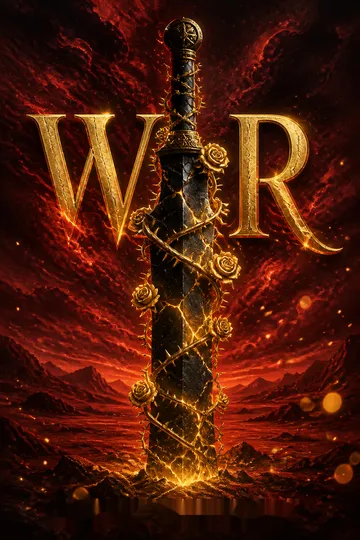
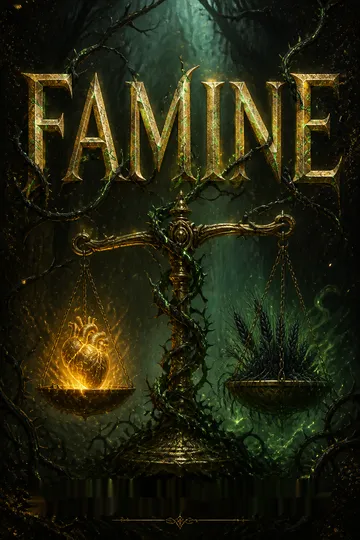
The Four Horsemen Series
About the Author
Other books by Laura Thalassa


Download PDF
Download EPUB
.epub digital book format is ideal for reading ebooks on phones, tablets, and e-readers.








