

Key Takeaways
Make the daily question practical: what good should I do now?
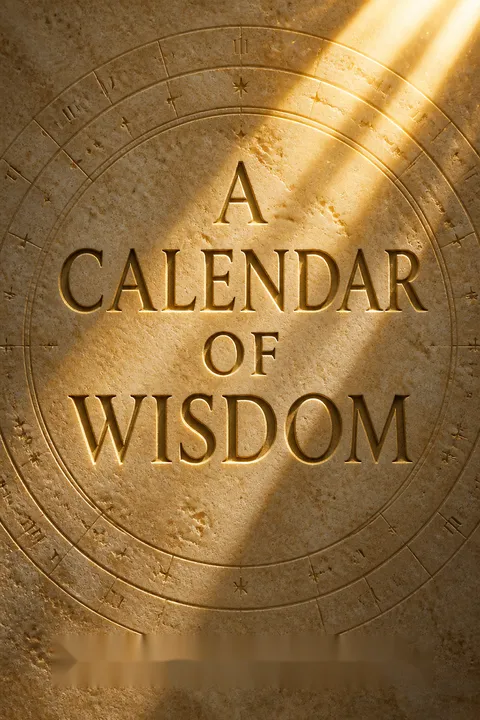
A yearlong conversation. Tolstoy spent about fifteen years gathering wisdom for a general readership. The book arranges each day around a moral theme, combining thoughts from religious and philosophical traditions with his own reflections. He added roughly 800 of his own thoughts, and repeatedly revised the work. He also used it as his daily reading, making the calendar less a reference book than a practice.
Reading must become conduct. Tolstoy called this practice a Circle of Reading: a regular encounter with wise voices intended to clarify how to live. He openly acknowledged that he sometimes shortened, adapted, or restated other writers’ ideas. The goal was not exact scholarship, but to make reflection useful in ordinary life. The daily test is whether an idea changes an action.
The calendar’s form is part of its argument. Small, repeated encounters with ideas can keep ethical attention from being crowded out by urgent tasks. That resembles reflective journaling and other practices that turn broad values into prompts for daily choice. Yet a familiar thought can become ritualized and lose force. Its value depends on returning to it with a concrete question: what behavior does this idea ask for today? Tolstoy’s approach is most compelling when reading becomes rehearsal for action, not a way to feel virtuous without acting.
Treat conscience as a compass, but keep testing inherited beliefs
Faith gives life a direction. Tolstoy defines faith less as agreement with a set of doctrines than as an understanding of why a person lives and what responsibilities follow. He sees a shared moral core across religious traditions, especially love of others. But that inheritance is not a license for blind obedience: each person must examine teachings with intellect and conscience, accepting some and rejecting others.
Prayer means moral attention. In this view, prayer is not mainly a request for special favors. It is a pause to recall the principles by which actions should be judged. Tolstoy compares changing beliefs to a sailor adjusting sails as the wind shifts. A living faith should remain open to correction, especially when custom or authority excuses cruelty.
This pairing of faith and critical judgment resists two easy answers: that tradition settles every moral question, or that secular knowledge alone supplies a purpose for living. It also resembles intellectual humility, the recognition that inherited ideas may be useful but should remain answerable to evidence and ethical consequences. The tension is that conscience can reflect prejudice as readily as insight. A trustworthy moral compass therefore needs more than sincerity: it needs scrutiny, dialogue, and attention to who bears the cost of a belief.
Let love cross the boundary between private virtue and public life
Love is the common measure. Across the traditions he gathers, Tolstoy finds a recurring moral demand: treat other people as kin, not as instruments or enemies. For him, love is more than warm feeling. It means offering practical help, respecting another person’s dignity, and refusing to reserve compassion for family, nation, or social class. He argues that society improves when people begin by improving their own conduct.
Private acts have public reach. A person’s choices can spread either kindness or hostility. Tolstoy uses the image of humanity as a body whose members suffer together: indifference to another’s pain is a failure to recognize the connection. Helping someone in need, speaking without contempt, and responding to an opponent with patience are small acts, but they enact a social order less dependent on domination.
Tolstoy’s move from personal love to public ethics is powerful because it asks whether institutions embody the care they praise. The idea connects with traditions of civic responsibility that treat social trust as something built through repeated interactions, not just laws. Still, private goodness cannot substitute for fair rules or collective action. Compassion may motivate reform, but structural arrangements determine who has power and resources. The strongest reading holds both levels together: personal conduct matters, and systems should be judged by whether they make humane conduct possible.
Practice restraint before desire turns from guest into master
Passions grow through indulgence. Tolstoy repeatedly warns that greed, rage, sexual desire, pride, and excessive appetite can take over judgment when treated as commands. He does not present self-control as an instant transformation. Each attempt to resist a destructive impulse weakens its hold and makes the next effort more possible. One recurring image compares a passion to a visitor who gradually takes possession of a house.
Begin with what is manageable. Tolstoy recommends reducing unnecessary wants and practicing abstention in ordinary choices. He uses eating as an example: a person who treats food as a source of endless pleasure may become less able to govern other appetites. Restraint, in this account, is not punishment for having a body. It is a way to keep appetite from dictating the whole life.
The gradual account of self-command fits what behavior science calls practice-dependent change: repeated choices can make a response easier to access. It also avoids the fantasy that character is transformed by one dramatic vow. But restraint is not automatically virtuous. Excessive control can become shame, rigidity, or disregard for legitimate needs. The useful distinction is between a desire that enriches a life and a compulsion that narrows it. Tolstoy’s question is not simply whether pleasure is present, but whether a person remains free to choose.
Answer injury without feeding the cycle that made it
Retaliation multiplies harm. Tolstoy argues that returning anger for anger can make both people more entrenched. He illustrates the cycle with a bear trying to reach honey beneath a swinging log: each forceful shove makes the log strike back harder, and the bear responds with still more force. The lesson is to stop supplying the reaction that keeps the conflict alive. Forgiveness, patience, and gentle correction can interrupt escalation.
Apply the principle to war. Tolstoy extends nonviolence beyond personal disputes. He rejects the idea that calling mass killing a war makes it morally different from murder, and argues that wars will not end through more violence. He believes people who suffer from war can help stop it by refusing to take part. For him, means matter: violence cannot reliably create a peaceful society.
The bear story makes escalation visible: a person can mistake a stronger reaction for a path out of conflict, even as it deepens the trap. Conflict resolution often depends on interrupting that feedback loop through listening, restraint, or a change in incentives. Nonviolence is not passivity, however. Refusing retaliation can be morally courageous, but people facing ongoing abuse may need protection and collective support. The principle is strongest as a rejection of revenge and organized killing, not as a demand that victims remain exposed to harm.
Make your work useful, and question wealth built on others' labor
Work is part of a good life. Tolstoy praises useful physical labor, not because every person must do the same job, but because idleness often depends on someone else’s effort. Manual work can support health, independence, and a sense of dignity. He also cautions that work is not automatically virtuous: activity that serves vanity or luxury may simply shift burdens onto others.
Look behind comfort. Tolstoy challenges charity that gives away a small portion of wealth while leaving the source of that wealth unquestioned. He also attacks large-scale ownership of land, arguing that people need access to the earth to live and work. His image is a field made fertile when manure is spread rather than left in one heap. Wealth, in his ideal, should circulate and help sustain life.
This section connects personal ethics to political economy: consumption is never purely private when goods depend on other people’s labor and access to resources. That perspective remains useful for asking who benefits from a system and who carries its costs. Tolstoy’s categorical suspicion of wealth, however, can flatten important distinctions between exploitation, shared prosperity, and resources used for public benefit. The lasting challenge is not to treat every possession as immoral, but to examine whether accumulation depends on deprivation and whether prosperity contributes to common well-being.
Judge yourself closely, and leave room for other people to change
Blame hides self-knowledge. Tolstoy warns that people readily identify faults in others while overlooking similar weaknesses in themselves. He argues that conflict is rarely understood by assigning all fault to one person, and that criticism can keep anger alive instead of repairing a relationship. Before condemning someone, he advises imagining that person’s circumstances and examining one’s own part in the dispute.
People are not fixed types. Tolstoy compares a person to a river: what someone was yesterday does not fully describe who that person is today. People can move from cruelty toward kindness, or from foolishness toward understanding. This does not erase responsibility for harmful acts. It does caution against turning a deed into a permanent verdict on a human being, and encourages correction without contempt.
The distinction between judging an action and defining a person is central to fair-minded correction. It leaves room for accountability while recognizing that behavior changes with context, learning, and support. The practice of looking inward can reduce self-righteousness, but it has limits: in a coercive or abusive relationship, insisting that both parties share blame can distort the facts and deepen harm. Self-examination should sharpen responsibility, not dissolve it. Compassion is most useful when paired with clear boundaries and an honest account of what happened.
Extend compassion beyond humans, especially where custom hides harm
The moral circle includes animals. Tolstoy argues that sensitivity to animal suffering grows from the same capacity for compassion that protects people. He challenges the assumption that familiar practices are therefore harmless, especially the killing of animals for food when other food is available. Custom, he suggests, can dull a moral response that would otherwise be obvious if a person witnessed the animal’s fear and pain.
Teach care by example. The book urges adults not to train children to treat small creatures as objects for amusement. Tolstoy sees everyday cruelty as a habit that can weaken compassion more broadly. His argument is not merely about diet: it asks readers to notice which lives are excluded from moral consideration, and whether convenience has been mistaken for justification.
This is an early, forceful version of the moral-circle question: which beings count, and what habits make their suffering easier to ignore? Contemporary animal ethics similarly examines how distance between consumer and production can hide harm. Yet moral concern must still engage practical differences in access, health, and circumstance. Tolstoy himself distinguishes between people with abundant alternatives and those without them. That qualification helps turn a sweeping condemnation into a more useful inquiry about available choices and avoidable suffering.
Read less passively; let wisdom become thought and conduct
More information is not always more understanding. Tolstoy warns that a steady stream of borrowed ideas can crowd out independent thought. He favors a small, carefully chosen library of lasting works over indiscriminate reading, and argues that a thought matters when it answers a real question in a person’s life. Learning by memory alone is not enough; a reader must examine an idea and decide whether it is true and useful.
Choose knowledge by its purpose. Tolstoy questions scholarship that accumulates facts without helping people understand how to live. He does not reject learning itself. Rather, he asks readers to distinguish necessary knowledge from material pursued for status, novelty, or entertainment. The test is practical: does this idea clarify a moral choice, improve judgment, or help someone act with greater kindness?
Tolstoy’s warning anticipates a modern problem of information abundance: exposure can create the feeling of learning without the work of integration. Cognitive science distinguishes familiarity with an idea from the ability to retrieve and apply it, which supports his emphasis on reflection. Still, too narrow a reading diet can reinforce blind spots. A strong practice combines depth with intellectual diversity, then tests ideas against experience, evidence, and perspectives beyond one’s own.
Remember death to choose what deserves today's limited attention
Mortality clarifies priorities. Tolstoy asks readers to imagine that life could end soon, not to encourage despair, but to expose the difference between status-driven plans and immediate duties. In one example, a person facing execution is unlikely to worry about increasing an estate or gaining fame. The person might instead comfort someone who is mistreated, help an older person, or care for an injured stranger.
The present is where action happens. Tolstoy repeatedly argues that the past cannot be changed and the future has not arrived. A good life is therefore built through choices available now: finish a needed task, speak kindly, or do the good that is already within reach. His reflections on death also aim to loosen fear by distinguishing bodily change from the spiritual life he believes is enduring.
Mortality can function as a decision filter, stripping away distractions that feel urgent but matter little. This resembles the use of a future perspective in goal-setting: people compare immediate impulses with the person they hope to become. The practice is not universally calming. Death can also provoke avoidance or panic, especially under acute stress. Its value lies in making priorities more concrete, not in denying grief or uncertainty. The reader can borrow the question without adopting Tolstoy’s certainty about an afterlife.
Analysis
A Calendar of Wisdom is not a conventional argument that advances step by step. It is a deliberately repetitive moral environment. The calendar returns to love, conscience, restraint, service, death, and nonviolence from different angles, using voices from many traditions alongside Tolstoy’s own reflections. Repetition is not merely a limitation: it resembles ethical practice, where a principle is tested against fresh situations rather than mastered once in theory. The book’s intended reader does not need specialist knowledge. Tolstoy wanted wisdom to be available to ordinary people and used clear, compact entries as invitations to daily examination.
Its organizing conviction is that a person’s inner life and social life cannot be separated. The same habits that shape private conduct, such as greed, pride, anger, and indifference, help sustain public arrangements marked by poverty, coercion, and war. Conversely, personal self-discipline and compassion are presented as beginnings of social change. This is the work’s enduring strength: it refuses to treat ethics as an ornament added after practical life is over.
It is also where the book needs careful reading. Tolstoy sometimes moves too quickly from the moral importance of personal change to claims that can sound dismissive of institutional reform. His strong condemnation of wealth, state power, punishment, meat eating, and organized religion reflects a distinctive and uncompromising worldview, not a neutral consensus. His treatment of gender also carries assumptions that contemporary readers should question. And because he openly adapted and reshaped sources, the collection is best approached as Tolstoy’s synthesis of inherited wisdom, not as a reliable anthology of exact quotations.
The most productive way to read the book is neither to accept every claim nor to dismiss its religious vocabulary. Its durable method is simpler: pause, question received beliefs, examine motives, and ask what action would reduce harm. That method makes the calendar less a final authority than a daily tool for moral attention.
Review Summary
A Calendar of Wisdom is a collection of daily quotes and reflections compiled by Tolstoy over 15 years. Reviews are mixed, with some praising its inspirational content and others criticizing its religious emphasis. Many appreciate Tolstoy's selection of wisdom from diverse sources, though some find it repetitive. Readers recommend consuming it slowly, one page per day. The book touches on themes like faith, work, love, and self-improvement. While some consider it a treasured companion, others find it too simplistic or religious for their taste.
People Also Read




Glossary
Circle of Reading
Daily reading for reflectionTolstoy’s name for a regular reading practice built around a wise thought for each day. In the calendar, ideas from different traditions are grouped by date and theme so readers can return to them repeatedly. The aim is not to collect quotations, but to reflect on life’s purpose and apply moral insight to conduct.
law of God
Moral law of loveTolstoy’s term for the higher moral requirement he believes can be recognized through conscience and the shared wisdom of religious traditions. It is expressed chiefly through love, service, and respect for life. He distinguishes it from human laws when those laws authorize violence or contradict the duty to treat others with compassion.
kingdom of God
Life organized around loveIn Tolstoy’s usage, the kingdom of God is not primarily a place or a set of religious rituals. It is the realization of divine moral principles in individual lives and human society, especially through love, equality, and the rejection of violence. Each person contributes to it through daily conduct and efforts to improve life for others.
nonresistance to evil and violence
Refusal to answer harm with harmTolstoy’s interpretation of Christian ethics as a refusal to use violence against people, even when violence is presented as punishment, political necessity, or war. He argues that retaliation reproduces the harm it claims to defeat. The principle calls for persuasion, forgiveness, and nonparticipation in violence rather than coercive force.
animal self
Bodily desires and impulsesTolstoy’s term for the appetites and self-focused impulses associated with bodily existence, including greed, rage, excessive consumption, and sensual desire. He contrasts these with spiritual life, understood as conscience, love, and service beyond personal gratification. The distinction is not simply between body and soul, but between being governed by appetite and exercising moral judgment.
FAQ
What's "A Calendar of Wisdom" about?
- Daily Reflections: "A Calendar of Wisdom" is a collection of daily thoughts compiled by Leo Tolstoy, offering reflections from various sacred texts and philosophers.
- Spiritual Nourishment: The book aims to nourish the soul by providing wisdom and guidance for everyday life, encouraging readers to contemplate deeper meanings.
- Universal Themes: It covers universal themes such as love, faith, kindness, and the pursuit of a virtuous life, drawing from diverse cultural and religious backgrounds.
- Tolstoy's Vision: This was Tolstoy's last major work, fulfilling his dream of collecting the wisdom of the ages into a single volume for a general audience.
Why should I read "A Calendar of Wisdom"?
- Daily Inspiration: The book offers daily inspiration and guidance, making it a perfect companion for those seeking spiritual growth and reflection.
- Diverse Perspectives: It includes thoughts from a wide range of philosophers and religious texts, providing a rich tapestry of wisdom from different cultures and eras.
- Personal Growth: Reading it can help foster personal growth, encouraging readers to live a life filled with kindness, satisfaction, and happiness.
- Tolstoy's Legacy: As Tolstoy's favorite work, it provides insight into his philosophical and spiritual beliefs, offering a unique perspective on his thoughts.
What are the key takeaways of "A Calendar of Wisdom"?
- Universal Wisdom: The book emphasizes the importance of universal wisdom and the interconnectedness of all human beings.
- Moral Living: It encourages living a moral life, focusing on virtues such as love, humility, and self-sacrifice.
- Spiritual Reflection: Daily reflections prompt readers to contemplate their relationship with God and the divine nature within themselves.
- Continuous Improvement: It advocates for continuous self-improvement and the pursuit of spiritual enlightenment.
How did Leo Tolstoy compile "A Calendar of Wisdom"?
- Extensive Research: Tolstoy spent over fifteen years collecting thoughts from various sacred texts and philosophers, revising the book multiple times.
- Personal Selection: He carefully selected contributors, including both famous thinkers like Kant and lesser-known figures, to provide a wide range of perspectives.
- Thematic Organization: The book is organized thematically, with thoughts grouped according to topics for each day, week, and month.
- Personal Contributions: Tolstoy added around eight hundred of his own thoughts, often starting and ending each day's entry with his reflections.
What is the structure of "A Calendar of Wisdom"?
- Daily Entries: The book is structured as a daily calendar, with each day featuring a selection of thoughts and reflections.
- Thematic Grouping: Thoughts are grouped by themes such as love, faith, and kindness, providing a focused reflection for each day.
- Weekly Stories: Originally, Tolstoy included short stories or vignettes for the end of each week, though these are not present in all editions.
- Personal Reflections: Each day often begins and ends with Tolstoy's own reflections, framing the thoughts of other contributors.
What are some of the best quotes from "A Calendar of Wisdom" and what do they mean?
- "Better to know a few things which are good and necessary than many things which are useless and mediocre." This quote emphasizes the value of focusing on essential knowledge that enriches life.
- "The life of a person without faith is the life of an animal." It highlights the importance of faith in giving life meaning and purpose.
- "Love is not a source, it is a consequence of our understanding the divine, spiritual beginning which exists in all of us." This reflects the idea that love arises from recognizing the divine within ourselves and others.
- "Real life exists only in the present." This encourages living fully in the moment, rather than being preoccupied with the past or future.
How does "A Calendar of Wisdom" address the concept of faith?
- Foundation of Life: Faith is presented as a fundamental aspect of life, providing meaning and direction.
- Interconnectedness: The book explores how faith connects individuals to a greater spiritual reality and to each other.
- Diverse Perspectives: It includes reflections on faith from various religious traditions, highlighting its universal importance.
- Personal Reflection: Readers are encouraged to reflect on their own faith and its role in their lives.
What role does love play in "A Calendar of Wisdom"?
- Central Theme: Love is a central theme, seen as the highest virtue and the foundation of a meaningful life.
- Divine Connection: The book suggests that love is a manifestation of the divine within us, connecting us to others and to God.
- Practical Application: It encourages readers to express love through actions, promoting kindness and compassion in daily life.
- Transformative Power: Love is portrayed as a transformative force that can overcome hatred and bring about personal and societal change.
How does "A Calendar of Wisdom" encourage self-improvement?
- Daily Reflection: The book provides daily reflections that prompt readers to consider their actions and thoughts, fostering self-awareness.
- Moral Guidance: It offers moral guidance, encouraging virtues such as humility, kindness, and self-sacrifice.
- Continuous Growth: Readers are encouraged to strive for continuous personal and spiritual growth, seeing life as a journey toward perfection.
- Practical Advice: The book includes practical advice for living a virtuous life, making self-improvement accessible and achievable.
What is the significance of the diverse sources in "A Calendar of Wisdom"?
- Cultural Richness: The inclusion of diverse sources enriches the book, offering a wide range of perspectives and wisdom.
- Universal Themes: It highlights universal themes that transcend cultural and religious boundaries, emphasizing shared human values.
- Broad Appeal: The variety of sources makes the book appealing to a wide audience, regardless of their background or beliefs.
- Tolstoy's Vision: The diverse sources reflect Tolstoy's vision of collecting the wisdom of the ages, providing a comprehensive guide to living a meaningful life.
How does "A Calendar of Wisdom" address the concept of death?
- Part of Life: Death is presented as a natural part of life, not something to be feared but understood as a transition.
- Spiritual Perspective: The book encourages viewing death from a spiritual perspective, focusing on the eternal nature of the soul.
- Acceptance: Readers are encouraged to accept death as an inevitable part of existence, finding peace in the knowledge of a higher purpose.
- Life's Meaning: The reflections on death prompt readers to consider the meaning of life and the importance of living virtuously.
What impact did "A Calendar of Wisdom" have on its readers and society?
- Spiritual Guide: The book has served as a spiritual guide for many, offering daily inspiration and wisdom.
- Cultural Influence: It has influenced readers across cultures, promoting universal values and encouraging personal growth.
- Enduring Legacy: As Tolstoy's favorite work, it continues to be a testament to his philosophical and spiritual beliefs, impacting readers long after its publication.
- Revival of Interest: The book experienced a revival in Russia after the fall of the Soviet Union, highlighting its enduring relevance and appeal.
About the Author






Download PDF
Download EPUB
.epub digital book format is ideal for reading ebooks on phones, tablets, and e-readers.








