

Key Takeaways
Replace the white-centered national story with a history of shared making
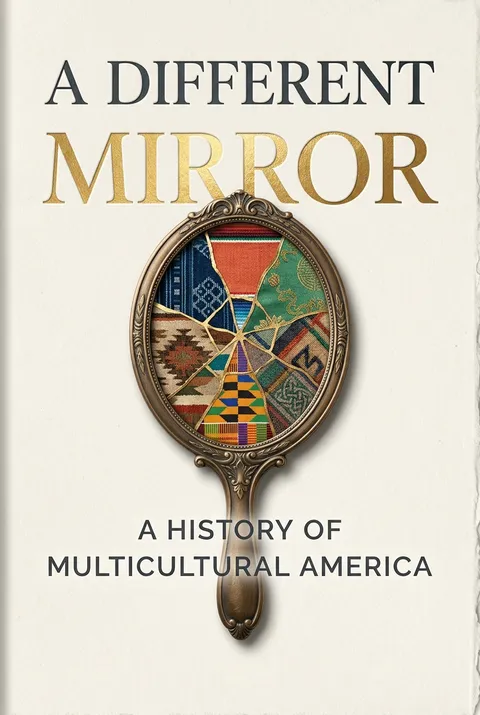
A distorted mirror. Takaki opens with a taxi driver who assumes he is a foreigner, although he was born in the United States and his family had lived there for generations. He traces that assumption to the Master Narrative of American History, a familiar account that presents the nation as mainly European in origin and white in identity. The story leaves out Indigenous people, enslaved Africans, and immigrants from Asia and Latin America.
A fuller account. Takaki challenges the story associated with historian Frederick Jackson Turner’s frontier thesis and Oscar Handlin’s focus on European migration. He argues that Americans were made through many histories at once: conquest, forced labor, migration, exclusion, and cooperation. In the book’s account, one-third of Americans did not trace their ancestry to Europe, and California’s racial diversity already challenged the old picture.
What's striking is that the book treats historical omission as more than a gap in a textbook. A narrow account changes how people interpret present-day belonging, making an American-born person seem foreign and a founding contradiction seem peripheral. The comparative method is powerful because it asks how groups shaped one another, not only what happened to each group separately. Its main risk is compression: a shared national story must not imply that dispossession, enslavement, and immigration were equivalent experiences.
Measure frontier progress by the people it dispossessed
Land was not empty. English colonists described America as unused wilderness, though Indigenous communities farmed, governed, and managed the land. The Powhatans brought food to starving settlers at Jamestown. New England peoples cultivated corn and beans, stored harvests, and organized shared labor. European diseases devastated Native communities, and colonists often treated the resulting land vacancy as divine permission to settle.
Removal kept the pattern. The Cherokee were forced west on the Trail of Tears after the federal government accepted a removal treaty signed by a small faction, despite opposition from most of the nation. More than four thousand Cherokees died during removal. Later, the Dawes Act divided tribal lands into individual allotments and sold remaining land to white settlers. By 1933, Native Americans had lost about 60 percent of the land base they held when allotment began.
The chapter’s sharpest correction is to the language of progress. It shows how claims about improvement can obscure who already lived on, cultivated, and depended on a place. That insight travels beyond frontier history: infrastructure and development are never neutral when rights to land are unequal. The comparison also needs care. Native nations had distinct political systems and experiences, and the book’s examples should not be taken as one universal Indigenous story.
Treat racial slavery as a political construction, not an economic inevitability
Labor status changed. The first Africans brought to Virginia in 1619 likely entered a system of indentured service, much like many Europeans. For decades, white indentured servants made up much of the colony’s workforce. The decisive change came amid conflict over land and power, not from an automatic progression toward slavery.
A rebellion altered incentives. In 1676, Nathaniel Bacon’s uprising drew together armed workers, including Black and white laborers, against Virginia’s elite. The rebellion frightened planters who feared a broader challenge to their authority. They increasingly relied on enslaved Africans, who could be denied arms and forced into lifelong bondage. Laws made a child’s status follow the mother and increasingly defined Blackness as a hereditary condition. The book traces racial slavery as a system built through choices, law, and economic interest.
This account links race-making to political economy without reducing racism to a mere disguise for class conflict. The planters’ labor needs mattered, but so did the deliberate creation of legal distinctions that made some workers more controllable than others. The rebellion is an illuminating turning point, not a single-cause explanation for slavery’s expansion. That distinction matters because social systems usually harden through several pressures, including profit, political power, and inherited beliefs.
Trace how employers turned shared labor into racial competition
The economy connected workers. Enslaved Black labor produced cotton for New England mills, where Irish women worked. Chinese and Irish crews built the transcontinental railroad, while Mexican workers mined copper and Japanese and Chinese immigrants cultivated Western farms. These were not separate economic stories. Their labor helped build one national economy.
Solidarity was possible. In 1903, Mexican and Japanese farmworkers in Oxnard organized together and won a wage increase. Yet employers regularly set groups against one another. A Massachusetts shoe manufacturer brought Chinese workers in as strikebreakers against Irish union members. The Irish workers then tried to organize the Chinese, but broader white labor opposition undermined the effort. Takaki shows that shared work could support cooperation, while racial division could protect employers and preserve unequal access to jobs.
The labor history makes racial separation look constructed and maintained, not natural. Workers who shared dangerous jobs and low wages sometimes recognized common interests, but solidarity required more than similar circumstances. Organizing rules, racial privilege, and trust shaped who was included. The Oxnard example is especially useful because the workers acted across language lines, while a labor federation’s exclusionary condition showed how even institutions claiming to represent workers could reproduce racial hierarchy.
Read each migration as a pressured choice, not a simple search for opportunity
People moved under pressure. Irish families fled hunger and eviction, Jewish families escaped pogroms, Chinese migrants faced poverty and upheaval, and Japanese farmers sought relief from taxes and debt. Mexican migration grew through poverty, revolution, and the pull of higher wages. Later, Vietnamese and Afghan refugees escaped war and political repression. These journeys shared hopes for safety or livelihood, but their causes and legal circumstances differed.
Gender shaped the journey. Chinese men often migrated without wives because of family expectations and American restrictions on Chinese women. Japanese picture brides traveled through arranged marriages, while Irish women often crossed alone to earn wages. Mexican migration could involve a man traveling first and later bringing his family. Takaki’s comparisons show why migration cannot be summarized as a voluntary hunt for prosperity: law, violence, family obligations, and labor demand shaped who could leave and who could join them.
Push and pull factors help explain migration, but they do not capture who controls the route, the terms of entry, or family separation. Takaki’s attention to women and refugees complicates the familiar image of a lone male worker freely choosing a new country. At the same time, shared language about hardship should not flatten differences between a refugee fleeing immediate violence and a worker responding to economic need. Those distinctions matter for both history and policy.
Notice how whiteness opened citizenship to some while excluding others
Race shaped legal access. The 1790 naturalization law limited citizenship to white people. Irish immigrants faced Protestant hostility, yet they could become citizens and voters, organize political power, and win municipal jobs. Chinese immigrants were barred from naturalized citizenship and later targeted by the Chinese Exclusion Act. Japanese immigrants faced similar barriers, even when they owned farms and raised American-born children.
Conquest could make citizens outsiders. Mexican residents of the Southwest did not cross into the United States when the border moved; the United States annexed their territory. Many then lost political influence and land through discriminatory laws, court costs, and taxes. Whiteness was not simply a description of appearance. It functioned as a legal and social boundary that could grant some groups pathways into power while denying others equal standing.
This comparison reveals that assimilation was never just a matter of adopting English, working hard, or embracing national customs. Legal categories determined whether effort could translate into citizenship, property, and political influence. Irish mobility was real, but it coexisted with nativist prejudice and often depended on racial distinction from Black Americans. The framework is strongest when whiteness is understood as a changing structure of access, rather than as a uniform experience shared by everyone classified as white.
Freedom without land left emancipation exposed to economic coercion
The land question mattered. After the Civil War, formerly enslaved people sought land, schools, political power, and independence from former enslavers. Some received land temporarily under General Sherman’s wartime order, but President Andrew Johnson restored much of it to former planters. Congress rejected broader land redistribution, often summarized as the promise of forty acres and a mule.
Debt constrained freedom. Many freedpeople became sharecroppers or tenant farmers, working land they did not own and buying supplies on credit from plantation stores. The resulting debts could consume the earnings from a year’s labor. Takaki distinguishes emancipation from full economic independence: the law ended slavery, but without assets or bargaining power, many Black families remained vulnerable to coercive labor arrangements and poverty.
The episode makes a useful distinction between legal freedom and the material resources that let people exercise it. Land was not only wealth; it could provide leverage, mobility, and protection from an employer’s control. The argument should not imply that land alone would have ended racial inequality, but it clarifies why civil status without economic power left so many freedpeople exposed. In policy terms, access to assets can shape whether formal rights become usable rights.
Use wartime service to measure the gap between ideals and rights
Service did not guarantee protection. During World War II, the United States imprisoned about 120,000 Japanese Americans, roughly two-thirds of them citizens by birth, despite weak evidence of a mass security threat. More than 900,000 African Americans served in a segregated military. Mexican Americans enlisted in large numbers, and Navajo code talkers used their language to transmit military messages the Japanese could not decipher.
Contributions changed the argument. Japanese-American soldiers of the 442nd Regimental Combat Team suffered 9,486 casualties in Europe. Black soldiers challenged Jim Crow, while Chinese-American service helped weaken the case for Chinese exclusion. Yet medals and sacrifice did not end discrimination. The wartime demand for loyalty exposed a contradiction: the country invoked democracy abroad while distributing rights and protection unequally at home.
War turns national ideals into a practical test because governments ask people to accept risk and sacrifice in the name of shared citizenship. The stories here make clear that service could create political leverage, but it did not automatically secure equal rights. The comparison also resists a single narrative of wartime inclusion: some groups gained new opportunities while Japanese Americans lost liberty on a mass scale. Patriotism and state protection were not distributed consistently.
Civil rights law can open doors without dismantling poverty
Legal victories mattered. The Mendez decision challenged school segregation of Mexican-American children, and Brown v. Board of Education ruled that segregated public schools were unequal. The Civil Rights Act and Voting Rights Act strengthened protections against discrimination and voter exclusion. These changes widened access to public life and gave movements new tools.
Economic barriers remained. Takaki argues that equal treatment under law did not erase joblessness, poor housing, or concentrated poverty. Industrial work moved away from many urban Black communities, while low-wage service jobs offered little security. By the 1980s, the book describes both a growing Black middle class and a deeply disadvantaged population. A right to enter a workplace or school matters, but it cannot by itself supply jobs, housing, transportation, or family resources.
The distinction between formal equality and material conditions is central to understanding why legal change can produce real gains without ending inequality. Laws can prohibit exclusion, but they do not automatically redistribute jobs, housing, or opportunity across a city. The book’s emphasis on economic structure usefully complicates narratives that blame individuals for poverty. A further caution is that economic disadvantage is not identical across racial groups; policy must address specific histories as well as shared conditions.
Read racial conflict as multiracial, rooted in shared conditions
The old binary breaks down. In 1992, after four white Los Angeles police officers were acquitted in the Rodney King beating case, unrest killed 52 people and damaged thousands of businesses. Black residents’ anger was central, but the conflict also involved Latino residents and Korean-American shopkeepers whose stores were attacked. The event exposed a city shaped by policing, poverty, business ownership, and racial separation across several communities.
Connection is not sameness. Takaki argues that the conflict cannot be understood through a simple Black and white frame. Communities were entangled, but they did not occupy equal positions or experience the crisis in the same way. The book’s closing challenge is to tell American history in a way that makes those relationships visible, including identities formed across cultures and generations.
The multiracial lens is valuable because it reveals relationships that a two-group model misses, including economic ties and neighborhood tensions. It should not turn difference into a vague claim that everyone is equally affected. In Los Angeles, distinct histories of policing, migration, and ownership shaped how groups encountered one another. A fuller account holds both ideas together: communities are interdependent, and power within that interdependence remains uneven.
Analysis
Takaki’s central intervention is not simply to add overlooked groups to a standard national timeline. He changes the explanation of how the United States came into being. The country’s economy, political institutions, and racial categories developed through conquest, slavery, immigration, exclusion, and labor that crossed group boundaries. His recurring stories of land seizures, labor competition, and wartime service make this an account of linked histories rather than separate ethnic chapters. The taxi encounter gives the argument a human scale: historical omission can teach people to misrecognize a fellow citizen.
The comparative method is intellectually productive because it exposes both common mechanisms and unequal outcomes. Law could grant Irish immigrants a path to citizenship while denying that path to Chinese and Japanese immigrants. Economic pressure could draw groups into the same industries while employers and unions divided them. Yet comparison has limits. Indigenous dispossession, chattel slavery, and migration under economic pressure are not interchangeable experiences. The umbrella category of minority can clarify exclusion while obscuring differences in sovereignty, coercion, class, gender, and legal status. Takaki’s narrative is most persuasive when it uses comparison to identify relationships, not to claim equivalence.
The book also treats storytelling as historical evidence. Testimony, songs, letters, and family memories recover the meanings that administrative records often miss: fear, aspiration, humiliation, and strategic silence. Those voices make historical structures legible without making every individual representative of a whole group. The approach invites readers to question whose records define the national past and how those choices shape present identity.
The book’s demographic future claims reflect the moment of its revised edition and should be read as forecasts, not timeless conclusions. Its durable point is broader: a diverse population cannot be understood through a story that assumes a single origin or a fixed racial majority. A more accurate national memory recognizes both interdependence and conflict, while refusing to confuse shared citizenship with equal power.
Review Summary
A Different Mirror by Ronald Takaki examines American history through the experiences of diverse ethnic groups including Native Americans, African Americans, Irish, Chinese, Japanese, Mexican, and Jewish Americans. Readers praise its accessible writing style and use of personal accounts to illuminate overlooked histories of immigration, discrimination, and resilience. Many reviewers appreciate how it challenges traditional Eurocentric narratives and reveals systemic racism throughout American development. Some critics note the book can feel formulaic or lacks analytical depth, while a few dismiss it as biased. Overall, most consider it essential reading for understanding America's multicultural reality, though its density and 440+ pages may challenge casual readers.
People Also Read






Glossary
Master Narrative of American History
White-centered national storyTakaki’s term for the dominant account of U.S. history that presents the nation mainly as a creation of European settlers and treats whiteness as the default meaning of being American. It marginalizes Indigenous people, enslaved Africans, and immigrants from Asia and Latin America, distorting both the past and assumptions about who belongs.
frontier thesis
Frontier-shaped national developmentFrederick Jackson Turner’s influential interpretation that the frontier shaped American character and history through the encounter between European settlers and wilderness. Takaki argues that the thesis casts Indigenous people as obstacles to settlement and makes conquest appear to be the natural advance of civilization, while overlooking the societies and economies already present.
giddy multitude
Elite label for unruly workersA phrase used by Virginia’s ruling class for poor, armed, and dissatisfied workers, including servants, landless freemen, and enslaved people. Takaki uses it to highlight the elite’s fear of cross-racial worker alliances, especially around Bacon’s Rebellion, and to trace how racial divisions helped stabilize an unequal social order.
one-drop rule
Rule assigning Black statusA racial classification that treated people with any African ancestry as Black. Takaki traces its emergence in colonial Virginia laws that made a child’s status follow the mother and increasingly assigned mixed-race children to slavery. The rule helped make racial identity hereditary and supported the legal boundary between enslaved and free people.
picture bride
Marriage arranged through photographsA Japanese woman who migrated to marry a man she had usually seen only in a photograph. The practice adapted arranged marriage customs to transpacific migration, allowing men in the United States to form families despite distance. Picture brides helped turn a largely male migration into settled communities, while their choices remained shaped by family expectations and immigration policy.
Dawes Act
Allotment of tribal landsThe 1887 federal law that divided reservation lands into individual allotments, generally without requiring the consent of Native nations, and authorized the sale of remaining land to non-Native settlers. Promoted as a path to individual farming and assimilation, the policy broke up communal landholding and accelerated Native dispossession.
Indian Reorganization Act
Tribal self-government policyThe 1934 law associated with John Collier that ended the federal allotment program and permitted tribes to establish forms of self-government and seek land restoration. It marked a shift away from policies designed to dissolve tribal life. Its limits and implementation remained contested, including by Navajos who opposed federal direction of their economy.
double victory
Victory abroad and at homeAn African-American World War II demand to defeat fascism overseas while also ending racism and segregation in the United States. The phrase captured the contradiction of serving in a segregated military while being asked to defend democracy. It linked military service to demands for full citizenship and equal treatment.
model minority
Stereotype of Asian successA public stereotype that portrays Asian Americans as uniformly successful through discipline, family values, and hard work. Takaki shows how this image was used to contrast Asian-American achievement with Black poverty and to suggest that discrimination could be overcome by effort alone. The stereotype obscures differences within Asian communities and structural barriers faced by other groups.
Nisei
Second-generation Japanese AmericansThe U.S.-born children of Japanese immigrants, commonly called the second generation. Nisei were citizens by birth, yet many encountered racial exclusion in employment and public life. During World War II, their citizenship did not protect them or their families from mass incarceration, while some Nisei served in the U.S. armed forces.
Issei
First-generation Japanese immigrantsJapanese immigrants who formed the first generation of Japanese communities in the United States. Many came seeking wages, worked in agriculture or on plantations, and hoped to return to Japan. Immigration restrictions, land laws, family formation, and the birth of U.S.-citizen children shaped their transition from temporary sojourners toward permanent settlement.
Download PDF
Download EPUB
.epub digital book format is ideal for reading ebooks on phones, tablets, and e-readers.








