

Key Takeaways
Laos transformed the CIA from an intelligence service into a war-making institution
A ceremony launched the war. In 1961, CIA officer Bill Lair joined Hmong leader Vang Pao at a baci, a Lao ceremony in which people tie strings around one another’s wrists to mark a bond. Their partnership began Operation Momentum, a CIA program to arm and train Hmong fighters against communist forces in Laos. It started small, with plans to train about a thousand men, but grew into the CIA’s largest operation of its kind.
The scale soon exploded. By the end of the decade, Vang Pao commanded more than thirty thousand fighters, and the operation cost about $500 million a year in 1970 dollars. The CIA had moved far beyond gathering intelligence: it was recruiting armies, directing battles, and coordinating airpower. The war also tied Laos to a wider US effort to stop communism from spreading through Southeast Asia.
What's striking is how an intimate local ritual introduces a vast change in American statecraft. The strings signal mutual obligation, while the operation grows through budgets, military logistics, and decisions made far from the Hmong communities bearing the risk. That contrast frames the book's central question: when a secret agency becomes a war-making institution, who can judge whether the war is succeeding? The CIA's expansion was not simply a technical development. It changed which government actors could use force, and how visible those choices were to the public.
Understand local politics before turning grievances into military assets
Washington saw a domino. US leaders feared that communist control of Laos would trigger neighboring countries to fall in succession, the logic known as the domino theory. But Laos was not a simple board square. Most people lived in rural poverty, and many had little contact with national politics. The Hmong, a highland people with a history of resisting outside control, feared that a stronger communist state would threaten their autonomy.
The US often misread the players. In 1960, Captain Kong Le seized Vientiane, denouncing corruption and calling for neutrality. Washington treated his move and Prince Souvanna Phouma's coalition efforts as signs of communist danger, despite evidence that neither man was simply a communist instrument. Lair's years learning Thai and Lao helped him understand the region better than many incoming officers, but local knowledge could not correct the policy assumptions driving Washington.
The episode illustrates a recurring gap between a map's strategic meaning and a place's political reality. A government can appear aligned or neutral from Washington while local actors are responding to corruption, fear, family ties, and community survival. This is a useful corrective to explanations that reduce conflicts to ideology alone. Yet cultural fluency is not a cure-all: Lair understood more than many colleagues, but he still worked inside a policy built around US priorities. Knowing a society better does not automatically grant its people control over the decisions made in their name.
Treat a proxy alliance as a commitment, even when no treaty exists
The Hmong had their own reasons. Many joined Vang Pao's forces to defend their homes and preserve a degree of independence, not because they shared every American objective. Their cooperation was therefore an alliance between parties with overlapping but different aims. At the first baci with Lair, Vang Pao reportedly asked whether America would abandon the Hmong. Accounts differ about what Lair promised, and no formal treaty is documented, but US officers knew the Hmong believed America was committed to seeing them through the fight.
The imbalance grew with the war. US food, weapons, money, and air support flowed through Vang Pao, concentrating power in his hands and making the Hmong increasingly dependent on American assistance. Some CIA officers discussed moving the Hmong to Thailand if the war went badly, but the idea never received formal approval. The gap between perceived obligation and actual policy became dangerous.
An informal alliance can create real obligations without producing enforceable guarantees. That is especially true when one side controls the money, weapons, and escape routes, while the other supplies the fighters. The Hmong were not passive instruments: they pursued their own security and political aims, and Vang Pao made consequential choices. But local agency does not erase the patron's responsibility for shaping the terms of the partnership. The key distinction is between a partner's ability to choose and the stronger ally's ability to decide what risks that choice entails.
Secrecy let presidents wage war while Congress argued over whether one existed
Neutrality was a public fiction. The 1962 Geneva accords were supposed to keep foreign forces out of Laos. The signatories ignored that commitment, while Washington maintained the appearance of neutrality and expanded a covert war instead of asking Congress to approve a conventional one. The CIA, the embassy, and the White House shared information unevenly, and journalists could see only fragments of the operation.
Oversight arrived late and incomplete. Some members of Congress received classified briefings, but the wider legislature and public were kept in the dark. When senators questioned Ambassador William Sullivan in 1969, he denied the scale of US involvement and bombing. The secrecy protected the operation politically, but it also made it harder to test its aims, correct errors, or establish responsibility for civilian deaths and military failures.
Secrecy here does more than conceal facts. It weakens the feedback loop between policy, evidence, and public judgment. If officials can deny the war's existence, setbacks do not necessarily force a public reassessment; they can instead prompt more classified activity. That creates a sharp accountability problem even when some legislators receive private information. A small circle's awareness is not equivalent to meaningful oversight, particularly when the executive controls what Congress is told and when. The case shows how procedural opacity can become a strategic asset for leaders, even as it raises the costs of correction.
Do not turn a guerrilla force into an infantry army it cannot sustain
The original strategy fit the fighters. Lair designed Momentum around Hmong strengths: small units would ambush communist patrols, then withdraw through familiar mountains and forests. He warned that expecting the Hmong to hold ground like a conventional army could destroy the force. In 1966, new CIA chief Ted Shackley pushed to seize and retain territory, drawing more North Vietnamese troops into Laos and away from Vietnam.
Nam Bac exposed the mismatch. The anti-communists built up about seven thousand defenders in the remote town, despite Lair's warning that its surrounding heights made it a trap. When the North Vietnamese attacked in January 1968, thousands of defenders fled, and about 2,400 were captured. Of more than 400 paratroopers sent to reinforce the position, only 12 or 13 survived. The defeat reflected poor leadership and preparation as well as a flawed strategy.
The failure is not merely that a particular battle was lost. The force was asked to perform a different military function from the one for which it had been recruited, trained, and organized. In organizational terms, the operation changed its core competency without building the logistics, discipline, or leadership that a new mission required. Lair's warning mattered because it identified this design problem before the disaster. His example also invites a caution: local tactical success can tempt sponsors to demand conventional results from irregular forces, even when the conditions that produced success have not changed.
Airpower can win a battle while destroying the society it claims to protect
Bombing reshaped daily life. US air attacks expanded from support for Hmong positions to a campaign against North Vietnamese forces and supply routes. By 1973, the United States had flown more than 580,000 bombing missions over Laos. The book reports that the pace averaged an attack about every eight minutes for nearly a decade. On the Plain of Jars, families hid in caves and dug holes to survive; a bomb that struck one cave killed more than 400 people.
The damage lasted beyond combat. A US survey found that 97 percent of the Laotian civilians interviewed had witnessed a bombing, and 61 percent had seen someone killed. About one-third of the bombs dropped remained unexploded. Those remnants killed or injured roughly 20,000 people in the decades after the war. Airpower could interrupt enemy movement, but it also displaced civilians and left a lethal landscape.
The section forces a distinction between a weapon's immediate military effect and its total social cost. Bombing may disrupt a route or help defend a position, yet civilian displacement, lost farms, and unexploded ordnance alter the conditions in which any postwar society must recover. Those effects are not external to strategy: they shape whether residents trust the forces claiming to protect them. At the same time, the book's figures describe different kinds of harm, from survey responses to long-term ordnance casualties, and should not be collapsed into one measure. Precision about evidence strengthens, rather than softens, the moral argument.
The Plain of Jars victory lasted months, not long enough to change the war
A dramatic victory looked decisive. In August 1969, Vang Pao launched Operation About Face, a surprise attack on communist forces occupying the Plain of Jars. US aircraft flew as many as 300 bombing missions a day, and Hmong troops retook the strategically important plateau. They captured weapons and supplies, and the operation briefly disrupted North Vietnamese movement through Laos.
The gains could not be held. By January 1970, two North Vietnamese divisions, supported by tanks and artillery, had taken the Plain again. Bad weather limited American air support, while the Hmong force was stretched thin and had lost many fighters. The victory had been real, but it did not produce enough recruits or force Hanoi to abandon its aims. Its temporary success concealed the deeper problem: the Hmong could not replace losses at the rate the war demanded.
The Plain of Jars is a clear example of why tactical, operational, and strategic success must be judged separately. The Hmong won the ground fight; the operation disrupted an enemy's position; neither result changed the underlying balance of forces for long. A sponsor can mistake a vivid battlefield result for proof that a strategy works, especially when the victory validates a prior decision to escalate. The reversal also shows that terrain has no stable value apart from the ability to hold it, supply it, and replenish the forces assigned to defend it.
Plan an ally's exit before the war makes escape impossible
The settlement left Laos exposed. The 1973 Paris Peace Accords secured the US withdrawal from Vietnam but did not require North Vietnam to remove its forces from Laos. US bombing ended in March 1973, and American support for the Hmong dwindled. By 1975, communist forces were taking the country's towns. Vang Pao and other Hmong leaders had to confront the consequences of a war they had fought with American backing.
Evacuation was improvised. Washington approved asylum for Vang Pao and a small circle, not a mass rescue of Hmong allies. CIA officers and pilots organized flights without approval, helping about 2,500 Hmong reach Thailand by August 1975. Around 41,000 Laotians, including 25,000 Hmong, fled to Thailand that year, largely on foot. The United States had discussed a contingency plan years earlier, but no authorized plan matched the scale of the danger.
An exit plan is not a charitable add-on to a proxy war. It is part of the original risk calculation, because a partner's exposure depends on the sponsor's ability and willingness to continue support. The story also complicates the idea that withdrawal is a single decision: ending air operations, withdrawing advisers, limiting asylum, and leaving local allies to manage the transition are separate choices. A policy can end its own military commitment while continuing to shape the risks faced by those who relied on it.
A ceasefire cannot erase a war's human and material aftermath
The costs crossed the armistice. The communist takeover brought imprisonment and repression for many former officials and anti-communist fighters. Hmong refugees fled to Thailand, where many waited in temporary camps before resettlement. By the end of 1976, at least 100,000 Hmong were in Thailand. The Hmong community in the United States eventually grew to more than 260,000, but resettlement systems had done little to prepare for people arriving with limited formal schooling, no English, and experience shaped by farming and war.
The land remained dangerous. Roads, homes, and farmland had been damaged, and unexploded bombs continued to kill and injure civilians. In 2007, journalists found Hmong fighters still hiding in the jungle, some believing the United States might return to help them. Their isolation reflected how little the outside world had attended to the war's unfinished human consequences.
The aftermath shows that a war's end is not synonymous with recovery. Refugee policy, rehabilitation, demining, and the rebuilding of livelihoods all determine whether people can leave wartime dependence behind. The book also presents resettlement as a collision between rural experience and institutions poorly equipped to meet it. That account should not be mistaken for a claim that refugees lack capacity; rather, it points to the costs of abandoning communities without preparation or sustained support. Postwar responsibility is part of the history of intervention, not a separate humanitarian chapter.
Separate tolerated opium traffic from claims of a CIA-run drug scheme
The record is disputed. Opium had long been grown and traded in parts of the Southeast Asian highlands. During the war, Air America, the CIA's contract airline, connected remote areas to regular flights. Pilots recalled seeing Hmong and Lao officials carry opium aboard without being challenged. That evidence supports the claim that American air services helped facilitate the trade, but it does not by itself prove that the CIA ran or profited from a drug network.
Accounts diverge on responsibility. Historian Alfred McCoy argued that Vang Pao and the CIA encouraged the trade as a source of money and influence. Lair and other CIA figures denied that the agency promoted or profited from it, while Hmong historian Paul Hillmer judged the evidence of Vang Pao's personal involvement weak. The book notes that released CIA records offer little direct discussion of narcotics.
The distinction between facilitation, tolerance, direction, and profit matters whenever a secret institution leaves an incomplete record. A flight system can enable a trade without proving that its sponsor designed the trade, and official denials do not settle the question either. The book's careful presentation is valuable because it resists turning a plausible allegation into a proven conclusion. This is not an argument for suspending judgment indefinitely. It is a reminder to match each claim to the evidence available, especially when secrecy makes the archive uneven.
Measure the CIA legacy by the war-making institution Laos helped create
The agency counted a partial success. CIA leaders later described Laos as a victory because the operation tied down North Vietnamese forces and expanded the agency's paramilitary capacity. Officers who served there moved into senior posts and later covert operations. The book traces Laos veterans and methods into Central America and Afghanistan, and connects the agency's growing role in targeted killing after 2001 to a model established in Laos: local proxy forces, airpower, contractors, and limited public scrutiny.
The human balance sheet differed. The Hmong fought with courage, but their army was devastated, Laos suffered mass displacement and extensive civilian deaths, and the country remained burdened by unexploded ordnance. The CIA's institutional prestige rose even as its local partners lost their homeland. That contrast explains why Washington could call the operation successful while many of its participants experienced it as a defeat.
The book's most consequential argument concerns institutional learning. Agencies tend to preserve the lessons that advance their mission, and Laos supplied a powerful example of how covert force could expand executive freedom of action while avoiding large deployments of US troops. That is a meaningful historical lineage, though Laos should be treated as a formative template, not the sole cause of every later paramilitary campaign. The enduring question is whose outcomes define success: the sponsoring institution's strategic tally, or the long-term security of the people enlisted to achieve it?
Analysis
The book's narrative moves from a wrist-binding ceremony to a government transformed by war. That progression matters. Operation Momentum began as a partnership between Bill Lair and Vang Pao, grounded in the Hmong need to defend their homes and autonomy. It grew into a campaign whose goals increasingly reflected Washington's need to divert North Vietnamese troops from Vietnam. The shift was not a single betrayal or decision. It accumulated through changing commanders, greater budgets, American airpower, and the belief that another escalation could repair the consequences of the previous one.
The central tension is between local agency and strategic dependence. The Hmong chose to fight and had their own political aims, but their access to supplies, aircraft, and evacuation depended on the United States. This made the alliance unequal without making the Hmong mere instruments. It also meant that US officials could alter the war's purpose while leaving local allies to absorb the consequences. The lack of a formal treaty did not prevent the Hmong from understanding American support as a durable commitment; it simply left that commitment dangerously undefined.
Laos also demonstrates how an institution can succeed by its own measures while producing failure for its partners. The CIA tied down enemy forces, gained experience in directing proxy warfare, and established a model that agency leaders valued. Yet the Hmong lost their homeland, civilians suffered immense harm, and the country remained contaminated by unexploded bombs. These are not competing accounts of one outcome. They are different ledgers, maintained by different parties.
The book is strongest when it shows how secrecy and organizational incentives reinforced one another. Limited public scrutiny reduced pressure to reconsider the war, while visible battlefield successes rewarded expansion. Still, the account does not make every contested accusation certain: the narcotics question, for example, remains evidentially disputed. That caution matters. The larger case needs no overstatement. Laos helped normalize a form of war in which presidents could use a secret agency, contractors, local armies, and airpower with less public accountability than a conventional deployment would invite.
Review Summary
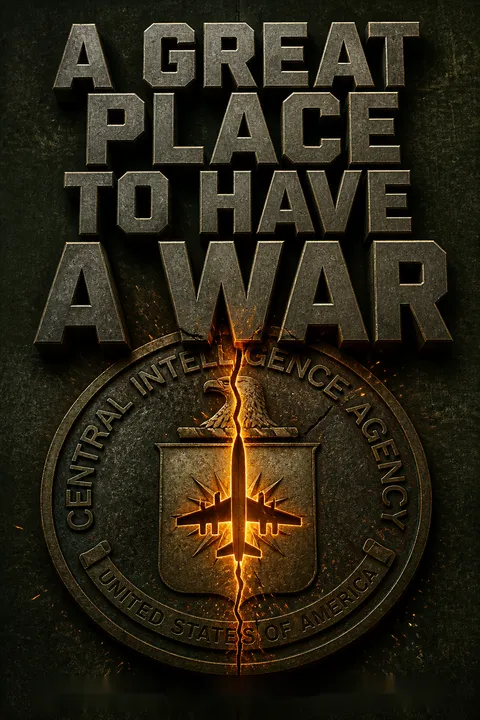
A Great Place To Have a War is praised as a well-researched, engaging history of America's secret war in Laos during the Vietnam era. Readers appreciate Kurlantzick's exploration of the CIA's transformation into a paramilitary organization and his focus on key figures involved. The book is commended for shedding light on a lesser-known conflict and its lasting impacts. Some criticize minor inaccuracies and repetition, but overall, reviewers find it informative and thought-provoking, highlighting the tragic consequences for Laos and lessons for current U.S. foreign policy.
People Also Read





Glossary
baci
Ceremony of symbolic bondingA Lao and Thai ceremony in which participants tie strings around one another's wrists or arms to mark a bond, welcome, or important transition. In the book, a baci introduces Bill Lair to Hmong leaders and symbolically marks the partnership between Lair and Vang Pao at the beginning of Operation Momentum.
Operation Momentum
CIA Hmong military programThe CIA operation launched in 1961 to arm, train, and support Hmong forces led by Vang Pao in Laos. Initially conceived as a limited guerrilla effort, it expanded into a large proxy war involving tens of thousands of fighters, extensive American logistics, and air support. It became the largest paramilitary undertaking in CIA history.
domino theory
Model of cascading communist expansionA Cold War argument that if one country fell under communist control, neighboring states would be more likely to follow. US officials applied this logic to Laos, viewing the country as a buffer between North Vietnam and allied states such as Thailand. The book contrasts this strategic model with the complex local politics and varied motives inside Laos.
sheep dipping
Concealing an operative's former identityAn intelligence practice of removing a person's official military or government identity and giving them a civilian cover identity. In Laos, technicians and other personnel could be presented as employees of private companies, making their connection to the US government harder to establish. The practice also left some people in dangerous positions without the preparation or protections given to acknowledged combat personnel.
Operation About Face
1969 Plain of Jars offensiveThe name given to Vang Pao's 1969 surprise assault on communist forces occupying the Plain of Jars. Hmong troops, supported by an intense American bombing campaign, recaptured the strategically important area and captured substantial weapons and supplies. North Vietnamese forces retook the Plain in January 1970, making the victory temporary and costly.
Air America
CIA contract airlineA CIA-supported airline operating under the appearance of a private charter carrier in Southeast Asia. In Laos, it flew supplies, transported fighters and refugees, and evacuated wounded personnel. Its flights connected isolated regions to the war effort. The book also discusses how regular air access could facilitate opium transport, while noting that evidence of deliberate CIA drug policy is disputed.
Download PDF
Download EPUB
.epub digital book format is ideal for reading ebooks on phones, tablets, and e-readers.








