

Key Takeaways
Write your chapter in a story older than your own lifetime
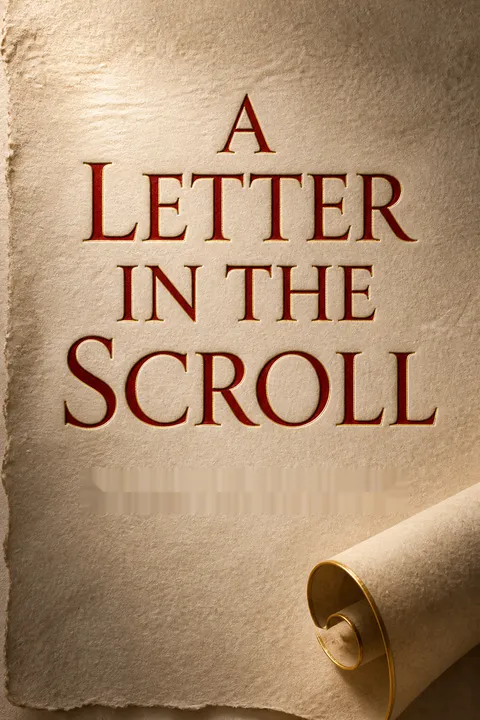
Identity gains a past and future. Sacks imagines Jewish life as a Torah scroll: every person is one letter, each generation adds to a story, and the whole only makes sense through its parts. The image answers his central question, why remain Jewish? Not because Jews are superior, or because history leaves no choice, but because inherited stories can give a life direction and responsibility. The story is unfinished, so each generation must decide whether to carry it forward.
Inheritance becomes participation. The book opens amid concern that many young Jews are choosing not to build Jewish homes or pass on the tradition. Sacks offers his own answer as a letter to the next generation: identity is not only a description of origins, but an invitation to help shape what comes next.
What's striking is how the scroll image makes continuity both intimate and collective. Narrative identity works this way: a person interprets a life through stories received from family, culture, and community, then revises them through choices. That can make inherited traditions feel like resources rather than museum pieces. The metaphor also has a useful limit. A person is not only one letter in a group story, and communities can ask too much of individual members. Its strongest use is not to demand sameness, but to show how a particular inheritance can offer belonging and purpose without exhausting anyone's identity.
Treat inherited identity as a summons, not a sentence
Birth raises a moral question. In fifteenth-century Spain, Rabbi Isaac Arama asked how descendants could be bound by a covenant made before they existed. Jewish tradition held that future generations had accepted the Torah at Sinai, but Arama objected that an unseen soul could not stand in for a whole person. The question still matters: inheritance can bring belonging and obligations, but neither cancels a person's agency.
Continuity needs a response. Sacks rejects identity as an inescapable fate. He presents Judaism as a journey whose inherited claims become meaningful when a person chooses to live them. Family and history can offer reasons to continue a tradition; they cannot substitute for a living relationship with it. The task is to receive an inheritance critically, understand its demands, and decide how to answer.
The tension between inheritance and consent is not unique to religion. Nobody chooses a first language, a family history, or the ecological and political conditions inherited at birth, yet these shape real responsibilities. The analogy helps explain how obligations can precede explicit agreement without being arbitrary. Still, an inherited claim earns loyalty through its meaning and practice, not simply its age. Sacks's framing is persuasive when it treats tradition as an invitation that must be renewed. It becomes less persuasive if communal continuity is used to silence dissent or make individual choice seem morally suspect.
Let outrage at injustice become work, not an excuse for despair
Faith begins in protest. A rabbinic story imagines Abraham seeing a palace on fire and asking whether it can be ownerless. The world appears ordered, yet it is also full of violence and injustice. Sacks reads the flames as central: Abraham's faith does not explain suffering away. It holds together belief in a moral purpose and refusal to accept the world as it is.
Responsibility answers the alarm. God identifies himself as the palace's owner but does not put out the fire. Sacks interprets this as a call for human action. The Hebrew phrase tikkun olam means repairing or mending the world. It names the shared work of reducing injustice, not a promise that history will become painless. The journey remains unfinished because the moral vision must be enacted in ordinary choices and institutions.
The image is powerful because it turns the problem of evil from an abstract puzzle into a demand for attention. In moral psychology, outrage can either harden into helplessness or focus effort on a tractable harm; Sacks argues for the second response. That is a productive account of religious protest, especially when it directs people toward protecting others. Its limit is equally important: action does not explain why suffering occurs, and some harms cannot be repaired by those who witness them. The distinction between explanation and response helps prevent moral work from becoming a glib answer to tragedy.
Measure civilization by how it treats the powerless individual
Human dignity limits power. Sacks finds a radical political idea in Genesis: every person, not just a ruler, bears the divine image. In his reading, this challenges ancient societies that treated ordinary people as tools of kings, armies, or empires. If each person has inherent dignity, no government or majority can claim unlimited authority over life and conscience.
The moral test is practical. The Exodus story presents God as siding with enslaved people, while biblical law repeatedly protects the poor, the widow, the orphan, and the stranger. The principle applies beyond grand declarations of rights. A society's character is revealed in whether its institutions protect those with the least power, and whether leaders themselves remain answerable to law.
Sacks offers a religious foundation for a principle familiar from modern human-rights language: the individual cannot be reduced to an instrument of collective goals. The connection is useful because it makes dignity more than a policy preference. It also raises a historical caution. The idea that all people carry equal worth has developed through many traditions and political struggles, and its presence in scripture has never guaranteed just practice. The strongest version of Sacks's claim is therefore normative: the image-of-God idea supplies a standard by which societies, including religious ones, can be judged.
Protect difference without pretending one tradition fits everyone
Chosenness means a particular task. Sacks distinguishes Jewish particularity from claims that Jews are better than other peoples or that everyone must become Jewish. In his account, God can love different peoples without requiring them to share one culture or religious practice. Israel's role is to embody a way of life, not to monopolize access to God.
The stranger tests the principle. The Torah's command to care for the stranger draws force from the Israelites' memory of having been strangers in Egypt. Sacks notes that this duty appears repeatedly, more often than the command to love one's neighbor. The point is not simply to treat familiar people kindly. It is to protect those whose differences make them easy to exclude.
This is a demanding form of pluralism: traditions can make serious claims about how to live without insisting that every community must live identically. It avoids both forced uniformity and the idea that moral judgment is impossible. The stranger becomes a practical test, because respect is easiest when it costs little and the other person feels familiar. A useful question follows: do institutions protect difference when a minority's practices are inconvenient or unpopular? Sacks's ideal is compelling, though ideals and historical conduct do not always align. That gap makes the principle a continuing standard, not a certificate of virtue.
Pair personal freedom with law that protects everyone else
Leaving Egypt is not enough. The Exodus frees the Israelites from slavery, but Sacks distinguishes release from domination from the creation of a free society. At Sinai, the people accept a covenant and a shared body of law. In his account, this turns a group joined by common suffering into one joined by a common purpose.
Freedom needs fair limits. Sacks uses the Hebrew terms hofesh, individual liberty, and herut, freedom shaped by law and shared responsibility. Without rules, one person's freedom to take or threaten can destroy another's. Biblical provisions for debt release, rest, fair wages, and access to subsistence aim to prevent poverty and power from stripping people of independence. Law is not the enemy of liberty when it protects equal standing.
The distinction resembles a central problem in political theory: freedom from interference is not the same as the social conditions that let people exercise freedom safely. Rules can constrain, but they can also protect people from coercion by employers, majorities, or stronger neighbors. Sacks's account is especially useful because it links legal limits to economic independence, rather than treating liberty as purely formal. The tension remains real: institutions designed to protect can become oppressive themselves. The book's emphasis on moral limits above rulers offers a check, but only if citizens and institutions can actually enforce those limits.
Make continuity a practice taught across generations
A story survives by being taught. Before the Israelites leave Egypt, Moses tells them to explain the escape from slavery to their children. Sacks treats this unexpected emphasis on education as essential: political freedom can be won in a moment, but its values must be learned and renewed. Jewish schools, family rituals, public Torah study, and festivals all help pass on a shared memory and moral vocabulary.
Rest belongs to everyone. Shabbat, the weekly day of rest, gives that inheritance a public rhythm. Employers, workers, families, and even animals are to stop working. Sacks calls it a lesson in freedom because rest is not reserved for those who can afford a private holiday. Shared practice makes an ideal tangible, even when it cannot yet shape every day of the week.
This account treats education as civic infrastructure, not merely preparation for work. Schools and rituals transmit information, but they also teach people what a community considers worthy of memory and protection. The Sabbath example adds a temporal dimension: a public pause can make equality visible in a way that a declaration cannot. Modern societies also need shared time, though plural communities may express rest in different ways. The underlying test is whether people with less money and bargaining power can genuinely stop. A ritual of rest loses its moral force if only the secure can afford to observe it.
When sacred institutions collapse, move their purpose into community
Loss can prompt reinvention. After the Romans destroyed the Temple in Jerusalem, Jewish life lost its central place of worship and sacrificial system. Rabbinic leaders developed portable institutions: synagogues for prayer, study, welfare, and community life. Wherever Jews gathered, they could renew their shared practices without a state or a central sanctuary.
Forgiveness became personal. Rabbi Akiva taught that a person could seek atonement directly through teshuvah, meaning a return to God through admitting wrongdoing, remorse, and changed conduct. The synagogue and teshuvah answered different needs, but both made religious life less dependent on a single priestly center. For Sacks, this is a striking renewal: a political catastrophe did not end the tradition, because its purposes could be carried by people and local communities.
The history illustrates institutional resilience: durable communities preserve a mission by changing the forms that serve it. The synagogue brought worship, education, and mutual aid together, a combination that resembles the modern idea of civic infrastructure. Teshuvah adds an individual counterpart, making repair possible without an elite intermediary. Resilience should not be romanticized, however. Adaptation can preserve a community, but it does not undo the losses that forced adaptation. Sacks's account is strongest when it honors both facts: institutions can be rebuilt, and the catastrophe that made rebuilding necessary remains a catastrophe.
Answer shame with belonging, not concealment
Prejudice can reshape self-image. Sacks argues that modern antisemitism placed Jews in a double bind: they were urged to assimilate, yet still marked as outsiders. Hatred shifted from religious accusation toward claims about ancestry, and attempts to appear indistinguishable did not reliably bring acceptance. In his account, some Jews internalized that pressure and became ambivalent about their own identity.
Ambivalence cannot teach continuity. The book cites a 1991 American survey reporting that 57 percent of young Jews had married non-Jews. That figure belongs to the book's historical moment, not the present. Sacks's broader concern is that a tradition passed on with embarrassment is difficult for children to embrace. He argues for pride without superiority: valuing one's own inheritance can support respect for other cultures rather than hostility toward them.
Sacks identifies an important psychological mechanism: stigma can become self-monitoring, leading people to hide the very identity that others have targeted. Social identity research likewise distinguishes secure belonging from defensive superiority. The distinction helps explain why pride need not mean chauvinism. Yet assimilation has many causes, including friendship, personal belief, and changing family patterns, so prejudice alone cannot explain it. The book's strongest point is narrower: shame makes a tradition harder to transmit, while honest confidence can make it available for genuine choice. Belonging is more durable when it is offered, not imposed.
After catastrophe, make Jewish continuity an act of life
The Holocaust resists neat answers. Sacks refuses to explain the murder of millions as a hidden good or to treat evil as unreal. He presents Jewish faith as a refusal to accept either easy consolation or a morally indifferent universe. The question of where God was remains painful; it does not excuse human cruelty or remove human responsibility.
Life becomes a response. The book recalls a Holocaust survivor who, after years of persecution and the loss of hope for children, sang to his baby that Jewish life was good. Sacks's answer to catastrophe is not triumphalism: mourn the dead, defend the vulnerable, build families and schools, and continue the practices that hatred sought to erase. The postwar revival of Jewish life in Israel becomes one expression of that choice.
The survivor's song makes continuity an intimate act rather than a slogan. In the aftermath of mass violence, rebuilding family and communal life can resist the perpetrator's aim of reducing people to disposable victims. The account also protects mourning from being displaced by a victory narrative. Its theological restraint matters: survival is not proof that suffering was justified, and rebuilding does not settle the question of divine silence. The passage is most persuasive as an ethic of response, joining remembrance to care for the living and refusing to let catastrophe dictate the whole meaning of a people.
Analysis
Sacks's book is a personal argument for Jewish continuity, but its deeper project is to explain why a particular tradition can matter to humanity without claiming to be universal in its practices. Its narrative moves from a modern identity crisis, through biblical and rabbinic ideas, to the institutions that carried them, then returns to the modern problem of disengagement. The recurring question is not simply whether Judaism is true, but what kind of people and society its practices ask Jews to become.
The argument's strongest conceptual move is to treat covenant as a bridge between individual agency and collective obligation. The individual is neither an isolated chooser nor a replaceable unit in a mass. Promises, education, law, family life, and shared rituals create bonds through which freedom can become social rather than merely private. This offers a coherent account of why a tradition needs institutions: values that are not practiced can disappear from public life even when they remain admired in principle.
The book is also unusually clear that Jewish faith begins with unresolved moral tension. The burning palace does not yield a tidy solution to evil. Instead, the image turns belief into protest and responsibility. That stance gives Sacks a way to discuss catastrophe without claiming that suffering is secretly beneficial. It does not solve the theological problem, but it makes the practical implication unmistakable: explanations are no substitute for preventing harm.
Some historical claims are more ambitious than the evidence in the book can bear. Sacks sometimes presents Judaism as the singular source of ideas such as human dignity, political consent, and pluralism, while sharply contrasting it with other religions and philosophies. These comparisons are rhetorically effective but can flatten complex traditions and obscure multiple historical influences. Jewish history also contains gaps between its ideals and its conduct, as does every tradition. The argument is most persuasive not as a proof of Jewish uniqueness, but as an interpretation of a powerful moral inheritance. Its challenge to readers is to judge any community by whether its institutions make dignity, responsibility, and difference livable.
Review Summary
A Letter in the Scroll receives high praise for its exploration of Jewish identity and philosophy. Readers appreciate Sacks' eloquent writing, accessible explanations, and thought-provoking insights. Many find it inspirational, reaffirming their Jewish pride. Critics note some repetition and question certain arguments. The book is lauded for addressing why one should be Jewish, the contributions of Judaism to the world, and the challenges faced by modern Jews. It's recommended for both Jewish and non-Jewish readers seeking to understand Judaism's enduring significance.
People Also Read




Glossary
Covenant (brit)
Mutual binding promiseA covenant is a relationship formed when people freely bind themselves through mutual promises and obligations. In Sacks's account, it differs from a contract based mainly on self-interest: covenant creates loyalty and shared purpose while respecting the distinct agency of each party. He applies the idea to marriage, society, and the relationship between God and the Jewish people.
Emunah
Faithfulness and loyaltyEmunah is often translated as faith, but Sacks emphasizes its sense of faithfulness: loyalty maintained through a relationship and demonstrated in action. It describes the commitment between God and Israel, as well as the responsibility of one generation to preserve and transmit a tradition. It is less about accepting a list of propositions than living faithfully within a covenant.
Tikkun olam
Repairing the worldTikkun olam means repairing or mending the world. Sacks uses it for the human work of responding to injustice and bringing society closer to its moral purpose. It follows from the idea that God and human beings are partners in creation: injustice is not simply to be explained or accepted, but addressed through responsible action.
Am
People joined by historyAm refers to a people whose members share ancestry, collective memory, and historical experience. In Sacks's account, the Israelites first became an am through their common fate as slaves in Egypt. The term emphasizes bonds formed by shared origins and past events, rather than a jointly chosen political or religious mission.
Edah
People joined by purposeEdah describes a community constituted as a body politic around shared ideals, laws, and responsibilities. Sacks contrasts it with am: a group can be joined not only by its past, but also by the future it undertakes to build. The covenant at Sinai transforms the Israelites from a community sharing a fate into a community accepting a common purpose.
Hofesh
Individual libertyHofesh is individual freedom, especially release from another person's control. Sacks argues that this freedom alone cannot sustain a free society, because one person's unchecked choices can threaten another's safety or rights. A stable society must pair individual liberty with laws and responsibilities that protect the freedom of all.
Herut
Freedom under shared lawHerut is freedom understood as a collective condition created by shared law and responsibility. In Sacks's account, the Israelites gain hofesh when they leave slavery, but become capable of a free society only through the covenant and law received at Sinai. Herut means that individual freedom is protected and made sustainable through obligations that apply across the community.
Tzedek
Social and distributive justiceTzedek means justice, with a strong emphasis on the social conditions needed for dignity and independence. Sacks connects it to biblical provisions for the poor, debt relief, fair wages, and access to resources. It is not merely voluntary charity: it treats social support as part of a just order and recognizes that poverty can undermine freedom.
Hessed
Covenantal love and kindnessHessed is often translated as kindness, but Sacks emphasizes covenantal love: enduring loyalty expressed through care for others. It reaches beyond what law can require or measure, extending a sense of kinship to people in need. In a gracious society, formal justice is necessary, but relationships also depend on generosity and concern that cannot be reduced to legal rules.
Teshuvah
Return through moral changeTeshuvah means return, especially a sinner's return to God through acknowledging wrongdoing, feeling remorse, and resolving to act differently. Sacks presents it as a direct path to atonement that does not depend on a Temple, sacrifice, or priestly intermediary. It makes moral repair available to each person through changed conduct and renewed relationship.
Halakhah
The path of lived practiceHalakhah means the way or path, and refers to the system of Jewish law and practice governing religious and everyday life. In Sacks's account, it carries spiritual values into concrete conduct, including worship, business, family relationships, food, and community obligations. Its purpose is not simply to describe belief, but to make moral and religious commitments real through daily actions.
FAQ
1. What is A Letter in the Scroll by Jonathan Sacks about?
- Exploration of Jewish Identity: The book is a personal and theological journey into what it means to be Jewish, tracing the historical, spiritual, and cultural evolution of the Jewish people from biblical times to the present.
- Legacy and Survival: Sacks examines how Judaism, as the world’s oldest religion, has survived through crises, persecution, and assimilation, focusing on the covenantal bond that unites generations.
- Judaism as Civilization: The book presents Judaism not just as a religion, but as a civilization and a moral vision that has shaped Western thought and values.
- Response to Modern Challenges: It addresses contemporary issues such as assimilation, ambivalence, and the crisis of Jewish identity, offering insights for renewal and continuity.
2. Why should I read A Letter in the Scroll by Jonathan Sacks?
- Profound Insight into Jewish Continuity: The book offers a deep exploration of Jewish survival, identity, and the reasons for maintaining Jewish life in the modern world.
- Accessible and Comprehensive: Sacks makes complex theological and historical ideas understandable for both Jews and non-Jews, providing a broad perspective on Jewish values and history.
- Universal Relevance: Beyond Judaism, the book addresses fundamental questions about identity, morality, and the human condition, making it valuable for anyone interested in religion, philosophy, or culture.
- Contemporary Application: Sacks provides thoughtful reflections on how Jews today can reconnect with their heritage and face modern challenges with pride and purpose.
3. What are the key takeaways from A Letter in the Scroll by Jonathan Sacks?
- Jewish Identity as Covenant: Jewish identity is both inherited and chosen, rooted in a covenantal relationship with God that obligates each generation to continue the story.
- Education and Freedom: The book highlights the centrality of education and the Sabbath in sustaining Jewish freedom, dignity, and communal life.
- Moral Responsibility: Sacks emphasizes the Jewish mission to repair the world (tikkun olam) through justice, charity, and faithfulness.
- Resilience and Renewal: Despite historical tragedies, Judaism’s ability to adapt and renew itself—especially after the destruction of the Temple and the Holocaust—is a central theme.
4. What are the best quotes from A Letter in the Scroll by Jonathan Sacks and what do they mean?
- “Each of us is a letter in the scroll.” This metaphor highlights the idea that every Jew is a unique and essential part of the ongoing Jewish story, with a responsibility to past and future generations.
- “Why be Jewish?” Sacks frames this as a question of both personal and collective identity, urging readers to consider the meaning and value of their heritage.
- “The covenant is a partnership.” This quote underscores the mutual responsibility between God and the Jewish people, emphasizing freedom, dignity, and moral action.
- “Judaism is the voice of hope in the conversation of humankind.” Sacks expresses the enduring optimism and moral vision that Judaism brings to the world.
5. How does Jonathan Sacks define Jewish identity in A Letter in the Scroll?
- Fate and Faith: Jewish identity is described as both a birthright (fate) and a matter of free commitment (faith), creating a unique tension that must be actively lived and chosen.
- Covenantal Inheritance: Jews are born into a covenant “already forsworn at Sinai,” inheriting obligations and a shared destiny.
- Personal and Collective: Identity is not just individual but collective, binding each person to a historical narrative and moral mission.
- Ongoing Narrative: Sacks uses the metaphor of the “letter in the scroll” to illustrate how each Jew contributes to the unfolding story of the Jewish people.
6. What is the significance of the question “Why be Jewish?” in A Letter in the Scroll by Jonathan Sacks?
- Historical Turning Points: Sacks identifies moments in Jewish history—such as after the destruction of the Temples, the Spanish Expulsion, and the Holocaust—when this question became urgent.
- Modern Relevance: The question is especially pressing today, as many Jews face assimilation and question their connection to Judaism.
- Identity as Choice: Sacks challenges the assumption that Jewish identity is automatic, emphasizing the need for conscious commitment and pride.
- Survival and Continuity: The book argues that answering this question is essential for the survival and renewal of Jewish life.
7. How does A Letter in the Scroll by Jonathan Sacks explain the concept of covenant?
- Moral Partnership: The covenant is a binding moral pact between God and the Jewish people, based on mutual responsibility, freedom, and dignity.
- Foundation of Society: It shapes Jewish social institutions—family, community, and nationhood—serving as a model for justice, equality, and shared values.
- Living Dialogue: The covenant is dynamic, requiring each generation to engage with its principles through study, worship, and ethical action.
- Marriage as Metaphor: Sacks likens the covenant to marriage, emphasizing faithfulness, loyalty, and love as the basis for social and religious life.
8. What is the metaphor of the “letter in the scroll” in A Letter in the Scroll by Jonathan Sacks?
- Every Jew as a Letter: Drawing on the Baal Shem Tov, Sacks describes the Jewish people as a living Torah scroll, with each Jew as a unique letter.
- Continuity and Responsibility: Each individual’s life is a chapter in an ongoing story, linking past, present, and future generations.
- Collective Identity: The metaphor emphasizes that Jewish identity is not just personal but part of a larger, historical narrative.
- Moral Mission: Being a “letter” means having a responsibility to uphold and transmit the values and legacy of Judaism.
9. How does A Letter in the Scroll by Jonathan Sacks describe the role of education in Jewish life?
- Central to the Covenant: Education is the essential institution of Jewish life, with Abraham chosen for his role as a teacher.
- Universal Literacy: The development of the alphabet and universal literacy allowed every Jew to access knowledge, overturning ancient hierarchies.
- Transmission of Values: Schools, synagogues, and yeshivot became the means by which Jewish law and identity were passed down, making study a religious and political act.
- Sustaining Freedom: Education is seen as the foundation of a free society, where individuals internalize the law and become its masters.
10. What is the significance of the Sabbath (Shabbat) in A Letter in the Scroll by Jonathan Sacks?
- Revolutionary Institution: The Sabbath sanctifies time, creating a weekly “messianic society” where freedom and equality are experienced by all.
- Suspension of Hierarchies: On Shabbat, all social distinctions are set aside, allowing master and servant alike to rest and experience dignity.
- Spiritual and Social Renewal: The Sabbath renews family and community bonds, offering a vision of a just and peaceful world.
- Public Time: Shabbat is communal and cannot be bought, emphasizing the importance of shared rest and spiritual reflection.
11. How does A Letter in the Scroll by Jonathan Sacks address the challenges to Jewish identity in the modern era?
- Ambivalence and Assimilation: Sacks highlights the crisis of ambivalence among modern Jews, leading to high rates of intermarriage and secularization.
- Impact of Anti-Semitism: Historical persecution has caused some Jews to feel embarrassed or to minimize their Jewishness in pursuit of acceptance.
- Need for Pride: Sacks calls for renewed pride in Jewish identity, arguing that ambivalence cannot sustain a people.
- Embracing Heritage: The book urges Jews to fully embrace their heritage as essential for survival and continuity.
12. How does A Letter in the Scroll by Jonathan Sacks explain the Jewish response to suffering, evil, and the Holocaust?
- Faith Amid Suffering: Sacks acknowledges the profound challenge the Holocaust poses to faith, refusing easy answers to the problem of evil.
- God’s Silence and Human Responsibility: The book suggests that God’s non-intervention is consistent with human free will, placing responsibility on humans to combat injustice.
- Endurance and Hope: Jewish faith is characterized by courage, endurance, and the determination to continue life and ideals in defiance of evil.
- Spiritual Renewal: Moments of tragedy have often led to spiritual renewal and the redefinition of Jewish life, as seen after the destruction of the Temple and the Holocaust.
About the Author
Other books by Jonathan Sacks



Download PDF
Download EPUB
.epub digital book format is ideal for reading ebooks on phones, tablets, and e-readers.








