

Key Takeaways
Keep science and religion in conversation, not competition
Different questions, shared world. Science investigates how the physical world works, by testing explanations of observable events. Religion asks what human life means, what deserves loyalty, and how people ought to live. Sacks argues that neither can replace the other: science cannot by itself tell people what ends are worth pursuing, while religious claims about nature must answer to what careful observation discovers.
A needed partnership. The book’s central image is not a battle between rival accounts of facts, but two perspectives on one world. Science describes causes and patterns; faith interprets lives, relationships, and obligations. Conflict grows when either side claims authority over questions its methods cannot settle.
The distinction is strongest when treated as a division of labor, not a wall. Scientific evidence can expose the consequences of moral choices, while ethical commitments can guide which research questions deserve attention. The harder question is whether meaning belongs only to religion. People build secular accounts of purpose, too. Sacks’s more defensible claim is that facts alone do not supply values, and that human beings need practices and communities to make values durable.
Ask what your life is answering, not only what caused it
Meaning as a task. Psychiatrist Viktor Frankl survived Nazi concentration camps by attending to what might still be done and who might still need him. He helped two fellow prisoners reconsider suicide: one had unfinished work, and the other had a daughter who hoped to see him. Frankl called his approach logotherapy, a form of therapy that helps people find meaning through responsibility and purpose.
A call from beyond the self. For Sacks, human beings do not only ask how events happen. They ask what response life requires of them. A vocation, a person to care for, or a promise to keep can make hardship bearable without pretending that hardship is good or deserved.
Frankl’s account gives purpose a practical shape: meaning is not merely a belief about the universe, but a reason to act today. That connects with approaches to resilience that emphasize agency within constraint. Yet purpose should not become a demand that every sufferer discover a grand mission. Some pain resists interpretation. Care, safety, and companionship can matter before a person is ready to name a purpose.
Use more than one lens to understand people and the world
Systems and stories. Sacks contrasts analytical thinking, which breaks a whole into parts, with relational thinking, which reads context, intention, and connection. He uses left-brain and right-brain activity as a metaphor for these modes, not as a strict map of how every thought works. The distinction matters because observing a movement does not reveal its meaning: raising a hand might signal a question, a greeting, or a taxi.
Context changes meaning. Cognitive psychologist Jerome Bruner distinguishes argument, which seeks verifiable conclusions, from narrative, which makes human experience intelligible through particular lives. A scientific account can explain behavior, but understanding an action often requires grasping what the person intends and the story in which the action belongs.
This is a useful warning against confusing measurement with understanding. A clinical score, economic indicator, or brain scan can reveal patterns without exhausting what an experience means to the person living it. The book’s hemispheric shorthand should be handled cautiously, since the brain’s functions overlap. Its lasting insight does not depend on a rigid brain map: human judgment needs both detached analysis and imaginative attention to context.
Distinguish Abraham's relational God from Aristotle's abstract first cause
Two inheritances converge. Sacks argues that the West received Greek philosophy and science alongside a biblical faith first expressed in Hebrew and Aramaic. The New Testament was written in Greek, the language of its authors and their wider audience. That encounter helped shape Christian theology, combining biblical ideas with Greek questions about being, permanence, and universal truth.
Different pictures of God. In the Greek philosophical tradition, God could be described as timeless and unchanging. In the Hebrew Bible, God acts in history, makes promises, calls people, and engages in relationships. Sacks sees centuries of confusion between these pictures as one reason people came to expect science and religion to answer the same questions.
The historical lens explains why debates about God often slip between different meanings of the word. A first cause in a philosophical argument is not automatically the God who calls a person into relationship. Still, Athens and Jerusalem are broad labels, not sealed intellectual worlds. Greek philosophy contains varied traditions, and Jewish thought has engaged them deeply. The contrast clarifies a real tension, but it should not be mistaken for a complete map of either tradition.
Treat faith as commitment under uncertainty, not as proof
Risk precedes certainty. Sacks’s own search for faith began in university philosophy, where arguments for God’s existence were challenged. He found a different kind of answer in people: the Jewish thinkers Joseph Soloveitchik and Menachem Mendel Schneersohn embodied a tradition that seemed larger than themselves. One challenged him to think; the other challenged him to take responsibility for students around him.
The future stays unknown. Drawing on philosopher Bernard Williams’s discussion of the painter Gauguin, Sacks argues that major choices cannot always be justified in advance. A person cannot know what a vocation will become before taking its risks. Faith, in this sense, is not certainty about outcomes. It is the courage to commit while the future remains open.
This account makes faith less like assent to a finished list of propositions and more like trust enacted through choices. It also applies beyond religion: marriage, research, art, and public service all require action before success can be guaranteed. The challenge is to distinguish courageous commitment from stubbornness. A responsible faith should allow correction when evidence or experience reveals harm, rather than treating every failure as proof that greater obedience is needed.
Defend human dignity by defending freedom and responsibility
People are not merely specimens. Sacks argues that human dignity rests on seeing each person as more than a biological organism, economic unit, or political instrument. The biblical idea of humanity made in God’s image gives every individual worth that does not depend on usefulness, status, or ability. Renaissance thinker Pico della Mirandola expressed a related vision: human beings are distinguished by their capacity to shape themselves through choice.
Freedom carries duties. If people can choose, they can be held responsible, and their choices must not erase the freedom of others. Sacks warns that accounts of humanity that reduce choice to biology or social forces can weaken this moral foundation. The point is not to deny biology, but to resist treating a person as nothing but biology.
The argument identifies a genuine pressure point: a description of how people behave does not, on its own, establish how they should be treated. Yet religious belief is not the only possible foundation for dignity. Secular moral and legal traditions also defend equal worth and rights. The most productive reading is therefore not that nonreligious ethics must fail, but that every society needs a compelling account of why vulnerable people count even when protecting them is costly.
Build politics around mutual promises, not merely services or power
Covenant makes citizens partners. In Sacks’s account, covenant is a mutual commitment to shared responsibilities, not simply a contract for services. The biblical Exodus story supplies a model: a people freed from slavery accepts obligations meant to shape a just community. Seventeenth-century political thinkers drew on the Hebrew Bible to develop ideas about popular consent, limits on rulers, and religious toleration.
Keep power answerable. A covenantal society depends on families, congregations, charities, and other civic groups where people cooperate without relying solely on state authority. The state has an important role, but it is not the source of every human bond. Sacks argues that power needs limits, and that citizens must share responsibility for the common good.
The covenant model usefully joins freedom to obligation: political membership means more than receiving benefits or expressing preferences. It also highlights the importance of institutions between the individual and the state. But shared moral language can be used to silence minorities as easily as to inspire solidarity. Mutual promises need enforceable rights, independent institutions, and room for dissent. A society cannot rely on virtue alone to keep power in check.
Let religious practice train generosity without claiming virtue's monopoly
Goodness is widely shared. Sacks rejects the idea that only religious people can be moral. He points to empathy in human beings and other animals, including a bonobo that tried to help an injured bird. Moral concern can arise without belief in God.
Communities rehearse care. Religious life can still strengthen moral habits through shared rituals and practical service: visiting the sick, helping people in need, and supporting neighbors. Sacks cites research associating frequent worship with higher levels of charitable giving, volunteering, and civic participation. His claim is not that faith makes every believer virtuous, but that communities can repeatedly teach cooperation and responsibility.
The distinction between individual goodness and moral infrastructure is important. A person may act generously without religion, while institutions can help make generosity habitual and collective. The same group bonds that support care can also encourage suspicion of outsiders, however. That risk is not a reason to dismiss religious community, but it makes openness and self-criticism essential. The measure of a community is not only how well it serves members, but how it treats those beyond its circle.
Make love durable through commitments that protect the vulnerable
Relationships carry the argument. The Bible begins its human story with spouses, parents, children, and siblings, placing personal bonds before political power. Sacks reads the story of Adam and Eve as a movement from treating one another as types toward recognizing one another as distinct people. He reads the binding of Isaac as teaching that a child is not a parent’s possession.
Ritual protects shared time. At a Jewish school, children acted out a Sabbath meal. One boy said he valued the Sabbath because his father did not have to hurry away. Sacks saw the weekly ritual as creating protected time for family life. He argues that marriage makes love a durable commitment and connects intimacy with responsibility for children.
The strongest point is that love needs forms: time, promises, habits, and institutions that help care survive stress. The account of children rehearsing a Sabbath meal makes that idea concrete. At the same time, durable commitment must not become a defense of coercion or unequal burdens. A sound ethic of family life should protect children and adults alike, recognizing that safety and mutual respect matter as much as permanence.
Answer suffering with protest and repair, not easy explanations
The Bible gives protest a voice. Moses, Jeremiah, Habakkuk, and Job challenge God over injustice and suffering. In the book of Job, friends offer tidy explanations for his pain, but the story rejects their certainty: Job has not earned his suffering. Sacks argues that faith in this tradition does not require calling every tragedy good or deserved.
Protest should lead to action. Maimonides distinguishes suffering rooted in the physical world, harm people inflict on one another, and harm people bring on themselves. Natural disasters cannot all be prevented, but human cruelty and injustice can be opposed. Abraham’s challenge to God over the fate of a city becomes a model for refusing to accept injustice simply because it appears inevitable.
This approach avoids a common moral trap: explaining another person’s pain as a lesson, punishment, or necessary step in someone else’s growth. Protest preserves the claim that the world ought to be better, while repair turns that claim into work. Yet action cannot always restore what has been lost. Mourning, accompaniment, and honest limits belong alongside reform, especially when suffering has no available remedy.
Guard faith from scapegoating, end-times politics, and coercive power
Good intentions do not prevent harm. Sacks names several hazards inside religion: reading violent passages without interpretation, dividing humanity into absolute camps of good and evil, trying to force an imagined final redemption into present politics, and using religion to gain power. Dualism, his term for treating evil as a separate force embodied by an enemy, can turn blame into dehumanization.
Power can corrupt devotion. During the Roman siege of Jerusalem, Jewish factions fought one another while the city faced a common enemy. The episode illustrates how political and religious certainty can become self-destructive. Sacks argues that scriptural traditions need interpretation and that faith must be judged by whether it limits power, respects others, and resists violence.
The safeguards are valuable because they focus on mechanisms, not just bad actors: selective reading, enemy-making, certainty, and political ambition. These mechanisms also appear in secular ideologies, so religious self-criticism should not become a claim that religion is uniquely dangerous. The hardest test is whether a community permits criticism from within. Interpretation only restrains violence when authorities and members can challenge readings that excuse domination.
Read evolution as a creative process, not a verdict on meaning
Darwin changed the design question. Natural selection explains how complex forms can emerge through variation and competition over generations, without each feature being separately assembled like a clock. Sacks accepts evolution and argues that it overturns a mechanical version of design, not every possible religious understanding of creation. The process can produce novelty and diversity without its individual steps anticipating the eventual result.
Explanation is not interpretation. Sacks points to the universe's finely calibrated conditions, the shared genetic basis of life, and the appearance of self-conscious humans as sources of wonder, not scientific proof of God. Evolution describes how life develops. Whether life has meaning is a further question, one that scientific explanation alone does not settle.
This is a careful way to avoid treating gaps in scientific knowledge as evidence for God. It also keeps theology from claiming that evolutionary biology is false simply because its account feels unsettling. The boundary matters: evolution is an empirical scientific theory, while the claim that its history expresses divine purpose is an interpretation of that history. The two can coexist, but one does not experimentally establish the other.
Analysis
The book’s most durable contribution is not a proof of God, but a distinction between explanation and interpretation. Scientific methods can explain causal processes, while human beings still debate what those processes mean and what obligations follow from them. Sacks is right that a description of the universe cannot, by itself, settle questions of dignity, justice, or purpose. His insistence on conversation also avoids the familiar mistake of treating every religious claim as a rival scientific hypothesis.
The argument becomes less secure when its contrasts harden into civilizational binaries. Greece and Israel, analysis and relationship, science and religion are illuminating ideal types, but real traditions mix them. Likewise, the hemispheric account is most persuasive as a metaphor for distinct cognitive tasks, not as a precise neurological division. Sacks acknowledges this qualification, though the architecture of the book sometimes gives the contrast more certainty than the evidence warrants.
A second tension concerns the role of religion in sustaining morality and liberty. Religious communities can form habits of service and civic responsibility, but they can also define outsiders as threats or place authority beyond challenge. Sacks recognizes these dangers and offers interpretation, humility, pluralism, and limits on power as safeguards. Those safeguards matter as much as belief itself. The same is true of secular institutions: neither faith nor reason guarantees humane conduct without accountability.
The book is strongest when it treats faith as a lived orientation rather than a conclusion forced by cosmology. Frankl’s search for reasons to continue, the Sabbath’s protection of family time, and Abraham’s protest against injustice all show meaning becoming concrete in action. The reader need not accept Sacks’s theology to see the challenge: a society needs more than efficient systems. It needs shared practices that make people answerable to one another and preserve hope without denying suffering.
Review Summary
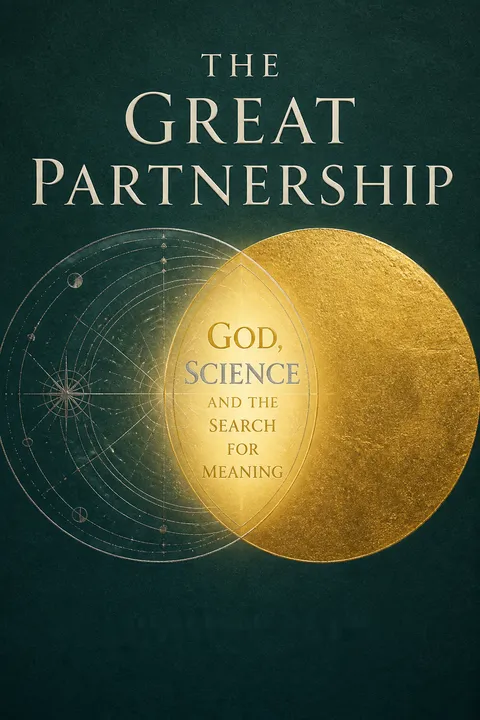
The Great Partnership receives mostly positive reviews for its exploration of the complementary relationship between science and religion. Readers appreciate Sacks' eloquent writing, insightful analysis of religious texts, and balanced approach to faith and reason. Many find his arguments for the importance of religion in providing meaning and morality compelling. Some criticize repetitiveness and weak arguments on certain topics. Overall, reviewers praise the book for offering a thoughtful perspective on reconciling scientific and religious worldviews, though opinions vary on its effectiveness in fully achieving this goal.
People Also Read





Glossary
Meaning-seeking animal
Human beings who ask whySacks uses this phrase for the human capacity to seek purpose, interpret experience, and ask why life exists. People do not only respond to biological needs or physical causes. They imagine futures, judge their own desires, and try to understand what their actions mean.
Framing beliefs
Assumptions shaping interpretationFraming beliefs are deep assumptions that orient how a person or culture understands experience. They are not usually conclusions drawn from a particular observation, but background commitments that give observations significance. Sacks notes that science itself relies on assumptions, such as the expectation that natural patterns will continue.
Logotherapy
Therapy through finding meaningViktor Frankl's approach to psychotherapy, named from the Greek word logos, emphasizes the human search for meaning. It helps people identify responsibilities, relationships, or unfinished tasks that give them a reason to continue living. Sacks presents it as a practical account of purpose, especially under extreme hardship.
Covenant
A binding shared commitmentIn Sacks's account, covenant is a relationship formed through mutual commitments and responsibilities, especially between God and a people. Applied to politics, it means citizens are partners in a common good rather than customers receiving services. It links freedom with obligations to others and limits the authority of rulers.
Complementarity
Different views, one realityBorrowed from physics and applied by Sacks to human understanding, complementarity describes cases where distinct perspectives reveal different aspects of a subject. A person can be viewed as an object of study and as a subject with intentions. Neither perspective alone fully captures the whole.
Dualism
Good and evil as separate campsSacks uses dualism for a worldview that divides reality into opposed forces, such as absolute good and absolute evil, or the saved and the damned. When applied to groups, it can cast an enemy as the embodiment of evil, encouraging scapegoating, dehumanization, and violence.
Sacred discontent
Protest against a broken worldA phrase Sacks draws from Herbert Schneidau to describe the biblical refusal to accept injustice as inevitable. It combines awareness of the world as it is with a conviction that it ought to be better. Its religious expression is not merely complaint, but protest that motivates efforts toward repair.
Anthropic principle
Life-permitting cosmic conditionsThe anthropic principle refers to the observation that the universe's physical constants fall within ranges compatible with the existence of stars, planets, and life. Sacks presents this fine-tuning as a source of wonder and as suggestive to believers, while stressing that it does not by itself prove God's existence.
About the Author
Other books by Jonathan Sacks



Download PDF
Download EPUB
.epub digital book format is ideal for reading ebooks on phones, tablets, and e-readers.








