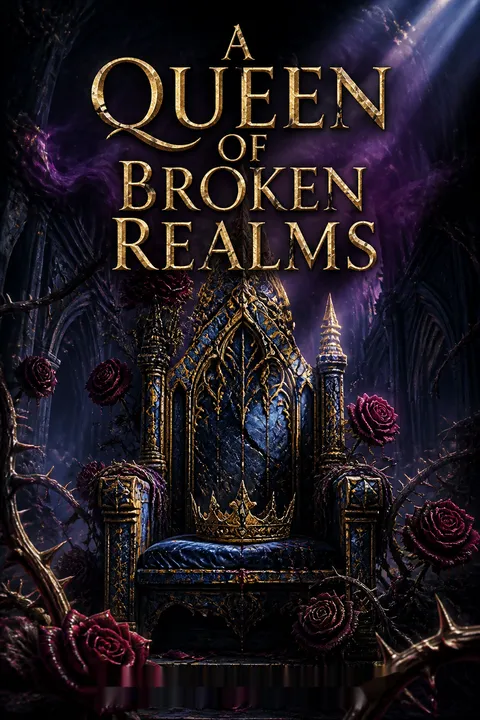


Plot Summary
Blood on the Dais
Leucosia, an ancient vampire-siren hybrid, has just killed Eshkar and accepted Ashen’s offer to spare the Shadow Realm by ruling it. The demons kneel, but one refuses to accept her authority and hurls an axe into her back. Ashen blinds the attacker in front of the assembled Reapers, making the price of harming their new Queen unmistakable.
Leucosia drinks Ashen’s blood to heal her shattered shoulder and lung, then steadies herself before the crowd. She promises justice and mercy, though the title frightens her more than the wound. The room has not yet learned whether she can govern its enemies, but its first challenge makes clear that every decision will be tested in blood.
The coronation begins not as a triumph but as a test of whether authority can survive visible vulnerability. Leucosia’s body is wounded at the very moment her political identity is created, so legitimacy cannot rest on ceremony alone. Ashen answers with spectacular violence, which protects her but also exposes the old realm’s reflexive language of control. Her promise of mercy is therefore more than an ideal: it is a threat to the machinery that has normalized cruelty. The scene frames her rule as a struggle to make care credible among people trained to recognize only force.
The Souls Walk Free
Once the hall empties, Leucosia’s confidence gives way to panic about governing demons who recently tortured her. When the ghost carriage crosses the bridge above the Bay of Souls, she cannot ignore the spirits chained to it. She stops the carriage and releases each soul, confronting Ashen with the fact that the Reapers have treated the dead as equipment.
The choice gives her no immediate plan for running the realm, but it turns her discomfort into a first act of policy. Ashen takes her to a ruined cliffside manor where he has secretly built a garden of sculptures. Leucosia sees the memorial to his lost child and the glass figure he made of her, then agrees that the broken house might become a home for them both.
Leucosia’s first governing instinct is not to issue a law from the throne but to notice the beings everyone else has stopped seeing. Releasing the carriage souls gives her an ethical foothold before she has administrative knowledge or loyal institutions. Ashen’s response matters too: he does not defend the custom, and the garden reveals that his private grief has already made him uneasy with the realm’s indifference. Their prospective home is built from damaged stone rather than royal spectacle. It links intimate repair to political reform, while Leucosia’s unease shows that compassion alone will not make leadership easy.
A Garden of Grief
In the manor’s overgrown sculpture garden, Leucosia lights lanterns beside figures representing the different immortals Ashen has encountered. The path ends at a marble image of Davina holding the child she and Ashen lost, a private monument to guilt he has carried for centuries. Leucosia recognizes that he has treated the loss as a verdict on himself, not simply a grief to be mourned.
At the garden’s far end, she finds a luminous glass sculpture of herself, made after Ashen left her in the Living Realm because he could not stay away. He admits that the bond’s discomfort was not the real reason he returned. They choose to restore the ruined manor together, beginning with the greenhouse and its cherished silk-covered bed.
Ashen’s garden externalizes what he cannot easily say: he has preserved grief by turning it into objects he can tend but never resolve. Leucosia’s response does not erase his responsibility or demand that he stop mourning. Instead, she recognizes the difference between remembering a loss and using it as lifelong punishment. The glass sculpture complicates the memorials because it records a living attachment, not only death. Their decision to rebuild the manor makes intimacy practical: a shared home requires choices about space, care, and a future neither can secure. Leucosia’s leadership and her relationship with Ashen both begin through acts of attention.
The Sea Swallows Leucosia
After Leucosia and Ashen sleep in the greenhouse, fighting erupts around the manor. Ashen gives her Eshkar’s necklace, which fits a portal pedestal in the Kur, and orders her to escape while he holds off the attackers. Remembering his plea to the doomed Davina, Leucosia runs, though the fear between them nearly turns her back.
Silver arrows strike her as she reaches the cliff, and she jumps into the Black Sea rather than be captured. The water overwhelms her with the minds of countless suffering souls. A huge tentacled creature tears into her back and drags her down instead of letting her die. When Ashen loses all sense of her through their bond, Leucosia has vanished into a hidden cavern beneath the sea.
The attack turns Leucosia’s new sovereignty into a physical crisis before she can establish control. Ashen’s order to flee is shaped by old trauma: he once begged Davina to run and could not save her. Leucosia obeys because she understands that history, but the choice still costs them both. The Black Sea literalizes the suffering her reforms aim to address, forcing her to experience its collective anguish rather than observe it from a throne. The creature’s capture suspends the usual rules of death and rescue. She is neither safely alive nor able to reach the people who would search for her.
Ashen’s Seven Dark Days
Unable to feel Leucosia, Ashen searches the Black Sea night after night while Ediye studies spells to locate her. He summons the anunnaki Aloros, postponing the promised resurrection of Leucosia’s sister, Aglaope, until she can be found.
As the days pass without a sign, Ashen’s grief hardens into vengeance. Ediye tells him how a human named Matthew killed her son, Tayo, and how Leucosia once helped her recognize when revenge had begun consuming her. Ashen refuses her warning and continues punishing suspected traitors.
His soldiers capture Joash, brother to a Reaper Leucosia killed, and discover he had worked with Ember’s remaining loyalists. Ashen prepares to torture the captives repeatedly, convinced that violence is the only way to learn who opened the realm to the Nephilim.
Ashen’s response to loss reproduces the very logic Leucosia hoped to undo: pain becomes permission to inflict more pain. Ediye’s account gives him a model of how revenge can outlast its original cause, but grief makes that insight difficult to use. His decision to delay Aglaope’s resurrection shows that, even at his most destructive, he remains attached to Leucosia’s wishes. The contrast between Ediye’s recovered capacity for light and Ashen’s deliberate descent into brutality makes the emotional stakes concrete. Without Leucosia, his love does not automatically make him merciful; it can instead sharpen his fear into punishment.
The Key Beneath the Sea
In the cavern, Leucosia wakes hungry and injured, unable to reach Ashen or summon Ediye. She studies the shifting rings around a black wall and learns to seize a ribbon of writing at the instant its symbols align. The timing lets her pull a humming tourmaline sphere from its protective opening. A brief view through the rings reveals a distant woman and threads of colored light, but the window closes before Leucosia can learn more.
She uses Ediye’s pendant again, and this time her friend arrives through a portal. Ediye brings Ashen’s stored blood, allowing Leucosia to recover, and helps her escape. They return to the Kur, where Leucosia reunites with Ashen and finds Pyrrhus, a Reaper who wounded her but later chose not to attack again.
The cavern gives Leucosia a problem she can solve through attention rather than combat. She studies the rings, learns their timing, and takes the sphere through persistence, a small rehearsal for ruling a system whose workings have been hidden from her. The glimpse beyond the wall offers knowledge without explanation, making the stone both a rescue object and a mystery. Ediye’s arrival restores friendship as a practical form of survival: she brings blood, an exit, and a bridge back to Ashen. Pyrrhus’s hesitation to betray Leucosia introduces a different possibility for the realm, one in which an enemy’s choice can matter as much as their past allegiance.
The First Mercy Test
Back in the Kur, Leucosia questions Pyrrhus about his role in the fighting. He admits that he intended to take her for Ember’s plan, but did not strike again after she warned him about the hybrids’ venom. Ashen wants to punish him; Leucosia instead values his honesty and sends him to the dungeons rather than ordering his death. She also confronts the larger problem of the souls’ suffering.
After Joash reveals a hidden bond that allows someone to summon him, Leucosia and her allies begin investigating the stones and the Nephilim’s interest in her. She recruits Imani to represent the Reapers, asks Cole to serve as her advisor, and offers Davina the role of Resurrectionist, even though Ashen has painful history with her.
Leucosia does not confuse mercy with trust. Pyrrhus’s admission does not erase his earlier intention, but it gives her a basis for choosing a measured consequence instead of repeating the old regime’s reflexive brutality. Her decision to appoint Davina extends that principle into personal territory. She asks Ashen to make room for someone associated with his deepest grief, not to excuse the past but to give the realm a different future. Recruiting Imani and Cole also recognizes that authority is not self-sufficiency. Leucosia begins building institutions by distributing knowledge and responsibility, even as she remains unsure whether she deserves the throne.
A Wedding Under Stars
Ashen takes Leucosia to Pamukkale for hot springs, a quiet meal, and a private concert in the ancient amphitheater at Hierapolis. The carefully planned date answers her fear that their bond has formed only through battle, secrets, and crisis.
As Tessa sings, Ashen proposes, and Leucosia accepts. Ammon Hassan performs their wedding that night using old Guild rites, with Ediye, Cole, and Eryx beside them. Ashen’s final surprise is the resurrection of Leucosia’s sister, Aglaope, whose return overwhelms the bride with joy and panic.
Leucosia steadies herself in Ashen’s arms and chooses to continue with the ceremony. She gains both a husband and the sister she believed lost, but their reunion arrives with centuries of history neither has yet explained.
The date gives Leucosia a rare experience of being known outside emergency. Ashen chooses landscapes connected to her history and pleasures, turning romance into evidence that he has listened. The proposal answers her earlier hurt about whether he chose her, while the wedding makes that choice public and reciprocal. Aglaope’s resurrection complicates the celebratory scene: recovered family is not a simple return to the past, because both sisters have changed and accumulated separate wounds. Leucosia’s brief panic does not invalidate her consent. Her decision to proceed shows that she can experience fear without allowing it to make every choice for her.
The Apothecary’s Broken Door
Leucosia and Ashen travel to Cairo to consult Ammon Hassan about the humming sphere and to obtain what they need for a Resurrectionist. They find Ammon’s apartment ransacked, Ediye bleeding from a head wound, and the elderly apothecary dead. Wynter, a Guild apothecary, arrives with Roman, a vampire whose mind seems to contain missing memories.
The Nephilim attack again, forcing the group to flee through Cairo’s traffic. Leucosia drives a bus into their pursuers’ car, buying time for Ashen to reunite the group and lead them through a portal to the Shadow Realm. Before Ediye loses consciousness, she warns that the Nephilim are coming back. Leucosia takes Ammon’s old book, turning the attack into a race to understand the stones.
The murder of Ammon shifts the story from investigation to active pursuit. The violence reaches a place associated with care and specialized knowledge, showing that the enemy is targeting the very institutions capable of helping Leucosia. Wynter and Roman arrive as both potential allies and unresolved mysteries; Roman’s damaged memory echoes the broader concealment surrounding the Nephilim. Leucosia’s reckless bus maneuver is not merely a burst of action. It reverses her role as someone repeatedly rescued and lets her protect the group. Ammon’s death also gives the book she takes a material urgency: preserving knowledge becomes part of keeping her friends alive.
Dimitrios’s Name Returns
Wynter helps Davina become the Shadow Realm’s Resurrectionist, using a rare substance called ushgada to shield her between life and death. Leucosia notices the substance’s scent and its label from Évora. When Cole recognizes the place, he reveals that he had been an angel assigned to protect Dimitrios, a demigod there.
Davina and Aglaope helped kill Dimitrios and harvest his remains, while Ashen had disclosed the demigod’s presence to Davina. Cole’s grief erupts, and the others acknowledge their part in the death rather than shifting blame. Davina accepts the Resurrectionist role despite the cost, and the discovery links the Nephilim, the harvested demigod, and the strange substance used to bring her back.
The revelation makes resurrection morally complicated: the means of restoring life are entangled with the remains of someone whose death devastated Cole. Leucosia’s attention to scent and provenance turns a small physical detail into historical evidence, while the others’ willingness to name their responsibility prevents grief from being reduced to a single villain. Cole’s anguish reveals that old assignments and loyalties can survive across radically changed identities. Davina’s new role is not a clean redemption, but a demanding form of service that places her in contact with the suffering she once knew as a soul. Restoration here requires accountability, not erasure.
The Queen Enters the Gauntlet
Leucosia turns the Gauntlet, once used to torment resurrected souls, into a trial for the realm’s traitors. She places Joash and other attackers inside its trapped maze, then adds Urtur, Zida, and Valentina as obstacles. When the fighting reaches the weapons chamber, Leucosia enters the course herself and kills the archer who previously targeted her.
Hybrids join the fray, and she pulls Pyrrhus to safety. On the unstable bridge above acid, Joash attacks her and nearly drags her down, but Pyrrhus breaks his grip and helps her cross. Their arrival at the finish earns the crowd’s acclaim. Ashen, who had been magically restrained to prevent him intervening, is furious and frightened; Leucosia apologizes for making him watch her risk death.
Leucosia uses the Gauntlet’s familiar spectacle to speak in a language the Reapers understand, then alters who bears its danger. She is not simply performing strength for political approval; she accepts the same bodily risk imposed on others and protects a former opponent when the test turns lethal. Pyrrhus’s aid gives her mercy a visible consequence: he chooses to protect someone who once held power over his fate. Yet her wager strains her marriage, because Ashen experiences her agency as the possibility of losing her again. The episode shows that public legitimacy and private trust can demand conflicting forms of courage.
Naya Wakes to Sentence
Leucosia’s plan to resurrect souls takes shape when Davina revives Naya, a Dreamwalker witch sentenced for coercing other covens through their dreams. Naya remembers her crime and faces a long term as a wraith, but Leucosia offers her a place on the Council and a chance to guide damaged souls toward recovery.
Cole agrees to help Naya adjust, finding renewed purpose in work that serves rather than protects through force. Meanwhile, Eryx researches the Nephilim in the Realm of Light, and Aglaope explains that she once sought freedom for the siren sisters whose origins were erased.
During training, a silver arrow narrowly misses Leucosia. Ashen tears the attacker apart, confirming that the danger has reached the heart of their rebuilding effort.
Naya’s case tests whether Leucosia’s reforms can accommodate culpability without returning to dehumanizing punishment. She does not pretend Naya is innocent; instead, she offers a role that makes restitution possible while preserving consequences. Cole’s willingness to guide her also begins to redirect his grief toward care, though it does not cancel that grief. Aglaope’s account of their lost origins introduces freedom as a shared but potentially dangerous desire. The attempted assassination then punctures any sense that reform can proceed in safety. The Queen’s authority is challenged not only by open enemies but by the vulnerability of those who choose to stand near her.
The Arrow at Imhas
As Leucosia and Aglaope watch the Shub Lugal train, Aglaope gives her a wedding ring made with amethyst from their old island. Their conversation exposes the distance between the sisters: Leucosia admits that her revenge against Barbossa Sarno grew from Aglaope’s choices, though she does not regret killing him.
Aglaope says she pursued a masked man’s offer because she wanted their forgotten origins and freedom. Before they can go further, a silver arrow strikes the pillar beside Leucosia’s head.
Cyrus captures the shooter, and Ashen responds with brutal force. Eryx’s research soon supplies a lead: old texts place a Nephilim passage at Rusalimum, the ancient city now called Jerusalem. Leucosia brings that discovery to her first full Council meeting.
The sisters’ reunion is not secured by affection alone. Leucosia speaks plainly about the harm that followed Aglaope’s decisions, while Aglaope frames her actions through protection and a desire to recover their stolen history. Neither account resolves the conflict, but the ring offers a tangible gesture of kinship. The arrow interrupts before trust can settle, reminding them that private reconciliation is happening inside a political crisis. The Jerusalem clue turns Eryx’s archival work into actionable intelligence. In sequence, the scene links hidden origins, external danger, and the need for collective judgment rather than allowing family feeling to obscure the war.
The Light Realm Falls
At the Council meeting, Leucosia argues that the Nephilim are entering the Living Realm through Jerusalem, while her advisers debate the risk of seeking the second fate stone. Before they decide, Aloros, an anunnaki envoy, arrives badly wounded.
He reports that traitors opened portals in the Realm of Light, allowing Nephilim to attack House Esagila and threaten the children sheltered in the House of Virtues. Aloros gives Leucosia the key to the Light Realm’s hidden portals, which joins with Eshkar’s necklace.
Leucosia promises aid. At the Kur, she shows the Reapers the burning city through the opened portal and explains that the Nephilim intend to reach the fates. She refuses to force anyone to fight, but asks them to help before the enemy can remake every realm.
The invasion transforms a distant threat into a choice with identifiable victims, especially the children of the House of Virtues. Leucosia’s argument is strategic as well as ethical: the Shadow Realm cannot seal itself off from an enemy determined to reach the fates. Her refusal to compel the Reapers distinguishes leadership from the Council’s old coercion, even as she makes the danger unmistakable. The joined keys materialize the possibility that the realms were once connected, challenging the political story that they must remain enemies. Aloros’s appeal also reverses the usual balance of power: the realm long treated as hostile now depends on the demons’ resilience.
A War Through Anur
Leucosia, Ashen, and Eryx enter the burning Realm of Light and fight toward the ziggurat while the Shadow Realm’s army gathers behind them. Hellfire triggers Leucosia’s memories of being burned, and Ashen shields her until the demons arrive.
She hides his injured mind inside a remembered dance at Bit Akalum, giving him refuge until Pyrrhus and the assembled Reapers reach them. The forces defend the House of Virtues, then split: Ediye leads the defense while Leucosia, Ashen, Cole, and Aloros enter the ziggurat.
They reach its lowest chamber and obtain the Soulfate stone. Aloros and Cole stay to defend their realm. As Leucosia and Ashen follow a route toward the Living Realm, someone attacks Ashen at the cliff edge and sends him into the sea.
The battle makes the story’s political argument physical: the Shadow Realm’s demons and the Realm of Light’s angels can defend one another without surrendering their distinct histories. Leucosia’s memory-space for Ashen reverses the earlier pattern of him anchoring her through panic; care now travels both ways. Pyrrhus’s return with the army demonstrates how an individual choice can grow into collective allegiance. The victory remains incomplete, however. Securing the stone does not remove the danger, and the attack at the cliff abruptly separates the newly unified allies. The movement from battlefield solidarity to intimate betrayal prepares the final conflict over who has the right to define freedom.
Anthemoessa Opens Again
Leucosia wakes inside a magical enclosure on Anthemoessa, where Aglaope has brought both fate stones. Her sister reveals that she used the ushgada and a hidden passage in the Book of the Fatespeaker to pursue the power beyond Alahalsu, hoping to free their sisters and reshape the realms.
She believes this is the only way to protect Leucosia from the burdens of rule. When Ediye and Ashen arrive, Aglaope continues opening the gate despite their attacks.
Leucosia stops her by driving Ashen’s sword into her heart and drawing her soul back toward the Shadow Realm. Ediye places the stones in the gate, where they shatter and collapse the passage. Leucosia later gives Aglaope’s wandering soul an everlasting death, leaving her sister’s body on the island.
Aglaope’s betrayal is rooted in love and fear, not simple appetite for power. She sees Leucosia’s responsibilities as another form of captivity and tries to save her by imposing a future of her own design. Leucosia must therefore refuse a person she loves without pretending the choice is painless. Her use of Ashen’s sword draws on the realm she has chosen to lead, while the soul-taking makes the political decision intimate and irreversible. Destroying the stones prevents anyone from controlling the fates, but it cannot restore the sisters’ shared life. The later release of Aglaope’s soul is an act of mercy that finally ends what the gate could not resolve.
The House of Virtues
Weeks later, Leucosia grieves at the cliff where Aglaope once saved her, while Ashen helps her remember that survival and loss can coexist. He takes her and their friends to the House of Virtues, where Ediye hears Tayo, the son she lost, call her mother. The boy has been brought back among the souls of the Light Realm, and mother and son reunite.
Aloros thanks Ediye for defending the House during the invasion and offers her ascension and a place on the anunnaki Council. She declines ascension but accepts leadership of the House of Virtues. Leucosia returns to the repaired cliffside manor with Ashen, Ediye, Cole, and Eryx, carrying grief that remains real alongside the evidence that lives and loyalties can be rebuilt.
The ending offers restoration without claiming that loss has been reversed. Ediye receives Tayo, but Leucosia has already had to release Aglaope permanently; the two outcomes do not balance like accounts. Ediye’s refusal of ascension is equally important. She accepts responsibility while retaining the identity and powers she has chosen, rather than treating status as the only proof of worth. The repaired manor, the reunited family, and the new leadership of the House of Virtues show reform becoming social practice. Leucosia’s realm is not healed by a single victory. It changes through repeated decisions to make room for the living, the grieving, and the newly returned.
Epilogue
Ashen watches Leucosia sleep in their restored greenhouse bedroom, listening as her nightmares grow less frequent and her days fill with rebuilding, friends, and song. He remembers their recent visit to the House of Virtues, where she played with Tayo and enjoyed the rides with their family.
Above them, the fog draws back from the skylights, revealing stars over the Shadow Realm for the first time in his memory. Ashen holds Leucosia close and wonders whether a true morning might finally come.
The final image gives the novel’s political transformation a quiet, environmental measure. The Shadow Realm has not become gentle overnight, but the fog that once defined its limits briefly parts, allowing Ashen to imagine a different future. His vigil beside Leucosia also reverses his earlier helplessness: he can protect her through presence without trying to control her choices. The stars do not promise that grief or danger has ended. They mark a new capacity to perceive possibility. The realm’s first dawn remains uncertain, which makes hope an ongoing practice rather than a reward automatically granted by victory.
Analysis
The novel makes political change inseparable from the management of pain. Leucosia does not inherit a neutral kingdom; she inherits customs that turn souls into transport, suffering into spectacle, and fear into loyalty. Her first reforms therefore begin with perception: she notices who is bound, asks what a prisoner chose, and treats resurrection as a responsibility rather than a convenience. These acts are small beside the wars, but they alter what the realm can imagine as legitimate.
The romance with Ashen develops along the same fault line. His capacity for protection is also a capacity for control, because terror of losing Leucosia can turn him toward vengeance or toward restricting her choices. Leucosia’s agency does not require rejecting his care; it requires that care become reciprocal. When she shelters his mind during the battle, their bond stops functioning only as rescue and becomes mutual dependence without ownership.
The sisters’ conflict gives the book its sharpest ethical problem. Aglaope’s plan is motivated by love and a real desire to escape imposed purpose, yet she assumes that protecting Leucosia entitles her to decide the future for everyone. Leucosia’s refusal is painful precisely because Aglaope’s fear is intelligible. The destruction of the gate rejects the fantasy that freedom can be secured by controlling destiny itself.
Finally, the narrative links healing to institutions and relationships rather than a single magical cure. Davina’s work as Resurrectionist, Naya’s offer of restitution, Ediye’s leadership, and the return of Tayo each address a different form of loss. None erases guilt or grief. The ending’s hope is therefore modest but durable: people can inherit damaged systems and still make choices that reduce harm, one soul and one act of care at a time.
Review Summary
Most readers celebrate A Queen of Broken Realms as a satisfying, emotional conclusion to the Shadow Realm series, praising the witty banter, steamy romance, and compelling chemistry between Lu and Ashen. Fans particularly love the humor, found-family dynamics, and side characters like Ediye. Critical reviews cite excessive sexual content overshadowing the plot, pacing issues, and unresolved storylines. Several readers note the book felt too long or convoluted, while others wished for more books featuring the beloved supporting cast.
People Also Read


Characters
Leucosia
The reluctant Shadow QueenAn ancient siren-vampire hybrid who has spent centuries surviving by concealment, Leucosia is suddenly responsible for the realm that once tortured her. She is sharp-witted, physically fearless, and unusually attentive to souls whom others treat as tools or refuse to see. Her ability to hear thoughts and touch minds gives her power, but she tries to distinguish understanding from coercion. Leucosia’s humor keeps terror at speaking distance, while her instinct to protect friends repeatedly draws her into danger. She must learn that compassion is not the same as softness and that leadership means choosing consequences, sometimes at a personal cost. Her deepest struggle is whether she can accept a place in the world without surrendering her independence.
Ashen
The grieving ReaperA powerful Reaper and Master of War, Ashen is Leucosia’s mate and the most feared soldier in the Shadow Realm. His discipline conceals an immense capacity for guilt, rooted in losses he has spent centuries memorializing rather than healing. He is strategic, protective, and capable of frightening violence, yet his private art and devotion to Leucosia reveal a tender attentiveness he struggles to trust in himself. Ashen’s central tension is between the role that makes him effective and the rage that threatens to consume him. He loves Leucosia deeply, but must learn that protection cannot mean deciding every risk for her. His loyalty is strongest when it makes room for her judgment.
Ediye
The star-eyed witchEdiye is Leucosia’s closest friend, a witch whose formidable magic is matched by humor, pragmatism, and emotional courage. The loss of her son once drove her toward vengeance, giving her particular insight into the difference between justice and a life organized around punishment. She is a skilled healer and spellcaster, but she does not present herself as untouched by grief or regret. Ediye often gives Leucosia the blunt counsel others are too intimidated to offer. Her loyalty is active: she researches, fights, and crosses dangerous boundaries to help the people she loves. She values the self she has made through hardship and resists the idea that power requires her to become someone else.
Aglaope
Leucosia’s protective sisterAglaope is Leucosia’s older sister, an ancient and formidable siren whose protectiveness has shaped their shared history. She is composed, observant, and accustomed to carrying knowledge alone. Her love for Leucosia is deep, but it is joined to a strong conviction that she must act when danger threatens, even without full agreement. Aglaope’s memories of their origins give her a perspective Leucosia lacks, while centuries of separation leave them with unequal understandings of the past. She embodies the difficult boundary between care and control: a sister can want another’s safety and still misjudge what freedom means to her.
Cole
The angel across realmsCole is one of Leucosia’s closest friends, an angel with experience in the Living Realm, the Shadow Realm, and the Realm of Light. His warmth and playful manner make him a source of ease, but beneath them lies a strong need to protect and serve. He is devoted to Ediye and shares a close bond with Eryx. Cole’s sense of purpose can make him take on more responsibility than is healthy, especially when someone is in danger. He offers Leucosia valuable knowledge of multiple realms, while their friendship lets her rely on someone who understands the strain of belonging to more than one world.
Davina
The burdened former loverDavina is a witch whose history with Ashen carries intimacy, grief, and unresolved harm. She has spent time as a soul in the Shadow Realm, giving her direct knowledge of what its punishments do to the dead. Thoughtful and reserved, she is not defined solely by her past mistakes; she wants to contribute to a future that treats souls differently. Her relationship with Leucosia is cautious but meaningful, built around the possibility of trust without requiring anyone to forget what happened. Davina’s emotional restraint often hides how much responsibility she is willing to accept.
Eryx
The scholarly angelEryx is an angel and Cole’s partner, known for his bright enthusiasm and deep interest in history and art. He is affectionate without being naïve, and his curiosity makes him a valuable researcher when the group needs information about the Realm of Light. Eryx’s devotion to Cole is steady, and he is willing to enter unfamiliar territory rather than remain safely at a distance. His scholarly habits turn old texts into practical clues.
Ammon Hassan
The trusted apothecaryAmmon Hassan is an elderly apothecary and an experienced member of the Guild of Gilgamesh. He is generous with his knowledge, grounded in long study, and willing to help beings who might otherwise distrust one another. His familiarity with ancient substances and ritual practice makes him a crucial source of guidance for Leucosia’s group. He treats young immortals with warmth rather than condescension.
Wynter
The guarded apothecaryWynter is a capable apothecary associated with the Guild of Gilgamesh. Practical and quick to question other people’s motives, she protects her knowledge and the people close to her. Her competence matters under pressure: she can identify supplies, perform delicate procedures, and keep working through danger. Wynter’s caution is not coldness so much as a learned defense in a world where expertise can make its holder a target.
Roman
The watchful vampireRoman is a vampire closely connected to Wynter. Strong, vigilant, and sparing with words, he watches threats before most people notice them. His fierce concern for Wynter can override his own safety, while his guarded manner suggests a history he does not readily share. Roman is difficult to read, even among immortals accustomed to hiding their intentions.
Cyrus
Ashen’s disciplined secondCyrus is Ashen’s second in command and a senior soldier among the Shub Lugal. He is disciplined, observant, and efficient at turning urgent orders into coordinated action. His loyalty is not merely personal; he takes the security of the realm and its people seriously. Cyrus becomes an important counterweight to Ashen’s volatility and a practical support to Leucosia as she learns to govern.
Imani
The independent ReaperImani is an influential Reaper who runs Bit Akalum, a gathering place in the Shadow Realm. Elegant, perceptive, and politically capable, she knows how to command a room without relying on Ashen’s threat of violence. She respects Leucosia because she recognizes a fellow woman who refuses to yield her place. Imani’s networks give her both influence and obligations she is careful to protect.
Pyrrhus
The wavering ReaperPyrrhus is a Reaper and soldier who has been caught on the wrong side of the realm’s shifting loyalties. He is wary, pragmatic, and aware that survival often depends on reading a situation quickly. Yet he is capable of recognizing when someone has treated him fairly. His choices make him an important measure of whether Leucosia’s promise of mercy can reach beyond her friends.
Aloros
The anunnaki envoyAloros represents the anunnaki of House Esagila in the Realm of Light. Proud and direct, he begins from a position of political distance from the Reapers but understands the value of a reliable alliance. He is responsible for ancient knowledge and access that Leucosia’s group cannot obtain alone. His duties require him to weigh the survival of his own realm against the dangers of asking former enemies for help.
Naya
The Dreamwalker witchNaya is a Dreamwalker witch whose abilities allow her to enter and influence dreams. She is intelligent and forceful, but her powers carry ethical responsibilities she has not always respected. Naya’s history makes her wary of judgment, while her capacity for reflection gives her a chance to use her gifts in service of others. She represents the difficult possibility of rehabilitation without pretending that harm did not occur.
Zida
The white serpent guardianZida is a huge white serpent who protects Leucosia and moves freely through the Shadow Realm. She is intelligent, intimidating, and sometimes difficult to direct, with a presence that can settle a room faster than a speech. Her loyalty is expressed through action, and her appetite gives her a role in the realm’s rough justice.
Urtur
The loyal jackalUrtur is a large black jackal who bonds closely with Leucosia and Ashen. He is affectionate and perceptive, but also a formidable presence when danger approaches. His companionship offers Leucosia uncomplicated comfort in a realm where almost every relationship carries political or traumatic weight.
Tayo
Ediye’s lost sonTayo is Ediye’s son, a bright and affectionate child whose loss remains central to her history. His name and memory hold the tenderness that survives beneath her anger. He represents the personal life Ediye wanted to protect and the love that continues to shape her choices.
Hotaru
The wary councilorHotaru is a Reaper from House Ushzu whose caution makes her a sharp voice in council. She thinks in terms of risk and security, and she is willing to challenge plans that could endanger the Queen or the realm. Her skepticism is a useful check on enthusiasm.
Maru
The candid ReaperMaru is a Reaper considered for Leucosia’s Council. He is unusually frank about his relationships and attentive to what happens to souls after their arrival in the Shadow Realm. His openness makes him a promising participant in a government trying to replace secrecy with accountability.
Zara Sargan
The ancient hybrid fighterZara Sargan is an ancient vampire transformed into a hybrid. Sharp-toothed, stylish, and bold, she meets battle with unnerving enthusiasm and makes practical use of unconventional weapons. Her confidence sets her apart from the more visibly altered hybrids around her.
Dimitrios
The protected demigodDimitrios is a demigod whom Cole was assigned to protect. Though he appears chiefly through the memories and grief of others, his life connects the fates, the apothecaries, and the hidden political struggle among the realms.
Plot Devices
The Mated Mark
A bond across distanceLeucosia and Ashen’s matching marks allow them to sense one another’s emotions and, when circumstances permit, maintain a connection across realms. The bond heightens intimacy but does not remove uncertainty: when Leucosia is trapped beneath the Black Sea, both are unable to feel the other. The mark also makes their emotional states difficult to hide, which brings tenderness and conflict into the same physical signal. It functions as a recurring test of trust, especially when Ashen’s desire to protect Leucosia clashes with her need to act as Queen.
The Fate Stones
Keys to the godsThe tourmaline Deathfate stone and lapis Soulfate stone are protected by inscribed rings that open only at precise moments. Together, the stones can open Alahalsu, a passage to the last of the gods and the fates. The Nephilim seek them to reshape the realms, while Leucosia and Ashen must learn how to operate the ancient mechanisms before the enemy does. Their role changes from mysterious objects of escape to the center of a conflict over who should control destiny.
Resurrection and Ushgada
A return with a costThe Shadow Realm’s Resurrection Chamber restores Reapers, while a stronger Resurrectionist is needed to bring souls back into life. The rare substance ushgada helps protect a person at the boundary between life and death during the rite. Its source and association with Évora connect Davina’s return to the killing of a demigod, turning a practical ritual into evidence of an older conspiracy. Resurrection therefore carries both hope for the suffering souls and an ethical debt that cannot be ignored.
Leucosia’s Mind Touch
Truth without easy trustLeucosia can hear thoughts and, through touch, plunge another person’s mind into darkness or enter its memories. The ability helps her assess threats, question prisoners, and recognize emotional states that speech conceals. It can also violate another person’s inner privacy, so Leucosia must decide when to use it and when to ask for an answer instead. Her power makes the distinction between knowledge and consent a practical problem rather than an abstract principle.
The Realm Corridors
Passages under siegeMagical corridors and portal keys connect the Shadow Realm, the Living Realm, and the Realm of Light. The linked pendants reveal and open hidden routes, but the same access points let traitors bring the Nephilim through. As Leucosia and her allies close corridors, reopen others, and use the joined keys to observe the invasion, travel becomes a question of both strategy and trust. Control of movement determines which realms can support one another and which can be attacked in isolation.
The Shadow Realm Series
About the Author
Other books by Brynne Weaver




Download PDF
Download EPUB
.epub digital book format is ideal for reading ebooks on phones, tablets, and e-readers.








