

Key Takeaways
Define purpose by the way you show up, not the job you hold
Being matters more than occupation. Feick distinguishes a soul purpose from a specific career or mission. In her view, the shared purpose is to move beyond ego-driven separation and express love and equanimity. A person's work is one way to express that purpose, not the purpose itself. The book's example is Oprah: hosting a television show was a vehicle for teaching and sharing wisdom, not the essence of her calling. The same principle applies to ordinary work. A cashier, parent, or manager can live purposefully through how they treat people and meet daily responsibilities.
Purpose is practiced in moments. Feick argues that seeking one perfect vocation can make people feel they have failed when their lives take another shape. Her alternative is to ask what qualities a situation calls for, then embody them in whatever role is available.
This reframing separates a person's values from their job title, which can make purpose less fragile during unemployment, caregiving, or career change. It also resembles values-based approaches to decision-making: the role may change, while the qualities guiding action remain recognizable. The useful test is concrete: does a claimed purpose shape how someone behaves today? A broad ideal such as love can otherwise become too vague to guide choices. Feick's account offers a compass, but readers still need to decide what love and equanimity require in specific circumstances.
Treat recurring pain as a pattern to examine, not a cosmic sentence
Karma means unfinished patterns. Feick uses Karma not as divine punishment or a scorecard, but as emotional and mental residue that keeps influencing present experience. She says it can show up in repeated relationship conflicts, family habits, or beliefs about scarcity. In this model, a painful event is not automatically a lesson with one correct answer. The useful question is what the event reveals about a person's reactions and recurring choices.
Look for repetition without self-condemnation. One client returned for another reading two years after receiving advice, and the guidance was much the same. Feick understood this as a sign that the client had not changed the circumstances or habits sustaining the problem. The story's practical point is that insight alone does not interrupt a pattern; awareness must lead to a different response.
A pattern-based account can replace fatalism with curiosity: instead of asking what punishment is deserved, a person can examine what keeps recurring and what is within reach to change. That shift is compatible with reflective approaches to behavior, even if the book's past-life explanation is a matter of spiritual belief. The distinction matters. Patterns can be shaped by other people's actions, material conditions, and chance, not only by an individual's inner state. Treating every hardship as self-created risks turning reflection into blame.
Use the Records to loosen a story, not merely collect past-life lore
The archive is a healing tool. The Akashic Records are described as a living store of experiences, thoughts, emotions, and relationships across lifetimes. Feick distinguishes lower-level Records, which she associates mainly with personal history, from Records accessed on the Quantum Field, which she says offer a wider view of a situation and its effects on everyone involved. These are the book's spiritual claims, not established descriptions of a physical archive.
Seek the pattern beneath the plot. In one client story, a man described a strained relationship with his daughter. Feick connected the conflict to a recurring pattern of resentment and manipulation in his relationship with his mother. The point was not to supply an entertaining past-life narrative, but to help him see his contribution and consider a different response. In her method, information matters most when it supports emotional release and self-understanding.
The strongest practical distinction here is between explanation and change. A compelling story about a former life can feel meaningful while leaving current behavior untouched; examining a repeated interpersonal pattern is more directly actionable. The Records can be understood as a meditative framework for exploring that pattern, without requiring the reader to accept a literal cosmic database. Feick's emphasis on seeing a situation from multiple perspectives is also valuable, provided that perspective-taking does not erase unequal power or excuse harmful conduct.
Quiet the inner noise before seeking spiritual guidance
Prepare attention before interpretation. Feick calls an integrated state of heart, mind, and energy coherence. Her preparation includes breathing, focusing on the heart, imagining mental clutter lifting away, and bringing the chakras into alignment. She describes higher-consciousness thoughts as calm and clear, while ego-driven thoughts feel repetitive or agitated. In her system, this preparation is meant to reduce distraction before entering the Records.
Use the exercise as a pause. A reader can follow the practice without treating its energy explanation as proven: settle the body, notice thoughts without chasing them, and choose a clear question. Feick also describes the heart and a surrounding toroidal field as channels of interaction with the Quantum Field. The book presents this as spiritual cosmology; its meditation instructions are separable from claims that the body's energy field attracts external events.
A short ritual can help mark the transition from ordinary distraction to deliberate reflection. Its sequence gives attention a task, which may make it easier to notice the difference between an immediate reaction and a considered response. The more delicate claim is that calmness identifies a message from a higher source. Calm thoughts can still be mistaken, and anxious thoughts can contain useful information. The practice is most reliable when it supports inquiry rather than granting certainty to whatever impression appears.
Work a charged memory through awareness, responsibility, and release
Begin with a manageable memory. Feick's guided process starts with a clear intention, relaxation, and the preparation described above. She recommends initially choosing a memorable but relatively minor event rather than beginning with overwhelming trauma. In the meditation, the practitioner expands awareness toward the Records, asks to understand the event, notices associated feelings and patterns, and allows them to unwind rather than forcing a result.
Close with compassion and grounding. The process then asks the practitioner to consider their role, view the event from more than one angle, practice compassion, and imagine a more expansive state of being before returning attention to the room. Feick says the Records can transform the past and alter future possibilities. Practically, the sequence is a guided visualization for revisiting a memory and loosening its emotional hold; it should not replace professional support for serious trauma.
This sequence has a useful structure: establish safety, approach a memory in limited doses, observe emotion, and return to the present. Those elements can make introspection feel less like uncontrolled rumination. The metaphysical language may also provide meaning for readers who find spiritual imagery helpful. The boundary is important, however. Revisiting trauma can intensify distress, and a person need not reach forgiveness or feel compassion toward someone who harmed them. Emotional release is not a test of spiritual progress.
Take responsibility for your response without excusing another person's harm
Responsibility is not blame. Feick argues that people can regain agency by noticing their own actions, interpretations, and feelings, rather than assigning another person control over every response. She describes a rupture with a friend in which both people felt betrayed. By examining her own part and working through guilt and hurt, she says she reached forgiveness without requiring the friend to change first.
Keep the boundary clear. In the book's framework, an emotional charge signals unresolved attachment that may be explored in the Records. That can be a prompt to ask what is still painful or what response is possible now. It does not mean the harmed person caused the harm, must reconcile, or should tolerate further mistreatment. Agency concerns one's next steps; accountability for harmful behavior remains with the person who acted.
The distinction between agency and blame is essential to making this advice humane. People can often influence how they respond without having chosen the injury, the imbalance of power, or the conditions surrounding it. Reflection may help reduce helplessness, but it should not be used to transfer responsibility from a perpetrator to a victim. Forgiveness can be meaningful for some people; it is neither proof of healing nor a prerequisite for setting boundaries, seeking justice, or ending contact.
Notice group loyalties without confusing equanimity with indifference
Entanglement names emotional enmeshment. Feick applies the term Karmic entanglement to charged attachments involving family, workplace, religion, political affiliation, race, or nation. In her account, absorbing a group's beliefs can make its conflicts feel like one's entire identity. Her example is a worker who adopts a colleague's complaints about a previously well-liked boss and becomes drawn into the hostility.
Examine the reaction, not just the label. Feick suggests using the Records to explore what a group connection stirs up and how it relates to personal patterns. She values equanimity, meaning compassion alongside emotional steadiness, rather than being consumed by anger. This need not mean withdrawing from collective life. One can oppose injustice, support a community, or take action while remaining curious about whether anger is clarifying the issue or narrowing one's view.
The idea of emotional enmeshment helps explain how group membership can shape identity and perception. It also invites a useful check: is loyalty expanding solidarity, or making dissent feel impossible? Yet equanimity should not be reduced to neutrality. Strong emotion can be an appropriate response to real harm and can motivate collective action. The challenge is to distinguish a reaction that sustains attention and care from one that consumes attention without helping anyone.
Get consent, ask focused questions, and keep readings confidential
Permission is a core safeguard. Feick says a practitioner should obtain verbal consent before reading another person's Records, treat session information as confidential, and approach the work as service rather than control. When a question concerns an absent partner or relative, she recommends exploring the client's own experience or the relationship rather than claiming access to the other person's private Records.
Specific questions improve focus. A broad question about a relationship may open too many possible threads, so Feick encourages clients to name the situation they want to understand. Her suggested session flow is to prepare, set an intention, receive and share impressions, check whether they make sense, and ask whether the client wants to explore a pattern. She advises practicing with oneself before offering readings to others and avoiding sessions while emotionally judgmental or attached.
Consent and confidentiality are among the book's clearest practical strengths because they place the client's autonomy above the reader's curiosity. Focused questions also help keep an intuitive session bounded and comprehensible. These safeguards matter even for people who regard the practice as symbolic rather than supernatural. A further protection is to present impressions as possibilities, not diagnoses or commands. The more consequential the decision, the more important it is that the client retain independent judgment.
Treat spiritual insight as a prompt for choices, not proof of control
Repeated thoughts can reinforce familiar responses. Feick links habitual thinking to repeated neural pathways and argues that awareness can make new responses possible. She cites estimates of tens of thousands of daily thoughts and a high share repeating from the previous day, but does not provide enough detail here to treat those figures as settled evidence. The practical claim does not depend on the numbers: familiar interpretations can keep people acting in familiar ways.
Pair reflection with action. Feick's clients sometimes recognize a repeating pattern yet remain caught in it until they take a different step. The Records are presented as a way to identify and release old emotional stories; the grounded test is whether that insight changes a conversation, boundary, habit, or decision. The book's stronger claims that thoughts directly summon events or that spiritual work can undo illness go beyond what its examples establish.
The distinction between noticing a pattern and changing behavior is valuable: insight becomes consequential when it informs an observable choice. Neuroplasticity supports the broad idea that experience and practice can shape the brain, but it does not establish that Akashic Records work rewires neural pathways or that thoughts attract specific external events. Keeping those claims separate preserves what readers can use while avoiding self-blame when illness, loss, or economic hardship persists despite hopeful thinking.
Analysis
Feick's book is a practical manual for a metaphysical belief system. Its through-line is that people repeat emotional and relational patterns because they identify with a limited ego story, and that meditative access to the Akashic Records can help them see the pattern, release its emotional charge, and choose differently. The material moves from cosmology and spiritual purpose to exercises, personal and client stories, and rules for conducting readings. Its strongest contribution is not evidence for a literal universal archive, but a repeatable reflective sequence: settle attention, ask a bounded question, examine a recurring pattern, consider one's own role, and decide what response is now possible.
The book's vocabulary blends spiritual concepts with scientific language. In particular, its Quantum Field is a spiritual realm of possibility, not a demonstrated equivalent of the field studied in physics. References to quantum entanglement, electromagnetism, DNA, and brain pathways do not validate the book's claims that consciousness attracts matching events or that the Records alter past events. The cited thought-count estimates are not sufficiently sourced in the text to carry much evidential weight. Readers can still use the meditations as guided imagery or reflective practice without accepting those explanations as science.
The ethical stakes are significant because the book repeatedly says people create their experiences and choose their families or karmic circumstances. That framing may feel empowering when it directs attention toward available choices, but it can become cruel if used to explain abuse, illness, poverty, or discrimination as a person's spiritual responsibility. The book's better safeguards are its distinction between responsibility and blame, its requirement of consent for readings, and its advice to retain personal choice. A careful adaptation preserves those safeguards while rejecting spiritual insight as a substitute for medical care, therapy, material support, or accountability.
Review Summary
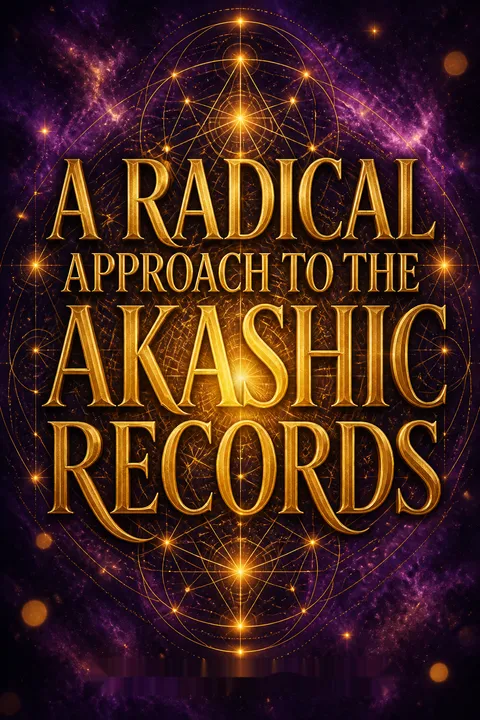
A Radical Approach to the Akashic Records receives mostly positive reviews, with readers praising its accessibility and informative content on accessing the Akashic Records. Many found it enlightening and transformative, appreciating the author's explanations of spiritual concepts. Some critics noted repetition and a lack of depth in certain areas. The book is seen as a good introduction for beginners, offering practical exercises and meditations. However, a few readers felt it oversimplified the process or lacked originality. Overall, it's viewed as a helpful guide for those interested in exploring the Akashic Records.
People Also Read







Glossary
Akashic Records
Spiritual archive of experienceFeick describes the Akashic Records as a living archive containing the experiences, thoughts, emotions, and actions of beings across lifetimes. Her method treats the Records as a meditative resource for identifying recurring patterns and seeking emotional change. The Records are a metaphysical concept in this book, not an empirically established database.
Quantum Field
Field of spiritual possibilityIn Feick's vocabulary, the Quantum Field is a realm of pure consciousness, love, and creative potential, where the highest level of the Akashic Records can be accessed. She says it offers a broad view of patterns and possibilities. This spiritual use of the term should not be confused with the technical meaning of quantum fields in physics.
Karma
Recurring emotional patternsFeick redefines Karma as emotional and mental residue that contributes to repeated patterns in a person's life, rather than punishment or a moral tally. In her framework, becoming aware of a pattern, taking responsibility for one's part, and releasing its emotional charge can loosen its influence. She applies the idea to personal, family, and group experiences.
Karmic Entanglement
Charged ties to people or groupsKarmic Entanglement is Feick's term for an emotionally charged bond with a person, family, organization, or larger group. She says such ties can shape a person's beliefs and reactions, sometimes making group conflict feel personally consuming. Her suggested response is to explore the connection and one's own patterns, not to assume that every strong feeling is harmful.
Toroidal Field
Spiraling energy-flow modelFeick uses Toroidal Field, or Torus, for a circulating, spiral-shaped energy pattern that she associates with the human body, the heart, and the universe. In her spiritual model, this flow connects a person's feelings with surrounding energy and the Quantum Field. The book's metaphysical interpretation is distinct from evidence that this field attracts particular life events.
Coherence
Integrated state of awarenessCoherence in this book is a prepared state in which thoughts, heart focus, and chakras are aligned. Feick's meditation aims to reach it by relaxing, clearing imagined mental clutter, and attending to the chakras. She presents coherence as a way to quiet ego-driven distraction before working in the Akashic Records.
Planes of Existence
Interacting levels of experienceFeick describes Physical, Emotional, and Mental planes as interrelated levels that correspond to human experience, with the Quantum Field representing a higher level of consciousness and potential. She portrays the planes as overlapping spirals rather than a simple ladder. This cosmology organizes her account of how patterns move between thought, emotion, and embodied life.
Spiritual Council
Guides for spiritual reflectionThe Spiritual Council is Feick's term for a group of advanced spiritual beings who, she believes, guide a person across lifetimes and can offer perspective in the Akashic Records. She advises treating their guidance as information for reflection rather than instructions to obey. The Council is presented as a spiritual belief, not a verified external authority.
FAQ
What's "A Radical Approach to the Akashic Records" about?
- Purpose and Transformation: The book by Melissa Feick is about accessing the Akashic Records to transform your life and raise your vibrational frequency. It offers a unique approach to understanding and utilizing these records for personal growth.
- Spiritual Awakening: It emphasizes a radical spiritual awakening happening globally, urging readers to participate in this shift by healing themselves and others.
- Practical Guidance: The book provides practical exercises and meditations to help readers connect with the Akashic Records on the Quantum Field, facilitating deep healing and transformation.
Why should I read "A Radical Approach to the Akashic Records"?
- Personal Growth: The book offers tools and techniques to help you master your energy and raise your vibration, leading to personal expansion and self-realization.
- Unique Perspective: Melissa Feick provides a fresh perspective on an ancient tool, making complex spiritual concepts accessible and easy to understand.
- Empowerment: It empowers readers to take responsibility for their lives, transcend Karma, and create a life filled with joy and purpose.
What are the key takeaways of "A Radical Approach to the Akashic Records"?
- Transcending Karma: The book teaches how to transcend Karmic patterns and live a more conscious life by accessing the Akashic Records.
- Oneness and Love: It emphasizes the importance of raising your vibration to a frequency of Oneness and Love, which is essential for spiritual evolution.
- Practical Exercises: The book includes meditations and exercises to help readers connect with the Akashic Records and experience profound healing.
How does Melissa Feick define the Akashic Records?
- Living Archive: The Akashic Records are described as a living archive of every conscious experience in the Universe, including thoughts, emotions, and actions.
- Vibrational Imprint: They hold the energy vibration or imprint of every event and how it relates to all those involved, offering a 360-degree view of experiences.
- Tool for Healing: The Records are a tool for healing and transformation, allowing individuals to access their highest potential and transcend past patterns.
What is the significance of the Quantum Field in accessing the Akashic Records?
- Higher Vibration: The Quantum Field is a higher vibrational space where the Akashic Records reside, offering a more expanded view and deeper healing potential.
- Pure Creation: It is the level of pure creation, where all possibilities exist, allowing for profound transformation and manifestation.
- Connection to Oneness: Accessing the Records on the Quantum Field helps individuals connect to the energy of Oneness and Love, facilitating spiritual growth.
How can the Akashic Records help in transcending Karma?
- Understanding Patterns: The Records provide insight into Karmic patterns and their origins, helping individuals understand and transcend them.
- Healing and Release: By accessing the Records, individuals can unwind and release old emotional and mental patterns, leading to healing and transformation.
- Personal Responsibility: The process involves taking personal responsibility for one's actions and emotions, which is crucial for transcending Karma.
What exercises and meditations are included in the book?
- Connecting with the Akashic Records: The book includes a meditation for connecting with the Akashic Records on the Quantum Field, facilitating deep healing.
- Clearing Thought Forms: A meditation to clear mental clutter and activate and align chakras is provided to enhance coherence and connection.
- Unwinding Patterns: Exercises for unwinding emotional and mental patterns are included to help readers release past traumas and transcend Karma.
What role does the Spiritual Council play in the Akashic Records?
- Guidance and Support: The Spiritual Council consists of advanced souls who guide individuals in navigating the Akashic Records and transcending Karmic patterns.
- Life Review: They assist in life reviews and help individuals understand their soul's mission and purpose.
- Non-Interference: While they guide and support, the Council does not interfere with free will, allowing individuals to make their own choices.
How does Melissa Feick address the concept of illusion in the book?
- Duality and Separation: The book explains that the world of duality and separation is an illusion, and true reality is the Oneness of all things.
- Ego's Role: The ego creates and perpetuates the illusion, keeping individuals stuck in patterns of fear and separation.
- Transcending Illusion: By accessing the Akashic Records, individuals can see beyond the illusion and connect with their true Divine essence.
What are some of the best quotes from "A Radical Approach to the Akashic Records" and what do they mean?
- "You are not destined to live a life of pain and sorrow!" This quote emphasizes the book's message that individuals have the power to change their lives and transcend past traumas.
- "The Akashic Records are a tool for healing and transformation." It highlights the Records' role in facilitating deep healing and personal growth.
- "You are here to become the higher states of consciousness." This quote underscores the book's focus on spiritual evolution and self-realization.
How can "A Radical Approach to the Akashic Records" help in living a more conscious life?
- Awareness and Responsibility: The book encourages readers to take personal responsibility for their actions and emotions, leading to a more conscious and empowered life.
- Healing and Transformation: By accessing the Akashic Records, individuals can heal past traumas and transcend limiting patterns, creating a more fulfilling life.
- Connection to Higher Self: The book guides readers in connecting with their higher consciousness, leading to greater self-awareness and spiritual growth.
What is the process for reading the Akashic Records for others?
- Permission Required: Before accessing someone else's Records, verbal permission is necessary to ensure ethical practice.
- Intention and Focus: Setting a clear intention to be of service and maintaining focus during the reading is crucial for accurate and helpful insights.
- Healing and Insight: The process involves unwinding Karmic patterns and providing insights to help the individual transcend past limitations and connect with their highest potential.
Download PDF
Download EPUB
.epub digital book format is ideal for reading ebooks on phones, tablets, and e-readers.








