

Plot Summary
A Knife in the Dark
For sixteen years, Adamantine Garland, called Ada, has hidden her rare Chef abilities and military past, earning a living as an ordinary cook while caring for her increasingly forgetful grandmother. When corrupt gendarmes close the inn where she works, Ada escapes with food and discovers that an intruder has entered her home.
Her grandmother has killed him in self-defense, but the man knew Ada’s true name and carried a pouch contaminated with rare magical powder. A second attacker waits outside, armed and intent on taking her. Ada realizes someone has found her, and that staying would put her grandmother in further danger. She packs what they can carry and heads for the only refuge she can bear to seek: her estranged mother’s estate.
Ada’s first crisis joins the novel’s private and political stakes: the state that once claimed her skills can still punish her for escaping it, while the man who raised her is too vulnerable to move easily. Her decision to flee is not simply self-preservation. It costs her the fragile routine that keeps her grandmother oriented, exposing the burden of care that has shaped Ada’s life. The dead intruder’s knowledge of her name makes concealment feel temporary, while the grandmother’s unexpected violence shows that memory may fail even as the body retains its training.
The Wineglass Shatters
At her formal presentation in Lutecia, Princess Solenn of Braiz endures courtly condescension, then senses death in Prince Rupert’s wine just before their ceremonial toast. Her tongue has awakened to a Chef’s strange empathy, though her family has no known Chef lineage.
To save Rupert without exposing the gift or wrecking Braiz’s marriage alliance, she smashes their glasses together and spills the wine. Away from the court, she confides in Captain Erwan Corre, her lifelong protector, who reveals that her parents suspected she might be a Chef.
He then tells her that she was adopted and that he is her birth father; her mother is Ada Garland, a Verdanian rogue Chef. Solenn’s new ability has saved the prince for now, but her identity and loyalties are suddenly uncertain.
Solenn’s rescue is a political performance disguised as an accident. She must act decisively while concealing the very knowledge that makes her action necessary, because exposing her gift could unravel the alliance Braiz needs. Her revelation about Erwan and Ada adds a second instability: the self she thought was settled turns out to have been protected by a carefully maintained secret. The scene makes inheritance more than bloodline. Solenn’s abilities arrive before she has chosen what they mean, while her parents’ silence, intended as protection, becomes a breach of trust she must now interpret.
The Cellar’s Hidden Door
Ada reaches her mother, Comtesse Esme Alarie, who offers warmth, food, and work, but makes clear that she expects Ada to join her profitable black-market epicurea business. Ada sees the trap: her mother can provide the rare flour that briefly steadies Grand-mère, yet both women would again be controlled.
While pretending to prepare oatcakes, Ada mixes in cat hair, an ingredient she has secretly learned can make eaters invisible. She and Grand-mère slip past the household through a concealed cellar passage and escape into the night.
The route takes them through a storehouse packed with prepared magical foods, proof of the comtesse’s reach. Ada steals a valuable cheese to finance horses and rides with Grand-mère toward Petry’s wilderness refuge.
The escape turns Ada’s culinary expertise into a tool of refusal. Her mother’s offer is genuinely comfortable, but it repeats the old bargain in which Ada’s value is measured by what she can produce. Choosing precarious freedom over material care is not a clean victory: Grand-mère’s illness makes the rejected resources tempting, and Ada must carry the consequences herself. The cat-hair magic also complicates the world’s supposedly complete culinary knowledge. Ada’s private discovery shows that inherited institutions can mistake their catalogues for reality, while necessity rewards the person willing to experiment beyond official limits.
A Princess Saves a Mare
Solenn investigates the palace kitchens, learning how Chefs prepare magical ingredients and how rare her own empathetic ability is. At Prince Rupert’s garden fete, she refuses to watch an acrobat beat a frightened horse and claims the mare for the royal stable, even though her intervention embarrasses the prince.
The episode earns her a wooden horse sculpture from Aveyron Silvacane, a young nobleman whose strange bearing and kindness intrigue her. Solenn gives him the gruff cheese Jicard Dubray had handed her, after Aveyron explains that the magical dairy comes from animals kept in cruel confinement.
His account unsettles her assumptions about the food she has eaten. That evening, as Solenn begins to investigate the poison threat, she has a new reason to question what power costs its sources.
The mare gives Solenn a public test of conscience before she understands the larger moral system surrounding her. She intervenes without waiting for permission, then sees how easily the court can transform protection into a display of royal power. Her exchange with Aveyron sharpens the problem: magical food is not an abstract blessing when living beings suffer to produce it. Solenn’s growing resistance is not simply to gendered etiquette or Verdanian prejudice. She is beginning to question the categories that make exploitation seem natural, even when the people benefiting from it are otherwise generous.
Old Friends Under Siege
At Petry’s hermitage, Ada learns that armed strangers have also been seeking him. She sends Grand-mère away with Petry, then ambushes one pursuer and discovers a pie prepared with stony owl stomach, an ingredient that slowly turns its victim to stone.
The captive admits that Petry and Ada’s former Thirty-Fifth Division comrades are targets. Ada returns to Lutecia, where Emone Jourdain warns that someone has tried to burn her Golden Horse inn. Ada then finds Didina Rochamp dead after fighting off kidnappers; Didina’s children witnessed the attack.
When Ada reaches Emone’s inn, it is ablaze, and Emone is still searching the building for anyone left inside. Ada pulls her from the flames, tending her burns while realizing the campaign against their old unit is already killing people.
The threat becomes intimate through the people Ada once trusted in battle. Her first instinct is to protect Grand-mère, but sending her away means accepting distance from the person who has been her only family. The deaths and fire also reopen the cost of their shared military past: the former officers are being hunted because of what they know and what they did. Ada’s care for Emone contrasts with the attackers’ casual willingness to burn a refuge full of people. The Golden Horse was built to shelter the displaced; its destruction attacks not only a friend but the community she made.
The Betrothal Turns Fatal
At the formal betrothal ball, Solenn recognizes lethal magic in a dish of Braizian lamb and tries to send it away without exposing her new ability. Jicard eats first, and Rupert follows, dismissing her alarm.
Both men develop violent symptoms during the dances, but the ceremony continues until Rupert collapses in Solenn’s arms, coughing blood. Jicard dies as well. The deaths make Solenn look like the obvious culprit: she was beside Rupert, had questioned the food, and came from the country associated with the poison.
The palace bells announce the prince’s death at dawn. King Caristo’s grief quickly hardens into accusation, while Solenn’s protector, Erwan, warns that the evidence and timing may be part of a plot to fracture Braiz and Verdania.
Solenn’s gift gives her knowledge without authority. She can perceive the danger but cannot make the prince believe her, and every attempt to intervene can be reinterpreted as evidence of guilt. The court’s rituals intensify this helplessness: she must cut Rupert’s food and continue the dances while watching the poison take effect. The failed rescue is therefore both bodily and political. Her position as a foreign bride makes her convenient to blame, while the deaths of two young men expose how ceremonial order can continue long after it has ceased to protect anyone.
A Contract for Corpses
Seeking the employer behind the attacks, Ada disguises herself as a rough soldier and goes to Hester’s Grace Inn, where mercenaries gather for dangerous work. She recognizes the young man hiring them as Segal Valmont, son of Mallory, the former war hero Ada exposed as a murderer who harvested victims for magical powder.
Segal has recruited killers to capture Ada and her old comrades so their bodies can be turned to stone and ground into food for his father. When Emone’s arsonist spots Ada at the inn, Ada overturns the hiring table and escapes into the rain.
The next morning, she and Emone find that Solenn has been blamed for Rupert’s death. Ada now understands that the hired violence is tied to a broader effort to destabilize the realm, not merely settle an old grudge.
The hiring scene translates revenge into a supply chain. Segal does not merely want his father’s enemies dead; he treats their bodies as future provisions, repeating Mallory’s past violence as an act of filial care. Ada’s disguise lets her enter this system, but recognition forces her back into flight. Her investigation also links two scales of danger: a private vendetta against the Thirty-Fifth and an international conspiracy capable of turning Solenn into a scapegoat. The violence is frightening partly because its participants speak and act as workers fulfilling a contract, making atrocity appear administratively ordinary.
The Marquis’s Larder
While imprisoned in the palace tower, Solenn is taken against her will to Marquis Dubray’s private rooms. Jicard’s father has a vast collection of magical ingredients and intends to force Solenn to eat a gabby jay egg that would compel her to answer questions.
When he lunges, she fights back with a stone icon and kills him. Aveyron, who had climbed onto the balcony to investigate the marquis’s larder, helps her escape over the roof. His father, Brillat, agrees to help them leave the palace grounds.
As guards close in, Aveyron reveals his secret by transforming into a Camarga horse, and Solenn rides him out of Lutecia. On the road, he explains that magical beings are living people, not ingredients, and Solenn begins to see her own culture’s food as a form of predation.
Solenn’s escape is earned through physical skill, but it also marks a shift in what she believes she must protect. The marquis’s interrogation weaponizes a magical creature against her, while Aveyron’s transformation exposes the personhood hidden behind the category of food. The revelation does not erase Solenn’s past participation in the system; it makes her newly responsible for understanding it. Aveyron’s trust is costly, since revealing his nature risks his life. Their alliance begins not in romance or convenience but in mutual exposure and a shared refusal to accept the court’s version of what is permissible.
The God in the Cellar
Ada infiltrates the Valmont household using her invisibility oatcakes and finds Mallory alive, weakened by years of consuming rupic powder. His son reveals that the family has supplied him throughout his imprisonment, and that Segal’s revenge plot was meant as a gift.
Ada steals both rupic and a new powder that carries the unmistakable presence of Hester, the God of Hearth and Home. She also takes jewels that might help her reach Solenn. Before she can escape, Ragnar catches her and brings her back to the comtesse’s house.
Mallory arrives searching for the stolen powders, kills Ragnar with a blow through his chest, and takes Ada’s mother hostage. Ada stabs one of Mallory’s guards, but Mallory senses her invisible form and hurls her across the room.
The theft brings Ada’s different kinds of knowledge into conflict. Her palate identifies the new powder as divine, but she does not yet understand what that means or why Mallory can use it. Meanwhile, the emotional danger becomes painfully concrete when Ragnar dies protecting the comtesse. Ada’s mother has treated her as an asset, yet Ada still risks herself to save her. That unresolved attachment is not sentimental forgiveness; it is a history of need, resentment, and love compressed into a crisis. The blow that exposes Ada also makes secrecy physically untenable.
A Bargain with Abonde
Solenn crosses into Arcady with Aveyron and is seized by the Coterie, the hidden peoples whose bodies humans harvest for magical food. Queen Abonde initially condemns both visitors, then learns Solenn’s proposal: Braiz and the Coterie could unite against Albion, which has devastated their lands and supplies. Gyst appears and speaks through Solenn, revealing her descent from him and saving her from execution.
He secures six months for her to negotiate an alliance, but his intervention comes with a violation: he can take control of her body. Solenn also learns that Hester was once a mortal who shattered the Coterie’s ancient city of Ys. The queen grants Solenn refuge in Arcady, and Aveyron agrees to help her build the alliance.
The audience with Abonde transforms Solenn from a fugitive into a negotiator, but the change is not simply empowering. Her diplomatic future is granted by a God who overrides her bodily autonomy, reproducing the same pattern of control she has resisted at court. The Coterie’s anger is grounded in real harm: their kin have been treated as food for generations. Solenn cannot ask them to trust humans without confronting that history. The six-month deadline offers a political opening, while Gyst’s possession makes clear that even divine protection can arrive as domination.
Ada Finds Erwan
After the Coterie finds Ada at the comtesse’s estate, she joins Brillat’s mission to stop Mallory from harvesting Hester. On the road, Ada reunites with Erwan, now protecting Solenn, and confirms that their daughter is alive. Their reunion is tender but hurried: Albion’s agents are fighting Braizian musketeers near a broken wagon, where the spy Madame Brumal has been found among the enemy.
The skirmish reveals that the poisonings and framing of Solenn were part of Albion’s effort to sabotage the alliance. Ada, Erwan, and Brillat leave their forces to handle the captured agents and ride after Mallory. Ada and Erwan also acknowledge that their love survived their long separation, though neither can pause to decide what their reunion means.
The reunion restores a family connection without making the lost years disappear. Ada learns that Solenn lived, but she has not yet met her daughter, and Erwan’s presence brings tenderness alongside questions about how their child was raised. The military convergence also reframes the earlier crimes: the conspiracy against Solenn was not an isolated court intrigue but part of Albion’s strategy to weaken potential allies. Ada and Erwan return to a shared identity as soldiers, yet their intimacy now has to coexist with a broader mission and the possibility that they may not survive it.
The Valley of Stone
The riders reach a hidden valley where a fifty-foot stone statue of Hester lies amid the ruins of the ancient city. Mallory is filing powder from her body and eating it, while his son and Albionish workers help him. When Erwan shoots, Mallory catches the bullet and answers with fireballs.
He has begun to wield Hester’s power and wants to replace her, while Hester herself agrees to the arrangement because she sees it as a final release from centuries of isolation. Solenn arrives with Aveyron and is soon controlled by Gyst, who uses her to evade Hester. Ada and Erwan try to reach their daughter as Mallory turns the valley into a battlefield, and Solenn struggles against the God controlling her.
The valley makes the novel’s central metaphor literal: the supposedly sacred source of domestic warmth has become a quarry, and its power can be consumed by the same appetites that exploit living beings. Hester’s willingness to help Mallory complicates the conflict. She is not merely a victim awaiting rescue; her rage and isolation have made destruction seem preferable to continued captivity. Solenn’s struggle against Gyst echoes that history, as another powerful being claims the right to use her body for a larger purpose. The battlefield is therefore a contest over agency as much as survival.
Solenn Cuts the Chain
As Mallory attacks Ada, Solenn reaches into the divine power Gyst has been using through her and takes control of its force. She drives death through Mallory’s bullet wounds, killing him and ending his hold on Hester’s power. Solenn then refuses Gyst’s continued claim over her body.
Rather than let him possess her again, she cuts off her own tongue, the conduit of her Chef abilities and the means through which Gyst has reached her. The immediate battle stops, but the cost is grave: Solenn collapses, bleeding heavily, while Ada and Erwan carry her to shelter. Aveyron guards them, and Brillat searches the battlefield for surviving threats.
Solenn’s decisive act is neither a clean victory nor a simple rejection of magic. She uses the power that has been used against her, then destroys the bodily channel through which Gyst can dominate her. The choice is made under coercion and mortal danger, so it should not be mistaken for uncomplicated liberation. Yet it is also an assertion of authorship: Solenn would rather lose the gift and its social value than surrender her body to another will. The scene converts the novel’s recurring concern with tongues, food, and power into a costly question of who gets to speak through whom.
A Family Chooses Home
Solenn survives long enough to ask for home, writing her wish in the dirt because she can no longer speak. Brillat urges rest and recovery rather than immediate diplomatic work. Erwan plans to take her to his parents’ estate in Malo, where she can heal among people who love her.
Ada initially intends to return to Petry and Grand-mère, now safe in Rance, but Solenn asks her to come to Braiz. Ada agrees, and Erwan confirms that their family can acknowledge their relationship there without undoing Solenn’s place among Morvan and Katell’s children.
The surviving group prepares to divide its duties: Erwan will handle the political aftermath in Lutecia, while Solenn and Ada travel home together. The alliance and the coming war remain unresolved, but the family is no longer separated by choice.
The ending resolves the novel’s emotional opening without pretending its political dangers have vanished. Ada began by protecting a grandmother while living in the shadow of a lost family; Solenn ends by asking her birth mother to share a home. That invitation lets Ada accept kinship without displacing the parents who raised Solenn. Recovery becomes a collective responsibility rather than another task Solenn must perform for the realm. Their destination is not a retreat from politics forever: the war and alliance remain unfinished. It is a place from which they may face those demands without being isolated from one another.
Analysis
The novel makes food the most intimate form of power. Magical ingredients nourish, heal, and protect, but they also turn living beings into resources and give the state a reason to claim the people who can prepare them. Ada and Solenn occupy different positions inside this system: Ada escaped its ownership, while Solenn enters it as a foreign bride and newly awakened Chef. Their parallel stories expose how institutions disguise coercion as duty, care, or tradition.
The book’s strongest moral complication is that good intentions do not erase harm. Solenn’s proposed alliance may protect Braiz and the Coterie from Albion, yet she must first acknowledge that humans have benefited from the Coterie’s exploitation. Hester’s rage is equally difficult to dismiss. Her grievance is real, but her plan to destroy the world repeats the violence that made her isolated. The novel resists easy innocence on every side, asking whether cooperation can begin without pretending the past was harmless.
Family offers a counterweight to political ownership, but it is not simple. Ada’s mother confuses provision with the right to control; Ada herself chooses care for Grand-mère even when it limits her freedom. Solenn loves the parents who raised her while seeking the mother who gave her up. Erwan’s secrecy protects her and wounds her at once. Their reunion does not erase these histories, but it makes room for chosen, negotiated relationships.
Solenn’s final sacrifice is deliberately costly. By cutting off the tongue that connects her to Gyst and to Chef power, she rejects a divine claim over her body, but she also loses a central means of expression. The act is not presented as a tidy cure for domination. It is a desperate assertion that consent matters even when the authority demanding obedience is a god, a monarch, or a family member. The ending offers home as a place to recover and act together, not as an escape from the unresolved work ahead.
Review Summary
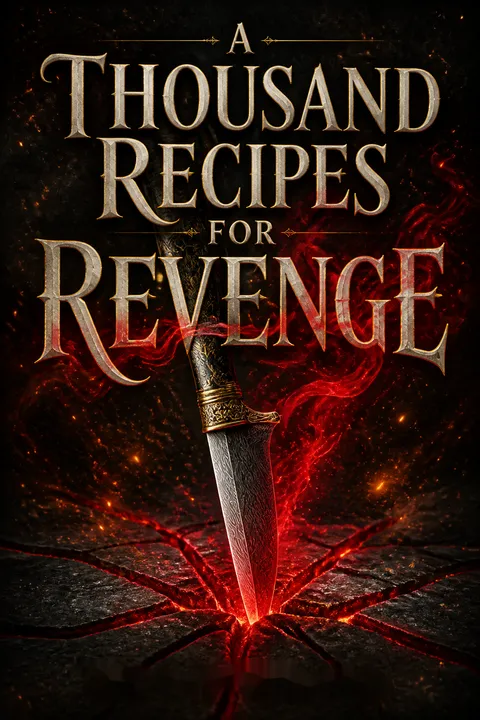
A Thousand Recipes for Revenge receives mixed reviews, with an average rating of 3.87 out of 5. Readers praise the unique magic system centered around cooking, complex characters, and unexpected plot twists. Many appreciate the world-building and the blend of historical and fantasy elements. However, some find the pacing uneven, characters underdeveloped, or struggle to connect with the story. The book's ending is frequently described as surprising and intriguing, setting up anticipation for the sequel.
People Also Read





Characters
Ada
Rogue Chef and motherAdamantine Garland Corre, usually called Ada, is a gifted empathetic Chef and former military officer who has spent years hiding from the Guild and Crown. She cooks below her abilities to avoid detection, though the instinct to make food exactly right remains difficult to suppress. Her fierce loyalty centers on the grandmother who raised her, but she is also shaped by grief, anger, and a distrust of institutions that have treated her as property. Practical and observant, Ada turns culinary knowledge into survival skills, from reading magical ingredients to devising a way to become invisible. Beneath her guarded independence is a longing for family that she has never quite managed to extinguish.
Solenn
Braizian princess and envoySolenn is a sixteen-year-old princess raised in Braiz, trained to negotiate, ride, and represent her people. She is direct, physically confident, and more interested in useful work than in the decorative obedience expected of a court bride. Her compassion is practical: she steps between an acrobat and an abused horse, and she takes seriously what magical food costs its sources. Solenn’s identity is shaped by loyalty to the family and country that raised her, even as she encounters truths that complicate her inheritance. She is neither naïve nor cynical; she is learning to weigh political necessity against the people harmed by the systems she is expected to serve.
Erwan Corre
Captain and steadfast guardianErwan is a disciplined Braizian musketeer captain and Solenn’s longtime protector. His composure comes from years of military training, but his care for Solenn is intimate rather than merely professional. He taught her to ride, read, and defend herself, and he knows how to support her without mistaking protection for ownership. Erwan carries the weight of decisions made to keep dangerous truths from her, and he is capable of accepting her anger without demanding quick forgiveness. His loyalty is expressed through action: he plans, watches, and places himself between those he loves and the threats around them.
Eglantine Garland
Ada’s beloved grandmotherKnown affectionately as Grand-mère, Eglantine is an elderly former palace Chef whose memory is increasingly unreliable. She raised Ada with generosity and practical affection, giving her a home when others might have sent her away. Although her thoughts sometimes lose their thread, her trained body retains the reflexes of her earlier martial practice, and flashes of her old culinary expertise still surface. Eglantine can be stubborn, funny, and unexpectedly formidable. Her dependence on Ada is real, but so is her dignity; she remains a person with preferences, skills, and a past, not simply a burden for her granddaughter to manage.
Aveyron Silvacane
Horse-loving provincial nobleAveyron is a young nobleman from Camarga, quietly observant and unusually attentive to horses and the ethics of magical food. His gentleness does not make him passive. When Solenn is in danger, he acts with a courage that places his own security at risk. He is close to his father, Brillat, though he is willing to question inherited rules when a person’s life is at stake. Aveyron’s manner carries an unfamiliar quality that Solenn notices before she understands it. His loyalty grows from respect rather than social obligation, and he treats trust as something that must be earned and repaid.
Brillat Silvacane
Comte and covert investigatorBrillat is a provincial comte from Camarga who travels Lutecia with his son and a discreet retinue. He is composed, purposeful, and reluctant to disclose information that could endanger his people. His investigation into the magical-ingredient trade is not motivated by profit; he treats the beings behind those ingredients as kin deserving protection. Brillat values restraint, though he is not indifferent to danger, and his willingness to ally with humans depends on whether they can act with integrity. His relationship with Aveyron combines affection with authority, creating tension when his son’s choices challenge the limits of their mission.
Emone Jourdain
Shelter-building former officerEmone is Ada’s former comrade and the charismatic owner of the Golden Horse inn. During the war, soldiers sought her out for practical help and a sympathetic ear; in civilian life, she has built a refuge for people who have been rejected or displaced. Her optimism is not ignorance. Emone recognizes danger, keeps a weapon ready, and continues to look after others even when she is hurt. Her relationship with Ada is affectionate but candid, and she can challenge Ada’s isolation without diminishing the reasons behind it.
Petry Montrell
Hermit and trusted allyPetry is a former officer who lives near the ruins of an old pentad and helps rogue Chefs find safety. Broad, practical, and increasingly weary, he offers Ada more than a hiding place: he understands the cost of caring for someone whose memory is failing. He treats Eglantine with patience and helps Ada leave her in safer hands when the threat closes in. Petry’s quiet generosity contrasts with the political world’s appetite for control, while his age and chronic pain remind Ada that even the strongest friendships have limits.
Didina Rochamp
Veteran and devoted motherDidina is one of Ada’s former Thirty-Fifth Division comrades, remembered for her blunt humor, skill with weapons, and refusal to build her future around a soldier. In civilian life she has a husband and children, a family life she once hoped to create. Her connection with Ada predates the separation that followed the war, and she belongs to the network of former officers who still look out for one another. Didina’s ordinary commitments matter as much as her military past.
Esme Alarie
Ada’s formidable motherComtesse Esme Alarie is Ada’s socially ambitious mother, a highborn woman who built influence through an illicit magical-ingredient business. She is intelligent, decisive, and accustomed to treating relationships as arrangements that can be managed. Her history with Ada is marked by absence and demands, though she is not without attachment to her daughter. Esme’s difficulty is not a lack of capability but a narrow understanding of care: she often assumes that providing comfort and opportunity gives her the right to direct another person’s life.
Ragnar
Comtesse’s loyal stewardRagnar is Esme’s imposing, multilingual steward, known for his strength and quiet courtesy. He has served her for years and treats Ada with more warmth than her mother often does. His loyalty is complicated by his awareness that Esme can be manipulative, yet he believes she has genuine affection for Ada. Ragnar is a careful observer who tries to protect the people under his care without humiliating them. His steady presence makes him one of the few adults in Esme’s household whom Ada can trust.
Mallory Valmont
Disgraced war heroMallory was once celebrated for his service in the Thirty-Fifth Division, where his intelligence and skill with supplies earned him respect. His history is bound to Ada and the other officers who served beside him, though his reputation became deeply contested. Mallory’s ambition and intense need for recognition shaped his relationships with fellow Chefs and soldiers. Even in the past, his charm could coexist with a capacity for fixation and control. His story asks how institutions turn useful violence into public virtue, and what happens when the celebrated figure is no longer permitted to define his own record.
Segal Valmont
Son seeking redressSegal is Mallory’s son, raised at a distance from his father yet deeply devoted to him. He is educated, careful with his appearance, and used to the privileges of wealth. His love for Mallory gives him a powerful sense of duty, but it also makes him vulnerable to repeating his father’s convictions without examining their cost. Segal wants to repair an old wrong in the only way he has been taught to understand: through vengeance and the acquisition of power.
Gyst
God of unseen thingsGyst governs fermentation, secrets, decay, and the powerful changes that begin unseen. Chefs invoke him in cellars and kitchens, and his presence is often recognized through the processes that turn ordinary ingredients into something transformed. He is curious, evasive, and fond of controlling what others know. Gyst’s attention can feel like a blessing, but his interest is not automatically benevolent; he treats mysteries as an invitation to interfere. His association with both nourishment and decomposition makes him a god of necessary change, but also one whose perspective can disregard human limits.
Hester
Goddess of hearth and homeHester embodies the warmth of a household and the destructive force of fire. Verdanians regard her as their home-born deity and honor her through food offerings, especially at the hearth. Her mythology carries a contradiction that people readily accept: the same flame can feed a family or consume its shelter. Hester is powerful, passionate, and difficult to separate from the land and buildings that people call home. Stories about her temper have become part of everyday religious teaching, though the official version of her history is not the only one.
King Caristo
Suspicious Verdanian rulerCaristo rules Verdania and has a long history of volatile decisions, particularly where Braiz and Albion are concerned. He understands numbers, soldiers, and the machinery of power, but political suspicion can make him stubbornly resistant to evidence that does not fit his expectations. His authority shapes the lives of Chefs, soldiers, and foreign allies, often without requiring his personal presence. Caristo’s public confidence masks a ruler who is capable of both strategic intelligence and damaging misjudgment.
Queen Roswita
Foreign-born Verdanian queenRoswita came to Verdania as a foreign bride and has spent much of her life navigating a court that never entirely stops regarding her as an outsider. She is poised, politically experienced, and more perceptive than her husband’s public manner suggests. Her sympathy for Solenn is limited by the pressures of court and her own history, but she can recognize the loneliness of being permanently measured against local expectations. Roswita understands that survival in the palace often requires restraint rather than open protest.
Madame Brumal
Princess’s Verdanian tutorMadame Brumal is assigned to prepare Solenn for life at the Verdanian court. She knows its manners, clothing, and expectations, and she is anxious to ensure Solenn makes no public mistake. Her care is real but shaped by the biases of the society she represents, including rigid ideas about femininity and appearance. She can be supportive in practical matters while also pressing Solenn to become more acceptable to a court that does not fully accept her.
Prince Rupert
Young Verdanian heirRupert is a fourteen-year-old prince whose marriage to Solenn is meant to secure a political alliance. He enjoys sport and the company of his friend Jicard, and he often approaches formal obligations with the impatience of someone who has been protected from their consequences. That immaturity can make him careless, but he also shows moments of kindness toward servants and an ability to laugh at the absurdity of court life. Solenn sees more possibility in him than their arranged match initially suggests.
Jicard Dubray
Prince’s closest companionJicard is Rupert’s friend and frequent companion at court, the son and heir of the powerful Marquis de Dubray. He is sociable, privileged, and eager to impress his circle with knowledge and access to magical ingredients. His confidence often makes him dismissive of other people’s discomfort, though he is not presented as a deliberate villain. Jicard’s position gives him a link between the royal household and the elite appetite for rare epicurea.
Marquis de Dubray
Collector of rare epicureaThe Marquis is Jicard’s wealthy father and a prominent courtier with an extensive private collection of magical ingredients. He is proud of his status and his possessions, and he treats knowledge of epicurea as a form of prestige. His polished manners conceal an assumption that access and authority entitle him to demand answers from others.
Plot Devices
Epicurea
Food carries divine powerIn this world, magic enters human bodies through foods prepared from blessed plants, animals, or other sources. Chefs can recognize, prepare, and intensify those powers, while rare empathetic Chefs can perceive how a dish will affect a particular person. The system makes cuisine a form of medicine, military technology, and political currency. It also conceals a moral problem: some magical ingredients come from beings who are intelligent and capable of suffering. As Solenn learns, the word ingredient can hide a person’s life behind the language of consumption.
Empathetic tasting
Taste reveals danger and desireAda and Solenn possess unusual forms of Chef perception. Ada can experience how other people taste food, allowing her to tailor dishes and detect subtle qualities. Solenn’s newly awakened ability lets her sense magical ingredients and experience the death they may cause. This power repeatedly gives them information that others cannot access, but it does not guarantee that anyone will believe them or obey their warnings. The gift therefore creates both advantage and isolation: knowledge arrives in the body before it can be converted into proof.
Cat-hair oatcakes
A hidden route through dangerAda discovers that cat hair, when prepared in food and awakened through Gyst, can make her and another eater invisible. She uses the magic to escape her mother’s estate and later enter the Valmont household. The effect is powerful but limited, requiring carefully prepared oatcakes and lasting only a short time. It also lets the users perceive strange figures from a neighboring realm. This private invention demonstrates how Ada’s ingenuity can exceed official Chef knowledge, while each use exposes her to the risks of relying on an unexplained power.
The Coterie
The ingredients are peopleThe Coterie is the name for magical peoples who live partly in the human world and partly in Arcady. Some can take human forms, including the Camargas, while others appear as animals, trees, or other beings. Their existence changes the meaning of epicurea: many magical foods are taken from living people or their kin. Aveyron and Brillat’s opposition to the trade begins as a mysterious dislike of ingredients, then becomes the moral center of the story’s challenge to human assumptions about food, ownership, and power.
The Hester powder
A god becomes a weaponMallory discovers that powder ground from Hester’s stone body can give him extraordinary strength and fire, even as his body has been weakened by years of consuming rupic. His use of the powder is not just another instance of magical indulgence: it threatens to drain Hester’s remaining power and gives Mallory the chance to occupy her place. The statue and its powder turn an old religious mystery into an immediate political and physical danger. This device connects the exploitation of magical beings to the novel’s questions about divine authority and revenge.
Chefs of the Five Gods Series
About the Author
Other books by Beth Cato
Download PDF
Download EPUB
.epub digital book format is ideal for reading ebooks on phones, tablets, and e-readers.








