


Plot Summary
The Man Overboard
Aboard the Swallow, Vice, a wanted pirate, and Knigh Blackwood, the naval officer who betrayed her, pose as Lord and Lady Villiers while sailing toward Arawaké. Their marriage is fiction; their shared cabin is not, and neither is the anger Vice uses to keep Knigh at a distance. She studies a clue to Francis Drake's treasure while hiding her weakness after a week in an iron cage.
When apprentice Llyr falls into the night sea, Vice stops the ship with her depleted magic. Knigh dives into the darkness, finds the boy, and brings him back alive. Vice's fear for Knigh briefly breaks through her hostility, but the rescue cannot undo what he did or restore her trust.
The ship's false marriage makes proximity unavoidable, but the rescue gives that arrangement a moral complication: Vice and Knigh still act for one another even when neither can safely admit what the gesture means. Vice's damaged strength is not merely a physical obstacle; it exposes how imprisonment has disrupted the identity she built around competence. Knigh's dive, by contrast, turns guilt into action. He cannot reverse his betrayal, so he chooses a risk that protects someone vulnerable. Their shared rescue creates evidence of care, not yet grounds for forgiveness.
The Storm's Edge
After sensing a ship-killing storm, Vice warns Knigh that the Swallow cannot outrun it. Her depleted magic cannot drive them clear, but she reads the storm's edge and directs Knigh to change course. He secures her to the mast with a rope while she bends the wind to match the new heading.
A towering wave sweeps her overboard, leaving her hanging from the line as she fights to keep both herself and the ship from being lost. Knigh hauls her back over the rail, and the Swallow escapes the worst of the weather. At the Midwinter celebration that follows, their staged marriage, shared danger, and old desire draw them together, but intimacy only brings the betrayal back into the room.
Vice's decision to help is not a simple return to strength. She must work within her limits, read the storm precisely, and accept a line tied by the man she distrusts. Knigh's rescue makes their dependence reciprocal, but not equal: he can pull her from the sea, while she determines whether the ship survives. The storm makes their romantic conflict physical. They are thrown together by necessity, yet the warmth that follows cannot erase the injury beneath it. The section insists that shared danger can renew attachment without repairing the conditions that make intimacy unsafe.
Yule's Broken Promise
During the Swallow's Yule feast, Vice and Knigh share a public kiss beneath mistletoe, then return to their cabin and sleep together. Knigh's tenderness makes the encounter feel like a possible beginning; Vice's longing makes it impossible to dismiss as mere comfort. Afterwards, she names the betrayal he had avoided discussing: he arrested her after sharing her bed, and the Navy's iron cage nearly destroyed her health and magic.
Knigh offers no defence that can make the harm smaller. Vice admits their connection was never only physical, then asks him to get her back to her friends and keep away from her. The next week, they share a cabin but retreat into silence, each carrying the same unresolved night differently.
The encounter fails because the characters assign it different meanings while carrying unequal responsibility. Knigh treats sex as evidence that forgiveness may be possible; Vice experiences it as proof that desire can reopen a wound without healing it. Her blunt naming of the cage restores the physical stakes that his remorse risks abstracting. Knigh's refusal to defend himself matters, but restraint is not repair. By ending the night with a boundary rather than reconciliation, Vice protects her agency even as she acknowledges her attachment. Their distance becomes an honest consequence, not a romantic misunderstanding easily swept away.
The Copper Drake
Vice's search for the meaning of FitzRoy's torn page stalls until she reaches Nassau with Knigh and discovers that her friend Perry and the rest of the crew are still missing. At bookseller Waters's wrecked shop, she finds him unconscious and badly injured. Knigh uses his healing gift to bring Waters back from the edge of death.
Waters identifies FitzRoy's men as his attackers and explains that they were searching for a mysterious book with a copper dragon on its cover. Knigh had bought that book for Vice before their betrayal, intending it as a gift; its Ancient Hellenic writing has resisted both of them. FitzRoy has already left Nassau, but his interest confirms that the book may hold another route to Drake's treasure.
The rescue of Waters shifts Knigh's role from the man who caused harm to someone capable of using his power in another person's service. Vice accepts that help without mistaking it for absolution. The Copper Drake also changes the story's central puzzle: treasure hunting is no longer only a contest with FitzRoy, because a second object and a second hidden message have entered the search. The book's original status as an unoffered gift gives it emotional weight, but its value does not depend on romance. It is a material record of Knigh's attention, now entangled with danger and knowledge.
Home at Gunpoint
Vice finally finds Perry, Aedan, Saba, and the crew aboard the recovered Covadonga, now renamed Respair. Aedan points a pistol at Knigh for helping FitzRoy capture Vice, and Vice stops him by placing herself between the gun and its target. She tells the crew FitzRoy also betrayed them by separating them from her and hiding his clue to Drake's treasure.
The revelation turns their anger toward a shared pursuit, while Knigh's knowledge of the clue gives them a practical reason to keep him aboard. Vice then challenges Perry for captaincy, expecting the crew to recognize her courage and skill. Instead, they elect Perry, judging Vice too reckless with her own life to trust with theirs.
Vice's return home does not restore the place she expects to occupy. She can stop Aedan from killing Knigh and rally the crew against FitzRoy, but the vote reveals that loyalty and leadership are not interchangeable. The crew values Vice's courage while fearing its cost. Perry's election makes visible a deficit Vice has not understood: she treats self-sacrifice as proof of care, while her crew experiences it as a risk imposed on them. This is a painful but useful distinction. The rejection challenges her self-image without erasing her capabilities or her bond with the people who voted against her.
The Kraken's Parley
The Royal Navy ship Sovereign approaches under Admiral and Duke of Mercia, Knigh's former commander, while a strange wake reveals the kraken moving unseen below. Mercia demands a parley with Knigh, and the brothers meet between the ships. Knigh urges George to leave Mercia, explaining that the Duke is dangerous, but George rejects him and draws a pistol when Knigh tries to pull him away.
Their parley collapses into gunfire. The kraken attacks the Respair, and a tentacle throws a sailor overboard. Unable to outrun the creature or the larger warship, Perry accepts a desperate plan: grapple the Sovereign, forcing both vessels into close combat and buying the crew time to find another way out.
The kraken turns Mercia's authority into a physical threat that can reach beyond the ordinary rules of naval combat. Yet the deeper rupture is George's refusal to trust his brother. Knigh's attempt to protect him repeats the same paternalism that has shaped much of his life: he assumes that danger gives him the right to decide for someone else. George's pistol makes the cost immediate. Perry's choice to grapple the Sovereign is not a victory of confidence but a disciplined response to narrowing options, marking her as a captain who can act without pretending the risk has disappeared.
A Berserker's Blade
Vice leads a boarding party onto the Sovereign to steal Mercia's clue, but marines surround them before they reach his quarters. During the fight, Knigh loses control and attacks Aedan, striking his arm with enough force to leave him near death. Vice steps between them and calls Knigh back to himself. She then orders him to carry Aedan while she and the others fight their way out.
Back on the Respair, Knigh uses his healing gift to mend Aedan's shattered injury. Wynn and Effie prepare barrels packed with gunpowder and rum; Knigh adds heated oil to make the sea burn. The explosions drive the kraken away long enough for the Respair to escape, but Vice's guilt over Aedan's blood follows them to Nassau.
The boarding raid turns Knigh's private fear of himself into visible danger for the crew. Vice can interrupt his berserker state, but that ability does not make her responsible for managing his violence. Her decision to save Aedan and then require Knigh to heal him keeps the consequence present rather than allowing remorse to substitute for repair. The escape plan also demonstrates how collective competence works: the sisters' explosives, Knigh's tactical knowledge, and Vice's command of wind and sea combine to create a chance. The crew survives through coordination, not through one person's heroic strength alone.
Blood in the Alley
In Nassau, Vice hears Knigh and Perry discussing how her choices endanger others. Hurt, she leaves the Respair without saying where she is going. Pirate captain Garlon Vane ambushes her in an alley, beats her unconscious, and sells her to Mercia aboard the Sovereign. When Vice fails to return, Perry's crew searches Nassau and finds one of her earrings in an alley marked by blood.
FitzRoy arrives with the news that Vane delivered her to Mercia and offers help recovering her. Knigh resists trusting him, but Perry accepts a temporary alliance because FitzRoy has a powerful frigate. Meanwhile, Knigh realizes FitzRoy's poetic clue forms mountains and rivers when turned sideways, giving the crew a destination.
Vice's disappearance begins as an attempt to escape emotional exposure, but Vane converts that private retreat into physical captivity. The bloodied earring gives her absence a material cost: the crew cannot assume she has simply chosen to leave. FitzRoy's return complicates the old betrayal without canceling it; the group must use his resources while remaining alert to his motives. Knigh's reading of the clue likewise makes attention consequential. What had seemed like meaningless poetry becomes geography only when he changes his approach, a practical counterpart to the characters' need to reconsider familiar stories about one another.
Mercia's Storm Lesson
On the Sovereign, Mercia keeps Vice in a comfortable cabin but uses iron restraints to punish her escape attempt. He teaches her that fae-blooded sea witches can draw directly from the wellspring, a source of magic beyond the limited effort she has known.
When the Respair approaches, Mercia threatens a fishing boat with the kraken until Vice summons a storm from clear skies to drive her friends away. The storm works, and Vice discovers a new reach of power, but the drowned civilians leave her sick with guilt.
Mercia explains his larger purpose: he has a map to Drake's treasure and wants Vice to clear its unnatural storm, then help him claim Excalibur and the throne of Albion. She recognizes that his lessons were never meant to set her free.
Mercia's mentorship is coercion disguised as opportunity. He teaches Vice a genuine technique, but then makes its first decisive use morally unbearable by holding civilians hostage. The power she gains is real; so is the cost of using it under threat. This complicates the fantasy of limitless ability, since greater capacity does not automatically produce greater freedom. Mercia's political ambition also reframes the treasure hunt: the object is not merely wealth but a means of claiming legitimacy. Vice's captivity therefore operates at two levels, bodily and interpretive. Mercia wants not only her magic, but her agreement about what that magic is for.
The Cipher's Hidden Key
At the island, Vice uses drawings in the Copper Drake to find an entrance among overgrown ruins. One carved door opens onto a deadly pit, and Mercia shoots the trapped Evans rather than attempt a rescue. Vice identifies the safe door by matching the book's figures and wordplay to the carvings. In the next chamber, she secretly takes rubbings of a grid of Ancient Hellenic letters: the cipher key she has sought.
Mercia opens a chest expecting treasure but finds only aged linen and a purple cloth marked with a lightning bolt. As he accuses Vice of stealing the real prize, the terrace collapses. She lands on a crumbling platform above the sea, refuses to hand him the book, and falls when the ground gives way.
The ruins expose two competing ways of treating the past. Vice reads the carvings as part of a living culture and solves the door through careful comparison, while Mercia values the site chiefly as a container for his desired prize. His killing of Evans makes that difference unmistakable: people become expendable when they obstruct his progress. Vice's secret rubbing is a small act of intellectual independence inside captivity, giving her knowledge Mercia does not control. The chest's disappointing contents undercut his assumption that possession equals understanding. The sudden collapse makes the material world itself resist his certainty and forces Vice to choose action without knowing whether she will survive.
The Respair Goes Under
As Vice falls from the island cliff, the Respair and FitzRoy's Sea Witch engage Mercia's scattered warships. The Respair is badly damaged and begins sinking before the crew can reach safety. Vice survives the fall, swims through rough water to the nearby Venatrix, and takes its commander, Munroe, at swordpoint.
Rather than expose him to charges of mutiny, she arranges a credible hostage story and demands that his crew rescue the people from the Respair. Munroe agrees. Knigh and Perry abandon the sinking ship with the crew, Barnacle, and her kittens, expecting to reach FitzRoy's vessel. Instead, FitzRoy sails away. Munroe's Venatrix arrives in time to take them aboard, and Knigh discovers Vice at its helm, directing the ship.
The sinking of the Respair strips away the security of a familiar home and tests whether the crew can survive without the structures that held them together. Vice's hostage ruse is both tactical and ethical: she gives Munroe a way to help without publicly choosing mutiny, preserving his agency even while forcing the issue. Knigh, meanwhile, takes responsibility for the evacuation rather than waiting for a superior to restore order. FitzRoy's flight confirms that a useful ally is not necessarily a dependable one. The rescue succeeds because Vice and Knigh act separately toward the same end, each protecting people the other loves.
A Hard-Won Reprieve
When Mercia's kraken catches the Venatrix, Vice channels the wellspring and strikes the creature with lightning. The kraken reaches her mind, revealing that it is intelligent and in pain, so she stops attacking; it releases the ship and escapes into open water.
Vice's magic also keeps pursuing warships at bay. Once she returns to herself, she and Knigh finally speak plainly. Vice apologizes for pushing him toward the Sovereign and forgives his arrest of her; Knigh apologizes for hiding his reasons and losing control.
They agree to call themselves friends rather than rush back into romance. Munroe offers the Venatrix to their company, while Knigh has decoded the clue and Vice holds the cipher key. They sail on together, with Drake's treasure still ahead.
The kraken's plea revises the meaning of the story's apparent monster: power and danger do not prove the absence of personhood. Vice's choice to stop the lightning is an ethical limit she sets while wielding new power, not a retreat from it. The reconciliation with Knigh similarly avoids a magical reset. Forgiveness follows specific apologies and shared acknowledgment of harm, but the pair chooses friendship as a boundary rather than treating desire as proof that every injury is healed. The ending's hope rests on practical resources, the Venatrix and complementary clues, as well as a more honest relationship. Recovery here means continuing with unfinished work.
Analysis
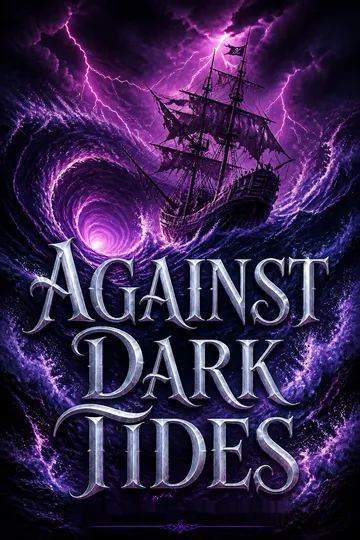
Against Dark Tides treats betrayal as an event with material aftereffects, not a misunderstanding that can be dissolved by desire. Knigh's decision to hand Vice to the Navy leaves her weakened by iron, costs him his place in the Royal Navy, and changes the terms of every later act of care. His remorse matters, but the novel repeatedly distinguishes remorse from repair: Vice must decide what she can forgive, and Knigh must learn that self-condemnation is not the same as accountability.
The story also asks what makes a leader trustworthy. Vice understands courage as taking danger onto herself, yet her crew's vote exposes the danger in that model. A captain must distribute responsibility and allow other people to use their skills. Perry embodies that principle, while Vice's later coordination of magic, weapons, and crew abilities hints at a broader definition of strength than solitary endurance. This is not a rejection of her daring; it is a challenge to make daring answerable to those who depend on her.
Magic follows the same logic. The wellspring expands Vice's reach, but Mercia's control over the conditions of her learning makes power ethically ambiguous. Her storm can protect her friends and terrify them; the kraken can destroy ships yet also suffer. By recognizing its intelligence, Vice refuses the convenient division between heroic force and monstrous force. The real question becomes who has agency and who is being used.
The title's dark tides are both literal and relational: storms, iron, political ambition, and the habits of mistrust that pull people away from one another. Respair names the book's counterweight, not a return to innocence but a recovery of possibility after harm. Vice and Knigh end with friendship rather than a romantic cure, and with clues rather than treasure. Their hope is credible because the work remains unfinished, but they are better prepared to face it together.
Review Summary
Against Dark Tides receives a 3.98/5 rating with mixed reactions. Readers praise the enhanced world-building, pirate adventure elements, treasure hunting, and character growth, particularly appreciating Knigh's development and Perry as a supporting character. However, many found Vice's prolonged anger toward Knigh tedious and repetitive, making the first 70% drag. The "just friends" ending frustrated numerous readers after enduring intense angst. Positive reviews highlight vivid descriptions, emotional depth, action sequences, and the Kraken. Critics felt Vice acted childishly and the slow-burn romance became exhausting, though most acknowledge strong writing and addictive storytelling.
People Also Read





Characters
Vice
The Pirate QueenA daring pirate and sea witch, Vice prizes freedom, competence, and loyalty to the people who have become her family. Humor and bravado help her control what others see, while her instinct to meet danger herself can make her mistake self-sacrifice for leadership. She is quick to act, alert to injustice, and slow to admit when she needs help. Her history with Knigh draws out both desire and suspicion, while the crew's trust matters to her more than she lets on. Vice's defining conflict is not whether she is strong, but whether strength can include relying on others without surrendering her independence.
Knigh Blackwood
The Guilty OfficerA disciplined former naval officer, Knigh finds purpose in skill, duty, and clear chains of command. His self-control is hard won, shaped by shame about past failures and fear that anger can make him dangerous. He wants to repair the harm he has caused, but guilt often leads him to decide what others need rather than ask them. Vice unsettles his certainty and draws out a more instinctive loyalty than he trusts in himself. His challenge is to distinguish responsibility from self-punishment and to make sound choices without waiting for institutions to tell him what is right.
Berit Peregrina
The Steady CaptainKnown as Perry to her friends, Berit is a seasoned sailor whose calm judgment makes her a natural source of stability. She cares fiercely for Vice and often tries to soften consequences on her friend's behalf, a form of protectiveness that can become enabling. Her leadership is less theatrical than Vice's, built on attentive decisions and confidence in other people's abilities. Perry values loyalty, but she also understands that care sometimes requires difficult honesty. Her relationship with Vice carries the intimacy of chosen family, with affection strong enough to survive disagreement about what Vice can responsibly ask of her crew.
FitzRoy
The Charming CaptainFitzRoy is a charismatic pirate captain skilled at managing appearances, gathering information, and turning opportunity to his advantage. He has a long history with Vice and knows how to charm a room, but his ambition makes his loyalties difficult to read. He understands the practical value of ships, clues, and alliances, and can be useful even to people who distrust him. His polished manner contrasts with the cost his decisions impose on others. FitzRoy represents the uneasy line between a capable leader and a self-serving one, especially in a world where survival often requires temporary cooperation.
Duke of Mercia
The Royal ManipulatorA powerful royal naval commander with fae blood, Mercia combines courtly polish with an appetite for control. He is intelligent, persuasive, and well versed in magic, and he can make coercion resemble instruction or generosity. His fascination with capability does not ensure respect for the people who possess it. Mercia prizes political destiny and treats relationships as instruments when they conflict with his aims. His history with Knigh gives their encounters the tension of a former mentor whose authority has become suspect. He is dangerous not because he lacks charm, but because charm and cruelty coexist so easily in him.
George Villiers
Knigh's Younger BrotherGeorge is Knigh's younger brother, an aristocrat whose polished manners conceal strong opinions and a desire to choose his own attachments. He is less experienced at sea and in command than Knigh, but that does not make him passive. George resists being treated as someone whose safety gives others the right to make decisions for him. His relationship with his brother is shaped by family duty, old assumptions, and differing judgments of the people around them. He also shares a close bond with Mercia, which places him at the center of competing loyalties.
Billy
The Merchant CaptainBilly is a warm, capable merchant captain and Knigh's longtime friend. His life at sea has given him practical authority and a perspective less bound to naval hierarchy than Knigh's. Billy dislikes being reduced to an injury or treated as a symbol of someone else's guilt. He expects others to recognize his competence and the life he has built, rather than assume that a changed body means a diminished person. His friendship with Knigh allows him to confront difficult truths without making his own identity revolve around the harm he suffered.
Aedan
The Fierce LoyalistA strong, tattooed member of Vice's pirate crew, Aedan is physically formidable and emotionally direct. His loyalty is expressed through action, and he reacts fiercely when he believes someone has endangered Vice. He values friendship as a bond earned through shared work, which makes betrayal difficult for him to tolerate. Aedan's protectiveness can become impulsive, especially when anger outruns judgment. His history with Vice includes trust and intimacy, but he remains part of the broader crew rather than a rival defined only by romance.
Saba
The Quiet CraftswomanSaba is one of Vice's closest crewmates, a skilled craftswoman and a steady presence in dangerous situations. She makes useful objects by hand, notices small details, and expresses loyalty through practical care rather than speeches. Her friendship with Vice includes affection without the need to compete for attention or status. Saba can be stern when the crew is at risk, but she is not easily shaken from those she considers family. Her skill with a bow and her readiness to stand beside others make her a reliable part of any plan.
Lizzy
The Shipboard HealerLizzy is a resourceful member of the crew who tends injuries and speaks plainly when others are avoiding the practical facts. Her knowledge of remedies and her readiness to enter a fight make her valuable in both sickbay and on deck. She is attentive to the crew's needs without confusing kindness with softness. Lizzy's humor and clear-eyed competence help the group function amid danger, and she treats healing as urgent work rather than a reason to excuse reckless choices.
Munroe
The Dependable CommanderMunroe is a thoughtful naval officer who commands the Venatrix and values his duty to the Royal Navy. He is neither as rigid as Knigh nor as willing to accept a pirate's word without question. His sense of responsibility is tested when his loyalties to the service and to former colleagues point in different directions. Munroe is pragmatic enough to consider unconventional solutions, but he wants a defensible reason to take them. His quiet decency appears in how he treats Vice as a person, even while recognizing the risks of helping her.
Garlon Vane
The Brutal PirateVane is a feared pirate captain with a grudge against Vice and a reputation for force over negotiation. He commands through intimidation and prizes the advantages that fear can buy. Vane is alert to weakness, both physical and emotional, and uses what he learns to improve his position. His menacing presence contrasts with Nassau's loose social world, where shared reputation can protect people as effectively as a weapon. He represents the predatory side of piracy, where independence from law does not automatically mean freedom from cruelty.
Waters
The Bookseller AllyWaters is an elderly bookseller in Nassau and a trusted friend of Vice. His shop reflects a life spent collecting stories, objects, and knowledge from many places. He is sharp-tongued, sociable, and more resilient than his age might suggest. Waters treats Vice with affection without demanding that she become gentler or more conventional. His love of books makes him an important link between the pirate world and the old puzzles surrounding Drake's treasure.
Llyr
The Young ApprenticeLlyr is a fifteen-year-old apprentice aboard the Swallow, cheerful and observant. As one of the youngest members of the ship's company, he depends on the older sailors' competence and care. His presence reminds the crew that danger at sea is not an abstraction; a moment's accident can put a young life in the water.
Evans
The Kind Young GuardEvans is a young naval guard aboard the Sovereign. Unlike some of his colleagues, he treats Vice with ordinary courtesy and notices her discomfort. His small acts of consideration suggest a person trying to remain humane within an institution that often reduces prisoners to problems to be managed.
Barnacle
The Ship's CatBarnacle is the Swallow's grey cat, beloved by Vice and later welcomed into the pirate crew's shipboard life. She is independent, affectionate on her own terms, and an expert ratter. Her presence gives Vice a small, familiar point of comfort amid confinement, travel, and the unsettled life at sea.
Wynn and Effie
The Firework SistersWynn and Effie are sisters from a family associated with fireworks and explosives. Their technical knowledge and inventiveness let them turn limited supplies into practical tools under pressure. They are confident, quick to collaborate, and willing to adapt an idea when the first version is not enough. Their work shows how specialized skill can matter as much as force in a crew's survival.
Plot Devices
Iron restraints
Magic's painful limitIron burns Vice's fae-blooded skin, weakens her body, and blocks her access to magic. The gibbet cage in Albion leaves her physically depleted for the voyage, while Mercia later uses lined shackles to control her during captivity. Iron therefore gives imprisonment a specific magical cost: confinement does not merely restrict movement, it cuts Vice off from the sea that anchors her identity and strength. Its effects also distinguish Vice's fae blood from the abilities of ordinary humans and fae-touched witches.
The Copper Drake
A cipher disguised as historyThe Copper Drake is an old book with a copper dragon on its cover and writing in a ciphered form of Ancient Hellenic. Knigh buys it as a gift for Vice, but never gives it to her before their relationship collapses. FitzRoy's men later attack Waters to find it, alerting Vice that the book matters. Its illustrations help identify the island ruins, and the hidden letter grid there provides the key to its cipher. The book connects character history, danger, and the practical puzzle of finding Drake's treasure.
The wellspring
Power beyond ordinary limitsThe wellspring is a source of magic that fae-blooded people can enter directly, rather than drawing power in small amounts through effort. Mercia teaches Vice to channel it, making possible a storm summoned from clear skies. Using it demands concentration and can overwhelm her sense of self, however, and Mercia's lessons are entwined with coercion. The device turns the question of power into a question of judgment: increased capacity can serve protection, manipulation, or harm, depending on who directs it and under what pressure.
The Kraken
A weapon with its own willMercia commands a huge sea creature whose tentacles can strike sailors and destroy ships. Its unseen wake gives warning of its approach, while its size makes ordinary escape plans seem inadequate. The crew uses explosions and burning oil to frighten it away, but Vice later discovers that it can communicate and feels pain. That revelation changes the creature from a simple monster into a being caught within Mercia's power. Its role tests whether Vice can distinguish a threat from the person controlling it.
The ships
Home, duty, and escapeThe Swallow carries Vice and Knigh toward Nassau under a false marriage; the Respair becomes the crew's base and Perry's command; the Sovereign embodies Mercia's naval power; and the Venatrix offers a faster vessel with a complicated connection to Knigh's former life. Each ship makes a different kind of belonging visible. Sea, sails, currents, and crew roles shape the action, while the loss of the Respair forces the pirates to decide what they can carry forward. The ships are not interchangeable settings; they make freedom and duty concrete.
Beneath Black Sails Series Series
About the Author
Other books by Clare Sager



Download PDF
Download EPUB
.epub digital book format is ideal for reading ebooks on phones, tablets, and e-readers.








