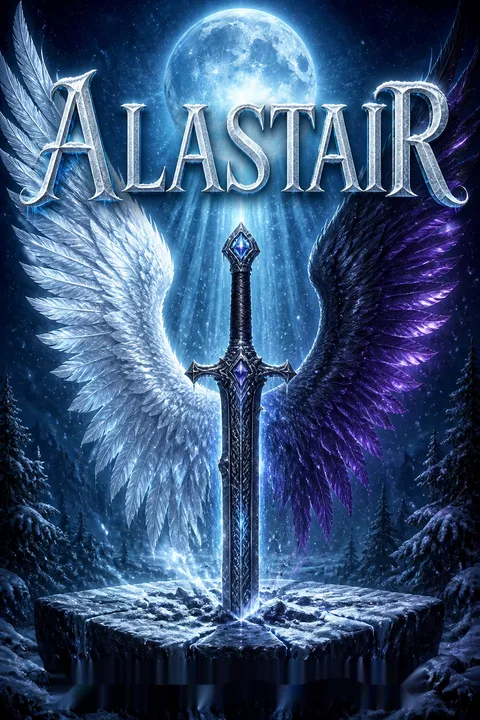


Plot Summary
Prologue
As a child, Alastair believes Lucifer cherishes him and sets out to prove himself when the angel Lazarus takes the sons of Lucifer’s generals. Defying the king’s warning, he lets Lazarus carry him away, intending to find the other boys and lead them home. Instead, he meets Galen, Castor, Daman, Bellamy, Raiden, Gray, and Kallias, and discovers that Lazarus has gathered them to train against Lucifer.
Alastair initially treats the boys as pieces in a mission, but their loyalty and shared danger turn them into his brothers. When he learns Lucifer intends to conquer and destroy humanity, Alastair vows to protect them, even from the man he once called father.
The childhood frame establishes the novel’s central conflict before its romance begins: Alastair mistakes being useful to Lucifer for being loved by him. Pride makes that mistake especially seductive, because being singled out confirms the importance Alastair already wants to believe he has. His decision to leave the castle is still driven by a wish to earn Lucifer’s approval, but its consequence is a family Lucifer cannot control. The prologue therefore makes his later struggle more than a change of allegiance. He must learn to distinguish genuine attachment from the flattery that makes a person exploitable.
Echo Bay Wakes the Dead
Thousands of years after his childhood, Alastair lives with his Nephilim brothers on a Greek island, where they and their allies prepare for Lucifer’s growing war. Their mansion in Echo Bay has already burned, and the return of their long-lost brother Kallias has only partly eased their losses. Reports of monsters are spreading worldwide when Alastair’s vampire friend Konnar calls with worse news: corpses are rising in Echo Bay.
Lazarus, the white-winged angel who trained the brothers, arrives to assess the threat. He recognizes the attack as bait meant to draw Alastair home, and warns that Lucifer wants him specifically. Alastair agrees the danger is real, but his need to protect the town and confront Lucifer soon overrules caution.
The opening places Alastair in a familiar leadership bind: he can identify the enemy’s tactic and still feel compelled to answer it. The burned mansion matters because Echo Bay is not simply a strategic location; it is the material remains of his chosen family’s shared life. Lucifer exploits that overlap between private grief and public duty. Alastair’s intelligence does not immunize him against manipulation, because the bait works by attaching itself to something he values. Lazarus’s warning introduces a counterforce, though his authority over Alastair is already contested.
Pride Walks Into the Trap
Alastair secretly travels to Echo Bay with Phoenix, Bellamy’s demon mate, intending to make Lucifer reconsider attacking the brothers. At the ruins of the mansion, Lucifer and his generals reveal that they expected him. Lucifer offers Alastair a place at his side and tries to revive the boy’s old hunger for approval. Alastair refuses, but not before revealing that Kallias, once believed dead, has returned.
Lucifer orders his forces to capture him, and disables Phoenix’s teleportation with a psychic assault. Alastair calls Lazarus for help. Lazarus arrives with the brothers and their mates, then holds Lucifer off while the others escape. Though Lazarus is badly wounded, Michael and additional angels arrive in time to drive Lucifer away.
Alastair’s plan succeeds in delivering information but fails at its practical purpose: he cannot control the encounter once Lucifer turns it into a personal test. The king’s offer is effective because it reaches past Alastair’s politics and addresses the childhood wound beneath them. Alastair’s restraint, when he stops himself from fighting, marks a small but consequential shift from proving strength to protecting others. Phoenix’s danger makes the cost of Alastair’s secrecy immediate, while Lazarus’s willingness to intervene unsettles the claim that he sees the brothers only as military assets.
The Angel’s Hidden Bond
Back on the island, Bellamy blames Alastair for endangering Phoenix, and Alastair’s fear for Lazarus escapes his usual composure. Lazarus survives his wounds, but avoids explaining why he repeatedly protects the brothers, including saving Daman before Lucifer’s return.
After Alastair accidentally finds him bathing beneath a waterfall, he confronts him with the evidence. Lazarus admits that he cares for them, then Alastair recognizes the connection between them: Lazarus has hidden their fated mate bond for more than two thousand years.
The archangels ordered Lazarus to seal it, leaving Alastair unaware while Lazarus endured his feelings alone. Alastair reacts with anger at the deception and flies away, unable to decide whether the revelation means love or another loss of control.
The bond’s revelation changes the meaning of earlier scenes without erasing their harm. Lazarus’s care was real, but so was his choice to withhold knowledge that belonged to Alastair’s own life. Their conflict exposes a distinction between protective secrecy and paternalism: Lazarus believed ignorance spared Alastair pain, yet made the decision for him. Alastair’s anger is therefore not simply resistance to fate. It is a demand for agency after centuries in which others have treated his life as a plan to administer.
A Seal Gives Way
Alastair tells his brothers about the bond, and they support him without deciding for him. He and Lazarus then argue over the years of silence. Lazarus believes he should restore the seal so Alastair can escape feelings he never chose; Alastair hears this as another decision made on his behalf.
Once they understand the misunderstanding, Lazarus stops treating duty as the only acceptable answer and kisses him. The kiss breaks the weakened warding completely, releasing the feelings both had been denied.
They begin a relationship, and Lazarus, who has never been intimate with anyone, lets Alastair guide their first night together. The next morning, affection comes more easily, but neither can forget that the celestial council may punish Lazarus for disobeying its order.
Their first intimacy is also a negotiation over consent. Fate may have selected them, but Alastair insists that destiny cannot substitute for his right to know and choose. Lazarus’s willingness to act only after hearing what Alastair wants marks a change from command to reciprocity. His inexperience makes the reversal especially telling: the angel who trained Alastair to obey must now risk being vulnerable himself. Their happiness begins not when the supernatural bond asserts itself, but when they correct the human problem of speaking past each other.
The War Spreads Worldwide
Michael arrives to oversee the celestial and Nephilim forces, a move Alastair initially resents as a challenge to his authority. Training reveals the limits of Alastair’s plan: the brothers once fought Lucifer as a synchronized unit, but cannot reproduce that state without him present.
Meanwhile, attacks intensify across cities, and Lucifer’s agents unleash monsters and raise the dead. Fallen angel Penemuel proposes using his writing magic to prepare humans to protect themselves and accept the supernatural without mass panic.
Alastair and Michael approve the plan, and Daman spreads its instructions online. Allied commanders send dragons, hunters, and warriors to threatened regions. The civilian guidance reduces panic, while the coalition frees its strongest fighters to pursue Lucifer rather than contain every outbreak.
This section tests leadership as a practice of sharing power. Alastair’s pride interprets Michael’s arrival as displacement, but the crisis demonstrates that a coalition cannot depend on one strategist’s control. Penemuel’s plan is ethically uneasy because it alters human understanding through magic, yet it also responds to a concrete emergency: public terror would multiply the damage of the attacks. The narrative does not make cooperation morally effortless. It presents it as a series of constrained choices, where delegating responsibility may protect lives even when it unsettles the person accustomed to carrying it.
Lucifer Survives the Blades
The coalition tracks Lucifer to a castle near Transylvania’s Hoia Baciu forest, where he has gathered witches and armed followers. In the battle, Lazarus and the angels engage Lucifer’s generals while the brothers fight through demons and the dead. Their movements finally synchronize, allowing all eight to strike as one force.
Their celestial steel pierces Lucifer’s supposedly invulnerable skin for the first time. He bleeds, and the brothers believe they have won. Then Lucifer heals from the wounds and escapes, leaving them with no answer for how to finish him. Alastair’s strategy has proven that the brothers can weaken their enemy, but not that they can kill him. The failed victory forces them to seek the missing piece of the prophecy.
The battle converts an abstract theory into observable proof: the brothers’ combined power can alter Lucifer’s defenses. Yet the healing that follows prevents competence from being mistaken for mastery. Alastair’s plan was not foolish, but it was incomplete, and that distinction matters to someone whose identity is organized around being right. The episode also makes synchronization relational rather than merely tactical. The brothers succeed because their separate abilities become coordinated, but the fight still depends on knowledge none of them yet possesses.
Night Fall Has a Price
Alastair and Lazarus lead the group into the realm of the lost to consult Mephistopheles, the fallen angel banished there after betraying Lucifer. He explains that Lucifer’s son Asa carries Night Fall, a soul weapon formed from the darkness within Lucifer.
Combined with the brothers’ sins, the sword can kill him. Mephistopheles shares a vision in which Alastair and his brothers fight Lucifer beneath a moonless winter sky. Alastair realizes that victory requires more than lending the sword their power: the brothers’ souls must become part of it.
He tells them the truth privately. Their mates may survive, but the brothers themselves could remain trapped, unable to return. They choose to continue, though Alastair withholds the full cost from Lazarus.
Knowledge here is not a clean solution but a burden that changes the meaning of victory. Night Fall answers the tactical question left by Lucifer’s healing, while the vision turns that answer into a moral dilemma. Alastair’s instinct to withhold the truth from Lazarus repeats, in miniature, the protective secrecy that wounded him earlier. He now understands the harm of having decisions made for him, yet fear tempts him to make one for the man he loves. His courage and his contradiction arrive together.
Asa Sets His Terms
The group visits Asa in the celestial prison, where Lucifer’s son has been kept powerless since his resurrection. Alastair appeals to Asa’s anger at being manipulated and sacrificed by his father and by Belphegor. Asa agrees to cooperate only if Michael moves him from his cell to a guarded room with a bed, a bath, and better food. Michael accepts.
Asa reveals Night Fall, the black sword that contains the key to Lucifer’s death, and Alastair takes responsibility for wielding it. Their agreement gives the coalition its weapon, but it also confirms that the brothers cannot avoid the sacrifice attached to it. Asa’s participation is useful, not trusting; both sides leave the prison with conditions still unresolved.
Asa’s bargain makes the war’s moral economy visible: even cooperation is negotiated through grievance, leverage, and immediate need. Alastair does not ask Asa to become virtuous or loyal. He identifies a common interest and offers a way for Asa to act against the father who treated him as disposable. Michael’s willingness to grant comfort shows a pragmatic form of mercy, though it does not amount to forgiveness. The scene also echoes Alastair’s own history with Lucifer, giving him a chance to recognize manipulation without repeating it.
Echo Bay’s Spy Is Exposed
At Konnar’s nightclub, the reaper Taeden warns Alastair that Lucifer knows about Night Fall. His information came from Holden, who heard about the sword from Evangelos, one of Lazarus’s trusted angels. Michael and Lazarus question Evangelos under truth-binding restraints; he admits he has defected to Lucifer and disclosed the weapon.
He also reveals that Lucifer plans to summon Asa during the rare black moon, using residual magic at the place Asa first returned to life. That place is the burned mansion in Echo Bay. The council executes Evangelos for treason. The news leaves the allies with little time to prepare: Lucifer is not merely gathering power, he is moving to destroy the sword’s bearer before the final battle.
The betrayal is painful because it comes through intimacy rather than military surveillance: Evangelos passed information to a lover who was connected to the enemy. The book treats secrecy as a vulnerability that can travel through ordinary human attachments, not only through grand strategy. Lazarus must distinguish a trusted subordinate from a trustworthy one, just as Alastair has had to reassess Lucifer. The execution closes the security breach but cannot undo its consequence. Once information has crossed the line, the enemy can force the heroes to fight on a timetable of his choosing.
The Cost Reaches Their Mates
Before the black moon battle, Alastair finally tells his brothers’ mates what the spell demands: the eight souls will be trapped inside Night Fall. Clara objects, but agrees to perform the forbidden ritual because no other way to stop Lucifer exists. The mates are devastated.
Daman and Warrin mourn the family they hoped to build; Phoenix and Bellamy struggle to separate love from sacrifice; Titan, Simon, Mason, Kyo, and Elasus face the same approaching loss. Alastair cannot comfort them without sharing their grief, and Lazarus holds him as he admits he does not want to leave. When Michael reports that Lucifer has reached Echo Bay, Alastair sets the army in motion, choosing the mission despite the future it may cost.
The revelation changes the sacrifice from an abstract prophecy into a shared, intimate event. Each mate imagines a distinct future that may be lost, making the cost legible through plans for children, homes, and ordinary time. Alastair’s leadership no longer means shielding others from painful knowledge; he gives them the truth and allows them to respond. The scene refuses the easy idea that noble purpose erases grief. Duty may determine what they do, but it does not make the choice painless or render the people left behind less important.
Asa Escapes the Summoning
The allied armies converge on the mansion ruins beneath the black moon, while Lucifer’s forces try to keep them away from the witches’ summoning circle. The spell succeeds in pulling Asa from the celestial prison.
Lucifer attacks him to prevent the brothers from using Night Fall, but Phoenix reaches Asa first and teleports him out of danger. Michael takes Asa into protective custody, preserving the weapon and the possibility of victory. Across the battlefield, dragons, angels, vampires, werewolves, hunters, and Nephilim fight to hold the enemy back.
Alastair gathers his brothers and prepares to use their synchronized power against Lucifer. The rescue removes the immediate threat to Night Fall, but the ritual and the final confrontation are now unavoidable.
Phoenix’s rescue is a concentrated expression of the alliances the war has created. A demon once aligned with Lucifer now saves Asa, the very person whose sword may save the world. The event does not require Phoenix to become innocent; it requires him to choose his commitments in action. At the same time, the broad coalition is not decorative spectacle. Each group holds a different part of the battlefield, creating the brief opening the brothers need. The heroes can reach Lucifer only because others make that approach possible.
The Eight Become Night Fall
As Clara chants beside the ruined mansion, the brothers synchronize and weaken Lucifer’s defenses. Their blades finally cut him, but the spell begins taking their souls one by one. Kallias falls first, then Galen, Castor, Daman, Gray, Bellamy, and Raiden; each soul enters a colored stone in Night Fall while their mates watch.
Alastair remains to face Lucifer alone, then drives the black sword into his heart. The final purple stone receives Alastair’s soul, and Lucifer dies. His army disperses, ending the conquest, but the victory leaves eight lifeless bodies in the snow and their souls imprisoned in the sword. Lazarus holds Alastair as the battle falls silent, unable to know whether his mate can return.
The climax gives literal form to the novel’s conflict between power and personhood. The brothers defeat Lucifer by turning their individual sins into a shared weapon, but that unity threatens to erase the people who created it. Their order of falling makes the spell intimate rather than abstract: each body is a separate goodbye, witnessed by someone who loves it. Alastair’s final act succeeds, yet success cannot initially be distinguished from loss. The scene withholds easy triumph because the world’s survival has not answered whether the survivors can reclaim their own lives.
Love Calls Them Back
After Lucifer’s death, Raphael restores the brothers’ bodies and urges their mates to call them out of Night Fall. Warrin, Simon, Mason, Titan, Kyo, and Phoenix each reach the soul bound to them, and Daman, Galen, Gray, Raiden, Castor, and Bellamy return. Alastair’s soul remains in the purple stone because he refuses to leave Kallias, whose mate Elasus died centuries earlier.
Lazarus cannot persuade him to abandon his brother. Uriel returns with Elasus, restoring the Spartan’s body and bringing him to the battlefield. Elasus calls Kallias back, freeing the final stone. Alastair then returns to Lazarus. The brothers survive the spell, but the reunion follows an entire night of grief and does not undo the lives lost in battle.
The return mechanism makes attachment active rather than sentimental: the mates’ specific promises and shared histories give the trapped souls a reason to respond. Alastair’s refusal to leave Kallias extends the brothers’ loyalty beyond the battlefield, but it also nearly costs him his own return. Uriel’s intervention resolves the final obstacle by acknowledging that Kallias’s longing cannot be answered by his brothers alone. The scene’s emotional logic is reciprocal. No single hero rescues everyone; different bonds bring different people home.
The War’s Debts Are Judged
After the battle, the allies burn their dead and Alastair mourns Lucifer, whose childhood tenderness may have been real even alongside his manipulation and ambition. Lazarus and Alastair return to the island as the council reviews the consequences of the war.
The archangels approve their relationship and allow them to complete the mating ritual. Mephistopheles, whose knowledge revealed Night Fall, receives limited leave from his exile; Asa is freed under supervision, while Belphegor remains imprisoned.
Lazarus learns the brothers’ sins remain, though Michael promises the celestial army will handle any future wars. Alastair and Lazarus can finally imagine a life beyond duty. Their future is not granted by victory alone: it depends on political decisions that recognize their bond and the brothers’ service.
The aftermath refuses to treat victory as a universal pardon. Different characters receive different judgments, shaped by both their actions and their willingness to change. Mephistopheles gains limited freedom rather than instant absolution; Asa receives another chance, while Belphegor faces continued confinement. Uriel’s approval of Lazarus and Alastair likewise marks institutional change, not the disappearance of institutional power. The resolution matters because personal love had long been governed by rules imposed from above. Their relationship becomes possible only when the council revises the judgment that kept it sealed.
A Wedding After Winter
With the war over and the council’s permission secured, Alastair and Lazarus marry in the island courtyard. Michael officiates, the brothers and their mates gather as witnesses, and the couple exchange vows before drinking the magically blessed wine that begins their soul-binding ritual.
Alastair chooses a champagne-colored suit for Lazarus, who accepts the clothing on the condition that it will come off later. Their teasing unsettles neither the seriousness of the vows nor the joy of being together openly.
As the guests celebrate, Alastair and Lazarus step into a future they once believed had been denied to them. The wedding resolves the novel’s central question not by making their past harmless, but by giving them a freely chosen life after it.
The wedding converts private reconciliation into public recognition. Earlier, Lazarus’s bond with Alastair existed as a secret managed by authority; now their friends witness and affirm the union. The ceremony’s humor is not a retreat from the cost of the war. It demonstrates that play, appetite, and ordinary pleasure have returned to a world that had narrowed around survival. Alastair’s insistence on a chosen ceremony and Lazarus’s willingness to meet him there show how far their relationship has moved from command and concealment toward mutual authorship.
Epilogue
Four months later, Alastair and Lazarus live together in the celestial realm, where Lazarus has built Alastair a library stocked with books recovered after the mansion fire. They share an easy domestic life and return regularly to the island to eat with Alastair’s brothers and their mates.
At one Sunday dinner, Daman and Warrin announce that they are expecting a child, and the family celebrates around Raiden’s food. Simon offers Alastair a violin to replace the one he lost. Alastair watches his brothers laugh, safe and together, and recognizes that the peaceful life he feared he would never have has begun.
The epilogue tests the ending through ordinary details rather than another supernatural threat. A rebuilt library answers the loss of the mansion without pretending the burned home can be restored exactly; the violin offered by Simon gives Alastair another path back to an old pleasure. Daman and Warrin’s expected child makes the future tangible, especially after the brothers believed family life would be sacrificed with their souls. The weekly meals preserve the brothers’ collective identity while allowing each couple a separate home. Peace here is not emptiness after conflict. It is the freedom to make plans that extend beyond the next battle.
Analysis
Alastair’s story begins with a child who confuses being cherished with being chosen for a purpose. Lucifer’s attention gives him status and direction, but both are conditional: Alastair matters while he can be shaped into a weapon. His adult conflict is therefore not only whether to fight his former king. It is whether he can separate love from usefulness, and leadership from the belief that every outcome rests on his shoulders.
The relationship with Lazarus gives that conflict a second form. Lazarus’s secrecy comes from obedience and fear of punishment, not indifference, but good intentions do not cancel the cost of withholding Alastair’s choices. Their bond becomes possible when Lazarus stops deciding what Alastair should be spared from and listens to what he wants. The romance does not dissolve duty; it exposes the way institutions have taught both men to treat personal need as a threat to duty.
The Nephilim brothers’ shared powers make family more than a metaphor. Their sins can become weapons only when their separate movements synchronize, so cooperation is both an emotional achievement and a combat requirement. The final spell intensifies this logic cruelly: their devotion to humanity demands the temporary loss of their own lives and futures. Their mates’ voices then become the means of return, making love neither a sentimental reward nor a substitute for action, but a force that can resist the spell’s claim over their souls.
Lucifer offers a distorted counterpart to Alastair. Both are proud, intelligent, and hungry to define their own lives, but Lucifer turns freedom into domination and calls domination purification. Alastair’s victory comes from accepting limits: he needs his brothers, allies, and eventually Lazarus. The resolution does not claim that all enemies are misunderstood or redeemable. Instead, it distinguishes grief for a real past tenderness from surrender to the person who weaponized it. Peace arrives when the survivors can choose homes, partners, and futures without being reduced to what the next war requires.
Review Summary
Alastair received mixed reviews, with ratings ranging from 1 to 5 stars. Many readers praised the epic conclusion to the series and the emotional journey, while others felt disappointed by the lack of romance development between Alastair and Lazarus. Some found the plot engaging and well-executed, while others thought it overshadowed the main couple's relationship. Readers appreciated the character interactions and battle scenes but wished for more intimate moments between the protagonists. Overall, the book sparked intense emotions and debates among fans of the series.
People Also Read





Characters
Alastair
Pride’s guarded strategistThe eldest of the eight Nephilim brothers, Alastair is intelligent, composed, and accustomed to measuring his worth through competence. His sin, Pride, can magnify confidence in others until they abandon reason, making restraint as important as strength. He loves tea, books, and solitude, but his polished manner conceals a fear of failure and an old need to earn Lucifer’s approval. As the brothers’ strategist, he feels responsible for their safety and often confuses carrying every burden alone with protecting them. His sharp perception is matched by a stubbornness that can make him act before he has asked for help.
Lazarus
The guarded angel commanderA powerful angel and military commander, Lazarus trained the Nephilim brothers under orders from the celestial realm. Disciplined, observant, and emotionally guarded, he has spent centuries treating self-denial as proof of loyalty. He is protective of the brothers, though his severe methods and reluctance to explain himself make care difficult for them to recognize. His attachment to Alastair challenges the belief that duty requires abandoning personal desire. Lazarus’s affection emerges through small acts, including attention to Alastair’s habits and willingness to let him see vulnerability that he has shown no one else.
Lucifer
The conquering MorningstarOnce the most powerful angel, Lucifer becomes king of the underworld and seeks to rule the human realm as well. Beautiful, charismatic, and skilled at making others feel uniquely valued, he can inspire genuine affection while using people as instruments. He sees himself as a liberator and purifier, a self-image that lets him frame domination as justice. His history with Alastair is especially intimate: he helped raise the boy and taught him, yet also cultivated the loyalty he hoped to exploit. Lucifer’s conviction that power entitles him to decide humanity’s fate makes him both persuasive and dangerous.
Galen
Wrath’s fierce protectorThe broad-shouldered Nephilim avatar of Wrath, Galen is blunt, formidable, and fiercely protective of his brothers. His anger can overwhelm judgment, but it is rooted in loyalty and grief rather than simple aggression. He trusts action more readily than conversation, yet his bond with Simon reveals a gentler capacity for care. Galen often challenges Alastair directly when he thinks pride is driving a dangerous choice.
Castor
Greed’s irreverent fighterCastor, the red-haired avatar of Greed, is playful, acquisitive, and quick with a joke, especially when tension threatens to overwhelm the group. His appetite for beautiful and expensive things gives his sin a comic surface, but he is a capable fighter and devoted brother. He loves Kyo and is generous with the people he considers family. Castor’s humor often helps the brothers keep their closeness alive through danger.
Daman
Envy’s watchful skepticThe Nephilim avatar of Envy is reserved, sharp-tongued, and skilled at noticing insecurity in others. His power can intensify jealousy, a gift he treats with caution because he understands how easily resentment becomes destructive. Daman’s history of loss makes him wary of trust, but his relationship with Warrin gives him a place to be openly affectionate. He is often the brother willing to make a hard decision when sentiment threatens their safety.
Gray
Sloth’s tender survivorThe smallest brother, Gray is sleepy, affectionate, and often disarmingly funny. His sin can drain another person’s energy, but he prefers gentler uses of his power. Beneath his playful love of naps and sweets is a history shaped by Belphegor’s army and a persistent fear of becoming like his father. Mason’s steadiness and his brothers’ care help Gray feel safe enough to remain soft in a life built around combat.
Bellamy
Lust’s charming peacemakerBellamy’s sin lets him perceive and stir desire, and his charm often turns tense moments into jokes. He is perceptive about his brothers’ feelings, especially Daman’s, and knows how to coax people into admitting what they would rather conceal. Behind his confidence is a long familiarity with loneliness, which makes his love for Phoenix both intense and hard-won. Bellamy’s loyalty to his mate and brothers frequently pulls him between personal desire and the needs of the group.
Raiden
Gluttony’s generous heartA gentle giant with a deep love of cooking, Raiden makes meals into a form of care. His sin can turn appetite into a dangerous force, but his reluctance to hurt others reflects his basic compassion. He is emotionally perceptive in a warm, unassuming way and often notices when a brother needs comfort before that brother can ask. His relationship with Titan brings out his playful domesticity and his wish to build a safe life beyond war.
Kallias
Melancholy’s returned SpartanA Spartan warrior who died young, Kallias returns to a world that has changed beyond his understanding. His sin can spread waves of sadness, and he struggles to separate that influence from his own grief. Though gentle and thoughtful, he has a soldier’s discipline and a deep longing for the life and love he lost. His brothers’ patience helps him adapt, while his bond with Elasus gives his melancholy both its ache and its tenderness.
Michael
The battle-tested archangelMichael commands the celestial forces and brings formidable battlefield experience to the alliance. His easy humor and curiosity make him less forbidding than his rank suggests, though he can be uncompromising when lives are at stake. He is Lazarus’s closest friend and supports the Nephilim even when other archangels distrust them. Michael’s strength lies in balancing strategy with personal loyalty, and he often helps Lazarus recognize that obedience is not the only form of honor.
Clara
The witch who stands beside themA human witch and close friend of the brothers, Clara brings healing, practical magic, and a willingness to speak plainly. Her warmth makes her a natural refuge, but she is not sheltered from the dangers around her and contributes directly to the coalition’s plans. She is especially attentive to the emotional lives of those who insist they are fine. Her relationship with Sirena gives her a life and loyalty of her own beyond her role as the brothers’ healer.
Penemuel
The fallen angel writerPenemuel is a fallen angel who left Lucifer’s cause and now writes books while wrestling with the harm caused by his earlier choices. His magic can influence readers, a power that makes his work ethically complicated as well as useful. He is thoughtful rather than martial, and initially prefers private writing to battle. His effort to help civilians shows a growing willingness to accept responsibility without pretending that past mistakes can be erased.
Mephistopheles
The exiled keeper of secretsA fallen angel banished to the realm of the lost, Mephistopheles is bitter, perceptive, and isolated. His knowledge of prophecy and soul weapons makes him essential to the war, but he does not offer help without confronting the cost of his own punishment. He resents the council that exiled him and remains capable of both spite and kindness. Raiden’s generosity and the brothers’ direct appeals reach the loneliness beneath his hostility.
Asa
Lucifer’s dispossessed sonAsa is Lucifer’s son, raised without the affection he craves and shaped by resentment toward his father. Clever and proud, he has been manipulated by people who understood how badly he wanted recognition. Losing his powers leaves him vulnerable but does not erase his capacity to bargain. His connection to Night Fall makes him important to the conflict, though his cooperation depends on self-interest and a chance to act against those who used him.
Uriel
The council’s rigid judgeUriel is a powerful archangel who values law, hierarchy, and strict control. His hostility toward the Nephilim comes partly from their fathers’ rebellion, a prejudice that makes him treat inherited blood as evidence of inherited guilt. He believes harsh decisions preserve order, even when they inflict suffering on people who did not choose their circumstances. His authority over the afterlife gives his judgments unusual weight, and his relationship with Lazarus is marked by both command and conflict.
Belphegor
Gray’s fallen fatherBelphegor is a fallen angel and commander who remains devoted to Lucifer, even when that loyalty places him against his son, Gray. He is calculating in war and capable of tenderness, but his attachment does not reliably overcome his allegiance to power. Belphegor’s choices expose the difference between loving someone and protecting them. His unresolved relationship with Gray gives the conflict a painful family dimension.
Konnar
The vampire Alastair trustsKonnar is an ancient vampire, owner of the supernatural nightclub Krave, and one of Alastair’s closest friends. Refined, teasing, and fiercely protective of Echo Bay, he offers Alastair companionship without demanding romance. His network among supernatural communities helps the coalition respond to threats, while his knowledge of soul magic gives the heroes a reason to hope after the final battle. Konnar’s loyalty is expressed through practical help as much as affection.
Simon, Mason, Kyo, Warrin, Phoenix, Titan, and Elasus
The brothers’ devoted matesThese seven partners anchor the brothers’ lives beyond warfare. Simon is Galen’s human husband; Mason is Gray’s monster-hunting partner; Kyo is Castor’s water-dragon mate; Warrin is Daman’s ice-dragon husband; Phoenix is Bellamy’s demon mate; Titan is Raiden’s Nephilim husband; and Elasus is Kallias’s Spartan beloved. Their temperaments differ, from Simon’s awkward warmth to Phoenix’s sharp-edged devotion, but each relationship gives one brother a distinct source of trust, comfort, and future possibility.
Taeden and Evangelos
The leak and its informantTaeden is a reaper with a provocative reputation and a complicated past connection to Daman. His information helps expose how the enemy learned about Night Fall. Evangelos is one of Lazarus’s angels, whose loyalty shifts to Lucifer and whose loose confidence with a lover compromises the coalition’s plans. Together, they show how personal relationships and political allegiance can carry dangerous information across the lines of war.
Sirena, Baxter, Tatsuya, Daichi, Bane, and Viktor
The allied commandersThese leaders bring distinct forces to the coalition: Sirena commands Nephilim warriors, Baxter leads the Greek island community, Tatsuya rules the water dragons, Daichi serves the earth dragons, Bane leads Echo Bay’s werewolves, and Viktor commands ice dragons. Their armies defend cities, hold the battlefield, and protect the nexus. They are not interchangeable generals; each alliance rests on local loyalties and relationships that make cooperation possible.
Nico
The young warrior they protectA young Nephilim taken under the care of Raiden and Titan, Nico is eager to prove himself and prone to curiosity. His place in their household gives the older warriors a glimpse of family life beyond their own long histories. Titan’s protective instincts often clash with Nico’s wish to fight, while Raiden meets his energy with affection and food.
Plot Devices
The Nephilim sins
Powers that unite as weaponsEach brother’s inherited sin grants a distinct supernatural ability, from Galen’s wrath and Daman’s envy to Alastair’s power to distort another person’s confidence. The abilities are dangerous when used alone, but they can synchronize in Lucifer’s presence and weaken his otherwise impenetrable defenses. The brothers’ powers make them both the target of Lucifer’s plans and the force capable of defeating him. Their effectiveness depends on trust and coordinated action, so the device links magical mechanics to the family bonds the brothers have built.
The sealed mate bond
A fate kept from its partnersLazarus uses powerful magic to block his fated connection with Alastair after the celestial council forbids the relationship. The bond remains buried rather than erased, leaving their minds linked and allowing suppressed emotion to surface at moments of danger. When Alastair believes Lazarus may die, the warding begins to fail; their first kiss breaks it completely. The device creates the romance’s central conflict, but also raises a question of agency: a destined bond does not excuse Lazarus’s decision to conceal it.
Night Fall
The vessel that can end LuciferNight Fall is Asa Morningstar’s black soul weapon, formed from the darkness within Lucifer. Its eight stones can hold the Nephilim brothers’ souls, allowing their combined power to make the sword capable of killing Lucifer. The weapon provides the solution to the brothers’ failure to keep Lucifer wounded, but its use carries a terrible cost: the souls may remain trapped after the battle. Its connection to Asa also makes him both a prisoner whose cooperation is needed and a target Lucifer wants to eliminate.
The black moon
A deadline that magnifies magicThe rare black moon at the turn of the year intensifies magic and marks the night of the final confrontation. Lucifer uses its power to summon Asa from the celestial prison, while Clara uses it to cast the spell that binds the brothers’ souls to Night Fall. The same event enables both sides’ plans, making time and location crucial to the battle. Because the spell must also be reversed beneath the black moon, the lunar timing becomes a narrow window for the brothers’ return.
Penemuel’s written influence
Guidance spread through human networksPenemuel can influence minds through his writing. Rather than use that power to command people directly, he proposes spreading practical instructions about supernatural attacks and ways civilians can protect themselves. Daman distributes the material through online networks, helping the public respond without the panic that would otherwise compound the violence. The device turns a fallen angel’s former capacity for manipulation into a contested form of public protection, while leaving the ethical tension of magically influencing human understanding in view.
Sons of the Fallen Series




About the Author
Download PDF
Download EPUB
.epub digital book format is ideal for reading ebooks on phones, tablets, and e-readers.








