


Plot Summary
Prologue
As a boy, Gray loves his father, Belphegor, a fallen angel who teaches him to fight while promising a better world. When angels attack their camp, Belphegor sends Gray to hide, but Lazarus captures him and takes him away from the only family he knows. For ten years, Lazarus trains Gray and seven other sons of fallen angels to become weapons, each marked by a deadly sin.
At eighteen, Gray receives his first assassination order: kill his father. He cannot strike the final blow. Castor, another son ordered to kill his own father, fails too, and Lazarus kills Castor’s father instead. Gray’s refusal will haunt the war that follows.
The childhood opening makes Gray’s central conflict more than a struggle between good and evil. His father’s affection is real, even as Belphegor’s cause demands violence, so Gray cannot simply file him away as a villain. Lazarus offers rescue from a dangerous upbringing, but then reproduces its coercion by turning the boys into assassins. The failed assassination is therefore not a simple failure of courage. It is the first moment Gray refuses to let an order erase love, though he has no language yet for the cost of that refusal. His later guilt grows from a choice that was both compassionate and consequential.
The Hunter Meets Sloth
Two years after ghouls killed his fellow Marines in Afghanistan, Mason hunts monsters from town to town, driven by guilt and sleepless memories. In Echo Bay, he tracks a manananggal that targets couples, poses as an engaged man to draw her out, and follows her to an abandoned house. His silver dagger cannot kill her.
Gray, a sleepy-looking Nephilim, arrives with brothers Galen and Raiden, whose celestial steel finishes the demon as Mason salts her separated lower body. Their arrival turns Mason’s private hunt into a first glimpse of a larger supernatural community. When shades appear, Mason fights beside the brothers, while Gray’s sudden collapse leaves Mason curious about the strange, vulnerable man who helped save him.
Mason and Gray meet while each is acting from a different kind of vulnerability. Mason makes danger manageable by treating it as a target he can track and kill; Gray wants to prove he can still participate despite Sloth’s debilitating spells. The manananggal hunt disrupts Mason’s assumption that knowing how to kill a monster is the same as understanding the supernatural world. It also gives Gray a chance to display competence before his exhaustion reduces him to someone who needs carrying. Their connection begins not with rescue alone, but with the uneasy recognition that both men are trying to live beyond the limits imposed by their pasts and bodies.
Phoenix’s Tempting Bargain
Rather than leave town, Mason stays in Echo Bay hoping to see Gray again. Phoenix, an upper-level demon, finds him and offers to erase the memories that fuel his nightmares if he infiltrates the Nephilim brothers’ home. Galen interrupts the approach and brings Mason to the mansion, where the brothers explain that Asa, the son of Lucifer, is waging war through coordinated monster attacks.
Lazarus, the angel who trained Gray, blames Gray for failing to kill Belphegor and warns him to make amends. Mason recognizes the brothers’ goal as the same one that drives his own hunting: protecting people. After meeting Gray’s family and hearing Alastair’s proposal to unite their forces, Mason agrees to bring the human hunters into the fight.
Phoenix’s offer is tailored to Mason’s wound: it promises not safety, but escape from remembering. His willingness to consider it reveals how thoroughly guilt has narrowed his imagined future. The Nephilim offer a different demand, asking him to keep remembering and act with others anyway. Lazarus’s blame of Gray shows how military institutions turn complex histories into simple measures of obedience and failure. Mason’s choice to join the alliance is pragmatic, but it also marks a shift from isolated vengeance toward shared responsibility. He has not yet overcome his suspicion of supernatural beings; he has chosen to cooperate before he feels comfortable doing so.
Gray Names His Father
Mason and Gray’s attraction grows through teasing, shared meals, and a hesitant first kiss, followed by sex at Mason’s motel. But at the shore, Mason’s conviction that monsters should be destroyed collides with Gray’s friendships among Echo Bay’s supernatural residents. Gray reveals that he is Belphegor’s son, carries the sin of Sloth, and grew up believing his father’s army was on the right side.
His father’s atrocities eventually changed that belief, but not his love for him. Mason has to confront the fact that his blanket hatred includes Gray. He kisses Gray rather than retreating, then shares only that he has made choices he regrets. The emotional bond deepens, though the worst of Mason’s history remains unspoken.
This conflict tests whether affection can survive the collapse of a person’s moral categories. Mason has built a protective rule that turns every supernatural being into a threat; Gray’s identity makes that rule intimate and impossible to maintain. Gray’s disclosure is not a bid for absolution. He is asking Mason to recognize that origin and action are not the same thing, even when the person responsible is his father. Mason’s response is meaningful but incomplete: he offers tenderness before he can explain his own pain. Their growing intimacy depends on that opening, while the silence around Mason’s trauma foreshadows the distrust it will later produce.
Krave Tests the Alliance
At Krave, a supernatural nightclub, Mason watches vampires feed on willing humans and struggles to reconcile consent with the corpses he has seen in his work. Konnar, the ancient vampire who protects Echo Bay, pledges his coven and other local groups to the war.
He also reports that reapers have joined Asa, raising the question of what the dead are being used for. Later, Gray overhears Mason privately telling Scarlett he still distrusts the club’s residents and might attack them if they prove dangerous. Gray confronts him, convinced he was used for information.
Mason explains that ghouls killed his team, including his lover and closest friend, Travis Kinkaid, and that survivor’s guilt drove him into hunting. Gray recognizes the fear beneath Mason’s suspicion, and Mason agrees to try trusting Konnar.
Krave forces Mason to distinguish a monster’s appearance from its conduct, but the distinction is emotionally harder than it is logically. His private call shows that agreement to an alliance has not yet changed his underlying threat response. Gray hears the concealment as betrayal because he has made trust the price of intimacy. Mason’s account of Kinkaid reframes that secrecy: he is not merely prejudiced, but organized around the belief that hesitation and trust lead to deaths. The scene does not absolve his threat to Konnar. Instead, it lets Gray understand its origin while insisting that trauma explains behavior without making its consequences disappear.
The Mark Between Them
Bellamy’s eyes take on Mason’s color, confirming that Gray’s growing certainty about their fated connection is not wishful thinking. Gray then tells Mason that Lazarus trained him as an assassin, and that his power to steal energy once let him kill targets to stay awake. Mason does not condemn him. As they grow closer, Mason shares the full story of Kinkaid’s death and the guilt he carries for freezing during the ghoul attack.
Gray bites Mason with his consent, marking him and strengthening their connection; afterward, Gray uses his power to ease Mason into dreamless sleep. Galen helps Mason face his grief through hard training and a breakdown at the punching bag, giving him a way to feel loss instead of keeping it locked away.
The intimacy here depends on exchanging histories that each man has treated as evidence against himself. Gray fears that his past proves he is evil; Mason fears that his failure to save Kinkaid proves he is unworthy of love. Neither is offered a clean absolution. Instead, each is met with a witness who can tolerate the facts without reducing the person to them. The bite is simultaneously erotic, chosen, and connective, a bodily counterpoint to the involuntary violence that shaped both lives. Galen’s intervention matters for the same reason: Mason’s healing is not achieved by romance alone, but by being challenged to experience grief directly.
The Reapers Take Sides
At Krave, reaper Taeden confirms that hundreds of reapers are rumored to have joined Asa because he promises to free them from their contracts with Death. That motive explains their defection, but not the rising death toll. Lazarus supplies the missing danger: Belphegor is collecting souls meant for Paradise, whose power could break the barrier to the celestial realm.
Gray remembers that Lazarus once ordered him to kill his father, and that love stopped him. Meanwhile, Gray and Mason hunt ghouls together, giving Mason a chance to face the creatures tied to his trauma without facing them alone. Their victory is brief. Lazarus reports that monsters are massing across the world, and the brothers prepare to defend humanity on a larger scale.
The reapers’ bargain mirrors the brothers’ own history: both groups were assigned identities and purposes by powerful authorities, then offered freedom through service to a new power. Asa’s appeal is persuasive precisely because it speaks to real constraint, not simple greed. The stolen souls transform random-seeming attacks into an organized mechanism for breaching heaven, linking human deaths to a cosmic political struggle. Gray’s remembered failure remains the hinge between past and present. The joint ghoul hunt also places Mason’s recovery within the larger plot: he does not erase what happened in Afghanistan, but begins to act in its presence without letting memory dictate every response.
The Dead Fill Echo Bay
The attacks erupt across cities as storms, tornadoes, earthquakes, demons, and reanimated corpses overwhelm human defenses. Lazarus warns that the dead and living are being killed in numbers large enough to feed Belphegor’s plan.
Alastair sends the brothers, allied dragons, local supernatural groups, and Mason’s hunters into the crisis, while Simon and Clara remain protected at the mansion. In Echo Bay, Mason and the Nephilim move through deserted streets and find people torn apart by shades and zombies.
Mason freezes briefly when the dead begin to resemble his memories of Afghanistan, but Gray stays beside him as he resumes fighting. The scale of the violence confirms that the alliance is no longer preparation for war; it is the only defense available to people already under attack.
The outbreak makes private trauma public. Mason’s first encounter with ghouls isolated him from the people around him; now the same kind of impossible violence is unfolding in streets where survivors cannot yet name what they are seeing. Gray’s presence does not magically cure Mason’s fear, but it gives him a relational anchor from which he can act. The division between fighters and those sheltered at home also exposes the cost of protection: Simon and Clara are safe only because others leave to face the danger. Belphegor’s strategy weaponizes confusion as well as death, turning the supernatural conflict into a crisis of perception for ordinary people.
Holden Steals the Souls
In an abandoned warehouse, the team finds a reaper collecting souls from people killed by monsters. Holden, a reaper Bellamy knows from Krave, kills her and stores the souls in a pocket watch, exploiting the rule that reapers cannot directly kill humans.
As Ramiel fights the brothers and ghouls swarm the building, Mason is struck from behind and collapses. Phoenix appears to seize Gray, but Mason manages to shoot the demon with a silver bullet before losing consciousness. Gray heals Mason’s head wound, while Galen carries him clear.
Bellamy then uses his own power to heal Phoenix, a choice he cannot explain to his brothers. The immediate fight ends, but Holden’s betrayal confirms that Asa’s side is gaining strength through willing collaborators, not only monsters forced into battle.
The warehouse sequence compresses the book’s moral tensions into a single room. Holden uses a loophole in the reapers’ rules to take souls, showing how formal neutrality can become complicity when someone exploits its language. Mason’s shot is an act of protection made possible by his refusal to stop fighting while injured; Gray is not simply the rescued partner, but also the healer who keeps him alive. Bellamy’s secret intervention complicates the brothers’ certainty about loyalty. His action hints that desire and allegiance may not obey the clean divisions the war requires, even as the immediate danger leaves no time to investigate it.
Gray Faces Belphegor
With Daman and Castor tracking Belphegor to a Scottish fortress, Gray joins the assault while Mason stays behind to help defend Echo Bay. Gray slips through the castle and confronts his father in the library.
Belphegor reveals that Lucifer intended the eight sons to become a Nephilim army, powerful enough to destroy the celestial forces, and that Lazarus took the boys to turn them into weapons for the opposing side. Gray believes enough to falter, but still refuses to join his father.
When Sloth overwhelms him, Belphegor escapes through a window with Gray in his arms. The brothers track them to a villa in Florence and bring Gray home. The failed attempt leaves him shaken, but it exposes the conflict’s hidden history and the manipulation both sides have practiced.
Belphegor’s revelation does not erase his violence; it destabilizes the story Gray has used to understand his own life. He was not merely a son raised by a fallen general, but a child conceived as part of a military design. Lazarus’s rescue may have prevented one form of exploitation while reproducing another. Gray’s inability to kill Belphegor is therefore not just a personal weakness. It reflects the difficulty of judging a father who loved him and still treated him as an instrument. His capture makes that unresolved bond materially dangerous, while the revelation forces the brothers to reconsider who has been controlling the war’s terms.
Lazarus Names the Weapon
After Gray returns, the brothers learn that Lazarus has been badly wounded and that Belphegor and Asa have breached the celestial gates. Lazarus admits the real objective: Belphegor wants Lucifer’s sword, Light Bringer, hidden in the celestial vaults so Asa can wield it.
The brothers confront Lazarus over his abuse and his decision to turn them against their fathers, while he acknowledges their usefulness because they can match Asa’s strength. The world is still reeling, and Gray and Mason had expected to marry before the emergency interrupted them.
Nonetheless, they join Lazarus and the dragon allies, with Mason insisting on going even though he is human. The alliance enters heaven together, determined to stop Asa before he can escape with the weapon.
Lazarus’s admission changes the brothers’ role from a force defending humanity at a distance to the central weapon in a conflict over heaven itself. His request is morally compromised: he needs the people he once abused, and he offers no easy repair for that history. Their choice to help is not a restoration of trust in him. It is a decision to protect lives beyond the institution that failed them. Mason’s insistence on accompanying Gray also reframes partnership as participation rather than guardianship. Their postponed wedding places private commitment beside public danger, but neither is treated as a reason to abandon the other.
Gray Takes Asa’s Sword
In the celestial realm, the brothers fight through demons and fallen angels to reach the vaults, where Asa emerges with Light Bringer. Gray is nearly immobilized by Sloth, so Mason offers his energy despite the risk that Gray might drain too much.
The strength lets Gray reach Asa and drive his sword into him. Asa freezes Gray in midair, but Bellamy catches him before he falls; Belphegor escapes with the wounded Asa while the weapon is recovered.
The battle leaves Lazarus and several allies injured, but the mass attacks begin to recede once Belphegor has the souls he needs and Asa cannot carry the sword away. The brothers guard Light Bringer at their mansion, knowing the victory has stopped an immediate catastrophe rather than ended the war.
Gray’s climax transforms the power he once understood only as a shameful means of killing. He uses it with Mason’s consent, and Mason’s trust becomes practical rather than merely emotional: it supplies the strength Gray needs to act. The distinction does not make the power harmless, but it changes its ethical structure. Gray still cannot kill Belphegor, and Asa survives, so the battle is not a neat moral resolution. Yet Gray prevents the weapon from reaching its intended wielder. His decisive act answers the old accusation that he is useless without requiring him to become the unfeeling assassin Lazarus trained.
Vows After the Apocalypse
With Light Bringer secured, the attacks stop, though Belphegor and Asa remain alive and the conflict is not over. Angels erase the human world’s memories of the catastrophe and replace the evidence with ordinary explanations for the deaths.
Mason and Gray resume their wedding plans at the mansion, where Alastair performs a binding ritual with wine infused by magic. They exchange vows, drink, and complete the bond through sex and Gray’s consensual bite, joining their life forces.
Mason chooses a permanent life with Gray despite the danger that either could die if the other is lost. The wedding does not promise safety or peace. It gives the couple a chosen commitment in a world where both have already learned how easily other people can decide what their lives are for.
The ending pairs two different forms of forgetting. The angels erase the public record so ordinary life can continue, while Mason’s recovery depends on keeping his painful memories and learning to live with them. The contrast matters: collective concealment is imposed, but the couple’s bond is chosen. Their ritual makes intimacy consequential, exposing both to the risk of shared mortality rather than treating love as an escape from danger. The wedding also counters the history of both men being used by others: Gray was fashioned into a weapon, Mason into a self-punishing hunter. They now define their own obligations, not because the war has ended, but because uncertainty has made their choice urgent.
Analysis
Gray joins a paranormal war story to a romance about two men who have made survival depend on opposite forms of control. Mason converts trauma into action and distrust; Gray uses openness and humor to keep his past from swallowing his present, even as Sloth repeatedly takes control of his body. Their relationship is not simply a cure for either problem. Mason’s nightmares persist, and Gray’s exhaustion and guilt remain. What changes is that each begins to let another person witness the damage rather than using isolation as proof of strength.
The book also distrusts inherited moral categories. Mason’s experience gives him strong evidence for fearing monsters, but Konnar’s community makes species an inadequate measure of character. Gray’s parentage complicates the same logic from within: he is connected to an enemy without being reducible to that enemy’s choices. Belphegor’s claim that Lazarus also used the brothers as weapons does not excuse his atrocities; it reveals how both sides have treated people as instruments. Gray’s refusal to kill his father therefore carries moral force and strategic cost at once. The novel resists making mercy either pure virtue or simple weakness.
Power is repeatedly tied to consent and consequence. Gray’s energy-draining ability was once lethal, but with Mason’s permission it becomes a means of helping him fight. The bite marking Mason and the later ritual joining their lives make intimacy materially risky, not merely emotionally intense. This contrasts with the coercive systems that shaped the brothers and the reapers: contracts, military training, bloodline, and command. Their marriage cannot stop the war, and the angels’ mass memory alteration offers a fragile public reset rather than justice for the dead. The ending’s hope lies instead in chosen obligation. Gray and Mason commit to one another without pretending that love erases history, danger, or grief.
Review Summary
Gray received mixed reviews, with some praising the sweet romance and character development, while others found it less exciting than previous books in the series. Many readers loved Gray's adorable personality but felt his sleepiness sometimes hindered the plot. The relationship between Gray and Mason was generally well-received, though some found Mason less compelling. Readers appreciated the ongoing series plot and character interactions, but some were uncomfortable with Gray's childlike portrayal. Overall, fans of the series still enjoyed the book despite its flaws.
People Also Read





Characters
Gray
The sleepy assassinGray is a Nephilim marked by Sloth, one of seven brothers raised to fight supernatural threats. He can be warm, trusting, talkative, and easily delighted by food, anime, and small absurdities, yet sudden waves of exhaustion can leave him helpless. That contrast makes him more than a comicly sleepy figure: he is someone working to hold on to agency when his own nature repeatedly interrupts it. His affection is generous, sometimes careless about personal boundaries, and rooted in a longing for closeness. He has been trained to kill, but he does not accept that a violent inheritance must define his whole character. Gray’s greatest struggle is to acknowledge his darker capacities without surrendering the tenderness he has chosen to protect.
Mason Hawk
The haunted hunterMason is a former Marine who hunts monsters after a ghoul attack killed members of his unit. Disciplined and capable under pressure, he relies on routine, weapons, and emotional distance to manage trauma he has never fully processed. His suspicion of supernatural beings comes from experience, but he initially treats experience as proof that every monster is irredeemable. Gray unsettles that certainty by making the category personal. Mason is protective and direct, though he sometimes mistakes control for safety and silence for strength. His growth depends on accepting help without disowning his grief, and on learning that loyalty to the living does not require hatred of everyone who looks dangerous.
Galen
The wrathful protectorGalen embodies Wrath and is the physically imposing, fiercely protective brother who often answers danger with anger. His temper makes him intimidating, but his devotion to his brothers and husband, Simon, gives that fury a purpose beyond domination. He distrusts outsiders because he has spent centuries protecting a family that has repeatedly been targeted. Galen’s bluntness can wound, especially when he treats Gray as too fragile to make his own choices. He understands anger as something that must be managed rather than denied, and he teaches Mason to confront grief through physical discipline. His care is rarely gentle in manner, but it is steady in action.
Alastair
The calculating eldestAlastair, the avatar of Pride, leads the brothers with strategy, discipline, and a reserve that can seem colder than it is. He weighs risk carefully because his decisions affect an immortal family and the human world they protect. His habit of controlling information and directing his brothers reflects a commander shaped by a childhood in which other people’s mistakes brought punishment. Alastair is especially protective of Gray, though that protection can become paternalistic. He is also capable of patience, loyalty, and private grief. Beneath his formal manner is a man who has learned to place duty ahead of personal attachment, sometimes at a profound emotional cost.
Bellamy
The charming seducerBellamy carries the sin of Lust and uses charm, physical confidence, and a sharp sense of humor as readily as weapons. His ability to draw desire from others makes him dangerous in battle, but it also complicates the boundary between attraction and choice. Among his brothers he can be playful and affectionate, though he keeps much of his inner life private. He is socially fluent without being emotionally transparent, and his willingness to use seduction does not mean he is free of longing or conflict. Bellamy’s role in the family often involves distracting enemies and easing tension, while the people closest to him recognize that the performance can conceal a more guarded self.
Raiden
The generous giantRaiden embodies Gluttony, approaching nearly everything with cheerful excess, especially food, exercise, and affection. He is a towering fighter, but his warmth makes him one of the household’s most approachable members. Cooking is one of the ways he cares for his family, and he often uses humor to lower the temperature when conflict threatens to take over a room. Beneath the appetite and jokes is a dependable protector who takes danger seriously when someone he loves is at risk. His easygoing nature does not make him passive; he is willing to fight hard and to reassure others through practical acts.
Daman
The guarded EnvyDaman is the brother marked by Envy, a sin that sharpens his bitterness and makes him guarded with people outside his inner circle. His dry, cutting manner can resemble indifference, but his loyalty to his brothers runs deep. Daman is skilled at tracking, and he brings strategic value to the group beyond his combat abilities. His marriage to the ice dragon Warrin offers him a life outside the family mansion, while his bond with Bellamy remains an important thread between the brothers. Daman’s reserve is a defense against vulnerability, not evidence that he feels less than the others.
Castor
The acquisitive trackerCastor embodies Greed and is drawn to possessions, beautiful objects, and the thrill of getting what he wants. His confidence and sharp humor can disguise the pain he carries from his father’s death and the torture he endured. He is a capable tracker and a determined fighter, but his history makes trust difficult. His marriage to Kyo gives him a relationship built on teasing, fierce attachment, and mutual protection. Castor’s appetite for things does not exhaust his character: beneath it is a person who wants to keep what he loves safe.
Lazarus
The severe angel trainerLazarus is an angelic commander who raised Gray and the other sons of fallen angels as soldiers. He values order, strength, and mission success, and he judges failure in stark terms. His methods have left lasting wounds in the brothers, especially Gray and Alastair, whose childhoods he shaped through discipline and coercion. Lazarus is convinced that protecting the world requires hard choices, but his certainty makes it difficult for him to recognize the people harmed by those choices. He regards the brothers as powerful allies and has a complicated investment in their survival, even when he speaks to them as a commander rather than a caregiver.
Belphegor
Gray’s fallen fatherBelphegor is one of Lucifer’s fallen generals and Gray’s father. He is both a loving parent in Gray’s memories and a powerful military leader whose cause has brought devastation to human lives. That contradiction gives his bond with Gray its emotional force: affection does not undo the harm Belphegor causes, and the harm does not erase the affection Gray remembers. Belphegor believes force is necessary to remake the world and regards sacrifice as a cost of achieving that vision. His history with the other fallen angels and with Lazarus places him at the center of the brothers’ contested origins.
Asa
Lucifer’s ambitious sonAsa is the son of Lucifer and a central force behind the supernatural war. He commands a growing coalition of monsters, fallen angels, and other supernatural beings, while pursuing a return to his father’s ambitions. His connection to the Nephilim brothers is more intimate than a conventional enemy’s: their blood and origins are tied to the rebellion that produced him. Asa is persuasive as well as powerful, offering allegiance to people who feel trapped by their existing lives. His ability to exploit both inherited loyalty and resentment makes him a threat beyond his skill in battle.
Phoenix
The cunning demon brokerPhoenix is a powerful demon who prefers bargains and psychological leverage to straightforward combat. He recognizes Mason’s guilt and uses the promise of relief from painful memories to tempt him into spying. He is observant, persuasive, and fond of needling his opponents, especially when he senses an emotional weakness. Phoenix’s polished manner should not be mistaken for harmlessness; he can move quickly from conversation to violence. His attention to Gray and the brothers makes him a persistent complication in a conflict already crowded with competing loyalties.
Simon
Galen’s human anchorSimon owns Timeless Antiques and Curiosities and is Galen’s husband. Before entering the brothers’ world, he was an ordinary human whose shop connected him to supernatural events. He is practical, compassionate, and willing to confront Galen when the larger man’s temper threatens to take over. Simon’s steadiness gives Galen a place to return to after violence, while his own experience of being drawn into danger helps him understand Mason’s disorientation. He is not a fighter by nature, but his courage appears in the way he stands beside people more powerful than himself.
Clara
The healing witchClara is a witch and a close friend of the Nephilim brothers, especially Gray. Her specialty is healing magic, which makes her a practical ally when celestial weapons leave injuries that ordinary healing cannot mend. She is frank, funny, and comfortable challenging people who assume supernatural power makes them superior. Clara also acts as a bridge between the brothers and the human world, offering support without demanding that they explain every part of themselves. Her warmth is active rather than sentimental: she shows care by arriving, treating wounds, and telling people when they are being difficult.
Konnar
Echo Bay’s vampire allyKonnar is an ancient vampire who helped shape Echo Bay into a place where humans and supernatural residents can coexist. He leads a coven and enforces rules against harming people, though his own kind remains a source of deep suspicion for Mason. Konnar is composed, socially skilled, and patient enough to explain that supernatural beings are not morally identical simply because they share a species. His decision-making is guided by a commitment to the community he has built. The contrast between his conduct and Mason’s past experiences gives the alliance its central test of trust.
Kyo
The water dragon husbandKyo is a water dragon and Castor’s husband. He is spirited, affectionate, and skilled with a katana-like spirit weapon tied to his body. His loyalty to Castor is unmistakable, though he can trade barbs with him just as readily as he offers comfort. Kyo also connects the Nephilim to the dragon clans through his family, giving him a role in the wider military alliance. His courage is not the absence of worry; he feels the danger of battle acutely and still stands beside the people he loves.
Warrin
The ice dragon princeWarrin is an ice dragon prince and Daman’s husband. His immense strength and command of ice make him a formidable ally, while his quiet manner contrasts with Daman’s sharper temperament. Warrin rarely needs to dominate a conversation; his presence and steady attention communicate his commitment. He serves as a bridge to the ice dragon kingdom and helps bring its forces into the larger conflict. His affection for Daman is evident in the small gestures that soften the Envy brother’s guardedness.
Taeden
The candid reaperTaeden is a reaper who frequents Krave and is known for his appetite for excess and his unusual enjoyment of the work of collecting souls. He is candid about the bargains reapers accept and the limits imposed by their contracts with Death. His self-interest makes him an uneasy source of information, but he is not easily persuaded to follow a cause simply because it promises power. Taeden’s blunt account of reaper life helps the brothers understand why Asa’s offer might appeal to people who feel trapped by an eternal obligation.
Holden
The ambitious reaperHolden is a reaper who moves through the same supernatural circles as the Nephilim brothers. He presents as sociable and self-assured, but his long service to Death has left him questioning the life he chose when he was young. He is drawn to the possibility of becoming mortal again, a desire that places personal freedom in tension with the lives endangered by the war. Holden’s role illustrates that people can make consequential choices from understandable pain and still be responsible for what those choices do to others.
Scarlett
Mason’s hunter confidanteScarlett is a monster hunter and one of Mason’s closest friends in the human hunting network. She researches unfamiliar creatures, shares practical advice, and checks that Mason is still alive when he disappears from the message boards. Her humor keeps their friendship from becoming only a record of trauma and danger. Scarlett is also connected to a wider network of hunters, making her an important channel between Mason and the Nephilim alliance. She offers loyalty without pretending to have authority over his choices.
Storm, also called Thor
The hunter network’s veteranStorm, whose given name is Thor, is an experienced hunter who helps gather other hunters into the alliance. He is direct, irreverent, and trusted by his peers, making his support influential when Mason asks the network to work with supernatural allies. Storm’s willingness to consider Konnar’s coven helps turn cooperation from a private arrangement into a broader strategy. He remains practical about the risks and continues hunting rather than treating alliance as a reason to stand down.
Caim
Castor’s fallen fatherCaim is a fallen angel and Castor’s father, remembered through Gray’s childhood encounters and the brothers’ history. He loved his family and believed that choosing his own path was part of the freedom the fallen angels sought. His attachment to Castor shaped how Gray understood fatherhood and the cost of war. Caim’s place in the past helps explain why the brothers’ relationship with their fathers cannot be reduced to simple loyalty or rejection.
Kallias
The lost eighth brotherKallias was the eighth son of a fallen angel, marked by Melancholy. Gray remembers him as quiet, deeply sad, and capable of rare warmth. His absence remains part of the brothers’ shared history and shapes their understanding of what their curses can cost. Gray’s memories of Kallias also reveal how strongly he resists allowing loved ones to disappear into the past without being remembered.
Uriel
The celestial commanderUriel is a senior angel and military leader involved in the ancient conflict against Lucifer. His authority reflects the celestial order that the fallen angels rejected, and his decisions carry consequences for both angels and Nephilim. He is a strategic figure rather than a personal presence in Gray’s daily life, but his role in the old war helps define the political history that shapes the present one.
Vepar
The storm-calling generalVepar is a fallen angel allied with Asa, able to command storms and other destructive weather. His power makes him one of the generals capable of turning a battle into a disaster for civilians far from the front. He is confident and dismissive of those he considers weak, and his presence in Belphegor’s forces demonstrates how the conflict has gathered dangerous figures from among the fallen.
Plot Devices
The Seven Deadly Sins
Power with a priceThe brothers’ curses give each of them a distinct disposition and ability, but also impose daily limits. Gray’s Sloth brings sudden, disabling exhaustion; Galen’s Wrath feeds anger; Bellamy’s Lust can sway desire; and the others carry their own distortions. Their sins make them effective fighters while complicating their control over themselves and other people. Gray’s power to absorb energy is especially consequential because it can become lethal when he takes too much. The device ties supernatural ability to psychology: power is not a neutral tool, but an intensified version of a weakness each brother must negotiate.
The Fated Mate Bond
Intimacy made consequentialThe brothers’ mate connections produce an unusually strong sense of recognition and attachment. Gray and Mason feel drawn together before either understands why, while other couples show that the bond can unfold differently. A bite can mark a mate, and a separate ritual can join their life forces, making each vulnerable to the other’s death. The bond intensifies the romance without making the characters’ choices automatic: Mason must still decide whether to trust Gray, and Gray must still risk revealing his past. Its strongest function is to make love a source of real vulnerability rather than a guarantee of safety.
The Reapers’ Contracts
Freedom traded for eternityReapers were once human and accepted immortality in exchange for collecting souls for Death. Their contracts bind them to a role they may later resent, creating an opening for Asa to recruit those who want their lives back. The reapers’ rules also limit how directly they may interfere with human life, but those rules can be exploited through loopholes. This mechanism links personal dissatisfaction to the larger war: the desire to escape an old bargain can lead someone to help create a more dangerous world. It also complicates the story’s moral divisions by making the enemy’s offer understandable without making its consequences harmless.
Paradise-Bound Souls
Fuel for the celestial breachSouls destined for Paradise carry the power needed to break the barrier to the celestial realm. Belphegor’s monsters kill humans, while cooperating reapers collect and transfer the souls. This turns apparently scattered attacks into a deliberate supply chain, with mortal deaths serving a supernatural military objective. The device gives the war a concrete clock: every new death may bring the attackers closer to heaven’s gates. It also forces the Nephilim and hunters to protect more than living bodies, since preventing the enemy from gathering souls is essential to stopping the breach.
Celestial Weapons
The only lasting threatCelestial steel can injure or kill beings who would otherwise heal from ordinary weapons. The brothers’ swords make them effective against powerful demons, while Lucifer’s sword, Light Bringer, is uniquely dangerous because Asa shares Lucifer’s blood and can wield it. The weapon’s introduction as a long-standing object of the war pays off when the celestial vaults become the target of the invasion. Mason’s conventional weapons remain useful against lesser threats, but the final struggle depends on the distinction between ordinary arms and weapons bound to supernatural bloodlines.
Sons of the Fallen Series
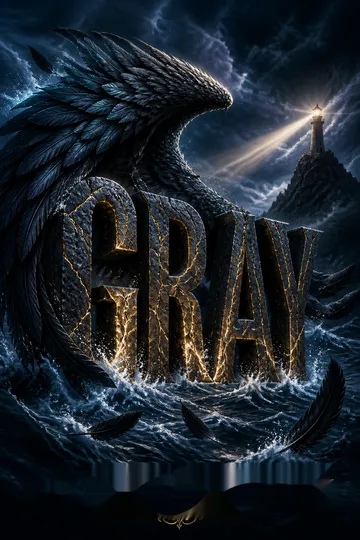



About the Author
Other books by Jaclyn Osborn
Download PDF
Download EPUB
.epub digital book format is ideal for reading ebooks on phones, tablets, and e-readers.








