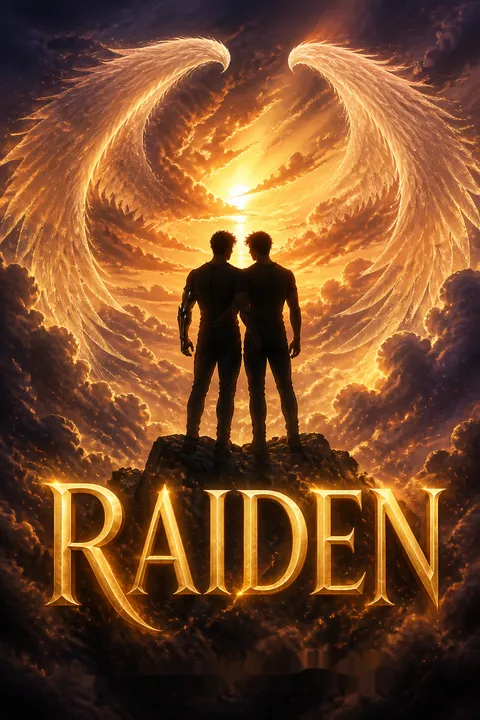


Plot Summary
Prologue
Before they became warriors, Raiden and his seven brothers sat around a fire and wondered what stories would be told about them. Kallias, whose curse was Melancholy, feared his life would fade like smoke; he longed to live fully before it ended.
Two years later, he died in battle, and the bond connecting the brothers broke. Raiden has carried that grief for thousands of years. The memory of their last night together hangs over the present, where Lucifer has escaped his ancient prison and the brothers face another war.
The prologue plants the story’s deepest absence before introducing its immediate crisis. Kallias’s fear of being forgotten becomes painfully literal when he dies, while Raiden’s memory of him becomes an act of resistance against that erasure. Their conversation also establishes the brothers’ awareness that their inherited sins may shape their fates. The scene is not simply a tragic prelude: it gives the later rescue of Kallias emotional weight, and makes the question of whether the brothers can reclaim a future more personal than defeating Lucifer.
Pizza Before the Storm
In Echo Bay, Raiden keeps his brothers and their allies fed while they recover from a recent battle and wait for Lucifer to regain strength in the underworld. The former mansion has burned, so the witch Clara has given the family rooms in her home. Raiden finds comfort in cooking, caring for everyone, and watching the household behave like a family despite the war.
His brother Alastair warns him that their former enemy Asa may still be alive. The report arrives the next morning from their commander, Lazarus, who confirms that Asa has been seen in Edinburgh. The news turns a peaceful breakfast into a new military problem: the brothers must find Asa before his followers regroup around him.
Raiden’s domestic labor is both characterization and emotional strategy. He cannot control the pace of war, but he can control whether his family eats, whether a lost book collection is gently replaced, and whether a meal offers a brief return to ordinary life. That practical care counters the brothers’ inherited identities as weapons. Asa’s reported survival ruptures this fragile arrangement, making clear that comfort is not an escape from danger but something the characters actively preserve within it.
The Shoreline Pull
On a protected island in Greece, Titan, a Nephilim warrior with a mechanical arm, cannot stop thinking about Raiden, who once saved his life on a battlefield. Titan lives near the shore and trains the island’s young fighters, especially Nico, an abandoned boy who has become like a son to him. When Alastair brings Raiden and the others to discuss Asa, Titan and Raiden are seated together.
Their attraction surfaces through small acts: Raiden notices Titan’s arm, offers to cook, and remembers an interrupted conversation from their previous meeting. The next morning, they spar on the beach. Raiden’s reluctance to hurt Titan costs him the match, but the two end up close in the sand, neither able to mistake the charge between them.
Titan and Raiden approach connection from opposite forms of restraint. Titan hides desire behind discipline and solitude, while Raiden is generous with affection but so oriented toward others that he barely recognizes his own longing. The sparring match makes their emotional imbalance physical: Raiden can fight fiercely, yet hesitates when the person before him matters. Titan’s role as Nico’s mentor likewise reveals a capacity for care that his guarded manner conceals. Attraction begins not as a grand declaration, but as attention paid to another person’s vulnerabilities.
Asa’s Stolen Second Life
Castor and Daman track Asa to a pub in Edinburgh, and Phoenix teleports them back to the island with the captured prince in chains. Asa is alive because he created a resurrection charm and attached it to his soul as protection against betrayal.
The charm worked, but its price was his supernatural power, leaving him unable to break ordinary restraints or heal quickly. He admits that Belphegor’s betrayal, not Phoenix’s, fulfilled the warning he once received.
Bellamy attacks Asa when he taunts Phoenix, and Raiden restrains his brother before bloodlust takes over completely. Lazarus then removes Asa to a fortified celestial prison. With the threat contained, Raiden and Titan share their first kiss and begin a relationship neither can dismiss as casual.
Asa’s survival turns power into a transaction rather than an entitlement: he bought another life by surrendering the force that once made him dangerous. His confidence persists even when his abilities do not, revealing how much he depends on status and control to defend himself. Bellamy’s attack shows the personal cost of Asa’s earlier cruelty, while Raiden’s intervention protects both his brother and their fragile alliance. The chapter’s shift from imprisonment to intimacy is deliberate. In a world ruled by costly bargains, Raiden and Titan choose connection without knowing what it will demand.
Love Takes the Field
Raiden and Titan spend the following days cooking, training, and learning each other’s habits. Titan worries over Nico’s safety as the young warrior prepares for a first real battle; Raiden recognizes the care beneath Titan’s sternness.
Their connection deepens even as Alastair gathers Sirena’s fighters, water dragons, and ice dragons to plan for Lucifer. The allies disagree about whether to attack the underworld while Lucifer is weak. Alastair insists that no weapon can kill him and that an attack would waste lives.
Before they can settle the dispute, some warriors defy orders, steal Baxter’s teleportation stone and magic-suppressing cuffs, and abduct Phoenix. Because Bellamy has bound his life force to Phoenix’s, his husband’s danger threatens him too.
The romance develops alongside the war rather than outside it. Titan’s concern for Nico echoes Raiden’s instinct to protect his brothers, and shared caregiving gives their attraction a moral dimension beyond desire. Meanwhile, the alliance’s argument over whether to attack exposes a classic wartime fracture: urgency can masquerade as courage, while caution can look like weakness. The unauthorized mission makes that fracture concrete. The rebels’ decision to use Phoenix as a guide treats a person as a strategic instrument, directly opposing the growing insistence that allies are family, not expendable assets.
The Bonfire Warning
Raiden, Titan, the brothers, and their allies enter the underworld with the help of Taeden, a reaper who demands that they repay his favor later. At a forest clearing outside Lucifer’s fortress, they find the kidnapped warriors’ heads displayed on stakes and their bodies burning below. Eighteen have been killed, including Myrine, a young fighter Titan had trained.
The spectacle makes clear that the enemy knows the rescue party has arrived. Vepar, who controls the air, and Purah, who can command the dead, intercept them and steer them toward the fortress. Bellamy senses Phoenix’s suffering and wants to charge ahead. Alastair sees the trap, but Gray slips away alone to find his brother-in-law.
The bonfire turns an abstract strategic failure into a public, bodily cost. The warriors did not merely lose a battle; their remains are used to frighten and provoke the people who came to retrieve them. Titan’s grief for Myrine and Bellamy’s anguish for Phoenix make the conflict intimate in different ways. Gray’s secret entry is an act of courage shaped by love, but it also repeats the rebels’ dangerous habit of acting alone. The scene narrows the question from whether the rescue party can win to what they will risk when retreat would mean abandoning family.
Lucifer’s Throne Room
Gray finds Phoenix in the throne room, badly tortured and left as bait, but Vepar and Purah realize he has vanished from the group. The others fight their way through the fortress, following the brothers’ bond toward him.
Their path leads directly to Lucifer, who holds Raiden in place through the authority of their shared blood. He reveals that Raiden’s father, Beelzebub, once visited him as a child, then uses that history to wound Raiden emotionally. Bellamy feels Phoenix nearing death, and Gray finally carries the injured demon back to them.
When Belphegor appears, Bellamy attacks him and Alastair charges Lucifer. The confrontation becomes a battle, with Phoenix barely conscious and the brothers facing a foe their weapons cannot initially touch.
Lucifer’s power operates through more than physical force. He can make Raiden’s ancestry feel like a claim on his identity, turning a painful family memory into a weapon in the present. The trap also exploits the group’s strongest attachment: Bellamy’s bond with Phoenix ensures that suffering will draw the others into danger. Yet Gray’s choice to rescue Phoenix disrupts the enemy’s intended sequence. The chapter’s crowded crisis is emotionally coherent because every tactical decision is also a decision about whose pain the group refuses to ignore.
Eight Sins Strike Together
Lucifer throws Raiden, Galen, and Daman aside, while Belphegor attacks Titan and nearly tears his mechanical arm from its connection. Gray weakens his father by draining his energy, then joins his brothers against Lucifer.
The eight Nephilim coordinate their attacks in alternating pairs, moving with a unity stronger than their earlier efforts. Daman’s blade finally cuts Lucifer’s cheek. Before the brothers can press the advantage, Lazarus arrives with reinforcements and a teleportation stone, pulling them out of the fortress.
Titan heals from his injury, and the group returns to Clara’s home with Phoenix alive but gravely wounded. After the danger passes, Raiden and Titan acknowledge their bond, mark each other, and agree they want a committed relationship.
The wound on Lucifer matters less for its size than for what produces it. The brothers do not overpower him through individual strength; they become effective when they act as a coordinated unit. Their victory is therefore relational before it is military, though Lazarus’s intervention prevents it from becoming a decisive defeat. Titan’s injury and Phoenix’s condition keep the escape from feeling triumphant. In the aftermath, Raiden and Titan choose commitment under the shadow of possible death. Their bond offers comfort, but it also creates a new vulnerability each must learn to accept.
The Soul Lazarus Hid
After Phoenix begins recovering, Lazarus arrives at Clara’s house badly whipped by Uriel. He admits that, long ago, he was ordered to send Kallias’s soul to the underworld, but secretly placed it in the realm of the lost instead. Kallias has remained there since his death, and the brothers’ bond has been broken all this time.
Lazarus also reveals the larger cost of their service: Uriel intends for the Nephilim to be condemned after death, despite their sacrifices. The brothers are furious, but the thinning veil on Halloween may let them enter the lost realm and retrieve Kallias. Lazarus believes the restored eighth brother could help them defeat Lucifer without repeating the near-fatal spell that caged him before.
Lazarus’s confession reframes obedience as an ethical problem rather than a virtue. He has served a punitive celestial hierarchy for millennia, yet his hidden disobedience is the one act that preserved a brother’s chance at return. The revelation about the Nephilim’s souls also changes the stakes of loyalty: the brothers are asked to risk their lives for a realm that may reject them even in death. Kallias’s possible recovery answers neither injustice nor grief by itself, but it offers a practical and emotional reason to challenge the fate assigned to them.
Raiden Crosses the Veil
On Halloween, Mephistopheles allows one living person to pass through the veil into the realm of the lost. He chooses Raiden because, despite Gluttony’s demands, Raiden repeatedly puts loved ones before his own desires. Inside the darkness, Raiden follows Kallias’s severed black thread and faces visions designed to keep him there.
His mother offers him the comfort of home and sweet bread; an illusion of Titan promises a peaceful life without war. Raiden turns away from both, remembering that he came for Kallias. He finds his brother waiting in a vision of Sparta, still grieving his lost mate, and persuades him to leave. They cross back together, and Kallias awakens at Clara’s house among his brothers.
Raiden’s trial gives Gluttony a psychological meaning beyond appetite. His real temptation is not food but the wish to stop carrying responsibility and remain inside a world where love is easy and danger has ended. The visions are persuasive because they offer what he genuinely wants, not merely what he craves. By leaving his mother and the imagined Titan, Raiden does not reject love; he refuses to confuse love with avoidance. The rescue also reverses his earliest grief: the brother he once could not save is now brought home through Raiden’s own capacity for self-denial.
A Vow Before the War
Kallias struggles with electricity, television, and the centuries he has missed, but familiar food and the patience of his brothers help him adjust. While the family begins to imagine a future after the war, Titan asks Raiden to marry him. Raiden accepts, adding only that he wants to make their wedding cake. Their happiness is interrupted when Lazarus summons the eight brothers to the celestial realm.
There, Uriel confirms that all Nephilim are barred from the afterlife because of their fathers. He offers a condition: if the brothers kill Lucifer, he may allow their souls, and those of other Nephilim, into the celestial realm. Bellamy and Phoenix receive no guarantee, leaving the family with a bargain that cannot yet be called justice.
The proposal is a refusal to let uncertainty dictate the shape of the present. Titan does not ask because he believes the war will be easy; he asks because waiting for certainty has become another form of surrender. Uriel then makes the private stakes public, tying the brothers’ afterlife to a task that may kill them. His offer resembles a contract, not forgiveness: salvation is conditional on usefulness. Bellamy and Phoenix’s exclusion exposes the limits of the bargain, since the authority granting mercy still reserves the right to divide a family.
A Wedding on the Water
With the war still unresolved, the allies move to the Greek island to stand together, and Raiden and Titan plan a beach wedding. Raiden spends the day cooking and making the cake while Titan waits with their friends, warriors, and family gathered as witnesses. Alastair officiates as they exchange vows and drink wine prepared for the binding ritual.
Their first kiss as husbands begins the formal joining of their souls; afterward, they complete the bond in private. At Titan’s cottage, Raiden says he once thought his brothers’ happiness was enough, but Titan has taught him to choose a future for himself too. They imagine a life of shared cooking, a garden, and family meals, even as Lucifer remains a threat.
The wedding provides emotional resolution without pretending the external conflict is over. Raiden and Titan bind themselves to each other while knowing that the war may still demand sacrifice. Their vows are grounded in ordinary acts: cooking, tending a garden, feeding people. These are not distractions from heroism but the life their heroism is meant to protect. The formal bond also shifts Raiden’s self-understanding. He no longer treats his own happiness as a bonus earned after everyone else is safe. The ending offers commitment as a practice of hope, not a guarantee against loss.
Epilogue
Titan and Raiden marry on the beach with their family and allies gathered around them. After Alastair’s binding ritual and their vows, they drink the enchanted wine, kiss, and complete the joining of their souls in private.
At Titan’s home, Raiden admits that he once believed his brothers’ happiness was enough for him, but being loved by Titan has taught him to want a life of his own. They imagine growing food, cooking together, and sharing meals with the people they love. The war is not finished, but neither is the life they have chosen.
The epilogue closes the romantic arc without closing the war. Its central resolution is not safety but mutual recognition: Titan accepts Raiden’s messy, generous whole, and Raiden allows himself to be cared for rather than remaining only the caretaker. The binding ritual makes that commitment supernatural, yet the scene’s imagined future is deliberately domestic. A garden and shared meals counter the scale of the celestial conflict with a life measured in repeated acts of nourishment. The wedding therefore works as both a promise and a form of resistance to a fate that would reduce the brothers to weapons.
Analysis
Raiden’s central conflict is not whether he can defeat hunger, but whether he can recognize what hunger is asking for. At first, food, sex, and care for others blur together as forms of appetite. Titan helps him discover that desire can mean a wish for reciprocal attention, not merely another thing to consume. That recognition changes Raiden’s role in the family: he remains its cook and emotional caretaker, but he begins to claim a future of his own.
The war plot tests the same question at a larger scale. The brothers are repeatedly treated as tools by celestial authorities, enemy leaders, and even allies who choose to use Phoenix as a guide without his consent. The story distinguishes loyalty from obedience. Lazarus’s concealed disobedience preserves Kallias’s soul, while the brothers’ synchronized attack on Lucifer becomes effective through trust rather than command. Their inherited curses do not vanish; they become manageable when the brothers act together without surrendering their judgment.
Kallias’s return joins the romantic and familial arcs. Raiden’s trial requires him to leave behind an illusion of perfect domestic happiness because another person needs him in reality. Yet the story does not present self-denial as the only moral choice. The proposal and wedding insist that Raiden, too, deserves a life worth protecting. Uriel’s conditional offer complicates that hope: it makes salvation dependent on victory, and leaves Bellamy and Phoenix’s future uncertain. The ending therefore offers neither a completed war nor a guaranteed afterlife. It offers a chosen commitment, made in full knowledge of danger, and a family that insists its members are more than the sins and bloodlines assigned to them.
Review Summary
Raiden receives mixed reviews, with many praising its heartwarming romance and character development. Readers appreciate Raiden's sweet, nurturing personality and his relationship with Titan. The book offers unexpected plot twists and advances the series' overarching storyline. Some critics find it slow-paced or lacking in action compared to previous installments. Fans enjoy the family dynamics and interactions between characters from earlier books. While not universally acclaimed, many readers consider it a satisfying addition to the Sons of the Fallen series, eagerly anticipating the final book.
People Also Read





Characters
Raiden
The generous warriorRaiden is a towering Nephilim who carries the sin of Gluttony, an appetite that reaches beyond food into touch, affection, and experience. He loves cooking for his brothers and allies, and their pleasure matters to him as much as his own. His warmth can seem heedless beside the family’s history of violence, but it is a conscious way of making a home wherever they gather. Raiden is brave in battle and tender in private, though he often overlooks his own needs. His bond with his brothers shapes his identity, while his attraction to Titan challenges him to imagine a happiness that belongs to him too.
Titan
The guarded island warriorTitan is a Nephilim warrior from the Greek island that shelters his people. A mechanical arm replaces the limb demons tore away in battle, and his practiced control can make him seem colder than he is. He trains young fighters, especially Nico, and feels responsible for keeping them alive in a war they did not choose. Titan carries grief for his parents and unease about returning to an empty home. Raiden’s openness unsettles his defenses, but also gives him a way to speak through acts of care, especially cooking. He is brave enough to protect others, yet must learn that tenderness requires risking his own heart.
Alastair
The burdened strategistAlastair, the eldest of the cursed brothers and avatar of Pride, is their principal strategist. He values preparation, discipline, and control, partly because he has spent centuries acting as the family’s commander. His composure hides grief and fear of losing another brother. Alastair often distrusts incomplete information, especially when Lazarus withholds plans, and his need to be right can harden into arrogance. Yet he protects his brothers fiercely and can recognize when they need something other than orders. His relationship with authority is complicated: he is both a leader expected to command and a son still contending with powers that claim the right to define his fate.
Kallias
The absent melancholicKallias is one of the eight brothers and carries Melancholy, a curse that can spread sadness through those around him. He is thoughtful, perceptive, and prone to seeing loss before possibility. In the brothers’ memories, he is the one who speaks most plainly about mortality and the fear of being forgotten. His bond with his brothers is profound, but his sorrow can make him withdraw from the world around him. Kallias’s history as a Spartan warrior gives him discipline, while his emotional nature leaves him vulnerable to grief. He represents the family’s oldest wound and the question of whether memory can keep a person connected to life.
Lazarus
The severe commanderLazarus commands the celestial army and trained the cursed brothers from childhood. He is stern, strategic, and accustomed to concealing information until he believes others are ready to act. Years of war have made him wary of emotional decisions, but his loyalty to the brothers complicates his obedience to celestial authority. He has a teacher’s intimate knowledge of their strengths and weaknesses, alongside a commander’s willingness to demand discipline. Lazarus’s reserve can look like indifference, especially when his plans affect the brothers’ lives. Beneath it lies a moral conflict between duty to the hierarchy above him and care for the people he helped raise.
Lucifer
The returned adversaryLucifer is the fallen angel whose ancient war forced the brothers to imprison him. He possesses a commanding presence and regards human violence as evidence that the world needs to be remade under his rule. His calm manner can be more unnerving than open rage, because he presents domination as a form of rescue. Lucifer understands how bloodlines, old loyalties, and unresolved family pain can be used against his enemies. He is not merely a battlefield threat; he challenges the brothers’ sense of who they are and what they owe the celestial realm. His return forces former allies to confront the limits of their old victory.
Uriel
The judging archangelUriel is a powerful archangel with authority over Earth and a rigid view of inherited sin. He judges Nephilim through their ancestry, measuring them against the actions of their fallen fathers rather than their own choices. His immense presence and controlled speech make him difficult to challenge, while his punishments reveal a capacity for cruelty beneath celestial order. Uriel is not simply an obstacle to the brothers’ military aims. He embodies the institutional power that asks them to sacrifice themselves while reserving judgment over whether they deserve peace.
Asa
The ambitious princeAsa is Lucifer’s son and a former ruler among the underworld’s demons. He is proud, calculating, and determined to preserve his own life and authority. Even when circumstances strip away his power, he uses mockery and confidence to keep others from seeing his vulnerability. Asa is capable of careful planning, including preparing for the possibility of betrayal, but his pride narrows his ability to recognize where betrayal may truly come from. His position as both enemy and son places him between competing loyalties, though he rarely allows affection to outweigh self-preservation.
Bellamy
The fiercely devoted brotherBellamy, the avatar of Lust, is a charming and expressive Nephilim whose feelings can turn dangerous when desire becomes bloodlust. He loves openly and fiercely, especially when someone threatens the people he considers his own. His relationship with Phoenix challenges the brothers’ old divisions between angels and demons, while his impulsive protectiveness sometimes puts him at odds with Alastair’s caution. Bellamy uses humor and flirtation to soften tense rooms, but his loyalty has a harder edge when someone he loves is hurt. He is both a source of levity and a reminder that attachment can be a strength with real risks.
Phoenix
The demon with chosen loyaltiesPhoenix is a demon who once served among the underworld’s power structure and now stands beside Bellamy and the cursed brothers. He is sharp-tongued, self-possessed, and comfortable with being called a villain. His loyalty is selective rather than universal, but once given, it is formidable. Phoenix resists being treated as helpless, even by the husband who would risk everything to protect him. His history makes the others wary, and his presence forces them to distinguish between someone’s origin and the choices they make. He is most persuasive when his actions, rather than his reputation, show where he stands.
Clara
The household’s witchClara is a human witch who gives the brothers a home and treats their supernatural crises as one more reason to keep medical supplies ready. She is practical, affectionate, and unafraid to order immortal warriors out of her hallway. Her teasing keeps the household from taking itself too seriously, while her loyalty is visible in the space and care she offers. Clara does not confuse love with indulgence: she can comfort the brothers and insist that they rest, eat, or behave. Her home becomes a refuge not because danger cannot reach it, but because she continually makes room for people who need shelter.
Penemuel
The repentant writerPenemuel is a fallen angel who writes books and has the supernatural ability to influence readers through his work. His gift can inspire, educate, or corrupt, giving his creativity a moral weight he cannot ignore. He is scholarly, self-aware, and committed to doing better than he did in the past. The brothers appreciate his steady presence, though Lazarus remains wary because their histories place them on opposing sides of a war. Penemuel’s writer’s block reflects his exhaustion with violence and his desire to imagine a world where people can gather without fighting.
Galen
The volatile protectorGalen carries Wrath and is the largest and most physically intimidating of the brothers. His anger can make him frightening, but it is often rooted in a fierce protective instinct and an impatience with threats to his family. Galen is less comfortable expressing tenderness than demonstrating it, especially around his human husband, Simon. His strength makes him a crucial fighter, while his temper can complicate strategy when restraint is required. The people closest to him know that beneath the menace is a man who wants his family safe and is willing to put himself between them and danger.
Castor
The competitive risk-takerCastor, the avatar of Greed, thrives on competition, possessions, and the rush of a wager. He is witty, impulsive, and often willing to needle his brothers when they become too solemn. His appetite for risk can make him a useful tracker and a dangerous gambler, though his loyalty to his mate Kyo grounds him. Castor’s jokes do not mean he takes the family lightly; he is often the first to challenge a plan that could endanger them. His competitive streak reveals a desire to feel in control of outcomes that war and immortality make uncertain.
Daman
The guarded trackerDaman carries Envy, a curse that feeds suspicion, bitterness, and self-doubt. He is reserved and often appears cold, but his loyalty to his brothers is deep. As a tracker, he is patient and perceptive, able to follow a trail others miss. His bond with Warrin gives him a rare place of calm, though it does not erase the habits built by centuries of envy. Daman’s dry humor and bluntness help him keep emotional distance, especially when he feels exposed. He understands how resentment can distort judgment because he has had to live with that pressure inside himself.
Gray
The soft-spoken infiltratorGray, the youngest brother and avatar of Sloth, is small, affectionate, and often underestimated. He clings to the people he loves and fills the household with dinosaur toys, jokes, and sleepy charm. Beneath that softness is a capable infiltrator with the power to enter dreams and manipulate sleep. Gray dislikes the violence that comes with his abilities, but he acts decisively when his family is in danger. His relationship with Mason gives him a steady partner who respects both his vulnerability and his strength. He is a reminder that quietness is not the same as passivity.
Baxter
The island’s sharp-tongued leaderBaxter leads the protected Greek island where Nephilim can live among their own kind. He is flamboyant, irreverent, and fond of drinking and provoking people, but his first concern is the safety of his community. His friendship with Titan stretches back a century and gives Titan a place to belong even when he withdraws into solitude. Baxter is willing to let warriors choose whether to fight, rather than treating loyalty as something he can command. The contrast between his careless manner and serious leadership keeps others from mistaking his jokes for a lack of responsibility.
Nico
Titan’s eager young studentNico is a young Nephilim warrior who grew up without the security of a family or home. Titan takes him under his wing and teaches him archery and combat, while Nico brings the energy of someone delighted to have friends at last. He is talkative, impulsive, and still learning when to listen, but his enthusiasm is matched by courage. Nico wants to prove that he can protect the island that gave him shelter. His bond with Titan has a distinctly parental quality, exposing the gentleness beneath the warrior’s reserve.
Sirena
The uncompromising commanderSirena commands her own force of Nephilim warriors and approaches danger with directness and discipline. She is skeptical of delays and prefers decisive action, which can bring her into conflict with Alastair’s caution. Her stern manner is not a lack of feeling; she grieves for her people and takes their losses personally. Sirena values the equality of an alliance and expects every commander to have a voice in decisions affecting their fighters. Her leadership is shaped by the belief that hesitation can be as costly as recklessness.
Mephistopheles
The isolated fallen angelMephistopheles is a fallen angel marked by an old rebellion and the punishment that followed it. He is guarded, exacting, and accustomed to setting firm boundaries around the place he inhabits. His manner suggests a person who has spent a long time alone with the consequences of his choices. Although he does not readily trust the visitors who seek his help, he responds to sincerity more readily than rank or force. His dry humor and unexpected appreciation for simple kindness complicate the ominous reputation attached to his name.
Kyo
Castor’s steady dragon mateKyo is a water dragon and Castor’s partner. He is grounded and observant, often balancing Castor’s competitive impulses with patience and a dry response. Kyo is loyal to his family and clan, and his presence links the brothers to the wider dragon alliances. He does not need to match Castor’s volume to make himself heard. His steadiness gives Castor a source of emotional balance without diminishing either man’s independence.
Warrin
Daman’s devoted ice dragonWarrin is an ice dragon and Daman’s husband. His calm, attentive manner contrasts with Daman’s suspicion and helps create a relationship in which neither must hide difficult feelings. Warrin is powerful in battle but gentle in private, often offering reassurance through simple acts of closeness. His loyalty extends beyond Daman to the brothers and their cause, even when the conflict grows dangerous. He embodies patience without passivity.
Mason
Gray’s human hunter husbandMason is a former Marine and monster hunter who approaches danger with training, discipline, and a protective instinct. His human perspective gives the supernatural household a different kind of groundedness, though he is no stranger to risk. Mason loves Gray deeply and wants to fight beside him, even when Gray tries to keep him safe by making decisions on his behalf. Their relationship combines tenderness with friction over protection and independence. Mason respects competence, but his devotion is not limited to the battlefield.
Belphegor
The treacherous fallen angelBelphegor is a fallen angel whose shifting loyalties and powers of mental influence make him difficult to predict. He is Gray’s father, a relationship that complicates the brothers’ hatred of their enemies. Belphegor’s capacity for manipulation makes trust dangerous, while his connection to Gray raises questions about whether affection can coexist with betrayal. He is a force that keeps the war personal, not merely political.
Taeden
The indebted reaperTaeden is a reaper associated with the supernatural nightclub Krave and a former lover of Daman. He is cocky, opportunistic, and openly indifferent to the brothers’ need for help. Yet he honors bargains when it suits him, making his assistance useful and its cost uncertain. His history with Daman adds a flicker of unresolved feeling beneath his hard-edged performance.
Plot Devices
The Cursed Sins
Power with a priceEach of the brothers carries a supernatural sin that shapes his impulses and abilities: Raiden’s Gluttony, for instance, demands more than food, while Galen’s Wrath can overtake him in battle. The sins sometimes speak as distinct presences, complicating the brothers’ sense of where their own desires end. Their shared bond lets them sense one another and coordinate. In the underworld, their combined action proves more effective against Lucifer than individual attacks. The device makes the brothers’ weaknesses part of their power, while asking them to exercise agency rather than simply obeying the curse.
Fated Mate Bonds
Love with consequencesThe Nephilim can form profound bonds with their destined partners, and some couples deepen those bonds by marking or joining their life forces. A completed bond allows partners to sense one another and can make one’s danger affect the other. Bellamy’s connection to Phoenix makes Phoenix’s suffering physically consequential to him, turning intimacy into both strength and vulnerability. Raiden and Titan’s growing bond gives the romance supernatural weight, while their decision to commit forces them to confront the possibility of losing each other. The device links private love to the war’s public risks.
Asa’s Resurrection Charm
A life bought with powerAsa prepares a charm fused to his soul so that betrayal cannot end his life permanently. It succeeds in bringing him back after his apparent death, but magic exacts a cost: the charm strips away his powers. The device accounts for Asa’s unexpected return and his sudden vulnerability, while reinforcing the story’s insistence that powerful magic is never free. It also gives Asa’s survival a character dimension. His preparation reveals a mind shaped by suspicion and self-preservation, even as the loss of power exposes how much his identity depended on control.
The Realm of the Lost
A trial of desireThe realm of the lost holds souls that have not passed on, and a thinning veil on Halloween gives the living a brief chance to enter it. Its path tempts visitors with visions drawn from their deepest needs, threatening to make them forget why they came. Only one living person can cross at a time, so Raiden must face the trial alone to search for Kallias. The realm turns the rescue into a test of character rather than strength: Raiden has to distinguish genuine love from a comforting illusion and keep moving toward the brother who needs him.
Teleportation Stones
Fast passage, costly choicesA teleportation stone lets its user transport a group across great distances, making it vital when armies and allies are scattered across the world. Phoenix’s teleportation ability has limits, so repeated journeys can drain him; the stolen stone later allows rebels to reach the underworld without him. The stones shorten travel but cannot resolve the dangers at the destination. Their use therefore creates tactical speed while keeping responsibility with the characters who decide where to go and whom to bring.
Sons of the Fallen Series



About the Author
Other books by Jaclyn Osborn
Download PDF
Download EPUB
.epub digital book format is ideal for reading ebooks on phones, tablets, and e-readers.








