


Key Takeaways
Let poverty and place inform your work without turning them into decoration
A life shaped by absence. Camus was born into working-class poverty in French Algeria. His father, Lucien, died from wounds sustained in the First World War when Albert was eight months old. His mother, Catherine, was nearly deaf, illiterate, and often silent. The family lived without running water or electricity in Belcourt, a poor district where European and Arab neighbors shared streets but rarely shared social standing. The sea, sun, and streets of Algiers became more than scenery: they were the physical world in which Camus learned to feel alive.
Memory became material. His writing drew on these conditions, but did not simply reproduce them. His first book returned to his family and childhood; later novels transformed familiar places and experiences into fiction.
What's striking is how bodily and local this origin story is. Camus's early world supplies both deprivation and pleasure, so his later defense of earthly life is not abstract optimism. It emerges from a child who knew scarcity and still found the sea, light, and companionship worth protecting. The limitation is equally important: a writer's vivid attachment to a place does not guarantee equal understanding of everyone who lives there. Camus's Algeria was emotionally real to him, but his imaginative attention remained unevenly distributed.
Treat education as a door, not an escape from where you came
A teacher noticed talent. Camus's family expected him to earn a living, and his grandmother opposed further schooling. His primary teacher, Louis Germain, recognized his ability and helped him compete for a scholarship. Camus won a place at high school, where meals and study time came with the scholarship. There he encountered books, privileged classmates, and a new awareness of how poverty separated him from others.
Opportunity did not erase origin. Camus worked during school holidays, felt ashamed when forms described his mother as a domestic worker, and remained connected to the people of Belcourt. Germain's support mattered because ability alone could not pay for education. Years later, Camus wrote to thank him, crediting the teacher's generosity with helping make his life as a writer possible.
The episode is a useful corrective to stories of success built on talent alone. Germain's attention mattered, but so did the scholarship that converted recognition into access. In educational research, this is the difference between identifying potential and building a pathway that lets it develop. Camus's case also resists a tidy escape narrative: schooling opened a wider world, yet it did not make him less conscious of class. Mentorship can widen a person's choices without requiring them to disown their beginnings.
Test political loyalties against the people they claim to serve
Commitment met a limit. Camus joined the Algerian Communist Party because he hoped it would fight poverty, fascism, and unequal treatment of Arabs. He organized cultural events and wrote in support of political rights for Muslim Algerians. But when the party attacked the Algerian Popular Party and its leader Messali Hadj, Camus objected. He believed the party was putting its political line ahead of the rights of the people it claimed to represent.
He would not accept the script. Camus refused to resign when urged to do so, but the party eventually expelled him. He had joined without deep knowledge of Marx, and his commitment was driven partly by the hope that communism could act as a secular moral community. The break taught him that solidarity loses credibility when loyalty to an organization outranks justice for actual people.
This is a concrete test of political integrity: not whether a movement uses humane language, but whether it tolerates dissent when a vulnerable group conflicts with its strategy. Camus's choice anticipates a familiar problem in organizations, where loyalty can become a substitute for accountability. His own understanding was incomplete, and his early idealization of communism shows how easily moral longing can recruit a person into a creed. The lesson is not to avoid commitment, but to keep commitments answerable to those affected by them.
Use absurdity to begin ethical action, never to excuse passivity
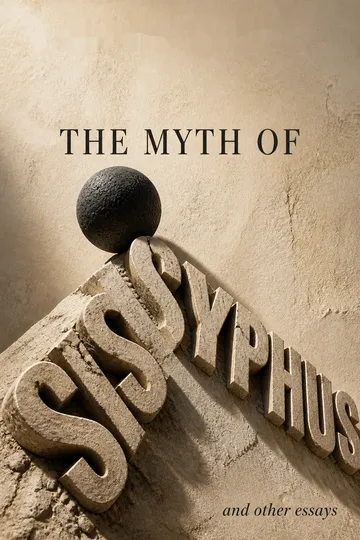
A collision, not a doctrine. For Camus, the absurd is the clash between a human desire for meaning and a world that offers no clear answer. In The Myth of Sisyphus, he argues that recognizing this clash does not settle how to live. His response is revolt, freedom, and passionate engagement with life, without pretending that a final explanation is available.
Fiction gives the idea a body. In The Stranger, Meursault's emotional distance exposes how society judges a person through conventions as much as through a crime. Sisyphus, condemned to repeat futile labor, becomes an image of continuing to act without a guarantee of success. Camus's point is not that nothing matters. It is that meaning cannot simply be borrowed from a promised afterlife or inevitable historical victory.
The strength of this account is its refusal to let philosophical uncertainty become an alibi. Camus connects metaphysical doubt to a practical question: what conduct remains defensible when no ultimate authority guarantees justice? That question still matters in ethics, where people often confuse uncertainty about foundations with permission to do anything. Yet Camus's answer is more a moral orientation than a proof. His insistence on human dignity supplies a value that the supposedly value-free universe cannot itself establish.
Reject revolutions that spend present lives on promised future justice
The end cannot cleanse every means. After the Second World War, Camus increasingly opposed political systems that justified present violence as the price of future happiness. In The Rebel, he traced how revolt against injustice can harden into a revolution that claims authority over life and death. He attacked the idea that history guarantees progress, particularly when that belief excuses executions, purges, or concentration camps.
He wanted justice without political servitude. Camus did not defend the existing capitalist order, and he favored social reforms and a freer, more democratic society. But he rejected the claim that revolutionary leaders could sacrifice individuals for an ideal future. This stance separated him from many French left-wing intellectuals who were reluctant to criticize the Soviet Union, and eventually helped end his friendship with Sartre.
Camus's central warning is a problem of political consequentialism: if a future good can excuse any present harm, then no limit on power survives. His insistence that victims are not expendable gives moral weight to political action without romanticizing purity. The challenge is that refusing one set of abuses does not itself resolve how to dismantle entrenched injustice. Camus could be clearer about institutions and strategies than about moral limits. Still, the demand that reform preserve political freedom is a necessary test for movements promising emancipation.
Make journalism answerable to facts, especially when power prefers silence
Reporting made injustice visible. At Alger Républicain, Camus covered court cases and traveled through Kabylia, where he reported on hunger, inadequate schooling, and exhausting labor. His eleven-part series described workers paid ten francs for twelve-hour days and challenged the claim that poverty was simply a local custom. He also reported on a prison ship, admitting that he had failed to give a prisoner the cigarette he requested. The moment showed how rules can make a reporter complicit in the conditions being documented.
Advocacy has risks. Camus helped draw attention to the case of Michel Hodent, who was acquitted after a trial he had criticized in print. But he also defended a Muslim religious leader who appears to have been guilty of the murder charge against him. His later newspaper, Le Soir Républicain, was shut down under wartime censorship.
Camus's journalism shows the value of entering places that official accounts flatten, then describing specific conditions rather than merely declaring outrage. It also reveals a persistent tension in advocacy reporting: moral urgency can sharpen attention, but it can also make a reporter overconfident about a defendant or cause. The Hodent coverage and the mistaken defense of El Okbi belong together. A credible journalist must both challenge power and mark the boundary between verified fact, inference, and solidarity.
Let art transform experience instead of merely reporting your life
Autobiography needed distance. Camus borrowed from his own life, but fiction was not a transcript. A beach incident in Oran helped shape the killing at the center of The Stranger, while tuberculosis, poverty, and family memories entered other works in altered forms. His novels changed style with their purposes: the terse narration of The Stranger differs sharply from the measured, collective voice of The Plague.
Theater made ideas physical. Camus had organized amateur theater in Algiers before becoming a professional playwright and director. He believed a text had to come alive through voices, bodies, movement, and staging. He adapted works by Dostoyevsky and Faulkner, and rehearsed with actors rather than treating the stage as a place to illustrate an essay. Art, for him, was craft: experience had to be shaped before it could be shared.
The biography makes a valuable distinction between personal material and personal confession. Fiction can make experience intelligible by changing its form, while theater tests ideas through bodies, timing, and an audience's response. That process resembles translation across media: what survives is not every detail, but the pressure or relation that mattered. Camus's craft also had limits. His novels often gave Arabs less individuality than his journalism did, showing that artistic transformation cannot automatically correct a writer's blind spots.
Defend civilians without pretending Algeria’s conflict had an easy middle
A divided home, not an abstraction. Camus wanted Arab Algerians to receive justice and political equality, and he condemned French repression and torture. He also rejected the FLN's attacks on civilians and could not accept Algerian independence if it meant his family becoming strangers in the country where they had lived for generations. In 1956, he traveled to Algiers to call for a truce protecting civilians, but many nationalists insisted that independence had to come first.
His position became lonely. Camus believed the two communities had to find a way to live together, yet he lacked a persuasive political route to that outcome. He was accused by French settlers of betraying them and by supporters of independence of defending colonial rule. His silence after leaving L'Express did not end his private interventions for prisoners and people facing execution.
Camus's predicament is most revealing when treated neither as heroic neutrality nor as simple hypocrisy. He opposed violence and racial inequality while remaining emotionally bound to a French community whose political power depended on colonialism. That attachment narrowed his imagination of independence, even as it helped him see the human cost of expelling ordinary settlers. His civilian truce was humane but politically underpowered. The case shows why ethical consistency alone cannot reconcile incompatible national claims, especially when one side controls the state.
Own the harm hidden inside your preferred story about yourself
Private freedom had a price. Camus wanted independence in love and maintained relationships with several women while remaining married to Francine Faure. Francine knew of his affair with Maria Casarès and endured a severe depression, including suicide attempts. Camus cared for her and their children, but his own letters and choices show that affection did not erase the harm caused by his divided life.
Fiction became self-examination. In The Fall, a lawyer confesses his faults in ways that let him judge everyone else. The character is not simply Camus, but friends recognized the writer's vanity, charm, self-justification, and guilt in the portrait. The novel turns confession into a trap: admitting wrongdoing can be another way to control the judgment of others.
The useful insight is psychological rather than celebratory. Self-criticism is not automatically accountability: a person can narrate their flaws so eloquently that the narration itself becomes a defense. Camus's life complicates any attempt to separate artistic sincerity from private conduct. The biography does not make his affairs equivalent to political crimes, but it does show that a humane public philosophy cannot substitute for care in intimate relationships. The test is whether self-knowledge changes how others are treated.
Keep working through doubt, but do not confuse output with healing
Recognition did not settle him. Camus repeatedly doubted his work, rewrote extensively, and feared he had exhausted his talent. He won the Nobel Prize in 1957, at forty-three, but felt burdened by the attention and thought André Malraux more deserving. His tuberculosis had returned, and he struggled with fatigue, breathlessness, and periods of despair even while planning novels and plays.
The final project remained unfinished. In Lourmarin, he worked on The First Man, a novel drawing on his family and childhood, and imagined it as the beginning of his largest creative effort. On January 4, 1960, aged forty-six, he died in a car crash while returning to Paris. The manuscript was found in the car. His death ended the work, not the questions it was trying to shape.
Camus's repeated return to the page suggests that disciplined craft can persist without confidence or a satisfying sense of completion. That is different from presenting illness and anguish as sources of artistic genius. The unfinished manuscript matters because it resists the neatness of a retrospective life story: the Nobel laureate was still beginning, revising, and unsure. A caution follows. Productivity can preserve purpose, but it cannot by itself resolve illness, guilt, or political failure.
Analysis
Todd presents Camus not as a doctrine with a biography attached, but as a life repeatedly forced to test its own principles. The sequence matters. Poverty and tuberculosis made bodily vulnerability concrete; journalism and Communist activism offered ways to respond to injustice; war and occupation exposed how political ideals could become instruments of coercion. Camus's writing then moved from the absurdity of an individual life toward collective resistance, while his political conduct remained skeptical of movements that promised perfect justice through present violence.
The strongest interpretive thread is the tension between universal ethics and particular attachment. Camus argued for equal dignity, opposed torture and executions, and defended political prisoners. Yet his attachment to French Algeria made him resist independence even as he condemned colonial inequality. His position was not simply incoherent: he feared that a new national order could dispossess ordinary Europeans and produce further violence. But the biography shows that this fear constrained his ability to imagine a just political settlement from the Algerian majority's perspective. His insistence on protecting civilians was morally serious, while his proposed truce could not resolve the prior dispute over sovereignty.
Todd's attention to letters, lovers, editors, teachers, and actors also challenges the myth of the solitary moralist. Camus relied on others for education, publication, political work, and emotional support. His public ideals and private behavior do not align perfectly. The record of Francine's suffering, alongside his insistence on freedom in love, makes that gap impossible to dismiss. Yet it also helps explain why self-judgment becomes a central subject in The Fall: confession can be honest and self-serving at once.
The biography's breadth is its strength and its risk. Archival detail gives the reader a vivid social world, but the abundance of relationships can obscure the central pattern: Camus kept choosing action while refusing the certainty that would make action easy. His enduring value lies less in offering a complete political program than in insisting that means, victims, and individual freedom remain visible when history's grand explanations threaten to hide them.
People Also Read








Glossary
the absurd
Conflict between meaning and silenceCamus uses the absurd for the confrontation between human beings' desire for meaning and clarity and a world that offers no final answer. It is not a claim that nothing matters. In his work, recognizing the absurd begins a question about how to live without relying on divine certainty or guaranteed historical progress.
absurd man
One who lives without guaranteesThe absurd man recognizes that life offers no ultimate explanation, yet continues to live and act rather than escaping into suicide or borrowed certainty. Camus develops this figure through examples such as Don Juan, the actor, and Sisyphus. Their significance lies in sustained engagement, not in winning a final reward.
revolt
Resistance bounded by human limitsFor Camus, revolt begins when a person refuses humiliation or injustice while affirming that some limits must not be crossed. It can become political action, but it is not identical to revolution or a license for violence. A revolt betrays its humane purpose when it treats present people as expendable for a promised future.
Neither Victims nor Executioners
Essays against ideological murderThis is the title of a 1946 series of Camus's political articles. He rejects the moral division that excuses one side's violence because the other side is worse, arguing instead for resistance to systems that normalize killing. The phrase expresses his search for political action that avoids turning people into either instruments or targets.
civilian truce
Agreement to spare noncombatantsCamus's proposed civilian truce during the Algerian War asked both sides to stop attacks on unarmed civilians. He hoped the agreement could reduce killings without requiring the parties to settle the larger political conflict first. Nationalist representatives rejected that sequence, arguing that independence had to precede any truce.
pieds noirs
European residents of AlgeriaPieds noirs refers to people of European origin who lived in French Algeria, including Camus's working-class family. The term covers a socially diverse population, not only wealthy settlers. Camus argued that many ordinary European residents were economically modest, while critics emphasized that the community still benefited from a colonial order that denied equal political power to most Algerians.
Mediterranean thought
Measure against ideological excessCamus uses this idea to describe a tradition associated with sunlight, bodily life, proportion, and limits, which he contrasts with abstract political systems that seek total control. It supports his preference for reform and human scale over historical absolutes. His contrast between Mediterranean and northern thought is lyrical and polemical, not a neutral account of regional cultures.
Download PDF
Download EPUB
.epub digital book format is ideal for reading ebooks on phones, tablets, and e-readers.








