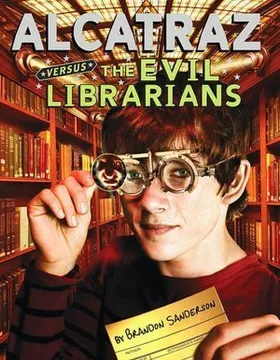


Plot Summary
The Sandbag Birthday
On his thirteenth birthday, Alcatraz Smedry receives a mysterious package from parents he barely remembers. Inside is a small bag of sand and a note promising an inheritance. The old stamps and faded address suggest the parcel was prepared years ago, yet it has reached him at exactly the right time.
As Al tries to make dinner for foster parents Joan and Roy Sheldon, his knack for breaking things turns a gas stove into a kitchen fire. He puts out the flames, but the damage confirms the Sheldons’ worst fears. His caseworker, Ms. Fletcher, tells him she will move him again, and Al retreats with the package and the familiar expectation that nobody will keep him.
The package gives Al a possible connection to his birth family, but his first response is not hope so much as suspicion. Years of disrupted placements have taught him to treat attachment as temporary, and his destructive reputation seems to confirm that belief. The kitchen fire complicates that self-image: Al insists it is an accident, yet he does little to repair the damage or comfort the people affected. His sarcasm protects him from admitting that the Sheldons matter. The inheritance arrives at the precise moment his current home is collapsing, making family both the story’s mystery and the source of Al’s deepest fear.
A Grandfather Through the Wall
The next morning, an exuberant old man arrives at the Sheldon home and identifies himself as Al’s grandfather, Leavenworth Smedry. He knows about the inheritance, but the bag of sand has vanished from Al’s room. Leavenworth suspects Ms. Fletcher, whom he recognizes as a Librarian, and urges Al to flee before the stolen sand is turned into powerful lenses.
Al refuses to trust him and shuts him out. Then the caseworker sent to collect Al draws a gun. Leavenworth crashes a self-driving antique car through the house, giving Al a choice between the armed stranger and escape. Al climbs aboard, partly from fear and partly from curiosity, and learns the Librarians want the sands for a war against the Free Kingdoms.
Al’s departure is less a clean act of courage than a decision made when his ordinary choices have vanished. The gunman makes the hidden conflict physically undeniable, while Leavenworth’s absurd rescue asks Al to trust a relative he has never known. Al protects himself with skepticism, even as he invents a confident explanation for why he let the sand be stolen. That lie shows his familiar strategy: turn vulnerability into performance before someone else can define him. The dangerous journey begins when he chooses motion over the rejection waiting at home, not because he believes the old man, but because the world has become impossible to dismiss.
The Cooler Opens Elsewhere
Leavenworth drives Al to a gas station whose cooler opens onto a vast hidden chamber, guarded by armored knights. There Al meets Sing, a broad-shouldered scholar and weapons expert, and Quentin, a language specialist whose Talent makes his speech sound nonsensical.
Leavenworth explains that Smedrys possess unusual Talents and recognizes Al’s ability to break objects as a rare power. He gives Al Oculator’s Lenses, spectacles that reveal hidden auras, and shows him other lenses that can track footprints or concentrate light into destructive beams.
Al also sees a book written in a mysterious forgotten script, the subject of his absent father’s research. Before the team reaches the library, Bastille, a teenage Crystin knight assigned to protect Leavenworth, arrives furious at being left behind.
The hidden room turns Al’s supposed defects into evidence of a lineage, but it does not instantly make him feel at home. He meets relatives who treat his breaking as useful, while he still experiences it as the force that has ruined every placement. The lenses offer a new way to interpret the world, yet their powers demand knowledge Al does not possess. Bastille adds friction to the team: her duty makes her competent, but her irritation exposes how often she is expected to manage reckless people. The family’s welcome is real, though awkward and conditional on a mission Al barely understands.
The World Behind the Map
Outside the downtown library, Al uses his new lenses to notice that its ordinary facade conceals a much larger structure, crowded with Oculatory power and guarded by a dangerous Dark Oculator. The team enters through the employee corridors after Sing’s deliberate fall creates a diversion, and Al breaks the handprint lock.
Inside, Leavenworth splits the group so Al can search for the stolen sands. A map in the stacks shocks Al: it shows three continents omitted from the geography he was taught, including the Free Kingdoms, and labels the familiar nations as Librarian-controlled Hushlands.
Sing and Bastille explain that the Librarians control public knowledge and rewrite history. Al doubts them, but the impossible building and the map leave him unable to return to his old certainty.
The map makes the conspiracy more than a secret organization: it reveals that Al’s ordinary world is itself an interpretation enforced by institutions. His resistance is psychologically credible because accepting the map means distrusting not one teacher or official, but the shared framework that has made his life intelligible. At the same time, the Free Kingdomers’ certainty is not automatically neutral; they also describe Al’s home as backward and controlled. The scene’s strongest shift is therefore not simple belief, but disorientation. Al begins to understand that knowledge can be power, and that the person who supplies the map may shape what counts as real.
Black Footprints in the Stacks
Al, Bastille, and Sing move through the library’s enormous stacks, where white, living paper creatures follow Librarian apprentices. On the next level they find caged, talking dinosaurs from the Free Kingdoms, held for execution because their visit to the Hushlands threatens the Librarians’ fabricated history.
The team leaves them imprisoned and searches a study filled with books in the same unreadable script Al saw at the gas station. Using tracking lenses, Al spots ominous footprints and follows them despite Bastille’s warnings.
They lead to Ms. Fletcher speaking with Radrian Blackburn, the one-eyed Dark Oculator. Al hears that Fletcher stole the sands and had long monitored him. Blackburn senses the hidden team and knocks Al unconscious with a lens, leaving all three prisoners.
This sequence links the conspiracy’s abstract control of information to bodies and lives: the dinosaurs are to be killed and their remains repurposed to support a false account of the past. Al’s curiosity about the forgotten script and the dark footprints pushes him beyond the cautious search plan, a decision with immediate consequences for his companions. His pursuit is partly strategic, since Blackburn may know where the sands are, and partly personal, since Fletcher has shaped his childhood. The revelation that his caseworker watched over him changes ordinary memories into evidence. Familiar authority no longer feels safe, but its motives remain more complicated than simple hatred.
The Cell Turns Inward
In a glass-barred cell, Al discovers that his Talent cannot break the special material holding him. Bastille blames herself for failing as Leavenworth’s guard, while Sing tries to keep the group steady. Al finally admits that his damage to foster homes has not always felt accidental.
Expecting families to reject him, he has often broken their most valued possessions first, making their departure happen before he could become attached. Bastille, meanwhile, reveals how badly she wanted to become an Oculator and resents being limited to her role as a warrior.
Fletcher visits and offers Al freedom if he reveals where Leavenworth is. Al refuses, asks about his parents, then lies about knowing the old man’s location. Blackburn arrives and begins torturing him for information.
The cell strips away the excuses Al has used to make his life bearable. His destruction becomes a form of pre-emptive abandonment: if he can force a family to reject him, he does not have to wait helplessly for rejection to arrive. The admission does not erase the harm he caused, but it gives him a way to understand it as behavior rather than identity. Bastille’s frustration offers a parallel wound. She has worked hard toward a capacity she cannot inherit, while Al possesses a power he has never wanted. Both characters confront the gap between effort, ability, and worth, though neither is ready to resolve it.
The Caseworker’s Bargain
Fletcher claims she can restore Al to an ordinary foster home if he betrays Leavenworth. Al recognizes that her years of cold criticism may have kept him insecure and distrustful of his own Talent, but she will not answer all his questions. Blackburn then uses a Torturer’s Lens to inflict unbearable pain, and Al is close to giving up the old man’s location.
Before he can, Leavenworth appears in the dungeon, already captured and chained, with Quentin also held nearby. Blackburn takes Leavenworth away for interrogation. The remaining prisoners are left with their fear and guilt: Al has failed to protect his grandfather, while Bastille believes she has failed her sworn duty. Their confinement makes escape urgent rather than theoretical.
Fletcher’s offer is effective because it targets Al’s oldest longing: an ordinary home and an adult who claims to have watched over him. His refusal is not pure moral certainty; he has only just begun to care about Sing, Bastille, and Leavenworth, and he still lies to control the exchange. Blackburn’s torture exposes the distance between imagined heroism and actual pain. Al nearly yields, which matters more than any boast about courage. Leavenworth’s arrival reverses the expected rescue pattern: the adult who brought Al into the conflict is now another captive, leaving the children to act without the protection they assumed he could provide.
Stone Gives Way
Al’s attempts to break the cell’s glass bars fail, but he discovers that his Talent can crumble the stone floor around them. He provokes the guard into drawing a sword, giving Bastille an opening to knock him unconscious and take the key.
The three escape and follow Leavenworth’s bright footprints through the library. A paper Codexian bursts through a wall, followed by another, and Sing’s guns and Bastille’s crystal blade cannot stop them for long. Al’s Firebringer’s Lens activates uncontrollably and burns into the floor; then his Talent surges.
He collapses the stone beneath one monster and breaks the other apart with a touch. Bastille survives the fight but loses her sword and glassweave jacket, while Al realizes his power can be more than random damage.
Al’s first meaningful use of leadership begins with an imperfect plan, not sudden mastery. He creates an opening for Bastille, who supplies the combat skill he lacks, and then discovers that his own power can alter the battlefield on a large scale. The fight exposes the cost of treating a Talent as either a curse or a ready-made solution: Al cannot control the lens, and his destructive burst damages the surroundings and his friends’ equipment. Yet the episode changes his relationship to the power. He stops asking only why it makes him different and begins testing what it can do when others’ lives depend on him.
A Rescue Made of Dinosaurs
The team reaches the torture chamber and finds Leavenworth strapped to a table while Quentin is tied nearby. To draw Blackburn away, Al frees the imprisoned dinosaurs and sends them toward the library’s public floors.
Their idea of disruption is to misfile a handful of books and read together, so the diversion fails. Al then activates the Firebringer’s Lens as bait, leading Blackburn down a corridor while Bastille and Sing return to the captives. Sing blasts through the warded chamber door with his guns.
Al breaks the table rather than the unbreakable manacles, freeing Leavenworth, and Sing removes the torture knife from the old man’s leg. Leavenworth reveals that he and Quentin found the room containing the Sands of Rashid, but its traps have already been triggered.
The failed dinosaur plan is not merely comic relief; it shows the difference between Al’s assumptions and other beings’ actual motives. He expects threatened prisoners to become useful instruments of chaos, but they retain their own codes and priorities. The failure costs time, yet Al adapts by using a lens to draw danger away from the others. The rescue combines each person’s distinct competence: Bastille’s combat instincts, Sing’s knowledge of weapons, and Al’s ability to break the table without breaking the restraints themselves. Their success is collective, not proof that Al has become a self-sufficient hero.
The Lens Turns Back
In the chamber of lenses, the team finds a vast collection but not the missing sand. Blackburn arrives with the lenses forged from the Sands of Rashid and challenges Leavenworth to an Oculator’s duel. The Dark Oculator’s offensive lenses overwhelm the exhausted old man, who collapses.
Al sees the Firebringer’s Lens beside the Rashid pair and remembers Quentin’s strange warnings. He touches the Firebringer’s Lens, changing how it works, and Blackburn later turns it on Bastille. Its beam rebounds into his eye, disabling him.
Al frees himself and the others, then wears the Rashid lenses. They let him understand Quentin’s apparent gibberish and read the forgotten script: they are translation lenses, and Quentin’s strange phrases have been hints about events to come.
Blackburn’s defeat turns on interpretation rather than greater force. He has accumulated specialized power but assumes that mastery means control over every possible use of it. Al survives by understanding his own Talent differently: breaking need not mean destroying, and a damaged object can still function in a new way. The Rashid lenses make this principle explicit by translating what had seemed like nonsense. Knowledge in the story is not simply possession of facts; it is the capacity to notice relationships among fragments. Al’s victory depends on attention, memory, and an ability to revise his assumptions at the moment when raw strength has failed.
Dinosaurs at Checkout
Fletcher reaches the lens chamber with a large force of Librarians, cutting off the team’s direct escape. Al breaks through an interior wall, but Leavenworth explains that the whole library sits inside Expander’s Glass, so breaking the outer shell would crush them.
Al uses the library card taken from the dungeon guard and sends the freed dinosaurs into the public lobby instead. Their arrival panics patrons and creates a crowd between the Librarians and the team.
Bastille, Sing, Quentin, and the wounded Leavenworth escape through the confusion, while a dinosaur calmly attempts to check out its books. They reach the cars and drive away. Bastille grudgingly acknowledges that Al’s dinosaur idea worked, though the dinosaurs remain in danger inside the library.
Al’s earlier misjudgment of the dinosaurs becomes useful only after he accepts their actual character rather than forcing them into a conventional action role. Their book-loving manners produce a different kind of disruption: not violence, but a public scene the Librarians cannot control without exposing themselves. The library card is a small, ordinary object that enables the escape, contrasting with the elaborate lenses and glass technologies surrounding it. The sequence also preserves moral limits. Al’s team gets away, but the dinosaurs’ safety is uncertain, and the public witnesses confusion rather than learning the truth. Victory is partial and dependent on concealment.
The Message in Sand
After a night recovering at a safe house, Leavenworth takes Al back to the Sheldons’ home. He explains that Al’s parents left him in the Hushlands because his knowledge of Librarian culture could make him valuable to the Free Kingdoms, not because they did not want him. Al struggles with the cost of that choice, then admits he has often rejected foster families before they could reject him.
Joan and Roy welcome him back despite the burned kitchen, and he begins to make amends. In his room, Al uses the Rashid lenses to read a hidden message from his father, Attica, who says the sands were only the beginning of a dangerous discovery. Before Al can absorb it, Leavenworth returns, late by only a few hours, and takes him to continue the work.
The return to the Sheldons resolves the emotional pattern that opened the story: Al expects rejection, but Joan and Roy receive him with concern rather than punishment. His apology is not a grand absolution; it is the first willingness to stay in a relationship after causing harm. Leavenworth’s explanation reframes Al’s childhood as a strategic sacrifice, but it does not make the separation painless or excuse the adults’ silence. The father’s message gives Al evidence that he was remembered and loved, while also opening further uncertainty about his parents and the meaning of the Talents. Belonging arrives alongside unfinished questions.
Epilogue
In the author’s afterword, Alcatraz concedes that the first days with Leavenworth changed him, making him more trusting, confident, and willing to act bravely.
He also insists that this growth should not be mistaken for a happy transformation or proof that he has become a worthy hero. The narrator keeps warning readers not to accept the polished legends about him, even as the events he has recounted show him beginning to care for others.
The afterword preserves the tension between Al’s self-accusation and the evidence of his choices. He resists the heroic label because it threatens to turn a messy change into a settled identity, while his memoir repeatedly shows him learning through mistakes rather than becoming virtuous all at once. His warning that improvement may have consequences also undercuts the reassuring shape of a completed adventure. The frame invites readers to question both public reputation and the narrator’s self-condemnation: Al may be unreliable about his worth, but his actions are visible enough for readers to judge independently.
Analysis
The book makes knowledge physical. Librarian control is not presented only as propaganda or censorship; it is built into hidden rooms, false maps, altered histories, and a library whose interior exceeds its visible shape. Al’s central task is therefore not simply to defeat an enemy, but to learn how to read a world designed to mislead him. The lenses are instruments of attention, and the Rashid lenses’ value lies in translation rather than force. Their importance clarifies the novel’s recurring contrast between power and understanding: Blackburn accumulates weapons and specialized lenses, while Al succeeds by noticing patterns and revising his assumptions.
Al’s personal conflict echoes the political one. He has absorbed an interpretation of himself as destructive and unwanted, then acted to make that interpretation come true. His realization that he deliberately drove foster families away is a turning point because it separates his behavior from his identity. He cannot undo the damage, but he can choose whether to keep repeating the pattern. Joan and Roy’s welcome gives that choice a lived consequence, not a sentimental abstraction.
The story also refuses to make growth synonymous with mastery. Al’s Talent remains unpredictable; Bastille’s competence coexists with grief over the future she imagined; Leavenworth’s affection does not erase the cost of leaving Al in the Hushlands. The team succeeds through distinct abilities and imperfect cooperation, not through one flawless hero. Even the comic set pieces carry this argument: the dinosaurs do not behave as Al expects, and their polite refusal to become a weapon forces him to adapt. The novel’s humor keeps its critique nimble, but its underlying question is serious: who gets to define what is normal, useful, or true, and what happens when people learn to question those definitions?
Review Summary
Alcatraz Versus the Evil Librarians is a hilarious middle-grade fantasy that subverts expectations. Readers praise Sanderson's unique magic system, clever worldbuilding, and sarcastic narration. The story follows Alcatraz, a foster child with a talent for breaking things, as he discovers a hidden world and battles evil librarians. Many adults enjoy the book's humor and meta-commentary on writing. While some found the style annoying, most reviewers recommend it for its creativity and entertainment value.
People Also Read
Characters
Alcatraz Smedry
Reluctant young OculatorAl is a thirteen-year-old raised in Hushlander foster homes, where his uncontrollable knack for breaking things has made him expect rejection. He hides his need for connection behind sarcasm and a deliberately difficult manner, often treating damage as proof that people are better off without him. His Smedry inheritance introduces him to Oculators, lenses, and a conflict over who controls knowledge. Al is observant and quick-thinking, but his confidence often outruns his judgment. He is most compelling when forced to admit that his supposed indifference has been a defense against attachment. His growth begins not with becoming fearless, but with accepting responsibility for how he treats the people who stay.
Leavenworth Smedry
Late-arriving grandfatherLeavenworth is Al’s grandfather, a veteran Oculator whose Talent lets him arrive late to events. He is energetic, eccentric, and inclined to treat danger as an invitation, but beneath his theatrical manner lies a serious commitment to resisting Librarian control. He gives Al the first account of his family and the lenses that make Oculatory power visible. Leavenworth believes that information can defeat force, yet his protective decisions are not always easy for Al to understand. His affection is evident in his persistence, though years of absence have left a distance between them. He represents family as something that must be demonstrated through action, not simply claimed by blood.
Bastille
Sharp-tongued Crystin knightBastille is a thirteen-year-old knight of Crystallia assigned to protect Leavenworth and the Smedry Oculators. She is a formidable fighter, disciplined in her training, and quick to criticize the reckless people whose safety she must manage. Her brusqueness conceals a deep frustration with the limits placed on her ambitions and a fear that failure will prove she never belonged in her role. Bastille does not soften easily, but her loyalty appears in what she risks and the work she continues after setbacks. Her relationship with Al begins in irritation and mistrust, then develops through shared danger. She offers a counterpoint to his self-doubt: someone capable who still questions whether her abilities are enough.
Sing Sing Smedry
Scholar with a useful stumbleSing is Al’s large, warm-hearted cousin, an anthropologist and specialist in ancient weapons. His Talent makes him trip at moments when a fall can help, a power he treats with more humility than embarrassment. Sing is curious about Hushlander customs and eager to learn from the people his side hopes to liberate, though his confidence in his own cultural judgments sometimes exceeds his understanding. He encourages Al without demanding that the boy instantly forgive himself. Sing’s steady kindness helps turn the strange new group into something Al can begin to trust.
Quentin Smedry
Cryptic language scholarQuentin is a wiry Smedry cousin and graduate student who studies Hushlander languages. His Talent scrambles his speech into phrases that sound meaningless to those around him, making him an unusual asset in espionage. He is observant and capable, though his communication style leaves others to work out what he means. Quentin’s specialized knowledge connects the team’s mission to the forgotten script and the mystery of the lenses. He shows that a seeming weakness can carry information others cannot easily access.
Ms. Fletcher
Al’s exacting caseworkerMs. Fletcher is the caseworker who has managed Al’s foster placements for years. Precise, severe, and uncomfortable with disorder, she speaks to him as if his failures are evidence of his character rather than signs of a child in need. Her long presence makes her one of the few constants in Al’s childhood, although he has little reason to trust her. She is ambitious and guarded, with personal hopes that complicate her professional role. Through her, the book makes authority unsettling: the adult who appears to organize Al’s ordinary life may understand far more about him than she admits.
Radrian Blackburn
One-eyed Dark OculatorBlackburn is a powerful Librarian Oculator who wears a monocle and directs the effort to seize the Sands of Rashid. He is controlled, strategic, and far more dangerous than the impulsive gunmen who first threaten Al. His desire for power is matched by a belief that knowledge and ability should belong to those strong enough to control them. Blackburn uses lenses for surveillance, combat, and torture, treating other people as instruments for his ambitions. His polished manner makes his cruelty more chilling, since violence appears to him as a practical tool rather than a loss of control.
Attica Smedry
Absent sandhunter fatherAttica is Al’s missing father, a Smedry Oculator who devoted himself to finding unusual sands and studying their powers. Al knows him mostly through the inheritance and the work attached to it, leaving their relationship full of unanswered questions. Attica’s research into the Sands of Rashid connects family history to the larger conflict between the Free Kingdoms and the Librarians. His absence has shaped Al’s sense of being unwanted, though the evidence of his care remains difficult for the boy to interpret.
Joan Sheldon
Foster mother and chefJoan is Al’s foster mother during the opening events and a celebrated cook whose kitchen fire makes his destructive reputation impossible to ignore. She is practical and proud of her home, yet her frustration does not erase her concern for Al. Her response to his return shows that care can survive anger and damage, though it cannot prevent either.
Roy Sheldon
Patient foster fatherRoy is Al’s foster father, gentler and more inclined than Joan to consider the pain behind the boy’s behavior. He recognizes that Al has been passed between homes and tries to interpret his actions with compassion. His welcome gives Al a chance to experience affection without first proving himself useful.
Charles
Polite dinosaur researcherCharles is a small pterodactyl researcher from the Free Kingdoms, captured during a visit to the Hushlands. Courteous and book-loving, he follows his own standards of manners even when facing danger. His behavior frustrates Al’s plans but reveals the dinosaurs as people, not props.
Plot Devices
Smedry Talents
Flaws turned into powersEach Smedry possesses a peculiar Talent that can look like a weakness: Leavenworth arrives late, Sing trips at useful moments, Quentin speaks in apparent gibberish, and Al breaks things. These abilities shape both the comedy and the action, but they do not obey their owners perfectly. Al’s power can protect him from threats and destroy barriers, yet it can also damage objects he values. The Talents make the story’s idea of ability unusually concrete: usefulness depends on context, practice, and how a person understands a supposed defect.
Oculator’s Lenses
Tools for seeing hidden powerOculator’s Lenses are spectacles made from special sands, each pair enabling a different way to perceive or affect the world. Al first uses them to see auras around the library, then receives lenses that reveal tracks and others that focus light into a destructive beam. The lenses make observation an active skill: choosing what to wear changes what evidence Al can notice. They also require discipline, since Al’s inexperience causes powerful lenses to activate at dangerous times.
The Sands of Rashid
Inheritance and hidden languageThe bag of sand left by Al’s parents drives the mission because both the Smedrys and the Librarians believe it can be forged into unusually powerful lenses. Al’s attachment to it is personal as well as strategic: it may be the only material link to his parents and his father’s research. The finished lenses do not simply amplify force. They allow Al to understand languages and codes, including the forgotten script and Quentin’s strange predictions. The device rewards attention and interpretation over brute power.
The Forgotten Language
A code hidden in plain sightThe unreadable script appears in a book at Leavenworth’s hidden base and again among the Librarians’ records. Scholars have tried to decipher it for centuries, and its continuing presence suggests that both sides believe it contains important knowledge. Al recognizes the writing but cannot read it until he uses the Rashid lenses. It links his father’s research to the conflict over information and helps establish that discovery depends not only on accumulating facts but on finding a way to interpret them.
Expander’s Glass
Bigger inside than outsideExpander’s Glass allows a building’s interior to extend beyond the dimensions of its exterior. The gas station hides a large chamber behind a small cooler, and the downtown library contains far more floors and rooms than its outside suggests. This technology makes the setting itself deceptive, supporting the larger conflict over what can be seen and believed. It also imposes practical limits: Al cannot simply break the outer wall to escape without risking the expanded structure collapsing around the people inside.
About the Author
Other books by Brandon Sanderson




Download PDF
Download EPUB
.epub digital book format is ideal for reading ebooks on phones, tablets, and e-readers.








