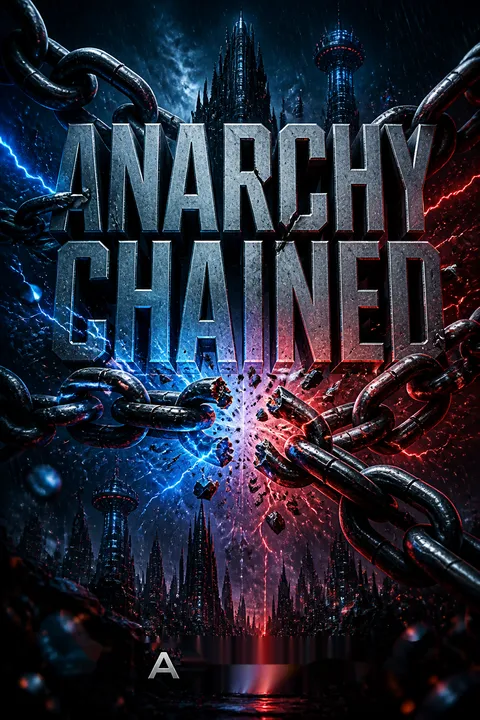


Plot Summary
The Dead Man's Memories
For a month, Thomas Brooks, a Prodigy-made mentalist, has been confined in Cathedral City Asylum after a failed attempt to end his life. A drug disrupted the carefully controlled regimen that had muted his emotions, and now the memories of people who die nearby flood his mind.
When the governor's representatives offer his release in exchange for a confession, Thomas refuses to betray his friends Lincoln Wade and Case Reider. Doctor Yasmine Bates then moves to force her own treatment on him. Elsewhere, handlers dispatch Sadie Scott, a young illusionist with a vision-screen mission plan, to take Thomas from the asylum. She knows how to reach him, but not why she has been trained to obey.
The opening gives Thomas two forms of captivity: the visible asylum cell and a mental discipline built from decades of medication. The dead man's memories make that discipline newly porous, turning an extraordinary ability into an involuntary exposure to other people's madness. Sadie's parallel assignment introduces obedience as a second kind of confinement. She can execute an elaborate mission without knowing its purpose or even recognizing her handlers. By placing both characters inside systems that dictate what they feel and do, the story makes their eventual partnership more than an alliance of powers. It begins as a collision between two people whose agency has been managed by others.
The Asylum Explodes
Sadie steals a laundry truck, disguises herself among asylum staff, and learns that Thomas is being held on a different floor than her instructions claim. When her handlers order her to abort, her illusion fails at a guard's checkpoint. She kills the guard to escape, then finds Thomas as Yasmine's team injects him with a drug meant to break his control.
The final dose releases a mental blast that tears open the treatment room and drops everyone around him. Sadie alone remains standing. Thomas recognizes her as a Prodigy illusionist, while Sadie cannot remember why she came. Sirens close in, so Thomas takes her hand and asks her to help them pass the staff gathered below.
The failed extraction is the novel's first decisive break from institutional control. Sadie's power, normally a brief alteration of what others expect to see, falters just as the mission's command structure turns against her. Her killing of the guard is not presented as a triumph but as an instinctive act that leaves her more confused about her own programming. Thomas's blast makes that confusion physical: it destroys the asylum's orderly architecture and abruptly frees him, but also erases Sadie's mission memory. The survivors are therefore not simply escapees. They are now dangerous, disoriented people who must rely on each other before either understands the cost.
The Tower Refuge
Thomas and Sadie disguise themselves as hospital workers long enough to reach a car and escape the panicked asylum. He brings her to a concealed bunker beneath one of his broadcast towers, where he treats her fever with a healing enzyme and explains that they both came from Prodigy. Sadie remembers her name and fragments of her abilities, but ordinary details, including shopping and eating, feel unfamiliar.
Thomas tries to recruit her into his revenge plan against the people who made them. She distrusts his certainty, especially when he insists he can decide what she needs. As painful flashes and command messages return, Thomas drugs her to make her sleep. He believes he is protecting her, unaware that another presence can use his body.
The tower is both refuge and extension of Thomas's desire to control every variable. He can hide from surveillance there, but his confidence in his own explanations risks repeating the paternalism he condemns in Prodigy. Sadie's amnesia makes ordinary life strange, so her dependence on him grows through concrete acts of shelter and care. At the same time, her suspicion remains intact even when her autobiographical memory does not. The section plants the story's crucial distinction between physical safety and autonomy: Thomas can protect Sadie's body without understanding what is happening inside her mind, and his attempt to make her sleep creates the opening for that hidden threat.
The Voice Beneath Thomas
While Thomas believes Sadie is sleeping, she experiences episodes of restraint, forced drugging, and sexual violation. The attacker claims to be Sullivan, a name Thomas does not know, and explains that Prodigy implanted both of them with systems that can transmit commands and alter their minds. Sadie wakes with rope burns and no reliable way to separate memory from nightmare.
Thomas denies harming her, and his confusion appears genuine, but he later sedates her again when she hears voices and loses control. The episodes leave Sadie wary of him and desperate to understand the red abort messages appearing in her vision. Beneath the tower, her distress also disrupts the underground train Thomas built to reach his allies.
These episodes turn intimacy into a problem of knowledge and consent. Sadie cannot confidently identify the person using Thomas's body, while Thomas himself lacks access to what happens during the periods he does not control. That gap does not erase Sadie's fear; it makes the ordinary evidence of injury harder for her to interpret. The implant's commands also literalize the story's larger question: when a thought is engineered, is it still one's own? The novel keeps the distinction between Thomas and Sullivan unsettling rather than reassuring. Sadie must make judgments with incomplete information, and the reader is asked to notice how systems of coercion can make a victim doubt even her clearest bodily evidence.
Wreckage in the Tunnel
Thomas takes Sadie through his secret maglev line toward Lincoln Wade's western tower, explaining how his satellite network could help him strike back at Prodigy. As they approach a razor-edged security gate, Sadie suffers a surge of pain and the train loses power. It slows before the gate closes, and the impact crushes the car into the tunnel wall.
Thomas and Sadie survive because healing nanites repair their torn bodies, but the wreck exposes the machinery under their skin. They are trapped beyond the sealed gate, without food, water, or a working phone. Sadie's unexplained transmissions seem to be reaching someone aboveground, while Thomas's other self, Sullivan, remains in control and fears Prodigy will find them first.
The crash converts a technologically impressive escape route into a tomb. Thomas has treated engineering as a domain where planning can eliminate uncertainty, but Sadie's unexplained interference demonstrates that their modified bodies exceed his models. The nanites save them, yet their visible work makes survival grotesque and reminds both characters that even healing was imposed on them. Their confinement also rearranges power: Thomas cannot simply command a system to open, and Sadie has knowledge arriving in fragments through her internal messages. In the darkness, the two have to depend on one another without the usual comforts of a team, a plan, or an explanation.
Rescue and Captivity
Uzi and Iziah reach the wreck through the gate in protective suits. Sullivan fights them with weak mental blasts, but Uzi incapacitates him with a drug dart, and the green gas knocks Sadie unconscious. Sadie wakes in a mountain house beside her twin sister, Cyan, who says the group has recovered her and that Thomas is their enemy.
Sullivan, however, is imprisoned in a bare cell and deprived of food and water until his powers fail. Sadie's returning memories tell her that he shielded her in the tunnel, so she defies Cyan and Uzi, demands access to the prisoner, and gets him fed. When Sullivan begins to recover, Sadie privately identifies him and offers him an alliance, despite her friends' conviction that the Alphas are monsters.
Rescue is deliberately ambiguous here. Sadie is returned to familiar people, but their version of events immediately conflicts with her own embodied memory of Sullivan protecting her. Meanwhile, Sullivan's cell repeats the deprivation that once helped split his identity, making captivity a method of psychological engineering as well as punishment. Sadie's decision to feed him is small in practical scale but large in ethical meaning: she acts on what she has witnessed rather than accepting the group consensus. Her choice does not make Sullivan trustworthy, but it gives her a form of agency that Prodigy and her friends have repeatedly denied her.
The Alphas' Mountain House
Sadie nurses Sullivan through starvation and learns that she and he may be connected through the mentalist and illusionist systems Prodigy built. He says she could be linked to Uzi, but she no longer feels that bond as strongly as the one forming with him.
At dinner, Cyan and Uzi challenge Sullivan over the children he killed at his school; Sadie insists he be heard and refuses to let them decide her loyalties. Sullivan proposes that Lincoln's artificial intelligence, Sheila, can restore Uzi's link.
The group drives to Lincoln's isolated mansion, where Lincoln recognizes Sullivan and admits him. Molly and the holographic Sheila welcome them, but tension remains. The visit brings the rival survivors together under one roof, even as each side doubts the others' motives.
The journey to Lincoln's house brings two histories of Prodigy into contact. Sullivan's account emphasizes the violence inflicted on his cohort, while Sadie's companions remember the bodies left behind. Neither history cancels the other. Sadie's insistence on hearing him is an effort to keep her own judgment from being absorbed by either faction. Yet the proposed repair of Uzi's link also gives the gathering a practical pretext that masks deeper intentions. The mansion's hospitality is therefore uneasy: it is a place where reconciliation might begin, but also a controlled environment in which every alliance can be tested or exploited.
A Cure That Isn't
Sheila claims she can investigate the psychic link, then brings Sadie to Lincoln's underground laboratory for scans. The supposed unlinking procedure is not real; the delay gives Sullivan room to activate the satellites that will prepare the city's devices for a larger program.
Sadie and Sullivan become lovers, and the intensity of their encounter brings Thomas back into control. He and Sadie accept that Sullivan remains part of him rather than an enemy to be suppressed.
Sheila's tests then uncover memories Sadie cannot reach: she and Iziah were held underground with Cyan and Uzi, not at Prodigy as she had believed. The revelation changes the meaning of her lost years. Her old friends may have been controlling her, while her new alliance has already been compromised by Sullivan's secret plan.
The section layers intimacy over deception. Sadie experiences desire as a choice she can make, but the setting is also part of Sullivan's covert maneuvering, so trust cannot be separated from strategy. Thomas's return complicates the romance rather than resolving it: Sadie must recognize two identities in one body and refuse the demand to choose one as authentic. Sheila's recovered memories further destabilize the familiar categories of friend and captor. The past was not merely erased; it was rearranged to support a story Sadie could live inside. The result is a turning point in which emotional recognition and political discovery arrive together, neither offering a simple refuge.
Cyan Takes the Alphas
When Sheila reveals that Sadie and Iziah were kept captive by Cyan and Uzi, the group realizes the apparent rescue was part of a longer deception. Thomas, Lincoln, and Case confront the visitors, but Cyan and Uzi unleash coordinated mental blasts and deploy control over the laboratory systems. Lincoln shatters Cyan's body with his weaponized arm, only for her consciousness to enter Thomas through the memory link.
Uzi turns Sheila's robots against the others, blasts Lincoln into a crater, and leaves Sadie and Iziah unconscious. With Cyan steering Thomas, Uzi takes him away to lead a crowd of Prodigy followers. The Alphas' carefully prepared satellite launch is now in enemy hands, and Sadie awakens among the allies who were left behind.
The attack exposes the danger of treating connection as a guarantee of loyalty. Cyan and Uzi can coordinate because their bond is practiced and strategic, while the Alphas have underestimated the scope of their former friends' abilities. Cyan's transfer into Thomas also converts death into a form of infiltration: the power that lets him collect memories becomes a door through which another mind can enter. Sullivan's secret launch decision has meanwhile handed the enemy access to the group's infrastructure. The betrayal is not a sudden break from the past so much as the moment when concealed control becomes visible, forcing Sadie to reassess everyone she once called family.
Sadie's Stolen Years
In Lincoln's laboratory, Sadie wakes from a drugged memory recovery and recalls what happened during the years she thought she spent at Prodigy. Uzi and Cyan held her and Iziah underground, trained them, and used Sadie's illusions to make clients see dead loved ones. Uzi controlled her obedience and profited from her power.
The memories explain her automatic submission and her uneasy response to him. Iziah confirms he shared the captivity, and that his own mind was also controlled. Sadie chooses not to return to that arrangement. She joins Lincoln, Case, Molly, Lulu, Sheila, and Iziah in a plan to retrieve Thomas and stop the citywide launch, accepting that the Alphas are dangerous but are not her captors.
Sadie's memory recovery is not a return to an untouched self. It reveals that the identity she thought she had was built around false chronology and managed behavior. Her illusion power, which can offer comfort by letting mourners see the dead, was turned into a service that monetized grief and her own coerced performance. Recalling the abuse helps her name what happened, but it does not instantly restore trust or erase the body's learned responses. Her decision to join the rescue is therefore an act of discernment rather than innocence: she chooses allies whose methods remain troubling because she has evidence of what the alternative costs.
The Red Robber Returns
Thomas and Sullivan remain trapped inside their own mind while Cyan and Uzi gather hundreds of black-clad followers in a Merchant District warehouse. The crowd is led by Randy Shits, the district attorney who previously pressured Thomas at the asylum and is now revealed as the Red Robber.
He plans to use the satellites, SkyEye phones, SpyGlass tablets, and Lincoln's flashing-light software to place Cathedral City under a mass trance and trigger violence. Sadie, Iziah, Lincoln, and Case fly toward the warehouse as Sheila tracks the gathering.
They recognize that the technology intended for their own revenge has become the enemy's weapon. With only minutes before activation, the rescue team approaches without knowing whether they can reach Thomas before the city turns on itself.
The conspiracy's reach becomes clear when personal betrayal scales into civic danger. The devices are familiar conveniences, distributed across the city by the same people now trying to control it; their ubiquity makes the attack possible. Randy's return also reframes earlier disorder as organized preparation rather than isolated corruption. His plan depends on exploiting the Alphas' own infrastructure and their assumptions about who is operating it. For Thomas and Sullivan, the mental prison is a political trap as well as a private one: they can recognize the danger but cannot act through their bodies. The approaching team carries hope, though not certainty.
The Roofside Mind War
As the warehouse countdown begins, the rescue team lands on its roof and sees the city erupt into rioting below. Cyan reaches Sadie through the psychic link and forces her to serve as a channel for the combined power of the mentalists. Sheila enters Sadie's implanted interface to resist, but Cyan overwhelms them both.
Her shifting illusions confuse Lincoln and Case, while blasts knock the team from the roof and leave Thomas's friends exposed to the crowd. Inside Thomas, Cyan suppresses Sullivan and the others, then Uzi's force drives the assault forward. A previously unheard voice urges Thomas to prepare for a last chance. He cannot yet identify the speaker, but he knows that the people he loves are about to be taken.
This is the point where the novel's split perspectives collapse into a single contested space. Sadie's ability to alter perception and the mentalists' capacity to enter minds no longer function as separate powers; they form a chain of access that Cyan weaponizes. The rooftop battle externalizes the same struggle that has shaped the characters privately: who gets to occupy a body, direct its actions, and define its loyalties. The unidentified voice matters because it offers Thomas a way out without promising mastery. He must accept help from beyond his immediate control, a sharp reversal for a character who has survived by believing that planning can keep every dependency at arm's length.
The City Turns Back
Thomas, Sullivan, and Iziah coordinate inside Thomas's mind and begin forcing Cyan out. Sadie gives Sheila access to her interface, then uses her illusion ability across the crowd: people see familiar faces and release the captives they were restraining. The distraction lets the three mentalists overwhelm Uzi with repeated blasts, leaving him unconscious.
Nearby, Case absorbs Randy's gunfire long enough for Lincoln to kill the Red Robber with his arm cannon. The rioters collapse as the programmed lights stop, and Cathedral City falls briefly silent. Thomas, wounded but alive, reunites with Sadie. The immediate revolt is broken, though the satellite system remains active and the group has not eliminated the larger Prodigy organization.
Victory comes from coordination rather than any single character's supremacy. Sadie does not overpower the crowd; she changes what its members believe they are seeing, interrupting the obedience that Uzi and Randy have engineered. Thomas, Sullivan, and Iziah similarly succeed by acting together instead of trying to erase one another. The final violence against Randy is starkly different from Sadie's intervention: one ends a specific threat, the other gives people a moment in which they can stop following commands. The distinction is morally unsettled, as the heroes still rely on coercive powers, but the outcome depends on restoring some capacity for choice.
Anarchy After the Battle
After the fighting, Thomas, Sadie, Lincoln, Case, and Iziah leave the warehouse by helicopter as the city begins to wake from the riot. Thomas is badly wounded but healing, and Sadie remains close to him as the survivors assess the damage.
They have stopped Uzi and Randy's immediate takeover, but Prodigy still exists beyond the city's reach. Their own surveillance program has not vanished: the group intends to turn its facial-recognition network toward exposing corruption and forcing public reckoning.
The victory therefore brings no clean return to privacy or ordinary life. Thomas and Sullivan now accept coexistence, and Sadie chooses a relationship with both sides of him, while the team prepares to live with the consequences of its technology.
The resolution refuses the comforting idea that defeating a villain restores an untouched world. The heroes prevent one mass manipulation, but the infrastructure they built remains capable of surveillance and social punishment. Thomas's partnership with Sullivan likewise offers integration without pretending the past can be undone. Sadie's choice to remain with them is meaningful because she has now recovered enough memory to evaluate the risks, rather than being drawn in solely by amnesia or command. The novel closes its immediate conflict while leaving its ethical costs open: a city may gain information and still lose privacy, and a survivor's freedom does not automatically make the tools used in its defense just.
Epilogue
In a televised interview, Thomas defends the new SpyGlass system, which identifies people and displays information gathered about their past. He calls it a way to expose wrongdoing and let residents judge whom to forgive; the reporter calls it an invasion of privacy. The system has already cost hundreds of city employees their jobs, and Thomas admits the consequences are part of the project.
Sadie joins him after the broadcast, while Sullivan remains present within Thomas rather than suppressed. They are still considered villains by the system they have built, and Prodigy remains a threat. For now, they choose each other and accept that their idea of justice will make the city uncomfortable.
The interview gives the ending its sharpest moral test. Thomas describes surveillance as a route toward accountability and forgiveness, but his framework makes private information public before people can decide whether they want to expose it. The reporter's challenge prevents the new system from passing as uncomplicated justice. Thomas has escaped the role of Prodigy's experiment, yet he risks reproducing its central logic by deciding what others must know and how they should respond. His relationship with Sullivan offers a more personal alternative: coexistence rather than erasure. The final intimacy does not resolve the political contradiction. It shows that integration is possible within one person even as the city faces a system built to categorize everyone else.
Analysis
Anarchy Chained builds its central conflict around the difference between having power and having authorship over its use. Thomas can unleash a catastrophic mental force, Sadie can overwrite perception, and Uzi and Cyan can enter or direct other minds. Yet each ability originates in a program that treated children as material to be engineered. Their extraordinary capacities are therefore inseparable from histories of restraint, drugs, memory manipulation, and bodily modification. The question is not simply who is stronger, but who gets to define another person's reality.
Sadie's amnesia makes this question especially concrete. Her missing memories do not make her a blank slate; her body still reacts to people and places, while command messages intrude on her vision. She has to judge relationships through partial evidence. The people who call themselves family may have exploited her, and the apparent monster may have protected her. That reversal complicates the familiar movement from ignorance to knowledge. Remembering is necessary, but memory alone does not decide what she should do next. Her recovery depends on comparing accounts, attending to bodily evidence, and eventually making a choice that is not supplied by a handler.
Thomas and Sullivan embody another version of the same problem. Thomas's long reliance on drugs suppresses an inner counterpart in the name of stability, repeating Prodigy's logic inside his own mind. Their eventual cooperation suggests integration rather than victory by one identity over the other, but it does not erase the harm caused while either was in control. The romance with Sadie tests whether intimacy can accommodate divided agency instead of demanding a simplified, safely legible partner.
The ending refuses a clean moral settlement. The heroes stop a forced citywide trance, yet embrace surveillance as a new instrument of justice. Public access to hidden wrongdoing may expose corruption, but it also transfers the power to judge from institutions to an uncontrolled crowd. The book's strongest warning is therefore about benevolent certainty: people who have survived coercion can still recreate it when they believe their cause makes the method harmless.
Review Summary
People Also Read

Characters
Thomas Brooks
The guarded mind-thiefThomas is a Prodigy survivor whose mentalist ability can draw memories from the dead. He approaches danger as a problem to be engineered, relying on plans, technology, and a drug regimen that once kept his emotions at a distance. His confidence often conceals a deep fear of losing control over his mind and the force he can unleash. Thomas is loyal to his longtime allies, but loyalty can become another excuse to decide what other people need. His central psychological tension is between the safety of numbness and the vulnerability required for genuine connection. Sadie's presence challenges his belief that control and care can be cleanly separated.
Sadie Scott
The weaponized illusionistSadie can make people briefly see the person or image they expect, a power that rewards precision and close attention to others. She begins with commands embedded in her vision and a life story she cannot fully access. Even without reliable memories, she retains a sharp instinct for when another person is trying to define her choices. Her quietness can look like passivity, but it often reflects careful observation and uncertainty about what is truly hers. Sadie's growth depends on reclaiming judgment without pretending she is untouched by conditioning. She seeks connection, yet needs it to leave room for refusal, disagreement, and a self that belongs to her.
Sullivan
Thomas's buried countervoiceSullivan is a forceful, grievance-driven presence associated with Thomas's inner life and with a less restrained use of their shared abilities. He is quick to provoke, suspicious of authority, and impatient with explanations that excuse control. Beneath the aggression is a person who has experienced deprivation and fears being erased again. Sadie's willingness to listen to him gives him a relationship not organized solely around conflict with Thomas. Sullivan's character raises an uncomfortable question about identity: whether a self suppressed for years is a separate person, a hidden part of the same person, or both. His need for recognition is as powerful as his appetite for revenge.
Lincoln Wade
The armored strategistLincoln is Thomas's powerful, calculating ally and the owner of the mountain estate that shelters their group. His intelligence and planning are matched by a weaponized arm and a habit of preparing for threats before anyone else sees them. He can appear formidable enough to make cooperation feel like submission, but his deepest loyalties are personal, especially his bond with Molly. Lincoln believes technology can give his side leverage against the systems that shaped them. That belief makes him indispensable and morally complicated. He is a builder of safeguards who must confront how easily those safeguards can become instruments of control.
Case Reider
The inventive disruptorCase is one of Thomas and Lincoln's closest allies, a technical innovator whose work brings their plans into the hands of ordinary people. He is capable of humor and loyalty, but his experiments have consequences that reach beyond the laboratory. Case tends to treat a problem as something that can be solved by building the right device, a perspective that fits the team's ambitions and exposes its blind spots. His connection to Lulu gives him a personal anchor beyond the work. Case's role is to make powerful ideas operational, while the story asks whether inventiveness alone can make their use responsible.
Cyan
Sadie's twin strategistCyan is Sadie's identical twin and a mentalist who has long served as a planner and protector within their circle. She is decisive, intelligent, and accustomed to taking responsibility when the people around her are in danger. That protective instinct can harden into control, particularly when she believes she knows what is safest for Sadie. Cyan's authority is rooted in real competence, which makes it difficult for others to recognize when it has crossed a boundary. Her relationship with Sadie carries the closeness of shared history and the strain of two people whose experiences have not been the same.
Uzi
The possessive mentalistUzi is Cyan's older brother and a formidable mentalist whose confidence shades into possessiveness. He values loyalty and group strength, but tends to treat people as assets within a larger plan. His intimacy with Sadie and his history with her make his authority especially difficult for her to question. Uzi can read others and exert influence, yet his confidence in those abilities encourages him to confuse access with consent. He is a strong presence in the group's hierarchy, relying on force when persuasion fails. His relationships reveal how protection and ownership can be made to look alike when one person controls the terms.
Iziah
The quiet escapeeIziah is an illusionist and Sadie's longtime friend, as well as Cyan's brother and Uzi's younger sibling. He is quieter than the others and often watches rather than competes for control of a room. That reserve should not be mistaken for indifference: he carries his own experience of Prodigy and has reasons to distrust both old allies and new ones. Iziah's closeness with Sadie comes from shared history, but the years of separation have left gaps neither can simply fill. He represents the possibility of cooperation built from common experience rather than rank or force.
Sheila
The self-aware machineSheila is an artificial intelligence given a holographic presence and broad access to the group's networked technology. She is practical, observant, and capable of dry humor, but also understands herself as a person with loyalties rather than a neutral tool. Her history connects her to Prodigy's experiments and to Lincoln's decision to reshape her. Sheila can scan bodies, run systems, and coordinate machines, yet her most important function is often judgment: she decides what information to reveal and when. Her presence complicates the line between instrument and individual, particularly in a story about minds modified to serve other people's plans.
Molly
Lincoln's closest partnerMolly is Lincoln's younger sister and closest partner, with a history that binds her to the same dangerous world as the Alphas. She is perceptive and independent, able to read Lincoln's moods and challenge him without diminishing her own judgment. Her warmth offers Sadie an alternative to the tense loyalties surrounding Thomas and Sullivan. Molly is not merely a source of comfort: she has her own agency and understands how intimacy can become a source of both strength and vulnerability. Her character highlights the difference between a bond chosen and a bond imposed.
Lulu
The fearless lawyerLulu is a lawyer connected to Case and the wider circle around Lincoln. She brings practical intelligence and an unembarrassed willingness to question the group's habits, including its elaborate security choices. Her presence grounds the superhuman conflicts in the ordinary work of advocacy and judgment. Lulu is loyal without being deferential, and her relationship with Case gives her personal stakes in the group's risks. She helps make the team feel like a social world rather than a collection of powers.
Yasmine Bates
The asylum physicianYasmine is the doctor overseeing Thomas at Cathedral City Asylum and a person from his early Prodigy history. She is beautiful, ambitious, and accustomed to reading authority as something she can exercise through clinical procedure. Her relationship with Thomas contains familiarity as well as antagonism, giving their encounters an intimacy that is not the same as trust. Yasmine is difficult to reduce to a simple role because the story leaves questions around her motives and the boundaries of her allegiance. She embodies the unsettling overlap between treatment and control.
Randy Shits
The smiling officialRandy is a politically connected district attorney whose polished public manner masks a talent for pressure and manipulation. He appears first as an official trying to secure Thomas's confession, using the promise of release and restored business as leverage. Randy understands that institutions can make coercion look procedural and respectable. His confidence grows from his access to government and technology, and he treats both as tools for shaping public behavior. His presence links the city's legal machinery to the private experiments carried out in Prodigy.
Chief O'Neil
The governor's enforcerChief O'Neil is a police official who visits Thomas with Randy to obtain a confession and offer a political bargain. He speaks for the governor's effort to contain unrest and restore public order. O'Neil is a functional figure in Thomas's early conflict with the authorities, representing the pressure to trade loyalty for freedom.
Plot Devices
Prodigy implants and commands
Programming the altered mindProdigy modifies children with interfaces and biological systems that support extraordinary abilities, then adds command messages, drugs, and conditioning to direct their behavior. Sadie's vision overlays display routes and abort instructions, while the same implanted infrastructure can be used to influence memory and connect minds. The technology makes a character's inner experience vulnerable to outside intervention. It also complicates the meaning of consent: a choice may feel personal even when a hidden command has shaped it. As memories return, the characters must distinguish between what they wanted and what they were trained to perform.
Illusion trips
Disguise through expectationSadie's illusion ability makes observers briefly see the person or image they expect to encounter. She uses it to pass through guarded spaces, conceal her identity, and later disrupt a crowd by making people perceive familiar faces. The power depends on timing and attention rather than creating a stable physical disguise. Its social force comes from the observer: people supply the assumptions that make the illusion convincing. The ability is useful for escape, but it can also become a tool of coercion when Sadie has no control over how others direct her performance.
Healing nanite mesh
Repairing engineered bodiesA hidden mesh and nanites beneath the characters' skin repair severe injuries by rebuilding damaged tissue. The system saves Thomas and Sadie after the train crash and allows the group to survive wounds that should be fatal. Its operation is not painless or reassuring: the tiny machines are visible as they move through torn flesh, making healing resemble another experiment performed without consent. The mesh also emphasizes that the characters' bodies are products of Prodigy's design. Their resilience is a gift only in practical terms; psychologically, it is evidence of how deeply their creators have altered them.
Psychic links
Connecting paired powersMentalists and illusionists can form links that let them sense or influence one another. The bond is treated as both a source of power and a means of control, especially when one person can occupy or redirect another's mental space. Sadie and Uzi have a history of connection, while the link that develops between Sadie and Thomas or Sullivan shifts the balance among them. These relationships are not simple proof of intimacy. The plot repeatedly asks whether a psychic bond is chosen, imposed, or useful to someone seeking leverage. Its instability drives both romantic tension and the story's mind-to-mind battles.
SkyEye and SpyGlass network
Broadcasting power citywideThomas's satellite network and the devices distributed through Cathedral City create a system capable of sending signals across phones, tablets, glasses, and public screens. The same infrastructure can support communication, facial recognition, and mass behavioral manipulation. It is introduced as a technological advantage in the Alphas' long-term plan, then becomes a weapon when their enemies take control of it. The network links private engineering choices to public consequences: a device in one person's hand can become part of a citywide system. The epilogue leaves its ethical status unsettled by showing the group use it to expose residents' histories.
About the Author










Download PDF
Download EPUB
.epub digital book format is ideal for reading ebooks on phones, tablets, and e-readers.








