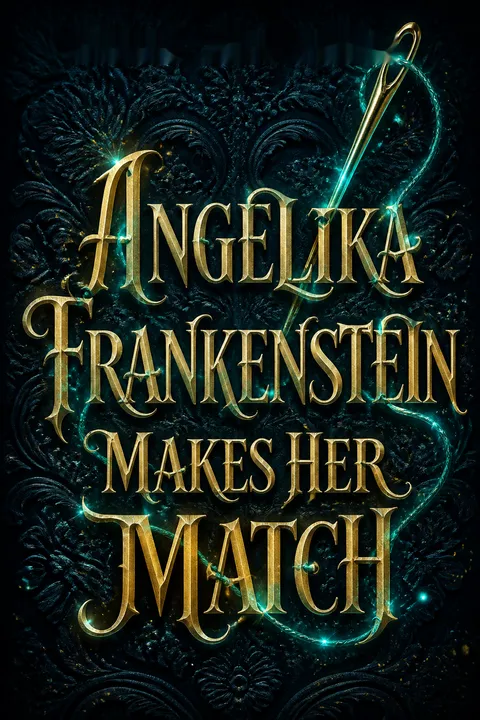


Plot Summary
Prologue
Blackthorne Manor has watched the Frankenstein family neglect its rooms and themselves for years. Their parents died when Victor and Angelika were young, leaving them wealthy but emotionally stranded. Victor buries himself in experiments and in the memory of his fiancée, Lizzie; Angelika follows him, longing for a life and a love of her own.
Now, strange work after midnight has turned the old barn into a laboratory. The house senses that the siblings are trying to change the terms of life and death, though it cannot yet tell whether their experiment will bring them hope or deepen their loneliness.
The house gives the story an intimate, almost domestic witness: its neglected windows and unused rooms register what the siblings cannot say directly about grief. Their wealth protects them from material hardship, but not from the emotional habits loss has left behind. Victor turns sorrow into ambition; Angelika turns it into a search for someone who will choose her. The laboratory therefore begins as more than a gothic contraption. It is the siblings' attempt to repair, through invention, a family life they could not save. The house's need for care quietly anticipates Angelika's own eventual change from consuming comfort to offering it.
A Suitor from the Morgue
In 1814, Angelika Frankenstein joins her older brother Victor at a Salisbury morgue, where he buys bodies for experiments meant to outdo his scientific rival, Jürgen Schneider.
Victor treats the work as a race for fame; Angelika wants to demonstrate that she is more than his assistant and hopes, less scientifically, to find a man she could love. She rejects Victor's suggestion that she assemble an ideal body from several corpses. Instead she chooses a handsome dead stranger and insists she will preserve his face.
Victor takes the stranger's hands for his own creation and gives Angelika other body parts, including the blacksmith's strong frame. She stitches the mismatched pieces together, determined to make her chosen man whole without knowing who he was.
Angelika's choice begins as a collision between technical skill and romantic fantasy. She is capable of precise anatomical work, yet she imagines the corpse as a future companion before asking what he might want. Victor's rivalry with Schneider makes the experiment public in his mind, a route to recognition; Angelika's purpose is private, an answer to years of isolation. The mismatch between these motives creates the central ethical tension: a person can be made into evidence, a project, or a desired partner, but none of those roles automatically grants the maker authority over him. Her craftsmanship is real, but so is the danger of confusing care with possession.
The Fourth Creation Breathes
A thunderstorm powers the experiment. Victor's towering creation wakes first, panics at the sight of Angelika, and escapes into the night. When Angelika's own man rises from the chamber, he is in severe pain, confused, and unable to remember his name or former life. He rejects her claim to be his mistress and asks to be treated as a person, not as Victor's scientific proof.
Angelika brings him to Blackthorne Manor, where she and the servant Mary wash him, warm him, and give him a temporary name: Will. He learns that Angelika stitched his body, while Victor's procedure restored his life. Their first night establishes both his dependence on their hospitality and his insistence on making his own choices.
The awakening overturns Angelika's imagined romantic script before it can begin. Will's pain makes the consequences of her experiment bodily and immediate, while his questions establish a self that cannot be reduced to the body she designed. His lack of memory leaves him vulnerable, but it does not make him passive or grateful on command. Angelika's response begins to shift from claiming him to tending him: warmth, washing, clothing, and a name become acts of care rather than proof of ownership. The temporary name also captures the story's unstable boundary between identity and circumstance. Will must discover who he was, even as the people around him meet who he is now.
A Kiss Among the Dead
As Will recovers, Angelika's affection grows faster than his trust. At the morgue, they retrace the place where she found him; Will understands that she chose him deliberately, and kisses her. Angelika then admits he was her fourth attempt at finding a husband, wounding the specialness he thought he had found with her.
The journey also yields a practical lead: the morgue has no useful records, but the nearby military academy recently suffered a fatal accident. On their return, thieves enter Blackthorne Manor. Will drives one away with a coin and a warning, while Angelika waits outside and is secretly stroked by an unseen figure in the orchard. Shaken, she lets Will comfort and wash her, and confesses that she has concealed his ring.
The morgue kiss is not a clean romantic reward. It reveals how differently the pair understand intimacy: Angelika treats her long pursuit as proof of devotion, while Will needs to know that he is not simply the latest candidate in a private experiment. His hurt forces her to see that a feeling can be sincere and still fail to recognize another person's need for agency. The break-in and the mysterious touch deepen the shift from flirtation to mutual reliance. Will responds to the thief without cruelty, and then cares for Angelika when she freezes in fear. His moral steadiness becomes a standard she begins to measure herself against.
A Commander at the Gate
Angelika visits Dunmore Military Academy, ostensibly to research a family medal, and meets its new commander, Christopher Keatings, a handsome, polished widower's-age bachelor. She asks about a training accident and learns that soldiers died, but finds no immediate match for Will.
Returning home, she meets Lizzie, Victor's witty fiancée, who embraces Angelika as a sister. Angelika then visits Clara Hoggett, a poor young widow whose husband died in the academy accident, and brings food. Clara's infant son Edwin resembles his father, and Angelika is unexpectedly moved by holding him.
The visit also shows her that Clara has been left alone in grief. Christopher accompanies Angelika back through the village; their conversation and shared laughter make him a genuine alternative, even as her attention remains fixed on Will.
Christopher represents a life Angelika can recognize at once: social standing, mobility, and an established identity. Yet her meeting with him does not produce the automatic infatuation she has come to expect from herself. Clara and Edwin instead interrupt her self-absorption more profoundly. By offering practical help, Angelika begins to notice the deprivation that her wealth has kept outside Blackthorne's walls. Her response to the baby also exposes a desire that is not merely about being adored by a husband. This turning point broadens the story's stakes: Angelika must decide not only whom she loves, but what kind of life her privilege can make possible for other people.
The Sleepwalker's Refusal
Lizzie's arrival brings new warmth to Blackthorne, but the household remains unsettled. One night, Victor and Angelika find Will sleepwalking through their late father's study, searching the shelves and papers. Asked whether he would marry Angelika, Will answers that he never will.
He wakes with no memory of the episode, leaving Angelika to carry its painful meaning alone. She also welcomes Sarah, a shy maid from a struggling family, and gives her paid time to study.
Meanwhile, Will begins restoring the neglected garden and asks to leave the main house for Larkspur Lodge, where he can think without being watched. Angelika wants to keep him close, but his refusal and his need for privacy force her to confront how little control she has over his future.
The sleepwalking scene dramatizes a conflict between conscious uncertainty and buried conviction. Will's unconscious refusal may not be a reliable verdict on his future, but Angelika experiences it as the clearest rejection she has ever received. Her pain is intensified by the imbalance between them: she knows what she wants, while he cannot yet know who he is. Sarah's arrival and Will's gardening offer a counterweight. Both acts turn attention outward, toward another person's capacity and toward work that can improve a shared place. Angelika is beginning to learn that love cannot be made secure by keeping someone nearby; it must leave room for a choice that may hurt her.
A Secret Society Forms
At a dinner arranged by Victor, Christopher presses Will for his history. Will stops evading and explains that Angelika and Victor found him dead and brought him back without his memories.
He asks Christopher to use military contacts to investigate, and Christopher agrees, though he suspects Will might be exploiting the Frankensteins. Angelika admits that she loves Will but also feels a real attraction to Christopher.
The guests agree to keep Will's identity secret and search together; Christopher is allowed to court Angelika, while Will accepts a place in a cottage on the estate rather than remain in her bedroom's shadow. Before leaving the main house, he tells Angelika that he wants to find out who he is before deciding whether he can belong with her.
The public disclosure changes the romantic triangle into a problem of evidence, status, and consent. Christopher is not simply a rival; he is a man whose identity is legible to society, while Will's is not. His suspicion is understandable in a world where a wealthy heiress could be targeted, but it also shows how quickly an undocumented person becomes suspect. Angelika's decision to acknowledge attraction to both men is a meaningful act of honesty, not indecision disguised as innocence. The secret society gives Will allies without converting him into their property. His move to the cottage establishes a boundary that Angelika must respect if her love is to become more than an elaborate form of control.
Mary Leaves the House
As Will settles into his cottage, Angelika tries to use her new sense of responsibility, tutoring Sarah and reconsidering the waste around Blackthorne. But she mishandles a conversation with Mary, suggesting the longtime servant may need to retire and assuming she will remain part of the family.
Mary hears dismissal, leaves the manor, and takes an emerald brooch. At the same time, Lizzie begins assisting Victor in the laboratory, making Angelika feel displaced from the partnership she shared with her brother.
Fleeing the laboratory in tears, Angelika spots Victor's escaped creation in the forest. She approaches him to recover Will's ring, but he flings her against a tree. Will finds her injured and carries her to his cottage, where he stays beside her through a night of dizziness and fear.
Angelika's growth is uneven, which makes it credible. She has begun to notice Sarah's needs, but she still assumes that her own intentions should be obvious to Mary. The resulting rupture exposes a lifelong habit: she treats affection as something others must infer rather than something she must articulate. Losing Mary and her place beside Victor produces a concentrated grief that she cannot immediately name. Her reckless approach to the escaped creation repeats the same error in physical form: she believes money and confidence can negotiate any danger. Will's care afterward offers a different model. He does not reward her recklessness, but he remains present and protects her while insisting that she understand the risk.
Two Suitors, One Fading Life
Clara draws Will's portrait for the group's investigation, and Christopher uses the quiet moments around the sitting to tell Angelika he wants to court her. He offers an adventurous life of travel and a family, but Angelika refuses to kiss him while her feelings for Will remain unresolved.
Will sees their closeness and admits that each strong emotion seems to drain him; his hands are growing colder and less useful. Angelika wants proof that he will fight for her, but Will explains that controlling his feelings is part of keeping himself alive.
He also worries that his damaged body may never father children, a future Angelika has begun to imagine. Their argument leaves them both exposed: she fears being unwanted, while he fears becoming a burden she will regret choosing.
The courtship plot now tests the difference between a compelling offer and a chosen attachment. Christopher can promise travel and children because his future is socially imaginable; Will cannot promise either. Angelika's refusal to kiss Christopher is therefore significant, but it does not resolve the emotional work ahead. Will's declining strength makes his self-control legible as survival rather than indifference, correcting Angelika's habit of reading restraint as lack of desire. Their conflict reveals that each is trying to spare the other: he minimizes his claim because he fears harming her, while she demands visible devotion because she fears abandonment. The romance becomes a negotiation between desire, bodily limits, and the right to choose despite uncertainty.
The Chapel Holds a Clue
Victor discovers that Lizzie is pregnant, and her wish for a church wedding forces him to face his old public attack on marriage and his distrust of religion. Angelika proposes repairing the ruined family chapel.
There, she and Will share a prayer, and he admits that faith belongs to his lost past. He also tells her that he may not live as long as an ordinary man. Before they can finish talking, Victor's creation approaches and reveals that Mary is living with him in the forest.
He has begun speaking and has been named Adam by Mary, but his hands are failing, much like Will's. Adam will not return, though he agrees to show the engraving on his ring. Angelika realizes both men are suffering, and the clue may connect Will to a life beyond Blackthorne.
The chapel gathers the novel's competing systems of meaning without making them interchangeable. Victor trusts experiment, Will carries a religious formation he cannot explain, and Angelika cautiously discovers that prayer can be an act of attention rather than submission to authority. The pregnancy makes the question of family immediate for Victor and Lizzie, while Will's warning about his health gives Angelika a more urgent reason to listen. Adam's appearance links the two reanimated men through shared bodily decline and shared isolation. His relationship with Mary also complicates the apparent rescue narrative: the people who flee Blackthorne are not merely problems to be retrieved. They require trust, safety, and a home they can accept.
A Grave Bears His Name
While Victor and Christopher search for Mary, Angelika rides into Salisbury and discovers Clara and Edwin living in a cruel boardinghouse after leaving the academy cottage. She and Will arrange for them to move into one of the estate cottages.
Angelika then visits Father Porter to ask about holding Victor and Lizzie's wedding in the family chapel. The old priest recognizes Will's name but offers little help. In the churchyard, Angelika finds the grave of Father Arlo Northcott, a young priest killed in a highway robbery six weeks earlier.
Will arrives, sees his own name on the headstone, and recognizes the possibility that he is Arlo. He searches Father Porter's office for records, but finds no proof before the group must decide how to investigate the apparent death.
The gravestone turns identity from an abstract longing into a public contradiction. Will's possible name belongs to a dead priest, while the living man stands beside the grave. That gap makes the mystery more dangerous than a search for relatives: reclaiming his identity could expose the Frankensteins and place Will under institutional control. Angelika's actions in Salisbury show a parallel transformation. She does not simply offer Clara money; she gets her and Edwin out of an unsafe home and gives them privacy. This practical intervention contrasts with Father Porter's bargaining over the wedding and the church. Angelika is learning to distinguish care that meets a need from authority that demands obedience.
The Ring's Hidden Cross
At night, several men steal apples from the orchard and seize Angelika when she runs toward Will's cottage. Adam hears her distress, kills the attackers, and protects her until Will and Christopher arrive.
His fierce response confirms how much he has come to care for her, though he remains wary of the two men. Adam leads them to a candle, where Will studies the gold ring still on Adam's transplanted hand. Its plain surface bears a cross-shaped impression.
After the danger passes, Will carries Angelika to his cottage, where they spend their first night together. Their closeness is tender as well as passionate: Will lets her know that his body is weakening, and Angelika chooses him while understanding that the future they want may not be guaranteed.
The orchard attack gives Adam a decisive role in a community that has repeatedly treated him as a threat. His violence is frightening, but it is directed at men who are attacking Angelika; afterward, he asks for care and recognition rather than reward. The ring becomes a material bridge between bodies, carrying a mark that neither memory nor speculation could supply. Will and Angelika's intimacy follows this disclosure, not as a cure for his illness but as an act of mutual choice under uncertainty. Angelika's courage here is no longer the confidence to take what she wants. It is the willingness to love without pretending she can guarantee the outcome.
The Empty Coffin
Reading a letter in Father Porter's office restores Will's memories: he is Arlo Northcott, a devout priest who survived a highway robbery only to die trapped in an overturned carriage. He has no sexual past and a large family he was sent away from as a child. When he asks Angelika to marry him too casually, she refuses, wanting a choice made with conviction rather than obligation.
Arlo asks again, this time pledging himself to her and accepting the future she imagines. To settle the identity dispute, the group exhumes his grave. The coffin is empty, but Father Porter demands that Arlo return to church service and threatens the Frankensteins if he refuses. Arlo collapses from exhaustion before he can leave, and his heart stops.
Arlo's restored history does not erase the person he has become with Angelika; instead, it gives his present choice moral weight. His childhood separation helps explain his fear of being unwanted, while his religious vocation and his new love pull him toward different obligations. Angelika's refusal of the first proposal marks a crucial boundary: she will not accept a marriage simply because others expect it or because Arlo feels indebted. The empty coffin proves that the social record is false, but it does not free him from power. Father Porter converts the miracle into leverage, using the village's fear of the Frankensteins to demand Arlo's return. The resulting collapse makes private love and public coercion collide.
Blood for a Second Life
Angelika and Victor bring Arlo back to Blackthorne, where a doctor can offer little beyond warmth and laudanum. Arlo repeatedly dies, and Angelika exhausts herself trying to keep him alive. Victor finally designs a narrow tube from rabbit intestine, allowing Angelika's blood to flow into Arlo's body. She gives the blood herself; Victor, who once dismissed prayer, joins the others in asking for Arlo's life.
The transfer works. Arlo wakes, and the household gathers around him. Angelika has also begun repairing the harm she caused: she welcomes Mary back, gives Sarah and Jacob cottages, supports Clara and Edwin, and organizes the apple harvest. Arlo and Angelika marry and move to Larkspur Lodge, where she later gives birth to a son.
The final rescue makes the novel's science and faith coexist through action rather than argument. Victor's improvised transfusion matters because his technical skill has become accountable to another person's life; Angelika's blood makes her commitment literal, while Victor's prayer acknowledges a limit he cannot engineer away. Their shared effort also completes the siblings' movement from isolated ambition to responsibility for one another. Arlo's survival is not presented as a reward for romance alone. It depends on a household that has learned to coordinate care across differences in belief, class, and expertise. Angelika's new home and charitable work extend that change beyond the couple, turning the estate's accumulated wealth into a living community.
Epilogue
By the next season, Blackthorne's apples are being harvested instead of left to rot, and the cottages shelter Mary, Adam, Sarah, and Jacob. Victor tends to Lizzie, who is expecting their child, and has learned to notice the people who make his experiments possible. Clara and Christopher visit with Edwin, now part of the wider household's life.
At Larkspur Lodge, Angelika's work supports new mothers and midwives, while Arlo studies the estate's plants and helps her prepare for their baby. Their son arrives safely, though he does not resemble his father. Angelika and Arlo love him without reservation, and the once-lonely estate becomes a place where care is practiced rather than merely promised.
The epilogue measures change through ordinary labor: apples gathered, cottages made habitable, meals shared, and children welcomed. These acts answer the opening image of a house and family left to decay. Victor's scientific ambition remains, but it no longer monopolizes his attention; he can recognize Angelika's contribution and accept obligations beyond his own fame. Angelika's wealth becomes useful when it circulates, not when it furnishes a private fantasy. Arlo's uncertain survival has led not to retreat from life but to a network of care that includes servants, neighbors, and friends. The ending's abundance is deliberately communal. The family grows by making room for people, not by guarding its inheritance.
Analysis
The novel's central ethical question is not whether Victor and Angelika can defeat death, but whether they can recognize the life they have made as belonging to someone else. Angelika's initial project is shaped by longing and privilege. She chooses a body, imagines a partner, and assumes that care will eventually produce love. Will's resistance interrupts that fantasy. His dependence is real, but so is his agency; the romance becomes meaningful only as Angelika learns that creating or rescuing someone does not entitle her to his future.
Memory complicates this choice. Will's former identity brings family, religious conviction, and obligations that his new life cannot simply erase. Yet the recovered past does not automatically outrank the present. His decision to marry Angelika becomes an act of authorship, not a denial of history. The empty coffin exposes the limits of official records, while Father Porter's demand that Arlo resume his vocation shows how institutions can turn identity into ownership. The novel does not resolve this tension by declaring science or faith wholly right. Victor's experiments save lives, but his confidence can overlook suffering; prayer gives the family language for hope, but it cannot replace practical care.
Angelika's transformation is also material. She moves from spending wealth to secure a private fantasy toward using it to feed, house, employ, and educate others. The wasted orchard becomes a harvest, and the isolated manor becomes a small community. This is not a rejection of desire or extravagance; it is a reorientation of them. Her generosity becomes most persuasive when it produces another person's independence rather than gratitude.
The ending's miracle is therefore collective. Angelika's blood, Victor's inventive work, Mary and Lizzie's presence, and the family's willingness to hope all contribute to Arlo's survival. Love is neither a cure guaranteed by fate nor a possession secured by passion. It is repeated work: respecting choice, attending to need, and making room for a life that cannot be fully controlled.
Review Summary
Angelika Frankenstein Makes Her Match receives polarized reviews averaging 3.33/5 stars. Supporters praise its absurd, creative premise, witty banter, slow-burn romance, and Gothic atmosphere, calling it fantastically nuts and perfectly weird. Critics find the power dynamics disturbing, citing problematic consent issues around bodily autonomy, uncomfortable sibling interactions in the morgue, excessive crude humor, and unexpectedly heavy religious themes. Many note the premise—a wealthy woman building her ideal man from corpses—is inherently problematic. Several reviewers struggled with the tone shifting between comedy and horror, inconsistent character development, and an unclear love triangle.
People Also Read







Characters
Angelika Frankenstein
Lonely scientific heiressAngelika is a wealthy, clever young woman raised alongside her brother Victor after their parents' deaths. She is skilled with needle and thread, fascinated by science, and accustomed to spending freely, yet her strongest longing is for a home and love that belong to her rather than to Victor's plans. Her directness can become self-absorption: she often assumes that others understand her intentions, then struggles when they do not. Her imagination is expansive, sometimes to the point of confusing a desired future with a likely one. Beneath her vanity is a capacity for fierce tenderness. She is driven by the wish to be chosen, but also by a growing desire to make her intelligence and resources useful to other people.
Will
The borrowed-life botanistWill is the temporary name given to a recently revived man with no memory of his former life. He wakes in a body assembled by Angelika and Victor, in pain and dependent on their hospitality, but he insists on personal dignity and the right to decide what happens to him. His education, gentleness, and practical competence emerge before his identity does. He notices servants' burdens, treats the poor with respect, and finds purpose in gardening. His reserve is often mistaken for detachment, though it is rooted in caution, responsibility, and fear of making a promise he cannot honor. Will is drawn to Angelika's energy while remaining alert to the imbalance between her wealth and his uncertain status.
Victor Frankenstein
Ambitious maker and brotherVictor is Angelika's older brother, a brilliant experimentalist who wants his work to secure a place in history and defeat his rival, Jürgen Schneider. Since their parents died, he has tried to protect and raise Angelika, but his teasing and self-absorption often leave her feeling like an appendage to his life. He trusts her extraordinary sewing skill while failing to recognize how much he depends on it. His engagement to Lizzie unsettles his public opposition to marriage and his fear of religious authority. Victor is driven by intellect, pride, and grief converted into action. His loyalty is profound, even when his manner makes it difficult to see.
Lizzie Lavenza
The theatrical confidanteLizzie is Victor's fiancée, a playwright with a quick wit, an appetite for theatrical entrances, and a deep affection for Angelika. She can read the emotional temperature of Blackthorne Manor faster than its inhabitants, and she urges Angelika to claim a life beyond her brother's laboratory. Her humor does not prevent her from taking friendship seriously; she mediates, challenges, and comforts without treating Angelika as fragile. Lizzie's relationship with Victor is passionate and unconventional, shaped by his public rejection of marriage and her own insistence on being loved openly. She is creative, socially perceptive, and willing to turn the household's strangest events into material for the stage.
Mary
The blunt household anchorMary is the elderly servant who has cared for the Frankenstein household for decades. She is sharp-tongued, capable, and protective, with a private life and artistic interests the young Frankensteins have rarely taken time to notice. Her practical warnings help Angelika navigate danger, while her anger exposes how easily the family mistakes long service for permanent consent. Mary expects respect to be shown through clear words and concrete care, not assumed from wealth or affection. Her history of loss has made her self-reliant, but she remains deeply attached to the people she has helped raise.
Christopher Keatings
The polished commanderChristopher is the new commander at Dunmore Military Academy and a potential suitor for Angelika. Immaculate in appearance, socially adept, and an accomplished hunter, he offers a life of travel, military society, and family. His neatness conceals humor and genuine kindness, especially toward Clara and Edwin. He is also competitive and protective, qualities that can make him mistake a complicated situation for a problem he can solve by pursuit. Christopher values clarity and status because his work depends on them, but Angelika's unconventional world repeatedly tests his assumptions.
Adam
The lost giantAdam is the enormous, escaped creation Victor searches for. Initially frightened, hungry, and nearly unable to speak, he survives in the forest with help from Mary and slowly learns to communicate. He is suspicious of the people who assembled him, especially when they seem to want something he owns, but he is capable of loyalty and tenderness. His size makes others fear him before they know him; his damaged hands and dependence make him vulnerable despite his strength. Adam wants safety, companionship, and recognition as a person rather than a scientific achievement.
Clara Hoggett
The bereaved young artistClara is a young widow raising her infant son, Edwin, with little money or support. Grief initially leaves her disorganized and isolated, but she retains a sharp eye and a talent for drawing that the people around her help her rediscover. She is proud and dislikes being treated as a dependent, even when accepting help would make her and Edwin safer. Clara's friendship with Angelika grows through practical kindness, shared work, and the difficult negotiations of class. She represents both the fragility of a life upended by loss and the possibility of rebuilding through community.
Sarah
The eager young maidSarah is a shy teenager sent to find work after her family's finances collapse. She arrives at Blackthorne with little confidence and gaps in her schooling, but responds to Angelika's offer of paid reading and writing time. Her silence is partly temperament and partly caution: she has learned that people with power may judge or dismiss her. With room to study and a safer place to live, she begins to participate more fully in the household.
Jacob
The young stablehandJacob is a local teenager hired to care for the estate's horses. He has been involved in theft because his family is struggling, but Will gives him work rather than defining him by that mistake. Jacob is observant, nervous around his employers, and eager to do well with the animals. His position links the household's growing prosperity to the village's need for paid work.
Edwin Hoggett
Clara's red-haired babyEdwin is Clara's infant son, an affectionate, heavy-limbed baby whose presence awakens Angelika's interest in motherhood and makes the household's future feel tangible. He connects Clara's grief to the possibility of a new family life.
Father Porter
The aging parish priestFather Porter has served the Salisbury parish for decades and is wary of the Frankenstein siblings' rejection of church authority. He is frail but politically astute, protective of the institution he represents, and accustomed to making demands in exchange for religious services. His manner combines genuine concern for the village with a strong instinct for control.
Jürgen Schneider
Victor's scientific rivalSchneider is Victor's German scientific rival, whose success with reanimation pushes Victor toward increasingly ambitious experiments. He is mostly present through Victor's competitiveness, but his reputation gives Victor a target for his hunger for recognition.
Henry Hoggett
Clara's absent husbandHenry is Clara's deceased husband, remembered as a generous officer, a lively companion, and a hands-on father. Clara's memories of him make clear what she has lost and shape the care she wants to give their son.
Dr. Corentin
The uncertain physicianDr. Corentin is the physician called to treat Arlo when his health fails. He approaches the extraordinary condition with limited medical certainty and offers the practical measures he can, while Angelika and Victor seek a solution beyond his knowledge.
Plot Devices
The resurrection experiment
A life made from partsVictor's reanimation method brings the dead back through a combination of anatomical work, afterbirth, electrical storms, and experimental procedure. Angelika contributes the fine stitching and selects the body that becomes Will. The method launches both the romance and the moral problem: Will's body is assembled by others, but he must still be allowed to define his own identity and future. Victor's escaped creation provides a second consequence of the experiment, showing that revival without care can create a vulnerable person who is treated as a threat. The science produces life, but it cannot by itself guarantee healing, belonging, or consent.
The engraved ring
A clue carried by another bodyWill's gold ring remains on a hand transferred to Victor's creation. Its engraving is initially inaccessible because the giant guards it and struggles to use his damaged fingers. Angelika's wish to recover it begins as possessiveness, but the ring eventually becomes a shared clue rather than a trophy. Its cross-shaped mark connects the nameless man's present to a possible religious identity. The object makes the story's central question physical: a person's history can survive in possessions and records even when memory has vanished, but discovering that history may place new obligations on the person who carries it.
Will's lost memory
Identity under investigationWill wakes without his name or memories, so his identity must be reconstructed from behavior, objects, records, and other people's accounts. His manners, knowledge of plants, discomfort in confined spaces, and unexplained faith all become clues. The uncertainty also gives Angelika and Christopher different reasons to investigate: she fears losing him, while Christopher worries that the stranger may be dangerous or deceptive. Memory's return does not simply solve a puzzle. It forces Will to choose between an inherited role and the life he has begun to build, while testing whether Angelika can love a person rather than the future she imagined for him.
The neglected estate
A home made communalBlackthorne Manor and its surrounding land reflect the Frankensteins' emotional isolation. The house is rich but poorly maintained, its apples wasted and its rooms crowded with unused objects. As Will restores the garden and Angelika learns to notice the village, the estate becomes a place of work and refuge. Cottages are repaired, local people are hired, Clara and Edwin receive a safer home, and the harvest is put to use. The setting therefore tracks Angelika's change in practical terms. Wealth ceases to be only a cushion for private excess and becomes a resource that can create durable relationships.
The chapel and the grave
Faith meets public proofThe ruined family chapel brings Will's private religious instincts into the openly skeptical Frankenstein household. Later, the grave bearing the name of Father Arlo Northcott gives the mystery a public and physical test. The empty coffin confirms that the official account of his death cannot explain the man who is alive before them, but the revelation creates danger rather than immediate freedom. Father Porter tries to turn the apparent miracle into a claim on Arlo's future. The chapel and grave connect belief, memory, authority, and bodily survival without allowing any one of them to settle the question alone.
About the Author


Download PDF
Download EPUB
.epub digital book format is ideal for reading ebooks on phones, tablets, and e-readers.








