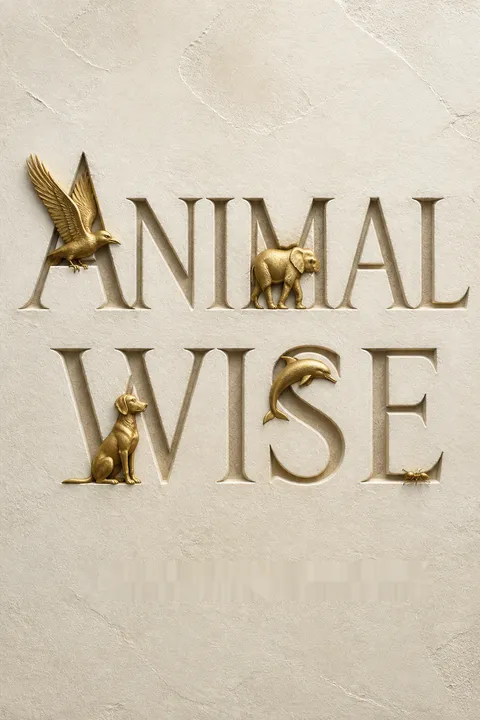


Key Takeaways
Stop asking whether animals think; ask what problems their minds solve.
The question changed. For much of the twentieth century, influential scientists treated animals as stimulus-response machines, partly because thoughts and feelings could not be measured directly. Darwin offered a different model: minds, like bodies, evolved gradually, and animals might share some human abilities in different degrees. Morell’s encounters make the issue vivid. Her dog Quincie invented a game by sending a pine cone down a slope, while Jane Goodall observed a young chimpanzee quietly take a banana that a dominant male had refused to share.
Behavior invites investigation. These scenes do not reveal exactly what an animal experiences. They do make a blanket denial of animal minds harder to defend. The scientific question becomes how animals perceive, remember, decide, and feel while meeting the challenges of their lives.
The shift from asking whether a capacity exists to asking how it functions is a useful scientific move: it replaces a human-versus-animal verdict with specific, testable questions. It also resists a common error in evolutionary thinking, the assumption that every species is a rough draft of humanity. The book’s examples support continuity without claiming equivalence. A pine-cone game may involve planning or playful exploration, but the observed action alone cannot settle which. That distinction protects both the animals’ complexity and the credibility of claims made about them.
Treat animal behavior as evidence, not an invitation to project.
Observation needs discipline. Goodall hesitated to publish the story of Dilly, the chimpanzee who concealed her interest in a banana until Beethoven fell asleep. Other scientists could call it an anecdote and argue that no one knew what Dilly intended. Her caution reflects a real problem: people readily assign human thoughts to animals, sometimes on thin evidence. The famous horse Clever Hans seemed to calculate answers, but his owner was unknowingly signaling the correct response with tiny movements.
Build stronger tests. Researchers can reduce such ambiguity through repeated observations, controlled experiments, and careful comparisons. Morgan’s Canon advises scientists to prefer the simplest explanation that adequately accounts for an animal’s behavior. Used well, it guards against overclaiming. Used too rigidly, it can make any mental explanation impossible to consider, regardless of evidence.
The central methodological challenge resembles a problem in social science: behavior is observable, but intention is inferred. A strong explanation should therefore survive competing accounts, not merely fit an appealing story. Yet simplicity is not the same as truth. Reflex explanations can become a default that protects old assumptions from scrutiny. The most productive standard is comparative: test whether behavior changes with context, learning, social partners, or experience. Such tests do not make inner life directly visible, but they can make some interpretations substantially more plausible than others.
Small brains can make sophisticated decisions without humanlike reasoning.
Size is a poor shortcut. Nigel Franks studied rock ants whose brains weigh less than a grass seed. When their nest is destroyed, scouts search for a new site. A scout can guide a nestmate by walking slowly and pausing until the follower signals that she has learned the route. Franks called this a tandem run and argued that it meets a scientific definition of teaching: the guide changes her behavior, accepts a cost, and helps another learn.
Fish calculate, too. Archerfish learn to shoot insects down with water, adjusting their aim and force as targets change. They can make the decision about where falling prey will land in about 40 milliseconds. Their small brains do not make the task simple. These cases show that complex performance can emerge from compact neural systems and well-adapted routines.
The ants and archerfish challenge the habit of treating brain size as a universal intelligence score. A better comparison asks what information a species must process, how quickly it must act, and what its environment demands. Distributed systems offer a useful analogy: many simple units can coordinate into capable behavior without a central planner. Still, successful behavior does not by itself prove reflective thought. The important achievement here is narrower and stronger: learning, flexibility, and coordination do not require a humanlike brain or conscious inner monologue.
Evolution builds intelligence repeatedly, not up a human-centered ladder.
Different brains, real abilities. Scientists once assumed that birds could not think because their brains lacked the mammalian cerebral cortex. Later anatomical work showed that bird brains are organized differently, not that they lack the neural structures needed for cognition. Irene Pepperberg’s African gray parrot Alex learned labels for colors, shapes, and materials, answered questions about sameness and difference, and appeared to understand the idea of zero.
Innovation is not ours alone. New Caledonian crow Betty bent a straight wire into a hook to lift food from a tube, despite never having faced that exact problem. Her performance suggested that toolmaking can arise outside the human and primate lineages. Evolution is a branching tree, not a staircase: similar challenges can produce similar cognitive solutions in distant species.
Convergent evolution is familiar in anatomy: wings evolved in both birds and bats, though their ancestors differed. Applying the same logic to cognition helps explain why sophisticated skills need not descend from a uniquely human precursor. The comparison also warns against ranking species by performance on human-designed tasks. Alex’s abilities are compelling partly because his training made questions possible, but one unusually capable individual cannot represent every parrot. The useful conclusion is not that every species thinks alike, but that intelligence has more than one evolutionary route.
Listen for social information in animal calls, not only alarms or mating songs.
Calls can carry identity. In Venezuela, researcher Karl Berg studied green-rumped parrotlets, whose short contact calls function much like names. Cross-fostering experiments showed that young birds’ calls resembled those of the adults who raised them, indicating that the calls are learned rather than simply inherited. Parrotlets recognize and imitate one another’s calls, using them to keep track of companions and family members.
Communication has layers. The calls are not yet a translated dictionary, and their full meaning remains uncertain. Other animals show how much structure may hide inside vocal signals: Campbell’s monkeys combine alarm sounds and alter them with extra notes to change the warning. These examples encourage a careful distinction between communication and human language. A call can convey socially useful information without possessing the open-ended grammar of speech.
Names are not merely labels; they help manage attention, affiliation, and recognition. That makes the parrotlets’ learned calls interesting as a social technology, not just a vocal curiosity. Their system also illustrates why field context matters. A sound’s meaning may depend on who calls, to whom, and what is happening nearby. The caution is equally important: resemblance to conversation does not establish language. Researchers can make progress by testing how listeners respond to specific calls, while resisting the temptation to translate every exchange into a human sentence.
Treat play and emotion as biological tools, not decorative extras.
Play builds social skill. Neuroscientist Jaak Panksepp recorded the ultrasonic chirps rats make during play and tickling. Humans cannot hear these sounds without a detector, but the rats seek out more play and chirp in anticipation of it. Panksepp connected play to emotional systems in the mammalian brain, including the systems he labeled PLAY, FEAR, and CARE.
Fun has consequences. In play, rats practice approaching, wrestling, stopping, and taking turns without turning every encounter into a real fight. Research described in the book links play with brain development and better social behavior. Rats denied play showed more difficulty managing social situations. The evidence does not mean every playful act has one simple purpose. It does suggest that positive emotion and play can help animals learn how to regulate behavior and live with others.
Play can be understood as low-stakes rehearsal. Its value is not only the immediate pleasure, but the chance to explore limits and consequences without the full cost of a serious conflict. That connection makes play relevant to development, learning, and animal welfare. At the same time, the leap from a chirp or a behavior to a precise subjective feeling requires care. Panksepp’s neural work strengthens the case for shared emotional foundations, while the varied lives of different species caution against assuming that their experiences match human joy in every detail.
Take fish pain seriously even when their faces cannot show it.
Pain has physical pathways. Victoria Braithwaite and colleagues found 22 pain-detecting receptors on the face and head of rainbow trout, along with nerve fibers capable of carrying those signals to the brain. Trout injected with bee venom or acid rocked, rubbed their lips against surfaces, and stopped eating for several hours. Fish injected with saline did not show the same pattern.
Sensation and suffering differ. Nociception is the detection of harmful stimuli; suffering involves a mental experience of pain. The research described here supports the claim that fish can detect and process pain, while the exact nature of their conscious experience is harder to establish. That uncertainty is not a reason to ignore welfare. It is a reason to improve how fish are caught, farmed, handled, and released.
A face that does not move like ours is a poor instrument for judging what an animal feels. The fish example exposes a broader bias: humans often recognize emotion most readily when it arrives in familiar facial expressions. Nervous-system evidence and changes in behavior offer other ways to assess possible suffering. Ethical decisions do not need certainty about identical experience; they can account for credible risk. The nuance is that pain detection alone cannot answer every question about consciousness, but it makes dismissing fish welfare as irrelevant increasingly difficult.
Protect experienced elders whose memories can keep whole groups alive.
Experience guides the herd. In Amboseli, elephant researchers found that older matriarchs were better than younger leaders at recognizing familiar elephants and assessing lion threats. A matriarch’s knowledge helps her family decide when to stay calm, bunch together, or move toward danger. When drought killed 20 older matriarchs, families lost more than individuals: they lost accumulated knowledge about their social and physical world.
Learning also travels socially. Chimpanzees learn skills such as cracking nuts largely by watching their mothers. A young female moving between communities introduced a different nut-cracking practice, which nearby juveniles began to copy. In both species, knowledge is carried through relationships. Removing elders or disrupting families can therefore damage a group’s ability to respond, learn, and survive.
The elephant evidence makes memory an ecological resource, not just an individual faculty. A knowledgeable leader can help a group avoid a predator or manage an unfamiliar situation, so protecting age structure may matter as much as protecting population size. The chimpanzee example adds a cultural dimension: learned behavior can spread through observation without formal instruction. Neither case means that elders always make optimal decisions. It does show why conservation plans that remove older animals or disrupt social bonds may erase expertise that cannot be quickly replaced.
Social complexity can reward alliance-making more than tool use.
Dolphins navigate shifting alliances. In Shark Bay, male bottlenose dolphins form close pairs and trios, then combine these smaller partnerships into larger alliances. Researchers watched unrelated males cooperate to capture and guard a female, even though the same males could compete in other circumstances. Their partners and loyalties shift, so success depends on remembering who helped whom and anticipating what allies may do.
Relationships demand computation. Tool use can be clever, but researcher Richard Connor argued that the dolphins’ intricate social lives better explain their large brains. The challenge is not only finding food. It is maintaining cooperation amid rivalry, uncertain loyalties, and changing opportunities. The observations make social intelligence a serious candidate for explaining cognitive evolution, though the dolphins’ precise thoughts and intentions remain difficult to verify directly.
The dolphin alliances show how a social world can become cognitively demanding even without human institutions or language. Cooperation is not the opposite of competition here; the two operate together, making trust and memory valuable. This resembles strategic problems in human groups, where a partner today may be a rival tomorrow. But complexity should not be confused with moral virtue. The same social skills that support alliances can enable coercion, as the dolphins’ treatment of females shows. Intelligence describes capacity, not kindness.
Dogs became human-reading partners, while wolves remained self-directed.
Domestication changed social attention. In a food-retrieval test, family dogs often waited for their owners’ cues, while outdoor dogs and wolves were more likely to act independently. Dogs also follow human pointing and gaze, form strong attachments to people, and can imitate some human actions. In another test, dogs searched where a person had repeatedly indicated a ball was hidden, even after seeing the ball moved elsewhere.
Cooperation is the key difference. Hand-raised wolf pups remained more wary and focused on their own goals than similarly raised dogs. The researchers argued that domestication favored dogs able to attend to human signals and cooperate with people. Dogs are not simply less intelligent wolves. Their distinctive skills reflect a long history of living and working alongside humans.
This comparison clarifies that intelligence is not a single ladder. A wolf’s independence can be useful in its ecological and social setting, while a dog’s sensitivity to human cues is valuable in a shared working relationship. Domestication acts as an evolutionary experiment, showing how selection can reshape attention and social behavior without making one animal universally superior. The warning is that human-centered tests may reward exactly the traits humans selected for. A fair comparison must ask what each species is adapted to do.
Manage animal populations as societies, not just numbers on a ledger.
Management can disrupt social order. In Washington State, heavy hunting removed many older male cougars that had held territories and kept younger males in check. Younger animals moved into new areas, increasing sightings and conflict with people. The apparent problem was not simply too many cougars; it was a disrupted social structure. Similarly, elephant culling separated young animals from families and older males, followed by abnormal aggression that subsided after older bulls were introduced.
Knowledge changes obligations. Morell argues that recognizing animal cognition should affect farming, research, fishing, and conservation. Animals’ social ties, memory, pain, and learned behavior can all be damaged by human decisions. Extinction also removes distinctive minds and ways of life. Better management begins by asking how a policy changes the animals’ actual lives, not only how many individuals remain.
Population counts are indispensable, but they can hide the relationships that make a population function. Social structure, age distribution, learned knowledge, and stress may shape outcomes that a simple head count misses. This is a systems-level lesson: interventions can alter the network, not merely the number of its members. The ethical implication is practical rather than sentimental. When evidence suggests that animals experience pain or depend on social bonds, decision-makers should include those costs in policy, while monitoring for unintended effects.
Analysis
Animal Wise works as both a tour of animal cognition and an account of how science decides what counts as evidence. Its narrative travels from ant colonies to fish, birds, rats, elephants, dolphins, chimpanzees, dogs, and wolves. Each case complicates a familiar human distinction: reasoning versus instinct, emotion versus thought, language versus mere signaling, culture versus inheritance. The book’s strongest organizing idea is evolutionary continuity. Cognitive abilities need not appear in a single sequence leading toward humans. Similar pressures can produce different solutions in distant lineages, and each solution makes sense in the life of its species.
The reporting also makes scientific restraint visible. Goodall’s hesitation over publishing Dilly’s apparent deception captures the tension between rich observation and replicable evidence. Experiments can narrow interpretations, but they can also privilege skills easy to measure in a laboratory. Long-term field observation reveals social context, while controlled testing can isolate particular abilities. Neither method is sufficient alone. The most persuasive claims arise when several forms of evidence converge, as with fish pain receptors and behavioral changes, or elephant call responses alongside decades of family records.
The book’s argument is strongest when it separates evidence for cognitive capacity from certainty about subjective experience. A fish detecting pain, a rat chirping during play, or an elephant attending to bones does not automatically experience that event as a human would. Yet demanding identical human expression as proof would make meaningful comparison impossible. A graded, species-specific standard is more defensible: identify what is observed, specify the inference, and acknowledge what remains unknown.
That standard carries ethical weight. Uncertainty about an animal’s inner life is not evidence that the life is empty. It is a reason to avoid careless certainty in either direction, especially where human practices cause pain, social disruption, or extinction. The book ultimately replaces the search for a final trait that separates humans from animals with a more consequential task: understanding the different minds already sharing the world, and letting that knowledge shape how they are treated.
Review Summary
Animal Wise receives high praise from readers for its engaging exploration of animal cognition. Reviewers appreciate Morell's accessible writing style and the fascinating insights into various species' mental capabilities. Many readers express surprise at the intelligence demonstrated by animals like ants, fish, and birds. The book challenges preconceptions about animal minds and emotions, prompting some to reconsider their relationships with other creatures. While a few critics found certain sections less engaging, the majority found the book both informative and thought-provoking, often citing specific examples that left lasting impressions.
People Also Read







Glossary
cognitive ethology
animal minds in contextAn approach to studying the mental experiences that may influence animal behavior, using experiments and observations in natural settings. Donald Griffin promoted the field by urging researchers to investigate how animals process information, learn, and possibly experience awareness, while treating mental abilities as products of evolution rather than uniquely human possessions.
Morgan's Canon
prefer sufficient simple explanationsA principle proposed by psychologist C. Lloyd Morgan: do not explain an animal’s behavior through a more complex mental ability if a simpler process adequately accounts for it. It is intended to limit unsupported claims about animal minds. Used too rigidly, however, it can make researchers dismiss mental explanations before testing them.
tandem run
ant-guided route learningA behavior in which one rock ant leads another along a route to a resource or a new nest. The leader walks slowly and pauses when the follower falls behind, continuing when the follower signals that it has learned the path. Nigel Franks argued that this meets a functional definition of teaching because the guide changes its behavior at a cost and helps another ant learn.
model/rival technique
social language-learning methodA training method used by Irene Pepperberg to teach parrots associations between sounds and objects. Two people take turns demonstrating a label and competing for the parrot’s attention. The parrot observes the exchange, then is asked to provide the label and receives the object as a reward for a correct response. The social interaction is central to the method.
affective neuroscience
emotion and brain systemsA field that investigates how brain activity relates to emotional processes and behavior. Jaak Panksepp used the term for research on basic mammalian emotional systems, including play, fear, care, and separation distress. His work examined these systems in animals to understand their evolutionary roots and their relationship to human emotion.
cross-modal perception
matching senses with memoryThe ability to connect information received through one sense with information previously learned through another. In Karen McComb’s horse study, a horse expected to hear the whinny of the individual it had just seen. A mismatch prompted the horse to look toward the hidden animal, suggesting it linked a voice with a mental representation of a familiar individual.
social cognition
thinking about relationshipsThe cognitive abilities animals use to manage social life, such as recognizing individuals, tracking relationships, anticipating others’ behavior, forming alliances, and coordinating cooperation. The idea gained prominence as researchers proposed that the demands of complex social groups helped drive the evolution of intelligence in primates and other animals.
fast mapping
rapid word-to-object learningA proposed way of learning a new label by excluding familiar possibilities and linking the unfamiliar word to a new object. Border collie Rico used this strategy to retrieve unfamiliar toys by name after brief exposure. Researchers compared his performance to young children’s rapid word learning, while noting that the precise mental process remains open to study.
mirror self-recognition (MSR) test
testing mirror self-recognitionA procedure used to test whether an animal recognizes its reflection as itself. After becoming familiar with a mirror, the animal receives a visible mark that cannot be seen directly. Researchers then observe whether it uses the mirror to inspect or touch the mark on its own body. Passing is treated as evidence of self-recognition, though the test may not suit every species’ senses or behavior.
FAQ
What's Animal Wise: How We Know Animals Think and Feel about?
- Exploration of Animal Cognition: Animal Wise by Virginia Morell investigates the cognitive processes and emotional expressions of various animal species, from ants to elephants. It challenges the notion that animals are purely instinct-driven.
- Research-Based Insights: The book is grounded in extensive research and interviews with scientists worldwide, presenting the latest discoveries in animal behavior and cognition.
- Philosophical Implications: Morell raises questions about our ethical obligations to animals, encouraging readers to view them as beings with rich inner lives.
Why should I read Animal Wise?
- Broadens Understanding of Animals: The book expands your perspective on animal intelligence and emotional depth, revealing behaviors once thought exclusive to humans.
- Engaging Narrative Style: Morell combines scientific research with personal anecdotes, making complex concepts accessible and enjoyable.
- Timely Ethical Discussion: It prompts readers to reconsider views on animal rights and welfare, advocating for a compassionate approach to animal treatment.
What are the key takeaways of Animal Wise?
- Animals Have Minds: Animals think and feel, possessing cognitive abilities that allow them to make decisions and plan for the future.
- Diverse Animal Intelligence: The book highlights the intelligence of various species, showcasing unique behaviors that illustrate the complexity of animal minds.
- Rethinking Human-Animal Relationships: Morell advocates for viewing animals as fellow beings deserving of understanding and respect, leading to more ethical treatment.
What are the best quotes from Animal Wise and what do they mean?
- “Animals have minds...”: This quote encapsulates the argument that animals possess complex cognitive and emotional lives, similar to humans.
- “It’s humbler, wiser...”: It challenges the anthropocentric view of evolution, urging readers to recognize animal intelligence and emotional depth.
- “The question now is not...”: Reflects the shift in scientific inquiry, emphasizing the need to explore the nuances of animal thought processes.
How does Animal Wise challenge traditional views of animal intelligence?
- Debunking the "Instinct-Only" Myth: Morell presents evidence that many species exhibit complex decision-making and emotional responses, shifting the narrative from viewing animals as simple machines.
- Highlighting Emotional Depth: The book emphasizes that animals experience a range of emotions, suggesting a shared emotional landscape among species.
- Encouraging Ethical Considerations: By showcasing animal intelligence and emotions, Morell advocates for reevaluating our ethical responsibilities toward them.
What specific examples of animal intelligence are presented in Animal Wise?
- Ant Decision-Making: Ants work together to solve problems and make collective decisions without a leader, illustrating complex social structures.
- Elephant Memory and Emotion: Elephants remember individuals and mourn their dead, underscoring their sophisticated emotional lives.
- Parrot Communication: Parrots mimic human speech and understand concepts, demonstrating cognitive capabilities and potential for complex social interactions.
How does Animal Wise address the ethical implications of animal cognition?
- Rethinking Human-Animal Relationships: Understanding animal cognition and emotions should lead to a more compassionate view of animals.
- Call for Better Treatment: The book advocates for improved treatment of animals in research, farming, and companionship contexts.
- Encouraging Advocacy: Morell encourages readers to become advocates for animal welfare, using insights from the book to inform their actions.
How does Animal Wise illustrate the intelligence of elephants?
- Matriarchal Knowledge: Older female elephants possess critical knowledge for herd survival, such as recognizing threats and navigating environments.
- Social Bonds: Elephants have strong social connections, recognizing family members and responding to their calls, demonstrating emotional intelligence.
- Decision-Making Skills: Elephants make strategic decisions in social situations, such as confronting threats or protecting their young.
How do dolphins demonstrate their cognitive abilities in Animal Wise?
- Communication Skills: Dolphins use vocalizations and body language to communicate, showcasing their social intelligence.
- Problem-Solving: They exhibit problem-solving skills, such as using tools or working together to achieve goals, indicating advanced cognitive functions.
- Social Learning: Dolphins learn from one another, with younger dolphins mimicking older individuals, highlighting their capacity for social learning.
What role do dogs play in Animal Wise?
- Human Companionship: The book explores the bond between dogs and humans, emphasizing their understanding of human cues and emotions.
- Cognitive Comparisons: Studies compare dogs to wolves, illustrating how domestication has shaped their cognitive abilities and social behaviors.
- Training and Learning: Dogs learn through observation and interaction with humans, showcasing their intelligence and adaptability.
How does Animal Wise contribute to the field of animal cognition?
- Challenging Traditional Views: The book presents evidence against outdated beliefs that animals lack intelligence or emotions.
- Interdisciplinary Approach: Morell combines insights from psychology, ethology, and conservation for a comprehensive understanding of animal minds.
- Inspiring Future Research: By highlighting ongoing studies, Animal Wise encourages further exploration into animal cognitive abilities.
What methods does Virginia Morell use in Animal Wise?
- Field Research and Interviews: Morell uses field research and interviews with scientists to present firsthand accounts of animal intelligence.
- Case Studies of Various Species: Each chapter focuses on different species, illustrating their unique cognitive abilities.
- Philosophical Reflection: Morell integrates philosophical questions, prompting readers to reflect on the implications of animal cognition for ethics.
Download PDF
Download EPUB
.epub digital book format is ideal for reading ebooks on phones, tablets, and e-readers.








