

Key Takeaways
Build leadership from your life story, not someone else’s template
Experience gives leadership meaning. A study of 125 leaders found no single personality, style, or skill set that explained success. Instead, leaders drew purpose from how they interpreted their experiences. Daniel Vasella, who later led Novartis, endured serious illness, long separations from his parents, and the deaths of his sister and father. A doctor who treated him with care left a lasting impression. Vasella eventually chose to lead a company that could help patients on a much wider scale.
Reframe, do not imitate. Difficult experiences can become sources of purpose when people see themselves as active interpreters of their lives rather than helpless products of circumstance. The authors’ central claim is not that hardship is required, but that reflecting on experience can reveal what matters and where a person can contribute.
The emphasis on interpretation avoids turning biography into destiny: the same event can support very different accounts of who someone is. That makes leadership development less like discovering a hidden, finished self and more like deciding which lessons deserve to guide future choices. Still, stories of adversity can be over-romanticized. Pain does not automatically produce wisdom, and leaders should not be expected to convert every private hardship into an inspiring public narrative.
Treat a new role as an experiment, not a test of your true self
Growth can feel unnatural. Herminia Ibarra challenges the idea that authenticity means behaving in the same familiar way everywhere. A manager named Cynthia entered a role with far more responsibility and immediately disclosed her uncertainty to her new team. Her openness weakened their confidence in her leadership. George, a Malaysian executive, struggled to adapt to a new company culture that expected him to promote his ideas more forcefully than he was used to.
Learn by trying. Ibarra calls the external perspective gained from testing new behaviors “outsight.” Leaders can borrow selectively from several role models, practice unfamiliar approaches, and use the results to refine their style. A learning goal, such as becoming more effective in large meetings, gives room to improve without demanding instant mastery. A changing leadership style need not mean a false identity.
This account treats identity as something shaped through action, not merely inspected through introspection. The practical value is substantial: a person can test a behavior without making it a permanent claim about character. The cultural question is just as important. Adaptation can expand a leader’s repertoire, but it can also become pressure to conform to whoever already holds power. The useful distinction is between learning a new tool and surrendering the right to choose when to use it.
Seek feedback that exposes the habits your intentions conceal
Good intentions can mislead. David Pottruck, a high-energy executive at Charles Schwab, believed his long hours and forceful push for results showed commitment. His colleagues experienced the same behavior as intimidating and self-serving. A boss’s blunt feedback forced him to confront the gap between how he saw himself and how others experienced him. Later, counseling helped him recognize that recurring conflict in his personal life also reflected his own behavior, not simply other people’s choices.
Make criticism usable. Self-awareness requires listening especially closely to feedback that threatens a cherished self-image. Pottruck learned to accept criticism without collapsing into shame, and to notice when stress pulled him back into old habits. Feedback is most useful when it points to repeated behaviors and their effects, rather than labeling a person as inherently good or bad.
The gap between intention and impact is a central problem in leadership because authority can reduce the candor a leader receives. Feedback becomes more credible when it comes from people who encounter the leader in different settings, and when it describes observable behavior rather than personality. Yet a single criticism is not automatically accurate. The disciplined response is neither reflexive defense nor instant submission, but checking whether the pattern repeats across people and situations.
Let pressure reveal which values deserve costly action
Values become visible under strain. The authors distinguish values, the beliefs a person holds, from leadership principles, which translate those beliefs into conduct. Jon Huntsman learned what his principles required while working in the Nixon administration. A senior official asked him to use his company’s employees in an operation intended to embarrass a political opponent. Huntsman first began to comply, then recognized the plan as unethical and stopped it. He later left the administration.
Choose before the crisis. It is easy to claim concern for others or honesty when nothing is at stake. Pressure reveals which commitments can withstand risk to status, career, or relationships. A value becomes a leadership principle when it guides a specific decision, such as refusing to misuse employees, even when a powerful superior expects obedience.
The story makes ethics concrete: principles matter most when they impose a cost on the person invoking them. This is also why values statements alone are weak evidence of integrity. Organizations can strengthen ethical action by making it safer to question questionable instructions and by clarifying who is accountable for a decision. Individual courage remains important, but systems that require exceptional courage for ordinary ethical conduct are themselves in need of repair.
Balance external rewards with work that feels worth doing
Success has competing engines. Extrinsic motivations include money, status, recognition, and promotion. Intrinsic motivations come from personal meaning, such as learning, helping others develop, or contributing to a cause. The authors argue that sustainable leadership requires understanding both, rather than pretending that external rewards do not matter or allowing them to become the only measure of success.
Name your own measure. Hewlett-Packard executive Debra Dunn described how clearly society maps the path of material achievement, while offering less guidance about fulfillment. Ann Moore, who later led Time, had several job offers after business school but chose a lower-paying position because she cared about publishing. Her choice illustrates how interest in the work itself can outweigh a more immediately impressive reward. The practical question is whether ambition is serving a purpose the leader actually values.
This distinction is useful because external rewards are easy to count, while personal meaning is harder to compare and communicate. A career can therefore drift toward visible achievements without a deliberate decision to do so. Intrinsic motivation is not automatically noble, however, and meaningful work can still be exploitative or poorly managed. The more rigorous test is whether the work’s purpose, conditions, and rewards fit together well enough to sustain both contribution and a life outside the job.
Show vulnerability without abandoning responsibility
Openness can create loyalty. When startup founder Archana Patchirajan told her employees that the company had run out of money and she could no longer pay them, they chose to stay, even at reduced pay. Employees described a leader who knew them personally, treated them like family, and gave them room to learn from mistakes. The company later sold for $14 million. The account contrasts with a workplace survey cited in the article, which found that 70% of employees were not engaged or were actively disengaged.
Vulnerability is not helplessness. Here it means taking the risk of being human: admitting uncertainty, asking for help, acknowledging a mistake, or showing care when someone is struggling. The article connects such openness with trust and human connection. It does not require leaders to disclose everything; the relevant question is whether disclosure helps people understand the situation and act together.
A leader’s honesty can reduce the distance that makes employees feel like interchangeable parts, while openness about mistakes can make learning safer. But the story also contains an important limit: employees staying at reduced pay is not proof that every workplace should ask for sacrifice in the name of family. Vulnerability earns trust only when it accompanies fairness, clear information, and real accountability. Otherwise, emotional closeness can become a tool for extracting commitment without reciprocal care.
Care about people enough to confront the work honestly
Empathy must include standards. Rob Goffee and Gareth Jones call their approach “tough empathy”: giving people what they need to succeed, not merely what they would prefer in the moment. Former Polygram CEO Alain Levy showed care by joining junior staff in the consequential work of choosing which songs to promote. At the BBC, Greg Dyke explained why the organization needed higher spending, secured employee support, then restructured it, including making staff cuts.
Keep both responsibilities in view. The approach respects individuals while taking the task seriously. Unilever CEO Niall FitzGerald later regretted staying too close to his team as a problematic detergent was being developed. He said he should have stepped back and focused on customers. Caring leaders sometimes need closeness to understand employees, and distance to judge the whole situation.
This model resists two easy caricatures: that kindness means avoiding hard decisions, or that results require treating people as expendable. Its central discipline is switching perspective without losing either one. The risk is that leaders can call harshness “tough empathy” after the fact. The test is whether the difficult choice is explained honestly, tied to the work’s real demands, and handled with respect for those who bear its costs.
Challenge leadership codes that make minorities erase their identity
Unwritten standards shape promotion. Sylvia Ann Hewlett describes executive presence as a mix of gravitas, communication, and appearance that influences how leaders are judged. In the Center for Talent Innovation research she cites, senior leaders said executive presence accounted for 26% of what was needed for promotion, and 67% identified gravitas as its most important element. Professionals of color often faced expectations based on white male norms, while receiving too little clear feedback about how to meet them.
The code has unequal costs. The article reports that only 11% of corporate America’s executive posts were held by professionals of color. It also cites research in which people of color were less likely than Caucasian colleagues to have a sponsor, 8% compared with 13%. When standards are vague but consequential, the burden shifts to individuals to decode them and risk compromising their identity.
This chapter complicates any simple instruction to be yourself. A workplace may praise authenticity while rewarding a narrow performance of authority, speech, or appearance. That contradiction cannot be solved only through coaching people who are excluded; organizations must also scrutinize how promotion criteria are defined and applied. At the same time, clear feedback is not a license to police cultural difference. The goal is to distinguish job-relevant capabilities from familiar styles that decision makers mistake for competence.
Make apologies credible through responsibility, repair, and fitting emotion
A polished apology can still fail. Researchers examined 29 videos of executives apologizing between 2007 and 2011, tracking facial expressions and comparing them with company stock movements. Apologies delivered with smiles were followed by worse stock performance. In a follow-up experiment, participants trusted a CEO more and were more willing to reconcile when he appeared sad than when he smiled or showed a neutral expression.
Words and actions must align. A strong apology includes an explicit admission, responsibility, an explanation, an offer to repair harm, and a promise to avoid repeating it. Another study reviewed 150 corporate statements about poor performance. Companies that blamed themselves tended to stabilize and improve, while companies that blamed outside forces continued to decline. The findings suggest that honesty can help an organization face the actual problem instead of defending itself from it.
The research highlights that apologies are interpreted through both content and delivery. A mismatch, such as smiling while describing harm, can make even carefully chosen words seem self-protective. But visible sadness is not proof of sincere accountability, and emotional displays can be staged. The more dependable signal is whether the apology names the failure accurately and leads to repair. Emotion can make a message legible; changed conduct gives it credibility.
Express emotion to communicate shared concern, not merely spontaneity
Emotion can connect or divide. In the book’s interview on public leadership, Gianpiero Petriglieri distinguishes spontaneous self-expression from expressing feelings that followers also recognize and care about. Leaders may be trusted when their emotion communicates a shared concern, but the same display can look self-centered or manipulative to people who do not share that concern. The meaning depends on the audience, not only on the leader’s intention.
Expression carries unequal risks. The interview notes that women leaders may be judged more harshly for visible emotion, while racial stereotypes can constrain which emotions a Black leader is permitted to show. It also warns that constant emotional display loses force. Leaders need to understand what they feel, whose concerns those feelings represent, and whether expressing them helps the group address the situation.
This account shifts the question from whether leaders should show emotion to what an emotional display does in a particular setting. Emotion can make a collective concern visible, but it can also polarize a group or reinforce stereotypes about who is entitled to authority. That makes emotional skill partly relational and partly political. Leaders should not be asked to perform feeling on demand; organizations should also examine why identical displays receive different interpretations from different people.
Keep trusted people close and your identity larger than your job
Leadership needs honest witnesses. Authentic leaders described support from spouses, family, friends, mentors, colleagues, and peer groups. The authors stress that a support team should offer advice and perspective, not just praise, and that these relationships work best when support is mutual. One executive’s weekly men’s group had continued for more than 30 years, creating a regular place for candid conversation without fear of professional reprisal.
Stay grounded beyond work. The collection presents family, community service, exercise, spiritual practice, and returning to familiar places as ways leaders maintain balance. John Donahoe argued that his personal life helped rather than hindered his effectiveness at work. Integration does not mean that every setting is identical; it means a leader is not forced to become a fundamentally different person in each one.
A trusted circle serves as more than emotional comfort. It can counter the distortions of hierarchy by giving a leader access to relationships where status is not the main currency. The strongest support is not necessarily a large network, but one that combines care with candor and includes perspectives beyond the executive suite. Still, integration should not be confused with constant availability or total disclosure. Boundaries can protect a coherent identity rather than undermine it.
Empower people throughout the organization to produce durable results
Leadership is not a solo performance. Anne Mulcahy took over Xerox when it carried $18 billion in debt, had exhausted its credit lines, and faced an investigation into its accounting. Though she lacked experience in several technical areas, she had spent 25 years building relationships across the company. She met with the top 100 executives to ask whether they would stay. Two left; the other 98 committed to the turnaround.
Make leadership spread. Mulcahy encouraged people throughout Xerox to step up and help restore the business. The company avoided bankruptcy, repaid $10 billion in debt, returned to revenue growth and profitability, and saw its stock price triple. The collection argues that leaders create sustainable results by building capable people, aligning work around shared goals, and giving others meaningful responsibility, rather than relying on personal charisma or loyal subordinates.
Mulcahy’s case shows how trust built before a crisis can become organizational capacity during one. Her credibility helped people commit, but the turnaround depended on action distributed beyond the CEO. That is a stronger model of leadership than treating employees as an audience for the leader’s vision. Results alone, however, cannot establish that every decision was fair or that success will persist. Durable leadership also requires attention to who bears the sacrifices and who gains from recovery.
Analysis
The collection’s strongest contribution is its refusal to equate authenticity with a fixed personality. Its articles offer several different meanings of the term: a life story that gives leadership purpose, a willingness to show human vulnerability, a consistency between words and conduct, and a developing capacity to adapt. These meanings overlap, but they are not interchangeable. The practical lesson is less “be yourself” than “know what you stand for, notice how others experience you, and choose behavior that serves the situation without losing your ethical center.”
That distinction resolves much of the apparent conflict between the collection’s chapters. George and colleagues emphasize self-knowledge and values; Ibarra warns that an overly rigid self-image can block learning. Together, they suggest that leaders need both continuity and revision. Values can remain stable while communication style, authority, and emotional expression evolve. The collection’s examples make that evolution concrete: Huntsman refuses an unethical instruction, while Cynthia learns that early over-disclosure can undermine confidence in a new role.
The book also shows that authenticity is judged socially, not privately. A leader may feel sincere yet be read as weak, insincere, or unprofessional. Those judgments are shaped by power and culture, as the discussion of executive presence and racial standards makes clear. This creates a genuine tension: adaptation can enlarge a leader’s effectiveness, but institutions can use adaptation as a demand for conformity. Any responsible account of authentic leadership must therefore examine both individual behavior and the rules by which organizations recognize leadership.
Finally, the collection links personal character to organizational performance without treating good intentions as sufficient. Vulnerability needs accountability, empathy needs standards, apology needs repair, and credibility needs empowered colleagues. The most convincing model is relational: a leader builds trust by acting consistently, listening to difficult feedback, making consequential choices visible, and enabling others to contribute. The framework is aspirational, not a guarantee. It cannot eliminate conflict, bias, or trade-offs, but it helps leaders identify what they can examine and change.
Review Summary
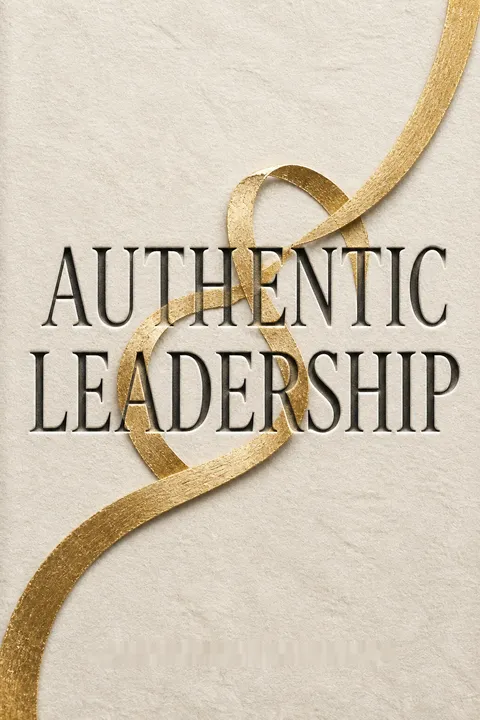
Authentic Leadership by Harvard Business Review receives mixed reviews. Readers appreciate its diverse perspectives on leadership authenticity, emotional intelligence, and workplace dynamics. Some find it thought-provoking and practical, while others criticize it for being basic or contradictory. The book's strengths include real-life examples, research-based insights, and discussions on balancing authenticity with adaptability. Critics argue it lacks depth or offers conflicting advice. Overall, readers value its concise format and potential for self-reflection, though opinions vary on its effectiveness in providing actionable leadership guidance.
People Also Read









Glossary
authentic leadership
Values-led, self-aware leadershipA way of leading grounded in understanding one’s life experiences, knowing and practicing personal values, and acting with purpose. The collection also connects it to balanced motivation, lasting relationships, grounded personal lives, and the development of other leaders. It is not presented as a single personality type or style to imitate.
authenticity paradox
Growth can feel unlike yourselfThe tension between wanting to behave in a way that feels genuine and needing to develop behaviors that a new role or setting demands. Ibarra argues that unfamiliar conduct can initially feel false, even when it is part of real learning. A rigid idea of the true self can therefore restrict leadership growth.
outsight
Learning through new behaviorThe external perspective people gain by trying new leadership behaviors, taking on unfamiliar work, and interacting with different people. It complements introspection by showing how a person’s actions function in real situations. In Ibarra’s account, experience can change a leader’s understanding of their abilities and preferences.
adaptively authentic
Genuine yet responsive leadershipA way of leading that preserves a sense of personal integrity while adapting behavior to changing roles, expectations, and circumstances. It avoids both wholesale imitation and rigid adherence to familiar habits. Leaders develop this style through experimentation, feedback, and selective learning from multiple role models.
tough empathy
Care paired with high standardsA leadership approach that respects people while giving them what they need to perform, which may differ from what they want in the moment. It treats concern for employees and commitment to the work as simultaneous duties. Tough empathy can include difficult decisions, direct feedback, or organizational change.
executive presence
Signals associated with promotionA cluster of qualities used to judge whether someone appears ready for senior leadership. The article describes three pillars: gravitas, communication skills, and appearance. It also emphasizes that standards for executive presence can reflect dominant cultural norms, may be applied unequally, and are often difficult for professionals of color to interpret.
resonance
Automatic response to others’ statesThe article’s term for people’s rapid, often unconscious responses to others’ expressions and emotional cues. Such responses can shape comfort, trust, and connection before a person has consciously assessed what is happening. The concept helps explain why a display that seems inauthentic may weaken connection even when its words sound appropriate.
high self-monitors
Situationally adaptive behaviorPeople who readily adjust how they present themselves to fit a situation. Ibarra describes them as willing to try different leadership styles, even when those styles initially feel unfamiliar. This flexibility can speed learning, though it can also lead others to perceive them as calculating or lacking a stable moral center.
true-to-selfers
Strongly favor familiar behaviorPeople who tend to express what they think and feel even when circumstances call for a different approach. In Ibarra’s account, this preference can support a sense of integrity but may also keep leaders attached to comfortable habits that no longer serve a new role. Development requires testing alternatives rather than treating familiarity as proof of authenticity.
FAQ
1. What is "Authentic Leadership" by Harvard Business Review about?
- Explores the concept of authentic leadership, emphasizing the importance of self-awareness, values, and genuine behavior in effective leadership.
- Draws on research, interviews, and real-world examples to show how leaders can develop authenticity and empower others.
- Covers challenges such as vulnerability, emotional expression, and the paradoxes of being authentic in diverse and changing environments.
- Includes essays and research from multiple experts, offering a comprehensive look at authenticity in leadership across cultures and contexts.
2. Why should I read "Authentic Leadership" by Harvard Business Review?
- Provides actionable insights for anyone seeking to lead with integrity and impact, regardless of their position or industry.
- Offers practical advice and real-life stories from CEOs and leaders who have navigated the journey to authentic leadership.
- Addresses current workplace challenges like trust deficits, diversity, and emotional intelligence, making it highly relevant for today’s leaders.
- Helps readers understand the value of self-awareness, vulnerability, and balancing personal and professional identities.
3. What are the key takeaways from "Authentic Leadership" by Harvard Business Review?
- Authentic leadership is rooted in self-awareness, personal values, and life stories, not in imitating others or following a set formula.
- Leaders must balance intrinsic and extrinsic motivations, practice their values under pressure, and build strong support teams.
- Vulnerability, emotional intelligence, and tough empathy are essential for building trust and connection with teams.
- Authenticity is complex and sometimes paradoxical; leaders must adapt, learn from diverse role models, and evolve their leadership identity over time.
4. How does "Authentic Leadership" by Harvard Business Review define authentic leadership?
- Authentic leadership is leading with a deep sense of self-awareness, acting consistently with one’s core values and principles.
- It involves being genuine, transparent, and true to oneself, rather than imitating others or conforming to external expectations.
- Authentic leaders empower others, build meaningful relationships, and integrate their personal and professional lives.
- The book emphasizes that authenticity is developed through life experiences, reflection, and ongoing personal growth.
5. What practical steps does "Authentic Leadership" by Harvard Business Review recommend for becoming an authentic leader?
- Reflect on and reframe your life story to understand your motivations, values, and purpose.
- Seek honest feedback to increase self-awareness and identify blind spots, even when it’s uncomfortable.
- Practice your values and principles, especially when they are tested under pressure or risk.
- Build a diverse support team of mentors, friends, and colleagues who provide honest feedback and encouragement.
6. How does "Authentic Leadership" by Harvard Business Review address the role of vulnerability in leadership?
- Vulnerability is presented as a strength, not a weakness, enabling leaders to build trust and deeper connections with their teams.
- Sharing doubts, admitting mistakes, and showing genuine emotion fosters loyalty and engagement among employees.
- The book cites research showing that authenticity and vulnerability are at the root of human connection and effective leadership.
- Leaders who embrace vulnerability are more likely to receive valuable feedback and support, reducing isolation at the top.
7. What is the "authenticity paradox" discussed in "Authentic Leadership" by Harvard Business Review?
- The authenticity paradox refers to the tension between staying true to oneself and adapting to new roles or environments.
- Leaders may feel like impostors when stepping outside their comfort zones, but growth often requires experimenting with new behaviors.
- The book argues that authenticity is not static; leaders must evolve their identities and sometimes feel "inauthentic" as they learn.
- Emphasizes the importance of learning from diverse role models and being open to change, rather than rigidly clinging to a fixed self-concept.
8. How does "Authentic Leadership" by Harvard Business Review suggest leaders balance intrinsic and extrinsic motivations?
- Leaders are encouraged to understand both their internal drives (purpose, growth, helping others) and external rewards (status, money).
- The book warns against being overly driven by external validation, which can lead to burnout or loss of fulfillment.
- Finding alignment between intrinsic motivations and daily work leads to greater satisfaction and sustainable success.
- Leaders should regularly reflect on what truly brings them happiness and fulfillment, adjusting their goals accordingly.
9. What is the importance of self-awareness in "Authentic Leadership" by Harvard Business Review, and how can it be developed?
- Self-awareness is identified as the most critical capability for leaders, forming the foundation of authenticity.
- It involves honest self-examination, recognizing strengths, weaknesses, and the impact of one’s behavior on others.
- The book recommends seeking feedback, engaging in reflection, and being open to learning from failures and setbacks.
- Developing self-awareness is a lifelong process, requiring courage, humility, and a willingness to confront uncomfortable truths.
10. How does "Authentic Leadership" by Harvard Business Review address diversity, inclusion, and the challenges faced by people of color?
- The book highlights that traditional standards of "executive presence" often reflect white male norms, making it harder for professionals of color to be seen as leaders without sacrificing authenticity.
- It discusses the lack of feedback and sponsorship for people of color, which can hinder their advancement and sense of belonging.
- Authenticity for diverse leaders may require navigating cultural expectations and finding ways to lead effectively without losing their identity.
- The book calls for organizations to recognize and value diverse leadership styles, fostering environments where all leaders can be authentic.
11. What are some key concepts like "tough empathy," "outsight," and "work-life integration" in "Authentic Leadership" by Harvard Business Review?
- Tough empathy: Leading with both care and high expectations, giving people what they need (not just what they want) while maintaining respect for individuals and the task.
- Outsight: Gaining external perspective by experimenting with new behaviors, learning from others, and acting before introspecting, especially during transitions.
- Work-life integration: Striving to be the same person across work, family, and community, breaking down barriers between different aspects of life to maintain authenticity and balance.
- These concepts help leaders navigate the complexities of authenticity, growth, and connection in modern organizations.
12. What are the best quotes from "Authentic Leadership" by Harvard Business Review and what do they mean?
- “No one can be authentic by trying to imitate someone else.” — Emphasizes the importance of self-discovery over imitation in leadership.
- “The story of your life is not your life. It is your story.” — Highlights the power of personal narrative and reframing experiences to find purpose.
- “Tough empathy means giving people what they need, not what they want.” — Underlines the balance between compassion and accountability in leadership.
- “The only way we grow as leaders is by stretching the limits of who we are—doing new things that make us uncomfortable but that teach us through direct experience who we want to become.” — Encourages leaders to embrace discomfort and experimentation as paths to authentic growth.
About the Author
Other books by Harvard Business Review






Download PDF
Download EPUB
.epub digital book format is ideal for reading ebooks on phones, tablets, and e-readers.








