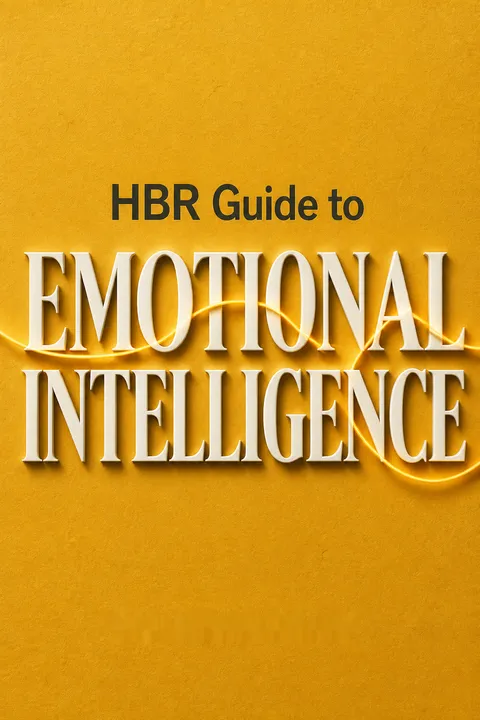


Key Takeaways
Treat emotional intelligence as a trainable skill, not a personality halo
A precise definition matters. Emotional intelligence is the ability to recognize emotions in yourself and others, understand what those signals mean for relationships, and manage emotional responses. It is not simply optimism, confidence, or a collection of admirable traits. The distinction matters: a confident person may misread a colleague, while a less confident person may accurately understand and respond to them.
Practice, motivation, and balance. The guide presents emotional intelligence as partly shaped by natural aptitude and partly developable through feedback, coaching, and practice. A promotion alone does not teach empathy: individual achievement can leave people unprepared to lead others. Nor should one skill dominate. Too much empathy can make hard decisions impossible; unchecked drive can destabilize a team. Emotional skill serves leadership when it is used to help people do good work, not merely to win their approval.
The useful distinction here is between emotional skill and emotional virtue. A person can read others accurately and still use that knowledge selfishly, much as a skilled negotiator can understand a counterpart without caring about their welfare. This makes purpose and accountability essential companions to emotional intelligence. The guide is also right to resist treating it as one universal score: recognizing facial expressions, regulating anger, and responding compassionately are related abilities, but they are not interchangeable. Development should target observable behaviors, not a vague label.
Name the feeling before choosing what to do about it
Feelings are signals, not orders. The guide distinguishes affect, the pleasant or unpleasant feeling generated by the motivational system, from emotion, the interpretation of that feeling in context. A tense morning at home, for instance, can leave someone feeling bad at work, where they may misread the discomfort as proof that a project is failing. Ignoring the signal loses useful information; staring at it endlessly can also prevent action.
Get more precise. Instead of stopping at stressed or angry, ask what else is present, how intense it is, and what event may have triggered it. A worker who calls everything stress may discover disappointment about a career direction or anxiety about a failed project. Writing about emotionally charged experiences can help clarify what feelings mean. Once the source is clearer, choose a response that addresses the actual problem.
Emotional labeling creates a small but valuable gap between sensation and reaction. That resembles measurement in science: a vague reading such as something is wrong becomes more useful when divided into possible causes. Precision does not guarantee a correct interpretation, however. A label is a working hypothesis, not a diagnosis, and colleagues may need to ask questions rather than announce what another person feels. The practical payoff is not emotional analysis for its own sake, but a better match between the problem and the response.
Ask people how your behavior lands, especially when rank silences them
Respect is a performance issue. In a survey of nearly 20,000 employees, being treated with respect had a larger effect on measured employee outcomes than recognition, inspiring communication, useful feedback, or development opportunities. Yet seniority can make honest feedback harder to obtain. Avon CEO Andrea Jung described using a rotating advisory group of employees to hear candid reactions to the company and her leadership.
Make feedback usable. Ask trusted people for specific examples of when you acted respectfully and where you could improve. Choose one behavior to change, request concrete suggestions, and invite colleagues to notice whether it changes. One manager who repeatedly interrupted her team worked with a coach on a physical reminder to wait, then checked in with employees. Reflection also matters: tracking when fatigue or pressure makes someone curt can reveal conditions that need to change.
The striking point is that respect is not a decorative leadership style. It affects whether people contribute, stay engaged, and trust the person setting priorities. Feedback systems help counter the information distortion that comes with authority: the higher a leader rises, the more colleagues may edit what they say. Still, soliciting feedback is not enough. If people take the risk of being candid and nothing changes, the process teaches them to stay quiet. Leaders need to close the loop by naming what they heard and what they will do.
Use your body to interrupt the story stress is telling
Return to the present physically. Stress can set off a loop: a threat interpretation changes breathing and muscle tension, and those bodily changes can make the situation feel even more dangerous. A deliberate breath, attention to the feet on the floor, or noticing a tense shoulder can interrupt the loop long enough to think. A student pitching a startup used a brief pause and awareness of his breathing and feet to steady himself before meetings with investors.
Treat outbursts as information. After yelling or crying, identify the precise feeling and the value or concern beneath it. Anger may follow frustration, sadness may point to loss, and anxiety may signal a perceived threat. Apologize for harmful behavior, but also explain what was going on and discuss how to handle the issue differently. Self-compassion can support accountability: it helps people examine a mistake without collapsing into shame or defending it.
The body is a practical route into emotional regulation because it is available before a person has a polished explanation for what is happening. A pause can lower immediate reactivity, but it does not resolve the source of conflict; that still requires a conversation or a decision. The same distinction applies to self-compassion. Kindness toward oneself is not permission to repeat an outburst. At its best, it reduces shame enough for a person to take responsibility and make a repair.
Make hard conversations safe enough for truth, then specific enough for change
Start with understanding, not a verdict. A physical therapist named MJ left an angry voicemail after a colleague repeatedly paged her away from patient care without explaining why. Her supervisor focused only on her reaction, which left her defensive. An HR partner first acknowledged the feelings she might be having, then helped her examine how she had responded. That sequence made it possible to accept responsibility without pretending the original disruption did not matter.
Keep the exchange concrete. Ask what the other person experienced, distinguish facts from assumptions, and invite them to suggest next steps. In meetings, notice who is quiet, who is resisting, and how power shapes participation. In email, assume tone may be misread: consider the recipient's perspective, make intent explicit, and use familiar communication cues only when appropriate. A useful conversation produces clarity and action, not merely emotional release.
Psychological safety is often misunderstood as comfort or freedom from consequences. This example points to a more demanding version: people can speak honestly, and they are still expected to own their conduct. Naming emotion before correction can lower defensiveness, while concrete follow-up prevents empathy from becoming a substitute for standards. The approach takes more time than issuing a reprimand, but a reprimand that leaves the actual causes untouched often buys compliance without learning.
Slow consequential choices before emotion and memory make them feel obvious
Intuition needs safeguards. Leaders often decide by recognizing familiar patterns and reacting to the emotional associations attached to them. This can be fast and effective, but three red flags can distort judgment: personal self-interest, attachment to a person or project, and memories that seem relevant but conceal important differences. Wang Laboratories founder An Wang resisted using an operating system associated with IBM, in part because he believed IBM had treated him unfairly earlier in his career.
Add structured challenge. List realistic options, identify influential decision makers, look for these biases, and add independent analysis or debate when the risks are high. Emotional states also affect negotiations. In experiments described in the guide, anxious negotiators made weaker opening offers and reached deals that were 12 percent less financially attractive than neutral participants. Preparation, practice, breaks, and careful questions can limit emotional shortcuts.
The important contribution is to treat bias as a process risk, not a character flaw. A capable leader can make a distorted decision because attachment and memory operate before deliberate reasoning catches up. Formal challenge is especially valuable when the decision maker has status, since subordinates may hesitate to question a confident proposal. The caution is that additional review has a cost too. Safeguards should be proportional to the stakes and uncertainty, rather than turning every routine choice into a committee exercise.
Understand another person's mind, feeling, and need as separate tasks
Empathy has distinct parts. Cognitive empathy means understanding another person's perspective. Emotional empathy means sharing or resonating with their feelings. Empathic concern means sensing what support they need. These capacities help leaders explain decisions, mentor people, and respond to distress, but one does not automatically supply the others. Compassion adds a motivation to help rather than stopping at understanding or emotional resonance.
Read context before interpreting signals. Emotional expression is culturally shaped. Enthusiasm that seems persuasive in one workplace may appear boastful or inappropriate in another; the guide contrasts more restrained norms in Japan and China with the greater acceptance of visible enthusiasm in the United States. Observe local patterns and check interpretations with questions instead of treating a facial expression or silence as universal evidence. Keep enough distance to understand another's distress without becoming overwhelmed by it.
Separating perspective-taking, emotional resonance, and concern clarifies why empathy can fail in different ways. Someone may understand a colleague's needs but feel little urgency to respond, or may absorb distress so strongly that useful judgment disappears. Compassion joins care to action while leaving room for boundaries. The cultural point is equally important: the same behavior can carry different meanings across settings. A leader who assumes their own emotional code is universal risks confusing restraint with indifference or enthusiasm with competence.
Turn workplace rivals through credible generosity, not clever arguments
Trust starts before persuasion. At Xerox, new manager John Clendenin faced Tom Gunning, a veteran who believed the promotion should have been his. Rather than arguing that Gunning should accept the decision, Clendenin met him in a setting that mattered to him, acknowledged the situation, and offered a concrete chance to attend senior meetings. He then explained how their skills could serve shared goals and what collaboration would involve.
Use a sequence, not a trick. The guide calls its approach the 3Rs method: redirect hostility away from the personal contest, give something useful before asking for help, and clarify the practical terms of working together. With skeptical vice presidents, Clendenin later framed an inventory proposal around a company-wide need and helped them shape it. When a colleague's passive-aggressive behavior persists, address the underlying work issue, document agreements, and seek support when needed.
The case illustrates why logic alone often fails in a rivalry: when people feel threatened, even sound proposals can look like attempts to take power. Concrete generosity can change the relationship's starting conditions, but it is not a guarantee of reconciliation. The offer must be genuine, and the expectations must be clear enough to prevent suspicion. This approach is best suited to relationships with shared work and some room for trust. Where a colleague repeatedly sabotages commitments, documentation and formal accountability may matter more than goodwill.
Build resilience with realism and recovery, not endless endurance
Face reality, then find room to act. The guide describes resilient people as accepting difficult facts, finding meaning in hardship, and improvising with available resources. Admiral Jim Stockdale endured eight years as a prisoner by accepting the possibility of a long captivity; people who relied on overly optimistic release dates often lost hope. Psychiatrist Viktor Frankl used the imagined task of explaining the camps after the war to give his suffering a purpose. A business owner facing recession and a lawsuit kept adapting his products and partnerships until the company emerged stronger.
Recovery is part of performance. Resilience is the ability to recover, not a demand to keep working without pause. The guide cites an estimated $62 billion annual productivity cost from insufficient sleep and recovery. Schedule breaks, use vacation, reduce constant phone checking, and choose activities that genuinely restore attention rather than keep the mind activated.
This account replaces the heroic image of resilience with a more realistic one: survival requires accurate appraisal, a reason to continue, flexibility, and replenishment. Meaning can help people endure what they cannot immediately change, while improvisation preserves agency under constraint. Neither should be used to romanticize preventable hardship. Organizations cannot demand that employees find purpose in chronic understaffing or substitute personal recovery habits for manageable workloads. Recovery is both an individual practice and a design responsibility.
Support colleagues without becoming the organization's emotional landfill
Notice the hidden workload. A toxic handler is someone who informally absorbs colleagues' frustration, carries confidences, mediates disputes, or softens difficult messages. The work can protect a team from disruption, but research described in the guide found that handlers often experience substantial stress and strain. One employee who supported coworkers through organizational change began sleeping poorly, felt increasingly cynical, and struggled to meet her own deadlines.
Make care sustainable. Watch for changes in sleep, health, concentration, or patience. Choose which situations genuinely need your help, say no with empathy, and direct people toward other support. Shared peer groups can help, but should focus on solutions rather than repetitive venting. If the role continues to damage well-being and the workplace will not change, a break, reassignment, professional support, or leaving may be necessary. Helping others does not require carrying every problem alone.
This role reveals a common organizational blind spot: emotional maintenance is valuable work, yet it often goes unassigned, unmeasured, and unrewarded. The person who absorbs tension may make a dysfunctional system appear healthier than it is. Boundaries therefore protect both the handler and the organization's ability to see its real problems. The guidance should not be mistaken for a reason to abandon colleagues in distress; it distinguishes caring support from taking responsibility for conflicts that the people involved, or the organization, must address.
Shape team emotion through daily behavior, not slogans
Make development personally meaningful. Emotional intelligence rarely changes through orders, rewards, or threats alone. The guide recommends helping an employee connect a personal vision of the future to honest feedback about current behavior, then building a learning plan and a network of support. One executive began working on empathy after recognizing that his forceful style threatened both his career and the close family life he wanted.
Culture is what people repeatedly feel and see. Emotional culture means shared norms about which feelings are expressed, encouraged, or suppressed. At Vail Resorts, leaders modeled fun and included it in recognition and performance reviews. A study in a long-term-care facility found that stronger cultures of caring were associated with lower burnout and absenteeism, better teamwork, and more satisfied patients. Leaders shape these norms through everyday conduct, work practices, and how people are treated during difficult decisions.
The strongest implication is that emotional culture is not created by branding language but by repeated social evidence. Employees learn what is safe to express by watching how leaders respond to disagreement, mistakes, and personal needs. Development plans also work better when tied to a person’s own aims than to an abstract demand to improve. There is a boundary to this approach: asking staff to display approved emotions can become emotional coercion. Healthy cultures make room for honest signals and address their causes, rather than rewarding performance of cheerfulness alone.
Analysis
This guide is an anthology, not a single sustained argument. Its chapters move from defining emotional intelligence to self-awareness, relationships, negotiation, resilience, and organizational culture. That breadth is useful, but it can make the subject seem like a bag of techniques. The central thread is more coherent: emotions contain information about goals, relationships, and perceived threats, and leadership improves when people can interpret that information without obeying every impulse it produces.
The guide is strongest when it distinguishes skills that are often blurred together. Feeling another person's distress is not identical to understanding their perspective; recognizing anger is not the same as knowing its cause; apologizing is not the same as repairing a relationship. These distinctions turn emotional intelligence from a flattering personality label into a set of observable practices. The emphasis on feedback also acknowledges a basic problem of self-knowledge: people cannot reliably infer their impact from their intentions alone, especially when authority makes others cautious.
Its recurring caution is equally important. Emotional skill can be used to manipulate, excessive empathy can become costly emotional labor, and a demand for positive feeling can suppress information that an organization needs. The guide's most balanced view treats emotions as evidence to examine, not commands to follow or noise to eliminate. A leader can be compassionate and make a hard decision; can regulate anger without denying a real grievance; can seek recovery without abandoning responsibility.
Because the volume collects work by many contributors, some claims and tools differ in scope and evidential strength. A case study, a survey, and an experimental finding do not establish the same kind of conclusion. The book is most trustworthy when its recommendations are treated as context-sensitive experiments: seek specific feedback, test interpretations, add safeguards when stakes are high, and observe whether behavior and outcomes improve. Its lasting value is not a promise that emotional fluency guarantees success, but a practical method for making workplace decisions with the human consequences in view.
Review Summary
HBR Guide to Emotional Intelligence receives mostly positive reviews, with readers praising its practical advice and easy-to-understand approach to emotional intelligence in the workplace. Many find it helpful for managers and leaders, appreciating the collection of articles from various authors. Some criticize it for being repetitive or containing obvious information. Readers value the book's insights on self-awareness, empathy, and resilience. While some consider it a must-read, others suggest it's best used as a reference or starting point for further exploration of the topic.
People Also Read









Glossary
Emotional intelligence
Emotional perception and managementThe ability to accurately perceive emotions in oneself and others, understand what emotional signals mean in relationships, and manage emotional responses. The guide distinguishes this narrower ability from broader traits sometimes grouped under the label, such as optimism, confidence, or initiative.
Affect
Basic pleasant or unpleasant feelingA felt state generated by the motivational system, generally pleasant when a person is making progress toward a goal and unpleasant when progress is blocked. In the guide's distinction, affect is the underlying feeling, while an emotion is an interpretation of that feeling in context.
Emotional agility
Flexible use of emotional informationThe capacity to recognize and describe emotions accurately, including difficult ones, and use what they reveal to choose a response. It involves neither suppressing feelings nor automatically acting on them. More precise emotional understanding can help identify the concern beneath a surface reaction and guide constructive action.
Empathy triad
Three ways of understanding othersA framework that separates empathy into cognitive empathy, understanding another person's perspective; emotional empathy, resonating with what that person feels; and empathic concern, sensing what support the person needs. The three capacities contribute differently to communication, relationships, and leadership.
3Rs method
A sequence for rebuilding trustA method for shifting an adversarial work relationship toward collaboration. It involves redirecting negative feelings away from a personal contest, offering something of value before making a request, and clarifying the practical expectations and benefits of working together. The method is illustrated through manager John Clendenin's effort to collaborate with a rival at Xerox.
Red flag conditions
Signals of decision biasThree circumstances that may distort a leader's judgment: inappropriate self-interest, strong attachment to a person, place, or project, and memories that seem relevant but mislead by obscuring differences in the current situation. Identifying these risks can prompt independent analysis, debate, oversight, or other decision safeguards.
Toxic handler
Unofficial absorber of workplace distressA person who voluntarily takes on coworkers' negative emotions by listening, mediating, carrying confidences, or softening difficult messages. This support can reduce disruption for a team, but it may also create invisible work, stress, and health costs for the handler if the emotional burden has no outlet.
Emotional culture
Shared workplace feeling normsThe shared values, norms, signals, and assumptions that shape which emotions people experience and express at work, and which they suppress. Emotional culture is conveyed partly through nonverbal behavior and daily practices. It can influence teamwork, satisfaction, burnout, commitment, and organizational performance.
Surface acting
Displaying an unfelt emotionShowing an emotion valued by a workplace without genuinely feeling it. Such display may help someone conform to a group's immediate expectations, but sustained surface acting can contribute to emotional exhaustion, particularly when employees have no acceptable way to express their authentic feelings.
Deep acting
Trying to cultivate a feelingMaking a focused effort to experience an emotion that fits a work situation or organizational norm, rather than merely displaying it. A manager might deliberately consider an employee's perspective and respond with care, allowing the outward behavior to support a genuine shift in feeling.
Self-Compassion Break
Brief practice for self-kindnessA short exercise for moments of stress or emotional upset. It combines noticing and naming the struggle, remembering that hardship is part of common human experience, and responding to oneself with kindness. The technique aims to reduce shame and reactivity so a person can think clearly and address the problem.
FAQ
What's "HBR Guide to Emotional Intelligence" about?
- Comprehensive Guide: The "HBR Guide to Emotional Intelligence" by Harvard Business Review is a comprehensive resource designed to help professionals understand and improve their emotional intelligence in the workplace.
- Practical Advice: It offers practical advice and strategies from leading experts on how to manage emotions, influence others, and navigate complex social situations at work.
- Skill Development: The guide emphasizes that emotional intelligence is not just an innate trait but a skill that can be developed and refined over time.
- Wide Range of Topics: It covers a wide range of topics, including self-awareness, empathy, resilience, and managing stress, providing readers with tools to enhance their personal and professional relationships.
Why should I read "HBR Guide to Emotional Intelligence"?
- Enhance Leadership Skills: Reading this guide can help you become a more effective leader by improving your ability to manage emotions and understand others.
- Improve Workplace Relationships: It provides insights into building stronger, more empathetic relationships with colleagues, which can lead to a more harmonious and productive work environment.
- Personal Growth: The guide offers strategies for personal development, helping you to become more self-aware and emotionally resilient.
- Practical Tools: It includes practical tools and exercises that you can apply immediately to improve your emotional intelligence and overall job performance.
What are the key takeaways of "HBR Guide to Emotional Intelligence"?
- Emotional Intelligence is Learnable: The guide emphasizes that emotional intelligence can be developed through practice and self-reflection.
- Importance of Self-Awareness: Understanding your own emotions is crucial for managing them effectively and making better decisions.
- Empathy and Influence: Developing empathy can enhance your ability to influence and persuade others, leading to more successful interactions.
- Resilience and Stress Management: Building resilience and learning to manage stress are key components of maintaining emotional well-being in the workplace.
How does "HBR Guide to Emotional Intelligence" define emotional intelligence?
- Beyond Innate Traits: Emotional intelligence is defined as a set of skills that can be learned and improved, rather than just an innate trait.
- Components of EI: It includes self-awareness, self-regulation, motivation, empathy, and social skills.
- Impact on Leadership: The guide highlights that emotional intelligence is crucial for effective leadership and can significantly impact personal and professional success.
- Scientific Basis: The book references research and expert opinions to support its definitions and recommendations.
What are the components of emotional intelligence according to "HBR Guide to Emotional Intelligence"?
- Self-Awareness: Understanding your own emotions and how they affect your thoughts and behavior.
- Self-Regulation: The ability to control or redirect disruptive emotions and impulses.
- Motivation: A passion to work for reasons beyond money or status, and a propensity to pursue goals with energy and persistence.
- Empathy: The ability to understand the emotional makeup of other people and treat them according to their emotional reactions.
- Social Skills: Proficiency in managing relationships and building networks.
How can I develop self-awareness as suggested in "HBR Guide to Emotional Intelligence"?
- Reflect on Emotions: Regularly take time to reflect on your emotions and how they influence your actions and decisions.
- Seek Feedback: Actively seek feedback from trusted colleagues and friends to gain insights into your emotional strengths and weaknesses.
- Mindfulness Practices: Engage in mindfulness practices to become more attuned to your emotional states and reactions.
- Journaling: Keep a journal to track your emotional responses and identify patterns over time.
What strategies does "HBR Guide to Emotional Intelligence" offer for managing stress?
- Mindfulness and Breathing: Practice mindfulness and deep breathing exercises to stay grounded during stressful moments.
- Reframe Negative Thoughts: Learn to reframe negative thoughts and focus on the positive aspects of challenging situations.
- Take Breaks: Incorporate regular breaks into your workday to recharge and prevent burnout.
- Physical Activity: Engage in physical activities that help reduce stress and improve overall well-being.
How does "HBR Guide to Emotional Intelligence" suggest improving empathy?
- Active Listening: Practice active listening by giving full attention to the speaker and acknowledging their feelings.
- Perspective-Taking: Make an effort to see situations from others' perspectives to better understand their emotions and reactions.
- Emotional Mirroring: Use emotional mirroring to reflect the emotions of others, which can help build rapport and trust.
- Empathy Exercises: Engage in exercises that challenge you to empathize with people from different backgrounds and experiences.
What role does resilience play in emotional intelligence according to "HBR Guide to Emotional Intelligence"?
- Bounce Back from Setbacks: Resilience is the ability to recover quickly from setbacks and adapt to challenging situations.
- Emotional Stability: It contributes to emotional stability, allowing you to maintain composure under pressure.
- Learning from Failure: Resilient individuals view failures as learning opportunities and are more likely to persevere in the face of adversity.
- Building Resilience: The guide offers strategies for building resilience, such as cultivating a positive outlook and developing strong support networks.
How can "HBR Guide to Emotional Intelligence" help in dealing with difficult colleagues?
- Understanding Motivations: Gain insights into the underlying motivations and emotions driving difficult behavior.
- Effective Communication: Learn techniques for communicating effectively and assertively with challenging colleagues.
- Conflict Resolution: The guide provides strategies for resolving conflicts and finding common ground with difficult individuals.
- Maintaining Professionalism: It emphasizes the importance of maintaining professionalism and emotional control in challenging interactions.
What are some practical exercises from "HBR Guide to Emotional Intelligence" to enhance emotional intelligence?
- Self-Assessment Quizzes: Use quizzes to assess your current level of emotional intelligence and identify areas for improvement.
- Role-Playing Scenarios: Engage in role-playing exercises to practice empathy and emotional regulation in various situations.
- Feedback Sessions: Organize feedback sessions with peers to gain insights into your emotional impact on others.
- Mindfulness Meditation: Incorporate mindfulness meditation into your routine to enhance self-awareness and emotional regulation.
What are the best quotes from "HBR Guide to Emotional Intelligence" and what do they mean?
- "Emotional intelligence is not just an innate trait: It can be learned." This quote emphasizes the book's core message that emotional intelligence is a skill that can be developed through practice and effort.
- "By managing your emotions and relating well to others, you can achieve higher levels of influence as well as personal well-being." It highlights the dual benefits of emotional intelligence in both professional influence and personal happiness.
- "Leaders who are motivated to improve their emotional intelligence can do so if they’re given the right information, guidance, and support." This underscores the importance of motivation and support in the journey to enhance emotional intelligence.
- "Your emotions are your natural guidance system—and they are more effective when you don’t try to fight them." This quote suggests that embracing and understanding emotions can lead to better decision-making and personal growth.
About the Author
Other books by Harvard Business Review





Download PDF
Download EPUB
.epub digital book format is ideal for reading ebooks on phones, tablets, and e-readers.








