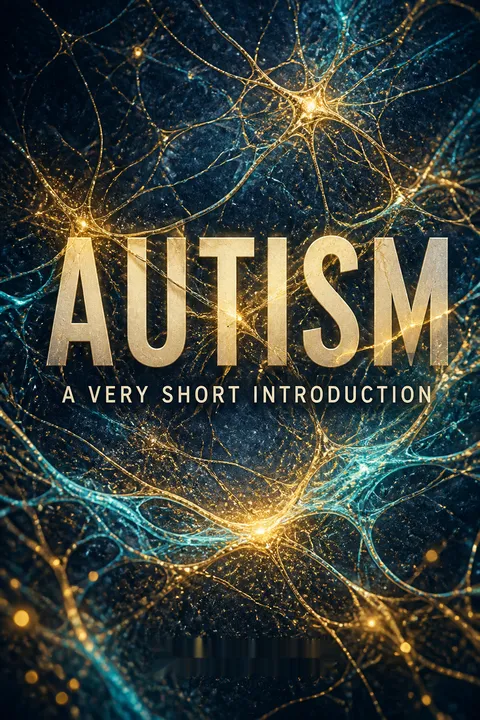


Key Takeaways
Read autism as a spectrum of distinct profiles, not one recognizable type.
One label, many lives. Frith presents three very different people: David, who speaks late and relies on fixed routines; Gary, whose social difficulties overlap with attention and motor problems; and Edward, who is verbally gifted but struggles with peers. Their differences show why autism cannot be understood as one standard presentation or a simple scale from mild to severe. The book uses “autism spectrum” for a range of developmental profiles, with shared features but widely varying abilities and support needs.
A common pattern remains. Frith identifies reciprocal social interaction, communication, and restricted or repetitive behaviour as the central features linking these varied profiles. The spectrum is a map of overlapping differences, not a guarantee that every person looks or functions alike.
What's useful here is the distinction between a shared diagnostic pattern and a person's whole identity. A category can help families and educators recognize needs, but it can also tempt outsiders to assume abilities, interests, or future prospects from a label. Frith's contrasting cases resist that shortcut. The spectrum metaphor is helpful, although it can imply a single line when people may have sharply uneven abilities across communication, sensory experience, daily living, and learning. A profile-based view preserves the book's central point while asking a more practical question: what is this person good at, what is difficult, and what support makes a difference?
Look for reciprocity, communication, and rigidity, not one telltale sign.
Three connected features. Frith's account emphasizes social reciprocity, communication, and restricted or repetitive behaviour. A child being quiet or preferring solitude is not enough to identify autism. The concern is difficulty engaging in a back-and-forth exchange, especially with other children. Communication includes gestures and facial expressions, not just spoken language. A child may use words to request something while rarely using them to share an idea or feeling.
Rigidity is more than routine. Repetitive play or a favourite food is common in childhood; the concern is an unusually intense pattern that limits exploration or makes change deeply distressing. David's repeated trampoline play and narrow food choices illustrate this. These features can change with age, learning, and support, so assessment depends on the pattern across behaviour, development, and context.
This framework redirects attention from conspicuous quirks to the function of behaviour. A repeated action matters not because repetition is inherently pathological, but because its intensity or inflexibility may restrict participation or signal distress. The same principle appears in clinical assessment more broadly: behaviours gain meaning from their frequency, context, and consequences. The challenge is that reciprocity is co-produced. A conversation partner's speed, assumptions, or communication style can also make an exchange inaccessible. The book's criteria are most useful when they guide careful observation rather than turn every difference in social style into a diagnosis.
Treat early social milestones as clues, not a verdict.
Shared attention matters. Joint attention is the ability to share focus on an object with another person, often by pointing, showing, or following someone's gaze. It develops around the end of the first year and helps make interaction genuinely reciprocal. A toddler who does not point to share interest may warrant attention, but one missed milestone cannot settle a diagnosis. Frith's example of Mickey shows why: he responded inconsistently to his name, yet later showed shared interest and joined other children in play.
Development can look different. Some families notice a loss of words or social engagement; others see slower progress compared with peers. Frith reports that around 30 percent of parents describe regression, while noting that a developmental gap can resemble a loss. In the research she cites, diagnoses made around 24 months were not confirmed in about one-third of cases two years later. Early assessment can open access to support, but uncertainty calls for follow-up.
The distinction between losing a skill and failing to acquire the next one is consequential for both families and researchers. Parents' observations deserve attention, while retrospective accounts can be difficult to interpret because development is uneven and comparison with peers changes over time. Frith's approach balances urgency with humility: a concern should lead to assessment and support, not a premature certainty. This also illustrates a broader principle in developmental science. Early indicators are probabilistic signals, not miniature versions of a final diagnosis. Good practice keeps watching the child's trajectory rather than treating one snapshot as the whole story.
Rising diagnoses do not, by themselves, prove an autism epidemic.
Counting depends on definitions. Autism was little known when Leo Kanner and Hans Asperger described forms of it in the 1940s. Later, awareness grew, diagnostic criteria broadened, and people once classified differently began receiving autism diagnoses. A California study discussed by Frith found autism diagnoses rising as diagnoses of intellectual disability fell, suggesting that some of the change reflected relabelling. The book also cites a British survey of children aged 9 to 10 that estimated autism spectrum conditions at just over 1 percent, including classic autism at about 0.2 percent.
Test claims against evidence. Frith reviews concerns that MMR vaccination or the vaccine preservative thimerosal caused the rise. The studies she discusses found no evidence that either explained it. Changes in awareness and diagnosis are not proof that every possible environmental influence has been ruled out, but a plausible story is not sufficient evidence of causation.
Prevalence is partly a measure of how a society defines and detects a condition. When criteria expand, counts can rise even if the underlying rate does not, making comparisons across decades difficult. That does not mean every rise is merely administrative; it means researchers need consistent methods and careful interpretation. The vaccine example also shows how a vivid sequence can feel causal even when broader evidence does not support it. Public trust is strengthened by explaining both what studies have found and what remains uncertain, rather than treating parental concern as foolish or treating suspicion as proof.
Trace autism to developing biology without mistaking risk for destiny.
Genes raise likelihood. Frith describes autism as a neurodevelopmental condition, meaning that differences in brain and mind development begin early and shape later abilities. In a twin study of 21 pairs she discusses, both twins had an autism spectrum condition in 90 percent of identical pairs, compared with 10 percent of non-identical pairs. The result points to a strong genetic contribution, but identical twins could still differ in how severely they were affected. Genes therefore signal susceptibility, not an inevitable, identical outcome.
Many routes may converge. The book considers combinations of genetic predispositions and developmental risks, rather than one universal cause. Brain studies reported differences in cell structure, connectivity, and early brain growth, but their meaning was not settled. Frith presents ideas such as atypical connection development and pruning as hypotheses, not established explanations. The evidence supports biological involvement while leaving the pathway from cause to individual profile unresolved.
The distinction between predisposition and destiny is essential. Genetic influence can be substantial without making development mechanically predetermined, and variation among identical twins is a vivid reminder that biological systems unfold in context. This framing also guards against blaming parents for a child's autism, a historical mistake that Frith describes as damaging and unsupported. At the same time, brain-based explanations should not be mistaken for complete explanations: describing a difference in connectivity does not, by itself, tell families what a person experiences or what support will help. Mechanism and lived experience answer different questions.
Ask what social understanding demands before calling behavior indifference.
Reading minds is effortful. Mentalizing, also called theory of mind, means inferring what another person knows, believes, wants, or feels. In the Sally-Anne task, a child watches one character move a marble while another is away, then predicts where the absent character will search. A child who answers from the character's outdated belief shows an understanding that people can hold different information. Frith reports that many autistic children find this task difficult and may learn social rules through deliberate reasoning rather than quick intuition.
Several mechanisms may contribute. Frith discusses three hypotheses: difficulty mentalizing, reduced spontaneous pull toward social signals, and differences in mirroring actions or emotional expressions. They may illuminate different experiences, but none explains every autistic person. The book also stresses that autistic people can show kindness, empathy, and social knowledge, even when these abilities do not appear in expected ways.
The important move is from judging intention to investigating processing. A person who misses an implied request or responds literally may not be rejecting the other person; the social cue may not have been obvious to them. This perspective encourages direct language and fewer hidden tests of social fluency. The mentalizing experiments are illuminating, but a laboratory task is not a direct measurement of someone's entire capacity for understanding others. Performance can depend on language, memory, and familiarity with the task. A model of social difference should explain both difficulty and competence, not define a person by what one test fails to capture.
Build around uneven abilities: detail can be strength, context can be costly.
Details may outshine the whole. Weak central coherence is Frith's term for a tendency to give less automatic priority to overall context and more attention to separate details. In one example, autistic children completed jigsaw puzzles by fitting shapes together, paying less attention to the picture. Some also excelled at finding hidden figures or recalling unconnected words. Frith describes Stephen Wiltshire, who memorized a city view from a helicopter ride and later drew it in meticulous detail.
A strength is not a guarantee. Detail-focused processing may contribute to particular talents, but it does not explain every skill or describe every autistic person. Frith notes that truly extraordinary savant abilities are uncommon, even though many people have distinctive strengths. A person may read fluently without understanding a text, or show remarkable memory in one domain while needing extensive help with daily tasks.
This account replaces the crude opposition between intelligence and disability with a more realistic pattern: abilities can be highly uneven, and the same attentional style can help in one setting while making another harder. The broader lesson for education and work is to separate a person's capacity from the way a task is presented. A detail-sensitive learner may thrive when information is explicit and structured. Yet popular stories about savants can distort expectations by making exceptional talent seem typical. Celebrating real strengths is valuable; using them to dismiss support needs is not.
Replace brittle routines with structure, teaching, and stress reduction.
Everyday flexibility can be hard. Executive dysfunction is difficulty with the mental processes used to plan, shift attention, inhibit an impulse, and adapt when a routine breaks. Frith describes Ken becoming distressed when his usual muesli is missing from a supermarket shelf, despite having a shopping list. The problem is not simply stubbornness: an unplanned change can demand several decisions and actions at once. Similar challenges can affect food, transitions, and ordinary errands.
Make demands more manageable. A predictable timetable, visual cues, clear instructions, and a calm environment can help a person know what happens next. Frith discusses structured teaching approaches and behaviour-based teaching, which can build useful skills. She also advises looking for stressors when behaviour worsens. An unexpected change, pain, or an unstructured choice may be part of the problem, even when the person cannot explain it directly.
This is a strong case for treating environments as part of the intervention. A predictable schedule does not merely soothe; it can reduce the number of decisions a person must hold in mind and make participation possible. The idea resembles accessibility design, where obstacles are removed from the setting rather than framed as failures in the individual. Structure should not become a rigid prescription, however. A useful support increases agency and lowers distress; an inflexible system can simply replace one person's needs with another's convenience. The person affected should shape the routines intended to help.
Match support to the person, while refusing both cure myths and romantic myths.
Support is not one-size-fits-all. Frith describes Applied Behavioural Analysis, which teaches skills through systematic reinforcement, and TEACCH, a structured approach that uses visual timetables and clear organization. These approaches illustrate different ways to teach or accommodate; neither guarantees the same result for everyone. Speech therapy, social-skills teaching, and individualized educational settings may also help. The book emphasizes planning around the child or adult rather than assuming that mainstream or specialist placement is always best.
Distinguish autism from added difficulties. The book says there is no medical cure for autism, while conditions such as epilepsy, anxiety, depression, or gastrointestinal illness may need treatment. A sudden behavioural change can signal pain or stress. Frith also rejects unsupported promises of quick cures. Respecting autistic identity need not deny serious disability, and acknowledging disability need not erase a person's strengths or preferences.
The tension between difference and disability is not solved by choosing one side. Some autistic people describe a valued identity and need few accommodations; others require lifelong, intensive care. A humane approach makes room for both without treating one group's experience as the standard. The same principle applies to intervention: the relevant test is not whether a method sounds scientific or popular, but whether it improves the person's communication, safety, autonomy, or quality of life. Families also need practical support, since care demands can be substantial even when a child is making progress.
Analysis
Frith's book is best understood as a guide to reasoning under uncertainty. It moves between observable behaviour, psychological explanations, and biological hypotheses, resisting the temptation to collapse them into one cause. Its enduring strength is this layered approach: a child's actions are not transparent evidence of motive, laboratory tasks illuminate only parts of a mind, and biological findings do not automatically translate into practical care. The cases of David, Gary, and Edward make heterogeneity concrete, while the recurring figure of Diane gives readers a companion through the science and its unresolved questions.
The book is also a snapshot of autism research in 2008. Its discussion of Asperger syndrome, prevalence, brain connectivity, and candidate cognitive theories should be read in that historical context, not as a current clinical manual. Theories such as mindblindness and weak central coherence are productive because they generate testable questions, but any single theory risks mistaking one route through autism for the whole condition. Frith often signals these limits herself, especially where evidence is preliminary or findings vary across people.
The practical argument is more durable than any one theory: observe the individual, reduce avoidable stress, teach skills without assuming incapacity, and do not mistake difference for either genius or tragedy. That stance also exposes a persistent challenge. Diagnostic categories must be broad enough to recognize people who need support, yet precise enough to remain scientifically useful. There is no frictionless solution. The book's strongest contribution is showing why that difficulty should lead to better inquiry and individualized care, not to simplistic explanations, parental blame, or promises of a universal cure.
Review Summary
Reviews of Autism: A Very Short Introduction are mixed. Some praise it as informative and well-researched, offering a good overview of autism spectrum disorders. Others criticize the author's language and approach as outdated, dehumanizing, and insensitive towards autistic individuals. The book covers autism's history, prevalence, neurodevelopmental aspects, and social communication challenges. While some readers found it enlightening, others felt it lacked nuance and perpetuated harmful stereotypes. The book's age (published in 2008) is noted as a factor in its outdated perspectives.
People Also Read





Glossary
Autism spectrum
range of autistic profilesA broad category for developmental profiles that share central difficulties in reciprocal social interaction and communication, often alongside restricted interests or repetitive behaviour. The term emphasizes substantial variation in language, intellectual ability, behaviour, and support needs. In Frith's account, people on the spectrum do not form a single uniform group or a simple ladder from mild to severe.
Joint attention
shared focus on somethingThe ability of two people to deliberately attend to the same object or event and recognize that they are sharing that focus. A child may initiate joint attention by pointing or showing something, or respond by following another person's gaze. Frith describes it as an important early foundation for reciprocal social interaction.
Mentalizing
inferring another person's mindThe process of attributing beliefs, knowledge, intentions, and feelings to other people in order to interpret their actions. Also called theory of mind, mentalizing can be measured with tasks such as predicting where someone will search for an object based on that person's mistaken belief. Frith presents it as one proposed explanation for some social-communication difficulties in autism.
Weak central coherence
reduced pull of contextFrith's account of a processing style in which surrounding context has less influence than it typically does, while separate details receive strong attention. This may help explain why some autistic people excel at finding visual details or recalling information literally, yet have difficulty extracting a broad meaning. The theory is an explanatory proposal, not a description that applies equally to everyone.
Executive dysfunction
difficulty managing flexible controlA proposed difficulty in high-level control processes such as planning, inhibiting impulses, shifting attention, and adapting when routines change. Frith uses this idea to help explain why apparently ordinary situations, such as shopping when a familiar item is unavailable, can become overwhelming. The concept is useful for understanding daily challenges but is not unique to autism.
Cognitive phenotype
distinctive pattern of thinkingA characteristic pattern of cognitive strengths and difficulties that may help link observed behaviour with underlying brain or genetic processes. Frith proposes that different cognitive profiles could account for some of the variation within the autism spectrum. The idea is a research tool for grouping patterns, not a complete diagnosis or a settled explanation of autism.
Applied Behavioural Analysis
teaching through reinforcementAn approach to teaching and behaviour change that applies principles of learning, including reinforcement, to develop useful skills and reduce behaviours that interfere with daily life. Frith describes its use in structured teaching, sometimes through intensive one-to-one sessions. The book notes that approaches vary in intensity and style, and that results and suitability depend on the individual.
TEACCH
structured visual support approachAn educational approach associated in the book with clear routines, visual information, and structured environments. A timetable showing the sequence of daily activities can help a person understand what is happening and what comes next. Frith presents TEACCH as a way to organize learning and daily life, complementing approaches that directly teach or shape behaviour.
Top-down and bottom-up
control and incoming informationTerms Frith uses for two interacting processes in the brain. Bottom-up processing carries information gathered from the senses, while top-down processing uses expectations, attention, and control to select or interpret that information. She speculates that a mismatch between the processes may help explain detail-focused strengths alongside difficulty with flexible control. This proposed connection remains a hypothesis in the book.
FAQ
What is "Autism: A Very Short Introduction" by Uta Frith about?
- Concise overview of autism: The book provides a clear, accessible introduction to autism, covering its history, diagnosis, causes, and the lived experiences of autistic individuals.
- Spectrum perspective: It explains the concept of the autism spectrum, highlighting the wide range of abilities and challenges among those diagnosed.
- Scientific and personal insights: Uta Frith combines scientific research with real-life case studies to illustrate the complexities and nuances of autism.
- Focus on development and intervention: The book discusses how autism manifests across the lifespan and the importance of early intervention and education.
Why should I read "Autism: A Very Short Introduction" by Uta Frith?
- Expert author: Uta Frith is a leading researcher in autism, offering authoritative and up-to-date information.
- Balanced and accessible: The book is written for both general readers and professionals, making complex ideas understandable without oversimplifying.
- Comprehensive yet concise: It covers key topics—history, diagnosis, causes, interventions, and personal stories—in a short, manageable format.
- Critical perspective: Frith addresses controversies, misconceptions, and the evolving understanding of autism, encouraging readers to think critically.
What are the key takeaways from "Autism: A Very Short Introduction"?
- Autism is a spectrum: There is a wide range of presentations, from classic autism to Asperger syndrome, with varying degrees of ability and impairment.
- Core features: The main diagnostic criteria are difficulties in reciprocal social interaction, communication challenges, and restricted, repetitive behaviors.
- Neurodevelopmental origins: Autism is rooted in early brain development, with genetic and possibly environmental factors contributing.
- No single cause or cure: Multiple risk factors and protective factors interact, and while interventions can help, there is no universal cure.
- Importance of support: Early diagnosis, specialized education, and understanding from society are crucial for improving quality of life.
How does Uta Frith define autism and the autism spectrum in "Autism: A Very Short Introduction"?
- Developmental disorder: Autism is described as a neurodevelopmental disorder that affects the brain and mind from early in life.
- Spectrum concept: The autism spectrum includes a range of conditions, from severe classic autism to high-functioning autism and Asperger syndrome.
- Core impairments: All forms share difficulties in social interaction, communication, and a tendency toward repetitive behaviors and restricted interests.
- Individual variability: Each person with autism is unique, with different strengths, challenges, and developmental trajectories.
What are the three core features of autism according to "Autism: A Very Short Introduction"?
- Reciprocal social interaction: Difficulty engaging in typical back-and-forth social exchanges, especially with peers.
- Communication challenges: Problems with both verbal and nonverbal communication, ranging from lack of speech to difficulties with conversational nuance.
- Restricted and repetitive behaviors: Engaging in repetitive actions, routines, or having narrow, intense interests that can dominate daily life.
How does "Autism: A Very Short Introduction" explain the causes of autism?
- Genetic predisposition: Strong evidence points to genetic factors as the primary contributors, with multiple genes likely involved.
- Neurodevelopmental processes: Abnormalities in brain development, such as differences in connectivity and pruning of neural connections, are implicated.
- Environmental factors: While some rare cases are linked to environmental insults (e.g., prenatal infections), most environmental causes have been ruled out.
- Complex interplay: The book emphasizes that both risk and protective factors interact, and no single cause explains all cases.
What are the "five big ideas" about the autistic mind discussed in "Autism: A Very Short Introduction"?
- Mindblindness (Theory of Mind): Difficulty understanding others' thoughts, beliefs, and intentions, leading to social challenges.
- Lack of social drive: A reduced innate motivation to seek out and enjoy social interactions, possibly linked to differences in the "social brain."
- Broken mirror system: Impaired mirroring of others' actions and emotions, affecting empathy and imitation.
- Weak central coherence: A tendency to focus on details rather than the whole, explaining both strengths (e.g., savant skills) and weaknesses.
- Executive dysfunction: Problems with planning, flexibility, and self-control, leading to rigid routines and difficulty adapting to change.
How does "Autism: A Very Short Introduction" address the increase in autism diagnoses?
- Broader diagnostic criteria: The definition of autism has expanded to include milder and atypical cases, increasing prevalence rates.
- Greater awareness: Improved recognition by professionals and the public has led to more diagnoses.
- Relabeling: Some individuals previously diagnosed with other conditions (e.g., mental retardation) are now recognized as autistic.
- No evidence of epidemic: The book argues that most of the increase is due to these factors, not a true rise in incidence.
What interventions and educational approaches does Uta Frith recommend in "Autism: A Very Short Introduction"?
- Early intervention: Prompt diagnosis and support are crucial for better outcomes.
- Specialized education: Structured, individualized teaching methods (e.g., ABA, TEACCH) are effective, especially for children with more severe autism.
- Social skills training: Programs that teach social understanding and communication can help, particularly for high-functioning individuals.
- Support for families: Ongoing support and resources for families are essential to manage stress and improve quality of life.
How does "Autism: A Very Short Introduction" differentiate between classic autism, Asperger syndrome, and high-functioning autism?
- Classic autism: Typically involves significant language delay, social aloofness, and often intellectual disability.
- Asperger syndrome: Characterized by high verbal intelligence, no language delay, and intense, narrow interests; social difficulties are present but may be masked by compensatory learning.
- High-functioning autism: Refers to individuals with autism who have average or above-average intelligence and better language skills, but still face core social and behavioral challenges.
- Overlap and debate: The boundaries between these categories are blurred, and the book discusses ongoing debates about their distinction.
What are some of the most memorable quotes from "Autism: A Very Short Introduction" and what do they mean?
- "With autism nothing is what it seems at first glance." – Highlights the complexity and paradoxes in autistic behavior, cautioning against superficial judgments.
- "Being autistic could be in many ways worse than being born blind or deaf." – Emphasizes the unique social challenges of autism, despite intact sensory abilities.
- "The knowledge they acquire is not the same as the ordinary ‘tuned in’ knowledge that we all take for granted." – Points to the different ways autistic individuals learn about the social world.
- "There is no better way to push back the frontiers of knowledge than by trying out ideas that seem a little outrageous at first—so long as they can be tested experimentally." – Encourages open-minded, evidence-based exploration in autism research.
What practical advice does "Autism: A Very Short Introduction" offer for families, educators, and society?
- Early and accurate diagnosis: Seek professional assessment if autism is suspected, but recognize the limits of early behavioral diagnosis.
- Individualized support: Tailor interventions and educational plans to each person's unique strengths and needs.
- Promote understanding and acceptance: Increase public awareness to reduce stigma and support inclusion.
- Beware of unproven treatments: Be cautious of "cures" or therapies lacking scientific evidence; focus on evidence-based practices.
- Manage stress and expectations: Recognize the challenges for families and individuals, and prioritize well-being and realistic goals.
Very Short Introductions Series Series














Download PDF
Download EPUB
.epub digital book format is ideal for reading ebooks on phones, tablets, and e-readers.








