

Key Takeaways
Build your financial plan around finite time, not inherited milestones
Start with the life. Clarey argues that money advice is useless until someone decides what they want their money and time to make possible. His three lenses are finiteness, time, and happiness: life ends, every purchase embodies labor, and material wealth is only one ingredient in well-being. Together, they challenge readers to question default goals such as a prestigious career, a large home, or parenthood simply because others expect them.
Turn urgency into action. The book recommends setting goals, making a plan, and following a regular routine. Its ideal is not one prescribed lifestyle: a family-centered life, a demanding career, or a modest life built around hobbies could each be worthwhile if chosen deliberately. The key is to stop postponing life until some imagined moment of perfect security.
What's valuable here is the order of operations: values first, financial tactics second. That resembles values-based planning in psychology, where goals are more durable when they express chosen priorities rather than social approval. Mortality can sharpen attention, but it can also provoke rash decisions or anxiety. A useful application is periodic review, not panic: choose priorities, set practical steps, and revise them when health, relationships, or circumstances change.
Lower fixed costs until your income buys freedom, not just consumption
Make restraint the default. The book's Lazy Bachelor Budget is a simple spending policy: spend as little as practical instead of tracking dozens of categories indefinitely. Clarey contrasts a couple earning $350,000 a year who reportedly spent $400,000 with a frugal computer consultant who built substantial wealth while working fewer hours. These are anecdotes, not proof that one budget suits everyone, but they illustrate the central warning: higher income does not prevent overspending.
Question every possession. Clarey calls minimalism a broader practice of reducing possessions and expenses to cut maintenance, housing needs, and dependence on work. He argues that a smaller home and cheaper habits can buy time and mobility. The point is not deprivation for its own sake. It is to notice the full cost of ownership, including upkeep and the work required to afford it.
Behavioral economics helps explain why this advice can work: recurring commitments shape spending more powerfully than good intentions do. A less expensive home or car can reduce pressure every month, while an elaborate budget can demand more attention than people can sustain. Still, spending as little as possible is not a complete financial plan. Health, accessibility, dependents, and reasonable enjoyment belong in the calculation too.
Treat tuition as a wager on skills employers actually reward
Count the full cost. Clarey frames education as an investment in earning power, not an experience that automatically justifies its price. He urges students to compare tuition, fees, books, and years out of the workforce with likely employment and pay. The book particularly favors science, technology, engineering, and math, while also pointing readers toward trades, community colleges, military training, and professional certifications.
Check alternatives. Before borrowing for a degree, ask whether the same knowledge can be learned more cheaply, whether employers require that credential, and whether graduates actually find work in the field. Clarey argues that a library or online study may be a better route for subjects with weak job prospects. His financial test is useful, but it does not mean education has no intellectual, civic, or personal value.
The investment lens makes opportunity cost visible: tuition is only part of the price when study delays full-time earnings. Labor-market outcomes matter, but they are not guarantees. Wages change, individual aptitude varies, and some fields provide benefits that salary data miss. The strongest decision combines likely earnings with graduation rates, debt, personal fit, and the value of learning itself, rather than treating either prestige or a single salary ranking as decisive.
Use employment to build options, not to outsource your life
Choose the trade-offs. Clarey compares conventional corporate work, government employment, military service, and self-employment. He sees corporate jobs as relatively structured but restrictive, while self-employment can offer control at the cost of uncertain income and extra administrative work. Government and military roles may provide benefits or training, but they also entail obligations and limits on choice.
Create bargaining room. The book's recurring practical idea is that lower expenses, useful skills, and alternative income make it easier to reject a bad job or negotiate for better pay. It recommends experimenting with different work while young instead of assuming an initial career must define an entire life. A job can be a source of income and experience without becoming a person's only identity or plan.
Autonomy is a genuine dimension of job quality, alongside pay, stability, and working conditions. Clarey's useful contribution is to connect low overhead with bargaining power: a person who can afford to walk away has more choices. His broad dismissals of employers and public-sector workers are not reliable descriptions of whole workforces. In practice, the best route depends on the worker's needs, local opportunities, and the protections or benefits a job provides.
Test a business idea cheaply before betting your household on it
Separate passion from demand. Clarey warns that a business can become an expensive hobby when its owner loves the idea but has no paying customers. His examples include struggling restaurants whose owners misunderstand basic operations. Before committing substantial money, he recommends writing a business plan that covers the market, the product, management, and finances, including how the owner might leave or sell the business.
Keep the operation simple. The book advises starting a venture on the side, keeping business and personal accounts separate, recording expenses, and avoiding needless complexity. Its premise is that entrepreneurship can provide independence, but only if the business is viable and competently managed. Passion can sustain effort; it cannot substitute for revenue, accounting, or a realistic plan.
This advice aligns with a useful principle from entrepreneurship research and practice: reduce uncertainty before increasing commitment. A small test of whether customers will pay can reveal more than a polished plan built on assumptions. Yet the book's celebration of independence can understate the burdens of volatile income, regulation, and personal risk. A side project is most protective when its losses are capped and household essentials remain secure.
Keep housing and transport cheap enough to preserve your options
Buy flexibility first. Clarey challenges the idea that homeownership is always superior to renting. A house brings property taxes, insurance, repairs, and reduced mobility, while renters avoid some ownership costs. He suggests considering a purchase when family needs, affection for a place, or a stable job make staying worthwhile. His own account of struggling with rental properties after taxes rose and work disappointed him serves as a warning against assuming appreciation or career stability.
Reject status spending. For cars, the book favors used, reliable transportation over a new or luxury model bought to impress others. It also encourages learning basic maintenance, a skill Clarey says can save money over time. The larger principle is to count ongoing costs and risks, not just the purchase price. A vehicle or home is useful only if it supports the life being built.
The rent-versus-buy question is best understood as a comparison of total costs and time horizon, not as a moral test of adulthood. Mobility has economic value when work or personal plans may change; ownership can make sense when a household expects to stay and can absorb repairs. The book is right to foreground hidden costs, but local prices, taxes, and financing terms can reverse its general preference for renting.
Invest for uncertainty, and never let retirement math promise certainty
Learn what you own. Clarey explains stocks as partial ownership in a company, bonds as loans, and commodities as materials whose prices depend on supply and demand. He favors diversified, low-cost index funds over paying high fees to managers who may not outperform the market. He also urges workers to understand their retirement plan, employer matching, fees, withdrawal rules, and insurance needs.
Plan with scenarios. The book recommends estimating retirement expenses and lifespan, then testing different assumptions for inflation and investment returns. It stresses that calculations cannot control market performance or policy changes. Its 2013-era claims that stocks were severely overvalued and retirement savings could be confiscated are dated and speculative, not dependable current forecasts. The durable advice is to prepare for uncertainty without treating any projection as a guarantee.
Diversification and attention to fees are strong foundations because they reduce risks that investors can control. Retirement planning also has a less visible hazard: poor returns early in retirement can do more damage than the same losses later, since withdrawals may lock in losses. Clarey's crisis framing can spur contingency planning, but specific alarms need current evidence. Sensible preparation uses diversified assets, realistic spending estimates, and adjustments as conditions change.
Improve your appeal, but treat gender theories as hypotheses, not laws
Invest in yourself. Clarey describes Sexual Market Value, or SMV, as his term for a person's perceived desirability in dating. He argues that fitness, competence, confidence, and social skill can improve a man's prospects. He also presents The Tao of Steve, a dating strategy that prizes appearing self-contained and avoiding excessive pursuit. These ideas form part of a strongly male-centered, polemical chapter about dating.
Separate observation from evidence. The book also makes sweeping claims about women's motives and dating behavior, often based on personal stories rather than systematic evidence. Those claims should not be treated as facts about women generally. The more transferable advice is to develop a life one values, notice whether interest and respect are mutual, communicate clearly, and leave relationships marked by coercion or persistent disrespect.
The matching-market metaphor can clarify why appearance, confidence, and social context affect dating, and self-development can improve well-being regardless of romantic outcomes. But markets are only a partial analogy: people have agency, emotions, and ethical obligations, not just a price or ranking. Scarcity tactics can turn connection into manipulation. Mutual consent, honest communication, and attention to individual behavior offer a sounder guide than claims about what an entire gender supposedly wants.
Make marriage and parenthood deliberate commitments, not social defaults
Weigh the obligations. Clarey treats family formation as a major decision because it changes a person's time, finances, and responsibilities. He argues that children need sustained parental care and gives an estimate of about $250,000 to raise one child to adulthood, a figure from the book's period rather than a universal current cost. He urges readers to consider whether they want to raise children, not merely whether they like the idea of having them.
Choose with care. The book recommends assessing a partner's character, financial habits, and expectations, and consulting a lawyer about marriage and property agreements. Its selection advice is entangled with unsupported stereotypes about women and family roles. A more reliable application is to discuss money, parenting, work, and conflict openly, and to make pregnancy prevention a shared, informed responsibility.
The book is strongest when it insists that children are people whose needs impose real duties, not lifestyle accessories. Family economics supports taking caregiving time and long-term costs seriously, although estimates vary with location, health, and family choices. Its gendered prescriptions are much weaker: household arrangements work differently across couples. Shared expectations, practical support, and respectful conflict resolution are better predictors of a workable partnership than a rigid theory of who should lead.
Read assets, debts, and cash flow before calling anyone wealthy
Look beneath appearances. Clarey introduces two basic financial statements. An income statement compares revenue with expenses over a period; a balance sheet lists assets and liabilities at a point in time. Their difference is net worth. Someone driving an expensive car or living in a large house may owe more than those possessions are worth, while a modest household with savings and manageable debt may be on firmer ground.
Check liquidity too. Net worth does not show how quickly assets can be converted into cash. A business or house may have value but be difficult to sell in an emergency. The book connects these skills to evaluating employers, investments, loans, and governments. It also recommends learning basic repairs through instruction, including online videos, to avoid paying others for every manageable fix.
The distinction between net worth and liquidity is essential because solvency and the ability to pay next month's bills are different questions. Reading statements can also counter the cognitive bias of judging wealth by visible consumption. Still, accounting measures depend on valuation and timing, and a balance sheet is not a full account of security. Income stability, insurance, access to credit, and foreseeable obligations matter alongside the headline total.
Secure legal advice before contracts, disputes, or incapacity arrive
Prepare before pressure. Clarey advises learning the local rules that govern leases, employment disputes, business formation, and divorce, and finding qualified legal help before a crisis. He describes lawyers as costly and urges clients to arrive organized, provide documents promptly, and understand fees and scope. For a business, legal advice can help with contracts and the choice of business structure; for a marriage, it can clarify the consequences of a prenuptial agreement.
Put wishes in writing. The book also recommends a will, a living will, and a person authorized to make financial or health decisions if someone becomes incapacitated. These documents are governed by local law, so templates are not a substitute for qualified advice. The point is to reduce confusion for loved ones when the person affected cannot speak for themselves.
Legal preparation is a form of risk management: modest effort before a dispute can prevent costly ambiguity when relationships are strained. Advance directives also preserve autonomy by recording preferences before decision-making capacity changes. The book's broad distrust of legal professionals should not deter people from seeking help; competence and incentives vary. Readers should compare credentials, fees, and relevant experience, and consult a professional licensed in their jurisdiction.
Plan for aging with care, never with self-inflicted harm
Give retirement a purpose. Clarey argues that leaving work without replacing its structure can be disorienting. He recommends planning activities, exercise, hobbies, friendships, and travel, while downsizing possessions that burden a household or its heirs. Estate organization and clear care preferences can also make a difficult period easier for family members.
Reject a dangerous proposal. The book's so-called Smith and Wesson Retirement Plan advocates suicide to avoid the costs and decline associated with old age. That is dangerous advice, not a legitimate financial plan, and this adaptation does not endorse or operationalize it. Concerns about pain, disability, or care costs belong in conversations with trusted people and qualified clinicians, including discussion of advance directives, palliative care, and available support.
Retirement is a transition in identity as well as income. A routine, meaningful activity, and social contact can help replace the structure that work once supplied, while advance care planning gives loved ones clearer guidance. The book's lethal solution collapses a complex medical and ethical question into a cost calculation. Financial fear or anticipated dependency is not a reason to harm oneself; care decisions should involve clinicians, trusted supports, and legal safeguards.
Analysis
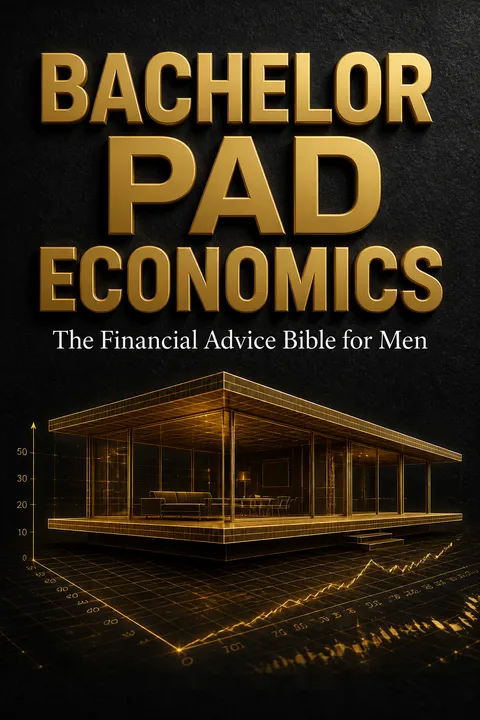
Bachelor Pad Economics is part personal-finance handbook, part anti-establishment manifesto, and part polemic about gender and social change. Its most coherent argument is that money is not the destination: it is stored labor, and financial choices should be judged by how they shape a finite life. That premise generates several useful practical questions. Does this degree plausibly improve earning power? Does this house justify its long-term costs? Does a lower spending baseline create room to leave a poor job? Can a person read the financial statements behind claims of wealth or risk?
The book's reference-guide structure serves readers who need advice on a particular decision, but its breadth also makes the quality uneven. Budgeting, debt avoidance, investment fees, liquidity, and preparation for legal or financial contingencies are concrete topics. By contrast, its claims about politics, social decline, women, and the labor market often move from personal experience to sweeping generalization. Its economic figures and market warnings reflect a 2013 context and should not be treated as current data. The dating and marriage chapters are especially ideological, so their gender theories require scrutiny rather than deference.
The deeper tension is between freedom as low obligation and happiness as human connection. Clarey argues for both: reduce commitments, yet value relationships above possessions. That tension cannot be solved by one universal lifestyle. A low-cost bachelor life may offer mobility; a family may offer forms of attachment and purpose that a spreadsheet cannot measure. The book is most useful as a provocation to make those trade-offs consciously, not as a neutral authority on every domain. Its recommendation of suicide as a retirement strategy is particularly dangerous and should be rejected outright.
Review Summary
Bachelor Pad Economics receives mixed reviews, with an overall 4.18/5 rating. Supporters praise its practical financial advice, life guidance for young men, and blunt honesty. Critics argue it's sexist and misogynistic, with some questioning its relevance beyond a specific demographic. Many readers appreciate the book's comprehensive coverage of topics like education, career, relationships, and finances. Some find it humorous and insightful, while others criticize its controversial views on women and society. The book sparks debate but is generally seen as valuable for its economic and life advice.
People Also Read










Glossary
Finiteness, Time, Happiness
Three financial-planning lensesThe book's three-part philosophical foundation for personal finance. Finiteness means a person's life ends, so choices have urgency. Time means goods and money embody human labor. Happiness, also called utility in the book, is the benefit a person receives from life, including health, security, freedom, purpose, relationships, and enjoyment.
Time Theory
Money represents human laborClarey's way of explaining economics through the human labor behind goods and services. A purchase exchanges money for work already performed by others, while wages reflect the market value of a person's specialized labor. Saving preserves some purchasing power from past work, and investing puts that value to work in hopes of future returns.
Lazy Bachelor Budget
A minimal-spending policyA simplified budgeting approach that replaces detailed tracking of many expense categories with a general rule of spending as little as practical. Clarey presents it as easier to sustain than recording every purchase and as a way to make modest spending feel normal. It is a behavioral philosophy, not a detailed system for allocating every dollar.
Minimalism
Fewer possessions, lower obligationsIn this book, minimalism means deliberately reducing possessions and recurring costs to lessen maintenance, housing needs, work demands, and dependence on employers. Clarey argues that owning less can increase mobility and free time. The term is used broadly as a life strategy, not just as an aesthetic preference for uncluttered rooms.
Sexual Market Value
Perceived dating desirabilityOften abbreviated SMV, this term describes a person's perceived desirability to potential romantic or sexual partners. Clarey applies an economic-market analogy to dating, arguing that traits such as appearance, confidence, skills, and social standing affect perceived value. It is a framework used in the book, not a validated measure of a person's worth or a scientific law of attraction.
The Tao of Steve
A dating strategy of restraintA dating approach Clarey draws from the 2000 film of the same name. It recommends appearing self-contained, showing competence, and not overwhelming a prospective partner with attention. The book presents this as a way to maintain attractiveness, but it is a strategic theory of courtship, not a substitute for mutual interest, honest communication, or consent.
The Red Pill
A metaphor for disillusionmentBorrowed from the film The Matrix and used in the book as a metaphor for rejecting conventional advice about dating and accepting Clarey's account of gender dynamics. It signals a shift in worldview, not evidence that the resulting claims are true. The book's specific conclusions should be assessed individually rather than accepted as a package.
Smith and Wesson Retirement Plan
A euphemism for suicideThe book's name for its proposal that a person use suicide to avoid late-life illness, care costs, or dependence. It is dangerous advice and is not a sound financial-planning method. End-of-life concerns should instead be addressed through qualified medical guidance, supportive conversations, and lawful advance-care planning.
About the Author
Other books by Aaron Clarey




Download PDF
Download EPUB
.epub digital book format is ideal for reading ebooks on phones, tablets, and e-readers.








