

Key Takeaways
Explore before committing decades to a life script chosen at seventeen
A costly first choice. The book opens with the author’s move from Wisconsin to Minnesota for college in 1993. Familiar summer memories, family ties, and cheaper tuition made the move seem sensible. As an adult, he says he had underestimated the winter, taxes, and local culture, while the relationships he treasured came from people, not the state itself. By the time a respected boss suggested he leave banking, he was 36 and had spent nearly two decades in the field.
Hindsight is a warning. The author cannot prove that a different choice would have produced his imagined life in South Dakota or Colorado. His point is that young people often make expensive commitments before they have enough experience to judge them. A pause to explore may cost time now, but a premature path can cost far more.
The personal story gives the argument emotional force because it shows how an ordinary decision can accumulate consequences through jobs, relationships, and housing. It also illustrates path dependence: once networks and obligations form, changing direction becomes harder. That is a useful lens for education and career choices, where early decisions can narrow later options. Still, regret is not evidence that another life would have been better. The strongest lesson is not to fear commitment, but to distinguish decisions that are reversible from those that are costly to undo.
Choose where to live before deciding what work fits you
Place shapes the questions. The book names three questions: who am I, what do I want to do, and where do I want to live? It argues that people usually try to answer them in the wrong practical order. A person does not develop in isolation: local culture, climate, available work, and the people nearby shape everyday habits and opportunities. So the author puts place first, then work, then identity.
A different life follows. Someone who loves hiking, for example, may find a more fitting community and routine near mountains than in a dense city. The author argues that a chosen setting can affect health, friendships, dating, and career options. He defines a Reconnaissance Man as someone who deliberately explores places and personal possibilities before making major life commitments.
This reverses the familiar idea that people must discover a fixed inner identity before choosing a setting. Person-environment fit offers a useful connection: a setting can make some behaviors easier, more rewarding, or more socially supported than others. A person who wants an active outdoor life may not need more discipline so much as better access to trails and companions. Yet place does not determine identity. Family obligations, disability, discrimination, and income can sharply limit mobility, and some people thrive in settings the author dismisses. The model works best as a prompt to compare environments, not a universal rule that everyone can freely relocate.
Test a hometown like a hypothesis, not a vacation destination
Three rounds of testing. The book proposes a staged way to narrow a vast country into livable options. First, make a broad survey to learn which regions attract or repel you. Next, spend roughly two weeks in about ten promising towns, looking for dealbreakers that a short visit might hide. Finally, try the best three or four for three months or longer, because novelty fades and seasons change a place.
Look for ordinary friction. A mountain town may be beautiful but lack reliable phone coverage; a pleasant lake may sit in a county with rules that change daily life. The aim is not to collect scenic photographs. It is to notice whether errands, work, recreation, and social life remain appealing after the holiday feeling wears off.
The staged approach turns a vague wish to find the right home into a sequence of information-gathering decisions. It resembles a pilot test: start broadly, invest more only when a candidate survives the first screen, and include routine conditions rather than relying on first impressions. This is especially valuable because place attachment can form quickly during a memorable trip. A limitation is that repeated stays require money, time off, and freedom to move. People with caregiving duties or precarious work may need smaller experiments, such as seasonal visits or conversations with residents, rather than a full trial year.
Demand a career-linked reason before borrowing heavily for college
Education has an opportunity cost. The author challenges the assumption that everyone should enroll immediately after high school. At 17, he argues, most people have little work experience and limited knowledge of their strengths. He cites 2016 estimates that a public degree could represent about $100,000 in costs and a private degree about $200,000, and says many graduates work outside their field or below their education level. Those figures and rates vary, but the underlying risk is clear: debt is hard to justify when the goal is still unknown.
Delay is not rejection. The book does not say college can never be worthwhile. It recommends working, exploring, and identifying a realistic career before paying for the training that career requires. A degree tied to a chosen profession is different from enrolling simply because that is what adults expect.
The useful distinction is between education as a deliberate investment and college as an automatic rite of passage. That framing invites readers to compare tuition, time, expected earnings, and alternatives rather than treating a credential as its own justification. It also preserves the option to enroll once a goal becomes clearer. The argument needs boundaries: some careers require formal degrees or licenses, and college can provide networks and learning beyond immediate wages. The book’s broad criticism of higher education is more sweeping than its strongest point. The sounder test is whether a particular program is worth its particular cost for a particular student.
Turn road miles into structured research, not aimless escape
Travel as fieldwork. The author favors driving because a car reaches small towns and rural areas, allows flexible detours, and provides time alone to think. A road trip is meant to reveal more than destinations: it exposes the landscape between them, local routines, and the practical feel of a region. He recommends researching routes and conditions in advance rather than improvising every mile.
Planning protects the trip. On a motorcycle journey toward Alaska, the author found a 136-mile stretch without fuel, longer than his bike’s 120-mile range. Route research also helped him anticipate maintenance needs and locate supplies. His broader lesson is to plan for weather, fuel, repairs, lodging, and time, while leaving enough flexibility to investigate unexpected possibilities.
The road trip is a distinctive tool in this book because it combines observation with solitude. In decision science, gathering information before a large commitment can preserve options and reduce avoidable surprises. Travel also tests assumptions against lived conditions, which online research alone cannot fully supply. But miles are not automatically insight. Driving fatigue can undermine reflection, and people without a car or travel budget can learn through shorter trips, public transit, or sustained local interviews. The useful principle is direct exposure to daily conditions, not the specific vehicle or scale of the author’s journeys.
Make exploration affordable by combining travel, work, learning, and practical skills
Stack the benefits. The practical chapters treat reconnaissance as a logistics problem: travel, lodging, food, vehicle reliability, and education all compete for money and time. The author estimates that a bare-bones two-week trip might cost about $600, while a comfortable summer on the road could approach $10,000. He suggests seasonal work, simple lodging, and learning basic vehicle repairs to make travel more feasible.
Keep learning in motion. The book groups field education into philosophy, prerequisites, career skills, and entrepreneurship. It points to online courses, CLEP and DSST exams, and remote work as possible ways to study or earn while traveling. These options require checking whether credits transfer and whether a credential is respected. The goal is to make exploration productive, not to postpone all useful work until the journey ends.
This is a strong application of constraint-based planning: one activity can serve several purposes, such as earning money while seeing a region or learning repairs while improving travel reliability. It also challenges the assumption that education must happen in one institution at one life stage. Online learning and portable skills can widen access, though they do not erase differences in broadband, time, or financial security. Remote work is not guaranteed, and low-cost lodging can bring safety and comfort tradeoffs. The most durable idea is to design exploration around actual resources rather than treating a large travel budget as a prerequisite.
Expect family pressure, then build independence before making your own choice
Freedom can carry a price. The book describes families who respond badly when a young person delays college or changes career plans. One client left community college and was cut off and forced from home. Another felt pressure to stay with a parent whose housing assistance depended partly on household composition. A third pursued chemical engineering rather than the medical career his parents wanted, supporting himself through security work while living in his vehicle.
Prepare for the emotional cost. The author also warns that travel can bring loneliness, anxiety in unfamiliar places, and judgment from peers. He suggests keeping in touch with trusted people and planning visits, while arguing that financial self-support makes it easier to set boundaries. Independence may preserve a person’s ability to choose, but it can strain important relationships.
The stories show that career decisions are rarely made by isolated individuals. Money, housing, family expectations, and cultural belonging can shape the menu of realistic choices. That makes the book’s emphasis on independence meaningful, while also revealing its limits: self-reliance is not equally achievable for every young person, and leaving a home can create serious risks. Autonomy need not mean cutting off support or treating family as an obstacle. A careful plan can include trusted adults, financial aid, community resources, and clear boundaries. The important distinction is between support that expands choice and support used to control it.
Choose a home by daily fit, not someone else's map of paradise
Screen for your actual life. To help readers start, the book evaluates places by climate, taxes and economic opportunity, scenery and outdoor activity, and access to a metropolitan area. It highlights western destinations such as Denver, Las Vegas, Utah’s national parks, and the Black Hills of South Dakota, while also considering places such as Tennessee and New Hampshire. These are the author’s preferences, not a universal ranking.
Test the tradeoffs. A scenic area may have few jobs or services; a major city may offer work and culture but bring congestion and higher costs. The author urges readers to look beyond a state’s reputation and notice local differences, seasonal conditions, and practical needs. His shortlist is a starting map for exploration, not a verdict on where every person belongs.
The screening criteria make an abstract choice more concrete: climate, work, recreation, and access can be compared instead of relying on a city’s image in popular culture. The book is most persuasive when it asks readers to identify their own dealbreakers. Its regional judgments, however, reflect one person’s tastes and political outlook, and some claims about places are presented more confidently than the evidence warrants. A useful comparison should also include healthcare, accessibility, schools, caregiving networks, and housing availability. No location maximizes every good; the aim is to find a workable combination for a particular life.
Analysis
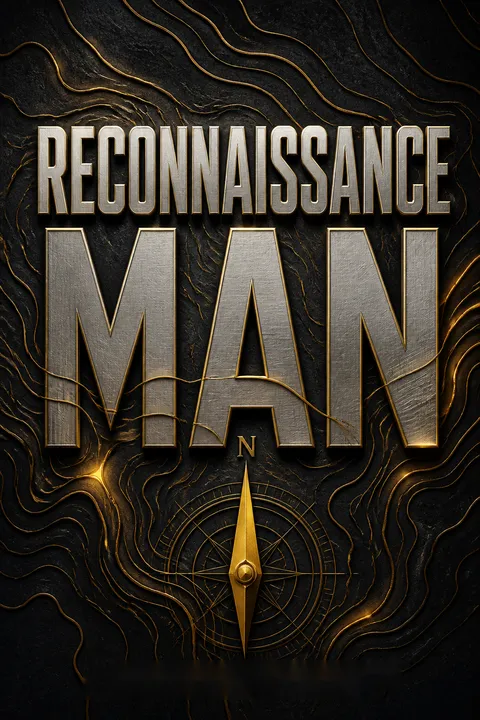
Reconnaissance Man is a memoir-inflected self-help argument built around a deliberate reversal: instead of choosing a career and then fitting a life around it, explore possible environments first, then use that experience to make better choices about work and identity. The author’s Minnesota story gives this reversal a human source. A decision that seemed reasonable at 18 became difficult to undo as work, relationships, and housing accumulated. His proposed remedy is not simply travel for its own sake, but staged investigation of the places where a person might build a life.
The book’s most useful contribution is its insistence that major decisions have context and switching costs. Its survey, focused visits, and longer trial stays form a practical method for replacing fantasy with firsthand information. The accompanying logistics advice extends the idea: research routes, budget honestly, build portable skills, and treat time away as a chance to learn. The argument also usefully separates postponing college from rejecting education altogether. It asks readers to connect expensive training to a clearer purpose.
The method is more compelling than many of the author’s supporting claims. His statistics about college costs, underemployment, and career changes are presented as variable estimates from 2016, not as a fully developed evidence base. Likewise, the book’s sharply polarized judgments about states, universities, and social groups can obscure its stronger point: people differ, and their environments should be assessed against their own needs. The author’s preferred destinations cannot serve as a neutral national ranking.
There are also real access constraints. A multi-year exploration is easier for someone with a car, savings, flexible work, good health, and few dependents than for someone without them. The book’s useful insight can still be adapted: trial a town for a week, interview people in a field, take a temporary job, or compare ordinary routines before signing a lease or taking on debt. Its lasting value lies in the decision discipline, not a prescribed itinerary: gather evidence before making commitments that are expensive to reverse.
Review Summary
Reconnaissance Man receives positive reviews for its unconventional advice to young people, encouraging exploration before settling down. Readers appreciate its candid approach to life planning, emphasis on self-discovery, and critique of traditional education paths. The book is praised for its insights on choosing where to live and its travel guide section. While primarily aimed at high school graduates, many reviewers find it valuable for all ages. Some criticisms include subjective opinions and a less informative final section. Overall, readers consider it a thought-provoking and potentially life-changing read.
People Also Read







Glossary
Reconnaissance Man
deliberate life explorerThe book’s name for a person who investigates possible places to live and ways to work before making major long-term commitments. The idea combines travel, self-reflection, practical planning, and learning about employment and finances. The aim is to make life choices with more direct experience and fewer assumptions, rather than automatically following a standard path from high school to college and career.
reconnaissance
structured life explorationIn this book, reconnaissance means methodically exploring regions and communities to learn where a person might thrive. It is not presented as aimless travel: the traveler screens possibilities, visits promising places, and tests finalists for longer periods. The process is meant to inform choices about residence, work, and personal direction before commitments such as degrees, mortgages, or family moves make change harder.
Shoulda Land
regretful alternative pastThe author’s label for imagining how life would have turned out if earlier decisions had been different. He uses it to distinguish unchangeable hindsight from a practical effort to improve future decisions. Regret can reveal what someone values, but the book argues that wishing for another past is less useful than changing how present choices are researched and made.
Four Types of Reconnaissance Education
four learning purposesThe author’s categories for learning during exploration: philosophical study to clarify principles, prerequisite coursework to meet general education requirements, employment education to develop career qualifications, and entrepreneurship education to generate business ideas. The categories frame travel as more than geographic discovery. They encourage readers to use time on the road for learning, while checking that courses, exams, and credentials are accepted by the institutions or employers that matter.
About the Author
Other books by Aaron Clarey



Download PDF
Download EPUB
.epub digital book format is ideal for reading ebooks on phones, tablets, and e-readers.








