

Plot Summary
Prologue
A girl leads her friends through a break in a fence and into the woods, where they find the abandoned Octagon House. They explore its dusty rooms but avoid the heavy metal door to the basement.
When it opens by itself, the girl sees a shape below and hears a plea for help inside her mind. Her friends leave without her, and she finally runs after them. The door shuts behind the girls, but the house has stirred, and the story passed from one girl to another will draw someone back.
The prologue turns childhood curiosity into a kind of inheritance. The girls know enough to fear the house, yet their group loyalty makes retreat feel more shameful than entering. The voice offers a personal appeal rather than a general threat, giving the house a way to recruit attention through compassion. Its final suggestion that girls return transforms the setting into an intergenerational trap: each visit is both a choice and the consequence of an earlier story. The scene also introduces the novel's central uncertainty. A child hears something real to her, but the adults and friends around her may later call it imagination.
Clare Comes Back
Three nights after Abby Lindsay is found at the Octagon House, her mother emails Clare Madden, Abby's childhood best friend, from Abby's account. Clare has left Chicago after a miscarriage, the end of her relationship with Josh, and the loss of her teaching job. She drives back to Sumner's Mills, where she grew up, but cannot make herself enter the hospital.
The next day, she learns from Rhonda, the gas-station clerk, that Abby filled her car before going to the house and had too little cash left for food. Rhonda says police dismissed the detail as irrelevant, though Abby was found in the basement with an empty pill bottle. The clues unsettle the simple suicide explanation, and Clare begins tracing Abby's final movements.
Clare's return begins as an act of duty, but her hesitation at the hospital shows how little confidence she has in her own capacity to help. She has been living by subtraction: a lost pregnancy, relationship, career, and home. Rhonda's small factual discrepancy interrupts that self-punishing drift. The gas purchase does not prove what Abby intended, but it creates a gap between the accepted account and observable behavior. Clare is pulled into the mystery because uncertainty is more bearable than accepting a tidy explanation that leaves her friend, and their shared past, unintelligible.
The First Door Closes
In 1998, fourteen-year-old Clare joins her friends Lori, Monica, and Abby at the Octagon House after Lori reveals its location. Earlier that day, Abby had taken a photograph of Clare's dead mother from Clare's belongings, hoping to feel close to a woman she had never met. Hurt and angry, Clare later urges Abby to investigate the basement.
When Abby steps onto the stairs, Clare shuts the heavy metal door, intending only to frighten her. It sticks, trapping Abby in the dark while Lori and Monica help pull it open. Clare later sees the door slide shut by itself. The girls leave, but Abby has seen something below, and Clare cannot decide whether her own cruelty or the house is to blame.
The first visit binds the supernatural disturbance to an ordinary act of adolescent retaliation. Clare's motive is recognizable, even small, which makes the consequence harder to dismiss as fate. Abby's interest in Clare's mother is not mere curiosity; she envies the secure love she imagines Clare received and borrows the photograph to enter that imagined family. Their intimacy already contains asymmetries of grief and belonging. The door makes those emotional pressures physical: Clare chooses to close it, then loses control of what closure means. Her uncertainty becomes a template for the adult guilt that follows.
The Fischers Move In
In 1965, Ben Fischer moves his wife Natalie and daughters Joan and Molly into the isolated house. He takes a monotonous job at Sumner's Metals while Natalie manages the unfinished wiring, lack of a telephone, and long days alone. Joan, an observant eight-year-old who records birds and other discoveries in a sketchbook, complains of a sound in the house and tells Ben she has found a doll in the basement.
He is rushing to work and promises to look later. Natalie, already uneasy about the door and the darkness, keeps a rifle nearby because she fears animals and unseen visitors. The family tries to treat its troubles as ordinary adjustment, but the children are drawn toward the basement and the adults keep postponing a reckoning.
The Fischer family enters the house carrying pressures that can be explained without haunting: isolation, money, exhaustion, and a father's dwindling attention. That realism matters because the supernatural does not replace ordinary vulnerability; it exploits it. Joan's sketchbook gives her a way to be noticed, while Ben's promise to return later reveals how care can fail through delay rather than malice. Natalie responds to danger with vigilance, but her isolation also makes her fears easy to discount. Each family member perceives a different part of the threat, and no one has enough trust or information to assemble the whole.
The Night Goes Missing
After the daytime visit, Clare and Abby make a fragile peace, then go with Lori and Monica to a party. Clare feels left out as Abby gets high with new acquaintances, while she discovers Monica with Abby's brother Paul and retreats into the woods.
Mitchell finds the girls after fighting Paul and drives Clare and an intoxicated Abby away. At Clare's suggestion, he takes them to the Octagon House. While Abby sleeps in the car, Clare and Mitchell explore upstairs and kiss.
A noise sends them searching; the car door is open, and Abby has vanished. Clare hears her calling from below, where she finds the doll and helps Mitchell carry Abby out. Abby is catatonic at the hospital. Clare says little about the basement, and the friends' closeness breaks under silence.
The second visit grows from adolescent longing and social exclusion, not from a deliberate attempt to harm Abby. Clare follows Mitchell partly to preserve a private connection with him, while Abby's intoxication and impulsiveness make her vulnerable in a place already associated with fear. The novel refuses to let one motive explain the disaster: desire, peer pressure, resentment, and the house's apparent agency converge. Clare's silence afterward is protective in the short term, but it prevents Abby from having her experience believed. Their separation begins not with a clean betrayal but with competing memories that neither girl can safely share.
Taylor Hears the House
Back in the present, Clare reconnects with Lori, now a farmer and mother of three, and learns that Lori's stepdaughter Taylor has been drawn to the house. Taylor has been sleepwalking, losing friends, and heading there during school hours after seeing something near the basement door.
Clare listens because she too has dreamed of the house since Abby's emails began. Those messages arrived during Clare's pregnancy; after months of fear and sleeplessness, she miscarried, lost her job, and later separated from Josh.
At her father's empty home, she finds Abby's pink letter, left before Abby disappeared. Its warning directs her to revisit the beginning. Clare also discovers that her childhood memory of the basement contains more than she admitted.
Taylor makes Clare confront the possibility that the house's influence is repeating rather than belonging only to her generation. The resemblance is not simply supernatural: both girls are isolated, frightened, and unsure which adults will take them seriously. Clare's grief over her daughter intensifies her need to find causation, but the story does not establish that Abby's emails medically caused the miscarriage. It shows instead how trauma links events in the mind, making coincidence feel like accusation. Abby's letter converts the mystery into a responsibility Clare can act on, even as she remains uncertain whether action will help or deepen the danger.
The Builder's Family
Clare visits Marion Janssen, the elderly owner of the house, pretending to research local history. Marion reveals that her brother George Sumner built the Octagon House in 1936 for a bride who disappeared before they married.
Decades later, she sold it to the Fischers, then regained ownership after their tragedy. Her daughter Rhonda interrupts and confirms that the house remains a local hazard. Clare learns the murdered family were Ben, Natalie, and their daughters, and that Ben's murder conviction was recently overturned because of legal errors and weak evidence.
He now lives in a nearby nursing residence. The discovery gives Clare a person to question, but Marion's account leaves the house's first disappearance unexplained and its owner unwilling to speak plainly.
Marion's history destabilizes the town's familiar story of a husband killing his family. Ben's overturned conviction does not establish innocence, but it reopens a case whose apparent certainty has depended on the absence of other explanations. Marion's attachment to the house is both familial loyalty and a form of avoidance: she has protected her brother's building while withholding the knowledge that might expose its origin. Rhonda represents the practical counterforce, focused on property risk and liability. Their disagreement reveals how communities manage frightening history by converting it into either a nuisance or a private secret.
A Sketchbook Opens
At Three Pines, Clare finds Ben asleep and meets Ruth Ann, a care aide who has befriended him. Ruth Ann shares his sketchbook, explaining that he used to draw birds for her autistic son before Abby's visits unsettled him.
The newer pages show Ben reconstructing his family and the basement. Hidden in the binding are Joan Fischer's death certificate and a letter reporting that she survived the attack but died years later in an institution. Two newspaper clippings concern Alice Carey and her daughter Grace, who vanished in 1936, before the Fischers arrived.
Their belongings, including a doll, may connect the disappearances. The records and drawings turn the house from a single crime scene into a history of missing people that Clare cannot yet interpret.
Ruth Ann's connection to Ben gives the investigation an ethical dimension: she values him as a person rather than reducing him to a notorious criminal. His bird drawings offer care through attention, a quieter form of knowledge than the official records that condemned him. The papers hidden in the sketchbook show how private memory can preserve what institutions omit, but they do not yet provide a complete account. Joan's life after the attack complicates the boundary between survival and recovery. By linking her fate to Alice and Grace, the evidence enlarges the mystery while insisting that each name belonged to a life, not merely a clue.
Alice and Grace
In 1936, Alice Carey is raising her six-year-old daughter Grace while relying on George Sumner's promise of marriage and a home. George has built the Octagon House for them, but Alice feels uneasy there and knows he resents Grace. During an argument, George strikes Alice; Grace escapes after he blames her for the conflict.
Alice and her daughter flee through the woods, and Grace tells her that George put her doll, Tabitha, in the basement. Despite the danger, Alice lets George's sister Marion persuade her to give him another chance. Soon afterward, Alice and Grace disappear. Marion later finds signs of blood in the house but stays silent to protect her only family. The missing pair become the first buried truth behind the house.
Alice's predicament is shaped by economic precarity and social judgment. George offers security, but his generosity is conditional, and his treatment of Grace exposes the violence underneath his dream of a family. Alice's return is not best understood as foolishness; Marion's reassurance and the absence of reliable alternatives narrow her choices. Marion's silence, meanwhile, demonstrates how loyalty can preserve a loved one at the cost of another person's safety. The doll carries Grace's account across decades, a small object that adults repeatedly misread or suppress. The house's history begins with an act of coercion made possible by people choosing the explanation they can bear.
The Last Fischer Night
On the night of August 22, 1965, Joan follows the basement's insistent sound and brings her three-year-old sister Molly with her. She hopes to find the doll and meet the strange girl she has glimpsed there. Natalie arrives with the rifle as the darkness seems to close around her daughters.
A shot rings out; Molly collapses, and Joan is strangled or struck in the confusion. Ben, outside when the gun fires, returns to find Natalie dying and both children in the basement.
Police interpret the scattered evidence as proof that Ben killed his family, and a jury sentences him to prison. Joan survives, but later dies after years of severe trauma. Ben's memory remains fractured, leaving the exact sequence uncertain even as his conviction is overturned.
This account preserves the novel's crucial uncertainty: Ben remembers enough to challenge the prosecution's version, but not enough to offer a neat alternative. The family tragedy is both supernatural horror and institutional failure, with the police turning ambiguous evidence into certainty and the legal system punishing the person least able to explain himself. Joan's attempt to protect Molly is an extension of her curiosity and affection, not a simple recklessness. Natalie's fear is also real, even if its object is unclear. The scene resists a single cause because trauma, the house, and human choices overlap without becoming interchangeable.
Abby's Body Answers
When Clare finally visits Abby, she traces their old triangle sign on Abby's palm and asks what happened in the basement. Abby's fingers twitch, then her body convulses in a severe seizure. Doctors transfer her to a neurological unit in Buffalo, where her parents prepare for uncertain decisions about life support.
Clare later studies the box they bring: old newspaper clippings, sketches of the rag doll, and pages from Ben's sketchbook. Abby had researched homemade dolls and marked the reports of the Fischer murders, trying to identify the figure she saw. The evidence shows that she had not simply returned to die; she was pursuing an explanation. Clare recognizes that the doll predates the Fischers and turns again to Marion.
The seizure sharply limits Clare's fantasy that personal recognition can repair Abby's condition. Her old hand signal briefly bridges their shared history, but it cannot substitute for medical care or the years of illness Abby has endured. The notebook changes the meaning of Abby's investigation: her trip was an attempt to understand the house, even if despair and mental illness were also part of her life. The narrative takes care not to make paranormal belief a diagnosis or to make diagnosis erase the mystery. Clare must hold both realities, the evidence of psychiatric suffering and the possibility that Abby saw something others did not.
Marion Finally Speaks
Clare returns to Marion, who is now bedridden, and shows her the doll drawings. Marion recognizes Tabitha, the doll she made for Grace. She reveals Alice's letter asking for help after Grace vanished, then admits she once saw blood in George's house and kept quiet because she was a frightened child dependent on her brother.
Rumors had circulated about young strays George took into the woods, who later disappeared. Marion believes George's possessive love made him dangerous and asks Clare to destroy the house. As she leaves, Clare receives Taylor's message: the girl is going back, carrying gasoline. Clare understands that the cycle is reaching another child and races to stop her.
Marion's confession does not absolve her; it makes her silence legible without making it harmless. At thirteen, she feared losing her brother and lacked the authority to force a search, yet the truth she withheld allowed the town to settle into a false account. Her request to destroy the house is a late attempt to convert memory into protection. Taylor's message changes Clare's investigation from retrospective reconstruction to immediate intervention. The novel's inherited pattern is not inevitable, but it becomes dangerous when adults mistake secrecy for loyalty and children have to carry evidence alone.
The Tunnel Below
Clare reaches the clearing and finds Taylor with a gasoline can. She sends Taylor back toward safety, then enters alone. The basement door stands open, marked with Abby's broken triangle. Below, Clare finds another triangle on a crumbling wall; behind it runs a tunnel beneath the clearing.
A cache of possessions includes the Fischer family quilt, Alice's belongings, and Abby's shirt, evidence that someone has used the hidden passage to collect or hide traces of the vanished. The rag doll rests nearby.
Clare sees Grace's ghost holding it out, then glimpses the menacing figure of George blocking the stairs. Rather than leave him untouched as another impossible vision, Clare grabs his clothes and pulls him down into the darkness. The door shuts, trapping her below.
Clare's descent is an act of investigation and self-confrontation, but it is also perilously close to self-destruction. The hidden tunnel turns rumor into material evidence: the house has an architecture designed to conceal movement and preserve possessions. Abby's symbols function as an act of communication from someone Clare once dismissed. Most important, Clare chooses physical contact with the figure she has spent years explaining away. Whether the encounter is supernatural, traumatic, or both, her decision marks a change from passive guilt to intervention. Yet the act does not make her invulnerable; she remains trapped and must be rescued by others.
Smoke and Forgiveness
Lori and Mitchell pull Clare from the basement before the fumes and spilled gasoline kill her. Taylor is safe, and the house burns while Lori keeps the fire from spreading. In a nearby hospital, Clare learns that she has a cracked rib and admits to Lori that she had not been sure she wanted to survive. Mitchell returns, and Clare tells him she shut the basement door on Abby as a child.
He forgives the frightened fourteen-year-old she was, while urging her to forgive herself rather than claim responsibility for Abby's illness. In a final dream, Ben takes the pills he had hidden and turns toward the burning house. He appears to choose death in hopes of rejoining his family, though his fate is not confirmed in waking scenes.
Rescue makes the novel's relational argument concrete: Clare cannot solve the past alone, and surviving requires allowing other people to act for her. Lori's care is practical and emotionally perceptive; Mitchell's anger gives way to an account of responsibility that distinguishes a childhood cruelty from the course of Abby's illness. Clare's confession does not erase harm, but it ends the secrecy that kept guilt limitless. Ben's final dream offers no judicial repair for decades lost in prison. His imagined return is poignant and troubling, a private release that cannot restore the family or correct the institutions that failed him.
Epilogue
Six months later, the house has been cleared and the basement filled. Clare finds Tabitha in the pocket of her old jacket, cleans and mends her, then buries the doll beneath the lavender her mother planted. Taylor helps, recognizing the doll as the figure from the house. In the following months, Clare visits Abby through rehabilitation; Abby regains consciousness and works toward walking again.
She and Clare eventually discuss what happened, allowing that both can remember it differently without either being called a liar or crazy. In spring, crocuses flower over the former house site. Clare returns with Lori and Taylor, then stays alone in the clearing, newly pregnant and able to imagine a life ahead.
The epilogue resolves the story through acts of care rather than a complete explanation. Burying Tabitha gives Grace a ritual of mourning she was denied, while placing the doll in the lavender garden joins the house's recovered past to Clare's own family memory. Abby's rehabilitation is deliberately gradual; waking is only the beginning of recovery, not a supernatural cure. Her later conversation with Clare holds two accounts at once, replacing the demand that one friend must be wrong. The flowers and pregnancy offer renewal without implying that grief has vanished. Clare can carry loss and still make room for a future.
Analysis
Beneath the Stairs treats haunting as an encounter between unresolved history and the ordinary mechanisms by which people decide whose account deserves belief. The Octagon House is frightening not only because it may contain a supernatural presence, but because its past has been repeatedly converted into convenient explanations: a bride ran away, a father murdered his family, a troubled woman attempted suicide, a child imagined a voice. Those explanations contain partial truths, yet they also suppress what the evidence cannot comfortably hold.
Clare's guilt is the emotional engine of the present-day plot. She interprets Abby's illness, her miscarriage, and the end of her relationship as consequences she might have prevented. That impulse gives her a reason to investigate, but it also risks turning care into a demand for total control. The story draws an important distinction between responsibility for a specific childhood cruelty and responsibility for another person's illness or survival. Clare's eventual honesty matters more than an imagined perfect rescue: she acknowledges what she did without claiming that it explains everything that followed.
The novel also examines how mental illness and the paranormal can be falsely framed as mutually exclusive explanations. Abby has a serious, long-standing condition, and her history of crisis is real. So are the material traces she investigates, including the doll, hidden belongings, and tunnel. The narrative does not make supernatural belief a substitute for treatment, nor does diagnosis prove that every perception is unreal. Its strongest ethical claim is that listening should precede dismissal, especially when a vulnerable person reports fear.
Finally, the house's repeated victims expose the cost of private loyalty. Marion's love for George helps explain her silence, but it cannot undo the danger that silence allowed. Against that legacy, the closing rituals are modest and human: rescue, confession, burial, rehabilitation, and spring flowers. They do not erase suffering. They make continued life possible without requiring every wound to become a lesson or every mystery to be solved.
Review Summary
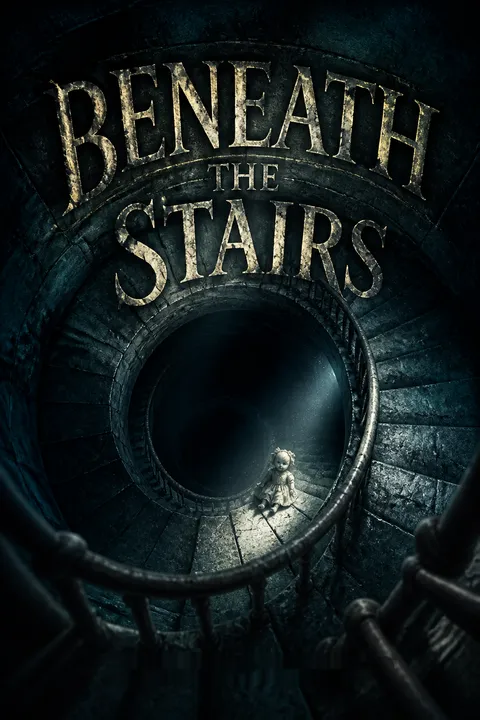
Beneath the Stairs by Jennifer Fawcett is a haunting debut novel about a creepy octagonal house and childhood trauma. Many readers found it atmospheric and engaging, with well-developed characters and an intriguing plot. The story alternates between multiple timelines, exploring the house's dark history. While some praised the suspenseful writing and gothic elements, others felt it was too slow-paced or repetitive. Critics noted unresolved plot threads and a somewhat disappointing ending. Overall, reviews were mixed, with most readers appreciating the eerie atmosphere but some finding the execution lacking.
People Also Read









Characters
Clare Madden
The returning witnessClare is a former teacher and the novel's central narrator. As a girl, she shared an intense friendship with Abby, but grief over her mother's death made her wary of emotional dependence and quick to retreat when relationships became painful. As an adult, she arrives in Sumner's Mills after a miscarriage and the end of her partnership with Josh, telling herself she will leave as soon as she helps Abby. Her habit of turning guilt into a private verdict shapes how she interprets both the house and her own losses. Clare is perceptive, compassionate with children, and less generous toward herself. Her struggle is to distinguish responsibility from the wish to control outcomes she could never have controlled.
Abby Lindsay
The haunted childhood friendAbby is Clare's closest childhood friend, a younger girl who skipped a grade and often felt overlooked in her busy family. She is imaginative, emotionally direct, and hungry for signs that she belongs. Her fascination with Clare's mother comes from longing for the patient, attentive parent she imagines Clare had. As an adult, Abby lives with serious mental health struggles and a history of treatment and repeated crises. She is not reducible to either her diagnosis or her visions. Her insistence that the basement experience mattered tests the trust between her and Clare, while her loyalty to their childhood bond remains present even after years apart.
Mitchell Lindsay
The burdened older brotherMitchell is Abby's older brother, admired by his younger siblings and treated by his parents as the capable one. As a teenager, his confidence and attention awaken Clare's first intense crush. As an adult, he works overseas and carries a private conviction that his choices contributed to Abby's suffering. His role in the family has trained him to suppress his own distress so he can be useful to others. He is protective, sometimes blunt when fear takes over, and reluctant to expose the parts of himself that feel messy or uncertain. His connection with Clare is complicated by their shared past, old attraction, and the care they still feel for Abby.
Lori
The farm's fierce guardianLori is Clare's childhood friend and the daughter of the family whose farm borders the woods. Direct, practical, and quick to anger when frightened, she has built a life around farm work, her husband Matt, and their children. Her bluntness can sound dismissive, especially when she wants a frightening problem to have a manageable explanation. Yet she notices when people need food, shelter, or company, and she acts decisively when a child is at risk. Her relationship with Clare carries old affection alongside the awkwardness of years without contact.
Taylor
The next girl drawn inTaylor is Lori's stepdaughter, a preteen negotiating the return of her birth mother and the strain of a complicated household. She resents being managed by Lori, but her guardedness hides fear and a desire to be believed. After entering the Octagon House with friends, Taylor experiences disturbing dreams and feels compelled to return. She is resourceful enough to seek help from Clare and determined enough to make dangerous plans on her own. Her situation echoes Clare and Abby's adolescence without making her merely a copy of either girl.
Ben Fischer
The imprisoned sketch artistBen is an artist who once tried to support his wife Natalie and daughters Joan and Molly in a remote house. His work at the local factory leaves him exhausted and isolated, and his careful bird drawings reveal a more attentive side than the town's judgment allows. After his family is found dead or injured, police and courts treat him as the only plausible culprit. Decades in prison and later illness leave him with fragmented memories and a deep need to understand what happened. His sketchbook becomes a quiet record of love, grief, and the limits of recollection.
Marion Janssen
The keeper of old secretsMarion is George Sumner's younger sister and the longtime keeper of the Octagon House. She values local memory, family obligation, and the traditions that give a place continuity. As a girl, she was devoted to her brother and close to Alice and Grace, which left her caught between affection and alarm. In old age, she is physically frail but stubborn about the promises she has made. Her silence reflects both fear and a painful effort to protect the only family she had. She represents the cost of preserving a family story by hiding the people harmed within it.
Alice Carey
A mother seeking safetyAlice is a young mother raising Grace without a husband in a town quick to judge her. She is resourceful, attentive to beauty, and skilled at making worn things last. George's promise of marriage and a home offers material security, but Alice senses the danger in his possessiveness and tries to protect her daughter. Her choices are constrained by poverty, social stigma, and limited alternatives. She wants a stable home for Grace, yet her own longing for safety can be turned against her. Through Marion's memories, Alice emerges as a person whose disappearance was not simply a local rumor.
Grace
The child with TabithaGrace is Alice's six-year-old daughter, quiet around adults and more at ease with her doll and the natural world. She has learned caution from a short life without much kindness, so George's attempts to win her trust do not persuade her. Her bond with Tabitha gives her a small source of comfort and a way to describe danger when adults doubt her. Grace's story connects the house's earliest history to the later children who encounter it. She is a child whose perceptions are easy for grown-ups to dismiss.
George Sumner
The house's possessive builderGeorge is Marion's older brother, an ambitious builder from the family that once dominated Sumner's Mills. He constructs the Octagon House as a home for the large family he hopes to have, investing the building with his ideas about love, ownership, and belonging. He can be serious and attentive, but his need to be loved on his terms makes him difficult to oppose. People around him struggle to separate affection from fear, especially when he presents control as devotion. His role in the house's history is filtered through memories, records, and the people who survived him.
Natalie Fischer
An isolated young motherNatalie is Ben's wife and mother to Joan and Molly. She is practical and determined to make an unfinished country house livable, but the lack of a phone, money, and company wears on her. She worries about the basement, her children's safety, and the possibility of danger in the woods. Her fear is repeatedly treated as fatigue or imagination, including by people who care for her. Natalie wants to protect her daughters while holding together a family under pressure, and her story shows how isolation can distort even reasonable attempts to assess risk.
Joan Fischer
The observant eldest daughterJoan is Ben and Natalie's eight-year-old daughter, a lanky, curious child who records birds, plants, and discoveries in a sketchbook. She is close to her father and longs for his attention as his work makes him increasingly tired. Joan hears a strange sound in the house and becomes fascinated by what she finds near the basement. Her curiosity is grounded in a child's careful observation, but the adults around her cannot recognize how frightened she is. She is protective of her younger sister, Molly, even when her own understanding of the danger remains incomplete.
Molly Fischer
The younger Fischer childMolly is Ben and Natalie's three-year-old daughter, affectionate, stubborn, and still reliant on familiar comforts such as her stuffed owl. Joan watches over her and tries to keep her safe. Molly's dependence makes the family's isolation especially consequential, since she cannot understand or navigate the house's dangers on her own.
Rhonda
The wary local gatekeeperRhonda runs the village gas station and is Marion's daughter. She distrusts outsiders and resents the burden her mother's attachment to the Octagon House places on the family. Blunt and watchful, she notices practical details others dismiss, including Abby's unusual purchases. Her irritation masks worry about her mother and about the legal and physical risks of leaving the house standing.
Ruth Ann
Ben's careful aideRuth Ann works at the nursing residence where Ben lives and understands how easily residents are reduced to diagnoses or past accusations. She becomes protective of Ben after seeing how other staff treat him. His bird drawings create a meaningful connection with her autistic son, giving her family a source of comfort. Ruth Ann is direct about her own limits and wary of Clare at first, but she shares what she knows when she realizes Clare is seeking understanding rather than sensational details.
Monica
The social strategistMonica is one of Clare's childhood friends, socially confident and skilled at drawing attention. She often turns other people's homes and secrets into entertainment, leaving Abby and Clare to manage the emotional consequences. Her sharpness is part performance and part adolescent self-protection. Monica understands how status works among girls, but she is less attuned to how her curiosity can violate another person's boundaries.
Josh
Clare's former partnerJosh is Clare's former partner, a natural-history museum worker who loves insects and shares her curiosity about the outdoors. He is patient, funny, and inclined to meet conflict with calm rather than confrontation. Their relationship gives Clare a model of ordinary trust and shared plans, including the hope of having a child. After their life together breaks apart, Josh's steady devotion becomes a source of both comfort and painful contrast for Clare.
Ted Lindsay
Abby's devoted fatherTed is Abby's father, a gentle and worried parent who has spent years trying to keep his daughter safe. He is especially close to Abby, who turns to him in moments of fear. His commitment can become overprotective, but it grows from long experience with crises and the helplessness of watching someone he loves suffer. He clings to hope when others fear that hope may prolong pain.
Caroline Lindsay
Abby's determined motherCaroline is Abby's mother, a practical parent who works to support a busy household and protect her children. She welcomes Clare as someone who once mattered deeply to Abby, while carrying her own guilt about what she may have missed. Her anxiety is sharpened by years of trying to understand Abby's needs and navigate medical decisions. She and Ted love their daughter fiercely, though they do not always agree on what care and hope should require.
Paul Lindsay
The combative middle brotherPaul is Abby and Mitchell's older brother, loud, quick to challenge authority, and often careless with his younger sister's feelings. His conflict with Mitchell reflects a family in which sibling affection and competition frequently occupy the same space.
Plot Devices
The Octagon House
A place that recruits visitorsThe isolated house is both a deteriorating structure and the center of a local story repeated among generations of girls. It attracts people through rumor, dares, family history, and the sense that something inside is asking for help. Its different rooms carry different kinds of memory: the bright lookout, the damaged living spaces, and the dangerous basement. The house's pull is not universal, which leaves characters arguing over whether it is a haunting, a psychological response, or both. As a plot device, it links separate histories and makes old harm recur in the present.
The Basement Door
A threshold that trapsThe oversized metal door opens or closes unpredictably and can be difficult to pull from either side. Its mechanical strangeness makes it plausible that a child could become trapped, while its cold air and apparent agency encourage the characters to imagine something more. Below it, the hidden tunnel connects the house to the woods and conceals possessions associated with missing people. The door is therefore both an immediate physical hazard and a boundary between public history and buried evidence. Its recurring movement turns a single childhood accident into the novel's central image of access, denial, and escape.
Tabitha the Doll
A witness carried through timeThe rag doll first belongs to Grace, who receives it from Marion and keeps it close. Later children glimpse the doll in the basement without knowing whose it was, and Abby researches old-fashioned dolls to identify it. The object travels across the novel's histories as a tangible link between Grace, the Fischer girls, and Clare's present investigation. Its appearance can be read as bait, a message, or the remnant of a child's attachment. Unlike a legal record, the doll preserves no explanation; it demands that someone recognize its owner and respond with care.
The Broken Triangle
A private signal of trustClare and Abby develop two triangle marks as a secret language: one signals distress and the other reassures the friend who receives it. The marks carry their shared childhood intimacy into the present, where Clare uses one to reach toward Abby in the hospital. Abby also leaves the distressed sign at the house, turning a familiar private symbol into a clue. Its meaning shifts from reassurance between friends to evidence that someone needs help. The symbol works because its history is relational, not merely coded; Clare understands it because she once learned how Abby asked to be seen.
Records and Drawings
A broken archive of memoryNewspaper clippings, letters, a death certificate, and Ben's sketchbook gradually challenge the accepted story of the house. Each source is incomplete: newspapers repeat official conclusions, Marion's letter reveals only what she dared to record, and Ben's drawings preserve images that his memory cannot fully explain. Abby collects and marks these materials before Clare knows what she is seeking. The archive gives the mystery a causal trail without providing a single authoritative narrator. Its fragments show how institutions can create certainty from weak evidence and how private acts of recording can keep an erased person in view.
Download PDF
Download EPUB
.epub digital book format is ideal for reading ebooks on phones, tablets, and e-readers.








