

Key Takeaways
Use measurement to extend thought beyond what the mind can hold
A cognitive scaffold. Humans can usually recognize only three or four items at a glance. Older tally bones, including the roughly 33,000-year-old Wolf Bone, may show people using notches to keep track of quantities that exceeded this limit. Measurement externalizes memory, turning a fleeting impression into something that can be counted, compared, and shared.
From tokens to ideas. In ancient Mesopotamia, clay tokens used to record goods were pressed onto sealed clay containers. Those impressions developed into written signs, while separate symbols for objects and quantities helped create formal numbers. Lists then made it possible to sort experience into categories. Measurement did not simply record a world already understood. It gave people tools for thinking about it differently.
What's striking is that measurement begins as a cognitive aid, not a cold mathematical doctrine. A mark on bone or clay lets thought travel beyond one person's memory and one moment in time. The same move also changes what can be noticed: categories become easier to compare once they are written down. That power is double-edged. A list can make a daunting task manageable, but it can also make the unlisted seem irrelevant. The useful question is not only what a system counts, but what its categories cause people to notice or overlook.
Treat every unit as a choice about what deserves attention
Measurement selects. A measurement isolates one feature of a complicated world and temporarily sets the rest aside. A nilometer, essentially a marked scale beside the Nile, recorded flood depth. Egyptians used its readings to anticipate harvests, manage food stores, and set taxes. The number mattered, but so did the decision to treat water level as a signal of the nation's future and the ruler's standing with the gods.
Order has a viewpoint. Measurement can reveal important patterns while narrowing attention to what the instrument records. William Blake's image of Isaac Newton hunched over a compass captures that risk: intense calculation can miss what lies outside the measured frame. Measurement is a human practice, not a feature of the world waiting to be plucked untouched from nature.
Measurement resembles a spotlight: it makes a chosen feature legible while leaving the surrounding scene dim. That is why questions of purpose and authority belong alongside questions of accuracy. A flood gauge can support food planning, but if its readings also justify a ruler's claim to divine approval, the same figure serves more than one agenda. The point is not that every measure is biased in the same way. Rather, a number's apparent neutrality cannot answer who chose the variable, who interprets it, or who bears the consequences.
Build shared standards that let strangers trade without trusting each other personally
A social contract in practice. A unit becomes useful beyond one household when people can agree on what it means. Archaeologists studying more than 2,000 Bronze Age weights found that standards used across distant regions varied by only about 9 to 13 percent. Merchants could compare weights directly, creating a kind of community enforcement without a central authority.
Fairness needs verification. Variable measures also created openings for fraud. Medieval grain sellers could manipulate capacity by shaking or heaping a container, changing how much it held. Communities responded with rules, inspectors, and public standards. In Italian towns, lengths were cut into stone walls so traders could compare their measures against a durable reference. Trust grew not from good intentions alone, but from ways to check a claim.
Shared standards function like public infrastructure: their value lies partly in the coordination they make possible between people who do not know one another. This does not require every measurement to be imposed from above. Repeated comparison among traders can stabilize expectations, while public reference points give disputes somewhere concrete to land. Yet the standard itself is not enough. People also need access to the means of checking it, and consequences for manipulation. A rule that only officials can verify may create order, but it can also leave ordinary users dependent on the very authority they are meant to trust.
Let measurement test nature instead of merely confirming inherited explanations
Observation can overturn authority. For centuries, many European scholars treated abstract reasoning as more reliable than observations of a changing material world. That balance shifted as natural philosophers began collecting precise records and testing claims. Tycho Brahe documented a new star in 1572, challenging the belief that the heavens never changed. His careful observations gave Johannes Kepler the evidence to describe planetary motion with mathematical laws.
Instruments make new questions possible. The mechanical clock divided time into regular units, helping synchronize work and prayer. Thermometers transformed heat from a felt quality into a comparable reading. But reliable scales took time to establish. Celsius's first scale put water's freezing point at 100 and boiling point at zero, a reminder that even familiar scientific measures have histories and human-made conventions.
The scientific shift described here is not simply a victory of numbers over superstition. It is a change in what counts as persuasive evidence. Measurement lets observations accumulate until a respected explanation can no longer contain them. Instruments also alter the questions researchers can ask: once temperature becomes comparable, claims about heat can be tested across settings. Still, a precise instrument does not interpret itself. Measurements gain scientific force through repeated observation, shared procedures, and willingness to revise assumptions when results resist them.
Remember that universal measures can equalize exchange and centralize power
A revolutionary promise. Before the French Revolution, France had more than 1,000 recognized units of measure and an estimated 250,000 local variations. Peasants and merchants alike wanted greater consistency. The new metric system aimed to replace inherited local measures with units based on the Earth, linked together, and divided decimally. Its designers imagined that a common system would make trade fairer and calculation easier.
A universal ideal, imperfectly made. The metre was defined as one ten-millionth of the distance from the North Pole to the equator, and the kilogram as the mass of a cubic decimetre of water. The survey to establish the metre took seven years and revealed an irregular Earth. Its final value included errors, and early enforcement often frustrated the people the system was meant to help. Standardization simplified exchange, but also strengthened central administration.
The metric project shows how equality and control can arrive in the same package. A shared unit can reduce opportunities for local fraud and make exchange across regions simpler. Yet a universal system also makes populations and property easier for governments to compare, tax, and manage. Its legitimacy therefore depends on more than elegant design. The people expected to use a new system need a voice in its creation and a practical path to adopt it. A measure can be mathematically coherent while remaining socially coercive.
Read maps as instruments of rule, not neutral pictures
The landscape made legible. In the United States, the Public Land Survey System divided much of the country into regular square plots. A typical township measured six miles by six miles, and land could be identified through a simple grid reference. The system helped the federal government sell land, direct settlement, and reduce boundary disputes. Over time, its rectangular pattern covered more than 1.8 billion acres.
A grid can erase prior claims. The surveyed land was not empty. Native nations had histories, uses, and territorial claims that did not fit neatly into the new parcels. The grid helped settlers and officials treat land as transferable property, while treaties and boundaries could be used to restrict Indigenous movement. The same surveying tools that organized ownership also supported dispossession and the expansion of slavery in the Mississippi Valley.
A map is not only a description of space. It is also a proposal for how space should be governed. A grid makes certain actions easy, such as selling a parcel or recording a title, while making other relationships harder to represent, such as shared use, seasonal travel, or sacred attachment to place. This is a general feature of administrative categories: they do not need to be false to be incomplete. The crucial safeguard is to ask whose knowledge the map preserves, whose it excludes, and whether excluded people can challenge its authority.
Use averages to spot patterns, never to erase individuals
Patterns at population scale. In the seventeenth century, John Graunt analyzed London's weekly records of births and deaths, using them to estimate population and identify public health patterns. Later, Adolphe Quetelet applied statistical methods to human measurements and presented the average person as a meaningful type. Statistics made broad social patterns visible, but the average was a summary, not a portrait of any one person.
A number can harden into a verdict. Francis Galton used statistics to argue that intelligence and social worth were inherited, helping lay foundations for eugenics. In 1927, Carrie Buck was forcibly sterilized after authorities labeled her feeble-minded, despite evidence that she had ordinary intelligence. Statistics can guide reform, as in Charles Booth's maps of poverty, or disguise prejudice as objective fact.
Averages are powerful precisely because they compress variation. That compression can reveal conditions no individual case can show, such as the scale of urban poverty or a changing pattern of disease. But a population-level description becomes dangerous when treated as a sufficient account of a person. The distinction between a useful summary and an individual judgment needs to remain explicit. Any statistic used to allocate education, care, or rights should be examined for how its categories were formed and whether affected people can contest the conclusion.
Trust precision, but inspect the human choices hidden inside it
From metal to constants. For more than a century, the kilogram was defined by a metal cylinder kept in France. Comparisons showed that it had diverged from its companion standards by an average of about 50 micrograms. In 2019, the kilogram was redefined using Planck's constant and measurements made with a Kibble balance. The metre had already been tied to the distance light travels in a specified fraction of a second.
Stable does not mean simple. Defining units through constants makes them independent of one vulnerable object, but reproducing the kilogram this way requires highly sophisticated equipment. Bruno Latour's term blackboxing describes how successful technical work becomes hidden behind a seemingly simple result. The polished definition conceals years of measurement, choices, and correction. Precision is a collective achievement, not evidence that human judgment has disappeared.
The move from a metal artifact to a constant of nature is a remarkable attempt to make standards reproducible beyond any single vault or nation. Yet universal availability in principle is not the same as equal access in practice. A laboratory must have the expertise and equipment to realize the definition. This matters because public trust depends not only on stable results, but also on understandable routes for checking them. Technical opacity can be justified by accuracy, but it should not be mistaken for the absence of decisions or institutions.
Question metrics when incentives turn the score into the goal
A measure can distort its target. In factories, scientific management broke work into timed motions so managers could standardize and speed up production. In the Vietnam War, US forces used enemy body counts as a measure of progress. The incentive to raise the total encouraged fabricated reports and civilian deaths recorded as enemy casualties. A statistic that appears to track success can alter behavior until it no longer represents success at all.
Ask what the number rewards. The book describes this broader habit as metric fixation: treating measurement as a substitute for judgment. Counts can help expose failures, but when rewards depend on a single score, people may optimize the score rather than the underlying purpose. A metric should be judged by how it changes conduct, not only by how neatly it summarizes it.
The body count illustrates a feedback loop: the number does not merely describe the institution's actions, it helps produce them. This is why measurement design is also incentive design. A useful metric needs room for context, independent review, and more than one account of performance. Otherwise, the easiest way to improve the result may be to redefine, conceal, or harm what the result is supposed to represent. The same warning applies in less extreme settings, including schools and workplaces, where narrow targets can quietly replace richer goals.
Keep personal measures subordinate to the life they are meant to serve
A memorable number is not necessarily a scientific one. The familiar goal of 10,000 steps began as the name of a Japanese pedometer promoted in 1965, chosen partly because the written character for 10,000 resembles a person walking. Research discussed in the book suggests useful activity targets vary by age. For older women, 4,400 daily steps was associated with lower mortality, while benefits did not keep increasing beyond about 7,500.
A score can crowd out its purpose. The author describes withholding Beethoven's Ode to Joy until he felt he had earned happiness. During depression, he avoided the piece for five years; when he finally listened, the ritual had emptied the music of its pleasure. Personal measures can provide structure, but they become harmful when they turn ordinary joy into a reward that must be justified.
Personal tracking can make vague aims concrete, but a proxy is never the same thing as the experience it represents. Step counts may encourage movement, yet a single target cannot account for different bodies, circumstances, or reasons for walking. The same distinction applies to productivity lists and habit scores. A useful personal metric should remain revisable and serve a chosen value, rather than becoming a private judge. When the measure starts dictating what counts as worthy or enjoyable, it has stopped being a tool.
Analysis
The book's deepest argument is that measurement is not merely a technical method for describing reality. It is an infrastructure for attention and coordination. A ruler turns a body into a transferable unit; a nilometer turns a river's flood into a forecast for harvest and government; a map turns territory into parcels that can be taxed or sold. Each step increases what people can know and organize, while deciding which differences count.
This makes measurement neither inherently liberating nor inherently oppressive. Shared standards can protect buyers from manipulated weights, and statistics can make widespread poverty visible to officials who might ignore individual testimony. The same drive toward equivalence can also conceal local knowledge, lend false authority to prejudice, or reward violence when a body count becomes a measure of military success. The moral question is not whether to measure, but how a measure is designed, governed, and used.
A helpful extension is to treat every important metric as a small constitutional arrangement. It defines a category, gives someone power to classify, and assigns consequences to the classification. Readers can test a measure with four questions: What purpose does it serve? What does it leave out? Who can verify or challenge it? What behavior does it reward? These questions make the book's history practical, without assuming that removing numbers would remove power.
The narrative also complicates the easy opposition between human experience and scientific abstraction. The modern kilogram is more stable than a single metal object, but much harder for most people to reproduce. A local measure may carry detailed information about terrain or work, yet fail to protect strangers from inconsistent trade. The choice is rarely between perfect precision and pure human meaning. It is between different kinds of knowledge, with different costs. Measurement earns trust when its limits remain visible and its purposes remain open to revision.
Review Summary
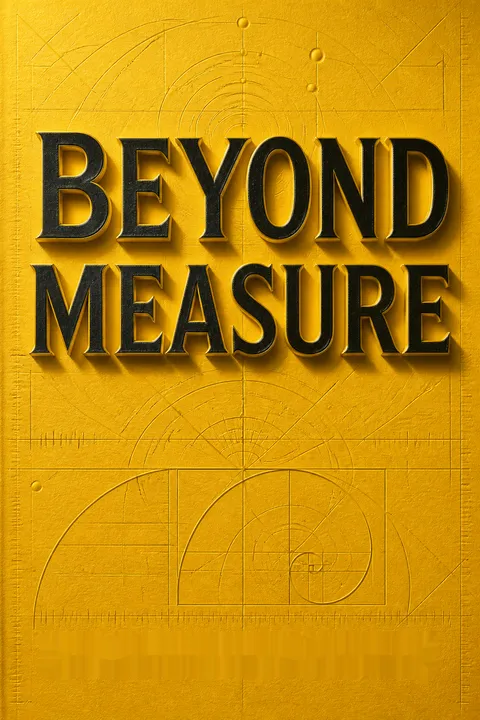
Beyond Measure explores the history and impact of measurement from ancient times to modern quantum standards. Readers found it engaging, well-researched, and thought-provoking, appreciating the blend of science, history, and social commentary. The book examines how measurement shapes our understanding of the world and its connections to power structures. While some criticized parts as tedious or biased, many praised Vincent's ability to make a seemingly dry topic fascinating. The book's exploration of measurement's role in colonialism, eugenics, and modern society particularly resonated with readers.
People Also Read







Glossary
Metrology
science of measurementMetrology is the science and practice of establishing, maintaining, and applying measurements. It concerns not only tools such as rulers and scales, but also the definitions, standards, and procedures that make measurements comparable. In the book, metrology links ancient trade and state administration to modern scientific units and international standards.
tools of legibility
systems that simplify societyTools of legibility are administrative systems that make people, land, and activity easier for governments to record and manage. Examples include censuses, permanent surnames, property records, land surveys, and standardized units. They simplify complex local realities into categories that can support taxation, planning, public services, or surveillance.
epistemic iteration
knowledge built in stagesEpistemic iteration is the gradual construction of knowledge through successive methods, each relying on what earlier methods made possible. In the history of thermometry, rough instruments first distinguished hot from cold; later scales and stable reference points improved comparison. Errors and revisions are part of this cumulative process, not proof that inquiry has failed.
normal distribution
bell-shaped pattern of variationThe normal distribution is a pattern in which repeated measurements cluster around a central value, with fewer observations appearing farther from that center. Astronomers used it to reason about measurement error. Adolphe Quetelet applied it to human data and treated the average as a meaningful social type, a shift that could turn a statistical summary into a claim about people.
social physics
statistical study of societySocial physics was Adolphe Quetelet's name for applying quantitative methods to social life. Drawing on astronomy and statistical analysis, he sought regular patterns in such data as crime, marriage, birth, and death. The approach made population-level trends visible, but also encouraged claims that social averages revealed fixed laws governing individuals.
metric fixation
overreliance on performance measuresMetric fixation is an excessive reliance on numerical measures to judge performance or make decisions. The problem is not measurement itself, but treating a score as a substitute for informed judgment. When rewards depend heavily on a metric, people may focus on improving the number rather than the underlying activity or public purpose.
blackboxing
hiding technical workBlackboxing is the process by which successful scientific or technical work becomes invisible behind a simple result. A user sees a stable definition or output but not the experiments, competing ideas, corrections, and conventions that produced it. This can make knowledge easier to use, while obscuring how it was built and where its assumptions can be questioned.
fallibilism
knowledge remains revisableFallibilism is the view that any claim, including a carefully tested scientific conclusion, could be revised or disproved. It differs from rejecting knowledge altogether. The fallibilist accepts that reliable understanding is possible while keeping open the possibility of error, making observation, replication, and criticism essential parts of inquiry.
FAQ
What is Beyond Measure: The Hidden History of Measurement from Cubits to Quantum Constants by James Vincent about?
- Comprehensive history of measurement: The book traces the evolution of measurement from ancient units like cubits to modern quantum constants, revealing its deep entwinement with civilization, science, and society.
- Interdisciplinary exploration: Vincent combines history, science, philosophy, and culture to show measurement as both a technical tool and a social, political force.
- Impact on human understanding: The narrative demonstrates how measurement systems have shaped our perception of the world and ourselves, influencing everything from public health to personal self-tracking.
Why should I read Beyond Measure by James Vincent?
- Reveals measurement’s hidden world: The book uncovers the surprising complexity and history behind everyday units, showing their evolution and redefinition through science and politics.
- Connects measurement to society: Vincent links measurement to the rise of civilizations, scientific revolutions, and modern management, offering insights into how it shapes our organization of the world.
- Explores philosophical and social implications: The book encourages readers to reflect on who controls measurement, its dual role as a tool of empowerment and control, and its impact on social justice and oppression.
What are the key takeaways from Beyond Measure by James Vincent?
- Measurement as a cognitive cornerstone: Measurement enables humans to compare, describe, and understand the world, setting us apart from other animals.
- Dual nature of measurement: It serves as both a tool of knowledge and authority, empowering societies but also enabling control and oppression.
- Ongoing evolution and debate: The book highlights the continual redefinition of standards, the tension between universal and local systems, and the philosophical challenges of abstraction versus particularity.
How did measurement originate according to Beyond Measure by James Vincent?
- Early tally marks: The first evidence of measurement comes from notched animal bones used as tally sticks, representing humanity’s initial attempts to externalize counting.
- Body-based units: Early societies used body parts (cubit, hand, foot) as accessible and proportionate standards for measurement.
- Cultural and cognitive development: Measurement is shown as a learned cultural skill, not innate, with children and societies progressing from estimation to standardized tools.
What role did measurement play in ancient civilizations as described in Beyond Measure?
- Foundation of civilization: Measurement enabled construction, trade, and astronomy in ancient societies like Egypt and Mesopotamia.
- Tool of authority: Elites such as priests and kings controlled measurement to organize society, enforce laws, and legitimize power.
- Spiritual and cosmological links: Measurement was intertwined with religious beliefs, calendars, and rituals, connecting it to divine favor and cosmic order.
How did the scientific revolution transform measurement, according to James Vincent?
- Shift to quantification: The scientific revolution moved from qualitative to quantitative understanding, using measurement to unlock nature’s laws.
- Mechanical philosophy: Thinkers like Descartes and Newton viewed the universe as a machine governed by measurable laws, replacing mystical explanations.
- Invention of instruments: Innovations like the telescope, clock, and thermometer expanded the reach of measurement into new domains.
What is the "quantifying spirit" in Beyond Measure and how did it shape science?
- Empirical measurement mania: The 17th-18th centuries saw a drive to measure everything, reflecting a belief in empirical knowledge and control over nature.
- Development of thermometry: The evolution of temperature measurement, from early thermoscopes to reliable scales, illustrates the challenges and breakthroughs in defining standards.
- Cultural and philosophical impact: Measurement demystified natural phenomena but also created new scientific mythologies, reshaping how society viewed the world.
How did the metric system originate and what were its political implications in Beyond Measure?
- Revolutionary standardization: The metric system was created during the French Revolution to replace arbitrary units with natural, universal standards.
- Decimal and rational design: It introduced interconnected, decimal-based units, reflecting Enlightenment ideals of reason and equality.
- Political and social tensions: The metric system faced resistance and embodied contradictions, becoming a battleground for debates over naturalness, practicality, and authority.
How does Beyond Measure describe the battle between metric and imperial measurement systems?
- Historical context: The book details the slow, contested adoption of the metric system, especially in the UK and US, where imperial units have deep cultural roots.
- Cultural and political resistance: Groups like ARM and the ‘Metric Martyrs’ illustrate how measurement debates are tied to identity, sovereignty, and tradition.
- Arguments and myths: Vincent explores both practical arguments for imperial units and pseudoscientific beliefs, showing measurement’s role in national and cultural identity.
What is the significance of the redefinition of the kilogram in Beyond Measure by James Vincent?
- From artefact to constants: The kilogram’s definition shifted from a physical object (Le Grand K) to being based on Planck’s constant, a fundamental quantum value.
- Quantum metrology: The Kibble balance allows mass to be measured via electromagnetic forces, making the kilogram universally stable and permanent.
- Philosophical implications: While more precise, the new definition ‘blackboxes’ measurement, making it less accessible to the public and raising questions about universality versus comprehensibility.
How does Beyond Measure explain the rise and impact of statistics and the concept of the "average man"?
- Quetelet’s social physics: Adolphe Quetelet introduced the idea of the ‘average man’ as a statistical regularity, influencing social sciences and public policy.
- Transformation of statistics: The average became seen as a real quality of groups, sparking debates about free will, determinism, and the dangers of reducing humans to numbers.
- Legacy and critique: The concept influenced figures like Florence Nightingale and Karl Marx, but also faced literary and philosophical rebuttals emphasizing individual variability.
What are the key philosophical and social critiques of measurement discussed in Beyond Measure by James Vincent?
- Measurement as control and limitation: Measurement imposes limits, categorizes reality, and reflects human biases, making it a tool of both knowledge and oppression.
- Philosophical perspectives: The book draws on thinkers like Charles Sanders Peirce, Aristotle, and William Blake to explore the fallibility, abstraction, and imaginative limits of measurement.
- Modern implications: Vincent discusses how measurement’s abstraction can alienate individuals and societies, but also create new forms of understanding, urging critical awareness of who controls measurement and why.
Download PDF
Download EPUB
.epub digital book format is ideal for reading ebooks on phones, tablets, and e-readers.








