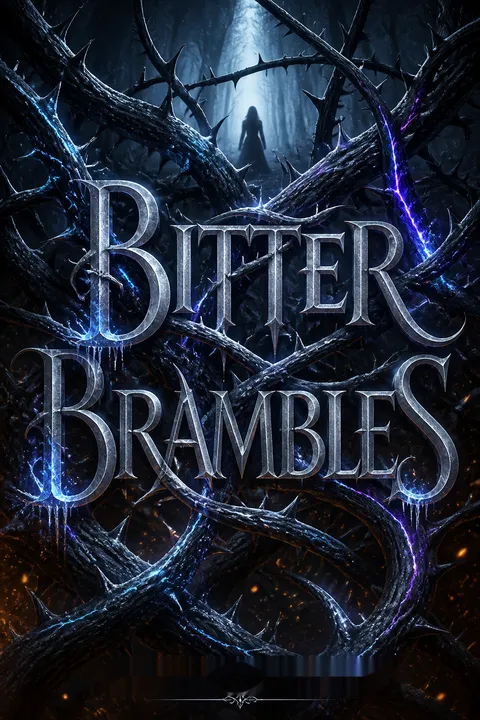


Plot Summary
Briar Vanishes at the Ivy
During a gathering at the Ivy Institute, Briar disappears before Kage can reach her. Ziv, a fallen god and Briar's mate, confronts Oaktar, the goddess of envy, who confirms Briar is alive but refuses to explain why she has taken her. When Ziv turns on headmistress Syrinx, she denies knowing where Briar is and threatens to revoke his place at the school.
Eleven days later, Briar wakes in a freezing cell at Frostburn Institute. A guard tells her the Ivy accepted a trade and that she now belongs there. Starved, cold, and unable to speak up for herself, Briar follows him toward the lowest bunkhouse, convinced that Ziv and Kage have not come for her.
The abduction turns the story's central bond into a test of absence. Briar has been trained to understand herself as disposable, so the silence from the Ivy does not initially register as a strategic delay; she experiences it as confirmation that she was never worth rescuing. Oaktar's power is displayed through control of other people's options, while Syrinx's denial leaves the institutional chain of responsibility deliberately murky. By beginning with a disappearance and then shifting to Briar's physical deprivation, the book makes emotional abandonment materially legible: hunger, cold, and isolation become the evidence Briar uses to interpret what her mates' silence means.
The Dregs Have Teeth
At Frostburn, Briar learns that food, warmth, and a bed must be earned. In the dregs, she meets Mick, a tutor who wants information about the Ivy, and bargains knowledge for meals and a chance at better shelter. That night, Hawk corners her in the shared bunkhouse and tries to force himself on her. Briar strikes his nose and throat, then sweeps him to the floor when he uses his power against her.
Mick stops the fight and moves her upstairs to the nest, where leader Tank lays down rules against violence inside. Oshea, another trainee, cautiously befriends Briar and guides her through the institute. Briar has secured a safer bed, but her refusal to submit has made her visible to people who may want to punish her.
Briar's survival depends first on refusing the terms other people set for her. Her strength is not yet supernatural command; it is tactical improvisation under bodily depletion. The meal bargain with Mick and the fight with Hawk both expose Frostburn's economy, where safety is treated as a scarce privilege and vulnerability invites exploitation. Yet Briar's victory does not make her secure. Tank's rules offer only temporary protection, and Mick's intervention is practical rather than tender. The scene marks an important shift from helplessness to agency, while preserving the cost: every act of self-defense attracts attention, and attention in Frostburn can become another form of danger.
The Void Answers Back
Mick tests Briar in the training field, pairing her with Oshea, whose kinetic attacks repeatedly veer away from her. Briar admits that ordinary magic seems unable to affect her, but she cannot explain why. Mick then brings in David, who attacks with freezing water.
The first stream melts before it reaches her; when he tries again, Briar feels the magic enter her grasp and sees ice form around her boots. The surge frightens her as much as it surprises the watching trainees.
Mick warns that her sudden display will make the elites suspicious, while Briar herself still thinks she may have caused it by accident. She now has evidence that Syrinx's expectation of a void may not have been entirely mistaken, but no reliable control over what she can do.
This discovery complicates the distinction between protection and power. Briar has understood her immunity as a passive shield, something that keeps others from affecting her but does not let her act. The ice attack reveals a more unsettling possibility: what has been used against her may be available for her to seize. The moment is triggered by anger and self-defense, not mastery, so the emerging ability carries both promise and threat. Her fear is psychologically credible because power does not immediately feel like freedom when it arrives without consent or instruction. Mick's suspicion also shows how quickly a person can be reclassified from weak to dangerous by an audience.
Sunny Becomes Moros
Moros, Frostburn's powerful shifter and heir to the Ashcroft Pack, has been investigating Briar's arrival without understanding why she occupies his thoughts. When his wolf scents her, he tracks her through the institute, then finds her alone after training. Briar mistakes the gray wolf for a threat and asks him to kill her quickly.
Instead, he lies beside her and lets her name him Sunny, the first warmth she has found in the cold. She falls asleep with her fingers in his fur. When she wakes to a man in her lap, Moros confirms he is the wolf and her mate. Briar tells him she already has two mates at the Ivy. Moros accepts the complication, offers her his room and protection, and promises he will not leave her by choice.
The meeting gives Briar a relationship that begins with care rather than demand. Her invitation to the wolf is shaped by exhaustion and a wish for comfort, but Moros answers by approaching slowly and accepting the name she chooses for him. That small act reverses the institute's usual hierarchy: Briar, so often named and assessed by others, gets to define the terms of first contact. Moros's possessiveness is present from the outset, yet he tempers it with attention to her fear and history. His promise matters because Briar has learned not to trust assurances; the story makes trust something that must be demonstrated through repeated restraint.
The Rescue Must Wait
At the Ivy, Kage's grief turns destructive, and he kills other trainees while trying to find a way out. Ziv confronts him, then beats him when Kage insists Briar may already be dead, forcing him to stop using self-destruction as an escape. Ziv finally reveals that Briar is at Frostburn, but says a direct rescue could expose her to the gods or allow the Fates to sever their bond.
Kage offers to enter the institute himself, but Syrinx would never release him, and Ziv cannot risk killing her while the Ivy remains tied to the Undertaking. Instead, Ziv plans to find a Frostburn informant and gather proof that Briar is safe. The men know where she is now, but knowledge does not give them permission to reach her.
Ziv's restraint is both protective and damaging. He believes that limiting action is the only way to keep Briar alive, yet Kage's despair exposes the human cost of a strategy that gives the person in danger no explanation. Kage's violence becomes a distorted attempt to convert emotional helplessness into something he can control, while Ziv's beating interrupts that pattern without resolving its cause. The threat to the mate bond raises the stakes beyond physical rescue: the gods can make attachment itself a vulnerability. Their decision to spy rather than act is therefore understandable, but it also creates the silence Briar will experience as abandonment.
A Bond in the Cold
Moros brings Briar into the elite wing and gives her a fur cloak, a private room, and steady company. He trains with her and stays close as she rebuilds her strength, but does not press her for sex while she remains emotionally numb and haunted by Ziv and Kage.
Mick continues testing her abilities, and Briar discovers she can sometimes siphon magic directed at her, especially when anger breaks through her fear. Over two months, Moros's patience makes his care harder for her to dismiss.
Briar recognizes that she loves him and chooses to stop withholding herself. They exchange bites that establish a shifter bond, then join physically. Briar still misses her absent mates, but her new bond gives her a present source of safety that she can accept without pretending the loss has vanished.
The romance develops through a contrast between intensity and consent. Moros feels immediate mate-bond urgency, but he refuses to use that instinct as permission to override Briar's emotional withdrawal. His care is expressed through practical acts, warmth, training, and patience, all of which counter the institutional habit of treating her as a resource. Briar's eventual choice is not a cure for grief; she can love Moros while continuing to mourn Ziv and Kage. That coexistence keeps the bond from functioning as a replacement plot. It instead gives Briar a chance to experience attachment without surrendering her right to set its pace.
Words Through the Mirror
Moros receives a message from Starla, an aide at the Ivy, and learns that Ziv wants to contact Briar through paired scrying mirrors and writing tablets. In their first meeting, Briar sees Ziv and Kage but cannot speak to them; Ziv apologizes and says he is delaying rescue to protect her. Briar withdraws from the mirror for several days, then reconnects.
Ziv offers mental communication, and once inside his mind she tells him plainly that he could have found a way to reassure her. He admits fear kept him silent. Briar also explains her developing ability to drain magic used against her, and Ziv supports her rather than fearing her. They agree to keep communicating, though Ziv still cannot promise when he can bring her home.
The mirror makes contact possible while keeping physical intimacy out of reach. Its written exchanges slow down the conversation and force each character to decide what deserves to be recorded, but they cannot supply the warmth of voice or touch. Briar's anger is essential here: reconciliation does not arrive because Ziv explains his reasons, but because she names the harm his silence caused and he accepts responsibility. The mental link briefly removes the mirror's barrier, yet it also risks overwhelming Briar, demonstrating that closeness can itself be dangerous. Their renewed connection is real but limited, a fragile channel rather than a solved separation.
Syrinx's Hidden Hand
While spying on Syrinx, Kage overhears the headmistress speaking privately with an unidentified man. Syrinx admits she should never have let Briar reach the Ivy and says she expected Briar to die after being sent to Frostburn. The man warns that Ziv will eventually learn Syrinx supplied information about Briar and her connection to him.
Their exchange makes clear that Syrinx's role was not passive: she helped set events in motion and intended Frostburn to dispose of Briar for her. The man also mentions that Briar's growing power makes her more dangerous than before. Kage cannot identify him or learn the full plan, but he carries the warning back to Ziv, turning suspicion of Syrinx into evidence of deliberate betrayal.
The overheard exchange reframes the trade as institutional violence disguised as administration. Syrinx's language treats Briar's death as a convenient outcome, revealing how easily a school that trains novices for a lethal contest can rationalize eliminating an inconvenient student. The unidentified man complicates the conspiracy without explaining it; his presence suggests Syrinx has allies or dependencies, but his motives remain unclear. Kage's role as a shadow observer suits the emotional position he occupies: he cannot safely approach Briar, yet he can gather information that may matter to her survival. His discovery gives the story a concrete antagonist while preserving uncertainty about the wider network.
Frostburn's Killing Qualifier
Frostburn's headmaster, Foley, reveals that the qualifier will decide which trainees represent the institute in the Undertaking and which become expendable fodder. The arena wards trap everyone inside for a twelve-hour test of survival.
Fighting breaks out immediately, and Briar spots Hawk approaching with the power that once let him overpower others. She draws one of the knives Ziv managed to send her, but a second attacker knocks her down before she can strike. Moros reaches her in wolf form and kills Hawk, ending the assault.
Jeh then offers to unite the elite trainees, whose shared formation gives them better odds. Briar accepts the alliance cautiously, warning them that betrayal will cost them dearly. She has survived the first attack, but the arena remains full of enemies.
The qualifier converts Frostburn's everyday cruelty into official policy. Foley does not conceal that some trainees are meant to die; he gives their expendability a ceremonial frame, calling survival a route to glory. Briar's response is shaped by earlier encounters: she prepares with a knife, reads Hawk as a predictable threat, and still gets blindsided by an unseen second attacker. Moros's intervention makes clear that individual skill cannot guarantee safety in a crowded system designed to produce chaos. Her agreement with Jeh is consequently pragmatic, not sentimental. Briar can build an alliance without trusting it completely, a new form of judgment learned from repeated betrayal.
The Arena Turns to Water
Moros's elite group works through the barricaded arena, where a flash attack kills Lynx and forces the survivors to improvise. Hildi uses the regenerating limbs of a trainee as a decoy, while Ren scouts and Wes opens a portal into the guarded pit. After the group passes the barrier, they shelter as the hours drag on. Then a tutor unleashes a flood to flush them out.
Briar refuses to run toward the observers who are directing the danger; instead, she reaches for the tutor's magic and draws it into herself. The tutor collapses, and the water stops. For a moment Moros cannot touch Briar, as if she has become a specter, but she returns to reach. Foley ends the qualifier early and declares that Frostburn has found its champion.
The climax of the qualifier is a change in who controls the spectacle. Foley and the tutors use the flood to drive trainees like prey, expecting them to react within the boundaries of the test. Briar instead identifies the source of the threat and turns her emerging ability back on its wielder. The act is both survival and refusal: she will no longer accept danger as something that simply happens to her. Yet the apparent victory carries a frightening cost, since Moros briefly cannot touch her and Briar's power seems to pull her outside ordinary physical rules. Foley's praise is not uncomplicated recognition; it suggests he may see her as a weapon to claim.
Ziv Threatens Syrinx
After Kage's report, Ziv meets Syrinx and pretends to consider her request for loyalty during the coming Undertaking. When she invokes the oath he made to the Ivy, he distinguishes service to the school from obedience to her.
Syrinx's assistant interrupts with news of the qualifier deaths, giving Ziv an opening to expose the power Syrinx has mistaken for manageable. He reveals enough of his divine form to terrify her and warns that he will attend the selection, either beside the Ivy or against it.
Ziv leaves without killing her, choosing to let her continue believing she can control the situation while he investigates. The selection begins the next day. His restraint now serves a purpose, but the danger to Briar and the question of Syrinx's allies remain unresolved.
Ziv's confrontation marks a shift from passive caution to calculated pressure. Earlier he withheld action because he feared retaliation against Briar; now he uses his remaining power to make Syrinx understand that her authority has limits. His choice not to kill her is tactical rather than forgiving. He wants her exposed and weakened, not simply removed before he knows who else is involved. This is a more disciplined form of anger than Kage's earlier violence, but it still carries the risk of treating people as pieces in a strategy. The selection gives Ziv a deadline, narrowing the space for delay and making his promise to protect Briar increasingly difficult to separate from his desire for revenge.
A Touch at the Selection
The selection party arrives at the Ivy aboard a vessel hauled by wyverns. Kage endures the flight with the single hope of seeing Briar, and the moment the trainees disembark he finds her standing beside Moros. Ziv reaches Briar first and holds her, but Kage moves close enough for her to touch his bare jaw. The contact lasts only an instant.
Ziv tears Briar away and demands to know what Kage has done; Kage's legs give way as the world goes black. He believes Briar may be dead, but the book ends before anyone confirms her condition. After months of separation, the three mates have finally stood within reach of one another, and a single touch has turned reunion into a new crisis.
The reunion is structured as both fulfillment and rupture. Kage's hope has been narrowed to seeing Briar, while Briar's small gesture of touching him implies recognition and a wish to bridge the distance between them. But the contact has consequences neither she nor Kage can control, and the scene withholds the certainty that would make the gesture comforting. Ziv's accusation and Kage's collapse transform a reunion into an unresolved emergency. The ending therefore refuses the emotional closure promised by the selection's arrival. Briar has gained power, a new bond, and renewed contact with her old mates, but none of those gains can protect her from the dangerous conditions of intimacy in this world.
Analysis
Bitter Brambles treats power less as a gift than as a contested interpretation. Briar begins with a body other people test, trade, and judge; her resistance to magic is first useful to others because it makes her a convenient target. When she learns to absorb magic, the same trait becomes a threat to the hierarchy that has organized her life. Her emerging agency is therefore not a clean ascent from weakness to strength. It arrives through fear, anger, and incomplete control, and each gain makes her more visible to people who want to own or eliminate her.
The book also distinguishes protection from care. Ziv and Kage love Briar, but their silence and restraint leave her to infer abandonment. Their motives may be protective, yet the emotional consequence remains real. Moros offers a contrast by staying present through ordinary acts: food, warmth, training, and patience. The novel does not ask Briar to exchange one bond for another; it allows grief and new attachment to coexist, and makes trust depend on what each person does rather than on supernatural destiny alone.
Institutions mirror the gods they serve. The Ivy and Frostburn present lethal competition as honor, while their leaders treat young trainees as resources in a political contest. The qualifier makes that logic literal, locking people inside an arena and calling the result selection. Briar's decision to drain the tutor who engineers the flood interrupts the expected arrangement between observer and spectacle. Yet Foley immediately calls her a champion, suggesting the system can absorb rebellion by renaming it usefulness.
The ending refuses to settle whether Briar's growing power will free her or make her more desirable as an instrument. Her touch reconnects her to Kage, but it also triggers an apparent catastrophe. In this world, intimacy is both refuge and exposure: love can preserve a person, but it can also reveal exactly where to strike.
Review Summary
Bitter Brambles receives mixed reviews with an overall 4.2 rating. Readers praise protagonist Briar's character growth at Frostburn Institute and the introduction of third mate Moros/Sunny. However, many criticize the pacing, with months passing quickly without plot progression. Common complaints include the unexpected cliffhanger ending revealing a third book, separation from original mates Ziv and Kage who don't actively search for Briar, over-explained dialogue, and focus on relationships over plot development. Five-star reviewers appreciate the character development and world-building, while lower ratings cite disappointment and lack of depth.
People Also Read



Characters
Briar
The guarded survivorBriar is a young woman shaped by a harsh childhood, repeated exploitation, and a lifelong sense that she is less valuable than other people. At the Ivy, she is trained by Ziv and protected at a distance by Kage, but she struggles to believe that either bond makes her worth choosing. Her humor is often sharpest when she is frightened or exhausted, and her instinct is to survive even when she feels little hope. At Frostburn, she must navigate a brutal hierarchy while learning what her resistance to magic can become. She values loyalty, warmth, and the right to decide who touches her. Her strength grows through action, but the story does not erase the grief and mistrust that make trust difficult.
Moros
The wolf who staysMoros is Frostburn's strongest shifter and heir to the Ashcroft Pack. His wolf is ruled by fierce instinct, especially when Briar is threatened, while his human self tries to temper that possessiveness with patience. Before recognizing Briar as his mate, he is proud, physically powerful, and accustomed to treating alliances as useful arrangements rather than intimate bonds. Briar's vulnerability forces him to measure strength differently: protecting her means providing warmth, training, and emotional room, not simply defeating rivals. His loyalty to his pack and his growing bond with Briar pull in opposing directions as the Undertaking approaches. He is protective without being uncomplicated, and his certainty can sometimes obscure the risks Briar must judge for herself.
Ziv
The fallen war godZiv is a former god of war who gave up his divinity after growing weary of an existence built on endless repetition. He now serves as an instructor at the Ivy, where his battle-hardened discipline makes him formidable and difficult to approach. Briar is his mate, and he trained her to survive, yet he often expresses care through preparation and strategy rather than comfort. His fear of the gods' power and of losing Briar leads him to make choices he believes are protective, even when they leave her feeling abandoned. Ziv is capable of tenderness, but he must confront how easily his tactical thinking turns another person's life into a problem to manage. His history with the gods makes his restraint costly and his anger dangerous.
Kage
Briar's lethal shadowKage is a shadowy demon whose touch is dangerous, leaving him isolated even when he longs for closeness. He recognizes Briar as his mate but keeps his distance because he fears what his nature could do to her. His devotion is expressed through vigilance and restraint, though Briar can experience that restraint as rejection. When she disappears, grief makes Kage reckless, and Ziv has to force him to face the difference between self-destruction and helping her. Kage is volatile, fiercely protective, and more emotionally vulnerable than his threatening presence suggests. His inability to touch Briar safely gives his longing a physical form, while his shadow abilities make him a natural observer of secrets others would rather keep hidden.
Syrinx
The ambitious headmistressSyrinx leads the Ivy Institute with a banshee's power and a politician's instinct for leverage. She prizes victory in the Undertaking and treats authority as something that must be defended by any means available. Her relationship with Ziv is built on mutual usefulness and suspicion, while her assessment of Briar is shaped by the girl's unusual resistance to magic and her connections to powerful beings. Syrinx is controlled in public, but her ambition makes her willing to arrange danger behind institutional procedures. She believes that managing information and controlling access will keep her secure. That confidence makes her difficult to read, and it also creates the possibility that she has underestimated the people she tries to use.
Oaktar
The goddess of envyOaktar is a powerful goddess whose reputation rests on vindictiveness and an appetite for possession. She can restrain Ziv long enough to remove Briar from the Ivy, then withholds the reasons for her actions. Her interest in Ziv carries a personal edge, and she treats Briar as leverage rather than as a person whose wishes matter. Oaktar's polished manner contrasts with the violence behind her threats. She embodies a divine order in which power permits interference without explanation, making even a brief appearance feel consequential.
Mick
The wary Frostburn tutorMick is a Frostburn tutor who first sees Briar as a possible source of information about the Ivy. He is sardonic, observant, and willing to test trainees harshly, but he also intervenes when Briar proves herself against Hawk. His attention helps her move from the dregs into the nest and later gives her a route into training. Mick does not trust her quickly, partly because her arrival and abilities are unusual. He represents Frostburn's transactional culture, though his choices show that self-interest and a limited sense of fairness can coexist.
Foley
Frostburn's calculating headmasterFoley is the headmaster of Frostburn, a school built around harsh discipline and preparation for the Undertaking. He ranks trainees by their usefulness to the institute and openly distinguishes likely contenders from expendable fodder. His cheerful presentation of lethal tests makes him more unsettling than a plainly angry authority figure. Foley sees Briar's potential as an institutional asset, and he is willing to let danger reveal what a trainee can do. His interest in victory governs his judgments more than individual welfare.
Hawk
The coercive traineeHawk is a Frostburn trainee whose power can interfere with another person's will. He relies on that advantage and on physical intimidation, using both to make other trainees feel unsafe. His encounter with Briar exposes the limits of his confidence when she can resist his magic and fight back. Hawk carries resentment after losing status to her, making him a persistent threat rather than a one-time obstacle.
Oshea
Briar's cautious allyOshea is a Frostburn trainee with kinetic magic that she is still learning to control. She approaches Briar warily but chooses to help her find the bathroom and join a table, offering small acts of companionship in an environment where kindness can look like a risk. Her curiosity about Briar's victory over Hawk reflects the resentment many trainees feel toward his abuse. Oshea is not a polished fighter, but she is willing to stand near someone others are avoiding.
Tank
The nest's stern leaderTank leads the trainees living in Frostburn's nest. His size and reputation keep others cautious, but he maintains a rule against attacks inside the sleeping quarters. He directs Briar toward meals and training rather than promising safety beyond the room. Tank's authority offers a practical shelter from the violence of the dregs, though his rules are limited to the space he controls.
Jeh
Moros's jealous allyJeh is an elite trainee and one of Moros's former roommates. He wants Moros's attention and feels shut out when Briar becomes central to Moros's life. His jealousy complicates their working relationship, but the coming danger at Frostburn forces him to consider cooperation more important than private resentment. Jeh understands the elite group's defensive tactics and takes responsibility for organizing them when the qualifier turns violent.
Starla
The overlooked informantStarla is an aide at the Ivy whose low profile lets her hear information others overlook. Moros has used her as a source at Frostburn, and she becomes a discreet link between him and Ziv. Her access to messages makes her useful, though the story leaves her full loyalties and the limits of her knowledge uncertain.
Taggert
The traded Frostburn eliteTaggert is a high-ranking Frostburn trainee whose disappearance coincides with Briar's arrival. His absence is the sign that an exchange between the institutes has taken place. He matters chiefly through what he may know about Frostburn's trainees and their weaknesses.
Eris
Moros's favored brotherEris is Moros's younger brother, sent to the Ivy while Moros is assigned to Frostburn. He is regarded as the weaker sibling, but his family name and his father's influence help secure his place. His presence reflects the bargains powerful families make around the Undertaking.
Hildi
The fearless eliteHildi is an elite Frostburn trainee who acts decisively under pressure. Her unusual ability to recover from injuries helps her improvise a distraction during the qualifier. Her humor remains sharp even in danger, but she understands that survival requires practical choices.
Wes
The portal makerWes is an elite trainee whose magic opens portals between locations. During the qualifier, he uses that ability to move allies through a guarded barrier, pushing himself toward exhaustion in the process. His usefulness depends on careful timing and the team's willingness to protect him while he works.
Plot Devices
The Undertaking
A contest built on sacrificeThe Undertaking is the gods' lethal contest, for which institutes train and select representatives. At Frostburn, the coming selection shapes daily routines, the rank hierarchy, and Foley's willingness to expose trainees to deadly tests. The qualifier compresses the larger system into one arena: trainees must survive long enough to be chosen, while some are treated as expendable. The contest gives the gods continued attention and fear, and it makes institutional ambition appear as a route to honor even when most participants may not return. Its rules create the central deadline and explain why Moros cannot simply abandon Frostburn without risking his pack's standing.
Briar's void ability
A shield that can takeBriar's unusual resistance initially makes magic bounce away from her, but attacks can also awaken her ability to siphon power. The change begins under pressure rather than through controlled lessons, which means she cannot reliably call on it or predict its cost. Her growing ability gives her a defense against magical attackers and makes her valuable to Syrinx and Foley. It also turns her into a target, because a person who can absorb another's power threatens the established hierarchy. The device links Briar's physical history of being used as a test subject with her emerging ability to refuse the role imposed on her.
The mate bonds
Love under supernatural constraintBriar is connected to Ziv and Kage at the Ivy, then recognizes Moros as another mate at Frostburn. Each bond is shaped by different limits: Ziv fears the gods may sever the connection, while Kage's dangerous touch keeps him at a distance. Moros can stay physically close, but his instincts must be balanced against Briar's need to choose her own pace. The bonds create genuine loyalty while also making separation more painful and potentially dangerous. They are not a simple promise of safety; they expose each character to loss and make decisions about rescue, contact, and intimacy carry supernatural consequences.
The scrying mirror
A fragile channel homePaired mirrors and writing tablets allow Briar, Ziv, and Kage to communicate across the distance between Frostburn and the Ivy. The mirror permits them to confirm that Briar is alive and exchange information without risking a physical rescue, but it cannot carry their voices. Their written messages are slow, easy to misunderstand, and shaped by the fear that the connection may be monitored. Ziv later proposes a mental link, which offers greater intimacy but overwhelms Briar when he enters her mind without enough protection. The device keeps the characters connected without resolving their separation.
The Frostburn hierarchy
Shelter earned by rankFrostburn sorts its trainees into the dregs, the nest, and the elite wing, with food, warmth, and sleeping space improving as rank rises. Briar's movement through these spaces turns institutional status into bodily consequences: a bed can mean rest, and a cloak can mean surviving the cold. The rules of each level are uneven, with the nest offering limited safety inside its walls and danger returning as soon as trainees leave. This system makes every fight consequential and lets characters reveal their values through how they use authority. It also shows why Briar's victories attract both protection and resentment.
About the Author
Other books by Albany Walker


Download PDF
Download EPUB
.epub digital book format is ideal for reading ebooks on phones, tablets, and e-readers.








