

Plot Summary
Prologue
Damiana names herself a Sin Eater, a creature who survives by consuming the sins clinging to other souls. She has known monsters since childhood, but has never met another being like herself. Deceit offers a small taste; vengeance gives her the nourishment she craves.
This opening defines Damiana through appetite before it defines her through biography. Sin is not simply a moral category in her world: it has texture, flavor, and consequences, making her both intimate with human wrongdoing and estranged from ordinary human life. The distinction between small lies and deep wrath also anticipates her vulnerability to other people’s pain. She feeds on what they carry, yet their choices remain theirs, a boundary she must continually interpret. By introducing her as a singular kind of monster, the opening makes loneliness part of the supernatural premise, not merely a private feeling.
Blood on the Bedroom Rug
Damiana lives alone in a remote Victorian house, where supernatural visitors have been her closest companions since childhood. Her hunger is unusual: ordinary food cannot sustain her, but the sins carried by other beings can. One night, a scarred stranger appears on her bedroom floor, bleeding from deep wounds.
Damiana cleans him, stops the worst of the bleeding, and stays nearby despite knowing almost nothing about him. He heals with startling speed and wakes able to stand. When he gives his name as Gunnar, Damiana feels an unsettling familiarity she cannot explain. His arrival turns an evening built around her familiar, hidden world into the beginning of an encounter with someone who can enter it and unsettle it.
The first decisive bond forms through care rather than courtship. Damiana does not know whether Gunnar is human, dangerous, or connected to her past, yet she chooses to tend his injuries. That impulse complicates her practiced independence: she is accustomed to receiving brief visits from beings who disappear, but she responds to Gunnar as if his survival matters personally. Her appetite also makes her an observer of other people’s moral states, while her tenderness toward the wounded stranger reveals a capacity that cannot be explained by feeding. The scene establishes the novel’s central tension between self-protection and the desire to be needed.
Rumors Has New Rules
After recovering, Gunnar accepts a ride into town, where he plans to meet Vanessa, the striking owner of Rumors. On the way, he admits that he was once human, but offers no account of what changed him. At the club, he tells Damiana he does not want to be seen with her. She takes this as an insult and walks away, though Gunnar follows to explain that his enemies might target her.
Inside, Damiana feeds on the ordinary deceptions and resentments around the dance floor, including the wrath of a woman betrayed by her boyfriend. She spots Gunnar entering a guarded VIP gathering with Vanessa. A bouncer then steers Damiana upstairs, and his evasions convince her that Gunnar’s presence has made the club’s security behave strangely.
Rumors makes the supernatural conflict visible first as social choreography: who gets admitted, who is watched, and who can move through a room without explanation. Damiana’s feeding gives her a vivid, almost forensic awareness of deception, but it does not grant her immediate understanding of Gunnar’s motives. His warning may be protective, yet its delivery repeats the rejection she has learned to expect from others. The club’s ordinary romantic betrayal echoes the larger secrets forming around her, while demonstrating that Damiana can consume anger without endorsing vengeance. Her hunger grants access to other people’s pain, but interpretation remains a separate and fallible task.
A Friend Leaves at Dawn
Back at home, Radmon, a ghostly friend, tells Damiana she must leave because the monsters who visit her take turns. Radmon cannot say where she is going or when she will return, and her departure deepens Damiana’s fear that companionship is always temporary. Near dawn, Damiana sees a huge lion with a shining golden mane at the edge of the woods.
He vanishes when she calls to him, then returns to her window before slipping back into the forest. Forea, a supernatural guardian of the woods, identifies him as a Nemean and confirms he comes and goes. The lion’s presence comforts Damiana, even though he refuses to speak, while his secrecy adds one more mystery to the changes surrounding her.
Radmon’s departure gives Damiana’s isolation a rule-bound shape: her friends are not abandoning her by choice, but the effect on her is still loss. The distinction may explain the monsters’ behavior without soothing the childlike need beneath her adult wit. The lion offers a contrasting possibility. He appears voluntarily, inspires comfort, and yet remains beyond conversation or control. Forea’s calm recognition suggests that Damiana’s house and forest sit within a much larger supernatural order than she knows. Friendship in this world is real, but access to it is governed by customs and silences that Damiana has never been allowed to understand.
Grim Breaks His Silence
Grim, the cloaked figure who has brought Damiana sins since she was a child, finally visits openly and drinks hot chocolate with her. He confirms that she has a soul, but remains evasive about why he can stay now when he could not before.
Later, Damiana returns from the forest and finds Gunnar confronting a human spy near her property. Gunnar orders the man away and reveals that he has been monitoring the house. Damiana begins extending her senses to catch whoever else may be watching.
The next night she follows another spy and sees Grim appear with a scythe. He tells the man that a covenant has been broken and that the Berserker must face the consequences, giving Damiana her first evidence that Gunnar’s arrival is tied to a larger supernatural agreement.
Grim’s visit offers warmth without transparency: he shares a drink and confirms Damiana’s soul, yet still withholds the knowledge she wants most. The watcher’s appearance makes that withholding feel less benign. Damiana has been treated as a protected object by people who never asked whether she wanted protection, and the discovery of surveillance makes the difference between care and control newly urgent. Grim’s warning establishes that the secret is not simply personal; it concerns a broken covenant and consequences that could reach beyond her house. Damiana’s decision to train her senses marks a shift from passive curiosity to deliberate investigation.
The Wards Fail at Rumors
Determined to learn why she is being watched, Damiana returns to Rumors and slips through a magical ward Vanessa’s group believes is secure. She notices that several people around the coven carry a foul, tar-like corruption, though Vanessa herself is harder to read. A charming stranger named Calix catches her interest, while Gunnar watches from the club’s restricted section.
Damiana provokes a drunken harasser to draw Gunnar out; he pulls her into a back office and demands to know how she crossed the wards. In exchange for an explanation, she demands his true nature. Gunnar admits he is a Berserker, a warrior transformed from a human. He also warns her that Vanessa’s circle is more dangerous than it appears.
The ward is a boundary meant to shape curiosity into obedience: outsiders should feel discouraged before they understand why. Damiana’s ability to cross it turns her into an exception the coven cannot easily categorize or contain. Yet the scene does not make her omniscient. She can detect corruption without knowing its source, and she must use provocation to force Gunnar into a partial confession. Her attraction to Calix complicates that pursuit, showing how desire can distract her without erasing her judgment. The office encounter is a contest over who gets to set the terms of disclosure, with Damiana refusing to accept protection as a substitute for information.
Three Guardians Return
Damiana later invites Calix to her house, hoping for a casual encounter, but Gunnar arrives, followed by Grim. The three men recognize one another, and their argument exposes that each has been assigned as Damiana’s guardian. They have watched over her from a distance and agreed not to approach her closely. Grim says the bond among them formed when Damiana was born, making the men her fated mates as well as her guardians.
Feeling deceived, Damiana drives all three from the house with a burst of power. They return the next day, agree to answer her questions, and explain that they expected her to seek one of them out. Damiana rejects the idea that she must choose a single mate and demands the chance to know them on her own terms.
The revelation converts what looked like random secrecy into a shared decision, but explanation does not erase the harm of exclusion. The men describe distance as discipline and protection; Damiana experiences it as the latest version of a childhood in which others decided she could not be trusted with the truth. Her power becomes a boundary-setting tool when speech alone has failed. Rejecting the demand to choose one mate is not simply defiance of romance conventions. It is a refusal to let a bond, however real, dictate her consent before she has had the chance to understand the people attached to it.
The Hunger Was a Warning
As the guardians explain themselves, Grim tells Damiana that she was dying as an infant, though he does not know why she could not eat. Her soul called to him, so he tethered it to her body and fed her the sins he carried. That intervention kept her alive but made her a beacon to supernatural beings, who began visiting her.
Damiana refuses to see those visitors as threats: they gave her company when her human family neglected her. She learns that Calix, a born Nemean, has guarded other young shifters, while Gunnar has never accepted a guardianship before. A Cherub assigned all three men to her. Damiana also discovers she no longer ages, a consequence of Grim’s intervention that unsettles her.
The explanation reframes Damiana’s appetite as evidence of a crisis rather than a quirky supernatural trait. Grim saved her, but his rescue altered the conditions of her life and drew other beings to her. The novel resists an easy moral verdict: his decision was compassionate, yet his continued secrecy denied her agency. Damiana’s gratitude toward the monsters who visited her is equally important. They did not replace the family she needed, but they helped her survive its absence. Learning that she will not age makes survival feel less like a solved problem and more like a future whose loneliness must be actively renegotiated.
The Coven's Rot Spreads
Damiana learns that Gunnar oversees witches to prevent them from stealing power through dark rituals. Grim reports that Charmed beings have been dying for months, with their souls and magic connected to the growing corruption around Vanessa’s coven.
A Mimic has also been killed, suggesting the threat is escalating. Gunnar admits Vanessa’s group has doubled in size, while Calix explains his own work keeping shifters in line. The three guardians disagree over how much danger to expose Damiana to, but she volunteers to help rather than remain protected and uninformed.
She, Calix, and Grim return to Rumors, where she senses the coven’s taint directly. Their investigation shifts from learning who her guardians are to stopping the people who are harming supernatural beings.
The plot’s threat expands from concealed surveillance to a pattern of supernatural deaths, giving Damiana a reason to act beyond her own unanswered questions. The guardians’ specialized duties help make the hidden world legible, but also reveal how fragmented its authority is: each man oversees a different population, and none has complete knowledge. Damiana’s insistence on joining the investigation opposes the protective logic that kept her uninformed as a child. Her power makes her useful, but usefulness is not the same as consent. By volunteering, she claims responsibility for her choices rather than accepting a role designed by others.
The Club Becomes a Crime Scene
At Rumors, Damiana recognizes the sickening magic on Vanessa’s coven members and watches Gunnar confront the High Priestess. She realizes the group’s influence is deeper than its visible members suggest. When she senses that a Charmed being has recently died inside the club, Gunnar triggers the fire alarm to empty the building.
The fleeing crowd leaves the hidden markings visible: runes and a pentagram built into the bar that had drawn Damiana to it night after night. She confronts Vanessa about the rituals, while Gunnar suspends the coven’s authority pending an investigation.
After they escape the arriving firefighters, Damiana learns that Aeson, her Brownie friend and fierce confidante, has disappeared. The investigation now has a personal cost, and the coven’s victims may include someone Damiana loves.
The club’s exposed ritual markings transform a familiar place of appetite into an instrument of extraction. The crowd’s ordinary pleasure had concealed the machinery of harm in plain sight, and the evacuation makes visibility itself a form of evidence. Damiana’s sensory gift identifies the death, but Gunnar’s abrupt alarm gives them time to inspect the space and protect the living. The discovery of Aeson’s absence then changes the emotional register of the investigation. Damiana is no longer an interested outsider challenging a corrupt institution. She is a friend who must reckon with the possibility that the people she is hunting have taken someone from her chosen family.
Vanessa's House Goes Silent
The group confronts Vanessa at her home, where she gathers coven members around her rather than answer Gunnar’s questions. Violence breaks out: Gunnar’s Berserker strength and Calix’s Nemean power overwhelm the witches, while Grim holds the room with deadly calm. Damiana forces one witch to admit that a man named Antonio taught the coven its method of drawing power without the usual cost.
Vanessa withdraws into the house and dies amid a spreading black corruption, warning Damiana that Antonio is coming for her. The captured witch gives up the location of the ritual site where Aeson is being held. Vanessa’s death ends her control of the coven, but it does not end the threat; the person who taught her remains unaccounted for.
Vanessa’s downfall is both an immediate victory and a strategic failure. The coven’s leader can no longer direct its members, but her death removes a source of information before the group understands the full structure behind the rituals. Damiana’s ability to force a confession makes her power frighteningly efficient, yet the information she obtains is narrow and costly. The warning about Antonio turns a local conflict into a continuing personal threat. The scene also clarifies that an institution can be corrupt without containing the whole conspiracy: defeating the visible leader may expose, rather than eliminate, the deeper source of the system.
The Brownie on the Altar
At the warehouse, Damiana finds Aeson bound to a stone altar with iron restraints etched in runes. Aeson is injured and ashamed that a witch managed to capture her, but Damiana refuses to let her turn that shame into surrender. The coven’s captive admits that she cannot free Aeson alone, a lie Damiana detects before forcing her to act.
Once the restraints are removed, Aeson uses her Brownie gift to invade the witch’s thoughts and make her destroy herself. Damiana gives Aeson one of her small knives, and Aeson kills the witch before they leave. The rescue succeeds, but the altar and specialized restraints show that the coven’s operation was designed to capture beings like Aeson, not merely to experiment with stolen magic.
Aeson’s captivity reverses her usual role as the fearless protector. She is physically restrained and emotionally wounded by the possibility that her people may doubt her leadership. Damiana answers with a mix of affection, bluntness, and practical help, refusing to let sympathy become pity. That response preserves Aeson’s dignity while restoring her ability to act. The witch’s death also complicates rescue as a clean moral event: Aeson survives by using the very capacity for fear and mental intrusion that makes her an assassin. Their friendship does not soften either woman into harmlessness; instead, it gives their violence a loyalty and purpose the coven’s rituals lack.
Damiana Returns to Her Past
Back home, Aeson reunites with her Brownie warriors while Gunnar’s contacts and Pixies investigate Vanessa’s finances. Their records point to Antonio’s shell companies and a recently acquired property in Lakeview.
The address lies near the imposing house where Damiana grew up, the place her parents sent her away from after her supernatural nature frightened them. When the group arrives, a party is underway at her parents’ home. Damiana throws a rock through a front window, sees her mother recoil, and turns away before the encounter can pull her back into the old family wound.
They move on to the nearby property to investigate Antonio, with Aeson taking point. The search brings Damiana’s hidden past physically close to the danger she is trying to stop.
The money trail gives the investigation a concrete direction, while the location turns a practical search into an encounter with Damiana’s history. Her parents’ home represents a form of abandonment that no supernatural explanation can make acceptable. Breaking the window is a brief act of retaliation, but leaving without entering suggests that she is not seeking reconciliation or permission to feel hurt. The two neighboring houses create a sharp contrast: one holds the people who failed to care for her, while the other may hold the source of an active threat. Damiana’s past is no longer safely distant, yet she chooses how close she will let it come.
The House Becomes a Snare
At Antonio’s suspected property, Aeson climbs through an upper window to open the back door. The instant Damiana crosses the threshold, a ward locks her in place and traps Aeson upstairs. Damiana gradually forces herself out of the spell’s pull, but the others cannot break it and have no witch available to help.
Grim enters the stronger ward and explains that Aeson must be crossed over to the realm of the dead before he can bring her back, an ordeal that could change her permanently. Aeson chooses to return. Grim crosses her soul and brings her back, but the effort leaves him collapsed and unresponsive. Gunnar smashes a hole through the wall, and Calix takes a car so they can flee before authorities arrive.
The ward transforms a familiar investigative impulse into a physical trap: crossing a threshold becomes the mistake that threatens to separate the group. Damiana’s ability to resist the spell is powerful but limited; she can escape its grip without knowing how to free Aeson. Grim’s intervention therefore turns his ancient authority into a deeply personal risk. Aeson’s choice to return preserves her agency even when the available options are grim. Grim’s collapse makes the rescue costly in a way Damiana cannot immediately repair, while Gunnar’s destructive escape converts his strength into practical care rather than mere force.
The Reaper Comes Back
The group reaches Damiana’s house with Grim still unconscious. Gunnar carries him upstairs, and Damiana waits until she sees evidence that he is breathing before allowing herself to settle. Calix returns after hiding the stolen car, while Aeson goes back to her Brownie band to reclaim her place and recover.
When Grim wakes, he confirms that Damiana will not have to choose only one of the men she is bonded to. Their relationships remain unsettled, but each has begun to show care through concrete acts: staying, returning, and helping.
Damiana invites her supernatural friends back into her home and asks Uncle Skinny Legs to tell Theius she misses him. The house, once arranged around solitary waiting, now holds both her chosen family and the monsters who raised her.
The resolution is deliberately domestic after the supernatural crisis. Gunnar carries Grim, Damiana watches for signs of life, and Calix handles the abandoned car; these practical acts make attachment visible without pretending that old distrust has vanished. Grim’s statement about Damiana’s bonds answers one of her central fears, but it does not settle how the relationships will work. The final invitation to Uncle and Theius matters because Damiana refuses a false choice between romantic connection and the companions who sustained her. Home changes not through architecture but through who is permitted to return and remain.
Antonio Remains at Large
The group learns that Vanessa’s coven is broken apart, but the Pixies have not found Antonio. His businesses have collapsed or gone quiet, leaving no reliable location to pursue. Grim arranges for his Reapers to report any further deaths among Charmed beings, while Gunnar watches for movement among the remaining witches.
Damiana and Aeson agree to keep searching, knowing that waiting for another victim may be the only way to draw Antonio into view. The novel closes with Damiana surrounded by her companions, but not free of danger: the man behind the rituals has escaped, and the next supernatural death could restart the hunt. Her loneliness has eased, yet her new family is bound together by an unfinished threat.
The ending offers relational resolution without pretending the external conflict is complete. Damiana has moved from solitude toward a chosen household, and Aeson has returned to her, but Antonio’s absence prevents emotional security from becoming a simple happily-ever-after. The decision to monitor future deaths also places the characters in a morally uneasy position: they are prepared to act, yet the evidence they need may arrive through another victim. This open ending fits Damiana’s new role. She is no longer waiting for others to explain her world; she has chosen to help defend it, even when the path forward remains uncertain.
Analysis
The novel makes isolation both a psychological injury and a condition of supernatural life. Damiana’s parents reject the parts of her they cannot understand, while the monsters who care for her are governed by rules that keep them intermittent and opaque. Her witty self-sufficiency is therefore genuine strength, but also a practiced way to survive without depending on anyone. The guardians’ secrecy repeats this injury even when motivated by protection. Their intentions do not cancel the impact of withholding; Damiana’s anger insists that care must include respect for the person being cared for.
The book’s supernatural systems literalize moral and emotional states. Damiana tastes sin, witches accumulate corruption through stolen power, and Grim’s work makes death a physical crossing. These devices turn abstract ethics into sensations, marks, and consequences. Yet her ability to read sin does not grant omniscience. She can detect a tainted aura or a lie while still misjudging the people around her. The story distinguishes perception from understanding, and power from wisdom.
Romance develops through negotiation rather than a simple revelation that fate has chosen the right partners. The bond gives Damiana and the three men an explanation for their attraction, but it cannot resolve the question of consent. Her refusal to choose one immediately protects her autonomy and forces the men to earn trust through conduct. Their care becomes credible when they stay, cooperate, and accept her friendships, not merely when they name the bond.
The ending’s unfinished hunt preserves the tension between personal healing and public responsibility. Damiana has gained a household without losing the monster friends who came before it, but Antonio remains a threat and future victims may be needed to expose him. The novel’s most persuasive answer to loneliness is therefore not destiny alone. It is a community repeatedly choosing to return, while accepting that love cannot erase danger, history, or the need for boundaries.
Review Summary
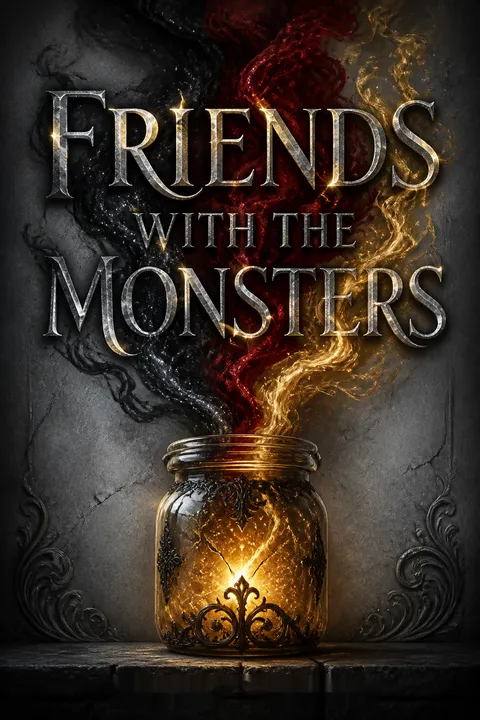
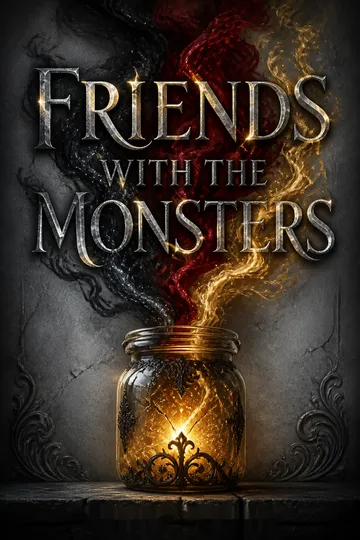
Friends with the Monsters receives mixed reviews with an average 3.96 rating. Readers praise the unique concept of a sin-eating heroine named Damiana and her three supernatural mates (Grim Reaper, lion shifter, berserker). Many loved the cover art and Dami's confident, unapologetic sexuality. However, criticisms include poor pacing with the first 60% feeling muddled, underdeveloped characters, weak world-building, and an abrupt ending leaving many questions unanswered. Reviewers noted the protagonist acts immature despite being 30, and the plot lacks depth. Fans of paranormal reverse harem appreciated the entertainment value despite flaws.
People Also Read








Characters
Damiana
The Sin EaterDamiana is a supernatural woman who feeds on the sins and emotional residue carried by others. Her keen perception makes her an unusually accurate reader of deceit, but her isolation has also taught her to use humor, bluntness, and sexual independence as shields. She has never needed human approval to know she is different; what she lacks is reliable knowledge about her own nature and a sense that someone will stay. Her affection for the monsters who visit her is not a childish delusion but the foundation of her chosen family. Damiana values autonomy, yet her deepest conflict is whether accepting care will make her vulnerable to abandonment again.
Gunnar
The Scarred BerserkerGunnar is a Berserker, a former human transformed into a formidable supernatural warrior. He is physically imposing, scarred, blunt, and accustomed to solving problems through direct action. His work overseeing witches gives him a strong sense of duty, although pride can make it difficult for him to accept help or admit when a threat has grown beyond his control. With Damiana, his protectiveness often arrives as orders, a habit that clashes with her insistence on choosing her own risks. Beneath the roughness is a man capable of tenderness and loyalty, but he must learn that protecting someone is not the same as deciding for them.
Calix
The Golden NemeanCalix is a born Nemean, a lionlike being who can move between human and animal form. He is confident, flirtatious, physically graceful, and more openly playful than the other men around Damiana. His ease with intimacy can look casual, but he is attentive to emotional signals and cautious about making a promise Damiana may not want. Calix’s work among supernatural shifters has made him familiar with guardianship, yet Damiana challenges him to become more than a distant observer. He approaches her with warmth rather than command, offering companionship while trying not to disguise the depth of his attachment.
Grim
The Beautiful ReaperGrim is Death, a Reaper who guides souls and has quietly brought Damiana nourishment since her childhood. He appears controlled, formal, and difficult to read, but his calm conceals powerful feeling and a profound capacity for devotion. His long history with Damiana gives him a unique closeness to her, while his choice to remain hidden created painful misunderstandings. Grim is accustomed to duty and consequence; learning how to participate in an intimate relationship requires him to risk openness rather than rely on supernatural authority. His tenderness is most visible in careful attention, but his possessiveness and intensity can be as unsettling as his scythe.
Aeson
The Fierce BrownieAeson is a Brownie assassin and one of Damiana’s closest friends. Tiny, fashionable, sharp-tongued, and dangerous, she combines a leader’s competence with a private need for places where she does not have to perform invulnerability. She understands violence as both a skill and a responsibility, and she prizes loyalty above reassurance. Her friendship with Damiana works because neither expects the other to become gentler or more conventional. Aeson can recognize Damiana’s loneliness without treating her as fragile, and she is willing to challenge her when desire or fear threatens to dictate her choices.
Vanessa
The Coveted High PriestessVanessa leads a large witches’ coven and owns Rumors, a club where supernatural and human worlds overlap. Beautiful, socially skilled, and accustomed to command, she understands how to make power appear effortless. She relies on secrecy and status to keep others from questioning how her coven operates. Her presence unsettles Damiana before Damiana can explain why, making Vanessa a useful test of the Sin Eater’s instincts. She represents authority that can look polished and secure while concealing a more dangerous foundation.
Uncle Skinny Legs
The Shadowed CardplayerUncle Skinny Legs is a long-limbed monster who has visited Damiana since she was young. He rarely speaks, but their card games and the small treasures he leaves make him a steady presence in her life. Damiana calls him family despite the absence of any conventional kinship, and he accepts that closeness in his own restrained way. His silences reflect the rules and limits of the supernatural world, but they also show how care can be expressed without explanation. He gives Damiana continuity when nearly everyone else appears only briefly.
Theius
The Hungry Forest FriendTheius is a shaggy, clawed creature who carries the enduring hunger of his own legend. Damiana feeds him without pitying him, offering food and company even when she knows neither can erase his deeper need. He is one of the few visitors willing to share fragments of his history and supernatural knowledge. His warnings about witches reveal both his experience and his fear of their methods. Theius’s discomfort around certain subjects reminds Damiana that even friendship has boundaries shaped by old dangers.
Forea
The Forest's Knowing HeartForea is a magnificent, antlered being who lives in a moonlit forest clearing among smaller animals. She communicates directly with Damiana’s mind and treats her with the calm familiarity of someone who knows the forest’s inhabitants and rhythms. Forea speaks in measured, sometimes puzzling observations rather than straightforward explanations. She offers Damiana companionship without demanding anything from her, and her knowledge helps place the isolated house within a wider supernatural landscape.
Samson
The Loyal HellhoundSamson is a massive Hellhound who can communicate mind to mind and remains loyal to Grim while treating Damiana as a friend. His imposing appearance contrasts with his respectful attention and willingness to carry news between supernatural communities. He knows that Aeson’s disappearance matters to Damiana and helps connect her to the Brownies searching for their leader. Samson’s presence makes the unseen networks around Grim tangible, while showing that allegiance and affection can coexist.
Radmon
The Departing GhostRadmon is a ghostly friend whose visits follow supernatural rules Damiana does not fully understand. She arrives to explain that her time with Damiana has ended for now, but offers no firm return date. Her gentle manner makes the departure more painful, not less. Radmon embodies the instability of Damiana’s social world: affection is real, yet the people she loves may be called away without warning.
Dare
The Prickly Pantry GuestDare is a small, spiked creature who hides in Damiana’s pantry. Her defenses would be dangerous to most people, but Damiana can touch her safely and treats her with affection. Their brief exchanges show how naturally Damiana accommodates beings others would fear. Dare’s presence also makes the house feel inhabited by a community beyond its human rooms.
Cece
The Ocean-Born PlaymateCece is a supernatural child from the sea who played with Damiana when both were young. Damiana remembers her as one of the companions who made an isolating childhood bearable. Their history matters because it shows that the beings drawn to Damiana were not simply frightening visitors; some became the closest thing she had to childhood friends.
Antonio
The Elusive RitualistAntonio is an elusive figure connected to supernatural circles and a trail of businesses. His name surfaces through the investigation rather than through a personal introduction. The people who seek him know little about his intentions or whereabouts, which makes him difficult to understand and harder to confront. He functions as a distant presence whose reach is suggested by what others have done in his orbit.
Damiana's mother
The Rejecting ParentDamiana’s mother presented a polished image of motherhood in public but treated her daughter’s unusual perceptions as a source of shame at home. She represents the family rejection that taught Damiana to expect abandonment before she could trust affection. Her influence remains powerful even after Damiana has built a life far from her childhood home.
Plot Devices
Sin Eating
A moral sense with a costDamiana perceives sins as sensory traces and can feed on them, especially on intense wrath. The ability lets her detect deception and corruption, but it is not a simple lie detector: she can sense that something is wrong without knowing its cause. In moments of extreme hunger, she can take too much and harm a person, so she has to distinguish nourishment from destruction. Sin eating also makes her a witness to private emotional damage, including betrayals that may never become supernatural crimes. It turns moral perception into a bodily need, placing appetite, judgment, and self-control in constant negotiation.
The Guardian Bond
Connection without automatic consentA supernatural bond links Damiana to Gunnar, Calix, and Grim, who were appointed as her guardians before her birth. The bond explains their intense pull toward her, but it does not answer the ethical question of whether they were right to keep their distance or whether Damiana must choose one of them. It drives the romantic conflict by making attachment feel both fated and suspect. Damiana insists that destiny cannot substitute for trust, time, and choice. The bond therefore works as a plot engine and a challenge to the characters’ assumptions about what a predetermined connection permits.
Wards and Ritual Marks
Hidden danger made physicalWitches use wards to control access, obscure gatherings, and trap intruders. Damiana’s unusual power lets her push through some defenses, but stronger wards can still hold her or others in place. The runes built into Rumors and the restraints at the warehouse reveal that magic has been embedded in ordinary-looking spaces and objects. This device makes secrecy something characters physically encounter rather than merely suspect. Wards also expose the limits of Damiana’s abilities: she can resist a spell without automatically knowing how to undo it or save someone caught inside.
The Reaper's Portal
Travel that risks transformationGrim can open portals between places and cross souls between the living world and the realm of the dead. His power allows the group to travel quickly and makes him essential when ordinary exits or routes fail. Crossing a living person is not a harmless shortcut, however; it can change the person and places a serious burden on Grim. The portal becomes most important when Aeson is trapped by a ward and the group has no witch capable of freeing her. Its use joins rescue to sacrifice, revealing that Grim’s authority over death has limits and costs.
The Monster Household
Chosen family against isolationDamiana’s Victorian home is a recurring meeting place for monsters who visit, eat, play cards, or leave gifts. The house initially reflects her isolation: she prepares for visitors, then often watches them disappear again. As Gunnar, Calix, and Grim begin staying, its rooms become crowded with food, discarded belongings, arguments, and shared rest. The house makes emotional change visible through concrete domestic details rather than declarations. It also protects Damiana from having to choose between romantic partners and the older supernatural friendships that helped her survive childhood.
Friends with the Monsters Series
About the Author





Download PDF
Download EPUB
.epub digital book format is ideal for reading ebooks on phones, tablets, and e-readers.








