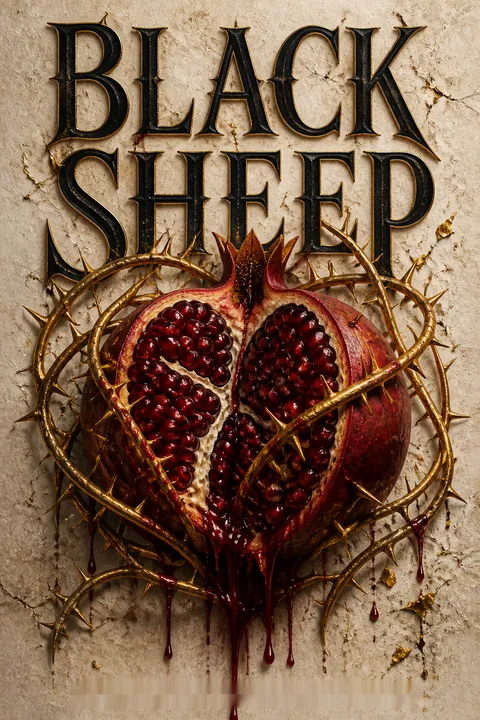


Plot Summary
A Pink Envelope
Vesper has spent six years away from Hell’s Gate, a secluded Satanist community in New Jersey, surviving on restaurant shifts and keeping her family at a distance. At Shortee’s, she is fired after an abusive customer burns his face with nacho cheese and management blames her. The humiliation lands on a night when she has begun to admit she misses home.
At her apartment, a formal invitation arrives for her cousin Rosie’s wedding to Brody, Vesper’s first love. A handwritten plea asks her to return. The news that Rosie and Brody are marrying stings more than the lost job: Vesper had imagined they would still be waiting for her. She decides to go and face them herself.
The restaurant’s petty indignities establish Vesper’s practiced contempt, but the invitation exposes what that contempt protects. She can treat customers, managers, and work as disposable because she has already lost the relationships that once gave her a place. Rosie and Brody’s wedding forces that loss into the present. Vesper’s decision is not simple longing: she wants to test whether home still matters, and whether her departure was truly a choice she can stand by.
The Farm’s Open Door
Vesper travels from Manhattan to Virgil without telling anyone she is coming. The farm’s familiar smells and the old house’s creaking porch make her feel that six years have folded away, but the crowded rehearsal dinner gives her no private reunion with her mother.
Constance Wright, the famous horror actor who has always been cold to her daughter, greets her with a cutting remark. Rosie rushes to embrace Vesper, while Brody fumbles the dinner rolls and can barely meet her eyes.
Aunt Grace, Constance’s sister and Vesper’s tender childhood caretaker, makes room for her at the table. The family resumes its Satanist meal blessing around her, and Vesper mouths the words without conviction. Back in her old bathroom, her reflection briefly moves out of sync.
The homecoming makes belonging physically persuasive before it becomes emotionally safe. Familiar rooms, food, and Grace’s affection offer Vesper the comfort she has been missing, while Constance’s contempt reinstates the old hierarchy at once. The blessing turns that collision into a test of performance: Vesper can imitate belief, but cannot honestly claim it. The misbehaving reflection hints that the return is disturbing more than memory. Her old surroundings seem to recognize a version of her that she has tried to leave behind.
The Porch Keeps Secrets
On the porch swing, Rosie explains that she asked Hell’s Gate’s High Priest to let Vesper attend, though she had nearly given up hope. She apologizes for falling in love with Brody after Vesper left, and insists their marriage is right for them. Vesper cannot make the apology ease her jealousy. Later, Constance confronts Vesper and tells her she should not have come, then sends Brody away when she catches them together.
That night Brody sneaks to the porch, afraid Vesper hates him. He admits he missed her, and they kiss. The kiss revives their old chemistry without changing the fact that he has chosen Rosie and his faith. When Vesper returns to her room, the window is open and her father’s photograph has been moved.
Rosie’s apology cannot repair the friendship because she treats the marriage as both an honest choice and an inevitable match. Vesper hears the affection in Rosie’s words but is still measuring herself against the life she might have had. Brody’s kiss offers a brief, bodily answer to that old longing, then sharpens the boundary: desire is not the same as shared values or a future. The moved photograph and open window shift the story from emotional unease toward a threat that can enter Vesper’s private space.
The Lamb Is Slain
On the wedding day, Vesper sees her old school uniform and remembers how tightly Hell’s Gate shaped childhood into ritual. Grace welcomes her with the chocolate chip banana pancakes she used to make, but Constance makes clear that Vesper’s place in the family remains conditional.
Vesper attends the underground cathedral with her ruby-and-diamond pentagram necklace at her throat. During the ceremony, the High Priest asks Rosie and Brody to pledge their lives to Satan and produce children within the faith.
Brody cuts the lamb’s throat as the required wedding sacrifice. Vesper looks away, unable to share the congregation’s celebration. At the reception, she is overcome by nausea and sees a shadow in her bedroom window, though it vanishes when she looks again.
The wedding makes the costs of Hell’s Gate visible in a ritual Vesper cannot reframe as mere eccentricity. The community’s vows bind marriage, childbearing, and worship into one contract, while the lamb’s death gives that contract a body. Vesper’s refusal to watch is not a dramatic rebellion; it is a boundary she can still hold when surrounded by people who consider the sacrifice sacred. The necklace places her back inside the institution, even as her discomfort and the shadow at the window suggest that her return has exposed her to something beyond social pressure.
Lucifer Claims His Daughter
The reception erupts when a silver-haired man appears and the guests fall into frantic worship. Vesper recognizes him as the father she has not seen in fourteen years.
He tells her he is Lucifer, the actual Satan worshipped by Hell’s Gate, and says he stayed away because Constance wanted to spare Vesper the pressure of knowing who she was. The community’s deference suddenly makes sense: they have treated Vesper as special because she is his daughter. Her father insists the world is nearing its end and that she has a role in what comes next.
He dances with her as the congregation watches, then warns that she cannot escape her nature. Vesper flees the farm after Constance admits she never wanted her, carrying a shattered sense of family back to the city.
The revelation converts Vesper’s lifelong sense of being watched and singled out into a grotesque explanation. The affection she received in Virgil may have been genuine, but it was entangled with the community’s expectation of what her birth means. Her father’s charm makes the revelation harder to reject: he offers the intimacy she has craved while framing it as destiny. Constance’s blunt rejection strips away the last hope that biological connection alone will earn care. Vesper’s flight is an attempt to reclaim authorship before anyone can define her purpose for her.
Home Follows Her
Back in her apartment, Vesper tries to resume ordinary life with Kerri, her self-absorbed coworker, and eventually returns to Shortee’s under a new manager, George. But the pentagram necklace and her father’s photograph keep appearing where she did not leave them, despite Vesper believing she discarded the necklace on the train.
She tells George that she grew up in a Satanist community, then sleeps with him partly to escape thinking about Brody and her family. At work, she sees a silver-haired man who resembles her father and nearly panics.
The familiar song from their last dance triggers another wave of distress. Vesper has returned to the city, but the objects and memories she carried from Virgil make clear that distance has not restored her sense of safety.
Vesper’s return to routine is less a recovery than a strategy for postponing thought. Kerri supplies familiar distraction, while George offers new intimacy without demanding a full account of Vesper’s history. Yet her father’s photograph and necklace undermine the idea that she can simply choose what remains of her past. The chapter’s recurring objects function like involuntary memories: they make the hidden history materially present. Vesper’s attempt to separate herself from Hell’s Gate through work, sex, and a new address is beginning to fail.
Wrath in the Bathroom
Kerri confronts Vesper in the Shortee’s bathroom after learning about her affair with George, and mocks her upbringing while accusing her of being socially broken. As Kerri steps toward Vesper, she slips and smashes her mouth against the vanity, shattering her teeth. Vesper helps her, but the sight of blood and her own surge of anger leave her unsure whether the fall was only an accident.
A flare of fire bursts from the kitchen stove soon afterward, then dies when a cook uses an extinguisher. Alone at the Black Stallion, Vesper remembers the night a stranger broke into her childhood home carrying a crucifix. He advanced on her, then fled; he fell down the stairs and died. Vesper realizes her command may have stopped him.
The violence unsettles Vesper because it appears to answer emotion rather than intention. The restaurant accident repeats the earlier nacho-cheese injury, but now Vesper suspects that her anger may be participating in the harm. Her flashback to the intruder adds an especially disturbing moral complication: he came to kill her, yet his death may have followed her intervention. The power, if it is hers, does not arrive as mastery. It appears first as consequence without comprehension, leaving Vesper to question whether she is protecting herself or becoming dangerous.
The Father at the Stallion
Vesper’s father appears at the Black Stallion and tells her the intruder was a former Hell’s Gate member who believed killing her would prevent disaster. He claims the man’s death and Kerri’s injury were not ordinary accidents, then urges Vesper to accept her power. He leads her into the alley, where George appears dazed and repeats that Vesper was not worth losing his job over.
Her father asks what punishment George deserves. Vesper imagines breaking his hands, and George’s bones snap without her touching him. Horrified but drawn to the certainty her father offers, Vesper leaves with him in a vintage car. He promises to explain her role in an approaching apocalypse, while using her longing for a parent to make his control feel like care.
The scene is a coercive lesson disguised as intimacy. Vesper’s father does not simply reveal her capacity for violence; he arranges a situation in which humiliation becomes a prompt and her private fantasy becomes an act. George’s injury confirms that Vesper’s anger can alter the world, but the father’s approval makes that confirmation dangerous. Vesper leaves with him not because she has resolved to join his cause, but because shock, exhaustion, and a childhood need for his attention have narrowed her sense of choice.
A Birthday in Red
Vesper wakes at the farm after her father brings her back, where Constance has sewn a lavish dress and the family is preparing a birthday celebration. She finds her baby teeth and a book of Hell’s Gate scripture among her mother’s belongings, but no family photographs.
The next morning, Grace gives her pills for her headache, and Vesper later realizes they have drugged her. Rosie helps her into the red, pentagram-covered gown while Vesper is weak, confused, and in pain.
The house fills with candles, guests, and music as the family insists the gathering is for her. At the table, her father announces that the congregation is celebrating the eve of the apocalypse. Vesper recognizes that she has been prepared for a ritual, not a birthday party.
The birthday setting turns care into a tool of captivity. Grace’s familiar tenderness and Rosie’s attention resemble the safety Vesper remembers, but both are now part of a plan that deprives her of consent. The dress, built from the symbols of the faith she rejected, makes her body into a public declaration before she can understand what is happening. Finding the scripture instead of photographs reinforces the family’s priorities: Vesper’s place in their story has been preserved as doctrine, not as an ordinary daughter’s history.
The Lamb Was Vesper
At the underground cathedral, Vesper learns that Hell’s Gate expects her blood to open a seal and bring the forces of hell into the world. Her father reveals that he has removed one of her ribs while she was drugged, then displays it as his offering. The wound under her dress confirms the theft. When Vesper protests, her family and the congregation do not intervene.
She turns to Constance, asking her mother to protect her, but Constance looks away. Lucifer grips Vesper, places a dagger at her throat, and cuts her. Her blood opens the seal beneath the cathedral. The betrayal is complete: the people Vesper returned to see have made her body the instrument of their prophecy, and her father’s affection has concealed an intended sacrifice.
The ritual makes the story’s central violation literal: Vesper’s family treats her body as communal property, justified by prophecy and bloodline. The removed rib and the cut throat transform inherited identity from a metaphor into physical appropriation. Her appeal to Constance is heartbreaking because it asks for the most basic parental act, protection, from someone who has repeatedly withheld it. The congregation’s silence shows how ritual can distribute responsibility until no individual feels required to stop the harm.
Hell Opens Beneath Them
Vesper awakens amid painless flames, her throat healed into a scar and a vast pit yawning through the cathedral floor. Lucifer calls her to join him, but she uses her new command of fire to attack the opening and shake the building.
As stained glass shatters and the floor tilts, the congregation scrambles for escape. Vesper refuses her father’s demand to complete the destruction of humanity. The believers who had watched her die slide into the pit, including Grace, Carl, Rosie, and Brody.
Constance stays upright long enough to press Kristal Link’s skull hairpin into Vesper’s hand and urge her to draw blood. Then Constance falls too. Lucifer’s charming appearance breaks apart to reveal an ancient, decaying figure, but he continues reaching for Vesper.
Resurrection does not make Vesper feel chosen or triumphant; it gives her the power to resist the purpose imposed on her. Her decision to turn destruction against the cathedral rather than the whole world separates her anger from her father’s ideology. Yet resistance carries terrible costs. The people who raised and loved her are also the people who enabled her sacrifice, so their fall cannot be made emotionally clean. Constance’s final gesture offers protection at the last possible moment, but it cannot undo what she helped permit.
The Hairpin Closes Hell
Vesper grips Constance’s skull hairpin and uses it to cut her palm, letting her blood reach the pit. The opening folds shut, and Lucifer disappears with it. The cathedral continues collapsing, so Vesper crawls through broken glass and climbs the winding stairs alone, her neck and side scarred and her body badly injured.
Outside, the barn catches fire and burns over the hidden ruins of Hell’s Gate. A lamb approaches her in the ash-covered yard. Vesper gathers it up and leaves the farm, choosing to carry a living creature away from the place where lambs were sacrificed. She cannot erase her family or the violence she has inherited, but she can choose what she does next.
The hairpin links Vesper’s survival to the horror films that shaped her childhood and to the mother who gave it to her. She does not defeat the past by becoming untouched; the scars remain, and the ruined farm makes the cost visible. What changes is her relationship to agency. She uses her own blood to close the breach rather than surrender it to her father. Carrying the lamb away turns an old emblem of sacrifice into a fragile companion, a small choice that belongs to her.
Epilogue
Years later, Vesper secretly returns to Wright Farm for an advance screening of a film about Constance and Hell’s Gate. The house is now a horror attraction, and the abandoned village has become fodder for documentaries and tourist merchandise. Vesper watches Lily, another former member, discuss the community while keeping her own identity hidden.
At a memorial stone, she burns the childhood photograph of her father, leaves the pentagram necklace and the hairpin, and walks away. She has built a life beyond the farm, but a sudden smell of sulfur and the silence of the crickets leave her wondering whether the past has truly released her.
The epilogue refuses to turn survival into uncomplicated closure. Vesper can visit the farm, recognize its exploitation as spectacle, and decide what objects to leave behind, but she cannot control how strangers narrate Hell’s Gate or whether the past will intrude again. Her choice to destroy the photograph is not a denial of her history; it is a refusal to keep her father’s image as the center of it. The final sensory warning preserves uncertainty without undoing the hard-won autonomy of her departure.
Analysis
Black Sheep makes the family romance of belonging inseparable from the politics of control. Vesper returns expecting emotional answers: whether Rosie still loves her, whether Brody regrets losing her, whether her father might finally come back. Instead, she learns that the community has assigned meaning to her before she can choose one. Its worship of her is not uncomplicated affection but a response to her ancestry and imagined role. The horror lies in how easily love can become a language for ownership.
Vesper’s cynicism initially seems like armor, but it also narrows her ability to imagine care beyond the family that injured her. Her father exploits that hunger with remarkable precision. He offers the intimacy she remembers, then recasts her anger as proof that she belongs to his apocalyptic purpose. The novel does not excuse Vesper’s destructive impulses, yet it distinguishes power from moral authority. Being able to hurt others does not make her obligated to do so, and being born into a story does not make that story her destiny.
The book’s rituals repeatedly convert abstract belief into bodily consequence: the wedding lamb dies, Vesper loses a rib, her throat is cut, and her scars remain after the supernatural crisis ends. That sequence challenges the community’s claim that sacrifice produces a perfect world. Its promised renewal depends on treating individual bodies as expendable. Vesper’s refusal is therefore not a simple rejection of religion in favor of skepticism. It is an ethical choice made under pressure: she will not reproduce the violence that has defined her family, even when she has the power to do it.
The ending offers no clean escape from inheritance. Vesper keeps scars, memories, and a capacity for fire. What changes is her claim over those things. She can leave the farm carrying a lamb rather than serving as one, and later choose which relics to surrender. Autonomy here is not the fantasy of becoming unrelated to the past. It is the harder practice of deciding what the past will make her do.
Review Summary
Black Sheep receives generally positive reviews, averaging 3.58/5. Fans praise Rachel Harrison's signature "cozy horror" style, blending dark humor with supernatural elements and strong female protagonists. Readers consistently highlight Vesper's relatable, snarky character and recommend experiencing the story blind due to a significant mid-book reveal. Comparisons are frequently drawn to Harrison's earlier works, Cackle and Such Sharp Teeth. Critics cite predictability, pacing issues, and underwhelming horror elements. A recurring theme among reviewers is the book's exploration of family trauma, religious estrangement, and personal identity.
People Also Read









Characters
Vesper
The estranged black sheepVesper is sharp-eyed, caustic, and practiced at keeping disappointment from showing. After leaving the Satanist community where she grew up, she builds a small, precarious life through restaurant work and insists that detachment is safer than hope. Her humor lets her name absurdity, but it also shields a deep hunger for family, especially for the absent father whose attention once made her feel chosen. She struggles to distinguish traits she inherited from the habits her upbringing imposed. Her central conflict is not simply whether she belongs to Hell’s Gate, but whether belonging can be separated from obedience and whether her own anger can be trusted.
Constance Wright
The famous, distant motherConstance is a celebrated horror actor whose poised beauty and controlled public image contrast with her chilly private manner. She raises Vesper amid film props, religious rituals, and long absences for work, offering little comfort and treating emotional need as an inconvenience. Her severity has taught Vesper to read tiny shifts in expression as warnings. Constance’s attachment to her career and her place in Hell’s Gate complicates the mother-daughter bond: she is neither a simple villain nor a dependable refuge. She is guarded, proud, and difficult to know, leaving Vesper to wonder how much of her coldness is nature and how much is a form of self-protection.
Vesper’s father
The absent fatherVesper’s father appears only intermittently in her childhood, yet his visits become the brightest memories she has of being loved. He is charismatic, playful, and able to make Vesper feel uniquely understood, which gives his absence an almost sacred weight. Her memories preserve his warmth more clearly than they preserve the reasons he could not stay. As an adult, Vesper has tried to find him without knowing his name, while fearing that the bond she remembers may have been less secure than she believed. His influence persists as both comfort and unanswered question.
Rosie
The faithful cousinRosie is Vesper’s cousin, childhood best friend, and closest thing to a sister. Warm, optimistic, and devoted to Hell’s Gate, she values family rituals and imagines a future built around faith, marriage, and children. Her sunny manner can conceal insecurity: she compares her looks and worth with Vesper’s and seeks reassurance even while presenting herself as the dependable one. Rosie remembers shared jokes and childhood tenderness with unusual vividness. That capacity for affection makes her bond with Vesper feel genuine, but her religious certainty also limits how well she can understand the choices that led Vesper to leave.
Brody
The first loveBrody is Vesper’s childhood sweetheart and Rosie’s fiancé. Their early intimacy grows out of a shared upbringing, secret meetings, and Vesper’s hope that he might question the faith as she does. Brody is affectionate and remembers the history between them, but his devotion to Hell’s Gate shapes his choices more strongly than his attraction to Vesper. He wants to believe that love and religious commitment can coexist without forcing a decision. His tenderness can comfort Vesper, but it also exposes the limits of a romance built inside a community neither of them experiences in the same way.
Grace
The sheltering auntGrace is Constance’s sister, Rosie’s mother, and the adult who gives Vesper much of the warmth she cannot get from her own mother. She cooks, quilts, jokes, and uses affectionate nicknames, making care feel practical and abundant. Her easy manner stands in contrast to Constance’s severity, though both women belong to the same religious community. Grace wants Vesper close and believes that returning home can restore what was lost. Her protectiveness is sincere, but her faith shapes what she considers good for Vesper, blurring the line between nurturing someone and asking them to conform.
Kerri
The talkative coworkerKerri works with Vesper at Shortee’s and fills silence with stories about her romantic life, especially her unstable attachment to Sean. She is sociable and emotionally demonstrative, traits that frustrate Vesper but also make Kerri an easy, familiar presence. Kerri believes herself perceptive and compassionate, yet her interest in others can quickly turn judgmental when she feels hurt. Their friendship is uneven: Vesper offers blunt advice while avoiding personal disclosure, and Kerri mistakes that distance for indifference.
George
The new restaurant managerGeorge replaces Rick as manager at Shortee’s. He is attractive, self-assured, and more considerate than Vesper expects, and his band-member persona gives her a welcome distraction from her family. Their quick intimacy offers Vesper a chance to imagine an ordinary future. George is not malicious, but he is careless with a confidence she shares, illustrating how a new connection can feel safe before trust has been tested.
Carl
Rosie’s affable fatherCarl is Grace’s husband and Rosie’s father. He tries to make family gatherings comfortable with corny jokes, broad affection, and a genial willingness to help. Vesper knows he has tried to fill a fatherly role, but she cannot accept him as a replacement for the father she longs for. Carl’s warmth is genuine, though his easygoing manner can make him slow to notice the pain beneath a family ritual.
The High Priest
The church’s public leaderThe High Priest conducts Hell’s Gate services and ceremonies, offering a solemn public face for the community’s beliefs. He has known Vesper since childhood and treats her as an important member of the congregation. His authority is ritual and institutional, helping translate doctrine into the rules that govern weddings, confirmation, and belonging. His attention makes Vesper’s return feel officially sanctioned, even when she does not know who has allowed it.
Lily
The former church memberLily is Jane’s older sister and a former member of Hell’s Gate who leaves the community. She shares a genuine childhood friendship with Vesper, and their parallel departures suggest that Vesper was not the only person who questioned the life they were taught to accept. In the years after the farm’s destruction, Lily becomes a public voice on the community’s history. Her willingness to speak openly contrasts with Vesper’s desire to remain unrecognized.
Jane
Rosie’s childhood friendJane is a former friend of Vesper’s who remains close to Rosie and marries Ant Alberts within Hell’s Gate. Perky, conventional, and eager to discuss marriage and motherhood, she represents the settled future the community offers its members.
Plot Devices
The wedding invitation
A summons disguised as welcomeThe formal invitation to Rosie and Brody’s wedding gives Vesper a socially acceptable reason to return to a community that normally bars defectors from coming back. Its anonymous handwritten appeal suggests that someone still misses her, while the wedding itself forces her to confront both her former best friend and her first love. The invitation’s true sender is revealed later, turning the apparent gesture of family reconciliation into a deliberate lure. It starts the plot by joining Vesper’s longing to another person’s plan.
The pentagram necklace
A wearable family claimGiven to Vesper as a child, the ornate pentagram necklace marks her place in Hell’s Gate and carries the weight of a childhood spent under the community’s rules. She resents wearing it, removes it after the wedding, and believes she has thrown it away. Its reappearances make it a physical reminder that her history cannot be discarded as easily as an object. The necklace connects religious identity with family inheritance, even when Vesper no longer accepts the beliefs it represents.
The Wright farmhouse
A house full of memoryThe Victorian farmhouse holds Vesper’s childhood rooms, her mother’s horror props, the family’s private rituals, and the hidden cathedral beneath the barn. Its familiar details comfort Vesper even as they revive the pain attached to her parents and her religious upbringing. The house’s mirrors and objects sometimes seem to behave unnaturally, blurring the line between Vesper’s exhaustion and a supernatural presence. The setting is not merely a haunted backdrop: it is the physical structure of the family history Vesper must enter before she can leave it.
The Lamb’s blood
Ritual made bodilyHell’s Gate’s ceremonies use the lamb as a sign of devotion, most visibly when Brody kills one during his wedding. The ritual prepares the reader for the community’s larger belief that Vesper’s blood can open a seal beneath the cathedral. Her father’s theft of a rib and the sacrifice he demands make the lamb imagery part of a system that treats bodies as religious offerings. The device binds doctrine to physical violence and exposes how believers use sacred language to justify coercion.
Kristal Link’s hairpin
A borrowed survival toolThe skull hairpin belongs to Kristal Link, Constance’s famous horror character, and Vesper remembers it as the tool that lets the heroine fight back. Constance gives the pin to Vesper during the cathedral’s collapse and tells her to draw blood. Vesper uses it to cut her own palm and close the seal she helped open. The hairpin connects her mother’s cinematic world to the real danger beneath the farm, then becomes an instrument Vesper uses on her own terms.
About the Author




Download PDF
Download EPUB
.epub digital book format is ideal for reading ebooks on phones, tablets, and e-readers.








