


Plot Summary
White at the Red Light
At a city intersection, a driver suddenly loses his sight while stopped at a red light. He describes a dense whiteness where the road should be. A stranger helps him home, then drives away in his car. The man's wife takes him to an ophthalmologist, who finds no damage in his eyes and cannot explain the blindness. That night, the thief also goes blind.
The doctor studies the case, then loses his own sight. More people follow: a boy with a squint, a young woman who wears dark glasses, and others who had been near the first patients. The illness offers no visible warning and no medical explanation, turning an ordinary traffic delay into the first crack in the city's shared reality.
The opening makes blindness both bodily catastrophe and a test of social reflexes. The thief's first act is genuinely helpful, but he converts another person's vulnerability into an opportunity; guilt arrives only after he has taken the car. Meanwhile, the doctor's instruments certify healthy eyes while the patient cannot see, exposing the limits of expertise without making knowledge itself worthless. The unusual white field also refuses the familiar metaphor of darkness. People are not simply deprived of light; their perception is overwhelmed by an alien brightness that makes the visible world feel newly unstable.
Quarantine by Decree
The government orders the blind and anyone considered exposed into an abandoned mental hospital, guarded by soldiers. The doctor's wife claims she has also gone blind so she can accompany her husband. In the first ward, six strangers gather: the doctor, his wife, the first blind man, the car thief, the dark-glasses woman, and the boy.
The doctor's wife secretly sees, but conceals it as the loudspeaker announces rules that leave the inmates responsible for their own food, hygiene, and dead. The first blind man recognizes the thief and accuses him of taking the car. The thief denies it, then grabs the other man in a fight. When the group searches for the toilets, the thief gropes the dark-glasses woman, who drives her heel into his thigh.
The quarantine is presented as protection, but its rules transfer the cost of public safety to people stripped of agency. The government can confine bodies without providing care, then call that abandonment civic responsibility. The doctor's wife enters the ward through a lie that is also an act of loyalty; her concealment gives her freedom to help, but makes every helpful gesture dangerous. Inside, old social roles survive in distorted form: the doctor is asked to lead, the thief still exploits a vulnerable woman, and the first blind man clings to property as proof that his previous life has not vanished.
The First Ward Breaks
The doctor's wife improvises a bandage for the thief's wound, and his fever worsens in the crowded ward. Believing the soldiers might take him to a hospital, he crawls toward the gate during the night. A guard mistakes his face at the bars for a threat and shoots him. The inmates bury him in the courtyard with a single spade.
Soon, soldiers place food beyond easy reach; when hungry blind people crowd the delivery point, guards fire into them, killing nine. The survivors carry the bodies away and divide the rations. The government makes no public acknowledgment of the killings. Within the asylum, hunger and filth make each small task harder, while the inmates learn that the soldiers' promises of aid do not amount to protection.
The thief's death joins personal guilt to institutional violence without making either one a simple moral lesson. He had harmed the first blind man, yet his injured body is still entitled to care; the soldiers instead treat his approach as a target. The later shooting makes the state's logic unmistakable: people rendered helpless are classified as dangerous when they move together. Burial becomes one of the inmates' first collective duties, but the government's silence denies them even the public recognition of their losses. The ward's increasingly practical rituals are fragile attempts to keep human obligations alive inside a system designed to shed them.
The City Enters the Asylum
Hundreds more blind people arrive, many pushed into the asylum without luggage or time to find their families. In the crush, the supposedly protected wing for people merely exposed to blindness is overwhelmed; those who still see are struck blind as they struggle through the crowd. The hospital fills beyond its beds, and the dead remain difficult to bury.
The old man with a black eye patch joins the doctor's ward carrying a small radio. He describes the spread beyond the walls: transport has stopped, public confidence has collapsed, and official reassurances have failed as more people go blind. The radio brings news from a world already losing its institutions, then its announcer also becomes blind and the broadcast falls silent.
The asylum's boundary proves to be a fiction: it cannot contain the illness, but it can concentrate its consequences. The overcrowding turns the state's neat distinction between infected and exposed into a physical crush, while official categories persist long after they cease to describe reality. The radio briefly restores a civic scale to the inmates' experience, connecting their ward to transportation, government, and public communication. Its silence is therefore more than a failed device. It marks the loss of a common account of events, leaving each group to make meaning and rules from whatever it can hear and touch.
Food Becomes a Ransom
A group of inmates takes control of the food deliveries. Their leader has a gun, and a blind accountant records the valuables they collect, using Braille. The gang first demands money and jewelry, then searches for anything the other wards might have hidden.
Hunger weakens resistance, and the gang begins withholding food from those who protest. Its demands turn the asylum's most basic necessity into a private market enforced by violence. The doctor's ward hands over its possessions, with the doctor's wife hiding a pair of scissors in the bedding area.
Elsewhere, the old man with the eye patch keeps his radio out of the collection, but its last broadcast ends when the announcer goes blind. The inmates can no longer count on outside news or fair distribution.
The gang does not invent scarcity; it captures the mechanism by which scarcity is allocated. Its Braille ledger gives extortion a veneer of administration, while the gun supplies the force that ordinary institutions once concealed behind rules and officials. The other wards' surrender is neither simple cowardice nor free consent: food deprivation narrows choice until compliance resembles survival. The doctor's wife hides scissors not as a fully formed plan but as a small refusal to surrender every means of action. The radio's failure closes another avenue of dependence, leaving the inmates to judge events without a trusted public voice.
Women Made the Payment
When the gang demands women in exchange for food, the wards first protest, then face the choice between sexual violence and hunger. The women go together, with the doctor's wife leading them. The gang leader selects the dark-glasses woman and the doctor's wife for himself, while the others are assaulted by the men.
The first blind man's wife joins the group despite her husband's objections. After the women return, the doctor's wife finds the woman who had struggled with insomnia dead, her body injured by the assault.
She washes the corpse before the men return with food. The first blind man refuses to collect the rations, ashamed and enraged, while the doctor goes in his place. The surviving women are left to carry an experience the ward's ordinary language cannot contain.
The gang's demand exposes how coercion can disguise itself as a collective bargain: the men debate who should go, but the women bear the bodily cost. The first blind man's appeal to marital honor fails because it centers his authority rather than his wife's choice. The doctor's wife acts as guide and caretaker, but care cannot undo what happened; washing the dead woman becomes a concrete, limited response to an irreparable harm. The scene also breaks the fiction that shared blindness creates equality. People can lose sight together and still occupy radically different positions of power, vulnerability, and responsibility.
Scissors Against the Gun
When the gang returns to collect another group of women, the doctor's wife follows them with the scissors she has kept hidden. During the assault, she drives the blades into the leader's throat. The blind accountant finds the body and takes the gun, claiming authority over the gang.
The women escape amid confusion, and the doctor's wife admits to her husband that she killed the leader because someone had to stop him. His death does not free the other wards.
The new gunman keeps control of the food, and the gang punishes a ward that tries to challenge its rationing. As hunger deepens, the doctor's wife considers surrendering herself, but the old man with the eye patch insists that the person who acted against the gang must not be handed over.
The killing is not framed as a clean restoration of justice. It removes the gang's most immediate predator, but the weapon and the food system remain, so power changes hands rather than disappearing. The doctor's wife's act is driven by an urgent refusal to let another assault proceed, not by confidence that violence can build a just order. Her willingness to accept punishment reveals how quickly moral agency can turn into self-accusation. The old man's defense matters because he treats her act as a shared answer to shared degradation, resisting the gang's effort to isolate her and make the community disown its own survival.
Fire Opens the Ward
With food withheld, seventeen inmates plan to force their way into the gang's ward, carrying metal bed rails. The barricade holds, and the blind accountant shoots into the attackers, killing two men. The doctor's wife sees the bodies and can no longer hide that she has sight.
While the wounded are carried back, an unnamed woman from another ward uses a lighter to set fire to the beds blocking the gang's entrance. The flames spread through the gang's ward, killing the woman and the people trapped inside.
The asylum catches fire. The soldiers, themselves blinded, have abandoned their posts, and the main gate stands open. The inmates escape into the street, but beyond the burning building they find no guide, no food supply, and no functioning authority.
The escape is produced by several acts that are brave for different reasons: the planned assault seeks collective control of food, the rescue tries to retrieve the wounded, and the fire is a desperate answer to a barricade protected by a gun. The doctor's wife's sight becomes public not through a chosen confession but because the violence makes concealment impossible. The fire destroys the gang's enclosure and kills the woman who starts it, so liberation arrives inseparable from further loss. The open gate ends physical confinement, not dependence or fear. The survivors leave the institution only to confront a city with the same failures at a larger scale.
Freedom Without Directions
Outside, the released inmates remain clustered by the asylum because none knows where to go. The doctor's wife leads her small group toward the home of the girl with dark glasses, using a cord so the others will not become separated.
The streets are crowded with blind people searching for food and somewhere to sleep. At the girl's building, they find the front door forced and her parents gone. A blind older neighbor has survived by gathering food from the flats and eating raw vegetables and meat from the gardens.
She lets the girl into her apartment and returns her key. The group rests there, but recognizes that no home is secure when its occupants must leave together to forage. They decide to stay together and move toward a larger, safer household.
Freedom initially feels like another form of exposure. The asylum at least supplied walls and a predictable route to food; the city offers movement without reliable orientation. The cord turns companionship into a practical technology, making each person's safety dependent on keeping contact with the others. The girl's return to her building brings no reunion with her parents, but the neighbor's key preserves a small link between ownership and belonging. The older woman's survival method is harsh, yet it is also a kind of local knowledge that formal authority cannot provide. Safety now depends less on a legal address than on whether a group can share risk.
A Writer's Borrowed Home
The group visits the first blind man's apartment and finds it occupied by a writer whose wife and daughters are away. Rather than expel him, the first blind man and his wife agree to share the flat until either family can return to its own home. The writer explains that he continues composing by feeling the grooves left by his pen, though he cannot read what he has written.
The doctor's wife examines his pages and later reads aloud to the group, giving their days a shared story beyond the hunt for food. They then reach the doctor's apartment, which has survived the chaos largely intact. He retrieves the keys he kept with him, and the group settles into clean clothes, a lamp, and the rooms of a household they can care for together.
The writer's arrangement replaces the usual contest over a home with a provisional ethics of hospitality. The first blind man could claim the flat as property, but accepts that the writer's presence is also a fact that must be accommodated. Writing by touch separates the act of making a record from the ability to verify it visually; the pages exist because someone persists in leaving marks. Reading them aloud creates another kind of shared access. The doctor's apartment offers practical shelter, but its value lies not in domestic comfort alone. The group can restore routines there because someone remains able to notice what needs doing.
Rain Makes a Household
At the doctor's home, the group ration food and use collected rainwater to wash clothes, shoes, and themselves. The doctor's wife, the dark-glasses woman, and the first blind man's wife wash together on the balcony, turning a necessary chore into a rare moment of ease.
The old man with the eye patch bathes in the tub, and one of the women quietly washes his back. He and the dark-glasses woman grow close, eventually choosing to live as a couple despite their age difference and blindness.
The doctor's wife reads aloud at night, while the boy with the squint grows attached to the dark-glasses woman and stops repeatedly asking for his mother. These modest routines give the group a way to live together without pretending that the city outside is repaired.
The household's intimacy grows through tasks that cannot be postponed: washing, feeding, guiding, and making room to sleep. Cleanliness does not erase the asylum's humiliation, but it lets the survivors experience their bodies as something other than evidence of neglect. The old man's relationship with the young woman is not made secure by sight or conventional expectations; it develops through attention and chosen companionship. The boy's attachment likewise shifts from the absent mother he cannot find to the adult who consistently cares for him. These bonds do not restore the old social order. They assemble a small, negotiated one from daily acts.
A City Without Witnesses
The doctor's wife and her husband go out for supplies, passing blind crowds, ruined shops, and a corpse being eaten by dogs. At a supermarket, she discovers a basement store of food, but its stairway is sealed behind a door surrounded by the eerie lights of decomposing bodies.
She escapes without opening it, shaken by the people who must have fallen inside. Later, she enters a church and finds every sacred image's eyes covered, including the figures in its paintings. The discovery spreads panic among the worshippers.
On another visit to the dark-glasses woman's building, the group finds the older neighbor dead outside, still holding the keys. They carry her to the garden, bury her, and leave a lock of the girl's hair on the door as a sign for her parents.
The doctor's wife's sight grants information but no mastery: she can locate food, recognize danger, and see the dead, yet cannot make the city usable for everyone else. The basement's sealed entrance gives abundance a grave-like quality, showing that food may exist and still be unreachable. In the church, the covered eyes reverse the usual promise that sacred images witness human suffering. The neighbor's death completes a fragile exchange of shelter and keys, while the burial and lock of hair answer loss with acts of care rather than explanation. The group is not rebuilding civilization so much as preserving traces of relationship inside its ruins.
Sight Returns, Unevenly
Back at the doctor's home, the first blind man wakes from a moment of darkness and realizes that he can see again. The girl with dark glasses regains her sight later that night, and the doctor sees by dawn. News from outside confirms that others are also recovering. The group celebrates, though relief brings exhaustion and tears as much as joy.
The old man with the eye patch still has his cataract, but the doctor expects it can eventually be treated. Then the doctor's wife looks out at the dirty, shouting city and sees the sky turn completely white. She lowers her gaze, afraid that the blindness has come for her at last. The people around her can see again; the final uncertainty belongs to the one person who has guided them.
Recovery arrives first as a sequence of individual experiences, not as an announcement that the world has been repaired. The first blind man's sight restores him to his wife, the dark-glasses woman's vision tests a relationship formed without faces, and the doctor's sight returns expertise to a profession that had become useless. Yet the city's noise and filth remain, making the restored ability to see a confrontation with consequences as well as a gift. The doctor's wife's final white sky destabilizes the apparent happy ending. Her fear is not simply fear of disability; she has learned what it costs to witness suffering when others cannot.
Analysis
Blindness turns perception into a public resource. Before the epidemic, people rely on sight so completely that they rarely notice how much coordination, dignity, and safety it supplies. Once it disappears, familiar institutions continue to issue instructions, but cannot perform the work their authority implies. The government's quarantine rules, the soldiers' perimeter, and the gang's ration system all claim order; each instead protects a hierarchy while leaving vulnerable people to absorb the consequences.
The novel's most unsettling reversal is that sight is neither innocence nor salvation. The doctor's wife can see what others cannot, yet that advantage exposes her to the full material reality of their degradation and makes her responsible for decisions no one else can verify. Her care is powerful because it is practical: guiding people to toilets, managing food, cleaning a body, and keeping a group together. But the book refuses to turn her into a flawless rescuer. She is exhausted, frightened, and capable of violence when the available alternatives have narrowed to complicity or intervention.
Relationships become the story's counter-institution. The dark-glasses woman comforts a child; the first blind man and his wife renegotiate intimacy; the old man and young woman form a bond beyond the roles others assign them; strangers share homes rather than simply expel one another. Such acts do not repair the city, but they preserve forms of personhood that law, money, and official communication no longer secure.
The ending offers recovery without explanation or moral bookkeeping. Sight returns, but not before fear, coercion, and mutual dependence have altered the survivors. The doctor's wife sees whiteness in the sky just as the others begin to see again, leaving the final image poised between renewed catastrophe and a warning about what people fail to perceive even when their eyes work. The novel's question is not merely whether humanity can survive blindness. It is whether people can learn to see one another before disaster makes that failure impossible to ignore.
Review Summary
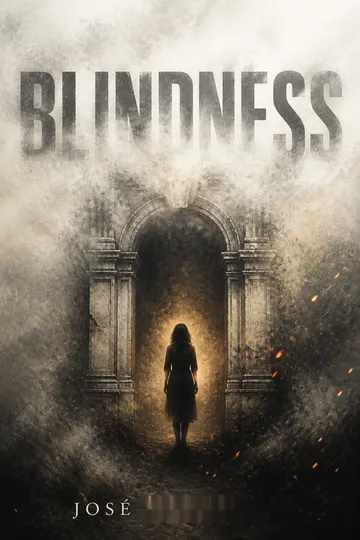
Blindness is a critically acclaimed novel exploring themes of human nature and societal collapse through an epidemic of sudden blindness. Readers praise Saramago's unique writing style, philosophical depth, and ability to create a disturbing yet thought-provoking allegory. The story follows a group of characters, particularly the doctor's wife who retains her sight, as they navigate a world plunged into chaos. While some found the writing style challenging, most agree the novel is a powerful commentary on humanity, morality, and the fragility of civilization.
People Also Read




Characters
The doctor's wife
The doctor's moral centerThe ophthalmologist's wife is observant, practical, and emotionally candid, with a habit of turning concern into useful action. She is closely bonded to her husband, but her care is not limited to him: she notices the boy's fear, the women's vulnerability, and the ward's neglected needs. Under pressure, she weighs compassion against the danger of becoming indispensable to people who may exploit her. Her strength is not a simple absence of fear. She feels fear and disgust sharply, then keeps moving when others depend on her. The novel places her between private loyalty and a widening responsibility to strangers, asking how much one person can bear without being consumed by the work of seeing.
The doctor
An expert without answersAn ophthalmologist, the doctor begins with the habits of a careful professional: he examines the first patient, searches medical literature, and tries to alert the authorities when he recognizes a possible contagion. His training gives him a method, but no cure for a condition that leaves the eyes physically intact. He is thoughtful rather than domineering, and understands that leadership means little if he cannot secure medicine, food, or protection for those around him. His marriage is a source of tenderness and practical partnership. As ordinary institutions fail, he must reconsider what it means to help when expertise cannot restore sight and the most urgent treatments are acts of companionship.
The first blind man
The first patientThe first blind man is an ordinary driver whose sudden loss of sight begins the crisis. He is frightened by his dependence and acutely conscious of the possessions and routines that blindness takes from him. His anger at the man who steals his car reflects a wish to hold someone accountable when the larger disaster has no known cause. He is married, and his wife's presence gives their shared ordeal a familiar intimacy, though fear and shame can make them speak past each other. He is neither heroic nor unusually cruel; his importance lies in how recognizably human his reactions are as a private misfortune becomes a collective condition.
The wife of the first blind man
A marriage under strainThe first blind man's wife initially responds to his crisis with practical care, then faces the possibility that she too may become blind. Her relationship with him is shaped by long familiarity, but the asylum forces them to renegotiate what marriage means when neither can protect the other in the old ways. She resists being treated as her husband's possession and makes choices according to the conditions they actually face. Her character shows how affection and resentment can coexist under fear, and how an apparently quiet partner may have a firmer sense of self than a spouse expects.
The girl with dark glasses
A guarded young caregiverThe young woman with dark glasses lives independently and makes choices about sex, money, and pleasure without accepting the moral labels others place on her. Her glasses initially hide an eye infection, but they also make her harder for strangers to read. In the asylum she comforts the boy, protects her boundaries, and develops unexpected attachments among people who know her first by voice and touch. She can be defensive and generous in the same moment. The story treats her sexual history neither as proof of corruption nor as a guarantee of freedom; what matters is her capacity to choose, care, and claim dignity under conditions designed to take choice away.
The boy with the squint
A child seeking safetyThe boy with the squint is brought to the ophthalmologist before the illness takes his sight. In the asylum he repeatedly longs for his mother and depends on the dark-glasses woman and the doctor's wife for comfort. Fear makes him cling to familiar voices and small routines, while hunger and displacement steadily consume his childhood certainties. He is not a symbol of innocence so much as a child trying to adapt with the limited information adults can give him. His presence makes the consequences of neglect concrete: every failed delivery, dangerous journey, and missing parent is something he must endure without being able to understand its scale.
The old man with the black eye patch
The ward's elder witnessThe old man with the black eye patch is a former patient of the doctor, already accustomed to living with impaired sight before the epidemic. He arrives with a portable radio and a habit of reflecting before he speaks. His account of the outside world gives the ward its first wider picture of the crisis, while his dry humor punctures despair without denying it. He is alert to shame, power, and the small forms of courage that others overlook. His age does not make him merely wise or detached; he remains capable of desire, vulnerability, and attachment, and his presence complicates assumptions about what people can begin anew under extreme conditions.
The car thief
A compromised SamaritanThe car thief first helps the newly blind driver reach home, then takes advantage of the man's dependence and steals his vehicle. His kindness and opportunism coexist, rather than canceling each other out. Once he becomes blind himself, he is forced to live beside the man he wronged and defend himself against accusation. He is quick to anger, ashamed when his own body becomes helpless, and still alert to physical desire. His character exposes the gap between a person's self-image as decent and the choices made when an opportunity appears.
The gang leader
The ward's armed rulerThe gang leader establishes control by monopolizing the asylum's food and backing every demand with a gun. He treats the other wards as a captive population whose belongings and bodies can be converted into payment. His power depends less on charisma than on the credible threat of deprivation and injury. He understands that people who are hungry may be divided, and he exploits their uncertainty about what others have surrendered. The character represents domination stripped of its official language: unlike the government, he makes no pretense that his rules serve the common good.
The Braille accountant
The gang's record keeperBlind before the epidemic, the accountant uses Braille to inventory the valuables and food controlled by the gang. His specialized skill gives the gang a practical advantage and lends its extortion a system of records. He is not simply a clerk caught in events; he participates in an arrangement that converts hunger into leverage. His position shows that experience of disability does not automatically produce solidarity. The same knowledge that might help people navigate a changed world can also be used to manage their exploitation.
The writer
A keeper of written memoryThe writer is living in the first blind man's apartment while his own family is away. Unable to see his pages, he continues writing by following the impressions his pen leaves in the paper. His work gives the survivors a way to consider experience beyond the immediate demands of food and shelter. He is patient about sharing the flat and does not claim a right to displace the household that once lived there. The writer's presence makes authorship an act of persistence: a record can be made even when its maker cannot verify the marks or know who will eventually read them.
The older neighbor
A solitary survivorThe older neighbor in the dark-glasses woman's building survives by searching nearby flats for food and cultivating what grows in the back gardens. Suspicion has become part of her method of staying alive, but it does not erase her capacity to respond to another person's need. She is physically and emotionally isolated, and her home becomes a temporary refuge for the returning girl and her companions. The neighbor embodies a form of endurance shaped by deprivation rather than ideology: she adapts because the alternatives are worse, and her wary generosity is difficult to separate from her need to protect what remains.
The woman who cannot sleep
A vulnerable ward mateKnown only by her inability to sleep, this woman is among the asylum's most vulnerable inmates. She has little social power and few means of protecting herself when the gang begins selecting women. The narration gives her a small but memorable presence through her anxious wakefulness and the other women who try to care for her. Her anonymity reflects how easily people become a number or a need in the overcrowded wards.
The dog of tears
A loyal street companionThe dog attaches itself to the doctor's wife after finding her in distress on the street. It follows the group, guards their refuge, and responds to human grief with an attentiveness that many people have lost. The dog is not a trained guide and cannot solve the survivors' problems, but its presence offers a kind of uncomplicated loyalty. It moves between animal survival and human companionship, reminding the group that care can cross the boundary between species even as the city's human systems collapse.
The woman with the lighter
A desperate resisterAn unnamed inmate from another ward, she keeps a lighter among the few possessions that remain to her. The small object gives her an option when ordinary appeals and organized resistance have failed. She belongs to the many people the asylum reduces to a bed, a ration, or a nameless body, but she retains the ability to make a consequential choice.
The car thief's wife
A household left behindThe car thief's wife receives him after a policeman brings him home blind. Her fear at seeing the uniformed officer quickly gives way to concern for her husband, and she becomes one of the early witnesses to how swiftly the crisis invades private life. She has little control over the wider events, but her response makes clear that each newly blinded person leaves someone else facing uncertainty.
Plot Devices
The white blindness
A crisis without explanationThe epidemic causes people to experience a total white field despite eyes that appear physically undamaged. It spreads through a pattern that seems contagious, yet the doctor cannot identify a mechanism or treatment. Its whiteness separates the novel's catastrophe from familiar darkness and makes the condition feel like an assault by excess visibility rather than simple absence. As the illness reaches the whole population, it also tests how much social life depends on seeing faces, streets, property, and other people's distress. The eventual return of sight does not explain the cause, leaving the condition as a force that exposes human behavior rather than a puzzle solved by medicine.
The mental hospital
A prison dressed as protectionThe government turns an abandoned mental hospital into a quarantine facility, separating those who are blind from those merely considered exposed. Loudspeaker rules assign food, hygiene, fire control, and burial to the inmates while soldiers enforce the perimeter. The institution provides beds and walls, but not reliable care. As arrivals multiply, the distinction between the two wings collapses, and the asylum becomes a small-scale version of the wider social breakdown. Its rope routes and numbered beds offer provisional ways to navigate, while its locked gate makes dependence on authority unmistakable. The building's eventual loss of control opens the story's transition from confinement to an equally dangerous city.
The doctor's wife's sight
A hidden capacity to witnessThe doctor's wife remains able to see while claiming to be blind so she can stay with her husband in quarantine. Concealment lets her guide people, find supplies, notice danger, and intervene in moments when no one else can. It also isolates her: she sees degrading conditions others cannot confirm, while revealing her ability could make her a servant or a target. The advantage never amounts to control over the crisis. She cannot prevent every death or make the city safe, and what she witnesses accumulates as a moral burden. Her sight functions as both practical resource and painful obligation, complicating the idea that greater perception automatically brings power.
Food as currency
Hunger creates a private governmentFood begins as a ration delivered by soldiers, then becomes the basis of the gang's control. The gang demands valuables and later uses women's bodies as payment, converting a biological necessity into a system of coercion. The blind accountant's Braille records make the exchange appear orderly, but the gun determines who eats. This device links institutional scarcity to intimate violence: once food is withheld, resistance becomes a gamble with other people's survival. It also reveals why simple appeals to fairness fail. The inmates need a way to distribute food, yet every system can be manipulated by whoever controls supply, information, or force.
The scissors and lighter
Small tools become resistanceThe doctor's wife keeps a pair of scissors among her belongings, while another inmate retains a lighter. Neither object is powerful by itself; both are ordinary household tools made consequential by the scarcity of weapons and the absence of outside protection. The scissors give one person a means to interrupt the gang's rule, while the lighter becomes part of the attempt to break its barricade. Their use carries terrible costs and does not guarantee a clean victory. The objects matter because they convert hidden, private capacity into action when institutions have failed and collective plans are still too weak to protect everyone.
FAQ
Synopsis & Basic Details
What is Blindness about?
- Sudden blindness epidemic: A city is struck by a mysterious epidemic of white blindness, causing societal collapse and forcing people into a brutal struggle for survival.
- Quarantine and dehumanization: The blind are quarantined in an asylum, where they face horrific conditions, power struggles, and the loss of their humanity.
- A journey of survival: The story follows a group of individuals as they navigate this new, sightless world, grappling with moral dilemmas and the search for hope.
Why should I read Blindness?
- Thought-provoking allegory: The novel uses blindness as a powerful metaphor to explore the fragility of civilization and the darkness of human nature.
- Intense emotional experience: Saramago's writing creates a visceral and unsettling reading experience, forcing readers to confront uncomfortable truths about humanity.
- Unique narrative style: The author's distinctive style, with long sentences and minimal dialogue markers, immerses the reader in the chaotic world of the blind.
What is the background of Blindness?
- No specific historical context: The novel is set in an unnamed city and country, making it a universal allegory rather than a specific historical or political commentary.
- Focus on human behavior: The background is less about a specific time or place and more about exploring the potential for societal breakdown and the extremes of human behavior.
- Timeless themes: The themes of blindness, power, and survival resonate across different cultures and time periods, making the novel relevant to any society.
What are the most memorable quotes in Blindness?
- "I think we did not go blind, I think we are blind, Blind but seeing, Blind people who can see, but do not see.": This quote encapsulates the novel's central theme of the blindness of human nature, even when physical sight is present.
- "If you can see, look. If you can look, observe.": This quote highlights the importance of awareness and observation, urging readers to pay attention to the world around them.
- "Inside us there is something that has no name, that something is what we are.": This quote delves into the core of human identity, suggesting that our true essence lies beyond labels and definitions.
What writing style, narrative choices, and literary techniques does José Saramago use?
- Long, flowing sentences: Saramago's writing is characterized by long, complex sentences that often lack traditional punctuation, creating a sense of stream-of-consciousness.
- Minimal dialogue markers: The absence of quotation marks and dialogue tags blurs the lines between narration and character speech, immersing the reader in the story.
- Allegorical and metaphorical language: The novel uses blindness as a central metaphor to explore broader themes of society, power, and human nature, making it a thought-provoking allegory.
Hidden Details & Subtle Connections
What are some minor details that add significant meaning?
- The dog of tears: The stray dog that follows the doctor's wife becomes a symbol of loyalty and compassion, highlighting the capacity for kindness even in a world of chaos.
- The old man's eyepatch: The old man's black eyepatch, initially a physical detail, becomes a symbol of his wisdom and experience, contrasting with the blindness of others.
- The color white: The pervasive whiteness of the blindness is not just a sensory experience but also a symbol of the emptiness and moral void that engulfs society.
What are some subtle foreshadowing and callbacks?
- The initial traffic stop: The opening scene, where the first blind man goes blind at a traffic light, foreshadows the breakdown of societal order and the loss of control.
- The stolen car: The car thief's actions early in the novel foreshadow the later power struggles and the breakdown of trust within the asylum.
- The doctor's research: The doctor's initial research into blindness foreshadows his own loss of sight and the futility of scientific knowledge in the face of the epidemic.
What are some unexpected character connections?
- The doctor and the car thief: The doctor and the car thief, initially connected by the car theft, end up as fellow internees, highlighting the shared vulnerability of all individuals.
- The girl with dark glasses and the old man: The unlikely bond between the girl with dark glasses and the old man with the black eyepatch reveals the human need for connection across age and experience.
- The hotel maid and the girl with dark glasses: The hotel maid and the girl with dark glasses, who were connected by the girl's blindness in the hotel, end up in the same ward, highlighting the interconnectedness of the blind.
Who are the most significant supporting characters?
- The old man with the black eyepatch: He provides a historical perspective and a sense of continuity, offering wisdom and reflection amidst the chaos.
- The girl with dark glasses: She demonstrates resilience and adaptability, forming a bond with the boy with the squint and challenging the established power dynamics.
- The car thief: He embodies the moral complexities of survival, highlighting the desperation and guilt that arise in the face of the epidemic.
Psychological, Emotional, & Relational Analysis
What are some unspoken motivations of the characters?
- The doctor's wife's guilt: The doctor's wife's unspoken motivation is her guilt over her ability to see while others suffer, driving her to help others while remaining hidden.
- The car thief's remorse: The car thief's unspoken motivation is his remorse over his actions, which leads to his eventual self-destructive behavior.
- The old man's acceptance: The old man's unspoken motivation is his acceptance of his fate, which allows him to provide a sense of calm and wisdom to the group.
What psychological complexities do the characters exhibit?
- The doctor's intellectual struggle: The doctor's struggle to reconcile his scientific knowledge with his own blindness highlights the limitations of reason in the face of the inexplicable.
- The girl with dark glasses's vulnerability: The girl with dark glasses's hidden vulnerability beneath her tough exterior reveals the emotional toll of her experiences.
- The first blind man's pride: The first blind man's struggle with his pride and his desire to protect his wife highlights the complexities of male identity in a world without sight.
What are the major emotional turning points?
- The doctor's wife's decision to kill the thug leader: This act marks a shift from passive observation to active resistance, driven by her rage and desperation.
- The first blind man regaining his sight: This event sparks hope and a sense of possibility, offering a glimpse of a future beyond the blindness.
- The women's sacrifice: The women's decision to submit to the thugs' demands highlights the depths of their desperation and the moral compromises they are forced to make.
How do relationship dynamics evolve?
- The doctor and his wife: Their relationship evolves from a partnership of equals to one where the wife becomes the protector and guide, highlighting the changing power dynamics.
- The girl with dark glasses and the old man: Their relationship evolves from a shared sense of isolation to a deep bond of understanding and companionship, highlighting the power of human connection.
- The blind internees: The relationships among the blind internees evolve from initial cooperation to power struggles and then to a fragile sense of community, reflecting the challenges of survival in a chaotic world.
Interpretation & Debate
Which parts of the story remain ambiguous or open-ended?
- The cause of the blindness: The novel never explains the cause of the blindness, leaving it as a mysterious and inexplicable phenomenon, emphasizing the limits of human understanding.
- The nature of the cure: The return of sight is also unexplained, leaving the reader to question whether it is a true cure or simply another phase in the cycle of blindness.
- The future of society: The novel ends with a sense of hope, but the future of society remains uncertain, leaving the reader to ponder the long-term consequences of the epidemic.
What are some debatable, controversial scenes or moments in Blindness?
- The women's sexual exploitation: The scenes of sexual exploitation are highly controversial, raising questions about the limits of human depravity and the role of women in times of crisis.
- The doctor's wife's silence: The doctor's wife's decision to remain silent about her sight is debatable, raising questions about the ethics of her actions and the responsibility of the individual in the face of collective suffering.
- The violence and brutality: The novel's graphic depiction of violence and brutality is controversial, forcing readers to confront the darker aspects of human nature and the limits of empathy.
Blindness Ending Explained: How It Ends & What It Means
- The return of sight: The ending sees some characters regaining their sight, suggesting a possibility of hope and renewal, but it is not a complete return to normalcy.
- The fragility of hope: The ending is not a simple happy ending, but rather a cautious optimism, acknowledging the fragility of hope and the enduring scars of the experience.
- A call for compassion: The ending serves as a call for compassion and empathy, urging readers to recognize the importance of human connection and the need to build a more just and humane society.
Blindness Series
About the Author
Other books by José Saramago

Download PDF
Download EPUB
.epub digital book format is ideal for reading ebooks on phones, tablets, and e-readers.








