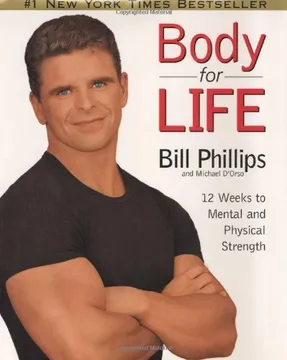


Key Takeaways
Use a 12-week body goal to prove change is something you can practice.
The body becomes evidence. Phillips argues that changing your body can demonstrate that deliberate effort changes more than appearance. The book opens with a fitness challenge that attracted tens of thousands of people, then follows participants whose new routines affected their confidence and relationships. Porter Freeman, a 49-year-old bar worker, says he lost 54 pounds during his 12-week transformation and regained a sense of self-respect. The book also states that featured competitors achieved extraordinary outcomes, not typical ones, so his result is an illustration, not a promise.
Start with agency. The point is not that a leaner body automatically solves every problem. It is that completing a demanding, time-limited commitment can give someone firsthand evidence that change is possible. The program is intended for healthy adults, and the book advises consulting a health professional before starting.
What's compelling is the use of a physical goal as a tangible experiment in personal agency. Behavioral research often finds that concrete mastery experiences can strengthen self-efficacy, the belief that one's actions can influence outcomes. A completed training session is a small piece of evidence, not merely a motivational slogan. The limit is equally important: body size and fitness are shaped by health, resources, disability, and circumstance, not character alone. The book's stories are powerful illustrations, but selected competition winners cannot establish what most readers should expect. The most durable lesson is to value the practice and capacity built, not to treat a dramatic transformation as the only valid result.
Turn vague hopes into five measurable goals with deadlines.
Give the future a shape. The book asks readers to identify five outcomes they want within 12 weeks, then write them as specific, measurable goals with deadlines. “Get in shape” is too indefinite to guide a day's choices; a target such as losing a stated amount of fat by a stated date gives effort a direction. Phillips calls the forward-looking orientation behind this practice “future vision ”: attention placed on what can be built, rather than being dominated by nostalgia or the immediate moment.
Make the goals visible. Readers are encouraged to write down their reasons and goals and review them morning and night. The book also recommends imagining the desired future, including how progress might look and feel. It cites a Harvard goals study to argue that written goals predict financial success, but the text gives no study details sufficient to verify that claim.
The practical strength here is specificity: a measurable target makes it easier to notice whether daily actions align with a desired outcome. Mental rehearsal can also help people anticipate obstacles and prepare responses, particularly when it is paired with concrete plans rather than fantasy alone. The cited Harvard story deserves caution; popular retellings of this study are often poorly documented, so it should not carry the argument. Nor should every goal be numeric. A person recovering from illness, building strength, or learning consistency may need process goals that reward controllable actions. Future orientation works best when it guides attention without making self-worth depend on hitting a particular number.
Replace sabotaging routines by installing specific actions in their place.
Change the pattern, not just the wish. Phillips calls recurring behaviors “patterns of action.” A pattern is useful if it moves someone toward a goal and obstructive if it moves them away. Readers identify three routines to stop and three to establish. Someone aiming to lose fat might replace skipped workouts with scheduled exercise and habitual low-nutrient snacks with planned meals. The key is to name the actual behavior, rather than relying on a broad resolution such as “be more disciplined.”
Add before subtracting. The book argues that new routines can crowd out old ones. For example, planning meals and keeping appropriate food available can make an unwanted eating routine less likely. It suggests that new patterns may feel more natural within a few weeks, but the time required will vary by person and behavior. A written list helps turn intentions into things a reader can review and act on.
This is a useful shift from moral judgment to behavioral design. Habits are often cued by settings, schedules, and convenience, so changing what is available or when an action occurs can reduce reliance on moment-to-moment resolve. The replacement principle also matters: removing a familiar behavior without offering another way to meet its need can leave a vacuum. Still, habits do not reliably become effortless on a fixed timetable. Stress, shift work, caregiving, and health conditions can disrupt routines, and a lapse does not erase learning. The best version of this advice treats routines as adjustable tools, not tests of virtue.
Train briefly, intensely, and recover before asking muscles to adapt.
Separate stimulus from recovery. The Training-for-LIFE Experience is the book's exercise plan. It schedules weight training three times a week, alternating upper- and lower-body sessions, and aerobic intervals three times a week, with one rest day. Weight sessions are designed to take no more than 46 minutes. The book emphasizes controlled lifting and lowering, challenging effort, and time between workouts for recovery. Its High-Point Technique means deliberately building a workout toward a demanding effort rather than extending exercise indefinitely.
Use effort, not comparison. The Intensity Index is a personal scale from 1 to 10, with 10 representing an all-out effort. Readers increase effort in stages and aim to progress relative to their own starting point. The 20-Minute Aerobics Solution applies interval changes in intensity to a short aerobic session. The text recommends morning exercise before eating, but that timing is not essential to the core schedule.
The program's strongest training idea is that a workout is a stimulus, while adaptation depends on what follows: recovery, sleep, and adequate food. Progressive resistance training is a well-established way to improve strength, and interval formats can make sessions time-efficient. But the book's exact schedule and effort scale are not universal prescriptions. Beginners, older adults, people with injuries, and those managing chronic conditions may need gradual progression or professional guidance. Also, training to maximal effort is not necessary for everyone and can increase fatigue or injury risk when technique breaks down. Short sessions can be effective, but effectiveness depends on appropriate load and consistency, not a ritualized number of minutes.
Track the plan against reality, then adjust instead of guessing.
Record what actually happens. Phillips recommends a Plan-to-Actual Analysis: decide in advance when and how to train, record what happened, then compare the two. His Daily Progress Reports track exercises, weights, repetitions, perceived intensity, food portions, and water. This can show whether a missed goal came from an unrealistic plan, inconsistent attendance, or an effort level that needs adjustment. For example, if a weight feels easier than intended, the next session can use a slightly heavier load.
Turn records into feedback. The purpose is not to produce a perfect log. It is to make patterns visible and learn from them. A plan without records makes progress hard to explain; records without a plan become a diary with little guidance. The book suggests reviewing body composition and photos every four weeks as another way to assess change, alongside the daily record of actions.
This is a practical form of feedback control: set a target, observe the result, and alter the next attempt. The same logic appears in engineering and in evidence-based coaching, where measurement helps distinguish a failed strategy from a failed execution. But measurement can also distort behavior when the metric becomes the mission. Daily weight fluctuations, for example, can reflect water and digestion rather than meaningful fat change. A good tracking system therefore uses multiple signals, including strength, energy, consistency, and how the person feels, and avoids turning ordinary variation into a verdict. Records should inform judgment, not replace it.
Build meals around protein and produce, without treating meal frequency as magic.
Make food choices repeatable. The Eating-for-LIFE Method asks readers to eat six smaller meals daily, each combining a portion of protein and carbohydrates, add vegetables to at least two meals, drink at least 10 cups of water, and include some unsaturated fat. A portion is estimated by the palm of the hand or a clenched fist. Suggested foods include poultry, fish, lean meat, eggs, cottage cheese, potatoes, rice, oats, fruit, and vegetables. A weekly “free day” allows unrestricted food choices, which Phillips presents as both a practical and motivational feature.
Plan for real life. The book recommends preparing groceries ahead and using nutrition shakes when convenient meals are hard to manage. Its central practical contribution is a simple menu structure that can reduce decision-making. However, its claims that frequent meals accelerate metabolism and that fasted exercise burns fat more effectively should not be taken as necessary rules for everyone.
The durable value is less in eating exactly six times than in making meals predictable and nutritionally substantial. Protein can support muscle maintenance, while fruits, vegetables, and minimally processed staples contribute useful nutrients and fiber. Meal frequency itself is a preference and scheduling strategy, not a metabolic shortcut; people can do well with different patterns. The book's “free day” may help some readers feel less restricted, though an all-or-nothing cycle can feel difficult for others. A flexible plan that fits culture, budget, appetite, and medical needs is more sustainable than a rigid menu. Nutrition shakes can be convenient, but they need not be treated as indispensable products.
Expect setbacks, and keep one lapse from becoming a reason to quit.
Prepare for disruption. Phillips argues that adversity is a normal part of any sustained effort. A missed workout, illness, job change, or personal crisis can interrupt progress, but the interruption need not define the outcome. The book asks readers to look for a practical response rather than treating difficulty as proof that they cannot succeed. It also urges readers to honor self-promises by finishing what they start, while emphasizing progress rather than perfection.
Use pressure carefully. The author recommends creating positive pressure through deadlines, telling supportive people about a goal, or committing to a challenge. The intent is to make follow-through more meaningful. His story of Lynn Lingenfelter illustrates a larger point: after years of depression following a shooting injury and an HIV diagnosis, Lynn began exercising and rebuilding daily structure. The book presents this as a personal account of renewed direction, not evidence that exercise treats HIV.
The distinction between a lapse and abandonment is psychologically important. People often interpret one disrupted day as evidence that a whole effort has failed, when a small restart may be enough to restore momentum. Social accountability can help, especially when it brings encouragement rather than surveillance. Still, the instruction to keep every promise can become harsh if circumstances change or a plan proves unsafe. A commitment should be to the underlying value, such as health, not necessarily to an unchanged schedule. Lynn's story is moving because it depicts restored agency amid serious hardship, but it should not imply that determination can erase structural barriers or medical realities.
Use support as a two-way force: accept help, then offer it.
Make change social. The book's transformation stories repeatedly show people drawing strength from family, friends, coworkers, and fellow participants. Fred and Renee Scurti, for example, trained together at home while raising four children and working around family schedules. Their shared effort helped them stay accountable and made the process part of family life. Danielle Coddington describes her children encouraging her when she felt like quitting. These stories make support concrete: it can mean exercising alongside someone, checking in, or recognizing another person's effort.
Give as well as receive. Phillips calls this the Universal Law of Reciprocation: contributing value to other people can strengthen relationships and one's own sense of purpose. The advice is to notice and express genuine appreciation, and to support a cause or person without demanding an immediate return. In the book, helping others is not an extra task after self-improvement; it is one way the benefits of change spread beyond the individual.
This section connects behavior change to social identity. A routine is easier to sustain when it belongs to a shared story, such as a couple training together or a parent modeling care for children. Appreciation can also reinforce cooperation by making effort visible. The caution is that support should not become pressure to perform for an audience. Public commitments can motivate some people but shame others, particularly when progress is uneven. Reciprocity is healthiest when it is freely given, not used as a transaction or a debt. The strongest community support combines practical help, respect for autonomy, and room for different bodies and different rates of change.
Treat physical progress as a beginning, not proof that every problem is solved.
Let one change widen the horizon. Body for Life presents physical fitness as a gateway to broader changes in confidence, energy, and self-direction. Its stories show participants applying the discipline and confidence they built through training to relationships, work, and service. Tom Archipley, for instance, describes deciding that his pharmaceutical career was not fulfilling and pursuing pre-medical study. The book's larger claim is that the process of setting and keeping goals can help people imagine choices beyond their current routines.
Keep the claim grounded. A body transformation can be meaningful without being a cure for grief, illness, financial strain, or relationship problems. The book's strongest version of its promise is not that exercise fixes everything, but that taking deliberate action in one area can provide a model for action elsewhere. The body is the starting point of this program, not a measure of a person's worth or the sole source of a good life.
The “gateway” idea captures a plausible transfer effect: succeeding at a difficult routine can build confidence and skills that a person may apply elsewhere. But transfer is not automatic. Exercise may help some people feel more capable, while career, family, or health problems still require their own resources and interventions. That distinction protects the book's humanistic insight from becoming an inflated promise. Its stories are most persuasive when read as accounts of possibility, not as universal causal proof. Physical progress can open attention to neglected choices, but meaning comes from how people interpret and use that experience, not from appearance alone.
Analysis
Body for Life is part fitness manual, part motivational narrative, and part behavior-change program. Its structure reflects that combination: personal stories establish emotional stakes, a mindset sequence asks readers to define a future, and exercise and food instructions convert intention into a weekly routine. Its central proposition is that an embodied achievement can become evidence of personal agency. That is more distinctive than a simple promise of weight loss, and it explains why stories about family support, recovery, and renewed purpose occupy so much space.
The program's most useful elements are behavioral rather than proprietary: making goals specific, scheduling workouts, recording actual behavior, practicing progressive resistance exercise, and building social support. The repeated logs are a practical strength because they make the plan observable. The memoir-like accounts also show how routines interact with identity and relationships, while the book's own warning that featured results are exceptional provides a necessary qualification.
The weaknesses arise when a persuasive coaching voice turns particular preferences into physiological laws. Six meals a day, fasted morning exercise, and a single prescribed exercise schedule are not requirements for every person. The book also presents nutrition claims about carbohydrates, meal timing, and metabolism with more certainty than its supplied evidence warrants. Its high-intensity training language needs moderation for readers whose health, experience, or circumstances call for gradual progression. A modern reading should retain the structure and discard the implication that one plan fits all.
The book is best understood as a time-bounded invitation to practice change, not a medical protocol or guarantee of a particular physique. Its emotional arc moves from neglect and discouragement toward competence and contribution. That arc can be valuable even when weight loss is modest, when a reader adapts the schedule, or when success means greater strength rather than a dramatic before-and-after image. Its deepest promise is credible when framed narrowly: repeated, supported action in one domain can help a person reconsider what else may be possible.
People Also Read








Glossary
Crossing the Abyss
From knowing to doingPhillips's term for the gap between understanding what actions could help and actually carrying them out. He argues that information alone rarely changes behavior. Readers are asked to identify reasons for change, clarify goals, and replace obstructive routines so that knowledge becomes repeated action.
Future Vision
Focus on desired outcomesA forward-looking orientation in which a person identifies and works toward specific future accomplishments. Phillips contrasts it with attention dominated by past experience or immediate circumstances. In the program, it is developed by imagining desired changes, writing goals with deadlines, and reviewing them regularly.
High-Point Technique
Build toward peak effortPhillips's approach to structuring exercise around a brief, demanding effort rather than accumulating long periods of moderate work. In weight training and aerobic intervals, intensity rises in stages toward a personal high point. The goal is focused effort followed by recovery, not maximal effort on every set or session.
Intensity Index
Personal effort scaleA scale from 1 to 10 used to describe perceived effort during exercise. Low numbers represent easy activity, while 10 represents an all-out effort for that individual. The index is intended to make intensity self-adjusting: a beginner and an experienced trainee can work at comparable relative effort using different loads or speeds.
20-Minute Aerobics Solution
Short interval aerobic sessionsThe book's aerobic routine, performed for 20 minutes three times a week. Participants move through planned intervals of gradually rising and falling effort, using the Intensity Index to set the difficulty relative to their ability. The format is meant to make brief aerobic exercise purposeful rather than relying on long, steady sessions.
Eating-for-LIFE Method
Planned portions-based eatingPhillips's nutrition approach, built around six daily meals that pair a portion of protein with a portion of carbohydrates, vegetables at some meals, regular water intake, and planned shopping. Portions are estimated using the hand rather than calorie counting. The method also includes one weekly free day and allows nutrition shakes for convenience.
Plan-to-Actual Analysis
Compare plans with outcomesA tracking practice in which a person plans the timing and content of a workout, records what was actually completed, and compares the two. The comparison is meant to identify where a routine needs adjustment, such as exercise choice, load, effort, or scheduling. The book also applies daily records to food and water intake.
Universal Law of Reciprocation
Giving strengthens connectionPhillips's name for the idea that offering sincere support, appreciation, or service to others can also enrich the giver's life. He recommends using this principle to build supportive relationships during personal change and to extend the benefits of progress beyond individual achievement.
Download PDF
Download EPUB
.epub digital book format is ideal for reading ebooks on phones, tablets, and e-readers.








