

Key Takeaways
Make your achievements audible before silence turns them into someone else's story.
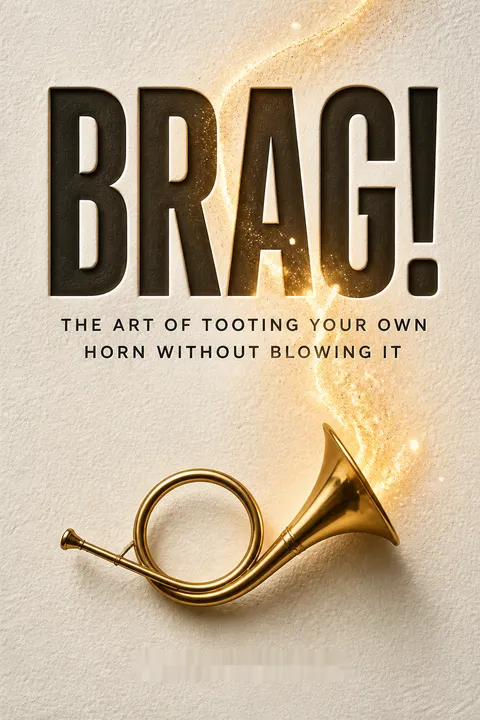
Hard work needs a narrator. Klaus learned this the awkward way. Her father taught her not to boast, but job interviews in Hollywood rewarded people who could explain why their work mattered. Later, coaching professionals across industries, she found the same problem: capable people often expected results to speak for themselves, then wondered why they were overlooked. In the book, bragging means describing your strengths and accomplishments with honest pride, in a conversational way that interests others. It is neither self-erasure nor a contest to sound superior.
The middle ground is learnable. A good account makes your contribution visible without pretending you did everything alone. Klaus also observes that women are often taught to share credit more readily, while some men overstate their role. Either habit can obscure the truth. The practical aim is accurate ownership, delivered with warmth.
What's useful here is the distinction between merit and legibility. A result can be real and still remain invisible to people who did not witness the work or cannot connect it to a person. A concise account gives colleagues a way to remember and repeat that connection. The idea also resists a false choice between humility and self-advocacy: acknowledging collaborators does not require erasing one's own labor. The caution is that organizations should not make individual storytelling the only route to recognition. Managers still bear responsibility for noticing contributions, especially when some employees face stronger social penalties for speaking up.
Take inventory now, before the next question catches you empty-handed.
Prepare before the spotlight. Klaus's Take 12 is a self-inventory covering personality strengths, interesting experiences, work successes, new skills, obstacles, education, interests, and ways a person helps others. The point is to recover details that daily routine tends to bury. Ask colleagues, friends, or family what they value in you, too. A manufacturing executive who thought he had to suppress his humor learned that coworkers saw it as a reason he was enjoyable to work with.
Keep the material accessible. Klaus calls the resulting collection a brag bag: a current store of professional and personal details to draw on in different settings. Organize it around goals, audiences, or career stages, and add fresh accomplishments regularly. The inventory is not a script to recite. It is preparation that makes a genuine answer easier when an unexpected opening appears.
The inventory works because it corrects two common distortions: people forget their own incremental progress, and they often misjudge which qualities others notice. Soliciting feedback adds a useful outside view, though it should be treated as evidence rather than a vote on one's identity. Different colleagues see different parts of a person. The strongest inventory therefore combines measurable outcomes with characteristic ways of working, such as persistence, humor, or mentoring. That mix creates a fuller account than a résumé can provide, without turning every personal detail into career currency.
Turn accomplishments into brief stories that show exactly what you contributed.
Specific beats impressive-sounding. Klaus calls short, memorable facts about oneself brag bites, and conversational accounts that run from roughly thirty seconds to three minutes bragologues. Both make achievements easier to remember than a list of titles. The story should show what happened, what the person did, and why it mattered, while giving others their fair share of credit.
Patty's account shows the difference. A junior banker had helped win a ten-million-dollar account by finding a prospect, arranging a meeting, and bringing in senior colleagues. At first she described the win as if she had barely participated. A coworker retold the sequence with energy and clear ownership. The lesson was not to claim the whole deal, but to name her initiative and the work she personally led. Concrete actions make a contribution credible.
A compact story is a practical unit of professional memory. It lets a listener retain not just a result, but the behavior that produced it, which is more informative when judging future responsibilities. The distinction between individual contribution and team outcome matters: claiming too much damages trust, while disclaiming too much leaves the listener with no account of one's role. A useful test is whether the story names both the person's actions and the collaborators' contributions. That balance makes self-promotion less like self-praise and more like an accurate explanation of how work got done.
Choose proof that matters to this listener, at this moment.
Relevance beats a career recital. A financial consultant once introduced himself to a Boston foundation prospect with a long chronology of Wall Street jobs. He missed the prospect's real concern: strong local connections. When he mentioned that he had grown up nearby, studied in Boston, and still had close family there, his background became relevant to the client's needs. A fact is persuasive not simply because it is impressive, but because it answers a question the listener cares about.
Read the room before speaking. Klaus uses the term brag bomb for self-promotion that fails through poor timing, a bad read of the audience, or both. A worker announcing a promotion to exhausted colleagues during a tense meeting may receive silence, even if the news is deserved. Adjust the moment, the detail, and the tone. If the story has no natural connection to the conversation, wait for a better opening.
This is a shift from broadcasting credentials to solving a listener's uncertainty. The same experience can signal different things to a hiring manager, client, or colleague, so selecting evidence is part of clear communication, not manipulation. The Boston example also shows why personal context can establish credibility when it is genuinely relevant. Still, audience adaptation has a boundary: tailoring should clarify fit, not imply a connection or qualification that does not exist. The best version stays both useful to the listener and faithful to the speaker's actual record.
Let curiosity and personality make confidence inviting rather than self-absorbed.
Sound like a person, not a presentation. Klaus's Brag Nags are reminders about delivery: stay conversational, show genuine enthusiasm, use stories and humor, and pay attention to the listener. She warns against stiff formulas that strip away personality. A department head who hid behind a telephone headset seemed aloof; once he began sharing small details about his sailing, colleagues saw more of the person behind the title. Warmth can make competence easier to approach.
Connect before you promote. Good schmoozing, in Klaus's sense, means listening, asking questions, finding common ground, and then sharing relevant details about oneself. When nerves or low energy make confidence hard to summon, her Over the Top technique uses an exaggerated private pep talk to help someone recover enthusiasm. It is a warm-up, not a license to ignore the audience or perform a false personality.
The strongest insight is that credibility depends partly on whether others can engage with the person carrying the expertise. Humor and personal details can lower social distance, while listening demonstrates that the exchange is not merely a disguised sales pitch. This is especially valuable in settings where formal, fact-only speech makes people sound interchangeable. At the same time, authenticity is not the same as unlimited disclosure. A professional can be warm without sharing private matters, and an energetic style will not suit every culture or listener. Adaptation should preserve personality while respecting context.
Put your work where decision-makers can see it, consistently.
Visibility is ongoing work. A salesperson named Bill assumed his results would speak for themselves. When senior leaders heard about the division's success, his boss described the strategy as his own and gave Bill little visibility. The problem was not only credit-taking. Bill had built too few relationships with people who could connect his results to his character and initiative.
Make contributions easy to notice. Klaus recommends keeping a current record of accomplishments, sharing progress with a manager, introducing oneself to colleagues beyond the immediate team, and building relationships with a small number of people who affect future opportunities. In a case of credit theft, she advises documenting ideas before and after meetings and following up on next steps. Regular visibility is not constant boasting; it is a way to ensure the work is understood before someone else supplies the story.
Visibility is a coordination problem as much as a confidence problem. In large organizations, decision-makers cannot infer individual effort from team output unless someone makes the connection clear. Brief updates and written follow-ups create a record and reduce ambiguity about who did what. But visibility tactics can become political theater if they reward volume over substance. A stronger norm combines individual reporting with transparent team credit, so people can make their work legible without treating colleagues as rivals. The book's practical advice is most defensible when paired with that reciprocal standard.
Use digital updates to replace missing face time, not to spam.
Remote work needs deliberate contact. Klaus calls self-promotion through email, voicemail, and phone techno-bragging. One analyst lost regular access to a boss after a merger expanded her responsibilities across offices. He began leaving short, specific voice messages about key projects and results. His boss responded, and the updates helped bring him back into the conversation.
Make each message worth receiving. A telecommuting employee who stopped connecting with colleagues missed a desirable assignment. Klaus's proposed reset included scheduled check-ins with her boss, progress notes, contact with coworkers, and regular visits to the office. The opposite mistake is mass emailing acquaintances only when seeking attention or business. Keep updates brief, personal, accurate, and relevant. Digital communication can maintain a relationship, but it cannot compensate for treating people as an audience rather than partners.
The core challenge is that distance removes the small, informal signals by which colleagues learn what others are doing. A concise digital update can restore some of that shared context and preserve a record of progress. Personalization matters because a generic broadcast asks recipients to do the work of figuring out why they should care. Still, frequent messages are not automatically effective. Their value depends on the recipient's preferences, the importance of the work, and a clear cadence. The aim is reliable communication, not occupying every available channel.
Bring evidence and a clear ask to interviews and reviews.
Do not improvise your case. For interviews, Klaus advises researching the organization, choosing the experiences that best fit the role, and preparing honest answers to difficult questions. A recent graduate who merely pointed to his résumé sounded flat; once he described projects he had worked on and what he had learned, his experience became understandable. A résumé records facts, but the interview lets a candidate show judgment, energy, and fit.
Make reviews a two-way conversation. Keep evidence of results, feedback, and progress toward goals, then state what is being requested. One banker whose revenue rose twenty percent arranged a follow-up after an unfocused review, explained his results and extra contributions, and directly asked for a promotion and bonus. His bonus was cut far less than his colleagues' and he later became a vice president. Prepare for criticism, too, and ask what measurable improvement would look like.
Preparation changes these meetings from tests of spontaneous confidence into discussions grounded in evidence. That is fairer to people who need time to organize their thoughts, and it gives managers something concrete to evaluate. A clear ask also prevents a common failure: hoping a supervisor will infer what recognition or opportunity is wanted. Yet evidence should not reduce performance to numbers alone. Collaboration, judgment, and improved skills may matter even when they do not appear on a dashboard. The strongest case links outcomes, conduct, and a specific next step.
Explain your business through the customer's problem, not your jargon.
Sell the person and the solution. A software founder arrived with polished marketing materials but opened with a dense explanation of technical architecture. His listener lost interest before hearing how the product could help. When he returned with a clearer story about his own experience managing dispersed teams, he connected the software to a practical customer problem: people working on the same document could see and mark changes together, avoiding slow, confusing exchanges. His background established credibility; the benefit made the product matter.
Make introductions work for you. Independent professionals also need to give friends and referral partners accurate, current descriptions of their work and goals. A freelancer whose relative introduced her through outdated, low-level assignments lost a chance to meet a publishing contact. Entrepreneurs should prepare short, audience-specific accounts of their expertise, the need they address, and the evidence behind their claims. A logo or website cannot do that conversational work.
The founder's failed pitch illustrates a basic translation task: expertise must be converted into consequences that a customer can recognize. Technical detail is valuable when it answers a real question, but it can become a barrier when delivered before the audience understands the problem. This logic also applies to introductions, referrals, and funding conversations. The speaker does not need to hide complexity; the sequence matters. Start with the human need and credible experience, then add detail in response to interest. Claims still need proof, especially when a new business asks others to take a risk.
Translate career pauses and unpaid work into credible proof of skill.
A job title is not the whole record. People outside paid employment can still explain what they have done and what they want next. Cheryl, who had left work to raise children, initially talked about baking cupcakes. Asked about her volunteering, she described fundraising and leadership work, including helping raise fifteen million dollars for a hospital's pediatric wing. Her unpaid experience showed relevant ability, but only after she named it clearly.
Connect the past to a possible next step. A woman recovering from illness described gardening as a serious interest while she reconsidered bookkeeping. She was later hired by a landscape company as its operations manager. Klaus also encourages retirees, job seekers, and freelancers to present career changes without apology or false certainty. The aim is not to pretend every pause is a triumph. It is to explain what the person brings, what they are exploring, and why the next opportunity makes sense.
This perspective broadens professional identity beyond payroll and job titles. Caregiving, volunteering, recovery, and personal projects can develop capabilities that employers need, but those capabilities must be translated rather than assumed. The examples also show that a person does not need a perfectly settled career plan to speak constructively about the present. There is a useful limit, however: unpaid work should not be treated as a substitute for fair pay, nor should every life activity be forced into a productivity narrative. Its value lies in giving people language for real experience and agency.
Analysis
The book's most durable contribution is not a formula for sounding impressive. It is a method for making work socially legible. People cannot reward, refer, or remember contributions they have not encountered, and a concise personal story helps carry information across gaps in time, hierarchy, and attention. The recurring tools, from the Take 12 inventory to the bragologue, convert scattered experience into usable evidence. Their emphasis on audience, timing, and conversation also distinguishes advocacy from a monologue of self-praise.
The argument is strongest when it pairs confidence with specificity and shared credit. Patty's account of winning a major client matters because it names what she did without claiming that the whole team was irrelevant. The advice is less convincing if read as a demand to promote oneself constantly or to make every aspect of life professionally useful. That burden can fall unevenly: employees who face social penalties for assertiveness may have to perform more carefully just to receive equal recognition. Remote workers and people outside conventional employment also face structural disadvantages that a better story cannot erase.
A practical reading therefore combines personal storytelling with organizational accountability. Individuals can keep evidence, tailor their examples, ask for opportunities, and make their contributions visible. Managers can make credit explicit, create predictable review conversations, and notice work that does not happen in their presence. The best self-promotion is not a substitute for fair systems. It is a tool for navigating imperfect ones while helping listeners understand the real contribution. Truthfulness is the constraint that keeps the tool useful: a vivid story should clarify what happened, not inflate it.
Review Summary
Brag! received mixed reviews, with an average rating of 3.68 out of 5. Readers appreciated the advice on self-promotion and storytelling techniques, finding it helpful for career advancement. Many found the examples and "bragologues" useful, though some felt they were repetitive or focused too much on high-level executives. The book was praised for addressing the discomfort many feel about self-promotion, especially women. Critics noted that some content could have been condensed and that the writing style was occasionally off-putting.
People Also Read









Glossary
Brag
Conversational self-advocacyIn Klaus's specialized usage, bragging means describing one's strengths, interests, and accomplishments with pride and enthusiasm in a way that is conversational and engaging. It is not supposed to rely on exaggeration, boastfulness, or putting others down. The term names a middle path between staying invisible and becoming an irritating self-promoter.
Take 12
Personal history inventoryA set of twelve prompts for recalling personality strengths, experiences, work history, successes, skills, obstacles, education, interests, and contributions to others. The exercise supplies raw material for future conversations about one's work and identity. Klaus encourages people to add specific examples and seek feedback from people who know them.
Brag bag
Reusable personal story bankA maintained collection of useful details about a person's professional and personal experience. It can include accomplishments, interests, strengths, anecdotes, and goals, organized by audience or situation. The collection helps someone choose a relevant detail quickly, rather than trying to reconstruct years of experience during an interview or casual conversation.
Brag bites
Memorable personal detailsBrief, quotable pieces of information about a person's accomplishments, interests, or strengths. A brag bite is meant to give a listener one clear detail worth remembering. Several can be used separately in conversation or combined into a longer account, depending on the time available and the listener's interests.
Bragologues
Conversational self-storiesShort, story-shaped accounts about oneself, ranging from a brief introduction to a few minutes of explanation. A bragologue connects experiences, accomplishments, and personal qualities in a memorable way. It should sound conversational rather than like a chronological reading of a résumé, and it can be adjusted for different audiences.
Brag bomb
Failed self-promotionA self-promotional attempt that falls flat, often because it arrives at the wrong time, ignores the audience's mood or needs, or lacks preparation. It can also result from dropping impressive facts into a conversation where they do not belong. The term encourages a speaker to assess context and delivery, not just content.
Brag Nags
Delivery remindersKlaus's label for practical reminders about delivering self-promotion well. They include using a conversational voice, bringing forward one's genuine personality, attending to first impressions, showing enthusiasm, listening, using stories and humor, and reading the audience. The reminders aim to prevent a good accomplishment from being buried under dull or self-absorbed delivery.
Techno-brag
Digital self-promotionThe use of email, voicemail, phone calls, and other mediated communication to keep relevant people informed about one's work and maintain professional relationships. Effective techno-bragging is concise, personal, and useful to its recipient. It compensates for limited face time without turning into generic announcements or repeated self-congratulation.
Brag-fright
Anxiety about self-promotionThe discomfort or fear that arises when a person is expected to talk about their own accomplishments. It can lead to silence, excessive modesty, flat delivery, or embarrassment about taking credit. Klaus treats preparation and practice as ways to make self-advocacy feel more natural without requiring a person to adopt a false persona.
Over the Top (OTT)
Exaggerated confidence warm-upA technique for recovering energy before a difficult interaction. The person silently or aloud rehearses exaggeratedly enthusiastic phrases, using the performance as a short warm-up. Klaus presents it as a way to help someone act more like their confident, engaged self when tired or nervous, not as a substitute for reading the room.
FAQ
What's "Brag!: The Art of Tooting Your Own Horn without Blowing It" about?
- Purpose of the Book: "Brag!" by Peggy Klaus is a guide to mastering the art of self-promotion in a way that is sincere and effective. It aims to help individuals communicate their achievements without coming across as arrogant.
- Target Audience: The book is designed for professionals who want to advance their careers by learning how to talk about their accomplishments confidently.
- Content Overview: It covers various scenarios where self-promotion is necessary, such as job interviews, performance reviews, and networking events, providing practical tips and strategies for each.
- Underlying Message: Klaus emphasizes that bragging is not about being boastful but about sharing one's successes in a way that is engaging and memorable.
Why should I read "Brag!" by Peggy Klaus?
- Career Advancement: The book provides tools and techniques to help you stand out in the workplace, which is crucial for career growth and job security.
- Overcoming Modesty: It addresses common myths about bragging and helps readers overcome the fear of self-promotion.
- Practical Advice: Klaus offers actionable advice and real-life examples that can be applied immediately in professional settings.
- Confidence Building: By learning to articulate your achievements, you can boost your confidence and improve your professional relationships.
What are the key takeaways of "Brag!"?
- Bragging Myths: The book debunks myths that hold people back from self-promotion, such as the belief that a job well done speaks for itself.
- Bragging Techniques: Klaus introduces concepts like "brag bites" and "bragologues" to help structure self-promotion effectively.
- Importance of Storytelling: The book emphasizes using stories to make your accomplishments memorable and engaging.
- Adaptability: It teaches how to tailor your self-promotion to different audiences and situations, ensuring relevance and impact.
What are "brag bites" and "bragologues" in "Brag!"?
- Brag Bites: These are short, memorable snippets of information about your achievements that can be easily inserted into conversations.
- Purpose of Brag Bites: They serve as "memory insurance," ensuring that people remember something compelling about you.
- Bragologues: These are longer, story-like monologues that convey your accomplishments in a conversational manner.
- Use of Bragologues: They range from a 30-second elevator pitch to a three-minute dialogue, adaptable to various contexts.
How does Peggy Klaus suggest overcoming the fear of self-promotion?
- Understanding Myths: Klaus encourages readers to recognize and challenge the myths that make them hesitant to brag.
- Preparation: She advises preparing a "brag bag" filled with brag bites and bragologues to use in different situations.
- Practice: Practicing your self-promotion in a safe environment can help build confidence and ease anxiety.
- Authenticity: Klaus stresses the importance of being genuine and using your unique personality to connect with others.
What are some practical tips from "Brag!" for job interviews?
- Preparation: Review your accomplishments and prepare brag bites that highlight your strengths and relevance to the job.
- Storytelling: Use stories to illustrate your achievements and make them relatable to the interviewer.
- Addressing Weaknesses: Be ready to discuss your weaknesses by framing them in a positive light, showing how you've overcome challenges.
- Research: Know the company and tailor your bragologues to align with its values and needs.
How can "Brag!" help with performance reviews?
- Ongoing Preparation: Keep a record of your accomplishments throughout the year to present during reviews.
- Structured Bragging: Use bragologues to clearly communicate your contributions and future goals.
- Handling Criticism: Accept feedback gracefully and use it as an opportunity to highlight your strengths and improvements.
- Asking for More: Be prepared to discuss promotions or raises by backing up your requests with evidence of your achievements.
What are the best quotes from "Brag!" and what do they mean?
- "It ain’t bragging if you done it." - This quote by Dizzy Dean, used in the book, underscores the legitimacy of talking about your real accomplishments.
- "Bragging is an art." - Klaus emphasizes that effective self-promotion requires skill and finesse, much like any other art form.
- "Be your best, authentic self." - This advice highlights the importance of sincerity and authenticity in self-promotion.
- "Turn small talk into big talk." - Klaus encourages using everyday conversations as opportunities to subtly promote your achievements.
How does "Brag!" address the use of technology in self-promotion?
- Techno-Bragging: Klaus discusses how to use email and voicemail effectively to keep key people informed of your progress.
- Virtual Presence: The book offers strategies for maintaining visibility and impact when face-to-face interactions are limited.
- Avoiding Pitfalls: Klaus warns against the impersonal nature of mass emails and stresses the importance of personalization.
- Leveraging Tools: She advises using technology to research and tailor your self-promotion to specific audiences.
What are some common mistakes in self-promotion according to "Brag!"?
- Overloading Information: Providing too much detail can overwhelm your audience; keep it concise and relevant.
- Ignoring Audience Needs: Failing to tailor your message to the listener's interests can make your bragging ineffective.
- Lack of Authenticity: Coming across as insincere or rehearsed can damage your credibility.
- Timing Errors: Choosing the wrong moment to self-promote can lead to missed opportunities or negative perceptions.
How does "Brag!" suggest using storytelling in self-promotion?
- Engagement: Stories capture attention and make your accomplishments more relatable and memorable.
- Structure: A well-told story has a clear beginning, middle, and end, making it easier for listeners to follow.
- Personal Connection: Sharing personal anecdotes helps build rapport and trust with your audience.
- Illustrating Success: Use stories to demonstrate how you've overcome challenges or achieved significant results.
What is the "Take 12" self-evaluation in "Brag!"?
- Purpose: The "Take 12" questionnaire helps you identify your strengths, accomplishments, and unique qualities.
- Comprehensive Review: It covers various aspects of your personal and professional life to create a complete picture of your achievements.
- Foundation for Bragging: The answers form the basis for your brag bag, filled with brag bites and bragologues.
- Self-Discovery: It encourages reflection and self-awareness, essential for effective self-promotion.
About the Author
Other books by Peggy Klaus

Download PDF
Download EPUB
.epub digital book format is ideal for reading ebooks on phones, tablets, and e-readers.








