

Key Takeaways
Technical skill gets work done; soft skills determine whether others can use it.
Expertise needs a human interface. Hard skills are the technical knowledge needed to perform a job. Soft skills are the personal, social, communication, and self-management behaviors that help people put that knowledge to work. A brilliant analyst who misses deadlines, cannot explain an idea, or alienates colleagues may struggle despite strong technical ability.
The business stakes are real. The book cites research with Fortune 500 CEOs by Stanford Research Institute International and the Carnegie Mellon Foundation: 75 percent of long-term job success was attributed to people skills, and 25 percent to technical knowledge. Other cited research linked conscientiousness and agreeableness to work success as reliably as cognitive ability and accuracy. These figures support the central point: expertise alone is not a career strategy.
The strongest version of this argument treats soft skills not as decorative polish, but as the mechanisms that let expertise travel through a social system. A sound analysis has little organizational value if colleagues cannot understand, trust, or act on it. This resembles the distinction between possessing information and making it usable. Still, the cited percentages should not be read as universal laws. Technical mastery can dominate in tightly specified roles, and people skills cannot compensate for poor work indefinitely. The practical lesson is about complementarity: strong performance usually requires both competent work and the capacity to coordinate it.
Choose work that fits your strengths and the life you actually want.
Start with evidence about yourself. Passion alone does not guarantee aptitude or success. Marta, who repeatedly left management jobs once organizations were running smoothly, eventually recognized a consistent strength: improving struggling businesses. She built a consulting firm around that pattern instead of treating her job changes as proof of fickleness. The book recommends regular self-assessment, including performance reviews and a 360-degree assessment, which gathers feedback from supervisors, peers, direct reports, and clients.
Include the rest of life. Work and life are not a permanent balancing act; they involve changing trade-offs. A manager who wanted more time with her children asked to work from home one day a week and found her boss receptive. Recheck values, goals, and constraints when circumstances change, then negotiate where possible rather than assuming every workplace arrangement is fixed.
This advice turns career choice from a search for a single calling into a process of pattern recognition. Repeated energy, reliable strengths, and the situations in which someone contributes best can reveal a better fit than an abstract passion statement. The emphasis on trade-offs also avoids the fantasy that every life domain can receive equal attention at once. One caution: self-assessment can reproduce other people's biases, especially when feedback reflects a narrow workplace culture. The most useful picture combines external feedback with direct attention to motivation, performance, and the kind of life the work makes possible.
Keep your skills current so loyalty never becomes your only career asset.
Experience can become a trap. Sam had built a career in sales and marketing at one sporting-goods company and assumed his loyalty would protect his prospects. When restructuring created a chance to move into a new area, executives doubted he had the skills for it. By the time he tried to broaden his experience, the company needed capabilities he had not developed, including e-commerce expertise.
Build both range and depth. The book does not recommend job-hopping for its own sake. It advises developing a reputation for doing something well while also seeking new roles, projects, and training that expand what you can do. Compare your abilities with the skills needed for your next position. If your current job offers no way to close important gaps, consider moving before change makes the choice for you.
The useful distinction here is between loyalty as a personal value and loyalty as a career plan. An employer may appreciate commitment while still reorganizing around new needs. Skill development is therefore a form of resilience, not disloyalty. The advice also resists a simplistic choice between specialist and generalist: deep expertise creates credibility, while adjacent skills make that expertise portable. A further nuance is that training is not always an individual responsibility alone. Organizations benefit from developing employees, but workers cannot assume that their employer will notice or fund every gap.
Use intuition as a warning light, not as a verdict.
Feelings can contain information. The book treats intuition as accumulated experience that may flag a problem before a person can explain it. Financial manager Gregory felt uneasy about an acquisition everyone else supported. A closer review uncovered a miscalculation that could have cost the company $3 million. In another case, an interviewer realized a candidate's manner reminded him of his difficult sister, not that the candidate was actually unsuited to the job.
Investigate before deciding. Notice the feeling, name it, and ask whether it reflects evidence or an old association. If a concern seems legitimate, look for facts that can support it. If it appears rooted in bias, avoid letting it control the decision. The book's key distinction is not intuition versus reason, but intuition as a prompt for careful reasoning.
This is a disciplined account of intuition. It avoids both extremes: dismissing tacit judgment as irrational, and treating a strong feeling as proof. In decision science, rapid impressions can reflect genuine pattern recognition, but they can also inherit stereotypes and past anxieties. The book's examples show both possibilities clearly. A useful extension is to ask what observation would change the initial judgment. That question converts a vague feeling into a testable concern and makes intuition more accountable, especially in hiring, investment, and other decisions with consequences for people beyond the decision-maker.
Guard your reputation with a hard line on integrity.
Small exceptions reveal big risks. Howard, an administrative assistant, used unused reward points from his boss's corporate credit card to buy electronics for himself. He believed the points would otherwise expire, but his boss saw the action as theft, and Howard was soon looking for a new job. The book calls the boundary crossed in such moments the IC Divide, meaning the line between acceptable conduct and a breach of integrity or character.
Do not bargain with the boundary. The author rejects résumé lies, taking credit for unearned work, and stealing office supplies as harmless shortcuts. A person's reputation can travel far beyond the workplace, especially through online records. The practical test is simple: if the behavior needs elaborate justification, stop and examine it. Follow the spirit of ethical standards, not merely the minimum that seems enforceable.
The argument recognizes that reputation is cumulative. Trust is not just a matter of whether a single act causes measurable harm; it shapes what others can safely delegate and believe. That makes minor acts of dishonesty consequential even when the immediate cost seems trivial. The emphasis on a personal code is useful because rules cannot anticipate every ambiguity. At the same time, ethical questions can involve competing duties rather than obvious theft or lying. A code works best when paired with sound judgment, consultation, and attention to power differences, not merely fear of getting caught.
Turn initiative into reliable delivery by managing details and commitments.
Notice problems, then plan the work. Irene, then an assistant in a distant sales office, researched a market opportunity and sent her analysis to her boss. It reached senior leaders and informed discussion of the company's marketing plan. Taking initiative can matter precisely because people higher up may lack the time or proximity to spot an issue.
Make follow-through dependable. The book pairs initiative with attention to detail, realistic deadlines, and contingency planning. After a television taping nearly lost three performers when fog diverted their flight, the author began scheduling arrivals earlier and preparing backups. When a new assignment exceeds available time or resources, say so constructively and ask what should take priority. Procrastination may signal missing information, poor scheduling, or work that no longer feels engaging, so diagnose the cause rather than simply blaming laziness.
Initiative is valuable when it reduces uncertainty or creates an option the organization did not see. Reliability gives that initiative credibility: ideas become useful when someone anticipates dependencies, identifies missing resources, and communicates constraints early. This connects individual productivity to project management, where small scheduling buffers can prevent a single delay from cascading through a team. The caution is that initiative should not become unpaid overextension or a demand to solve every structural problem alone. Workers can take ownership while still making resource limits visible and asking managers to prioritize competing obligations.
Listen for what the other person needs before selling your answer.
Listening is active work. Jon, a sales executive, spent a client meeting explaining his firm's services before asking what the prospective clients actually needed. They had a different goal in mind, so the presentation missed its mark. The book names the listener's station WIFT-FM, short for What Is In It For Them, as a reminder to focus on the other person's interests rather than one's prepared speech.
Adjust the delivery, not just the content. A new boss with little time needed recommendations first and supporting analysis afterward. Effective communication also includes asking clarifying questions, listening without interruption, and using basic courtesies such as please, thank you, and a sincere apology. When speaking publicly, prepare around the audience's needs, rehearse aloud, and make the delivery engaging instead of relying on facts alone.
The client story illustrates a common coordination failure: each side enters the conversation with a different model of the problem. Listening helps reveal that mismatch before it hardens into a rejected proposal or wasted meeting. The idea also fits user-centered design, where solutions begin with the needs of the people expected to use them. Adaptation should not mean abandoning clarity or authenticity to please every audience. It means choosing an order, level of detail, and channel that make the message easier to understand and evaluate.
Ask for feedback before silence turns into a surprise review.
Do not confuse silence with approval. Stuart believed his performance was excellent until an HR representative warned him that his boss had serious concerns. He had not asked how he was doing, and his boss had avoided raising a difficult issue. Regular feedback could have exposed the problem while there was still time to correct it.
Make criticism usable. Ask supervisors and colleagues for specific examples, listen without immediately defending yourself, and request concrete suggestions. Prepare for formal reviews by keeping a record of achievements and mistakes. If criticism becomes heated, take time to think before responding. The book distinguishes demanding management from repeated verbal abuse: a bully boss humiliates or belittles people and may require direct confrontation, support from others, or leaving the job when the behavior persists.
Feedback works best as a recurring information channel, not an annual verdict. Frequent, specific exchanges reduce the emotional shock of discovering a mismatch after it has shaped decisions about pay or promotion. The advice also places responsibility on both sides: employees can solicit input, while managers need to deliver it clearly and in time to be useful. There is an important boundary, however. Feedback is not automatically valid just because it comes from a supervisor. It should be examined for evidence, fairness, and possible bias, while abusive conduct should not be normalized as a growth opportunity.
Learn the workplace's unwritten rules before making your political move.
Every organization has an informal map. The book calls this the shadow organization: the unofficial network of influence, habits, and relationships that affects how decisions are made. A formal chart may not show that a trusted assistant can move work forward, or that an executive relies on a longtime colleague for advice. New employees should observe, ask careful questions, and learn who influences decisions before assuming the written process tells the whole story.
Build allies without theatrics. A mentor can explain the culture, advocate for an idea, and help someone meet relevant people. The author also advises deflecting gossip rather than joining it, and speaking to a boss before escalating a nonurgent dispute. Going over a manager's head can damage trust, so reserve it for serious circumstances and bring specific facts rather than personal attacks.
Organizational awareness is a form of practical literacy. Formal rules describe how a workplace claims to operate, while informal relationships reveal how coordination actually happens. Understanding both can help employees avoid naïve mistakes and can expose where power is concentrated. Yet political fluency need not mean manipulation. It can mean identifying whose knowledge is relevant, building reciprocal relationships, and raising concerns through fair channels. The challenge is to distinguish useful cultural intelligence from conformity to harmful norms. An unwritten rule deserves understanding, but not automatic obedience.
Make your achievements memorable, current, and easy for others to repeat.
Let people see the work. A personal brand is the impression colleagues associate with someone's value, strengths, and style. The book recommends turning accomplishments into short, conversational stories rather than reciting a résumé. It calls these stories bragologues and their vivid proof points brag bites. Maya prepared well for a salary review, then froze when she unexpectedly met her company's CEO because she had no concise account of her work ready.
Keep the evidence fresh. Update examples as responsibilities change, share progress with relevant colleagues, and make sure people introducing or recommending you have accurate information. If a teammate repeatedly takes credit for your work, state your contribution calmly and clearly. Employees working remotely also need a deliberate visibility routine, since fewer casual encounters can make strong work less noticeable.
Self-promotion here is best understood as reducing the information burden on other people. Managers cannot recognize contributions they never encounter, and a concise story helps them connect actions to results. This is not the same as exaggeration: the strongest account is specific, current, and verifiable. The advice is especially valuable in remote settings, where visibility no longer happens through shared corridors and meetings. A useful safeguard is to make recognition reciprocal by naming collaborators accurately. That protects credibility and prevents personal branding from turning into a zero-sum contest.
Lead with clear expectations, equal respect, and enough humility to learn.
Management requires a new skill set. Strong individual performance does not automatically make someone a capable manager. Jean thought she was naturally effective until conflict spread through her editorial team. She realized her earlier success had partly depended on having easy-to-manage employees, and sought help once a more difficult situation exposed her gaps. Good managers explain why work matters, specify what success looks like, and avoid controlling every detail.
Treat people as individuals. Differences in age, gender, and culture can affect communication and expectations, but stereotypes are poor substitutes for curiosity. A younger colleague warned Sheila that a casual phrase had a sexual meaning for younger listeners. Small acts of acknowledgment also matter: a manager can recognize a colleague's new baby or bereavement without turning a meeting into therapy. Humility means staying teachable, not surrendering authority.
Leadership in this account is less about charisma than about making the conditions for good work clear. Specific expectations reduce avoidable misunderstanding, while equal respect signals that rank does not determine whose dignity matters. The emphasis on humility is also practical: managers who can admit uncertainty are better positioned to learn from employees with different expertise. Generational and cultural patterns can offer clues, but they should never be treated as predictions about an individual. Curiosity is more accurate than categorization, and clarity is more useful than expecting people to read a manager's mind.
Analysis
The book's organizing claim is that career success depends not only on what a person can do, but on how reliably that ability is made visible, useful, and trusted. Its form supports the claim: dozens of short workplace stories turn abstract qualities such as self-awareness, listening, and judgment into recognizable moments. The reader sees how a missed flight, a badly handled review, or a poorly chosen email can reveal a larger behavioral pattern. The result is practical and memorable, though less systematic than a single diagnostic model.
Its strongest contribution is the insistence that soft skills are not ornamental niceness. They include self-management, ethical judgment, organizational awareness, and the ability to make work legible to others. The book connects these areas: a person who knows their limits can negotiate a realistic workload; someone who listens can tailor a proposal; someone who understands informal power can get an idea considered. This interdependence makes the lessons more useful than a checklist of manners.
The advice also has limits. Many cases are illustrative anecdotes, not controlled evidence, and some claims about gender or generational behavior risk turning broad tendencies into expectations about individuals. Workplace power matters too. Advising an employee to confront a bully or promote themselves may be riskier for someone with little security or institutional support. The most responsible reading treats the guidance as a set of options to adapt, not universal commands.
The book remains valuable because it teaches readers to inspect the small interactions that shape a career: what they assume, what they fail to ask, what they say yes to, and how others experience their conduct. Its practical test is not whether someone appears polished, but whether technical work is delivered with sound judgment, clear communication, and respect for the people who depend on it.
Review Summary
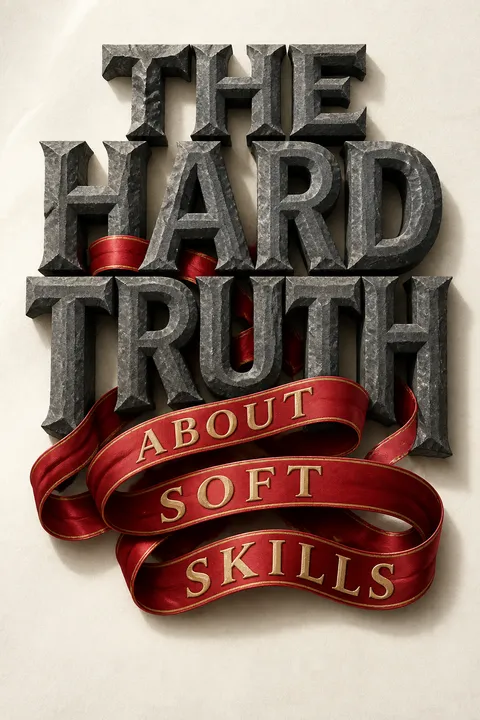
The Hard Truth About Soft Skills receives mixed reviews, with an average rating of 3.49/5. Some readers find it informative and helpful, praising its practical advice on workplace behavior and self-promotion. Others criticize it for being obvious, sexist, or lacking depth. The book's strengths include its readability, real-life examples, and focus on soft skills. However, some reviewers feel it relies too heavily on generalities and platitudes. Overall, opinions vary widely, with some finding it a valuable resource for career development and others dismissing it as common sense advice.
People Also Read









Glossary
Soft skills
Behaviors that make expertise usableThe personal, social, communication, and self-management behaviors that help someone apply technical knowledge effectively at work. The book includes self-awareness, adaptability, conscientiousness, empathy, initiative, integrity, problem solving, time management, and leadership. Soft skills are not substitutes for technical ability; they help people use that ability, collaborate, and deliver work reliably.
WIFT-FM
Audience needs reminderA mnemonic meaning What Is In It For Them. It reminds speakers to consider what the listener needs, wants, or expects before presenting an argument or proposal. Instead of focusing only on the speaker's prepared material, the communicator identifies the audience's goals and adjusts the message to make it relevant.
IC Divide
Boundary of integrityThe author's term for the boundary between ethical conduct and behavior that compromises integrity or character. It applies to seemingly minor acts, such as taking property or claiming credit that was not earned. The concept asks people to examine whether they are relying on excuses to make questionable conduct seem acceptable.
Shadow organization
Informal workplace power mapThe unofficial network of relationships, habits, and influence that shapes how a workplace actually functions. It can differ from the formal organization chart or written procedures. Understanding it means learning who affects decisions, how people prefer to communicate, and which customs influence whether ideas and work move forward.
bragologue
Conversational accomplishment storyA short, spoken story that communicates a person's work, strengths, or accomplishments without sounding like a list of résumé claims. It uses a natural, engaging account to help listeners remember what the person contributes. The book recommends preparing several versions for different settings and keeping the details relevant to the present.
brag bite
Memorable proof pointA concise piece of evidence that supports a person's professional story, such as a completed project, relevant client, or meaningful result. Brag bites can be combined into a bragologue or used individually in conversation. Their value depends on being accurate, relevant to the audience, and recent enough to reflect the person's current work.
catastrophe creep
Criticism expanded into total failureThe author's term for turning limited criticism of a particular idea, behavior, or situation into a sweeping judgment about one's entire worth or career. A disagreement can become, in the recipient's mind, proof that a boss dislikes them or plans to fire them. Recognizing this escalation can help separate the actual feedback from an anxious interpretation.
brag bag
Running record of achievementsA personal collection of accomplishments, interests, strengths, and concrete details that can be used to prepare for reviews, introductions, networking, or unexpected conversations. Keeping it current makes it easier to describe one's contributions accurately rather than relying on stale examples or trying to remember everything under pressure.
360-degree assessment
Feedback from multiple work relationshipsA workplace assessment that gathers observations from people who interact with an employee, including supervisors, colleagues, direct reports, and clients. It can reveal strengths, performance gaps, and differences between a person's self-image and how others experience their work. The book presents it as one input to ongoing career self-assessment.
FAQ
What's "The Hard Truth About Soft Skills" about?
- Focus on Soft Skills: The book emphasizes the importance of soft skills in the workplace, which are often overlooked but crucial for career success.
- Non-Technical Traits: It covers non-technical traits and behaviors such as communication, self-management, and interpersonal skills.
- Career Navigation: The book provides lessons and strategies for navigating and succeeding in the workplace using these soft skills.
- Real-Life Examples: It includes real-life stories and examples to illustrate how these skills can impact one's career.
Why should I read "The Hard Truth About Soft Skills"?
- Career Advancement: Understanding and improving soft skills can significantly enhance your career prospects and job performance.
- Practical Advice: The book offers practical insights and strategies that can be applied immediately in the workplace.
- Self-Improvement: It encourages self-awareness and self-management, which are foundational for personal and professional growth.
- Avoiding Pitfalls: By learning from others' experiences, you can avoid common workplace pitfalls and improve your interactions with colleagues and superiors.
What are the key takeaways of "The Hard Truth About Soft Skills"?
- Self-Awareness is Crucial: Knowing yourself is as important as knowing how to do the job.
- Communication is Key: Effective communication, including listening and adjusting your message, is vital.
- Manage Your Career: Take responsibility for your career management and don't rely on others to do it for you.
- Integrity Matters: Upholding integrity and character is essential for long-term success.
How does Peggy Klaus define soft skills in "The Hard Truth About Soft Skills"?
- Beyond People Skills: Soft skills encompass more than just people skills; they include personal, social, communication, and self-management behaviors.
- Complement to Hard Skills: They complement technical abilities and are essential for effectively using one's knowledge and expertise.
- Wide Spectrum: Soft skills cover a range of traits such as adaptability, critical thinking, empathy, and leadership.
- Essential for Success: These skills are crucial for navigating the workplace and achieving career success.
What are some practical strategies from "The Hard Truth About Soft Skills"?
- Take Initiative: Don't wait for others to ask you to address issues; take the initiative to solve problems.
- Manage Your Meetings: Be strategic about which meetings to attend and make them as productive as possible.
- Brand Yourself: Think of yourself as a brand and promote your accomplishments effectively.
- Handle Criticism: Learn to handle criticism constructively and use it as an opportunity for growth.
How does "The Hard Truth About Soft Skills" suggest handling a bully boss?
- Identify the Behavior: Determine if your boss is truly a bully or just demanding.
- Confront Privately: Address the behavior in private, focusing on specific actions rather than character.
- Seek Support: Join forces with colleagues or seek support from HR if necessary.
- Know When to Leave: If the situation doesn't improve, consider finding a new job.
What advice does "The Hard Truth About Soft Skills" give for effective communication?
- Listen Actively: Focus on truly understanding the speaker before responding.
- Adjust Your Message: Tailor your communication style to suit your audience's preferences.
- Use Magic Words: Incorporate "please," "thank you," and "I'm sorry" into your interactions.
- Be Concise: Avoid overwhelming your audience with too much information; get to the point.
How does "The Hard Truth About Soft Skills" address work-life balance?
- No Perfect Balance: The book suggests there is no perfect work-life balance, only trade-offs.
- Regular Check-Ins: Regularly assess your values and goals to ensure your career aligns with your life.
- Negotiate Flexibility: Explore your employer's policies and negotiate for flexibility when needed.
- Adapt to Changes: Be prepared to adjust your work-life balance as circumstances change.
What role does integrity play in "The Hard Truth About Soft Skills"?
- Foundation of Trust: Integrity is fundamental to building trust and credibility in the workplace.
- Avoiding Shortcuts: The book advises against lying, cheating, or stealing, as these actions can damage your reputation.
- Personal Code of Conduct: Develop and adhere to a personal code of conduct that aligns with your values.
- Long-Term Success: Upholding integrity is crucial for long-term career success and personal satisfaction.
How does "The Hard Truth About Soft Skills" suggest dealing with stereotypes?
- Acknowledge Limitations: Recognize the limitations of stereotypes and avoid making assumptions.
- Focus on Individuals: Pay attention to individual qualities rather than relying on stereotypes.
- Cultural Sensitivity: Be aware of cultural differences and adjust your behavior accordingly.
- Challenge Biases: Continuously challenge your own biases and work towards understanding others better.
What are some of the best quotes from "The Hard Truth About Soft Skills" and what do they mean?
- "Knowing yourself is as important as knowing how to do the job." This emphasizes the importance of self-awareness in career success.
- "There's no such thing as work-life balance, only trade-offs." It highlights the need to make conscious choices about how to allocate time and energy.
- "You have to be good to be lucky." This suggests that preparation and skill are often behind what appears to be luck.
- "There's nothing soft about soft skills." It underscores the critical role these skills play in achieving professional success.
How can "The Hard Truth About Soft Skills" help with career advancement?
- Skill Development: The book provides strategies for developing essential soft skills that enhance career prospects.
- Navigating Challenges: It offers guidance on handling workplace challenges, such as difficult bosses and office politics.
- Building Relationships: Learn how to build and maintain professional relationships that support career growth.
- Self-Promotion: Gain insights into effective self-promotion techniques that can lead to new opportunities.
About the Author
Other books by Peggy Klaus
Download PDF
Download EPUB
.epub digital book format is ideal for reading ebooks on phones, tablets, and e-readers.








