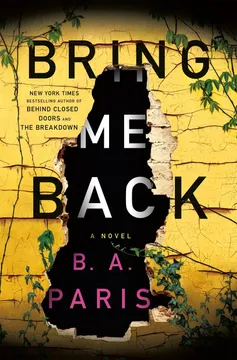


Plot Summary
Prologue
Twelve years before the main story, Finn McQuaid tells French police how his girlfriend, Layla, vanished from a roadside picnic area. He says she was asleep in their car when he went to the toilet, then gone when he returned.
He describes searching the dark, finding no trace of her, and driving to a service station to summon help. His account gives the authorities a possible abduction, a missing woman, and a frightened boyfriend. But the interview’s final admission unsettles its apparent clarity: Finn has told the truth, though not all of it.
The opening turns an act of disappearance into a problem of narration. Finn’s statement sounds coherent because he supplies the police with a sequence they can investigate, but the confession that it is incomplete makes coherence itself suspect. The gap is not merely a missing fact; it is the space where guilt, memory, and self-protection will compete. By framing the story as testimony, the novel asks readers to listen for what a narrator cannot or will not say, while withholding the knowledge needed to judge him.
The Doll at Home
Twelve years after Layla vanished, Finn is engaged to her sister, Ellen, and has rebuilt a life in the Cotswolds. A detective calls with an unsettling report: Thomas Winter, Finn’s former neighbour, believes he saw Layla outside her old cottage. Finn dismisses the ninety-two-year-old’s certainty as confusion. Then he finds Ellen troubled by a small Russian doll she picked up outside their house.
The sight jolts him because he keeps Layla’s own tiny doll hidden in his garden office. Police once found that doll beside his car in France, and its presence helped his lawyer argue that Layla might have left a clue rather than been killed. Finn hides this connection from Ellen, unwilling to let one coincidence disturb their approaching marriage.
Finn’s careful concealment establishes the novel’s central imbalance: he wants domestic calm, but that calm depends on withholding the past. The doll is simultaneously a keepsake, evidence, and a device that makes private memory public again. His choice to hide his own doll does more than protect Ellen from false hope. It preserves his authority over the story of Layla’s disappearance, allowing him to decide which facts belong in their shared life. The mystery begins not with proof that Layla is alive, but with the return of an object Finn cannot safely explain.
A Stranger in London
In 2004, Finn first sees Layla, an eighteen-year-old from the Outer Hebrides, overwhelmed by the New Year’s Eve crowds at Liverpool Street station. She has arrived in London without a hostel booking, a phone, or a clear plan. Finn gives his theatre ticket to his flatmate Harry and takes Layla home instead.
She tells him that her mother is dead, her father drinks heavily, and her older sister, Ellen, stayed behind on Lewis to care for him. Layla soon leaves Finn’s flat for a hostel, determined to build a life among people her own age. When her money is stolen and she cannot find work, she returns to Finn’s door cold and desperate. His welcome becomes the beginning of their romance.
The first meeting sets up a relationship built on rescue, but rescue is not a neutral act here. Finn’s instinct to take charge meets Layla’s fierce wish to escape a life in which others have decided what she must do. His generosity gives her shelter, while also placing him at the center of her new beginning. Layla’s return after hardship deepens their bond, yet it also teaches Finn to understand love through being needed. That pattern will later make separation feel less like loss than like the collapse of the identity he built around protecting her.
Love Turns Possessive
After Layla returns, Finn ends his relationship with Caroline and soon becomes inseparable from Layla. Harry, who has supported Finn for years, warns that Layla is changing his work and his friendships. Finn responds by beating Harry badly in a pub, then leaves his job and flat rather than face the damage.
He and Layla move to a cottage in Devon, where their first months feel like the home Finn has always wanted. Yet London’s freedom has given way to rural isolation, and Layla grows restless. A trip to Megève does not lift her mood. Finn interprets her unhappiness as a threat to their relationship, so he tries harder to hold their life together, unaware that his certainty is becoming another kind of pressure.
The move to Devon seems to fulfill Finn’s fantasy of permanence, but it also narrows Layla’s world. His violent response to Harry’s criticism shows how quickly fear of abandonment becomes aggression, even before the final night in France. Layla’s dissatisfaction is not a simple rejection of Finn; it is also a struggle against the life he has organized around her. The mismatch matters because Finn reads unease as a danger to be managed rather than information to be heard. The cottage becomes both a shared refuge and a stage on which his desire for permanence begins to confine her.
The Night at Fonches
On the drive back from France, Finn presses Layla to explain her distress. She admits that during a weekend in London she chose to sleep with another man, not because she was forced or too drunk to know what she was doing, but because she wanted the experience. Finn’s anger overwhelms him. He drags her from the car and shakes her; then his memory blanks.
When he comes to himself in the toilet block, Layla has disappeared. Afraid the police will suspect him, he invents a gentler account: Layla was asleep, he went to the toilet, and she vanished while he was away. Her Russian doll is found near the car, leaving open the possibility that she tried to signal what happened.
The betrayal is real, but the novel refuses to make it a sufficient explanation for what follows. Finn’s violence grows from an older wound, yet knowing that history does not excuse his assault. His missing memory becomes a convenient shelter: it lets him fear that he killed Layla without acknowledging what he does remember doing. The false statement then transforms an intimate failure into a public mystery. By making the doll both possible clue and accidental evidence, the story shows how objects can acquire meaning from the stories people need them to tell.
Dolls Multiply
In the present, Finn begins noticing Russian dolls where no one should have left them. He discovers that Ellen’s full set already contains the tiny doll she thought had gone missing, while another appears on his car in Cheltenham. Ellen runs after a red-haired woman she believes is Layla, but Finn tells her she has mistaken a stranger for her sister.
A further doll turns up with the bill at The Jackdaw, the village pub. Finn accuses Ruby, his former partner and the pub’s owner, of planting the clues to break up his engagement. Ruby denies knowing what the dolls mean. Meanwhile, Finn admits that his earlier claim about proposing to Layla was a lie, and that he proposed to Ellen partly because she remembered it.
The objects make the past harder to quarantine, while Finn’s explanations reveal how invested he is in controlling its return. He suspects Ruby because a familiar rival is easier to accuse than an unknown presence. His engagement also rests on an uncomfortable comparison: he proposed to Ellen after she invoked the commitment he had claimed to make to Layla. Their future is therefore entangled with a false history before the new clues arrive. The dolls do not simply ask whether Layla is alive. They expose how little Finn and Ellen have said to each other about what their relationship is built upon.
The Address Unfolds
Emails from a sender using the name Rudolph Hill soon turn the dolls into a direct threat. The sender claims Layla is alive and waiting. Finn drives to the old cottage in Devon, expecting a meeting, but finds it empty and neglected. A missing letter on the kitchen table proves someone has recently been inside.
When the sender’s cryptic clues finally make sense, Finn recognizes the connection to Pharos Hill, where Layla once compared a tree stump to a Russian doll. He races there and finds a doll on the stump, but not Layla. The location convinces him she is alive. Rather than tell Ellen or the police, he decides to keep the discovery private until he can find out what Layla wants.
The cottage and hill convert memory into a map, but the map leads Finn to certainty without contact. He takes a sign meant to establish Layla’s presence as permission to delay involving anyone else. That choice is emotionally legible: he wants the first reunion to belong to the two of them. It is also dangerous, because secrecy gives the sender more power over what Finn believes and does. The letter’s disappearance matters as much as the doll’s arrival. Someone has entered the past Finn thought he had sealed away, and has taken the words he left there for Layla.
The Ring Returns
Layla begins sending Finn photographs from their former life and tells him she found the letter he left in the cottage, with the engagement ring he had planned to give her. She says she is wearing it. Her messages swing between tenderness and pressure, while Finn hides their contact from Ellen and keeps hoping for a private meeting.
In her own account, Layla explains that she returned to the cottage because Finn’s wedding announcement made her fear he would sell it. She had believed he still tended the place for her, but found dust instead. The letter revived her hope, and she began leaving dolls to make Finn understand she had returned. She wants him to choose her before he marries Ellen.
The ring makes the past feel unfinished, but its force depends on a promise Finn never actually made to Layla. She reads the letter as an invitation to resume their life, while Finn reads her return as a chance to recover a lost love. Both treat old evidence as more authoritative than the people they have become. Layla’s doll trail is an attempt to control the pace of disclosure, and Finn’s secrecy gives that strategy room to work. Their exchange is less a reunion than a contest over who gets to define what their shared history means now.
Ellen Gets a Doll
Layla sends a Russian doll by post to Ellen, who recognizes the gesture as evidence that her sister may be nearby. Ellen asks Finn to involve the police, but he stalls because he wants to meet Layla first. He continues answering her emails, even as she tells him that he must end his relationship with Ellen if he expects to see her.
A doll with a smashed head sharpens the threat, and Layla gives Finn a ten-day deadline. She then sends dolls one by one, counting down in numbered emails. Finn grows sleepless and irritable, yet still withholds the messages from Ellen. Her direct questions expose the widening gulf between them, but he continues to protect his private connection to Layla.
The mailed doll changes the emotional geometry of the mystery: Ellen is no longer merely watching Finn react to signs of her sister, she is being addressed by them. Finn’s refusal to share what he knows becomes a betrayal of his present partner, even as he tells himself he is protecting her. The countdown turns uncertainty into scheduled coercion. Each day gives Layla another chance to dictate Finn’s attention, and each withheld message makes Ellen more isolated inside the relationship. The smashed doll works because Finn cannot tell whether it is a threat, a plea, or a demand to interpret violence as proof of love.
The Countdown Ends
As the final dolls arrive, Finn’s fixation damages ordinary life with Ellen. He neglects their meals and work, lies about speaking with the detective, and imagines violence whenever he sees the smashed doll. On the night the countdown ends, Ellen asks him to make love to her. Finn does, but calls out for Layla, leaving Ellen in tears.
He finds Layla’s message directing him to the cottage in St Mary’s and goes there before dawn, desperate to escape the hurt he has caused. The cottage is empty. When he asks where she is, Layla reveals she is in Simonsbridge. Finn realizes he has been sent away from home, but only after he has left Ellen there alone.
The countdown succeeds without requiring Layla to appear. Finn’s own desire does the decisive work: he turns intimacy with Ellen into an act staged for Layla, then flees the consequences. His choice makes the emotional threat concrete before any physical danger is confirmed. The emptied cottage is a second displacement, a replay of the original disappearance that leaves him traveling on someone else’s terms. At this point, the mystery has made Finn less a detective than a participant who confuses access with understanding. His final return is urgent because he has already recognized that the game may have moved beyond his control.
The Attic’s Wooden Dead
Finn speeds back to Simonsbridge, but Ellen and Peggy have vanished. A Russian doll stands on the landing, leading him to the attic, where a chest holds hundreds of dismantled dolls. The discovery suggests that the clues could have been staged from inside the house.
Finn finally tells Tony, Harry, and Ruby everything. They search Ellen’s unplugged computer and access an email account using a password connected to Pharos Hill. The inbox contains Finn’s messages to Rudolph Hill, and the sent folder contains every reply he believed came from Layla.
The evidence points to Ellen as the person behind the correspondence. Finn also finds her search for ferry routes to Lewis, so he boards a flight north, convinced she has gone to her childhood home.
The attic turns the scattered clues into a physical archive and redirects suspicion toward the person closest to Finn. The dolls are no longer mysterious gifts but raw materials, emptied of their smallest figures and reorganized as evidence. Ellen’s unplugged computer becomes a deliberate threshold: Finn must choose to look, then confront what looking reveals. The password’s reference to the hill he visited suggests that the apparent invitation to remember may have been designed to be solved. Yet even this proof does not settle the truth. Finn travels to Lewis with a theory, not knowledge, and the difference will matter.
The House on Lewis
On Lewis, Finn finds Ellen alone in the family house, with Peggy beside her. She tells him that Layla is alive inside her, then gives a fractured account of their father and the past. Finn demands to know where Layla is. When Ellen tries to run, he grabs and shakes her, then pushes her away. She falls against a stone wall and strikes her head.
Her final words insist that she is not Ellen but Layla. Finn checks for a pulse and finds none. Only then does Harry reach him with an email attachment from Ellen’s account, warning that Finn needs to read it. The message arrives too late to prevent the injury, but it explains the identity confusion Finn has just witnessed.
The confrontation collapses Finn’s competing explanations into a bodily consequence. He has traveled north to recover a person he thinks Ellen has hidden, but his violence repeats the original pattern that drove Layla away. Her claim that Layla exists within her sounds like evasion until the final message supplies its history. The fall is not an abstract symbol of lost control; Finn’s hands and the stone wall determine what happens next. The delayed email intensifies the tragedy by making understanding arrive after action, when insight can no longer protect anyone.
One Sister Remains
The email reveals that Layla had returned to Lewis after fleeing France, where her father mistook her for Ellen because his sight and mind were failing. Years earlier, he had killed the real Ellen with a shovel and hidden her body in a peat bog after she tried to protect Layla. Layla escaped to London, then came back to care for him, living as her dead sister.
After his death, she continued that identity, met Finn again as Ellen, and built a relationship with him while Layla’s buried self remained inside her. The dolls and emails were her attempt to reclaim Finn when he planned to marry her. On Lewis, Finn’s push kills Layla, not Ellen. His imagined reunion has ended in another irreversible loss.
The revelation recasts the novel’s central triangle as an identity built over an earlier act of violence. Layla’s impersonation of Ellen began as survival under a father who had already killed one daughter, then hardened into a life that could meet Finn’s need for stability. Her divided self is not presented as a simple trick: it is a strategy that outlasts its original danger and becomes destructive when she tries to recover the past. The dolls’ nesting form gains its full force here, suggesting layers of selfhood that can be hidden inside one another, but not safely separated.
Epilogue
Finn is handcuffed to a police officer when he attends Layla’s burial in St Mary’s, and he refuses Harry’s efforts to spare him a manslaughter charge. He is held alone under suicide watch and declines visits from Harry, Ruby, and Tony.
Peggy is safe at The Jackdaw, the only comfort he allows himself. Finn had once believed the worst part of Layla’s disappearance was not knowing whether she was alive. Now he knows what happened, and knows that his own hands ended her life.
The ending denies Finn the consoling role of a man who finally solved a mystery. His knowledge arrives with responsibility, not closure: he can name Layla’s suffering and the violence that shaped it, but he cannot undo the choices that repeated that violence. Refusing legal rescue is one of the few acts of agency left to him, a decision to accept consequence rather than manage the story. His solitude also answers the opening question of what a partial account can cost. Finn survives, but he cannot return to the life he built from omissions.
Analysis
Bring Me Back treats disappearance not as a single event but as a structure people use to arrange their lives. Finn’s version of Layla’s vanishing lets him survive the immediate danger of suspicion, then becomes the story he repeats to himself and to Ellen. Layla’s return under her sister’s identity performs a parallel act of survival: where Finn edits memory to remain respectable, Layla edits identity to remain alive. Neither strategy stays contained. The past reappears through dolls, letters, photographs, and a name on an email account, each object carrying more truth than the people handling it can tolerate.
The novel’s psychological tension comes from the gap between attachment and recognition. Finn believes that his enduring love gives him privileged knowledge of Layla, yet he repeatedly mistakes longing for understanding. Layla, meanwhile, tries to recover the person she was by forcing Finn to choose her, as if his choice could undo the years and the selves that have accumulated since. Their fixation turns love into a demand for restoration. Ellen’s quiet domestic presence seems to offer Finn an escape from volatility, but he has not built that relationship on full honesty either. The story makes secrecy corrosive because every concealed fact changes the conditions under which affection is offered.
The Russian dolls give this dynamic a physical form: each figure contains another, but the smallest one can disappear, be duplicated, or be mistaken for the original. The image is not a tidy explanation of identity. It is a warning that a person’s public self may contain grief, fear, and inventions that cannot simply be removed. The final violence follows from Finn’s confidence that he can force the truth out of someone through physical control. He repeats the behavior that first shattered his life with Layla, and understanding arrives only after he has made the loss permanent. The book’s bleakest lesson is not that love fails, but that love without curiosity, honesty, and restraint can become another form of possession.
Review Summary
Bring Me Back received mixed reviews, with ratings ranging from 1 to 5 stars. Many readers found it gripping and suspenseful, praising the author's ability to build tension and create unexpected twists. However, some felt the plot was implausible and the characters underdeveloped. The use of Russian dolls as a recurring motif was divisive, with some finding it creepy and others annoying. While some readers considered it Paris's weakest book, others found it her most entertaining. Overall, it was described as a fast-paced, addictive read, despite its flaws.
People Also Read







Characters
Finn McQuaid
The guarded survivorFinn is a successful investment manager whose confidence in the markets contrasts with his uncertainty about love and memory. Harry has repeatedly helped him recover from personal and professional crises, while Layla’s disappearance leaves him trapped between guilt and the fear that he may have harmed her. He is generous when he feels secure, but his temper and need for control surface when he believes he is being abandoned or deceived. His relationships with Layla and Ellen are shaped by what he does not ask, what he chooses to conceal, and his wish to make the past conform to a livable story.
Layla Gray
The vanished loverLayla is a spirited young woman from Lewis who leaves a difficult home for London, eager to experience a life beyond her father’s control. Her attraction to Finn is mixed with a need for independence, and she can be impulsive when the future feels too narrowly prescribed. The loss of her mother and the demands placed on her at home shape her attachment to her sister and her uneasy relationship with safety. Her vivid presence in Finn’s memories makes her absence feel active, but the story keeps the difference between his recollection of her and her own experience in view.
Ellen Gray
The devoted sisterEllen is Layla’s older sister and Finn’s partner in the life he builds after the disappearance. An illustrator, she is thoughtful, restrained, and attentive to the small routines that make a household feel dependable. Her childhood responsibilities and closeness to Layla inform her concern for her sister’s fate, while her quiet manner can make it difficult for others to know what she is thinking. Ellen wants a future with Finn, but she also wants her family history acknowledged rather than treated as a subject best left undisturbed.
Harry
Finn’s steadfast friendHarry is Finn’s longtime friend, business partner, and practical rescuer. He offers Finn work, legal support, housing, and companionship during periods when Finn cannot manage alone. His willingness to help is matched by a directness that can put him at odds with Finn, especially when he thinks Finn is making a destructive choice. Harry also maintains a connection with Ellen, and his steady presence gives Finn someone to turn to when the mystery becomes too large to manage privately.
Tony Heddon
The persistent detectiveTony is the detective who investigated Layla’s disappearance and remained in contact with Finn over the years. He is patient without being credulous, and he treats Thomas’s late-life sighting cautiously while still passing it on to Finn. His professional judgment offers a counterweight to Finn’s private theories. As retirement approaches, Tony remains willing to revisit a case that has never quite settled into the past.
Ruby
The village publicanRuby owns The Jackdaw and once had a relationship with Finn. Sociable and candid, she knows how local gossip can harden into judgment, including the scrutiny surrounding Finn’s relationship with Ellen. She is hurt by Finn’s dishonesty about his growing attachment to Ellen, but she is not defined by resentment. Her practical perspective helps Finn test his suspicions, even when he is too defensive to accept it.
Thomas Winter
The elderly witnessThomas is Finn’s former neighbour in St Mary’s, an elderly man with a long memory for the couple who once lived nearby. His reported sighting of Layla unsettles Finn because it revives a case most people have stopped discussing. Thomas’s care for the cottage garden also preserves a small, tangible link to Finn’s former life.
Mick
The grieving neighbourMick is Finn and Ellen’s reserved neighbour in Simonsbridge. He works as an accountant and organizes his days around caring for his wife, who lives with chronic pain and depression after a devastating accident. His guardedness reflects exhaustion rather than hostility, and Finn’s limited knowledge of the couple makes them easy to misread.
Peggy
Finn’s red setterPeggy is Finn’s ageing red setter and a constant presence in his home and walks. Finn chose her partly because her coloring recalled Layla, though the dog becomes meaningful in her own right as a source of routine and uncomplicated affection. She is sensitive to Ellen’s moods and remains a quiet measure of the domestic life Finn hopes to preserve.
Layla and Ellen’s father
The feared fatherThe sisters’ father is an alcoholic, ill, and often violent man whose demands shape their childhood on Lewis. His authority makes the sisters’ home feel unsafe and restricts their choices. His failing health later complicates the meaning of care, obligation, and escape in the sisters’ lives.
Plot Devices
The Russian dolls
Clues that keep nestingSmall painted dolls repeatedly appear outside Finn’s home, on his car, at the pub, by post, and on a meaningful hillside. Their connection to a childhood set shared by Layla and Ellen makes them seem personal, while Finn’s hidden doll links them to the French disappearance. Their growing number draws Finn into an increasingly intimate trail of clues. The dolls also carry a deeper meaning: they let the story represent identities and memories concealed inside one another. In the final revelation, the many discarded dolls point back to the place where the trail was manufactured.
Rudolph Hill
A sender disguised as a nameAn anonymous email account contacts Finn with claims that Layla is alive and directs him toward the cottage in St Mary’s. Its name first encourages Finn to suspect Ruby, whose dolphin tattoo seems to fit part of it. The sender’s clues instead connect a Russian doll with Pharos Hill, where Layla once identified a tree stump by its shape. The account lets its user control the timing and emotional temperature of Finn’s search, supplying just enough information to keep him moving while withholding any reliable explanation.
Finn’s police statement
A lie shaped like testimonyAfter Layla disappears at Fonches, Finn gives French police a version in which she was asleep in the car and vanished while he used the toilet. He invents details that make the disappearance look like an abduction and conceal the violent argument that preceded it. His account is persuasive enough to help him leave France, but the missing memory and the doll found near his car leave unresolved questions. The statement frames the novel’s larger concern with how fear and self-protection can turn a partial truth into the foundation for an entire life.
The Pharos Hill stump
A private landmark proves identityLayla once compared a distinctive tree stump on Pharos Hill to a Russian doll. Finn understands the connection only after reaching the abandoned cottage and realizing the anonymous sender has used the email address as a clue. A doll left on the stump convinces him that Layla, rather than an imitator, has returned. The landmark works because its meaning belongs to a small shared history, not public knowledge. It also demonstrates the limits of proof: Finn finds persuasive evidence of presence, but no explanation of where Layla has been or what she intends.
The borrowed identity
A self concealed in anotherThe novel’s shifting accounts of Layla and Ellen eventually reveal that Layla has lived under her sister’s identity. After fleeing France, she returns to Lewis, where her father mistakes her for Ellen, and continues the impersonation after his death. She later approaches Finn as Ellen and builds a new relationship with him while her former identity remains psychologically active. This device reshapes the meaning of the dolls, the emails, and Finn’s memories: the mystery is not simply where Layla went, but how a person can survive by becoming someone else and what happens when the buried self demands recognition.
About the Author



Download PDF
Download EPUB
.epub digital book format is ideal for reading ebooks on phones, tablets, and e-readers.








