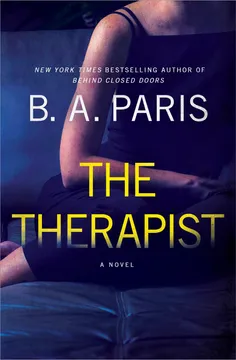


Plot Summary
The Stranger at Number Six
After leaving her country cottage for London, Alice Dawson tries to make a home with Leo Curtis, her private, risk-management consultant partner. Their gated development, The Circle, is quiet and close-knit, but Alice feels like an outsider while Leo resists the idea of rushing into friendships.
She invites the neighbors to drinks anyway. The gathering goes better than she expected: warm Eve and actor Will welcome her, while red-haired Tamsin remains guarded. A tall stranger arrives, and Alice assumes he is Tim, the husband of neighbor Maria.
She shows him the newly combined upstairs bedroom, then leaves him to find a drink. Later, the real Tim confirms he never attended. Nobody else remembers the visitor, and Leo worries the man may have searched the house.
Alice's invitation is a bid for belonging, but it also exposes a vulnerability: she trusts a stranger because she wants the neighborhood to receive her. Leo's concern about privacy initially reads as temperament, while Alice's hospitality seems harmless. The party quietly puts both habits under pressure. The Circle's apparent safety depends on neighbors recognizing one another, yet the visitor passes through precisely because Alice believes she already knows who he is. The mistaken name becomes the first crack in the couple's new life, linking Alice's wish for connection to the danger of accepting appearances.
The House Has a Past
As Alice asks around about the party guest, elderly neighbor Lorna admits she let him through the gate after he claimed he had been invited. Soon afterward, the man returns and identifies himself as private investigator Thomas Grainger.
He tells Alice that Nina Maxwell was murdered in this house, and that he is investigating the case for Oliver Maxwell's sister because Oliver may have been wrongly blamed. Alice verifies the murder in news reports, then calls the estate agent, Ben Forbes, expecting an explanation.
Instead, Ben says Leo already knew the house's history before buying it and had claimed Alice accepted it. She confronts Leo. He admits he concealed the murder because he wanted the house and feared Alice would refuse to move in. He hoped she would settle before learning the truth.
The house's hidden history makes Alice's new home feel like an agreement made without her consent. Leo's omission is not simply a withheld fact: he has made a major choice on her behalf, then represented her willingness to Ben as if it were already settled. That breach unsettles Alice more than the property's past because it changes the meaning of their shared move. Thomas offers another possible story, one in which accepted guilt may conceal a miscarriage of justice. Alice is caught between two questions of trust: whether she can rely on Leo, and whether the neighbors' account of Nina's death can be believed.
A Murder Without Answers
Alice sleeps in her downstairs study rather than the bedroom where Nina died, while she and Leo struggle to speak honestly. Thomas explains that Nina was believed to have had an affair, a possible motive for Oliver, but he suspects the other man may have been responsible. He asks Alice to listen for information because she is new to The Circle and has no old loyalties.
Alice initially refuses, then searches for the facts herself. Lorna tells her Nina confessed to an affair after a furious argument with Oliver. On the night of the murder, Lorna saw Oliver arrive and enter the house, although Oliver told police he had sat in the square first. That inconsistency helped condemn him. Alice begins to wonder whether Lorna saw someone else enter.
The case turns on the gap between what people saw and what they later said. Lorna's memory appears to incriminate Oliver, yet the detail may be mistaken, coerced, or incomplete. Thomas proposes an alternative that gives Alice a way to act without claiming certainty: she can gather observations rather than pronounce a verdict. That distinction matters because Alice's own grief makes her susceptible to treating emotional resonance as evidence. Her decision to investigate begins as a response to a troubling discrepancy, but it also gives direction to the isolation she feels inside the house and the relationship.
Friends Close Ranks
Eve and Maria describe Nina as a generous therapist who helped neighbors with work, studies, yoga, and friendship. Tamsin, Nina's former closest friend, resents Alice's questions, then later apologizes and explains that Nina had drifted away from her before the murder. Tamsin suspected her husband Connor had wanted Nina, but he admitted only that he had tried to kiss her; Nina rejected him, and he did not have an affair with her.
Alice also learns Nina saw a male therapist who visited her at home, though no one knows his name. Lorna recalls Nina saying she planned to end the affair. The stories make the Circle feel intimate, but each neighbor has a different reason to protect a version of the past.
The neighborhood's warmth and its silence are not opposites. The residents may care sincerely for Nina, yet their shared need to resume ordinary life makes certainty attractive. Tamsin's resentment, Connor's attempted kiss, and Nina's undisclosed therapist complicate the portrait of a universally beloved woman without establishing guilt. Alice's questions also press on private wounds, particularly Tamsin's sense of abandonment. The scene's psychological tension comes from how affection can become a form of selective memory: people preserve the Nina they loved while avoiding details that might unsettle the account that Oliver killed her.
Leo's Other Name
While looking for a highlighter in Leo's study, Alice finds a small key taped beneath a desk drawer. It opens a cash box hidden in his locked filing cabinet. Inside is an expired passport bearing Leo's photograph but the surname Carter. Thomas searches the name and finds that Leo Carter was imprisoned for fraud.
When Alice confronts him, Leo admits the conviction and says he took another name because he feared she would reject him. He also acknowledges that he has lied about his family and the circumstances of his past. Alice ends the relationship, not because he served time, but because he chose deception after she had trusted him with her own history. She asks for two weeks alone in the house before returning to Harlestone.
The passport turns an abstract suspicion into a material fact Alice can hold. Her reaction distinguishes punishment from trust: she does not condemn Leo for a crime whose sentence he served, but for deciding that intimacy could be built on a false identity. His shame explains the concealment without undoing its effect. The scene also sharpens the novel's recurring concern with names as instruments of control. Alice has been trying to learn who her neighbors are, but the most consequential disguise belongs to the person she thought she knew best.
Footsteps in the Dark
Alone after the breakup, Alice repeatedly wakes with the conviction that someone is in the house, though she finds no forced entry. She notices her clothes disturbed, a white rose by the door, champagne in the refrigerator, and signs that someone may have entered without her knowledge.
Eve recalls that Nina also felt watched when Oliver was away. Alice moves to a hotel, then returns and finds a synthetic blond ponytail hidden beneath her jumpers, along with artificial strands of hair around the kitchen.
Thinking Leo planted them to frighten her, she confronts him, but he denies knowing what she means. She also learns he gave Will and Eve a spare key, but their set goes missing. The unexplained visits now seem less like grief or imagination than a real intrusion.
Alice's perception becomes difficult to trust because fear, bereavement, and concrete anomalies reinforce one another. The artificial hair is especially destabilizing: it resembles evidence but is a manufactured prop, designed to provoke interpretation rather than prove a crime. Her earlier belief in Nina's presence offers comfort, then becomes a possible explanation for someone physically entering the house. The missing key gives that dread practical shape. Instead of resolving uncertainty, each new clue multiplies possible culprits, exposing how easily a person seeking safety can be steered by evidence arranged to look meaningful.
The Pattern Crosses Borders
Research into Nina's hair being cut leads Alice to a French murder from fifteen months earlier: Marion Cartaux, another blond woman, was strangled after her hair was removed. A homeless man has confessed, though Thomas doubts the case is settled.
Alice also discovers that actor Will was in Paris when Marion died, making him a possible lead rather than proof of guilt. She learns Nina's therapist was a man who came to the house, and wonders whether he was someone within The Circle.
Tamsin says Nina had once mentioned Oliver sitting in the square after work, supporting Thomas's theory that someone could have entered while Lorna watched the wrong person. Alice's theories grow more numerous, and her neighbors increasingly suspect she is inventing connections.
The apparent pattern expands the case but does not immediately make it clearer. Similar crimes can suggest one offender, yet the French confession complicates that inference, and Will's presence there is only circumstantial. Alice is drawn toward connection because scattered facts seem to answer one another, but the reader can also see how easily pattern-seeking becomes overreach. Her interest in Nina's therapist is more structurally promising: it ties the victim's private life to the neighborhood's unseen routines. The turning point makes Alice's intelligence and vulnerability inseparable, since her ability to connect details also exposes her to manipulation.
The Missing Visitor Returns
At lunch, Tamsin calls Alice a fantasist and insists the neighbors never believed her story about the uninvited guest. Shaken, Alice leaves The Circle, but Thomas tells her that Will was in Paris when Marion was killed and that Ben Forbes had sold Nina and Oliver their house.
Back home, Tim visits to say he cannot identify Nina's therapist. Alice notices a photograph of Nina newly placed among the family pictures on her refrigerator, a deliberate sign that someone has been inside.
She links Nina's Wednesday therapy appointments to Tim's training in psychotherapy and Maria's regular absence at yoga. Thomas then reports that Ben is friends with Tim. Tamsin phones to say Oliver had no sister, undermining the client Thomas claimed to represent.
The evidence finally begins to converge around access rather than personality. Tim's training, Nina's private appointments, the house's altered photographs, and Ben's connection form a more concrete chain than Alice's earlier suspicions about jealousy. Yet her emotional state remains compromised: Tamsin's accusation makes her doubt her own reliability just as the photograph confirms an intrusion. The revelation that Oliver had no sister is decisive because it does not merely challenge a theory. It invalidates the premise on which Thomas earned Alice's cooperation, forcing her to reconsider the investigator as part of the mystery.
The Investigator's Mask Falls
Before Thomas arrives, Alice realizes he is Nina's unnamed therapist and the person who has been entering the house. He admits that he is John Beaumont, the son Lorna and Edward claimed was killed in Iraq, and that he has murdered Nina, Marion, and Justine Bartley. He had posed as a therapist to manipulate women, then as a private investigator to draw Alice into his game.
John tells her she caused the car crash that killed her family, exploiting the guilt she has carried for years. He attacks her and takes her to his parents' house, where he ties her to a chair and begins cutting her hair. Lorna reveals that John forced her to lie about Oliver. When John attacks Alice again, Lorna strikes him, giving Alice the chance to survive.
The revelation collapses the story's competing identities into one predatory method. John does not merely impersonate a therapist or investigator; he studies what each person longs to believe and supplies that role. Alice wants justice and a trustworthy ally, so he makes himself both. His knowledge of her family tragedy turns private guilt into a weapon, while the haircut links his earlier victims to the threat facing Alice. Lorna's resistance breaks the pattern of enforced silence. Her intervention is morally painful, but it interrupts the cycle John built from deception, coercion, and the exploitation of grief.
A Partial Truth Survives
After the attack, Alice and Lorna tell the authorities a shortened account: the man from Alice's party took her captive, and Lorna helped save her. They leave out the false investigator, the fabricated client, and Alice's role in pursuing the murder. Lorna later tells Alice that John forced her to invent the argument, affair, and testimony that pointed to Oliver.
She also explains that John had been an obsessive child, had never served in Iraq, and imprisoned his parents after they fled him. Alice returns to her cottage in Harlestone, while Lorna awaits trial for killing her son. The Circle's residents begin selling their homes, unable to live comfortably with what they accepted about Nina's case.
The immediate aftermath offers no clean restoration. Lorna has saved Alice, but she has also killed her son and must answer for it; Alice has survived, but chooses not to expose every humiliating and painful detail. Their selective account is both protection and another compromise with truth. The revelation about Lorna's forced testimony restores Oliver's innocence, while the community's earlier eagerness to accept his guilt acquires moral weight. The neighborhood's dispersal shows that knowledge can make a place uninhabitable, even when it finally corrects the story people told themselves.
Epilogue
Six months later, Alice is back in her cottage and cautiously rebuilding a life beyond The Circle. Eve visits while pregnant, and the two women manage a tender reunion despite what remains unsaid. Alice knows that her fixation on Nina's case was bound up with her own guilt: she was driving when the crash killed her parents and sister, and she has never felt she was properly punished.
Leo served prison time for fraud, and Alice's resentment of that difference helped end their relationship, though they remain in contact. Lorna is awaiting trial, and Alice hopes the court will recognize that she saved her life. She considers telling Leo the full truth at last.
The ending shifts the question from whether Alice can uncover the truth to whether she can live without using secrecy as shelter. She recognizes that her pursuit of Nina's case was fueled by unresolved guilt, not only by concern for Oliver or the dead woman. That admission complicates her earlier judgment of Leo: his imprisonment did not make him trustworthy, but her envy of his chance to pay for wrongdoing shaped her refusal to forgive him. Alice's reunion with Eve is warm but incomplete, echoing the partial account given to police. Healing begins not with perfect disclosure, but with her willingness to consider it.
Analysis
The novel builds suspense by making credibility itself unstable. Alice enters The Circle wanting the ordinary assurances of a home: a locked gate, neighbors who know one another, a partner who shares her future. Each assurance proves conditional. The gate can be opened by a courteous resident, the neighbors' memories can be shaped by fear, and the partner's affection does not prevent him from concealing his history. The mystery therefore grows not just from missing evidence, but from the social habits that determine whose evidence is accepted.
Alice's grief is both an ethical motive and a vulnerability. Nina's name recalls her dead sister, making her feel responsible for a stranger whose story resembles her own losses. That attachment pushes Alice toward justice, but it also makes her unusually receptive to Thomas's offer of purpose. Her repeated theories are not simply signs of poor judgment; they show a mind trying to restore order after discovering that the people closest to her have withheld important truths. The danger lies in mistaking the need for coherence for proof.
The parallel stories of Alice and Lorna sharpen the novel's treatment of guilt. Alice has never felt punished enough for the crash that killed her family, while Lorna's loyalty to her son traps her in a false account that helps condemn Oliver. Both women have allowed remorse and attachment to distort what they can say openly. Their final alliance does not erase their choices, but it interrupts the silence that made further harm possible. The ending's partial disclosure remains morally complicated: protection can help someone survive, yet concealment can also preserve the very patterns that enabled violence.
Review Summary
Reviews for The Therapist are mixed, averaging 3.77/5. Readers praise its quick pace, creepy gated-community atmosphere, and surprising twists, particularly near the end. However, the protagonist Alice is widely criticized for making illogical decisions, missing obvious clues, and becoming frustratingly obsessed with uncovering the truth about murdered therapist Nina. Many felt the story was repetitive and slow in its middle section before picking up momentum. Fans of domestic thrillers generally found it an enjoyable, easy read, while others felt it fell short of the author's earlier, stronger works.
People Also Read








Characters
Alice Dawson
Grieving rural translatorAlice is a freelance translator who leaves her familiar country life to build a home with Leo in London. Her instinct is to welcome people, preserve memories, and make emotional connections, but those same qualities can leave her exposed to manipulation. She has survived the loss of her parents and sister, and the grief still shapes how she interprets other people's pain. Alice wants to belong without surrendering her independence, and she struggles when new relationships ask her to choose between loyalty, curiosity, and self-protection.
Leo Curtis
Private risk consultantLeo is Alice's partner, a successful consultant whose work keeps him traveling and whose private nature contrasts with Alice's wish for community. He values security, control, and a life insulated from other people's scrutiny. His affection for Alice is genuine, but his reluctance to share his past complicates their attempt to move from a weekend relationship into daily life together. Leo's idea of protection can become indistinguishable from withholding, making trust a central pressure in their relationship.
Thomas Grainger
Private investigatorThomas approaches Alice while investigating Nina Maxwell's murder on behalf of someone connected to the accused man. He is persuasive without seeming forceful and presents himself as a careful professional who wants evidence rather than gossip. His manner appeals to Alice's desire for a dependable guide at a moment when her home and relationship have become uncertain. Thomas's investigation gives the mystery a second perspective, while his confidence tests how readily Alice can distinguish sincere help from a convincing performance.
Nina Maxwell
Absent neighbor at the centerNina was a therapist, yoga instructor, and an active presence in The Circle before her murder. Neighbors remember her as generous with her time and attentive to other people's work and personal struggles. Yet accounts of her friendships and private life do not always agree, and she remains difficult for Alice to know through memory alone. Nina's absence draws the residents back toward the choices they made after her death and forces Alice to ask what their affection may have obscured.
Alice's sister Nina
Lost sister and namesakeAlice's older sister died with their parents in a car crash when Alice was nineteen. She remains a powerful presence in Alice's memory, and Alice often feels an instinctive connection to other women named Nina. That attachment can be tender, but it also makes it difficult for Alice to keep another person's story separate from her own grief.
Eve Jackman
Welcoming next-door neighborEve is a beauty blogger, Will's partner, and one of Alice's first friends in The Circle. Warm and generous, she helps Alice find a place among residents whose friendships began long before Alice arrived. Eve also carries memories of Nina and tries to balance compassion for Alice with her own need to believe the murder has been resolved. Her instinct is to smooth conflict, which can offer comfort while sometimes preserving the neighborhood's silences.
Tamsin
Nina's guarded best friendTamsin is a former model, a mother, and Nina's closest friend before their relationship changed. She is striking and controlled in public, but her depression and disappointment in her marriage leave her emotionally vulnerable. Tamsin resists Alice's questions because they reopen grief and threaten the fragile peace she has built. Her sharpness is not simple hostility: it grows from the fear that new attention will undo the private ways she has tried to contain her loss.
Will Jackman
Actor and Eve's partnerWill is an actor whose career is gaining momentum and whose long relationship with Eve began in their youth. He is sociable and generous, often helping his neighbors and offering Alice practical kindness. His profession makes him comfortable performing for an audience, but his relationships are presented as affectionate and familiar. Will's connection to Nina and to the adjoining gardens places him close to the Circle's shared routines.
Maria Conway
Speech therapist and motherMaria is a speech therapist, Tim's wife, and the mother of three boys. She is thoughtful and welcoming, often helping Alice understand the routines and relationships of The Circle. Her calm manner contrasts with Tamsin's guardedness, and she helps keep their small friendship group connected. Maria also remembers Nina as a neighbor who offered practical help without making a show of it.
Tim Conway
Psychology trainee and neighborTim is Maria's husband and a qualified psychologist pursuing further training in psychotherapy. He is a father of three and appears easygoing in the neighborhood's social life. His professional interests connect him to Nina's work and to the questions surrounding her private appointments. Tim is a quiet presence in the Circle, and Alice gradually becomes more aware of how often he watches the shared square.
Connor
Whisky trader and fatherConnor sells high-end whisky and is Tamsin's husband. Broad, blunt, and often joking, he can seem mismatched with Tamsin's quieter tastes, though he is devoted to their daughters. His confidence sometimes slips into insensitivity, especially when Tamsin wants him to take her feelings seriously. His interest in whisky also gave him a point of connection with Nina.
Lorna
Grieving elder neighborLorna is an elderly resident of The Circle who lives with her husband, Edward. She is careful and courteous, but bereavement has narrowed her world and weakened her confidence. The death of her son remains a private wound, and she is reluctant to revisit the painful history surrounding Nina. Her delicate manners conceal a difficult relationship between family loyalty, grief, and the fear of speaking openly.
Edward
Lorna's quiet husbandEdward is Lorna's husband, a retired man who tends the garden and prefers familiar routines. The couple's loss of their only son has shaped their withdrawal from the wider community. Edward is protective of Lorna and cautious with strangers, though he remains capable of small kindnesses toward Alice. His reticence reflects a generation and a marriage in which grief is often carried rather than discussed.
Oliver Maxwell
Accused husband and neighborOliver was Nina's husband and a helpful neighbor remembered for gardening and practical favors. After Nina's murder, the police accused him, and his own account of the night became part of the case against him. Friends describe him as gentle and devoted, a portrait that sits uneasily beside the crime attributed to him. His story gives Alice reason to question whether a community's certainty is the same as proof.
Debbie
Alice's country confidanteDebbie is Alice's longtime friend in Harlestone, where she runs a riding school and lives among the rural routines Alice left behind. Direct and affectionate, she offers Alice a place to stay and challenges her when grief begins to drive her decisions. Debbie knows Alice's history well enough to recognize when an apparent act of loyalty may also be an attempt to avoid facing her own pain.
Ginny
Alice's London confidanteGinny is Alice's friend and Mark's wife. She lives near The Circle and offers practical help as Alice's relationship with Leo deteriorates. Her loyalty extends to both Alice and Leo, leaving her careful not to turn their conflict into a contest of sides. Ginny's perspective gives Alice a connection to London beyond the gated neighborhood.
Mark
Ginny's husband and friendMark is Ginny's husband and one of Leo's few established friends. He works with Ginny and enjoys golf with Ben. His connection to both couples makes him part of Alice's wider support network.
Ben Forbes
The Circle's estate agentBen is the estate agent who helps Leo find the house in The Circle. He is also a friend of Mark's and becomes an important source of information about what Leo knew before the purchase. His role brings the property market into the story's questions of disclosure, responsibility, and who gets to decide what a new resident should know.
Plot Devices
The Circle
A closed neighborhoodThe Circle is a gated development of twelve houses arranged around a shared square. Its residents know one another's routines, exchange favors, and use a group chat to organize everyday life. That closeness makes Alice feel watched when she is new, but it also gives the mystery a compact geography: windows face the square, gardens connect through gaps in fences, and a visitor can enter by being admitted by a resident. The setting turns ordinary neighborly access into a question of evidence, and makes communal silence feel as consequential as a locked gate.
The disputed murder
A verdict without certaintyNina Maxwell's murder happened in the house Alice buys, and her husband Oliver was blamed after evidence and witness statements appeared to support the accusation. His death left the case looking settled to the neighbors, even though details of the night remain uncertain. Thomas's claim of a miscarriage of justice gives Alice a reason to test the accepted account. The affair, Lorna's observation of Oliver arriving, and the possibility of another person entering the house turn the murder into a puzzle about how memory, fear, and testimony can be shaped.
The false investigator
Trust used as baitA man introduces himself to Alice as Thomas Grainger, a private investigator seeking justice for Oliver. He claims to have a client who is Oliver's sister and presents his work as a careful attempt to reopen a flawed case. His professional manner encourages Alice to share information and lets him move through the neighborhood under a plausible pretext. The story's interspersed therapy scenes gradually suggest that a person can use a helping role to guide another's thoughts. This device becomes central when the identity behind the investigator and the supposed client are exposed.
Cut blond hair
A repeated signatureNina's hair was cut before her death, a detail that unsettles Alice because it echoes the fate of another blond woman murdered in France. Alice encounters artificial hair in her own house and initially mistakes the traces for evidence of an intruder's threat. The motif links separate crimes, fuels suspicion of the wrong people, and becomes part of the attack on Alice. Hair carries both forensic and personal meaning: it is a clue, a staged prop, and a way to turn a woman's appearance into a site of control.
The hidden French window key
An unseen route insideThe front door's mortice lock and the development's gate encourage Alice to believe the house is secure. But the French windows have not been fully accounted for, and an old key remains available outside Alice's knowledge. The gap between gardens provides a discreet route into the property, while small disturbances, a rearranged object, and a photograph on the refrigerator mark someone's presence. This device converts the haunting Alice fears into a physical method of entry and shows how the Circle's familiar architecture can conceal movement instead of preventing it.
About the Author

Download PDF
Download EPUB
.epub digital book format is ideal for reading ebooks on phones, tablets, and e-readers.








