

Plot Summary
Prologue
Rian, the Earth Fae’s magicks instructor, is accused of sleeping with the fated mate of a royal. He denies it, but the High Council trusts a thin piece of evidence and sentences him to exile. His mother, Aster, is ill, and both understand he may never see her again.
Terra, leader of the Earth Fae, watches with anger and gives him no reason to trust her. Rian leaves with his powers bound by iron cuffs and promises Aster he will try to find happiness. His farewell hardens into a vow of revenge.
The trial gives Rian’s later vengeance a human source: not simply exile, but being judged unheard while his mother is dying. The council’s swift certainty turns procedure into violence, while Terra’s silent judgment makes her seem part of the institution that wounds him. Aster’s request that he seek happiness offers an alternative to revenge before revenge has become his identity. Rian’s promise is therefore a moral thread the story can pull taut later. The opening also establishes the danger of a society that treats fated bonds as law, especially when royal status determines whose testimony counts.
The Verdict Beneath Marble
Three years after Rian’s trial, Terra meets with King Callum and Lily to consider how to stop the Domnua, the Dark Fae serving the goddess Domnu. Their attacks have unsettled the Elemental Fae, and Lily reports that a ritual using the combined power of the factions might strip Domnu of her strength.
Terra knows her own fated mate is Rian, the exiled man whose case helped fracture her family, and she believes he is now a threat to her people. While she weighs that danger against the approaching war, three Domnua attack her in the woods. Terra kills them with the Earth Fae’s amulet and performs their last rites, showing that defending her people does not erase her duty to the dead.
Terra’s leadership is defined by a tension between protection and reverence. She kills the attackers decisively, then gives them proper rites, refusing the easy moral distinction between defending her people and denying care to an enemy. The proposed ritual also makes unity a practical military necessity rather than a vague ideal: the factions must combine power to contain a goddess. Meanwhile, Terra’s knowledge that Rian is her mate complicates the conflict before they meet again. She sees him as both a personal possibility and a political danger, and neither role can be safely ignored.
A Bargain in Dublin
In Dublin, Rian has turned his magick and business acumen toward damaging the environment, joining a food-production company whose projects threaten forests and wildlife. He tells himself this is payback against the Earth Fae, though he still orders workers to relocate orangutans rather than kill them. After singing a heartsong he does not understand, he returns home to find Domnu waiting.
She offers to identify the man responsible for his exile if Rian brings her Terra’s amulet. She also reveals that his exile bars him from returning by law, not by physical impossibility. Rian accepts, wanting justice more than he wants to question the goddess’s motives. He has no plan to spare Terra, but his song has already reached her.
Rian’s environmental sabotage turns private injury into public harm. He chooses a company capable of damaging the Earth because the Earth Fae’s identity and the natural world have become fused in his anger. Yet his hesitation over the orangutans exposes the limits of his self-image as a man who no longer cares. Domnu exploits that contradiction with precision: she offers not merely revenge, but an explanation for a life that has felt stolen. Rian’s acceptance is less a clear-eyed alliance than a surrender to the one story that has kept him moving.
Fire Opens the Way
When Rian’s song reaches her, Terra decides she cannot leave his plan unchecked. She travels to Ireland with Bianca, a human ally gifted with magick, and Seamus, Bianca’s husband, hoping to persuade or stop him. Rian has already found the portal and prepared an island hideaway with Callahan, a Fire Fae who manages his affairs.
As Terra and her companions emerge through the portal, Rian binds their wrists with iron cuffs and disables their weapons before they can recover from the passage. He transports them to the island, where wards prevent escape. Although he insists he will not harm them, the cuffs burn Terra’s skin. Seeing the damage, Rian heals her and kisses her, then retreats from the feelings the contact awakens.
The portal crossing marks Terra’s shift from ruler responding to events to an active participant in Rian’s choices. Yet her attempt to intervene begins with a loss of control: Rian has studied the portal, prepared the island, and used the disorientation of travel to seize the advantage. His apology and healing gesture do not erase the coercion, but they reveal a conflict between his mission and his remaining conscience. Callahan’s presence offers an alternative moral witness to Rian’s self-justifying account. The island becomes a pressure chamber where power, attraction, and responsibility cannot be kept separate.
The Knife Beneath the Moon
Restless in confinement, Terra persuades Callahan to let her walk under the full moon. She reaches a meadow, removes her clothes for a private ritual, and finds Rian watching her. He berates her for standing near the cliffs, then kisses her in a rush of anger and desire. Terra responds by bringing him to pleasure, hoping to soften his hostility.
While she is distracted, Rian takes the amulet from her thigh. Its power strengthens him, but he does not hand it to Domnu. Callahan challenges him to wait before deciding what to do with it. The next morning Terra sees Rian’s hands blistered from the iron box where he has hidden the knife, and she chooses to treat his wounds rather than attack him.
The stolen amulet makes attraction inseparable from political power. Terra’s pleasure and care are genuine, but she is also trying to redirect a man who has made her people his target; Rian’s desire is genuine too, yet he uses her vulnerability to complete a theft. Their intimacy therefore cannot be read as simple romantic progress. Callahan’s counsel interrupts Rian’s habit of treating every choice as a direct route to revenge. Terra’s decision to heal him, despite being robbed, tests whether care can create trust without requiring her to ignore the harm he has done.
A Game Turns Intimate
Bianca and Seamus turn their captivity into a magickal competition, and Rian joins in despite himself. He wins and chooses an evening with Terra as his prize. Their outdoor date begins awkwardly, then deepens as Terra describes her brothers, Eoghan and Cormac, and the estrangement that followed her attempts to investigate Rian’s case.
She explains that she also cared for Rian’s mother after his exile. Rian learns that Terra risked her family’s disapproval to seek evidence in his favor, and he begins to question the story he has built around her. The tenderness between them grows, but two Domnua spy on the couple and report that Rian may be turning away from his mission.
Play gives Rian a temporary experience of belonging that argument could not offer. The improvised game places him among people who challenge him without treating him as irredeemable, and his choice of Terra as a prize exposes both his attraction and his lingering possessiveness. Their date changes the emotional stakes by giving him evidence of her loyalty: she acted for him before she knew they were mates. The spies’ report reminds the reader that this private opening is occurring inside a political conflict. Rian’s return to feeling is not protected from consequence; it makes his divided loyalties visible to an enemy.
Cormac Comes in Chains
Domnua warriors attack Rian on the island, and he fights them off before learning that the camp remains safe. Domnu then appears and demands the amulet, bringing a bloodied captive as proof she has kept her side of the bargain. The captive is Cormac, Terra’s younger brother. Terra recognizes him and attacks Domnu with lightning; Rian and the others join her, forcing the goddess to vanish.
Once Cormac wakes, Terra questions him about the affair that sent Rian into exile. Cormac admits he was involved with Eoghan’s wife, Marias, and resents his older brother’s importance. He also reveals that jealousy drove him to undermine Eoghan, while Terra’s questioning cost her the rest of her family’s trust.
Cormac’s arrival collapses the distance between public injustice and private family damage. Rian’s exile was enabled by a betrayal inside Terra’s household, while Terra herself has been punished socially for trying to discover the truth. Domnu weaponizes this knowledge by delivering Cormac as bait, inviting Rian to mistake vengeance for justice. Terra’s attack on the goddess shows that her first response is not to protect her family’s reputation but to oppose the force manipulating them. The revelation does not restore the past; it gives each character a more painful, more accurate account of it.
A Brother's Hidden Crime
After Cormac’s betrayal comes into the open, Terra confronts Rian on the cliffs, fearing he knew her brother’s identity and used her feelings to draw him out. Rian insists he did not know. Terra chooses to believe him and sings the heartsong that reveals they are fated mates. Rian kisses her, then withdraws, overwhelmed by the bond and unwilling to surrender control of his future.
He returns to Cormac and beats him while demanding an explanation. Cormac confirms his jealousy, and Rian learns that Terra stayed with Aster through her final days and arranged a ceremony for her. Rian leaves without killing Cormac, while Terra refuses to comfort her brother or take away the pain he caused.
This sequence forces the characters to distinguish knowledge from guilt. Rian did not know Cormac caused his exile, but Terra’s suspicion is understandable because he has withheld so much. Her choice to believe him is an act of trust, not proof that trust is easy. The heartsong offers a powerful bond but does not resolve Rian’s fear of losing agency. His violence against Cormac gives him a moment of control, yet the news about Aster redirects his attention from punishment to grief. Terra’s refusal to heal Cormac marks a boundary: compassion need not mean shielding someone from consequences.
A Claim Made in Sleep
Bianca tells Terra about an ancient ritual that might bind Domnu’s powers, though it would require the Elemental Fae to sacrifice their ruling amulets. Before the threat can be addressed, Terra turns to Rian, who believes his past actions make him unworthy of her. She stays with him, and they make love.
When Rian falls asleep without claiming her, Terra claims him as her fated mate, a choice that leaves her vulnerable if he never answers. In the morning, Rian finds her reaching toward the iron box holding the amulet and assumes she meant to steal it. She denies this and asks him to trust her. Before they can resolve the hurt, Callahan reports that Domnu and her army have arrived.
Terra’s private claim is both an expression of love and a serious risk within the rules of her world. She chooses commitment before receiving certainty in return, repeating the pattern of taking responsibility for others but now directing that courage toward her own desire. Rian’s suspicion in the morning shows how quickly shame can convert intimacy into evidence of betrayal. The threat outside interrupts their chance to repair the misunderstanding, forcing the relationship into public action. Bianca’s discovery of the binding ritual widens the stakes again: personal commitment and collective survival are now bound to the same coming confrontation.
The False Surrender
Rian returns the amulet to Terra, then approaches Domnu and pretends he will deliver her and the others as promised. He uses the deception to draw the goddess away from the cottages. When he returns, he tells his captives that he has broken his bargain and released the island’s wards, giving them a chance to escape with the amulet.
Rian intends to stay behind and hold Domnu’s attention. Terra refuses to leave him, as do Bianca, Seamus, and Callahan. Their refusal unsettles Rian more than Domnu’s army does: he still believes that people will abandon him once they understand what he has done. Terra counters his self-sacrifice by insisting that they face the danger together.
Rian’s deception is the first time he uses strategy against Domnu rather than against the people he resents. He does not yet trust himself to build a shared future, so he converts care into a plan to remove everyone else from danger. The others’ refusal challenges the logic of his isolation: protection offered without consent can become another form of control. Terra’s insistence that they stay does not deny the risk; it denies that Rian’s life is expendable. The scene turns the island from a prison into a chosen alliance, though Rian still has to act on the trust others are placing in him.
The Island's Last Battle
As Domnu unleashes her army, Rian remembers Aster’s plea that he seek happiness and joins the fight beside Terra. He uses ice and earth magic to trap Domnu with help from the Water Fae, then rushes back when Terra and the others are surrounded. A Domnua stabs Terra from behind, and Cormac takes a killing blow while shielding her.
Rian’s attack clears the remaining enemies, but Terra is badly wounded and Cormac is dead. Remembering that fated mates amplify one another’s power, Rian finally claims Terra. Their combined magic lets him pull the dark poison from her wound and heal her. Terra wakes, while the group prepares to leave before Domnu can recover.
Rian’s decision to fight beside Terra turns his internal change into conduct: he no longer treats love as a reason to retreat or as a weakness Domnu can exploit. Aster’s remembered counsel helps him choose a future rather than merely refuse the past. Cormac’s sacrifice complicates the idea of justice. His betrayal remains real, but his final act protects Terra and alters the meaning of his relationship to both siblings. The fated bond’s amplified power is not a reward for romance alone; it becomes effective because Rian accepts mutual responsibility at the precise moment another life depends on it.
Home Through the Portal
The group escapes to Gracie’s Cove, where Gracie treats their injuries and Callahan chooses to remain in Ireland rather than return to the Fae realm. At the portal, the goddess Danu confirms that Domnu can be bound by the ancient ritual and acknowledges that Rian was wrongly exiled. She lifts his sentence and lets him see Aster’s spirit, giving him the goodbye he was denied.
Aster confirms that she is at peace and encourages him to build a life with Terra. Rian returns to his people with his exile lifted and a responsibility to repair the environmental damage he caused. Terra brings the amulet home, while the coming conflict with Domnu remains unresolved.
The resolution offers repair without pretending that one battle has settled every consequence. Danu’s apology corrects the official judgment, but Rian must still address the damage he caused while pursuing revenge. Aster’s appearance supplies emotional closure that legal vindication alone could not provide: Rian learns that his mother’s final days included care, even while he was absent. Callahan’s decision to stay also preserves the novel’s respect for chosen belonging; returning home is not the only valid form of peace. The confirmed ritual leaves a larger threat ahead, but the central relationship has moved from imposed fate toward mutual choice.
Epilogue
Two years later, Rian has bought back threatened forest and begun protecting orangutans displaced by commercial clearing. He and Terra visit the flowering bush she planted for Aster, then honor Cormac by scattering his ashes into the river and planting an elder bush. Terra’s family has begun repairing its ties with her.
She gives Rian a puppy, which he names Callahan, after the friend who stood by him. As the trees sing around them, Rian understands that his life is no longer organized around revenge. He and Terra can face future dangers together, with the natural world they both love around them.
The epilogue makes redemption material rather than merely emotional. Rian does not simply feel remorse for the forests he helped destroy; he buys land back, protects the animals, and begins changing the use of his wealth. The memorials for Aster and Cormac place grief within the living environment, where mourning can become care rather than fixation. Terra’s gift of a puppy answers a need Rian could not comfortably voice, while its name honors the friend who helped him survive his worst choices. The trees’ song frames belonging as reciprocal: Rian can return to the Earth by learning to protect what he once harmed.
Analysis
Chorus of Ashes treats injustice as a story people inherit and repeat. Rian’s exile is a legal decision made without adequate truth, but his response converts that injury into further harm: he directs a corporation against the natural world and calls the damage justice. Terra’s pursuit of evidence also has a cost. Her family rejects her questions, showing how loyalty can become a demand to protect a comfortable account rather than a person seeking truth. The novel does not equate forgiveness with forgetting. Terra can love Rian while holding him accountable, and she can care for Cormac without shielding him from consequence.
The romance works as a test of agency within a culture that gives destiny legal and magical force. The fated bond intensifies attraction and raises the stakes of rejection, yet neither character can make the other’s choice for them. Terra claims Rian before he reciprocates, but her choice is meaningful precisely because it is risky. Rian’s eventual claim matters because he stops treating dependence as a threat to his autonomy. Their shared power arrives through reciprocal commitment, not mere biological inevitability.
Nature functions as both setting and moral record. Rian’s commercial destruction of forests externalizes his bitterness, while Terra’s healing practices imagine care as the circulation of pain rather than its denial. His later ecological repair gives remorse a material form. The title’s image of ashes also gathers the story’s central transformations: the dead return to the Earth, damaged relationships require honest mourning, and what has burned can still nourish new growth. The ending offers personal reconciliation, but Domnu and the unperformed binding rite preserve the larger political problem. Private happiness does not end the work of repairing a world shaped by coercion, secrecy, and unequal power.
Review Summary
Characters
Terra
Earth Fae leaderTerra leads the Earth Fae with a deep intimacy with forests, animals, and the rhythms of the land. She is powerful without relying on ceremony, and her instinct to nurture extends from wildlife to the people under her care. That generosity can make her seem untroubled, but she is also capable of anger, grief, and firm judgment when others violate her trust. Her estrangement from her brothers has taught her the cost of pursuing truth within a family that would rather preserve its preferred story. Terra wants both to serve her people and to have a private life filled with love and family, goals she refuses to treat as mutually exclusive.
Rian
Exiled magick masterRian was once a respected Earth Fae teacher whose skill with magick matched his appetite for learning. Exile, bereavement, and rejection have narrowed his life around grievance, and he uses wealth and influence in the human world to punish the people he believes wronged him. Beneath his polished, ruthless manner, he retains flashes of empathy, especially toward animals and those he considers his own. Rian’s central struggle is not whether he can wield power, but whether he can stop treating pain as a permanent identity. Terra unsettles his defenses because she offers care without pretending his choices have been harmless.
Domnu
Dark Fae goddessDomnu is a powerful goddess who rules the Domnua and seeks influence beyond her own realm. She prefers bargains, manipulation, and division when these serve her ambitions, but she is quick to use force when negotiation stops being useful. Her offers often contain the precise temptation a target most wants to hear, making her dangerous even before she enters a fight. Domnu sees loyalty as a resource to spend rather than a bond to honor, and her confidence leaves little room for the possibility that others might reject the future she offers.
Callahan
Fire Fae confidantCallahan is a Fire Fae who has built a life outside the realm and serves as Rian’s butler, adviser, and steady moral counterweight. His loyalty does not mean obedience: he challenges Rian directly when revenge threatens to consume him. Wry and observant, Callahan reads the emotional truth beneath Rian’s polished refusals and recognizes Terra’s strength without mistaking kindness for weakness. His decision to live beyond the Fae realm reflects his belief that home is chosen, not assigned.
Bianca
Human magick allyBianca is a human who has been given magick by the Fae, and she approaches their complicated world with curiosity, humor, and practical intelligence. She is married to Seamus and tends to turn uncertainty into a plan, whether she is researching old records or finding a way to make captors behave like companions. Her frankness helps Terra name feelings she might otherwise subordinate to duty. Bianca’s optimism is not naivety; she has faced danger before and remains willing to act when the stakes rise.
Seamus
Bianca's steadfast partnerSeamus is Bianca’s husband and a capable ally in magickal conflict. His lanky appearance can make people underestimate him, but he is brave, quick to protect others, and comfortable letting Bianca take the lead when her strengths are needed. He brings humor into tense situations without treating danger lightly. His partnership offers Rian a visible example of love built on trust, shared risk, and respect for another person’s agency.
Cormac
Terra's younger brotherCormac is Terra’s younger brother, long known within the family for charm and an ability to bring levity to serious moments. His relationship with Terra carries the closeness and expectations of siblings who grew up together, while his bond with Eoghan shapes much of the family’s emotional landscape. Cormac’s easy social manner contrasts with Terra’s inward connection to nature and her sense of duty. He is part of the family history Terra struggles to understand and protect.
Eoghan
Terra's elder brotherEoghan is Terra’s older brother and a serious keeper of records who values order, responsibility, and clear answers. His reserve can make him difficult to approach, but his quieter bond with Terra often appears in their shared walks among the animals and trees. Eoghan’s commitment to family and duty shapes the tensions among the siblings, especially when painful questions threaten the stability he has tried to build.
Marias
Eoghan's wifeMarias is Eoghan’s wife and a central presence in the family’s private history. Her relationship with Eoghan is one of the bonds Terra’s siblings are invested in protecting, even as Terra questions what the family believes about the past. Marias remains guarded, and her choices affect people beyond her marriage.
Aster
Rian's devoted motherAster is Rian’s mother, a frail but determined woman whose love for her son remains clear even when the Fae court separates them. She understands his stubbornness and knows that anger can become a refuge from grief. Her final wish for him is not revenge or restoration of status, but the possibility of a life that still contains happiness. Her words continue to shape Rian’s choices long after they part.
Callum
Danula Fae kingCallum is king of the Danula Fae and a decisive leader confronting Domnu’s growing threat. He favors direct action and takes the safety of his people personally. His partnership with Lily gives Terra an example of a bond that has endured danger without erasing either person’s agency.
Lily
Human queen and researcherLily is a human and Callum’s fated mate. Though she can be modest about offering advice in a Fae world, she is an attentive researcher whose library work helps identify possible ways to counter Domnu. Her intelligence complements Callum’s instinct for action, and their affectionate partnership gives Terra a close view of the kind of trust she hopes to find.
Danu
Goddess of the Good FaeDanu is the goddess associated with the Good Fae and the supreme authority above the Elemental Fae. She is gentler in manner than Domnu, but her power carries the weight of judgment and responsibility. Her distance from everyday events has consequences for those subject to the High Council’s decisions, and she must confront the costs of that distance.
Gracie
Cove healerGracie lives near the Irish cove where the portal is hidden and has a gift for healing with the Earth. She offers the group shelter and practical care, and she understands the protective magick surrounding her home.
Cillian
Rian's business associateCillian is Rian’s second-in-command at the Dublin company. He enjoys the club life that Rian has grown tired of, offering a brief glimpse of the detached human-world routine Rian uses to bury his unhappiness.
Plot Devices
Heartsong and fated mates
A bond that callsA heartsong is a magical summons associated with a Fae’s destined partner. Terra hears Rian’s song before they meet again, and she later uses her own song to reveal their bond to him. A claimed union can multiply the partners’ magick, while an unreturned claim carries a grave cost. The device gives the romance supernatural force but does not remove choice: Rian and Terra must decide whether to accept what the bond makes possible. It also makes intimacy politically and emotionally consequential in a society that regulates claimed pairs.
The Earth Fae amulet
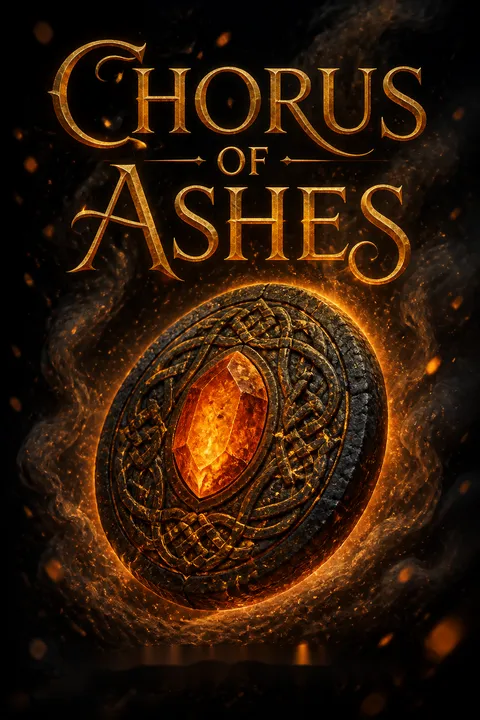
Power carried as a bladeTerra carries an enchanted knife that represents her authority as leader of the Earth Fae and channels the power of her people. Its compact appearance conceals its importance. Domnu wants it because possession would strengthen her hold over the Earth Fae, while Rian sees it as the price of the bargain that promises him the identity of the person behind his exile. The knife changes hands during the romance and becomes the concrete measure of whether Rian will serve Domnu, protect Terra, or choose his own path.
Fire portal
A dangerous thresholdFae portals connect the Elemental realm with the human world and are concealed behind wards and difficult terrain. Travelers pass through fire and emerge disoriented, making the instant after arrival strategically vulnerable. Terra uses a guarded portal to reach Ireland, but Rian discovers its location and turns the crossing into an ambush. The portal also determines whether characters can return home, so access to it is both a travel mechanism and a military advantage.
Iron cuffs and wards
Magick restrained by forceIron burns Fae and can interfere with their magick. Rian uses iron cuffs to bind Terra after she emerges from the portal, then uses an iron box to hide the amulet from magical detection. Separately, the protective wards around his island prevent captives from transporting themselves away. These devices let Rian control stronger opponents without permanently stripping their powers, but the injuries and constraints they cause expose the difference between claiming not to harm someone and actually keeping them safe.
The binding ritual
A cost of joined powerBianca and Lily discover an ancient ritual that may permanently bind Domnu’s powers. The rite requires the Elemental Fae to melt their ruling amulets together and fashion golden cuffs from the combined power. The book does not carry out the ritual, but its discovery changes the strategic question from how to survive Domnu’s next attack to whether the factions can accept the sacrifice required to stop her. Danu confirms that the rite is real, making unity and relinquished authority central to the wider conflict.
Wildsong Series Series
About the Author


Download PDF
Download EPUB
.epub digital book format is ideal for reading ebooks on phones, tablets, and e-readers.








