

Plot Summary
Silver Knives in Dublin
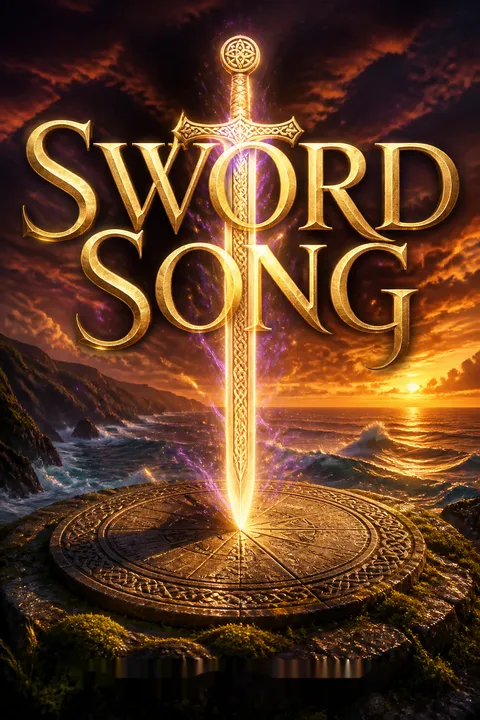
Sasha Flanagan makes her living among historic blades, running Cloak and Dagger, a Dublin gallery she built through years of study and hard work. Lately, silver-eyed attackers have been hunting her; she kills one in an alley with an iron sword and returns to her triple-locked shop. The threat arrives on top of an older wound.
Sasha ended her engagement after finding her fiancé, Aaron, cheating, and the betrayal has made her wary of trusting anyone. She searches Irish folklore for an explanation, even as she insists on handling each attack alone. Unseen nearby, Declan Manchester follows her under orders to protect her, waiting for the moment he is allowed to reveal himself.
Sasha’s expertise with weapons is both livelihood and defense: she has made mastery a substitute for dependence. The fae attacks turn that practiced self-reliance from an asset into a trap, because the danger is larger than any single opponent. Aaron’s betrayal sharpens the same problem on an intimate scale. Sasha distrusts not only strangers but also her own judgment, which once failed to recognize a lie inside her home. Declan’s hidden surveillance complicates the idea of protection from the outset. He keeps her alive, yet does so without her consent, making safety and trust uneasy partners.
The Mark Beneath Her Hair
Bianca, a cheerful stranger, arrives with Seamus, a red-haired fae who glows violet to Sasha’s newly sharpened sight. He explains that silver Domnua are seeking four treasures, and that the final Seeker must find the Sword of Light before the year ends or the hostile fae may reclaim Ireland. Bianca identifies Sasha as that Seeker and points out the knot-shaped mark hidden at her hairline.
Sasha’s assistant Maddox then admits he is also Danula, one of the benevolent fae, and that a curse forbade him from explaining her role sooner. When Sasha calls for her appointed protector, Declan appears at impossible speed. His presence unsettles her, but the mark and the attacks leave little room to dismiss the warning.
The revelation gives Sasha an explanation for the violence but not the comfort of control. A mark she never chose has assigned her a public burden, while Maddox’s necessary silence still feels like another breach of trust. The scene distinguishes forms of secrecy: Bianca and Seamus arrive with information, Maddox with affection constrained by rules, and Declan with years of concealed vigilance. Sasha’s skepticism is therefore psychologically coherent, not simple stubbornness. She is trying to determine whether this new system protects her or merely claims authority over her life. The quest begins as an external emergency and a dispute over who gets to define her.
Friends in the Killing Alley
At a hotel meeting, Bianca and Seamus explain that the Sword may be hidden near a ruined castle outside Killarney, but Sasha rejects their offer to guide her and leaves with Maddox. Declan catches her after she kills several Domnua and warns that more are hunting her than she can see. Sasha runs back to her gallery, arms herself, and steps into an attack that quickly becomes an army.
Her antique dagger proves unexpectedly effective, but numbers begin to overwhelm her. Bianca, Seamus, Maddox, and Declan arrive and clear the alley together. Seeing Bianca fight without hesitation, Sasha finally asks the group to help her. The mission changes from a solitary test of competence into a shared risk.
Sasha’s refusal is protective as well as proud. She assumes fewer companions mean fewer people she can endanger, but that arithmetic ignores what the others can choose for themselves. The alley battle supplies evidence that changes her mind: the group does not merely claim loyalty, it acts under pressure. Bianca’s cheerfulness is especially revealing because it does not signify naïveté; she fights decisively while remaining herself. Sasha’s request for help is small in wording but large in structure. It marks the first time she accepts dependence as a practical strength rather than a surrender of independence.
Fire at Her First Home
On the road toward Killarney, Bianca finds an inscription on Sasha’s dagger that links darkness with light. When Sasha describes love as conditional, emotion surges through the blade and sends a bolt of fire into the car roof, revealing her Seeker power.
The group follows Sasha’s instinct to a secluded settlement, where Clodagh, an elderly wanderer, recognizes her. Clodagh explains that she found Sasha as a baby inside a protective ring of blue-white fire, then placed her with foster parents who could offer greater safety.
She leaves Sasha a cat’s-eye pendant and a clue about trusting inner sight. After the settlement’s wards disappear, Domnua attack. Sasha uses the dagger’s fire to destroy a wave of them, but one attacker claims her foster parents have been taken.
The magic is tied to feeling before Sasha can make it a technique. Her first firebolt erupts while she is naming a belief formed by childhood hurt, so power and self-knowledge arrive together. Clodagh’s account recasts Sasha’s history without making it simple: she was protected, yet also separated from the person who first cared for her. The pendant’s association with instinct presses against the mistrust left by Aaron and her foster years. Sasha’s success in battle confirms her capacity, but the threat to her foster parents ensures that competence cannot shield her from emotional consequence.
The Nest Goes Dark
The attackers’ clue leads Sasha’s group to The Nest, the village tearoom where she once escaped into books. Inside a magical enclosure, she finds her foster parents, who admit they had not wanted another child and were frightened by the strange events around her.
They also explain that Clodagh brought her to them with a promise of protection. Sasha recognizes their limitations without excusing the loneliness she felt, then releases some of her old resentment. The illusion breaks into a battle, and Danula reinforcements join her friends.
Her parents’ fragmented memory supplies a direction: a place where light always shines. Bianca proposes a lighthouse, and Sasha’s own instinct points toward the ruined coastal fortress where she played as a child.
The confrontation does not erase Sasha’s childhood or transform her foster parents into ideal caregivers. It gives her a less punishing interpretation: their fear and inadequacy were real, but not proof that she was unworthy of love. Forgiveness here is an act of accurate differentiation, separating their limits from her value. The magical enclosure makes that internal shift consequential in the plot, allowing the fight to resume and the next clue to emerge. The Nest matters because it once offered Sasha refuge through solitary reading; now she enters it with companions and leaves carrying a usable piece of her past.
Light Above the Ruins
At the ruined castle, Sasha learns that Declan has watched over her since childhood, including the lonely years when she practiced fencing behind stone walls. Their growing attraction sharpens as he presses her to face old wounds, and she kisses him before he withdraws to preserve his focus on the mission. The group camps among the ruins and prepares for danger, but Domnua descend from the sky on winged beasts.
They seize Sasha and carry her into the old lighthouse, where their argument reveals that some want her dead while others have orders to keep her alive. Sasha kills her captors with her dagger and fire, then lights the lighthouse wick. The rusted door will not open, so she waits above the battlefield, wounded and listening.
The revelation that Declan has known Sasha since childhood makes his protection feel intimate and unsettling at once. He has witnessed parts of her life she never chose to share, while she knows almost nothing about his. Their attraction grows inside this asymmetry, and Sasha’s kiss is a brief assertion of agency against the idea that destiny has already decided everything. The capture then strips away her ability to manage danger through preparation alone. Lighting the lighthouse wick is a practical act, but it also converts her isolation into a signal. She cannot escape, yet she can make herself visible.
A Kiss After Battle
Declan spots the lighthouse flame and fights his way through the remaining Domnua to reach Sasha. He breaks the rusted door and finds her with a blade wound in her side. After the battle, Sasha and Declan become lovers, though the wound soon develops a dangerous fae chill. Seamus treats her with a hot poultice and a healing draught, and she recovers overnight.
The next morning Declan apologizes for letting desire distract him from caring for her injury; Sasha reassures him and chooses further intimacy. When the group searches the lighthouse together, Seamus discovers a rusted plaque bearing a phrase that points to Grace’s Cove. Sasha accepts the lead and agrees to continue toward the coast.
The romance shifts from prediction to choice. Declan has repeatedly described Sasha as his destiny, but the rescue and Sasha’s later response give the relationship concrete mutual action rather than relying only on his certainty. His failure to assess her wound exposes a genuine tension between desire and duty, and his apology matters because he accepts responsibility instead of treating devotion as proof that he cannot err. Sasha, meanwhile, does not confuse attraction with instant trust; she chooses him while still reserving the right to move at her own pace. The lighthouse plaque turns their private turning point back toward the shared quest.
The Sundial’s Cruel Mirror
Near Grace’s Cove, Sasha’s group visits Fiona and John, an elderly couple guarding a remarkable baby named Grace. The child touches Sasha’s cheek and presses her toward love and trust, while Fiona interprets the lighthouse clue as a nearby ancient sundial where light and shadow meet. After resting at a guest farmhouse, Sasha wakes before dawn with an urgent sense that she must go alone.
At the sundial, Aaron appears and uses magical visions to reopen Sasha’s deepest doubts. He shows her foster parents rejecting her, her sister with Aaron, Declan with another woman, and a bitter, isolated future version of Sasha. Each image exploits a fear she has carried: that she is unwanted, replaceable, and destined to end alone.
The trial turns the quest inward without making the threat merely imaginary. Aaron’s visions are tailored from the exact evidence Sasha fears most, including the painful ambiguities of her family and the imbalance between Declan’s long knowledge of her and her shorter knowledge of him. The sundial is an apt setting because it makes light inseparable from shadow: perception can reveal, but it can also distort. Baby Grace’s brief injunction to trust love gives Sasha a counterweight, not an answer. By going alone, Sasha claims responsibility for confronting the beliefs that no companion can resolve on her behalf.
Truth Draws the Sword
At the sundial, Sasha stops treating the visions as evidence and allows trust to outweigh shame. She recognizes that her foster parents’ failures do not define her worth, that her sister’s life is not a betrayal, and that Declan has repeatedly chosen to protect her. When she forgives Aaron, the Sword of Light appears in the central stone.
Sasha draws it and drives it through the attacker, who dissolves into silver: the figure was a Domnua using Aaron’s likeness. Her friends, held outside a magical barrier, reach her once it falls. Sasha apologizes to Declan for leaving alone, then tells him she chooses and loves him. The quest ends with the sword found and Sasha no longer measuring her future by the worst things others have done.
Sasha does not win by proving every vision false through external evidence. She wins by refusing to let fear dictate what counts as truth. Forgiveness is not reconciliation with Aaron, who is absent and represented by an enemy, but a refusal to keep organizing her identity around his betrayal. The sword’s appearance makes this psychological distinction visible: truth is uncovered when Sasha can separate injury from self-worth. Her return to Declan completes the agency established earlier. She does not accept him because fate commands it; after facing her doubts alone, she makes a choice in her own name.
Epilogue
At dawn, Sasha and Declan carry the Sword of Light to Grace’s Cove, while their friends watch from the cliffs. The Goddess Danu appears, receives the weapon, and blesses Sasha for completing the quest.
The cove glows blue in the presence of Sasha and Declan’s love. Declan kneels, and Sasha takes his gesture as a promise of marriage to come. Above them, baby Grace laughs as Bianca celebrates the unlikely fairy-tale ending.
The epilogue returns the sword to its divine source, closing the public task before turning toward Sasha’s private future. Danu’s blessing does not erase the hard work that brought Sasha there; it recognizes a choice she has made through fear, grief, and battle. The cove’s blue light gives the romance a supernatural confirmation, but Sasha’s own acceptance remains the emotional center. Earlier, she resisted any future that seemed preassigned. Now she can imagine commitment without surrendering authorship, because love has become something she chooses rather than a reward she must earn.
Analysis
Sword Song makes a fantasy quest depend on a heroine’s relationship to her own judgment. Sasha already possesses the conventional equipment of a protagonist: training, courage, professional expertise, and a talent for reading an opponent’s next move. What she lacks is confidence that her instincts can be trusted after Aaron’s betrayal and a childhood in which she felt misread. The magical plot does not replace those injuries with spectacle. It repeatedly makes them consequential, from the firebolt released by a painful belief to the visions designed to make Sasha mistake old fear for current fact.
The book also tests the difference between protection and control. Declan’s lifelong vigilance is sincere, but sincerity does not automatically make secrecy or possessiveness harmless. Sasha’s progression depends on accepting help without handing over authorship of her life. Her friends support that distinction in different ways: Maddox offers the intimacy of longstanding friendship, Bianca combines optimism with combativeness, and Seamus supplies practical knowledge. Their group becomes credible because care is enacted, not merely declared.
The sword’s dual identity as light and truth binds the external mission to this emotional structure. Truth is not the discovery that every painful relationship was secretly safe. Sasha’s foster parents did fail to understand her, Aaron did betray her, and the visions exploit real vulnerabilities. Her change lies in refusing to treat those facts as a verdict on her worth or future. Forgiveness releases her from organizing herself around injury; it does not make injury imaginary. In the final choice, Sasha accepts love only after confronting the possibility of being alone. The resulting romance therefore answers her arc through agency, not rescue. The fairy-tale ending matters because Sasha reaches it without surrendering the independence that first helped her survive.
Review Summary
Characters
Sasha Flanagan
The armed SeekerSasha is a Dublin weapons expert and gallery owner whose knowledge of blades comes from years of study, training, and self-reliance. She is observant, disciplined, and quick to act, but betrayal by her former fiancé has made her suspicious of other people and uncertain of her own judgment. Her history as a foster child adds a deeper fear that affection depends on becoming what others expect. Sasha’s independence is not simple coldness; it is a survival strategy that lets her build a life on her own terms. The quest places that strategy under pressure, asking her to accept help while preserving her right to choose what she believes and whom she trusts.
Declan Manchester
The hidden protectorDeclan is a fae warrior assigned to protect Sasha, a duty he treats as sacred and personal. He is physically formidable, watchful, and emotionally restrained, preferring action to explanation. His long familiarity with Sasha gives him a powerful sense of devotion, but it also creates an imbalance: he knows her history while she must learn who he is. Declan’s loyalty can become controlling when he assumes he knows what is best for her, and his challenge is to pair protection with respect for her agency. Beneath his guarded manner are strong family ties, a love of the sea, and a willingness to admit when he has failed.
Bianca
The fearless guideBianca is an energetic ally who knows the old stories and approaches fae danger with curiosity, humor, and unusual courage. She is Seamus’s partner and a devoted supporter of the Seeker, but she is not merely a storyteller or morale keeper: she fights beside the others and presses the group to notice clues they might overlook. Her optimism helps Sasha imagine possibilities beyond survival, while her directness can make uncomfortable truths harder to evade. Bianca’s gift is to make companionship feel practical. She offers help without demanding that Sasha become softer or more conventional before she deserves it.
Maddox
The loyal confidantMaddox is Sasha’s flamboyant gallery assistant and closest friend, known for his sharp eye, theatrical flair, and gift for selling beautiful objects. His friendship has grown through years of ordinary routines as well as the extraordinary danger surrounding Sasha. He is also fae, and the rules binding his kind kept him from explaining her role before the quest began. That silence wounds Sasha, even though Maddox’s motive is protection rather than manipulation. He offers a valuable counterpoint to Declan: Maddox knows Sasha through shared daily life, and his loyalty is affectionate, candid, and grounded in the person she has chosen to become.
Seamus
The practical fae allySeamus is a Danula, one of the benevolent fae, and Bianca’s loving partner. He brings knowledge of the Four Treasures, skill in combat, and a calm ability to turn magical understanding into practical help. His willingness to explain the rules contrasts with the secrecy Sasha has encountered elsewhere. Seamus also pays attention to the emotional logic of the quest, recognizing that Sasha’s inner conflicts may matter as much as the clues. His steady affection for Bianca offers Sasha an example of intimacy that can include humor, mutual care, and shared danger without requiring either partner to disappear into the other.
Clodagh
The keeper of beginningsClodagh is an elderly wanderer whose community has its own protections and spiritual practices. She carries knowledge connected to Sasha’s early life and offers guidance without pretending that she can complete the Seeker’s work for her. Her warmth is practical, expressed through shelter, food, and a carefully timed gift. Clodagh’s perspective helps Sasha see that protection can sometimes mean making a painful choice for someone else’s safety.
Fiona
The coastal wise womanFiona is an elderly woman near Grace’s Cove, knowledgeable about local magic, old sites, and the history surrounding the enchanted shore. She is hospitable without being harmless; a warrior’s resolve sits beneath her genial manner. Fiona supplies a crucial interpretation of the lighthouse clue and helps the travelers find shelter. Her confidence in Sasha is steady rather than sentimental, allowing her to offer direction while leaving the choices to the Seeker.
John
Fiona’s welcoming partnerJohn is Fiona’s partner and a generous host who helps the travelers reach a safe farmhouse. His practical kindness and ease around the unusual baby Grace contribute to the sense that the coastal community has its own deep relationship with magic. He gives the group shelter without making their danger the center of his hospitality.
Grace
The uncanny childGrace is a baby in Fiona and John’s care, but her unusually alert presence suggests a connection to the magic of the cove. She communicates a simple but significant nudge toward love and trust. Her role is brief, yet she gives Sasha a clear emotional prompt at a moment when the quest’s clues have become intensely personal.
Aaron
The faithless former fiancéAaron is Sasha’s former fiancé, whose infidelity ended their engagement and weakened her confidence in her own instincts. He represents a specific injury rather than the whole explanation for Sasha’s loneliness: she must confront the meaning she has attached to his betrayal. His memory continues to influence how she approaches intimacy and whether she believes she can be valued as herself.
Sasha’s foster parents
Her imperfect first familySasha’s foster parents took her in despite feeling unprepared for another child and struggled to understand her independent, unusual nature. Their strictness and emotional distance left Sasha feeling like an outsider in the home. They are neither presented as wholly cruel nor as blameless: fear and limitation shaped how they treated her, while their choices still caused genuine hurt.
Chelsea
The favored foster sisterChelsea is Sasha’s foster sister, remembered as the daughter who fit more comfortably into the family. Her place in Sasha’s memories contributes to Sasha’s sense of being the unwanted, difficult child, though Chelsea is not the central cause of that wound.
Goddess Danu
The divine quest-giverDanu is the goddess behind the Seeker and Protector tradition and the larger struggle over Ireland’s treasures. Her influence is felt through marks, inherited roles, and the beliefs that shape the fae community. She represents a power larger than the characters, but the story leaves room for individual choice within that divine order.
The Domnua
The silver-eyed huntersThe Domnua are hostile fae from the underworld who pursue the Seekers and try to prevent the four treasures from being found. Their silver appearance makes them distinguishable from the violet-glowing Danula, but their tactics range from direct attacks to manipulation. They turn the mythic quest into an immediate physical threat.
Plot Devices
The Four Treasures
A year-end magical deadlineThe Four Treasures of Celtic legend are the objective of a generational Seeker quest. The Stone has already been found by a previous Seeker, leaving Sasha responsible for locating the Sword of Light before the year ends. The Domnua seek the same objects, so every delay carries a public danger beyond Sasha’s own survival. This framework connects the book’s travel, folklore, and combat, while the succession of Seekers makes the mission feel inherited rather than freely chosen.
Seeker and Protector marks
A visible bond of dutyA knot-shaped mark identifies a Seeker, while an inverted version marks the assigned Protector. The marks make a hidden magical order legible to characters who know how to read it and explain why Declan has been watching Sasha. They also establish a conflict between destiny and consent. The marks can identify roles, but they do not answer how Sasha should relate to her allies or what Declan is allowed to decide for her.
Dagger and cat’s-eye pendant
Tools for power and perceptionSasha’s antique dagger becomes a channel for her fire magic, while its hidden inscription ties it to the quest’s language of darkness and light. Clodagh’s cat’s-eye pendant adds a second instrument, associated with intuition and releasing the past. Together, the objects give Sasha practical advantages in combat while also directing attention toward inner perception. Their importance depends not only on magical properties but on Sasha learning to read clues she once would have dismissed as superstition.
Truth as a trial
Inner conflict unlocks the questThe Sword of Light is also understood as a sword of truth, and the search repeatedly places Sasha in situations where buried beliefs become obstacles. Her foster-family encounter, the betrayal she assigns to herself after Aaron’s infidelity, and the sundial visions all test whether she can distinguish old pain from present evidence. The device makes emotional development causally important to the fantasy plot. It culminates when Sasha stops accepting shame as proof of her unworthiness and can finally claim the sword.
Light and shadow clues
A trail through Irish landmarksThe quest uses phrases about light, darkness, and instinct to lead Sasha from her gallery to her childhood places, a lighthouse, Grace’s Cove, and an ancient sundial. Each clue has a practical destination, but its meaning remains open long enough for Sasha’s allies to interpret and debate it. The lighthouse turns a phrase into a signal during battle, while the sundial makes the final puzzle both geographical and psychological. This recurring imagery unifies the artifacts, the Irish landscape, and Sasha’s struggle to trust what she sees.
The Isle of Destiny Series


About the Author





Download PDF
Download EPUB
.epub digital book format is ideal for reading ebooks on phones, tablets, and e-readers.








