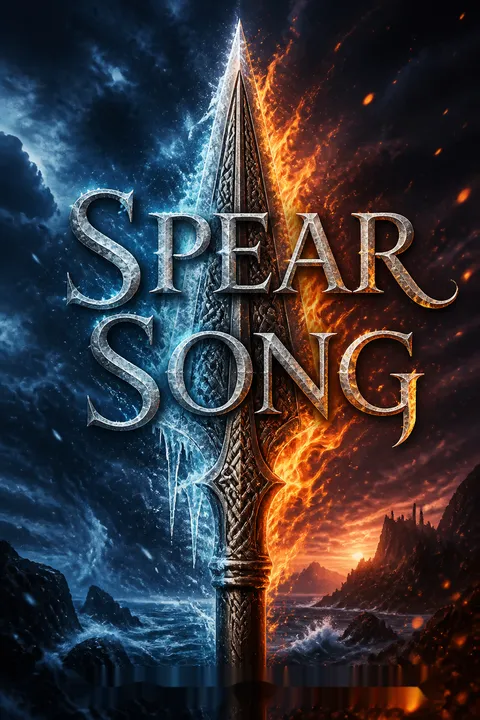


Plot Summary
Blood Stolen, Life Bargained
When a Domnua attack leaves Lochlain Laird’s mother dying, the high fae priest exhausts his remedies and breaks into the Goddess Danu’s forbidden cave. He steals a few drops of sacred blood, which restores his mother’s breath, then returns the bottle and submits to judgment. Danu discovers the theft but does not kill him.
Instead, she orders him to protect Gwenith Donovan, a human-seeming Seeker destined to find the Spear of Lugh, and makes his survival conditional on completing the quest. Loch resents the assignment, yet accepts it. His mother’s illness has already shown him how little his power can do against loss; now the goddess binds his life to the fate of a stranger.
The opening makes care, rather than ambition, the cause of Loch’s crime. He does not steal the sacred blood to gain power but to refuse his mother’s death, and that motive complicates the simple moral logic of a forbidden act. Danu’s response turns punishment into service: Loch must protect someone whose importance he does not yet understand. His resistance signals a deeper habit, the belief that duty is something he can perform alone and on his own terms. The quest therefore begins as a conflict between private devotion and collective responsibility.
Ice at the Hidden Cove
Gwen spends her days running This & That, her novelty shop in a small Irish village, and her evenings enjoying comics, her cat Macgregor, and a life she considers settled. A new talent has begun to unsettle that routine: she can freeze water. While secretly practicing at a secluded cove, Gwen attracts a silver-bodied attacker who lunges at her.
Loch appears and kills it with an iron weapon, then scolds Gwen for exposing herself to the Domnua. She protests his arrogance and, discovering her power can reach beyond a drink or shoreline, freezes him in place before escaping. Loch is left soaked and furious, while Gwen returns home convinced her first encounter with real magic has made life far more interesting.
Gwen’s first response to danger is not mastery but improvisation. She experiments with ice because it delights her, then uses that same power defensively when Loch’s harshness provokes her. The scene establishes that her cheerfulness is active rather than naïve: she can be frightened, angry, and capable of force without losing her curiosity. Loch, by contrast, understands the threat but treats knowledge as authority, assuming that protection entitles him to command. Their early clash sets the relationship’s central question: can care become partnership, or will it remain control dressed as duty?
Gran's Jeweled Inheritance
On her way to visit her grandmother, Gwen is attacked by three silver Domnua. She freezes one and Loch dispatches the others, then identifies the attackers as hostile fae. The revelation sends Gwen to her grandmother for answers. Gran confirms that the old story of finding Gwen among dancing fairies was true: she had discovered the toddler in a hidden gathering and raised her as her own.
A fae woman left a jeweled box for Gwen, meant to be opened at the right time. Inside are two bracelets, one set with a pale blue stone and one with a red stone, along with a cryptic clue about fire, ice, song, and day following night. The bracelets close around Gwen’s wrists and cannot be removed.
Gran’s confession could have made Gwen feel that her childhood was built on a lie. Instead, Gwen interprets the revelation through the security of their existing bond: Gran’s love matters more than the missing facts. That response keeps the story’s family question from collapsing into a simple search for biological parents. The box adds a second inheritance, one that Gwen receives only after she has begun to awaken her abilities. Its paired stones and riddle promise that identity will be discovered through action, not merely explained by ancestry. Gwen’s openness lets new knowledge expand her life without erasing the home she already has.
Rain Turns to Raiders
The bracelets draw the attention of a much larger Domnua force. As rain falls around Gwen, each drop seems to become another attacker; she fights with ice until Loch, the bowman Seamus, and Seamus’s partner Bianca join her. Gwen is wounded by a cursed blade and collapses, but Loch heals her and the group moves her away from the village.
Bianca explains that Gwen is a Seeker in a series of quests to recover Ireland’s lost treasures. Two have already been found; the Spear of Lugh is the next, and recovering it is vital to keeping the Domnua from taking the world. Loch also ensures Gran is moved to a protected fae village. Gwen now has a mission, a team, and a reason to leave home.
The rain attack changes the scale of Gwen’s discovery. Magic is no longer an amusing secret or an isolated threat; the multiplying raiders make clear that her survival is connected to a larger conflict. The team’s arrival prevents the plot from making Gwen a solitary chosen figure. Seamus and Bianca bring practical support and warmth, while Loch contributes the formidable power that Gwen lacks. Her injury also introduces a cost to careless action, but does not make her passive. The quest becomes a communal obligation, and the promise that Gran is safe gives Gwen room to accept it without feeling she has abandoned the family that raised her.
The Song Beneath Her Skin
While bathing at the team’s cottage, Gwen sings privately. The bracelets answer with a forceful magical song that overwhelms her with sensation and draws Loch to the bathroom. The next morning, Loch identifies Gwen as a siren, while Seamus realizes he can read the bracelets because their inscription uses a language taught to fae royalty.
The clues suggest that Gwen has royal fae ties as well as a powerful, unfamiliar song gift. She is unsettled by the idea that her voice might affect others, especially after Gran once made her promise not to sing publicly. The group follows the bracelet’s fire-and-ice clue toward the western coast, where Loch secures a yacht for the crossing.
Gwen’s body becomes a source of knowledge before she can interpret what it means. The bracelets do not simply grant a new ability; they make her voice impossible to treat as harmless self-expression. That is psychologically disruptive for someone who has long kept her singing private and has accepted Gran’s caution without understanding its origin. The royal inscription adds social consequence to a personal discovery: Gwen may belong to communities that have their own expectations of her. Her curiosity remains intact, but wonder now has an ethical edge. She must learn not only what she can do, but what her power may do to people around her.
A Kiss Before the Crossing
As the group prepares to leave the coast, Gwen sings without thinking, and Domnua riders attack from the hills. Loch carries her under deck and locks her in a berth while he and the others fight. Afterward, he blames her for the danger; Gwen accepts that her carelessness mattered but rejects his attempt to make her responsible for the attackers’ choices.
Bianca helps steady her, and Loch later apologizes during his watch. Their guarded conversation turns into Gwen’s first real kiss, which Loch returns with unmistakable passion. Before either can decide what it means, Gwen is standing at the rail when invisible forces seize her and drag her beneath the yacht into the dark water.
The boat sequence brings the conflict between safety and agency into the open. Loch’s instinct is to remove Gwen from danger, even by force; Gwen’s shame makes her briefly consider withdrawing from the team, but Bianca reminds her that the cause belongs to everyone. The kiss reveals that attraction has been building beneath their arguments, yet it does not resolve their power imbalance or Loch’s guardedness. Its sudden interruption by Gwen’s abduction prevents romance from becoming an escape from the plot. Instead, intimacy and peril arrive together, forcing Loch’s concern for Gwen to become more than a matter of assigned duty.
Taken Below the Waves
Loch spots Gwen disappearing overboard and dives after her, using an unfinished spell that lets him breathe underwater. The Domnua bind her and pull her deep, but Gwen begins drawing small pockets of air from the water, an ability she cannot explain. Loch attacks the forces around her while trying to keep her alive. Luminous merfolk reach them first, free Gwen, and carry her to the surface.
Their song warms and heals her; one woman gives Gwen breath and promises the sea folk will stand with her. Loch reaches her moments later, and the group pulls both of them aboard. Gwen recognizes the rescuers as connected to her, though she does not yet know how. Her understanding of family now extends beneath the sea.
The rescue turns Gwen’s unexplained heritage into a reciprocal relationship. The sea folk do not appear as a convenient magical weapon; they risk themselves to save Gwen, and their promise frames her as someone already connected to a community she has never known. Loch’s dangerous underwater spell mirrors his earlier willingness to break boundaries for someone he cares about, though he still acts alone. Gwen’s unexpected ability to breathe underwater suggests that her body carries knowledge unavailable to her conscious mind. The scene widens the story’s idea of belonging: Gwen is not simply entering the fae world but awakening ties across different worlds.
The Island Behind the Veil
The team cannot locate the hidden Isle of Destiny until Gwen sings a song about relying on friends. The magical island appears, divided between firelit darkness and bright, green daylight, and the yacht reaches its sheltered shore.
Outside the island’s protective boundary, the Domnua mass in the sea and sky. When the barrier briefly splits, Gwen uses her ice power to seal the opening before the raiders can pour through. Her friends recognize that the island’s defenses depend in part on her belief and growing skill.
They find cottages stocked with supplies, then settle inside the sanctuary while the sea folk continue to fight beyond its magical edge. Gwen’s task has become more than locating the spear: the group’s refuge is now under pressure.
The island makes the story’s inner conflict visible in its geography: fire and ice, light and darkness, safety and siege occupy the same landscape. Gwen’s song functions as a means of orientation, while her ice becomes a practical defense, linking two abilities that had seemed separate. The barrier’s vulnerability prevents sanctuary from becoming a simple pause in the action. Gwen must act before she fully understands the limits of her power, and the group’s survival depends on her trying. Her progression is not from weak to invulnerable, but from treating magic as a novelty to accepting responsibility for what it can protect.
A Mother Under Moonlight
At a moonlit beach, Gwen meets Amynta, the defender of the sea folk. Amynta reveals that Gwen’s father was a royal fae and that she gave up her daughter to protect her from a jealous sea princess who feared the child’s mixed heritage. The Goddess Danu arranged Gwen’s hidden upbringing, while Gran gave her a loving home.
Amynta urges Gwen to value love rather than postpone it. Gwen returns to Loch and tells him she loves him; he admits he feels the same, and they spend the night together. By morning, however, Loch insists the intimacy cannot become a lasting bond and returns his attention to the quest. Gwen is hurt, but decides not to let his retreat prevent her from doing her part.
Amynta’s account reframes Gwen’s childhood as a sequence of protective choices, not rejection. Gran’s care and Amynta’s sacrifice can coexist, giving Gwen a fuller family history without making either woman’s love compete with the other’s. The meeting also changes Gwen’s approach to intimacy: she chooses to express love despite uncertainty about its return. Loch’s withdrawal exposes the cost of his inherited model of devotion, in which love means sacrifice and protection rather than mutual decision. Gwen’s response is painful but not self-erasing. She accepts the hurt without surrendering her agency or the work she has undertaken.
The Protector Goes Alone
Loch leaves the cottages alone, intending to find the spear and spare Gwen further danger. Seamus confronts him, then explains to Gwen that Loch’s father died taking on a blood-magic bargain made by Loch’s mother, who had sought help conceiving another child. Loch grew up watching his mother grieve and learned to meet danger by sacrificing himself before anyone else could be hurt.
Gwen also understands that Loch stole Danu’s blood to save that same mother. She sees the pattern linking his crime, his retreat from love, and his decision to face the island alone. Following the connection she feels to him, Gwen sets out with Bianca and Seamus. They find Loch fighting a breach in the island’s defenses, surrounded by Domnua.
The revelation about Loch’s father supplies context without excusing Loch’s controlling choices. He has confused love with preemptive self-sacrifice: if he takes the danger onto himself, he believes he can spare others the grief he witnessed as a child. The blood theft repeats that pattern, showing how deeply the lesson governs him. Gwen’s response is not simply to chase a romantic partner; she recognizes that his solitary strategy endangers the team and undermines the quest itself. Seamus’s candor helps turn private pain into shared knowledge, making intervention possible. The group’s return to Loch marks a shift from a protector-and-dependent arrangement toward collective action.
The Spear Answers Song
Gwen joins Loch’s battle, and he finally accepts her as a partner. A Domnua dragon breaks through the barrier and freezes Loch, Seamus, and Bianca in pillars of ice; the blast knocks Gwen into a cavern inside the mountain. There she finds the Spear of Lugh trapped in a block of ice. Her bracelets cannot break it, so Gwen draws strength from the love she carries and sings.
The ice shatters. Armed with the spear, she returns to the summit and defeats the Domnua as the sea folk answer her song. Gwen then dives into the water, where Amynta brings her ashore. The sea queen returns Gwen’s companions, still frozen, and Gwen uses her song again to free them. The spear is found, and her team survives.
The climax resolves the story’s central question through coordinated power rather than solitary strength. Gwen cannot break the spear’s ice by repeating the force that worked against ordinary enemies; she must understand that her song and her relationships are part of her capacity. The weapon gives her extraordinary leverage, but it is her ability to reconnect the land battle with the sea folk that completes the victory. Her decision to enter the water after the fight also shows that triumph does not erase grief or vulnerability. The companions’ return depends on the same song that revealed Gwen’s gift, transforming a feared power into a means of rescue.
Danu's Last Judgment
The team carries the spear to Grace’s Cove, where Danu is waiting to receive the treasure. Gwen steps forward before Loch can face the goddess’s judgment alone and insists that he has earned the right to live. Danu accepts Gwen’s plea, recognizes the courage of the whole group, and releases Loch from the death sentence attached to his theft.
Loch acknowledges that love requires more than protecting someone from danger; it means allowing a partner to act beside him. With the spear safely returned, Gwen and Loch choose a future together. The quest’s immediate purpose is complete, and Gwen’s intervention has changed the terms of Loch’s survival: he remains not as a lone hero rescued by a goddess, but as a member of a team and a partner.
The judgment scene closes the moral circuit opened by Loch’s theft. Danu does not erase the seriousness of his trespass; she weighs it against the service and courage that followed. Gwen’s intervention matters because she refuses to let Loch’s self-sacrifice dictate the outcome once again. The spear gives her authority, but her claim rests on recognizing his capacity to change and on insisting that his life belongs within a relationship, not merely to duty. Loch’s acknowledgment is a small but decisive shift from unilateral protection toward partnership. Resolution, here, means neither perfect safety nor a promised future without conflict, but shared responsibility.
Epilogue
At a celebration in the fae village, Gwen, Loch, Gran, and their friends settle into a life that makes room for magic. Gran chooses to leave her familiar home and live closer to Gwen; Loch offers Gwen a shop in the village, and Macgregor enjoys the attention of the fae.
Beyond the festivities, Amynta and Miach meet briefly across the water, still separated by the worlds they inhabit. Amynta sends a blessing toward the celebration, knowing the larger struggle is not over. The gathering gives Gwen a new home and her grandmother a new beginning, while the lovers at sea remind the reader that some bonds endure without reunion.
The epilogue resolves belonging through concrete choices. Gran is not absorbed into Gwen’s new life by obligation; she decides that the magical village offers a future she wants. Gwen’s shop gives her a way to carry her old interests into unfamiliar surroundings, while Macgregor’s comic welcome makes the fae world feel domestic rather than merely spectacular. Amynta and Miach provide a quieter counterpoint: love persists, but it does not guarantee a shared life. Their separation prevents the celebration from becoming a claim that every wound has been healed. The final blessing is protective, not triumphant, acknowledging that community offers strength while danger remains.
Analysis
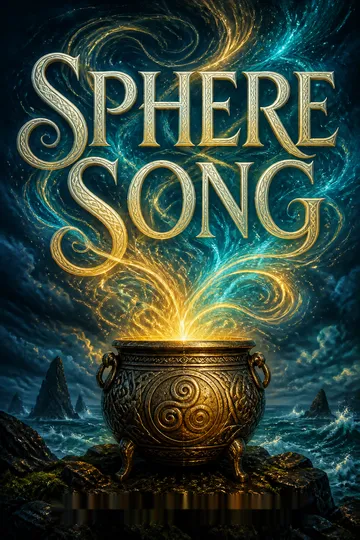
Spear Song builds its fantasy quest around a distinction between protection and control. Loch’s first instinct is to take danger onto himself, a habit rooted in witnessing his mother’s grief and reinforced by his own willingness to break sacred law to save her. The story treats this impulse as loving but incomplete. He must learn that shielding someone from risk can also deny that person agency, while Gwen must learn that accepting responsibility does not mean accepting blame for every danger around her.
Gwen’s development is deliberately tied to relationships rather than solitary self-discovery. Gran’s care gives her enough security to receive revelations without disowning her childhood. Amynta’s history expands that family without replacing it. The sea folk’s rescue shows that Gwen belongs to a wider community, while the team’s repeated cooperation makes the quest possible. Her magical abilities become most useful when she stops treating them as isolated tricks and understands them as connections between people and worlds.
The book’s recurring elements of song, ice, and fire give emotional conflicts physical form. Ice can defend, imprison, or preserve; song can attract danger, disclose identity, or free those held captive. The Isle of Destiny gathers these oppositions into a landscape where light and darkness coexist. Its central lesson is not that goodness makes conflict disappear, but that people can choose how to respond to it. By the climax, victory comes through a weapon, but also through Gwen’s trust in her own voice and her refusal to let love become another excuse for someone to act alone.
Review Summary
Characters
Gwenith Donovan
The curious shopkeeperGwen runs a small novelty shop in an Irish village and approaches life with humor, appetite, and an instinct to find possibility in upheaval. Her love of comics and fantasy gives her a vocabulary for wonder, but she is not merely escapist: when danger arrives, she acts, learns, and accepts responsibility for the consequences of her choices. Gwen’s warmth makes people feel welcome, while her willingness to challenge authority keeps that warmth from becoming submission. She values the grandmother who raised her and is curious about the family history she has never known. Her central tension is learning to trust her own power without losing the generosity and everyday affection that define her.
Lochlain Laird
The guarded protectorLoch is a powerful fae priest and warrior accustomed to solving problems through discipline, force, and personal sacrifice. He takes duty seriously, but his certainty can become arrogance when he assumes that protecting others gives him the right to make their choices. His fierce loyalty to his mother has shaped a guarded temperament and a belief that attachment invites loss. Gwen unsettles that logic because her cheerfulness is not weakness and her bravery does not require his permission. Loch’s struggle is not whether he can fight; it is whether he can let other people share risk, knowledge, and responsibility with him.
Bianca
The battlewise allyBianca is Seamus’s partner, a knowledgeable guide to Celtic legend, and a cheerful, capable fighter. She can move from joking companionship to decisive action without treating either quality as a contradiction. Bianca reads the emotional temperature of the group and often helps Gwen resist the isolation that fear or shame might create. Her loyalty is practical: she fights, explains what she knows, and offers comfort without taking control of another person’s choices. Her steady partnership with Seamus also gives Gwen an example of affection built on collaboration rather than possession.
Seamus
The quick-witted bowmanSeamus is a red-haired fae archer who joins the quest with his partner, Bianca. His humor softens tense moments, but it does not make him careless about danger. Seamus challenges Loch when the latter’s pride threatens the group and shares knowledge that helps Gwen understand the people around her. He is comfortable both teasing his friends and confronting them, a combination that makes him a useful counterweight to Loch’s severity. His affection for Bianca is openly collaborative: he trusts her judgment, supports her in battle, and expects the same partnership in return.
Gran
Gwen's steadfast anchorGran raised Gwen in a close, ordinary household and gave her the security from which she can face extraordinary discoveries. She is affectionate, observant, and cautious about the parts of Gwen’s history she does not understand. Her silence comes from fear of hurting the child she loves, not from indifference, and she is relieved when Gwen meets the truth with affection rather than accusation. Gran’s stories and keepsakes preserve a connection to Gwen’s early life, while her own grief over her husband gives her quiet emotional depth. She represents chosen family as an ongoing act of care.
Goddess Danu
The commanding goddessDanu is a powerful goddess whose judgments shape the obligations of the fae. Her beauty and presence do not soften her authority: she expects obedience when sacred laws and the safety of her people are at stake. Yet she is also capable of assigning service where immediate punishment might otherwise fall, suggesting that she values what a person can still contribute. Danu’s decisions affect both the quest and the relationships within it. She is neither a distant abstraction nor a simple benevolent guide; her power is personal, conditional, and exercised with an eye toward the wider magical community.
Amynta
The sea's defenderAmynta is a defender of the sea folk, composed and formidable in a society that prizes the power of women. She understands that protection can demand difficult choices, and she speaks about love as something that must be valued while it is present. Her authority is tempered by tenderness, though she does not confuse tenderness with weakness. Amynta’s place between private attachment and public responsibility gives her perspective on the costs of keeping communities safe. She is a guardian who encourages others to claim their own lives rather than remain sheltered from every risk.
Miach
The mysterious fae wandererMiach is a royal fae whose brief presence in the story is shaped by a lasting attachment and the distance between two magical worlds. He is remembered through the effect he has on others and the choices made around his absence. His appearance in the epilogue adds a note of tenderness and incompletion to the celebration.
Loch's mother
The beloved priestessLoch’s mother is a respected priestess and a deeply loving presence in his life. Even while weakened, she worries about the kind of person her son will become, urging him toward goodness rather than bitterness. Her history of love and grief helps explain why Loch treats sacrifice as proof of devotion, though she is more than the cause of his fears: she is a generous figure whose care has shaped his moral instincts.
Macgregor
The pampered tabbyMacgregor is Gwen’s oversized tabby cat and constant companion above the shop. He mostly answers her excited confidences with feline indifference, offering a humorous, familiar counterpoint to the magical upheaval around them. His comfort in the fae village shows how readily Gwen’s domestic attachments can travel with her.
The Domnua
The exiled fae raidersThe Domnua are hostile fae pressing back into the human world as an old protective boundary weakens. They attack people who pose no immediate threat and multiply through rain, giving their violence an unnerving, relentless quality. Their campaign is tied to the larger struggle over Ireland’s magical treasures. They function as more than individual monsters: their advance tests whether the Danula, humans, and sea folk can act together before the old order collapses.
Plot Devices
The Four Treasures
A quest with world stakesThe lost treasures of Ireland organize the larger conflict into a sequence of concrete tasks. Earlier Seekers have already recovered two; Gwen’s assignment is to locate the Spear of Lugh before the Domnua regain control of the world. The quest gives the group a shared objective even though its members have different motives: Gwen is discovering her role, Bianca and Seamus serve the cause, and Loch initially sees his assignment as punishment. The spear’s reputation as a weapon no enemy can overcome creates a strong payoff, but its recovery still depends on interpreting clues, surviving the island, and learning how Gwen’s own abilities fit together.
Fire and Ice Bracelets
A clue and magical conduitA fae woman leaves Gwen two jeweled bracelets with Gran, along with a short riddle linking fire, ice, song, and the movement of day and night. The bracelets fasten permanently when Gwen puts them on and mark her as more than an ordinary human. Their inscription can be read only by someone trained in the royal fae language, and their clue helps direct the team toward the western coast and the Isle of Destiny. They also connect Gwen’s emerging powers to the larger quest, though their meaning is not immediately clear to her or the group.
Gwen's Siren Song
A voice that opens pathsGwen has kept her singing private because she does not understand its effects. The bracelets awaken a more powerful form of it, and the song can attract attention, reveal a route, and affect those who hear it. At first, that makes singing frightening: Gwen worries that it may draw attackers or overwhelm her companions. As she learns to connect the ability to intention, trust, and her sea heritage, it becomes essential to locating the island and breaking the spear’s icy prison. The same gift that introduces danger also becomes a means of rescue and connection.
Danu's Sacred Blood
A life-saving crimeThe sacred blood kept in Danu’s protected cave has the power to restore someone near death. Loch steals only a few drops to save his mother, then returns the bottle and accepts the punishment he expects. Danu instead makes his continued life conditional on protecting Gwen until the spear is found. The blood links Loch’s private devotion to the public quest and gives his assigned role a personal cost. Its importance also explains why he remains tense about Danu’s final judgment, even after the group has completed the mission.
The Isle of Destiny
A sanctuary under siegeThe hidden island combines incompatible conditions: day and night, snow and sunshine, green hills and molten lava. Its magical boundary shelters the team from the Domnua, but the barrier can crack under pressure, leaving Gwen to help seal it with ice. The island serves as both a refuge and a test, giving the characters a place to uncover Gwen’s family history while forcing them to confront the enemy’s growing strength. Its strange landscape also reflects the story’s repeated insistence that opposing forces can occupy the same world without being reduced to one another.
The Isle of Destiny Series
About the Author


Download PDF
Download EPUB
.epub digital book format is ideal for reading ebooks on phones, tablets, and e-readers.








