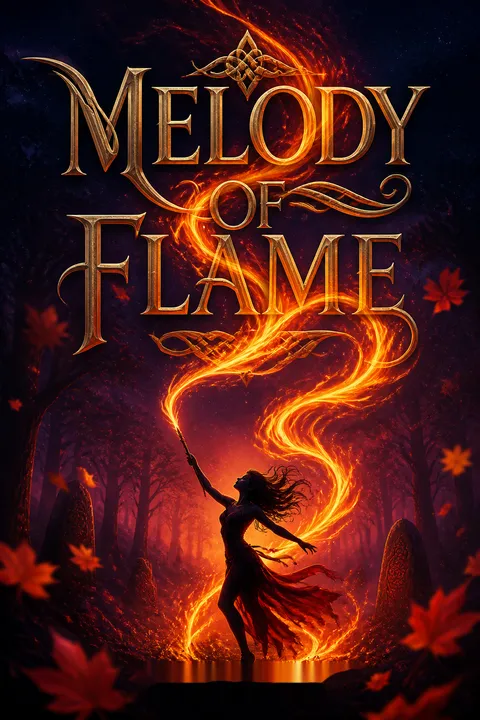


Plot Summary
Prologue
At an Irish fire festival, the fiercely independent dancer Sorcha Kelly meets Torin, a golden-eyed stranger whose presence unsettles her as much as it attracts her. They dance together and spend the night in her camper van, their intimacy feeling strangely enchanted.
By morning Torin has vanished. Sorcha finds a small flame hovering over her palm, an impossible power she cannot explain. The encounter leaves her with desire, uncertainty, and a secret that will shape the next two years of her life.
The opening joins erotic attraction to a literal transfer of power, making intimacy the event that changes Sorcha’s reality rather than a private interlude. Her first response to Torin is not surrender but challenge: she refuses his summons, chooses when to dance, and lets him close only on her terms. His disappearance then turns that agency into uncertainty. The flame is both a gift and an unanswered obligation, while the prophecy framing the encounter casts a fated bond as something older than either person’s consent. The tension between choice and destiny is present before Sorcha even knows the rules.
The Gift in Mother Jones
Nearly two years later, Sorcha earns a living as a fire dancer, using the power she learned to control through recurring dreams of Torin. She still cannot find him while awake, and the mystery has made her wary of trusting what happened between them. At a Cork flea market, a hooded stranger offers her a carved staff with a gold heart at its head.
The lights fail when she touches it, and a wave of nausea tells her she cannot simply leave it behind. The seller disappears before she can ask questions. Though the market has no record of the item, Sorcha takes it, feeling its power and hoping it might connect her to Torin. She returns to her van with a new mystery in hand.
Sorcha’s livelihood shows how she has converted an unexplained, potentially frightening power into skilled work without surrendering her identity to it. The staff disrupts that practical arrangement: it creates bodily distress when she walks away, making possession feel less like a choice than a summons. Yet Sorcha still decides to take it, guided by curiosity and her lingering hope that Torin may be reachable. Her response is neither credulous nor dismissive. She tests what she encounters against experience, then acts despite incomplete knowledge. The scene establishes her recurring strategy: she moves toward danger when refusing it would mean abandoning her own judgment.
The Wedding Reunion Turns Bloody
At a Cork wedding, Torin has come with Donal, his longtime adviser, while neglecting a revolt among the Fire Fae. He has spent two years searching for Sorcha and is stunned when she appears as the evening’s fire performer. Her dance draws him toward the stage, and he identifies her as his wife before he can explain what the bond means.
Then Donal warns that the Domnua, the Dark Fae, have arrived. Sorcha runs into the burning reception hall to help guests, carrying an elderly woman to safety before returning to search for anyone left behind. Inside, she sees Torin fighting silver-blooded attackers. Donal restrains Sorcha, then lets the Dark Fae surround her. Torin escapes their attack, but Sorcha is seized and transported away.
The reunion makes public what Sorcha and Torin have kept private: their connection carries political consequences. Torin’s sudden claim exposes how readily he treats a powerful bond as self-explanatory, while Sorcha’s immediate choice to rescue guests shows that her moral priorities remain grounded in human lives. Donal’s betrayal converts a romantic encounter into a tactical vulnerability. By letting Sorcha witness the battle before abducting her, the attack breaks the ordinary explanations she has used to contain her fire ability. Her instinct to help others persists even as her world becomes dangerous, but that courage also makes her easier to target.
A Firelit Captivity
Sorcha wakes bound in a cave with Donal, who explains that Torin serves the Danula, the faction that maintains order among the Elemental Fae, while the Domnua seek power and a return to Ireland. Donal admits that he is Dark Fae and used the wedding fire as cover for the attack. He intends to make Sorcha bait, forcing Torin to choose between rescuing her and managing the Fire Fae revolt.
Donal carries her through a portal concealed in flames to an in-between realm. Sorcha attacks him with her own fire and runs for the passage, but his magic wounds her. Torin arrives before she can escape alone, carries her back through the portal, and heals her on the coast as she confronts him over his earlier disappearance.
Donal’s explanation replaces a simple good-versus-evil map with a struggle over who controls the Fae world and what rules should govern that power. Sorcha does not accept his invitation to become a pawn, even while bound; her laughter at his confidence briefly unsettles him, then her escape attempt makes her refusal physical. The portal turns fire from her personal gift into the architecture of a larger conflict. Torin’s rescue cannot erase the harm caused by his absence, and Sorcha refuses to treat his return as absolution. Their attraction remains real, but trust has become the more urgent question.
The Queen's Terms
At a cottage near Grace’s Cove, human healer Bianca treats Sorcha while Torin waits outside the room. Once Sorcha can move again, she tries to leave for Cork to recover her van and belongings, but Torin argues that the Domnua now see her as leverage. Queen Aurelia arrives and confirms the danger: Torin has abandoned his royal duties to rescue Sorcha, leaving the Fire Fae unrest unchecked and making his loyalty suspect.
Sorcha also tells Aurelia that Donal is a Domnua infiltrator. When smoke rises from the hills, the queen asks Sorcha to help rather than harm the Danula. Sorcha agrees, then demands that Torin explain why he left after their first night together. She will take part in the conflict, but not on blind faith.
Sorcha’s decision to help is made under pressure, but the queen frames it as a choice with consequences rather than a duty imposed by romance. This matters because Torin has already used language of possession that conflicts with Sorcha’s hard-won independence. Aurelia offers Sorcha both information and political respect, giving her a way into the crisis that does not depend on Torin’s authority. Sorcha’s agreement is therefore provisional and ethical: she acts because the threat reaches beyond her own safety, while insisting that Torin answer for the personal damage he caused. Her participation begins before her trust does.
The Claim's Cost
As they walk back toward the cottage, Torin explains that a Fae can hear a fated mate’s heartsong and that accepting the bond strengthens both partners. He has claimed Sorcha, but she has not returned the claim. If the bond is rejected by both, they lose their magic; if one remains bound while the other refuses, the unanswered bond can become fatal.
Torin tells her why this terrifies him: his sister loved a powerful Fae who kept her waiting while pursuing other women, and the rejected bond slowly killed her. Torin says he left Sorcha because he feared repeating that tragedy, although he later searched for her. Sorcha hears both his grief and his reckless choice to leave her without answers.
The bond’s rules transform romantic indecision into a material risk, but they do not make Sorcha responsible for Torin’s choices. His sister’s history explains his fear without excusing his departure. Sorcha recognizes the contradiction: Torin claims to value love yet repeated the abandonment that shaped his mistrust of it. Her anger protects a vulnerable belief that she is rarely chosen or put first. The conversation therefore shifts their conflict from whether fate exists to whether either person can meet its demands honestly. Torin offers disclosure; Sorcha receives it without promising acceptance, preserving the difference between understanding someone and consenting to them.
Burning Cove, Divided Fae
Before Sorcha can settle into the new conflict, Seamus reports that the Fire Fae have seized Grace’s Cove and are attacking the portal. Torin, Sorcha, Bianca, and Seamus arrive to find Gracie, a powerful human ally, holding off Domnua alone. Sorcha fights beside the others and climbs the cliff when the enemy uses Gracie’s dog, Rosie, as bait.
A spirit named Fiona helps her reach the animals; Sorcha frees Rosie and returns to the battle. Donal then grabs Sorcha and turns the Fire Fae against her. Gracie breaks his hold, but the flames overwhelm Torin. The Water Fae arrive and extinguish the burning sea, while Gracie tends Torin’s wounds. His injuries are grave, and the group carries him to the Danula palace.
The battle tests Sorcha’s values under immediate physical pressure. She risks being lured away because she cannot ignore an animal in danger, then returns to the larger fight rather than treating that rescue as enough. Her acrobatic training becomes practical survival, but it does not make combat glamorous: she is frightened, exhausted, and forced to make decisions with little preparation. Torin’s refusal to harm the Fire Fae complicates the battle, since they are attacking him while being manipulated by Donal. The Water Fae’s intervention restores balance temporarily, yet Torin’s collapse makes clear that political restraint carries a personal cost.
Dreams Become Witnesses
At the Danula palace, Prince Callum treats Torin while Sorcha reports Donal’s betrayal to Queen Aurelia. Torin wakes, and Sorcha remains beside him as he recovers. They bathe, share food, and speak about her cramped childhood and his family, then Sorcha dances for him. The next day, she learns that the dreams she had of Torin were not inventions: he had entered them, sharing dances, travels, conversations, and lessons in fire.
What she took for abandonment was more complicated; he had reached her in sleep, though he failed to find her while awake and did not return sooner. Sorcha begins to understand that he had been present in one part of her life, even as his silence left her feeling abandoned.
The shared dreams complicate the emotional evidence Sorcha has used to judge Torin. His presence in them is intimate and sustained, but it cannot substitute for waking accountability. The distinction matters: a relationship built through private dream encounters can feel profound while remaining insulated from ordinary acts of repair. Sorcha’s growing understanding does not erase her hurt; it lets her name its specific source as abandonment rather than simple absence. Her dance offers Torin an expression of self that predates the Fae crisis, while their conversations begin to make that self legible to him. Recognition arrives, but trust still requires choice.
The Fire Princess Named
A message from Bran, leader of the Fire Fae, brings Sorcha and her companions to a stone circle. Bran explains that the Domnua persuaded his people that Torin planned to steal their freedom, and that their talisman has been taken. He then calls Sorcha the princess named in a prophecy, a child linked to both human and Fae worlds who may restore the Fire Fae’s power.
Sorcha is furious that Torin suspected this possibility but did not tell her. Bran admits that the faction is under siege and asks for help. Torin promises to inform the queen and seek support, while Sorcha must absorb a new identity that neither her upbringing nor her work has prepared her for. The missing talisman makes her new title immediately dangerous.
The prophecy gives Sorcha political significance before she has chosen what that significance should mean. Bran’s claim risks repeating the logic she resists in Torin: others define her role and expect her to accept it because a larger system requires her. Torin’s silence, even if tactically motivated, deepens her distrust because it denies her the chance to make an informed choice. Yet Sorcha’s anger is not a refusal to help. She distinguishes between being used and acting freely, a distinction that will become central when the talisman’s power is revealed. The political plot now converges with her personal history and the mysterious staff.
A Family of Strangers
After the meeting, Sorcha finds a message from Mary, the sister closest to her in age, boasting about a new suitor named Donal. Sorcha recognizes the danger and returns with Torin, Bianca, and Seamus to her family’s rural home. Her mother greets her with blame, and her sisters dismiss Sorcha’s account of the wedding fire while flirting with Torin.
Aileen eventually reveals that Sorcha was her husband’s lover’s child, explaining why Sorcha always felt like an outsider. Sorcha remembers being teased as a child for being a changeling and suspects the staff may be the missing talisman. The visit leaves her raw and isolated. She slips into the nearby woods, where the stream and its hidden portal draw her toward another confrontation.
The family visit exposes how Sorcha’s outsider identity was built from both actual rejection and years of partial knowledge. The revelation about her parentage offers an explanation, but not a comforting replacement family; Aileen’s resentment confirms that Sorcha’s sense of exclusion was learned through daily treatment. Her sisters’ disbelief also repeats the old pattern of her experience being dismissed. Yet Sorcha does not simply abandon them. Concern about Mary’s connection to Donal pulls her back into the family’s orbit, and the staff becomes a bridge between her personal past and the Fae political struggle. The woods hold both childhood memory and a route into danger.
Domnu at the Stream
At the stream, Sorcha meets Goddess Domnu, who reveals that the hidden waterway is a secret portal used by the Dark Fae. Queen Aurelia arrives and fights Domnu, but the goddess overpowers her. Sorcha attacks with fire, and the two goddesses’ magic collides in a blast that leaves Aurelia mortally wounded. Before dying, the queen gives Sorcha her crown and asks her to remember her son and people.
Screams from the house force Sorcha to choose between staying with Aurelia and finding her family. She carries the queen through the portal to the palace, entrusts her to the guards, then returns through the stream. At home, Aileen tells her that a man has taken the family. Sorcha has no time to grieve before pursuing them.
Sorcha’s first face-to-face encounter with Domnu reveals the conflict at its source, but it also forces a choice that no prophecy can make painless. Aurelia’s death marks the cost of confronting power directly; the queen’s final act transfers responsibility to Sorcha without making the burden feel ceremonial. Sorcha’s repeated passage through the portal turns it into more than an escape route: she uses it to carry the queen toward help, then returns to protect her family. The decision shows how her loyalties are widening rather than replacing one another. Grief and urgency coexist, leaving her to act before she can fully understand what she has lost.
Mary Holds the Family
Sorcha retrieves the staff from Betty Blue’s storage box and feels its power answer her; she now recognizes it as the Fire Fae’s missing talisman. Wearing Aurelia’s crown, she finds her mother and learns that her sisters and their children have been taken. In a roofless outbuilding, she discovers Mary guarding the bound family with a gun, convinced Donal will make her a princess.
Sorcha tells her that the role belongs to her, then uses the staff’s fire to knock the weapon away. With Shannon’s help, she binds Mary and frees the others. Shannon points toward the field where the remaining family members were taken. Sorcha hears the approaching army, leaves the children with their mother and sisters, and runs toward the danger.
The talisman’s recognition changes Sorcha from a person caught in a prophecy into someone able to act through an inherited source of power. But the immediate test is not abstract leadership: it is confronting Mary, whose grievance is real even as her actions endanger children. Sorcha does not mistake hurt for justification. She stops Mary, frees the family, and delegates their care instead of trying to manage every crisis herself. The encounter also clarifies Sorcha’s response to rejection. She no longer waits for her relatives to affirm her worth before acting. She can acknowledge the harm between them while still choosing protection over revenge.
A Princess Takes Command
Across the field, Sorcha finds Donal leading a vast Domnua force against Torin, Bianca, and Seamus. She draws the enemy’s attention by announcing that she has the talisman, then drives the staff into the ground and calls the Fire Fae to defend their princess.
Its flame signals the people she did not know she could command, and they sweep into the battle, turning the tide. Sorcha joins them and fights her way toward Torin. Donal catches her in the smoke, but she breaks free by striking him between the legs.
He throws a dagger that hits Torin in the throat. Sorcha unleashes the talisman’s power and destroys Donal, then learns Torin remains near death because she has not accepted his claim. She sings their heartsong and claims him; his breathing returns.
Sorcha’s authority becomes credible through action rather than title. She invokes the Fire Fae in a moment when they must choose whether to follow her, and their response turns a stolen symbol into collective defense. Donal’s attack on Torin makes the personal and political stakes inseparable, but Sorcha’s final choice is not a reward for his persistence. She claims him after understanding the bond, its danger, and his history, making consent the decisive act that fate alone could not supply. The heartsong transforms power from possession into reciprocity. The battle ends not because Sorcha becomes invulnerable, but because she accepts responsibility without giving up agency.
Home by Choice
A week later, Torin and Sorcha revisit her family. Shannon welcomes her and admits that, despite their distance, she still cares what happens to her. Sorcha warns the family away from the portal in the woods and offers a way to contact the Fae if danger returns. Mary has disappeared, but Donal is gone, and Sorcha does not treat the unresolved family hurt as something that can be repaired in one visit.
She decides not to seek out her father, whose acceptance has never been available to her. Instead, she tells Shannon that her needs are different and that she can wish her sister well without sharing the same life. Sorcha takes Torin’s hand and returns to the Fae realm, choosing a home where she is loved while keeping her own direction.
The resolution avoids a sentimental return to the family Sorcha once wanted. Shannon offers a small opening, but Sorcha does not confuse one kind gesture with the undoing of years of distance. Her boundary with her father is equally important: she stops treating his recognition as the missing proof of her value. At the same time, she does not reject ordinary human ties altogether. She leaves a route for help and acknowledges her sister’s different needs. Choosing Torin’s world is not a surrender of independence, because the decision follows Sorcha’s own assessment of where she can live fully. The ending recasts home as chosen belonging, not inherited obligation.
Epilogue
At Queen Aurelia’s funeral, Sorcha learns that the former king, Gregor, was the hooded seller who gave her the staff. He and Aurelia had judged that passing it to Sorcha offered the best chance of keeping it from Donal. Prince Callum becomes king, while the Earth Fae advisor Terra warns that the Domnua will press their advantage after Aurelia’s death.
Sorcha then performs a dance in the queen’s honor, shaping grief and battle into a final rise from fire. Her tribute turns the skill that once supported her solitary career into a public act of remembrance, as the gathered Fae celebrate Aurelia’s life.
The funeral gives the staff’s arrival a human decision behind its apparent enchantment: Gregor and Aurelia accepted risk because they believed Sorcha could carry the power responsibly. That revelation does not remove the cost of what followed, but it places the object inside a chain of choices rather than a self-fulfilling prophecy. Callum’s accession and Terra’s warning keep grief connected to political consequence. Sorcha’s dance provides a different kind of closure: she does not defeat loss or pretend the queen’s death was necessary. Instead, she uses performance to hold sorrow and celebration together, claiming her art as a language of leadership without abandoning the person she was before the Fae named her.
Analysis
Melody of Flame makes its central romance inseparable from questions of agency. Sorcha and Torin are framed as fated mates, but the bond does not automatically produce trust or mutual understanding. Torin’s claim carries magical consequences, yet Sorcha’s refusal to accept it remains intelligible: he left after their first night, and later treated protection as a reason to make decisions for her. The story’s emotional resolution depends not on fate overriding hesitation but on Sorcha learning what the bond means and choosing it when Torin is near death.
Sorcha’s political awakening parallels this romantic negotiation. She has spent years making a life through performance, turning a mysterious fire gift into a craft. When the Fae name her princess, the title risks reducing her to a useful symbol. She resists that reduction by asking questions, challenging Bran, insisting on her own priorities, and protecting people who cannot protect themselves. Her leadership emerges through conduct rather than bloodline alone. The staff matters because it gives her power, but the decisive element is her judgment about when and why to use it.
The family plot deepens the same concern with belonging. Sorcha’s childhood sense of being an outsider is not simply corrected by learning that her parentage is unusual. Her mother’s hostility and her sisters’ dismissiveness show that biological facts cannot retroactively create affection. Shannon’s modest change of attitude offers a more credible form of repair: a limited willingness to care, without pretending the past was harmless. Sorcha can leave without either forgiving everything or demanding that her family become different people.
The book’s elemental politics give these personal conflicts a wider frame. The Domnua exploit grievances and promise freedom while seeking power without responsibility. Against them, Sorcha’s defining strength is not purity or obedience, but an ability to recognize dependence: the Fire Fae need one another, a leader must listen, and love cannot be sustained by claims alone. Her final dance honors grief without disguising it, joining private art to public responsibility.
Review Summary
Characters
Sorcha Kelly
Fire-born performerSorcha is a traveling Irish dancer and acrobat whose quick humor, physical courage, and appetite for experience help her build a life outside her family’s expectations. She values independence not as a pose but as protection: her camper van is a private home after growing up crowded and overlooked. Her fire magic first frightens her, then becomes part of her work, showing how readily she turns uncertainty into practice. Sorcha is generous toward strangers and animals, yet distrustful when people claim authority over her choices. Her central tension is between wanting to be deeply chosen and fearing that love will cost her the self-direction she fought to secure.
Torin
Fire Fae royal advisorTorin oversees the Fire Fae for the Danula court, carrying responsibility for their welfare and the balance among elemental factions. He is confident, restless, fond of dance, and accustomed to acting decisively, but his certainty falters around love and the possibility of loss. His experience with his sister’s painful bond makes him wary of fated mates, even as he longs for the connection he feels with Sorcha. Torin’s protective instincts can become controlling when he assumes he knows what Sorcha needs. He is at his best when he listens, explains the stakes, and treats her judgment as equal to his own.
Donal
Torin's charming adviserDonal is Torin’s longtime companion and fellow royal adviser, a sociable, irreverent figure who prefers parties to prolonged duty. His easy charm helps him move among people without appearing threatening, and his closeness to Torin gives him unusual access to the Danula court. He questions the assumptions behind the Fae order and is drawn to a vision of greater power. Donal’s humor and warmth make his political convictions harder for others to read, especially when friendship and ambition seem to overlap.
Bianca
Human Fae allyBianca is a human ally of the Fae, an experienced and outspoken woman who adapts to danger by choosing action over paralysis. Her affection for Seamus gives her a grounding partnership, while her quick wit lets her challenge Torin when his pride obscures Sorcha’s needs. Bianca treats Sorcha as a person before treating her as a political asset, offering practical help and emotional steadiness without pretending the crisis is easy. She is both a capable fighter and a generous mentor.
Seamus
Bianca's Fae husbandSeamus is Bianca’s Fae husband and a steady ally in the struggle against the Domnua. His dry humor softens tense moments, but he remains alert to danger and willing to act quickly when someone is injured. Seamus often helps translate Fae politics into practical consequences for Sorcha, and his loyalty to Bianca is expressed through both affection and trust in her judgment. His calm presence balances Torin’s volatility and Bianca’s more forceful candor.
Queen Aurelia
Danula rulerAurelia rules the Danula with confidence and a belief in maintaining balance among the Fae and the human world. She recognizes Sorcha’s strength without demanding that Sorcha become a conventional court figure, and she is willing to hear criticism from someone with little political standing. Aurelia understands that leadership requires both force and restraint, especially when the Elemental Fae are vulnerable to manipulation. Her composure conceals a readiness to act when the safety of her people is at stake.
Bran
Fire Fae faction leaderBran leads the Fire Fae, a people whose quick tempers and strong elemental identity make them susceptible to provocation. He values his faction’s voice and fears that the Danula may restrict its freedom. His decisions are shaped by misinformation about Torin’s intentions, but he can reconsider when confronted with evidence of what the Domnua have done. Bran’s position brings Sorcha’s personal connection to fire into the political life of an entire people.
Gracie
Cove's fearless defenderGracie is a powerful human ally who protects the enchanted cove and its portal. Her courage is practical rather than ceremonial: she stands alone against an advancing enemy because the passage and those beyond it must be defended. Gracie’s devotion to her dog, Rosie, makes her warmth as visible as her strength. She recognizes Sorcha’s capacity without expecting her to have mastered it already, and she repays help with loyalty rather than empty praise.
Fiona
Guardian spiritFiona is a spirit connected to Gracie’s family and to the natural world around the cove. She can help Sorcha cross dangerous ground, though doing so costs effort. Her practical concern for Rosie and Sorcha makes her an unexpected ally in a battlefield where magic often arrives with a price.
Prince Callum
Danula healer princeCallum is Aurelia’s son and a powerful Fae healer whose courtly position is matched by a serious sense of responsibility. He treats Torin after battle and participates in the Danula’s response to Donal’s infiltration. Callum is measured and analytical, but his attachment to his mother and his people is evident beneath that control. He represents a younger generation expected to inherit both political authority and the consequences of past decisions.
Gregor
Former Danula kingGregor is Aurelia’s husband and the former king of the Danula. He is more comfortable supporting his wife’s rule than holding power himself. His choices suggest a man who understands that leadership sometimes means preparing others to act, even when the risks of that preparation are painful.
Mary
Sorcha's closest sisterMary is closest to Sorcha in age, and their relationship carries an old mixture of intimacy, rivalry, and resentment. She is ambitious and sensitive to the ways her family overlooks her, particularly after she pursues education and a life beyond home. Mary’s desire to be recognized can sharpen into hostility when she feels excluded. Her complicated history with Sorcha makes their conflicts more personal than a simple disagreement between siblings.
Aileen
Sorcha's guarded motherAileen is Sorcha’s mother, a tired and practical woman shaped by a hard household and years of work. She has little patience for Sorcha’s unconventional choices and often responds to her with criticism rather than curiosity. Aileen’s guardedness is not the same as emotional strength; it conceals regret and resentment she has never learned to express directly. Her relationship with Sorcha reflects the damage that can accumulate when care is treated as a debt instead of a bond.
Shannon
Sorcha's eldest sisterShannon is Sorcha’s eldest sister, a mother who feels trapped by the demands of daily life and resents the freedom Sorcha appears to possess. Her sharpness comes partly from exhaustion and from measuring her life against choices she believes she never had. Shannon is more capable of reconsidering her assumptions than she first appears. She and Sorcha share a difficult family history, but an opening for mutual respect remains possible.
Nolan
Water Fae leaderNolan leads the Water Fae and arrives with his people when the cove’s fire threatens to overwhelm the defenders. He is imposing, decisive, and cautious about involving his faction in another elemental conflict. His intervention shows the political weight carried by cooperation between the Fae elements.
Imogen
Water Fae allyImogen accompanies Nolan when the Water Fae reach the cove. Though her role is brief, her presence helps mark the arrival of a faction whose intervention can change the course of a battle.
Terra
Earth Fae advisorTerra advises the Earth Fae and is closely attuned to the natural world. At the funeral, her warning suggests that the land itself registers the growing conflict. She carries an earthy authority that contrasts with the court’s polished formality.
Rosie
Gracie's loyal dogRosie is Gracie’s beloved dog, whose capture exposes how readily the Domnua use affection as leverage. She is frightened but loyal, and her return to Sorcha instead of fleeing turns a rescue into a small act of courage.
Talia
Flea market regularTalia works at Mother Jones flea market and knows Sorcha as a regular customer. Her ordinary familiarity offers a brief glimpse of Sorcha’s life before the Fae conflict transforms it.
Plot Devices
The fated mate bond
Love with real consequencesFae mates can recognize one another through a heartsong and strengthen their magic by accepting the bond. An unanswered or rejected claim has serious consequences, so attraction alone cannot resolve Sorcha and Torin’s relationship. The bond gives the romance urgency, but the story distinguishes magical destiny from consent: Sorcha must understand what she is choosing before she can return Torin’s claim. Shared dreams let the pair know one another intimately across their separation, while also complicating Sorcha’s feeling that Torin abandoned her.
The carved fire staff
A key to Fire Fae powerA hooded stranger gives Sorcha a carved staff topped with a gold heart. Its power answers her touch, and she keeps it despite not knowing its origin. The object links the flea-market mystery to the political struggle among the Fae. It becomes a source of protection and authority, but its importance also makes Sorcha a target. The staff’s role shifts from an unexplained gift to a tool Sorcha can use when the Fire Fae need a leader.
Portals between realms
Passage into hidden worldsPortals allow the Fae to move between Ireland, their own realm, and concealed in-between places. Some are reached through fire; another lies in a stream near Sorcha’s childhood home. Their use creates both escape routes and vulnerabilities, while large-scale transport risks disturbing the natural balance. The portals connect Sorcha’s ordinary landscape to the Fae conflict and make her family home unexpectedly central to the struggle.
Elemental balance
Power constrained by consequenceFae magic draws on universal and elemental forces, so its use must be weighed against its effects on the wider world. Torin’s role involves maintaining balance among the Fire, Water, and other Elemental Fae, not simply defeating anyone who resists him. The Domnua exploit elemental grievances to provoke revolt and undermine trust. This rule system gives the political conflict material stakes: if one faction takes unchecked power, the consequences may spread beyond the Fae into the human world.
The princess prophecy
A disputed inheritanceA prophecy identifies a child connected to both the human and Fae worlds who will restore the Fire Fae’s power. Bran recognizes Sorcha as that person, but Sorcha has grown up with no knowledge of the prophecy or her place in Fae society. The prophecy makes her valuable to competing factions, yet it does not provide a complete script for her choices. Its tension comes from the gap between being named by tradition and deciding for herself what leadership should mean.
Wildsong Series Series
About the Author


Download PDF
Download EPUB
.epub digital book format is ideal for reading ebooks on phones, tablets, and e-readers.








