

Plot Summary
A Pendant Burns at Midnight
Clare MacBride is a geology doctoral student in Dublin who trusts evidence more than Irish folklore, though she has always sensed unusual energies in stones. Her crystal-shop owner, Branna, gives her a Celtic-knot necklace centered on a dark stone that pulses against Clare’s skin. That night, Clare glimpses a musician with silver eyes, then encounters him again in a shadowed lane.
A leather-clad stranger steps between them and drives a dagger into the attacker, who dissolves into silver light. The stranger calls himself Blake and identifies himself as Clare’s protector, but gives her no explanation she can accept. He warns that danger is tied to her own time and leaves her shaken, curious, and unable to dismiss what she saw.
The opening makes Clare’s skepticism more than a personality trait: geology gives her a disciplined way to trust what can be handled and tested. Her sensitivity to stones quietly strains that framework before the attack shatters it. The necklace works as an intimate threshold object, carrying the supernatural close to her body before she understands its meaning. Blake’s rescue complicates the usual shape of a first encounter: he saves her, but his secrecy denies her the comfort of a clear explanation. Clare’s first response is not wonder so much as investigative unease, a useful measure of how much she will have to revise.
The Mark Names Her
Still rattled, Clare researches silver-eyed fae and protective legends while her roommate, Bianca, searches her mythology books. At a café, healer Fiona O’Brien recognizes Clare’s power and tells her that a mark beneath her hairline identifies her as one of the Na Sirtheoir, a Seeker appointed to find a lost treasure.
Bianca explains the old conflict: Danu’s people brought four treasures to Ireland, and a curse gives Domnu’s descendants a chance to reclaim them after sixteen hundred years. Clare has four months to find the Stone of Destiny before the dark fae can rule again. She resists until Bianca photographs the mark and the evidence makes denial harder than belief. Clare accepts the danger, though not yet the scale of her task.
Clare’s discovery is persuasive because it arrives through several kinds of evidence at once: Fiona’s uncanny knowledge, Bianca’s research, and a visible mark Clare can inspect. The story does not ask her to abandon reason so much as to enlarge what reason is allowed to investigate. Bianca matters here as more than a lore expert. Her steadiness gives Clare a witness who neither mocks her nor lets panic become paralysis. The four-month deadline turns ancestry into an immediate obligation, while the Seeker title gives Clare a role she did not choose. Her acceptance is therefore less a conversion than a decision to act despite uncertainty.
The Hidden Team Assembles
Clare and Bianca arrive at the crystal shop expecting answers, and Clare can now see Branna’s violet glow. Branna explains that she could not approach before Clare saw a fae for herself, then offers a riddle about truth, the heart, and where a stone is born.
At Blake’s hidden chemist workshop, Clare discovers that her friend and lab colleague Seamus also belongs to the magical world. He and Blake know the old rules, while Bianca brings research and refuses to stay behind.
Clare insists they work as a team, despite Blake’s belief that a Seeker should travel alone. The four prepare with iron weapons and learn that Clare can suspend moving objects. She enters the quest with allies, but also with a protector whose long silence already feels like a betrayal.
The revelations expose a painful gap between protection and trust. Branna and Seamus kept secrets to safeguard Clare, yet their silence leaves her feeling that her life has been managed without her consent. Her answer is to claim authority over the group: she will not accept tradition as a reason to be isolated. That choice gives the quest a social shape, not merely a magical one. Each companion contributes a different kind of knowledge, and Clare’s early power test links her scientific impulse to practical survival. Her emerging leadership is imperfect, but it begins with a demand to participate in decisions about her own life.
The Farmhouse Is Breached
On the drive toward Clifden, Clare learns that Blake has watched over her since she arrived in Dublin, and his blame over her ignorance cuts deep. Their argument does not last long: Domnua break through the wards at a farmhouse where the group has stopped for the night. Clare wakes to Blake fighting attackers in the cottage and joins him outside as a larger force pours over the fields.
Bianca and Seamus take up weapons, while Clare discovers she can halt the fae in mid-attack long enough for her friends to strike. A Danula named Morrigan helps them drive the attackers back, and Seamus heals Blake’s poisoned wound with a violet salve. The group escapes knowing the assault was a test, not a final attempt.
The farmhouse assault converts supernatural theory into bodily risk. Clare’s power is not an abstract gift but a brief interval in which someone can live or die, and she must use it before she has time to feel ready. Blake’s insistence that he has protected her for years sharpens the conflict between safety and agency: he knows the threat, while she has been denied the chance to prepare. Bianca’s decision to fight beside Clare also matters, because loyalty here means accepting danger rather than offering reassurance from a distance. The attack proves that their opponents are organized and advancing, making delay a choice with consequences.
A Daughter Given by Danu
At her childhood home, Clare notices that she resembles neither Madden nor Mary MacBride and asks the question she has never thought to ask. Her parents admit they adopted her after a glowing woman appeared in their stable during a storm, carrying a baby and identifying herself as Danu.
They raised Clare as their own, concealing the unusual circumstances and preserving the truth until Clare came looking. Their account confirms that Clare’s connection to the Goddess began before she could remember it, but it does not weaken the love she has received from them.
Madden gives her the leather-wrapped package Danu left behind. Inside, Clare finds a message about love revealing truth and a gold ring set with aquamarine that settles onto her finger and fills her with power.
The revelation separates biological origin from the lived reality of family without diminishing either. Clare has been given a supernatural inheritance, but her parents’ love is not exposed as a substitute or deception; it is the secure ground from which she can face the revelation. Their account also reframes her childhood without making it false. The aquamarine ring embodies that double inheritance: it comes from Danu, yet its meaning becomes active through Clare’s present choices. The scene deepens the book’s central distinction between what is assigned by blood or destiny and what is made real through care.
The Ring Breaks the Horde
Leaving the farm, the group is chased across open land by a vast silver wave of Domnua. Seamus attacks from the window, but his arrows cannot stop the swarm.
Clare climbs into the back of Blake’s moving Range Rover and channels power through Danu’s ring; the pursuing army vanishes in a single burst, leaving two mounted leaders to be destroyed as well. Blake drives them to his family home, where his grandmother Esther shelters them. Esther reveals that she once served as a Seeker and that generations of Seekers have gathered clues for Clare.
She gives Clare a matching aquamarine necklace, a small dagger, and another cryptic clue. At a nearby stone circle, Blake kisses Clare, revealing how long his restraint has been fighting his love for her.
The ring’s sudden force gives Clare a startling measure of power, but the scene does not present power as uncomplicated mastery. She can save the group, yet she has little understanding of what she has released or what it will demand. Esther’s history places Clare within a chain of earlier attempts, transforming the quest from solitary destiny into accumulated work. The inherited necklace and dagger turn that history into equipment she can carry. Blake’s kiss adds another kind of inheritance, emotional rather than magical: years of concealed attachment. Clare’s growing trust now has to contend with attraction, obligation, and the danger of confusing them.
The Saint’s Path Calls
The next clue points toward a saint’s darkened path, and Bianca connects it to Mount Brandon’s pilgrimage route. On the way, Clare uses the ring’s power again to destroy a small Domnua attack. Blake, ashamed that she had to save him, accuses their intimacy of distracting him from his duty; Clare answers by pretending their night together meant nothing.
Bianca decodes the clue’s destination, while Fiona directs them to Cait’s pub in Grace’s Cove. Cait supplies hiking gear and urges Clare to repair the rift with Blake. That night, he admits his love, and Clare acknowledges that her harshness came from fear of being hurt. They reconcile, then set out for the mountain with Bianca and Seamus, despite Clare’s fear that Bianca is unprotected.
Clare’s power reverses the expected roles between protector and protected, exposing how deeply Blake measures himself by service. His wounded pride turns affection into accusation, while Clare’s claim that their intimacy was merely physical becomes a defense against rejection. Their reconciliation requires more than desire: each must recognize the fear beneath the other’s behavior. Bianca remains the group’s practical and emotional counterweight, translating clues and refusing to be treated as a liability. Cait’s help makes community tangible through supplies and shelter. The impending climb gathers these relationships into a test where care cannot remain private or safely separated from action.
The Stone Sings at Brandon
The group climbs Mount Brandon as the lunar eclipse begins and the Danula meet the Domnua below. When the battle reaches them, Clare pushes ahead, guided by an insistence she cannot explain. A Domnua wounds her, and another drives a sword through her aquamarine necklace and into her chest as Clare shields Bianca. She falls from the cliff and enters a space between life and death.
There, Danu urges her to reconsider the clues: truth, love, and the stone’s origin. Clare recognizes that the Stone of Destiny lies within her own heart. She draws out the blue sphere, returns to the mountain alive, and raises it. Its song sweeps down the slope, destroying the Domnua army and ending the battle as the Danula salute her and her friends.
The climax makes the final clue an inward discovery without reducing it to private self-knowledge. Clare can reach the stone only when she understands love as the truth connecting her to Blake, Bianca, her family, and Ireland. The revelation does not reward solitary heroism: she has come this far through shared research, protection, conflict, and loyalty. Her death-like passage strips away the habits that kept her feelings at a safe distance, but the recovered stone immediately acts in the public world, ending the invasion. The song turns inner recognition into collective consequence, joining emotional truth to the survival of a whole community.
Epilogue
After resting in Grace’s Cove, Clare and her friends visit a hidden beach protected by old magic. Clare returns the Stone of Destiny to Danu, who heals her remaining wound and promises protection for their loved ones.
The Goddess also reveals that Clare must help the next Seeker, Sasha Flanagan, and gives Bianca a magical necklace so she can aid the coming quests. Bianca accepts. As the group watches the cove glow, Clare and Blake remain together, while Bianca and Seamus draw closer.
The epilogue resolves the immediate danger but refuses to make victory mean that Clare can simply return to her old life. Returning the stone is an act of stewardship, not possession, and Danu’s limits show that even divine help operates within rules. Bianca’s new responsibility also broadens the story’s idea of courage: knowledge and loyalty can become forms of power when someone is invited to act. The next Seeker’s name turns a finished task into a continuing obligation, while the glowing cove gives the characters a brief, earned image of safety and affection after violence.
Analysis
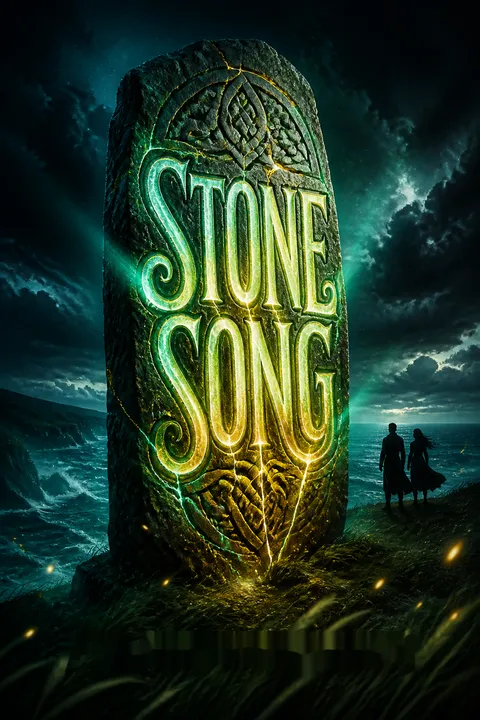
Stone Song makes inherited destiny collide with the modern habits Clare uses to define herself. Her geology training teaches her to study matter closely, and that discipline remains useful even after magic becomes undeniable. What changes is not her intelligence but the range of evidence she is willing to consider. The quest repeatedly tests whether knowledge can be separated from relationship: Bianca’s research, Branna’s withheld guidance, Blake’s protection, and her parents’ account all shape what Clare can understand, yet each arrives through personal bonds rather than detached observation.
The book also questions the idea that protection is automatically benevolent. Blake’s secrecy is meant to keep Clare safe, but it leaves her unprepared and resentful. Clare’s decision to gather a team challenges an old expectation of solitary heroism, and the group’s survival depends on their different capacities: Bianca interprets history, Seamus fights and teaches, Blake guards, and Clare learns to use her own power. Their cooperation does not erase conflict. It makes conflict negotiable, which is a more demanding model of trust than instant harmony.
The final revelation gives the treasure an intimate location, but its meaning is communal. Clare finds it by recognizing the truth of her attachments, then uses it to save people beyond herself. Love is not merely a romantic reward or a mystical password; it is the knowledge that allows her to act without reducing others to instruments of her destiny. The ring, the family farm, Esther’s house, and the threatened mountain all connect magic to care for specific people and places. The ending therefore resolves the immediate battle while preserving responsibility: Clare must help the next Seeker, and Bianca must decide whether to join the work. Victory opens a future rather than closing one.
Review Summary
Characters
Clare MacBride
Stone-minded scholarClare is an Irish geology doctoral student who builds her life around work, observation, and earned achievement. Her unusual sensitivity to stones is something she keeps private because it does not fit the scientific identity she has carefully constructed. She is sharp-witted, practical, and proud of her independence, but also capable of loyalty that overrides caution. Her close friendship with Bianca gives her a trusted place to think aloud, while her attraction to Blake unsettles her preference for control. Clare’s central tension is not simply belief versus disbelief. It is the effort to let new knowledge change her without surrendering the self-discipline and judgment that helped her become who she is.
Blake
Clare’s watchful guardianBlake is a formidable, guarded man whose life is shaped by duty and by a habit of keeping danger at a distance from the people he protects. He is disciplined in a crisis, quick to act, and less adept at admitting when fear or pride has taken control. His long connection to Clare makes their attraction emotionally charged, but his protective instincts can shade into secrecy and command. Blake’s bond with his grandmother Esther reveals a warmer, more vulnerable side than his stern public manner suggests. He wants to keep Clare safe, yet the story tests whether protection can be meaningful without trust and respect for her choices.
Bianca
Clare’s fearless confidanteBianca is Clare’s longtime roommate and closest friend, a history and mythology student whose enthusiasm is matched by a sharp, loyal mind. She brings legends into focus when Clare needs context, but she is never merely the group’s researcher: she makes her own decisions and insists on taking part when danger arrives. Her lively humor keeps fear from swallowing the room, while her romantic uncertainty around Seamus reveals a more vulnerable side. Bianca’s confidence can look impulsive, especially beside Clare’s caution, but it is grounded in a deep commitment to the people she loves. She treats friendship as an active responsibility, not a feeling that can be safely kept at home.
Seamus
Witty lab allySeamus is Clare’s colleague at Trinity College, a quick-witted and generous presence whose teasing often eases tension. His affection for Bianca has been evident to Clare before Bianca fully recognizes it herself. He is comfortable with the old stories and unusual dangers that unsettle Clare, and he contributes knowledge and practical help without demanding attention for himself. Seamus’s warmth makes him a bridge between the ordinary friendships of Clare’s Dublin life and the magical world gathering around her.
Branna
Crystal-shop mentorBranna owns the Dublin crystal shop where Clare works and treats its customers with a warmth that makes the place feel like refuge. She recognizes Clare’s affinity for stones and offers her a meaningful necklace before explaining the larger world behind it. Branna’s affection for Clare is genuine, though rules prevent her from sharing everything at once. Her role combines care with restraint: she wants Clare to be ready, yet cannot simply remove uncertainty from the path.
Fiona O’Brien
Healer and heraldFiona is a healer with a calm, perceptive manner and a gift for reading people beyond their stated intentions. She seeks Clare out when time is short and explains the family history and old danger surrounding the lost treasures. Though she knows far more than Clare, Fiona does not present herself as an all-powerful guide. She offers information, reassurance, and practical help, then leaves Clare to make the decision that binds her to the quest.
Esther
Blake’s generous grandmotherEsther is Blake’s grandmother, a small, warm-hearted host whose old family home offers respite to the travelers. Her humor and hospitality make an immediate contrast with the danger outside, but she also carries knowledge of earlier generations and recognizes the importance of Clare’s task. She gives the group both comfort and tools, treating food, stories, and preparation as parts of the same care. Her faith in Clare is quietly firm rather than naïve.
Madden MacBride
Clare’s devoted fatherMadden is Clare’s hardworking father, a farmer who has always been proud of her education even when her academic ambitions seemed foreign to him. He is affectionate, practical, and more comfortable showing love through work than through long explanations. His memories help Clare understand the unusual circumstances of her childhood, but his place in her life rests on years of care rather than biology.
Mary MacBride
Clare’s loving motherMary is Clare’s mother, a gentle and attentive woman who helped give Clare a secure childhood on the family farm. She is deeply emotional when the past must be discussed, yet her love for Clare remains clear and unwavering. Mary’s instinct is to make a home through welcome, food, and tenderness. Her relationship with Clare shows how family is sustained by daily devotion, not solely by origin.
Cait
Grace Cove hostCait runs Gallagher’s Pub in Grace’s Cove and offers the travelers a place to stay, food, and equipment for their climb. She is direct, observant, and generous without turning her help into a performance. As a relative of Clare’s, she provides a new connection to a wider family network. Cait’s practical support helps the group prepare for danger while her frank advice encourages Clare to repair her relationship with Blake.
Morrigan
Farmhouse defenderMorrigan is a capable ally whose home becomes a temporary refuge during the group’s journey. She enters the fight when the Domnua breach the property and helps defend Clare and her companions. Her willingness to act shows that the struggle reaches beyond the central group.
Danu
Goddess of the old storiesDanu is the maternal goddess at the heart of the old Irish legend that frames Clare’s quest. The stories associate her with light, protection, and the treasures brought to Ireland. She is powerful, but not free to intervene without limit, making her presence a source of guidance rather than an easy solution. Danu represents an inheritance that demands responsibility from those who receive it.
Plot Devices
The Four Treasures Curse
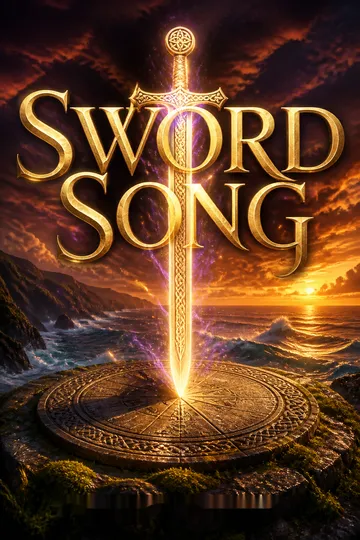
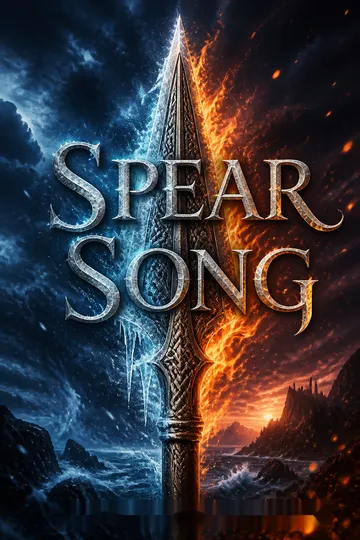
Sets the four-month deadlineThe mythic conflict between Danu and Domnu’s descendants is governed by a curse tied to four treasures: a stone, spear, sword, and cauldron. After sixteen hundred years, the Domnua may reclaim the treasures and rule Ireland if the Seekers fail to find them. The final year assigns four months to each Seeker, making Clare’s deadline part of a larger sequence rather than an isolated emergency. This device gives the fantasy its historical scale while keeping pressure close and measurable. Every delay in Clare’s search matters because the old conflict is moving toward a specific threshold.
The Seeker’s Mark
Identifies Clare’s callingA mark beneath Clare’s hairline identifies her as one of the Na Sirtheoir, the Seekers charged with finding the treasures. Its appearance signals that protective concealment has ended and the danger can now find her. The mark turns an unexplained bodily sensation into evidence, connecting Clare’s private experience to a role in the old curse. It also dramatizes the cost of delayed knowledge: people around Clare have waited for the right moment to tell her, but the moment arrives with little time to prepare.
The Clue-Giving Objects
Turns gifts into directionsBranna’s necklace, the riddles, Danu’s ring, Esther’s dagger, and the matching aquamarine necklace serve as clues and instruments along the search. They connect Clare’s sensitivity to stones with the ancestral story, while each new message narrows the path from family history to Mount Brandon. The objects do not solve the quest on their own. Clare and her friends must interpret them, test their meaning, and act under pressure. The devices make inherited knowledge tangible, but leave room for judgment, misreading, and emotional insight.
Fae Sight and Colors
Makes hidden allies visibleClare begins to see the supernatural beings around her through distinctive colors: silver signals the Domnua, violet marks the Danula, and gold identifies the Seekers. The visual system helps her recognize danger, understand who may be an ally, and discover that familiar people have been part of the hidden world. It also creates a practical asymmetry: Bianca cannot initially see the fae as Clare does, so Clare’s perception becomes both an advantage and a responsibility. The colors turn a crowded city into a battlefield Clare did not know she was navigating.
The Stone of Destiny
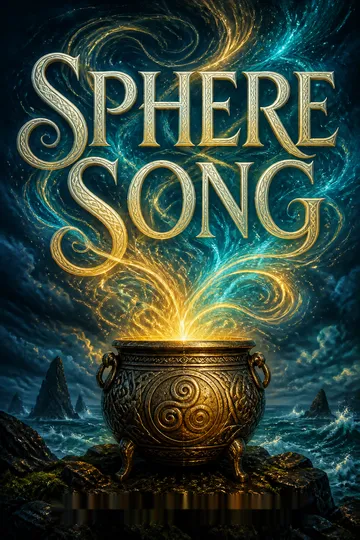
Tests truth and rightful careThe lost stone is famed for revealing truth and has changed through centuries of contact with human and fae owners. Its power makes it too dangerous to treat as a prize or tool of control. The clues repeatedly connect the stone to truth, love, and origin, guiding Clare toward a discovery that cannot be made by searching the landscape alone. Its final revelation is a major plot twist: the Stone of Destiny has been hidden within Clare herself. When she raises it during the battle, its song destroys the Domnua forces. Its recovery resolves the immediate invasion while establishing why restraint and stewardship matter.
The Isle of Destiny Series
About the Author


Download PDF
Download EPUB
.epub digital book format is ideal for reading ebooks on phones, tablets, and e-readers.








