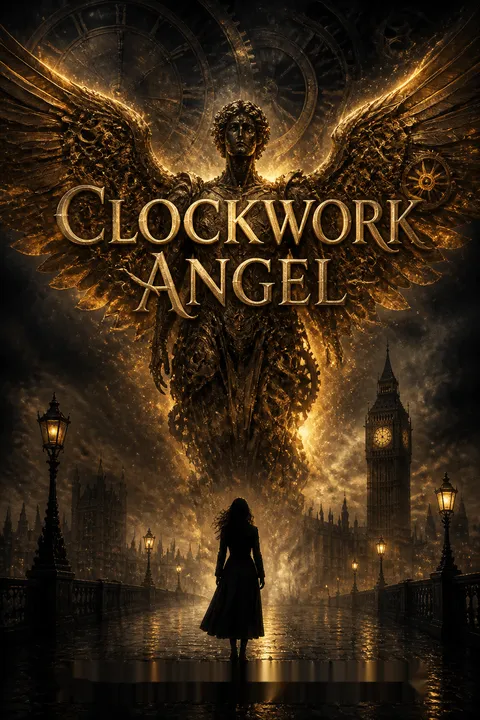


Plot Summary
Prologue
In London, Shadowhunters Will Herondale and Jem Carstairs find a murdered girl and a dagger marked with two interlocked serpents. The weapon points toward occult human activity, but the girl’s wounds suggest something more deliberate than a demon attack.
Weeks later in Southampton, Tessa Gray arrives from New York, carrying her dead mother’s clockwork angel and expecting her brother Nathaniel. He is absent. Two women claiming to be his friends show her a note in his handwriting, then lead her into their carriage and toward a captivity whose purpose she cannot yet understand.
The prologue plants two kinds of evidence: a body that refuses to fit the obvious explanation and an object whose repeated serpent design connects hidden worlds. Its abrupt shift from Will and Jem’s investigation to Tessa’s arrival makes the reader experience the same gap the characters must cross: the murdered girl and the isolated newcomer appear unrelated, yet both are being drawn toward a secret organization. Tessa’s angel, still ticking against her chest, offers a small image of continuity amid deception. The story begins by making private grief and public conspiracy look like separate matters, then quietly binds them.
The Dark House
Tessa follows Mrs. Black and Mrs. Dark from the Southampton docks because their note bears Nathaniel’s familiar handwriting. In their London house, they keep her locked in a bare room, using the claim that Nate is imprisoned to force her through painful exercises. They teach her to Change by holding an object that belonged to another person and entering that person’s memories.
When she becomes the dead seamstress Emma Bayliss, she relives Emma’s stabbing and discovers the sisters have been using her to investigate a murder. The women announce that their employer, the Magister, will marry Tessa. She strikes Miranda, the eerily obedient maid, with a brass globe and runs for the street, only to meet the sisters’ coachman.
Tessa’s captivity weaponizes her attachment to Nate: the sisters make care indistinguishable from obedience by presenting each act of self-erasure as the price of his survival. Her transformations are not simply disguises. They expose her to other people’s memories and deaths, making identity feel porous before she has any language for what she is. The sisters’ promise of marriage converts her power into property, while their praise rewards compliance with just enough tenderness to keep hope alive. Tessa’s blow against Miranda matters because it breaks the rhythm of that coercion. Her first escape attempt is imperfect, but it marks a shift from enduring events to acting within them.
Will Finds Tessa
The sisters bind Tessa to her bed, but she remembers how to Change into Emma and slips free by making her wrists smaller. She arms herself with a washbasin and swings it at the young man entering her room. Will Herondale, a Shadowhunter investigating Emma’s murder, answers with sarcasm, then cuts through the locked door with a rune.
He leads Tessa through the cellar as the sisters pursue them. They reach a room filled with dissected bodies and mechanical parts, where the sisters attack. Will’s companions Henry Branwell and Thomas join the fight; Will kills Mrs. Black, while Mrs. Dark escapes after striking Tessa unconscious. The Shadowhunters carry Tessa to their Institute, leaving her brother’s location unknown.
The rescue does not restore Tessa’s freedom all at once. Will saves her from one institution of control by bringing her into another world whose laws and motives she cannot yet judge. His irreverence punctures the sisters’ solemn authority, but his confidence also makes him difficult to trust. The cellar’s human remains expose the material cost of the sisters’ magic: bodies have become supplies for someone else’s design. Tessa’s choice to fight, even with a crude weapon, parallels her earlier attack on Miranda, but now it occurs alongside people who can answer violence with training and solidarity. Her unconsciousness makes rescue possible while postponing any certainty about what she has been rescued into.
A Face Borrowed
At the London Institute, its leader Charlotte Branwell explains that Shadowhunters protect ordinary people from demons and govern relations with supernatural Downworlders. Tessa learns that she is not an ordinary human, though even Charlotte cannot identify her kind.
At dinner, Jessamine Lovelace challenges her to prove her ability. Tessa takes Jessamine’s ring and Changes into her, briefly sensing the girl’s anger and longing beneath her polished appearance. The demonstration astonishes the household and confirms that Tessa’s gift is unusually powerful.
Charlotte offers food and shelter while promising to search for Nate. Will later guides Tessa through the Institute’s library and weapons rooms, while Jem Carstairs, Will’s closest friend, welcomes her with a gentleness she has not yet found elsewhere.
Tessa’s first voluntary demonstration changes the meaning of her power. In the Dark House, it was extracted through threats; at dinner, she chooses when to reveal it and controls the audience’s access to her. Yet the transformation also gives her an involuntary glimpse of Jessamine’s concealed distress, suggesting that passing into another body carries emotional knowledge as well as physical likeness. The Institute offers genuine hospitality, but Tessa is alert to the possibility that protection may become another form of use. Her books and the clockwork angel steady her sense of self as she enters a community that can name the supernatural world but still cannot explain her place in it.
The Mechanical Warning
Will and Jem return to the Dark House to search for evidence and find a woman sitting motionless in an abandoned room. She suddenly delivers a warning about an army made by neither Heaven nor Hell, then collapses; copper wire and metal mechanisms reveal that she is an automaton, not a living witness.
At the Institute, Henry examines Miranda’s body and finds a mechanical frame beneath stolen human flesh, with a seal linked to vampire leader de Quincey. Charlotte and Henry question Axel Mortmain, Nathaniel’s employer, and learn that Nate joined the Pandemonium Club before vanishing. Mortmain admits that he supplied machine parts to a powerful club member, whom he identifies as de Quincey, apparently the Magister.
The automaton’s warning collapses the comfortable boundary between human and machine. Its voice resembles prophecy, but its body is assembled from both clockwork and murdered people, so the threat is at once technological, occult, and ethical. Henry’s fascination with the mechanism contrasts with Charlotte’s insistence that its materials came from victims; their different responses reveal how invention can turn attention away from the people who paid for it. Mortmain’s account seems to provide a clean chain from factory parts to vampire leadership, giving the Shadowhunters a plausible target. The investigation advances, but it also demonstrates how easily evidence can be arranged to satisfy the investigators’ expectations.
Camille’s Dangerous Offer
Vampire informant Camille Belcourt tells Charlotte that de Quincey hosts gatherings where human captives are tortured and killed. She offers a way to witness the crimes: Tessa can Change into Camille and pass through the vampire’s social circle. Tessa’s first attempt leaves her cold and heart-stilled, but Jem steadies her until she Changes back.
She agrees to the mission because Camille has seen Nate at the club. Charlotte also tells Tessa that her father knew of the Shadow World, a discovery that unsettles Tessa’s hope of returning to an ordinary past. The Enclave approves the plan despite doubts about Henry’s signal device. Will will pose as Tessa’s human servant, while warlock Magnus Bane will guide them inside.
The mission turns Tessa’s involuntary gift into a chosen instrument, but it does not make the gift emotionally neutral. Becoming Camille means temporarily inhabiting a body without a heartbeat, an experience that makes Tessa fear that appearance may consume identity. Jem’s reassurance distinguishes the self from the body without pretending the distinction is easy. Meanwhile, Charlotte’s news about Tessa’s father unsettles the refuge of her memories: the past may have contained the same hidden world she now faces. The Enclave’s reliance on Tessa is practical and potentially exploitative, so her insistence that finding Nate remain part of the plan matters. She accepts danger on her own terms, not merely to serve Shadowhunter law.
The Vampire’s Theatre
At de Quincey’s mansion, Tessa performs Camille’s cold elegance while Will suppresses his anger at being treated as a human pet. They see vampires drawing blood from subjugates, then enter a hidden library with Magnus and discover plans for automatons powered by demonic energy.
The guests soon assemble to watch a prisoner’s public execution. When de Quincey removes the prisoner’s hood, Tessa recognizes Nate and orders Will to signal the Enclave. Henry’s Phosphor malfunctions, setting the room ablaze instead of sending its intended signal.
Will fights through the fire as Shadowhunters break in. Tessa reaches Nate, while de Quincey escapes the battle. Will bites him to break his hold, swallowing vampire blood and exposing himself to a dangerous transformation.
The party makes violence into entertainment, with etiquette and candlelight disguising a system built on helpless bodies. Tessa’s performance lets her move through the room, but her disguise also forces her to inhabit the social language that treats humans as possessions. When Nate appears, personal loyalty overrides the mission’s careful timing: she breaks cover and triggers the attack. Henry’s failed invention turns a controlled operation into a firestorm, while Will’s bite shows how quickly his instinct to protect can become self-endangerment. The rescue is real but incomplete. Nate survives, yet de Quincey escapes, and Will carries the enemy’s blood inside him. Victory arrives as a debt rather than a clean release.
A Kiss and Its Cost
After the raid, Tessa brings Will holy water to counter the vampire blood he swallowed. Feverish and soaked, he tells her that the blood could draw him toward becoming a vampire, then accepts the cure. Their guarded conversation turns intimate, and Will kisses her before abruptly sending her away.
Soon afterward, Tessa and Jem walk through London to Blackfriars Bridge, where Jem tells her about losing his parents and surviving a demon poison that left him dependent on a silver drug.
Clockwork attackers ambush them, injure Jem, and pursue them to the Institute. The automatons breach the gate, but Tessa and Jem hold out until Charlotte, Henry, and Will arrive. In the attack’s aftermath, Tessa discovers that Nate has disappeared from his sickroom.
Intimacy in this section is inseparable from danger. Will’s fever strips away some of his defensive wit, allowing tenderness to surface, but he retreats as soon as the kiss makes that tenderness consequential. Jem offers a different kind of closeness: he explains suffering without demanding that Tessa fix it or excuse it. His illness reframes strength as the ability to live with a condition that cannot simply be conquered by will. The automatons then make private vulnerability public, bringing mechanical violence to the Institute’s threshold. Tessa’s disappearance of Nate at the end turns relief into renewed fear and prepares a deeper test of her loyalty: she must confront not only enemies but the limits of what she knows about her own family.
Nate’s Missing Pages
The Institute finds Nate hiding behind drawing-room curtains, frightened and still weak. He explains that he discovered pages from their mother’s diary in a hidden compartment, learned that their parents had once attended Pandemonium Club meetings, and used the information to bargain for work with Mortmain.
At his first meeting, Nate won money at cards, but enchanted drinks made him addicted to gambling; after his losses mounted, de Quincey offered to erase his debts if Nate delivered Tessa. Nate says he complied under threat and later heard that the Dark Sisters had perfected a binding spell for the clockwork army. It can be performed only at the full moon, which, Jem discovers, is that very night.
Nate’s account complicates the family story without yet resolving it. His weakness is not presented as a single flaw but as a sequence of incentives: secrecy about debt, chemically reinforced gambling, then coercion directed at the person he loves most. Tessa hears both genuine remorse and self-protection, leaving her unsure how much of his explanation to trust. The diary pages also reveal that her parents’ apparent ordinary life contained concealed contact with the Shadow World. Their private past becomes a public threat when Nate identifies the full moon as the deadline for the binding spell. The family’s secrets and the city’s danger converge, forcing the Institute to act before it can verify every claim.
The Magister’s Diversion
Mortmain arrives at the Institute claiming that de Quincey’s clockwork army will soon be animated and gives Will and Jem an address in Highgate where the Dark Sisters are supposedly working. Worried that the Enclave will be destroyed if the warning is true, the boys leave to investigate.
At the derelict mansion, Mrs. Dark reveals that de Quincey is not the Magister and that the real leader has manipulated the evidence against the vampire. She transforms into a demon and traps the Shadowhunters inside a protective pentagram.
Will and Jem realize Mortmain has used them to remove both the vampire and the Dark Sisters while leaving Tessa exposed at the Institute. Mrs. Dark’s confession confirms the deception, but their discovery comes too late to prevent the attack at home.
Mortmain’s deception succeeds because it recruits the Shadowhunters’ own virtues. Will and Jem depart not from gullibility alone but from fear that hesitation will cost lives. Their certainty about de Quincey has been built from several apparently independent clues, yet the clues share a hidden author. Mrs. Dark’s correction turns the investigation into a lesson in manufactured consensus: repetition can feel like confirmation when each source has been staged. The delay also creates physical separation between Tessa and her protectors. The plot’s trap therefore works on two levels. Mortmain misdirects the institution, while the heroes’ sincere responsibility makes them carry out the misdirection themselves.
Blood Opens the Institute
While Will and Jem confront Mrs. Dark, Mortmain reaches the Institute with Nate and a squad of automatons. Nate kneels to Mortmain as the true Magister, and Tessa understands that his story about de Quincey was designed to mislead the Shadowhunters.
Agatha is stabbed when the machines invade; Thomas tries to defend the household, and Jessamine helps Tessa and Sophie flee. Mortmain sends Tessa to the Sanctuary and demands that she Change using a watch engraved with unfamiliar initials.
Meanwhile, Mrs. Dark explains that an automaton can pass the Institute’s wards if it carries a Shadowhunter’s blood. The attackers collected Jem’s blood during the bridge assault, allowing them to unlock the stronghold. The enemy has breached both the Institute’s defenses and Tessa’s last trust in Nate.
The betrayal lands hardest because Nate has been both victim and agent. His earlier account may contain truths, but he has concealed the decisive fact that he is now serving Mortmain. Tessa’s devotion to her brother has repeatedly made her vulnerable, yet it also gave her the courage to survive the sisters’ training and search for him. The Institute’s wards, once described as nearly absolute, prove vulnerable to a body that combines human blood with mechanical design. Security fails not through a simple flaw but through the conversion of intimacy into access: Jem’s injured body becomes a key. The attack destroys the comforting notion that a protected home can remain separate from the violence beyond it.
The Angel Takes Flight
Mortmain orders his automatons to restrain Tessa, but her clockwork angel suddenly rises from her neck and cuts into the machine holding her. Thomas and Jessamine fight the attackers; when Jessamine is struck down, Tessa escapes with Sophie.
At Highgate, Will and Jem defeat Mrs. Dark by bringing down a chandelier, then race back. Nate takes Jessamine and Sophie captive and steals the Pyxis, the Shadowhunters’ container for demon energy, before Henry, Charlotte, and Jem stop his clockwork escort. Thomas dies defending the Institute.
Alone with Mortmain, Tessa refuses to Change until he explains her origins, then threatens to stab herself rather than be taken. She feigns death through a sudden transformation. Will finds her alive, but Mortmain vanishes before he can capture him.
The angel’s first flight converts a cherished family keepsake into an active defense, joining Tessa’s past to the power she has begun to claim. Her refusal to obey Mortmain is equally important: she bargains with the threat to her own body because he values her ability more than her personhood. The climax gives several characters distinct forms of agency. Jessamine fights, Thomas protects others without Shadowhunter status, and Will and Jem turn Mrs. Dark’s own preparations against her. Yet the victory remains costly and partial. Thomas dies, Nate escapes with the Pyxis, and Mortmain disappears. Tessa survives by performance rather than force, showing that her power can be used strategically without granting her full knowledge of what she is.
A Place Among Shadows
After the deaths of Thomas and Agatha and the funerals for the fallen, Charlotte asks Tessa to remain at the Institute as an ally. Tessa accepts, though she still does not know what she is or where Nate has gone.
She finds a returned copy of her clockwork angel and, with Jem, decides to keep seeking the truth about her parents. Will, grieving and convinced he has brought danger to everyone around him, kisses Tessa on the Institute roof, then cruelly offers secrecy rather than a future.
He tells her that Shadowhunters cannot have children with warlocks; Tessa later finds the same fact in the Codex and realizes he spoke truth to wound her and drive her away. In the epilogue, Will seeks Magnus Bane’s help, suggesting that his hidden distress has become urgent.
The ending gives Tessa a home without giving her certainty. She chooses the Institute because its people have become meaningful to her, not because their laws can explain her origin or erase the cost of accepting help. The angel’s return offers continuity, but its sudden movement also hints that the object is more than a sentimental relic. Will’s kiss and rejection enact his central defense: he converts fear of attachment into apparent contempt, making himself the agent of the abandonment he expects. Tessa recognizes the difference between truth and kindness; a factual statement can still be used as a weapon. Magnus’s final encounter preserves Will’s mystery rather than resolving it, leaving emotional and political dangers alive.
Epilogue
In Camille Belcourt’s empty London house, Magnus Bane reads while waiting for the vampire who has left the city. Archer, Camille’s resentful servant, announces a late visitor: Will Herondale, drenched by the rain and visibly shaken.
Will says the Institute is not the problem. He has come for himself, and he asks Magnus for help because he has no one else to turn to. Magnus closes the door behind them and listens, while the book ends before Will explains what has driven him there.
The epilogue shifts attention from Tessa’s uncertain identity to Will’s carefully concealed crisis. Throughout the novel, Will makes his pain legible only through jokes, risk, and abrupt cruelty; here, he arrives soaked, frightened, and unable to maintain that performance. His appeal to Magnus matters because it reverses the usual direction of assistance: the Shadowhunter who rescues others must now admit dependence on a Downworlder. The scene also refuses a tidy ending. Mortmain remains free, Nate has disappeared with the Pyxis, and Will’s secret is still unnamed. The final emotional movement is not resolution but a plea that someone finally help.
Analysis
Clockwork Angel treats identity as something shaped by memory, obligation, and the stories people tell about themselves. Tessa’s ability makes this problem literal: she can wear another person’s face and encounter the traces of that person’s life, but she cannot thereby become them. Her fear that there may be no stable self beneath appearance is intensified by a world that routinely assigns people roles: Shadowhunter, Downworlder, servant, weapon, bride. The novel’s answer is not that identity is untouched by circumstance, but that choice and attachment remain meaningful within it. Tessa’s refusal to be owned matters precisely because her power makes her valuable to people who would reduce her to its use.
The machinery supplies a political analogue to that reduction. Mortmain’s automatons are built from human remains and mechanical parts, then potentially animated by captive demonic energy. They convert bodies and supernatural beings into components in a project of rule. The threat is not technology alone, but an instrumental logic that imagines living beings as resources. Henry’s inventions complicate any simple opposition between good magic and bad machinery: curiosity can create useful tools, yet attention to a device can obscure the people harmed in its making. The same question applies to the Shadowhunters, whose protective mandate can become paternalistic when they treat Downworlders as subjects rather than partners.
Family, too, is presented as both shelter and distortion. Tessa’s love for Nate keeps her alive through captivity, but it also blinds her to the consequences of his choices. The Institute offers a second family built from orphans, servants, and people who cannot fit comfortably into ordinary society. Its bonds are imperfect, sometimes abrasive, but more honest than the false assurances that first brought Tessa to London. Will and Jem provide contrasting models of care: Will hides attachment behind provocation, while Jem makes compassion visible without confusing it with control. Their presence helps Tessa recognize that intimacy need not require surrender.
The novel ends without defeating Mortmain or explaining Tessa’s birth. That incompletion is structural rather than accidental. Tessa has gained a place, a community, and greater agency, but not a final account of who she is. The unanswered questions preserve the distinction between belonging and certainty: she can choose where to stand before she knows exactly what she is.
Review Summary
Clockwork Angel receives mostly positive reviews, with readers praising its Victorian London setting, compelling characters, and addictive storytelling. Many find it superior to The Mortal Instruments series, appreciating the improved writing and character development. The love triangle and steampunk elements are generally well-received. Some criticize similarities to Clare's previous work and predictable plot twists. Overall, fans of young adult fantasy and Clare's writing style highly recommend the book, while a few readers find it lacking originality.
People Also Read





Characters
Tessa Gray
The borrowed faceTessa is an American teenager whose love of novels and devotion to her brother initially give her a narrow map of the world: home is wherever Nate can be found. She is observant, proud, and more courageous than she believes, though her instinct to protect others can make her vulnerable to manipulation. Her power to inhabit another person’s form and memories unsettles her sense of self, turning identity from a fixed inheritance into an intimate, sometimes frightening experience. Tessa resists being treated as a tool, even when she accepts danger to help others. Her developing ties to the Institute offer belonging without resolving the questions she has about her origins.
Will Herondale
The charming shieldWill is a gifted young Shadowhunter whose wit, beauty, and reckless confidence conceal a guarded inner life. He fights with quickness and invention, but his habit of turning every serious moment into a joke keeps people from knowing when he is frightened or hurt. He is fiercely loyal to Jem and protective of the Institute, even while he provokes those around him and resists their concern. Tessa’s directness unsettles his practiced evasions, creating an attraction he answers with both tenderness and retreat. Will’s behavior suggests that self-punishment has become a way to control what others might otherwise discover about him.
James Carstairs
Will’s steady counterpartJem is a silver-haired Shadowhunter raised in Shanghai and now part of the London Institute’s close-knit household. Gentle, perceptive, and quietly humorous, he makes space for other people’s grief without pretending it can be neatly solved. His bond with Will is built on loyalty and long familiarity; he understands when Will is lying, yet does not force every secret into the open. Jem’s calmness is not passivity. He fights skillfully and thinks carefully, but his physical fragility places limits on what he can do. He approaches Tessa with curiosity and respect, offering her companionship without demanding that she explain herself.
Nathaniel Gray
Tessa’s drifting brotherNate is Tessa’s older brother, a handsome dreamer whose charm and optimism have long softened the consequences of his choices. He wants a grander life than his circumstances seem to allow and is drawn to risks that promise quick transformation. Tessa and their aunt have often protected him from the results of his gambling and inconstancy, leaving him both loved and underprepared for hardship. His connection to Tessa is emotionally powerful because she remembers his warmth even when his conduct frustrates her. Nate’s desire to be admired shapes the way he responds to money, status, and the occult world.
Charlotte Branwell
The Institute’s commanderCharlotte leads the London Institute with discipline, intelligence, and a strong sense of obligation. She is small in stature but formidable in judgment and combat, and she must repeatedly defend her authority in a world inclined to question a young woman’s command. Her care for the Institute’s residents is practical rather than sentimental: she offers Tessa protection, seeks Nate, and expects the household to contribute to its shared work. Charlotte’s compassion can make her vulnerable to appeals and manipulation, but it also prevents her from treating people as expendable. Her marriage to Henry is affectionate, though their temperaments and responsibilities rarely align neatly.
Henry Branwell
The inventive husbandHenry is Charlotte’s husband and the Institute’s restless inventor. He is kindhearted, absorbed in mechanisms, and often so focused on an experiment that he misses what is happening around him. His inventions are ingenious in conception but unreliable in practice, creating both comic mishaps and real risks. Henry’s interest in machinery is not cruelty; he genuinely wants to equip the Shadowhunters better. His relationship with Charlotte contains affection and mutual respect, though she often has to draw him back from his work and speak for the household.
Jessamine Lovelace
The reluctant warriorJessamine is a beautiful young Shadowhunter who longs for the security and social ease of ordinary Victorian womanhood. She resents the Institute’s fighting life and measures freedom through marriage, money, and respectable appearances. Her sharp tongue can make her seem shallow, especially when she dismisses people she considers beneath her. Yet her attachment to the life her parents imagined for her grows from grief as much as vanity. Beneath the polished manners is someone trained to fight and capable of decisive courage, though she struggles with what that courage might demand of her.
Sophie Collins
The sharp-eyed maidSophie is a servant at the Institute with the Sight, the ability to perceive what ordinary people overlook. A scar left by an act of violence marks her face, but it does not define her judgment or her loyalty. She speaks plainly, particularly when Will’s behavior deserves correction, and is deeply attached to the household that gave her safety and meaningful work. Sophie’s reserved manner can hide strong feelings, especially around those she cares for. Her treatment of Tessa is practical and compassionate, shaped by an understanding of what it means to be judged by appearance.
Thomas
The loyal weapons keeperThomas serves the Institute as driver, weapons keeper, and reliable companion to the Shadowhunters. He is broad-shouldered, good-natured, and trained enough to fight beside them despite lacking their status. His warmth extends to the household staff, and his attention to Sophie suggests a tenderness he rarely makes explicit. Thomas is often treated as dependable background support, but his courage and steady presence make him essential to the Institute’s daily life.
Axel Mortmain
The polished industrialistMortmain is a wealthy manufacturer with an interest in machinery, travel, and occult knowledge. He presents himself as an educated, reasonable businessman, confident that money and study can make dangerous forces manageable. His background in trade has taught him how to read opportunity and cultivate influence. To the Shadowhunters, he appears to be a useful source of information about Nathaniel and the Pandemonium Club. Mortmain’s calm manner makes him difficult to assess, since curiosity, ambition, and self-interest can wear the same courteous face.
Alexei de Quincey
The vampire aristocratDe Quincey is an influential vampire leader whose elegant manners conceal a contempt for the Shadowhunters and their laws. He moves among wealthy mundanes and Downworlders with the confidence of someone accustomed to command. His gatherings reveal how social refinement can coexist with cruelty, and his interest in power makes him a dangerous figure even when he appears composed. Camille knows him from an earlier period of their lives, giving their encounters a personal history beneath the political conflict.
Camille Belcourt
The vampire informantCamille is a striking vampire and an informant to Charlotte’s Institute. She is poised, calculating, and accustomed to moving through rooms as if every glance were a resource. Her history with de Quincey gives her reasons to oppose him that are more personal than she initially admits. Camille helps the Shadowhunters because their mission offers an opening in a conflict she has not resolved. Her relationship with Magnus Bane suggests that her apparent coldness does not preclude attachment, though she rarely offers her motives without qualification.
Magnus Bane
The glittering warlockMagnus is a powerful warlock, Camille’s lover, and a knowledgeable guide to Downworld politics. His theatrical clothes and amused manner make him seem playful, but he is observant about danger and wary of the Shadowhunters’ tendency to claim authority over every conflict. He provides Tessa with information about her transformation and assists the mission against de Quincey. Magnus balances self-interest with a genuine capacity for care, and his ease in crossing social boundaries contrasts with the rigid divisions maintained by both vampires and Nephilim.
Mrs. Black and Mrs. Dark
Tessa’s occult captorsThe sisters are warlocks who train Tessa under the pretense that obedience will protect her brother. Mrs. Black favors open threats, while Mrs. Dark is more inclined to coax and flatter, but both treat Tessa as a valuable instrument. Their colorful clothing contrasts with their cold, predatory conduct. They understand Tessa’s power well enough to teach its mechanics, yet they offer no honest account of its purpose. Their partnership reveals how closely care, manipulation, and ambition can be braided together.
Miranda
The silent housemaidMiranda is the Dark Sisters’ eerily obedient maid, known for her flat voice and unchanging expression. She escorts Tessa through the house and repeats the commands given to her. Her unnatural stillness unsettles Tessa before she understands what Miranda is. She functions as the sisters’ instrument of control and as an early sign that the house conceals more than human cruelty.
Brother Enoch
The Silent healerBrother Enoch belongs to the Silent Brothers, Shadowhunters who serve as healers and scholars. His scarred, eyeless face and stitched mouth frighten Tessa, but his work is careful and medically skilled. He communicates directly through the mind, offering knowledge that ordinary speech cannot carry. Enoch is patient with questions, though his manner is formal and unsettling. His presence represents a form of care that does not depend on looking gentle.
Agatha
The pipe-smoking cookAgatha is the Institute’s cook, a steady older woman with the Sight and an enormous pipe. She keeps the household fed and treats its young residents with tolerant familiarity. Her practical warmth makes the Institute feel lived in rather than merely defended. Agatha’s place in the household is quiet but important: she contributes stability amid the Shadowhunters’ dangerous work.
Gabriel Lightwood
Will’s young rivalGabriel is the young son of a powerful Shadowhunter family and a sharp critic of Will. He is proud, competitive, and quick to invoke the rules of age and rank when they support his position. His hostility toward Will has roots in a family grievance, though he presents it as judgment of Will’s character. Gabriel’s occasional agreement with Charlotte’s plans shows that he is not simply oppositional; he cares about the reputation and safety of the Enclave.
Benedict Lightwood
The cautious Enclave elderBenedict is Gabriel’s father and an influential member of the London Enclave. He distrusts Charlotte’s plan to move against de Quincey without direct proof and worries about damaging relations with the Downworlders. His caution reflects political calculation as well as a desire to preserve the Clave’s authority. He can be dismissive of Charlotte’s leadership, particularly when her judgment challenges his own.
Church
The rescued church catChurch is a gray Persian cat rescued from the Dark Sisters’ ritual preparations. He behaves with the disdainful independence of a household cat and quickly becomes a small, unexpected presence at the Institute. His survival offers a modest counterpoint to the story’s many stolen and destroyed bodies.
Plot Devices
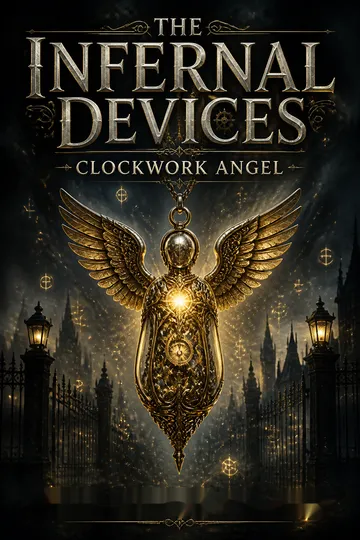
The clockwork angel
A keepsake with hidden forceTessa wears the small brass angel that belonged to her mother, relying on its steady ticking as a link to the family life she remembers. Henry examines it but finds only rust and a mechanism that continues to work. During the Institute attack, the angel unfolds its wings, rises from Tessa’s neck, and cuts an automaton holding her. Its return to Tessa near the end preserves the object’s emotional meaning while suggesting that its function and origins remain unexplained.
Tessa’s Changing
Identity as infiltration and defenseTessa can take another person’s appearance by holding something that belonged to them and entering the memories attached to it. The transformation lets her learn about the dead seamstress Emma Bayliss, escape restraints by becoming smaller, demonstrate her ability through Jessamine, and infiltrate de Quincey’s gathering as Camille. The power also carries emotional and physical risks: Tessa experiences other minds, temporarily loses her heartbeat in vampire form, and must decide when to return to herself.
Shadowhunter runes
Marks that turn skill into powerShadowhunters use runes drawn with a stele to strengthen their bodies, heal injuries, open doors, and conceal themselves from ordinary people. Seraph blades, activated by the names of angels, provide their principal weapons against demons and Downworld threats. These tools establish the Institute’s practical defenses and make its residents formidable, but their limits matter: they cannot make a failed plan succeed, and their protection can be exploited when an enemy acquires Shadowhunter blood.
The Pyxis
Demon energy under lockThe Pyxis is a protected container used to hold the energy left behind by demons. The Shadowhunters keep it in their weapons room, where only someone with Shadowhunter blood should be able to handle it. Mortmain’s scheme depends on obtaining the stored energy to animate clockwork bodies. The Pyxis therefore links the earlier discussion of demon remains to the automatons’ potential transformation from machines that follow patterns into creatures with independent will.
The automatons
An army outside old categoriesThe clockwork creatures combine gears and metal frames with stolen human flesh. At first they move according to mechanical patterns, but the Dark Sisters develop a spell intended to bind demonic energy into their bodies and give them more than programmed motion. Their mixed construction challenges the Shadowhunters’ usual categories of human, demon, and Downworlder. The machines attack Tessa, breach the Institute using Jem’s blood, and provide Mortmain with force that does not depend on ordinary soldiers.
FAQ
Synopsis & Basic Details
What is Clockwork Angel about?
- Victorian London's Shadow World: The story introduces a hidden world of Shadowhunters, who protect humans from demons, set against the backdrop of Victorian London.
- Tessa's Arrival and Captivity: It follows Tessa Gray, a young American girl who arrives in London and is immediately drawn into this world, discovering her own unique powers and being held captive by sinister forces.
- Unraveling a Conspiracy: The narrative focuses on Tessa's journey as she uncovers a conspiracy involving a secret society, clockwork automatons, and a mysterious figure known as the Magister, while also searching for her missing brother.
Why should I read Clockwork Angel?
- Intricate World-Building: Cassandra Clare creates a richly detailed and immersive world, blending historical elements with supernatural fantasy, making it a captivating read.
- Compelling Characters: The story features complex and well-developed characters, each with their own motivations and secrets, drawing readers into their emotional journeys.
- Intriguing Plot Twists: The narrative is full of unexpected twists and turns, keeping readers engaged and eager to uncover the mysteries alongside the characters.
What is the background of Clockwork Angel?
- Victorian Era Setting: The story is set in 1878 London, a time of rapid industrialization and social change, which provides a unique backdrop for the supernatural elements.
- Shadowhunter Society: The book introduces the Nephilim, a secret society of demon hunters with their own laws, customs, and history, adding a layer of depth to the world.
- Downworlder Culture: It explores the complex relationships between Shadowhunters and Downworlders (vampires, werewolves, warlocks, faeries), highlighting the tensions and alliances between these groups.
What are the most memorable quotes in Clockwork Angel?
- "The end of the world, and the beginning.": This quote, spoken by Will about the Ouroboros symbol, foreshadows the cyclical nature of events and the themes of destruction and rebirth in the story.
- "We are dust and shadows.": This quote, from Horace, reflects the Shadowhunters' understanding of their mortality and their place in the world, highlighting the themes of mortality and legacy.
- "You will know what kind of man he is not by the things he says, but by the things he does.": Aunt Harriet's advice to Tessa emphasizes the importance of actions over words, a recurring theme in the book, especially in relation to the characters' motivations.
What writing style, narrative choices, and literary techniques does Cassandra Clare use?
- Third-Person Limited Perspective: The narrative primarily follows Tessa's point of view, allowing readers to experience the world through her eyes while maintaining some mystery about other characters' thoughts and motivations.
- Foreshadowing and Symbolism: Clare uses subtle foreshadowing and recurring symbols, such as the clockwork angel and the Ouroboros, to hint at future events and deepen the story's themes.
- Dialogue and Wit: The dialogue is sharp and witty, particularly between Will and other characters, adding humor and tension to the narrative and revealing character traits.
Hidden Details & Subtle Connections
What are some minor details that add significant meaning?
- The Clockwork Angel's Ticking: The constant ticking of Tessa's clockwork angel serves as a subtle reminder of the mechanical and supernatural elements at play, foreshadowing her connection to the automatons.
- The Color Violet: The Dark Sisters' preference for violet clothing and accessories hints at their connection to the occult and their sinister nature, adding a layer of visual symbolism.
- The Names of the Dark Sisters: The names "Mrs. Black" and "Mrs. Dark" are not only descriptive but also foreshadow their roles as antagonists and their connection to the darker aspects of the story.
What are some subtle foreshadowing and callbacks?
- Will's Description of Hell: Will's assertion that "the ninth circle of Hell is cold" foreshadows the icy nature of the demon world and his own internal struggles, hinting at his hidden depths.
- The Recurring Ouroboros Symbol: The symbol of two snakes biting each other's tails, found on the knife and the Dark Sisters' carriage, foreshadows the cyclical nature of events and the interconnectedness of the characters' fates.
- Aunt Harriet's Advice: Aunt Harriet's advice to Tessa about judging men by their actions, not their words, is a callback to the theme of deception and the importance of discerning true intentions.
What are some unexpected character connections?
- Jem's Connection to Shanghai: Jem's background in Shanghai, where Mortmain also had business interests, hints at a deeper connection between the characters and the larger plot.
- Thomas's Loyalty: Thomas's unwavering loyalty to the Institute and his quiet affection for Sophie reveal a deeper connection between the mundane and Shadowhunter worlds.
- Camille and Magnus's Relationship: The revelation of Camille and Magnus's past relationship adds a layer of complexity to their characters and their motivations, hinting at a shared history and a possible future alliance.
Who are the most significant supporting characters?
- Sophie: As a servant with the Sight, Sophie's perspective offers a unique view of the Shadow World, and her loyalty to Charlotte and her growing friendship with Tessa make her a significant figure.
- Henry Branwell: Henry's inventions and his genuine kindness provide a counterpoint to the darker elements of the story, and his role as Charlotte's husband adds a layer of complexity to the Institute's dynamics.
- Thomas: Thomas's loyalty and his quiet strength make him a valuable ally to the Shadowhunters, and his connection to the Institute's history adds depth to the world-building.
Psychological, Emotional, & Relational Analysis
What are some unspoken motivations of the characters?
- Will's Fear of Intimacy: Will's constant teasing and self-deprecating humor mask a deep-seated fear of intimacy and vulnerability, stemming from his past and his fear of hurting those he cares about.
- Charlotte's Need for Control: Charlotte's strong leadership and her desire to maintain order at the Institute stem from a need for control, driven by her past experiences and her responsibility to the Shadowhunter community.
- Jem's Acceptance of Fate: Jem's calm acceptance of his illness and his willingness to face death reveal a deep understanding of his own mortality and a desire to make the most of his limited time.
What psychological complexities do the characters exhibit?
- Tessa's Identity Crisis: Tessa's struggle with her identity as a shape-shifter and her fear of losing herself in the process highlight the psychological complexities of her unique power.
- Will's Self-Destructive Tendencies: Will's self-destructive behavior and his tendency to push people away reveal a deep-seated pain and a fear of being loved, stemming from his past trauma.
- Jessamine's Desire for Normalcy: Jessamine's longing for a normal life and her resentment of the Shadowhunter world reveal her internal conflict and her desire for a different path.
What are the major emotional turning points?
- Tessa's Transformation into Camille: Tessa's transformation into Camille and her experience of a vampire's coldness and hunger mark a turning point in her understanding of her own power and the Shadow World.
- Will's Confession to Tessa: Will's confession to Tessa about his feelings and his fear of hurting her reveals his vulnerability and his internal struggle, marking a significant emotional turning point in their relationship.
- Jem's Revelation of His Illness: Jem's revelation of his addiction and his acceptance of his fate highlight his inner strength and his desire to live fully despite his limitations, marking a turning point in his character arc.
How do relationship dynamics evolve?
- Tessa and Will's Complicated Connection: The relationship between Tessa and Will evolves from initial animosity to a complex mix of attraction, fear, and misunderstanding, highlighting their shared vulnerability and their conflicting desires.
- Jem and Will's Parabatai Bond: The bond between Jem and Will is tested by their individual struggles and their differing approaches to life, but their loyalty and affection for each other remain a constant.
- Tessa and Charlotte's Mentor-Mentee Relationship: The relationship between Tessa and Charlotte evolves from a formal mentorship to a bond of mutual respect and understanding, highlighting Charlotte's kindness and Tessa's growing strength.
Interpretation & Debate
Which parts of the story remain ambiguous or open-ended?
- The True Nature of Tessa's Power: The exact origins and limitations of Tessa's shape-shifting ability remain ambiguous, leaving room for further exploration in future books.
- Mortmain's Ultimate Goal: Mortmain's true motivations and his ultimate plan for the clockwork army are not fully revealed, leaving readers to speculate about his long-term objectives.
- The Future of the Shadow World: The future of the Shadow World and the relationships between Shadowhunters and Downworlders remain uncertain, hinting at further conflicts and challenges to come.
What are some debatable, controversial scenes or moments in Clockwork Angel?
- Will's Treatment of Tessa: Will's often rude and dismissive behavior toward Tessa, despite his underlying feelings, sparks debate about his character and his motivations.
- Jessamine's Actions in the Park: Jessamine's violent reaction to the goblin in the park raises questions about her character and her prejudices against Downworlders.
- The Morality of Using Mundanes: The Shadowhunters' use of mundanes as sources of information and their willingness to sacrifice them for their own goals raises ethical questions about their methods and their responsibilities.
Clockwork Angel Ending Explained: How It Ends & What It Means
- Mortmain's Escape: Mortmain's escape at the end of the book leaves the threat of his clockwork army looming, setting the stage for future conflicts and highlighting the ongoing danger to the Shadow World.
- Tessa's Decision to Stay: Tessa's decision to remain at the Institute, despite the risks, signifies her growing sense of belonging and her commitment to her new family, marking a turning point in her character arc.
- The Unresolved Relationships: The unresolved romantic tensions between Tessa, Will, and Jem, as well as the complex dynamics between the other characters, leave readers eager to see how these relationships will evolve in future books.
The Shadowhunter Chronicles Series Series






About the Author
Other books by Cassandra Clare


Download PDF
Download EPUB
.epub digital book format is ideal for reading ebooks on phones, tablets, and e-readers.








