

Plot Summary
Prologue
Vale and his fellow hunters execute a member of their own order for secretly aiding vampyrs. The killing sharpens the team’s purpose: they are assigned to hunt werewolves, the most dangerous quarry they have faced.
Vale welcomes the chance to restore his team’s reputation, though his older brother Lucien worries about the risks and Jai, their scarred, volatile partner, seems almost eager for blood. Six months later, the hunt will bring them to Quinn, a wolf who has spent her life refusing to be owned.
The prologue establishes the hunters’ moral certainty before the novel begins testing it. Vale treats betrayal as a matter of allegiance, not evidence of individual harm, while the execution turns violence into proof of loyalty. The looming wolf hunt extends that logic: an entire people are reduced to a target category. Yet Lucien’s caution and Jai’s appetite suggest that the team is not psychologically unified. The prologue’s function is therefore double. It gives the hunters a credible institutional motive, then plants the personal differences that will make that institution difficult to obey.
Quinn Outruns Her Claim
Quinn, a powerful beta of the Red Mountain Pack, survives her seventh mating ceremony by outrunning the wolves pursuing her. Tertrim, who has tried to claim her before, corners her at a cliff, but she fights him until sunrise ends the ceremony and saves him from her claws. She refuses to bind herself to anyone before becoming alpha, the first woman she believes can hold that position.
At home, her adoptive father, Alpha Jang, urges her to consider a mate because he fears she will be alone after he is gone. Quinn loves him, but she fears surrendering her ambitions more than solitude. His worry leaves her tender, and more determined to prove she can lead on her own.
Quinn’s resistance is not simply a rejection of intimacy. The mating ceremony makes a political claim on her body, threatening to transfer authority to a male partner before she has secured her own legitimacy. Her fight against Tertrim therefore protects both personal consent and a future role in the pack. Jang’s concern complicates the conflict: he does not want to dominate her, but his fear of her loneliness still frames partnership as necessary. Quinn’s ambition is partly a response to inherited expectations and partly a defense against another loss. Independence gives her direction, but it also lets her avoid admitting how deeply she needs family.
The Cage in the Woods
Vale’s team, under pressure to find a local werewolf pack, traps and kills a feral wolf for information. The captive identifies the nearby Red Mountain Pack, but warns that it will not be easy to defeat. On the pack’s land, Quinn learns that Sarah has failed to return from a run. She finds Sarah injured in a steel cage beyond the border, with hunters waiting to use her as bait.
Quinn frees her, then stays behind to hold off the three men while Sarah escapes. Vale, Lucien, and Jai overwhelm Quinn with electric weapons and a drug that forces a wolf to change. They lock her in a cage at an abandoned mill, convinced that she is valuable enough to reveal the pack’s location.
The capture begins with a clash of competing obligations. Quinn acts as a protector, accepting danger so Sarah can get home; Vale’s team sees the same act as evidence that Quinn matters to her pack. The trap converts care into leverage. That shift is important because neither side understands the other’s ethical world: Quinn believes loyalty should protect the vulnerable, while the hunters believe the capture can serve a larger human good. The scene also gives the conflict a concrete geography. The border separates the pack’s protected community from a human wilderness where its rules have little force, and crossing it makes Quinn’s private courage a public risk.
A Life for One Week
At the mill, Quinn withstands questioning and Jai’s violent attempts to break her. Lucien, left to guard her while Vale and Jai answer a call, discovers that she can speak and briefly changes back to human form, but she gains little information from him. When Lucien is later bitten by a feral and develops a deadly infection, Vale turns to Quinn because his brother is dying.
Quinn offers to heal him in exchange for one week in which the hunters leave her pack alone. Vale accepts, and she uses hidden moon magic to purge the infection and repair older injuries. Her healing drains her strength, but Lucien survives. Vale keeps his word for the moment, though he still intends to find the pack once the week ends.
Quinn’s bargain is a practical expression of her priorities: she risks herself to protect a community she cannot see from inside the cage. The exchange also forces Vale to confront the limits of his methods. His weapons can capture and injure Quinn, but they cannot save the person he loves. Quinn’s healing does not erase their hostility; it creates a debt that neither side can interpret comfortably. Vale sees her action as potentially strategic, while Quinn describes it through reciprocal obligation. Their temporary agreement therefore rests on an uneasy form of trust, built not from shared beliefs but from each character recognizing what the other cannot afford to lose.
The Boy in the Firelight
As Quinn and Lucien trade questions, Lucien reveals that Vale once disobeyed their father during a raid and let a wounded wolf girl escape. Quinn recognizes the night: Vale was the child who spared her after hunters killed her parents, pregnant mother, and baby sister. Lucien had witnessed the rescue and helped keep it secret.
The discovery does not make Quinn forgive the hunters. She tells Lucien that his father led the massacre and that she will still defend herself if Vale threatens her. When Lucien’s memories confirm the details of her childhood, the three hunters are no longer faceless enemies to her, but the past gives her no reason to surrender her family’s safety.
The revelation makes the present conflict inseparable from an earlier act of violence. Vale’s childhood mercy complicates the identity he later built as a hunter, while Quinn’s survival exposes the human cost hidden by the institution’s language of duty. Neither fact cancels the other. Lucien becomes the witness who can hold both truths at once: his brother saved a child, and their father destroyed that child’s family. Quinn’s refusal to turn gratitude into forgiveness is psychologically credible. A single act of kindness can create obligation, but it cannot retroactively make a massacre just or require its survivor to trust the people who carried it forward.
Quinn Comes Home Armed
Quinn escapes the mill during a storm after Jai enters her cage and she fatally wounds him. Lucien catches up to her in the forest, but lets her leave rather than shoot. Back at the pack, she reports the hunters’ weapons, tactics, and location, then urges Jang to pull people in from nearby towns and reinforce patrols.
She confronts Tertrim when he again assumes she will belong to him, defeats him, and strips him of his fangs as punishment for breaking pack rules. Jang lets Quinn address the full pack, where she explains the danger and directs its defenses. His public support confirms her growing authority, though she still carries her childhood trauma and the secret of her healing power.
Quinn returns from captivity with more than intelligence. She has seen how an organized enemy thinks, and she translates that experience into proportionate protection rather than panic. Her handling of Tertrim likewise shows a shift from merely evading male pressure to enforcing the pack’s laws herself. Jang’s decision to let her brief the community is a political act: he makes her competence visible instead of privately praising it. The section links leadership to discipline. Quinn can be fierce, but her authority becomes credible when she directs force toward a specific violation and prepares people without manufacturing fear. Her private wound remains, yet it no longer defines the limits of her public role.
Jai’s Hidden Wolf
Jai leaves the hunters’ base alone, drawn by the fear that Quinn has exposed what he has spent his life suppressing. The pack captures him, and Quinn questions him in the moon cages. Jai explains that ferals killed his parents when he was a child, and that hunters raised him afterward, although he has always felt a violent instinct inside him.
Quinn recognizes the signs: the attack left him with a wolf trapped in human form, unable to shift properly. She tells him that his hatred has kept him from understanding himself. Jai refuses to betray Vale and Lucien, but he admits that he no longer knows whether he hates wolves. Quinn begins to see him as a person shaped by grief and prejudice, not merely an enemy.
Jai’s revelation reverses the hunters’ central distinction between human and monster. His identity has been organized around rejecting the very nature that now explains his volatility, leaving him alienated from both communities. Quinn’s insight does not excuse his violence, but it gives it a history and makes change imaginable. The conversation also marks an important shift in their relationship: they can speak about childhood loss without using it to win a tactical advantage. Neither has stopped being dangerous, and neither has become innocent through suffering. The possibility of alliance begins when each recognizes that the other’s pain is real without pretending their actions have had no consequences.
A Prisoner Set Free
During a pack celebration, Quinn unlocks Jai’s cell and gives him a route through the patrols, trusting him to persuade Vale and Lucien to abandon the hunt. Her pack discovers his escape, and Jang removes Quinn from her security duties and orders her held. Meanwhile, police arrest Vale and Lucien after they assault a local official while searching for the pack’s land records.
In jail, Lucien tells Vale that Quinn was the child he saved and argues that killing her people would make them their father’s successors in cruelty. Vale finally accepts that their work has strayed from protecting innocents. Jai reaches the brothers, explains what he has learned, and finds them ready to leave the hunters’ cause rather than attack the pack.
Quinn’s choice is a wager on moral agency, not a guarantee of safety. She risks her standing because she believes Jai can carry a truth back to people who may still reject him. The jail conversation makes the same question unavoidable for Vale: loyalty to family can preserve a bond, but it can also reproduce a parent’s violence. Lucien’s challenge works because it does not ask his brother to stop loving their father. It asks him to distinguish love from obedience. Jai’s return completes the fragile bridge. Each character chooses a person over an inherited category, but the choice remains vulnerable to the institution that still commands the hunters.
The Zombie Decoy
Seeking a way to redirect the hunters, Vale, Lucien, and Jai investigate unexplained killings in which human bodies have been partially eaten. Quinn’s knowledge of supernatural creatures points them toward graveyards and blood magic. At one cemetery, they find and restrain a walking corpse, proof that a necromancer may be operating nearby.
The hunters take the creature to their commander, expecting him to prioritize the greater danger. Instead, he announces that other hunters have already located the werewolf pack and orders an attack that night. The team’s attempt to buy time has failed. They return to Quinn with the warning, and she must decide whether to trust men who once held her captive when they say the danger is immediate.
The zombie is both evidence and a failed political instrument. The hunters can see that a necromancer threatens more than one species, but their hierarchy has already settled on the werewolves as the more useful target. This distinction exposes the difference between a stated mission and an institution’s actual priorities. Vale’s group tries to redirect violence toward a genuine danger, yet the commander treats the discovery as an inconvenience. The scene also gives Quinn’s knowledge practical value beyond her own survival. Her willingness to share information crosses a boundary she recognizes as dangerous, suggesting that cooperation may be necessary even when trust remains incomplete.
A Trial Interrupted
Held for freeing Jai, Quinn faces her pack’s anger while Jang struggles between his duty as alpha and his love for his daughter. Quinn explains that she trusted Jai to prevent a massacre, but refuses to demand leniency for herself. Jang initially orders her confined, then listens when she lays out why she chose to act.
At the gathering where the pack is to decide her fate, Vale, Lucien, and Jai emerge from the woods and warn that the hunters are already coming. Quinn confirms that she trusts their warning and immediately orders children and vulnerable pack members into shelter. Jang accepts her judgment, and the former enemies begin preparing together, with the brothers sharing the hunters’ tactics before the first attack begins.
The interrupted trial turns private trust into a public test. Quinn does not ask her pack to excuse the danger she created; she asks them to judge her intentions and record of service. Jang’s struggle shows that leadership is not an escape from love but a conflict between competing responsibilities. The approaching hunters remove the luxury of resolving that conflict through ceremony. Quinn’s decision to trust Vale and his brothers before she has been formally forgiven makes her leadership visible under pressure. The pack’s response does not instantly settle every doubt, but it demonstrates that coordinated action can begin before emotional agreement is complete.
Jang Falls in the Rain
The hunters attack the Red Mountain Pack in two waves, using guns, silver, wolfsbane, traps, and snipers. Vale’s knowledge of their tactics helps the wolves anticipate the ambush, while Lucien sets explosives and the pack uses its familiarity with the land. Quinn lures some attackers toward the gorge as the others fight near the homes.
Hunters breach the safe house and set the pack house ablaze. In the central battle, Jang is badly wounded and finally beheaded while Quinn watches, held back by the attackers. The hunters knock her unconscious and capture her alongside Vale, Lucien, and Jai. Marie and the surviving wolves drive the enemy away, but the pack has lost its alpha, its home, and many of its members.
Jang’s death transforms the war from a threat Quinn hopes to prevent into a loss she must survive. The hunters’ attack is materially organized, but its deepest damage is familial: the pack house burns while its leader is killed in view of his daughter. Quinn’s inability to reach him becomes another instance of childhood helplessness, now intensified by adult responsibility. The battle also tests the alliance in concrete terms. The brothers contribute knowledge and explosives, while the pack supplies terrain and collective force. Their cooperation cannot prevent every death. The scene refuses the comforting idea that choosing the right side automatically protects everyone on it.
Bites Behind Bars
In captivity, the hunters display Jang’s head to break Quinn’s resolve and announce that the prisoners will be thrown to ferals for entertainment. Quinn lets her grief harden into action. When Vale and Lucien are forced into the feral enclosure, she helps them survive the fight, then attacks the guards and opens the cages.
She knows the three cannot escape as humans, so after they choose the risk, she bites Vale and Lucien and pours her blood and healing magic into their changes. Their bodies convulse before becoming enormous wolves. Jai, already trapped between human and wolf, watches over them as Quinn pushes the brothers to practice shifting. They will need speed and strength before the hunters return.
The transformation is both a tactical intervention and an intimate violation of the boundaries the hunters once enforced. Quinn offers Vale and Lucien a choice, but the coercive circumstances make that choice costly: remaining human means likely death, while changing means surrendering the identity they built. Their acceptance does not erase the violence of the act; it makes survival a decision shared among them. Quinn’s power becomes most consequential when used to create capacity in others, not simply to heal herself. The scene also marks a reversal in the captor-captive relationship. The hunters’ enclosure, designed to stage monsters as spectacle, becomes the setting in which their former prey gains control.
The Hunters’ Stronghold Burns
After the prisoners defeat the guards and ferals, Quinn and the three men fight their way through the hunters’ compound. They find Tertrim locked in a cage but leave him alive, choosing to finish the immediate battle first. At the command center, they kill the commander and leave the hunters’ vehicles and headquarters as a warning.
Before they can escape, Sergeant Black arrives with a much larger force. His reinforcements surround the building and resume the attack. Quinn’s group has won a battle, not the war. With escape no longer a realistic option and the surviving pack members caught in the fight, Quinn faces a final confrontation against the hunters who destroyed her home and killed Jang.
The compound assault gives the former hunters a chance to use their professional knowledge against the system that trained them. Their expertise remains morally ambivalent: the same skills that once enabled capture now protect the pack. Leaving Tertrim behind shows Quinn’s focus on the larger threat, but it also postpones a personal conflict she has not resolved. Black’s arrival demonstrates the limits of a local victory. Killing the commander cannot dismantle a hierarchy with reinforcements and wider reach. The narrative therefore shifts from a covert rescue to open resistance, where the question is no longer whether the characters can avoid violence, but what they can preserve while resisting it.
The Moon Answers Quinn
Black’s elite hunters wound Quinn, Vale, Lucien, and Jai, and Jai takes a blade meant for Quinn before collapsing. Faced with the deaths of her mates and the destruction of her pack, Quinn releases a cry that draws supernatural beings from the surrounding world: ferals, pixies, vampyrs, witches, and stranger creatures. The sudden force breaks the hunters’ advance.
Quinn kills Black, while the gathered beings finish the remaining attackers. Jai dies from his wounds despite her efforts, and Quinn’s relief at surviving collapses into grief. Fifteen wolves are lost, with many others injured. The assault ends, but victory arrives through a terrible exchange: the pack is still alive, yet Quinn has lost the man who had only just become her mate.
Quinn’s call is the climax of a story built around categories that once seemed fixed. The creatures the hunters label as threats answer her not because she commands an army in the conventional sense, but because her grief gives voice to a shared history of persecution. Their arrival makes collective power possible, yet it does not make the battle clean or reversible. Jai’s death remains real, and the pack’s casualties remain part of the cost. The emotional contradiction is central: Quinn gains the force to stop the hunters at precisely the moment she loses the person she most wants to save. Power can interrupt violence without repairing its damage.
The Dead Come Home
Quinn carries Jang’s body home with the other survivors, then helps bury him in a moon ceremony and takes responsibility for the wounded and displaced pack. She later sends hunters a recorded warning, attaching evidence of their crimes and demanding that they stop targeting innocents. Jai’s body is returned to the pack, and Quinn’s grief deepens into a second mourning.
In death, he meets the moon goddess, who offers to return him if he gives up his wolf. Jai accepts, choosing a human life beside Quinn over a supernatural one without her. He wakes during his funeral, and she clutches him as the pack watches. His return does not undo their losses, but it gives Quinn a living companion in the aftermath.
The two returns to the pack distinguish public leadership from private grief. Quinn must carry Jang home and organize care even while she has lost the structure that once steadied her. Her recording turns mourning into a political demand: the hunters’ own evidence should expose the corruption of their mission. Jai’s return then complicates the meaning of sacrifice. He comes back diminished in supernatural power but not in agency; he chooses relational life over the identity that has defined him. The goddess’s bargain offers hope without erasing cost. Quinn gets Jai back, but the dead remain dead, and her new future must make room for both gratitude and grief.
Tetrim’s Last Attack
After returning to the pack, Quinn learns that Tertrim disappeared during the battle and suspects he helped the hunters locate them. He later charges at Jai while Jai is shielding a group of pups. Quinn kills Tertrim before he can reach them, then heals Jai’s severe wounds. The attack confirms that betrayal is not limited to the hunters and that Quinn’s earlier restraint could not reform every threat.
The pack gathers afterward and formally votes her into the alpha role Jang had prepared her for. Quinn accepts her father’s chain and appoints Vale, Lucien, and Jai as her betas. She now leads not by outrunning every claim, but by choosing a family and taking responsibility for the people who trust her.
Tertrim’s attack resolves the threat that had long treated Quinn’s autonomy as an obstacle to male entitlement. She kills him not to prove she can dominate the pack, but to protect children and a mate who cannot defend himself in that moment. The violence is decisive where her earlier warnings were not. Her formal elevation then reframes the ambition introduced at the beginning: Quinn does not achieve power by refusing every bond, but by defining relationships that support rather than displace her authority. Appointing her mates as betas joins intimacy and governance without making either a substitute for the other.
A Hunter Offers Peace
A hunter named Tate arrives unarmed and asks Quinn to cooperate against hunters who prey on innocents. Vale recognizes her as a rising sector leader who has challenged her own organization when its methods crossed ethical lines. Tate explains that she wants to rebuild the hunters’ original purpose and has allies among supernatural communities.
Quinn agrees to a limited truce with Tate herself, not the whole organization, keeping her suspicion intact while accepting a chance to prevent another war. Soon after, the pack confirms Quinn as alpha and welcomes her mates as betas. The decision gives her a formal mandate to lead, while Tate’s proposal opens a cautious path toward cooperation beyond the boundaries of one pack.
Tate’s arrival prevents the ending from treating revenge as a complete political solution. Quinn has defeated a local force, but the hunter institution still exists, and its future depends on whether anyone inside it can challenge its habits. Tate’s willingness to come without weapons signals risk, not guaranteed innocence. Quinn responds with a bounded agreement rather than absolution, showing that trust can be provisional and accountable. The formal vote and the proposed compact operate at different scales: one consolidates local authority, while the other imagines a broader civic order. The novel leaves that order unresolved, but no longer unimaginable.
Chosen Beneath the Moon
At the mating hunt, Quinn stops trying to outrun Vale, Lucien, and Jai and lets them catch and claim her beneath the moon. The ceremony binds the relationship she had feared would limit her, and her heat follows, with the three men caring for her together. Later, after becoming alpha, Quinn visits Jang’s memorial and sees him alongside her birth family in a vision granted by the goddess.
Jang tells her that he had always believed she was destined to lead. Quinn cannot restore the people she lost, but she leaves the encounter with their love affirmed and her present family at her side. Her ending joins the ambitions, attachments, and grief she once believed she had to keep separate.
The mating hunt resolves the opening conflict by changing what commitment means to Quinn. At first, mating threatens to take power from her; now she chooses partners who have already accepted her leadership and shared its burdens. Her consent is not surrender but an expansion of the life she can inhabit. Jang’s vision completes the emotional arc without undoing death. He confirms her authority, while the presence of her birth family joins past and present rather than forcing her to choose between them. The novel’s resolution rests on integration: Quinn can lead, love, remember, and grieve without treating any one of those experiences as a betrayal of the others.
Epilogue
A young witch named Elysia summons the god Phrixius while trying to remove a demon that has fed on her coven’s magic. Phrixius has left and returned before, but he cannot protect her when the demon drags her from the cave.
The god steps between them and promises to help, yet the force pulling Elysia away appears more powerful than either of them. The epilogue closes on her abduction, opening a separate supernatural danger beyond Quinn’s newly secured pack.
The epilogue deliberately breaks the emotional closure of Quinn’s story. After a resolution built on chosen family and recovered agency, Elysia is shown facing a threat that cannot be managed through the same alliance. Her summoning of Phrixius suggests that desperate choices can call help, but the demon’s ability to seize her anyway limits that hope. The scene also shifts the scale outward: Quinn’s local victory has not made the wider supernatural world safe. By ending on an unresolved abduction, the book presents peace as real but provisional, a condition that must be defended rather than a final cure for danger.
Analysis
Court of Beasts builds its conflict around the way institutions teach people to mistake categories for moral knowledge. The hunters call werewolves monsters, while the pack sees hunters as a human threat; each group has histories that make the label feel justified. The narrative complicates those judgments through specific relationships. Vale once spared Quinn, Lucien protects both his brother and his conscience, and Jai’s own nature exposes how violence can be inherited, denied, and then redirected. Their changes of allegiance are not sudden conversions to innocence. They are choices to stop treating group membership as proof of guilt.
Quinn’s leadership arc is similarly concrete. She begins by believing that autonomy requires refusing a mate and carrying responsibility alone. She earns authority by rescuing Sarah, returning with intelligence, managing the pack’s response, and accepting that trust can be a calculated risk. Her eventual bonds do not replace her political identity; they form around it. This makes intimacy part of her leadership rather than its opposite.
The book is less interested in whether violence can ever be avoided than in who bears its cost and what happens after victory. Jang’s death, the pack’s casualties, and Jai’s temporary death prevent the climactic defeat of the hunters from functioning as a clean moral reset. Quinn’s power can call allies and heal bodies, but it cannot restore every person or home. The supernatural rescue expands the possibility of solidarity, while Tate’s proposed truce suggests that institutions may also change through dissent from within.
The novel’s emotional logic is therefore one of chosen responsibility. Love does not make Quinn invulnerable or guarantee that she can save everyone. It gives her reasons to keep leading after loss, and it gives former enemies a way to act differently without pretending their past has vanished. The final movement from solitary ambition to shared rule is not a surrender of self. It is Quinn learning that strength can include dependence, grief, and a future built with people who have earned her trust.
Review Summary
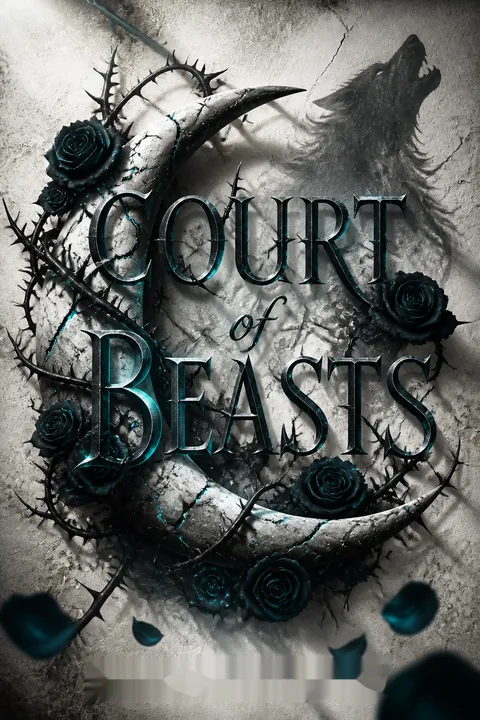
Court of Beasts is highly praised for its emotional depth, compelling characters, and intense action. Readers love the strong female lead Quinn and her complex relationships with the three male hunters. The book is described as a gripping paranormal romance with elements of enemies-to-lovers and reverse harem. Many reviewers were moved to tears by the storyline and connected deeply with the characters. The world-building and character development are frequently lauded. Some readers found the book lengthy, but most considered it an engaging, unputdownable read with satisfying spicy scenes.
People Also Read

Characters
Quinn
Reluctant pack heirQuinn is a fast, fierce werewolf and a senior beta of the Red Mountain Pack. She is determined to become alpha on her own merits and resists the idea that a mate should define her future. Her independence is both a source of leadership and a shield against the losses she has already suffered. She is protective of her pack, capable of strategic restraint, and more compassionate than her combative manner suggests. Her healing ability and connection to moon magic deepen her sense that she must use her strength in service of others. Quinn’s central tension is not between love and ambition, but between believing she must carry every burden alone and allowing trusted people to share it.
Vale
Reluctant hunter leaderVale leads a small, highly capable team of hunters and feels responsible for keeping his younger brother Lucien safe. Raised in an organization that treats monsters as enemies, he has learned to present control and certainty even when he doubts the work. His loyalty to his team is genuine, but his commitment to the hunters’ cause often masks grief and fear. Vale is practical, proud, and willing to take risks himself rather than ask others to do so. His relationship with Quinn unsettles the moral categories on which he depends, forcing him to distinguish inherited duty from the protection of actual innocents.
Lucien
The protective brotherLucien is Vale’s older brother, a formidable hunter who prefers caution to bravado and rarely feels comfortable with physical closeness. He is the team’s steadier observer, attentive to the emotional costs that Vale and Jai try to conceal. His loyalty to Vale is profound, shaped by childhood loss and the belief that protecting his brother is his purpose. Lucien is not naturally at ease with authority, yet he recognizes when obedience becomes complicity. His ability to name uncomfortable truths helps create the possibility of change within the team, even when doing so risks the only family he has left.
Jai
The scarred hunterJai is a fast, dangerous hunter marked by scars, volatility, and an appetite for the hunt that unsettles even his closest allies. He has spent much of his life trying to suppress a fierce inner drive, while the hunters’ discipline gives him a place to direct it. Beneath his aggression is a deep fear of abandonment and a stubborn loyalty to Vale and Lucien, the brothers who accepted him when others would not. Jai uses cruelty as armor, but he is capable of surprising tenderness when he trusts someone. His struggle centers on whether the identity he has been given can contain the truth he has been afraid to face.
Jang
Quinn’s adoptive alphaJang is the powerful, aging alpha of the Red Mountain Pack and Quinn’s adoptive father. He took her in after a devastating attack and raised her with affection, discipline, and confidence in her abilities. His authority is grounded in responsibility rather than fear, and he is willing to let Quinn lead even when doing so makes him anxious. Jang worries that her ambition may leave her isolated, but he does not want to force her into a life she has not chosen. His relationship with Quinn gives her both a model of leadership and a measure of love she struggles to believe she has earned.
Marie
The pack’s fierce heartMarie is Jang’s mate and Quinn’s adoptive mother. She is the warm, practical center of the pack, caring for its people while remaining capable of confronting anyone who threatens her family. Her scars carry the memory of an earlier attack, but they do not define her sense of worth. Marie understands that love can coexist with grief and that family bonds need not erase earlier ones. She supports Quinn’s choices while reminding her that accepting care is not a weakness.
Tertrim
The possessive rivalTertrim is a powerful beta who repeatedly pursues Quinn as a mate despite her refusal. His strength is real, but his desire to possess her is tangled with a hunger for status and authority. He treats persistence as entitlement and struggles to accept that Quinn’s power does not belong to him. Tertrim serves as a familiar threat within the pack itself: not an outsider seeking to destroy it, but a member whose ambition can undermine its rules.
Dom
Quinn’s steady allyDom is a protective beta with an easy manner and a strong sense of boundaries. He shares a casual, affectionate connection with Quinn without demanding that it become a permanent bond. His loyalty to the pack is practical: he helps organize events, supports Quinn’s decisions, and treats her authority as something she has earned. Dom’s warmth offers a contrast to the more volatile characters, but he is not merely a source of comfort. He is capable of standing firm when the pack is frightened.
White
The quiet elder betaWhite is an older, physically imposing wolf with a gentle temperament and a longstanding bond with Jang. He once had the strength to challenge for alpha but chose not to, believing Jang would lead better. White’s authority comes from judgment and service rather than ambition. He is especially kind to younger pack members and offers Quinn steady support as she grows into leadership, while carrying his own private history of loss.
Tate
The dissenting hunterTate is a high-ranking hunter known among her enemies as Angel. She is capable, direct, and willing to oppose her own organization when its violence targets innocents. Her willingness to approach Quinn without weapons signals both confidence and a desire to negotiate rather than threaten. Tate is not presented as a representative of every hunter; she is an individual trying to reclaim the ethical purpose her order has abandoned. Her offer gives Quinn a reason to consider limited cooperation without demanding immediate trust.
The commander
The hunter hardlinerThe hunters’ commander oversees the regional teams and measures success by reputation, obedience, and kills. He uses assignments and public humiliation to pressure Vale’s team into proving itself. His authority depends on reducing supernatural beings to targets and dismissing evidence that another threat may be more urgent. He represents an institution that has drifted from protection toward violence, though the book shows that not every hunter shares his priorities.
Sergeant Black
The ruthless reinforcerSergeant Black is an elite hunter leader called in when the local force fails to defeat the pack. Scarred and feared, he treats violence as both policy and spectacle. His arrival turns a local conflict into a confrontation with the wider hunters’ organization.
Sarah
The trapped pack runnerSarah is a werewolf and a lawyer in a nearby town. Under strain from a difficult case, she goes running alone and is caught in a hunter’s trap. Her danger prompts Quinn to cross the pack’s border and make the choice that brings the hunters into direct conflict with the pack.
Toby
The worried pack friendToby is a low-powered omega who depends on the pack’s care and gives Quinn the first warning that Sarah has not returned. His concern for Sarah shows how closely the pack’s members watch over one another, even when their own status leaves them vulnerable.
Elysia
The endangered witchElysia is a young witch trying to protect her coven from a demon that feeds on their magic. Her desperate summoning brings her into contact with Phrixius and a danger beyond her control, opening the epilogue’s separate conflict.
Phrixius
The summoned godPhrixius is a god whom Elysia summons for help against a supernatural threat. He is powerful and impatient with lesser beings, but he agrees to help the witch who has called and trapped him. His presence suggests that the danger surrounding Elysia may reach beyond ordinary magic.
Plot Devices
The mating hunt
Tests choice and belongingIn the werewolf pack, a mating ceremony sends eligible males after an unmated female, who must survive until sunrise to avoid an unwanted bond. For Quinn, the ritual makes a private choice publicly consequential: as a future alpha, her partner could affect her independence and authority. The ceremony frames the opening conflict and returns near the end, when she chooses to be caught by Vale, Lucien, and Jai. Its meaning changes from coercion she evades to commitment she freely accepts.
Hunter weapons
Equalize the human threatThe hunters use traps, electric weapons, wolfsbane, enchanted blades, guns, and stolen supernatural magic to counter werewolves’ speed and healing. These tools explain how Quinn can be captured and why pack defenses alone cannot ensure safety. Their presence also gives the former hunters practical knowledge that can help the wolves anticipate an attack. The weapons are more than equipment: they make an institutional imbalance visible, since disciplined humans can threaten a much stronger supernatural community by coordinating their methods.
Quinn’s moon healing
Turns mercy into leverageQuinn possesses a hidden ability to heal with moon magic. When Lucien develops a fatal infection from a feral’s bite, she uses that power to save him in exchange for a temporary promise that the hunters will leave her pack alone. Healing costs Quinn strength and makes her more visible as an unusual wolf, but it also creates a debt between enemies. Later, the same connection to moon power helps her transform the hunters who choose to become wolves and call supernatural allies when her pack faces destruction.
Jai’s trapped wolf
Breaks the human-monster divideJai carries a wolf inside him after a feral attack on his family, but for years he cannot shift and interprets his violent instincts as evidence that he is becoming evil. The condition isolates him from both humans and wolves and helps explain his ferocity without excusing the harm he causes. Quinn recognizes what is happening and gives him language for it. His hidden nature makes him a living challenge to the hunters’ claim that monsterhood and humanity are cleanly separated.
The necromancer evidence
Offers a failed diversionReports of eaten bodies lead the hunters to graveyards, where Vale, Lucien, and Jai capture a walking corpse and find signs of blood magic. They hope the evidence will redirect their organization toward a necromancer, a threat that endangers humans and supernatural beings alike. The commander refuses to postpone the wolf hunt because other hunters have already found the pack. The attempted diversion reveals that the institution’s priorities are not determined solely by danger, and it sets up the larger conflict hinted at in the epilogue.
Courts & Kings Series
About the Author
Other books by K.A. Knight


Download PDF
Download EPUB
.epub digital book format is ideal for reading ebooks on phones, tablets, and e-readers.








