


Plot Summary
A Wife Buried Alive
Dawn once chose Tim, a wealthy, polished man who gradually turned gifts into rules and affection into confinement. He controlled what she wore and ate, used his influence to return her to his penthouse after she sought help, and forced her into marriage.
At a gathering for his criminal associates, a young waiter notices her bruises and tries to help. Tim's men drag him away, then Tim beats Dawn, shoots the waiter, and stabs her in the stomach. Believing she is dying, Dawn clings to the thought of revenge. Tim has her body dumped and buried in the forest, but her death does not end her story.
The opening makes coercion concrete through the gradual conversion of luxuries into instruments of control. Tim does not begin as an obvious captor; his charm and gifts make the later confinement feel like a trap assembled one courteous gesture at a time. Dawn's failed appeal to the police also shows how private violence becomes civic power when authorities protect the abuser. Her final wish for revenge is not abstract vengeance. It is the one intention Tim has failed to discipline, and it becomes the first surviving piece of her selfhood.
The Forest Gives Her Back
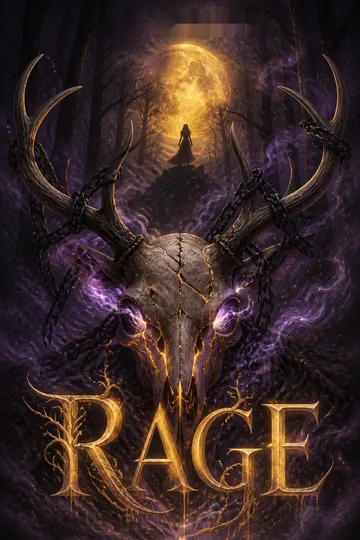
Nos, an antlered, centuries-old being who lives in the forest, feels a powerful call and follows it to disturbed ground. He finds a woman's hand pushing through the soil and draws Dawn from her grave. She is bloody, naked, and unmistakably dead, yet she breathes again. Rather than recoil from Nos's monstrous shape, Dawn studies him with wary curiosity.
She cannot remember who killed her, so Nos uses his magic to break through the fog around her memories. Dawn relives Tim's betrayal and murder, then releases a scream full of grief and rage. Its force reaches far beyond the clearing, summoning creatures she has never met.
Nos's rescue reverses the grave's meaning without erasing what happened there. The earth returns Dawn physically, but the recovered memory makes her confront the violence rather than waking into a clean slate. Her calm attention to Nos also establishes a striking change in her relationship to danger: the creature who should frighten her feels safer than the human who called himself her husband. The scream transforms private testimony into supernatural signal. Dawn's pain now has consequences across a hidden world, drawing other beings toward the life she has barely begun to reclaim.
The Call Breaks Chains
Dawn's cry reaches Dume, a minotaur held for centuries in an enchanted pit beneath a city. The call gives his beast enough strength to tear through weakening chains, climb out, and hunt for the woman in pain. It also reaches Griffin, a winged operative who resists the pull because he is pursuing a human trafficking case for the council.
Far away, Askaliarian, a sleeping dragon, wakes and later meets Dawn in a shared dream. He learns that she has died and that she intends to retaliate against her husband. Each man responds differently: Dume breaks free, Griffin tries to contain the call, and Aska begins making his way toward her.
The call makes Dawn a center of gravity before she understands her own nature. It does not simply assemble protectors; it exposes the different bargains each creature has made with power. Dume has been reduced to imprisonment, Griffin to service, and Aska to withdrawal. Their varied responses reveal that the bond is not a cure for their histories. It interrupts them. The story's romantic premise therefore arrives as pressure before comfort: these beings feel summoned by Dawn, yet they must decide whether to answer through choice rather than mere compulsion.
Hunger Takes a Face
Leaving Nos in the woods, Dawn stops a passing driver and accepts a lift to her former apartment building. When he turns predatory, an unfamiliar power takes hold: she kisses him and drains his life until he collapses as a withered shell. Nos rushes in and tears the man apart before he can reach her again.
Dawn is shaken by what she has done, but not enough to retreat from her new strength. Her body then changes into the dead driver's male likeness, clothes and all. At the penthouse, she finds Tim and his men still asleep after their celebration, steals weapons and cash, and tears open Tim's safe to take incriminating records.
Dawn's first use of power fuses survival, appetite, and violence so tightly that she cannot sort them into clean moral categories. She does not set out to kill the driver, yet the ability that saves her consumes him. Her shift into his form adds a second kind of agency: she can cross boundaries that once confined her to the role Tim assigned. The stolen records matter because they give her leverage beyond force. Her revenge begins to take shape as both bodily resistance and practical investigation, even as each new capacity brings risks she cannot yet predict.
Stacey Gets a Way Out
Dawn builds a plan to destroy Tim's money, status, and relationships before killing him. At a restaurant, she recognizes Stacey, a woman Tim has been abusing, and tells her that the apologies and presents will not make him change. Dawn gives Stacey money from Tim's wallet and directs her to a safe family farm, helping her leave the city before Tim can find her.
Dawn then returns to her own hunt, using the stolen paperwork to arrange a meeting with Marco, a crime boss connected to Tim. Marco drugs her during their negotiation and has her taken to a warehouse. Dawn wakes in a cage among women being held for sale.
Helping Stacey marks the first time Dawn uses her experience for someone else's escape rather than only for retaliation. The gesture is deliberately limited: she offers money, a destination, and urgency, but leaves the decision with Stacey. That respect for choice contrasts with the control both women have endured. Dawn's own plan remains punitive, however, and the meeting with Marco shows the cost of entering criminal systems armed only with evidence and confidence. Her compassion does not make her safe; it makes the stakes of the trafficking operation harder to ignore.
The Warehouse Below
Dawn studies her captors, then lures a guard into her cage and drains his life. His death triggers another shift, allowing her to wear his face and uniform. She uses the disguise to open the other cages, but one woman, who calls herself BB, insists on guiding Dawn below because the captors have taken supernatural women to a laboratory.
There, a doctor experiments on prisoners to force their powers to emerge. Griffin arrives while Dawn is changing and recognizes the mate bond, though she refuses to stop for him. She frees the captives, questions the doctor, and uses an antidote to return a drugged woman from wolf form to human. Griffin helps the group escape.
The warehouse turns Dawn's emerging abilities into a method of rescue, but the sequence refuses to make power effortless. Her transformation drains her, and the captives' fear means they do not immediately trust the person who has taken a guard's face. BB's decision to guide her gives the escape a needed partnership rather than a lone-hero structure. The laboratory also enlarges the danger: the captors are not merely selling vulnerable women, they are deliberately provoking supernatural abilities for unknown buyers. Griffin's arrival introduces a personal bond inside a crisis Dawn will not let eclipse the prisoners' needs.
Marco Meets His Prey
After escaping, Dawn tracks Marco to his nightclub and draws him into an alley. She forces him to explain that he and Tim have sold supernatural women to buyers known as The Others, who appear to be supernatural themselves. Dawn kills Marco rather than let him return to the club. Griffin arrives, and their attraction turns physical, though he resists admitting what the bond means.
Nos then finds them and identifies Griffin as another mate chosen by Dawn's call. Nos explains that she is a skinwalker whose developing powers let her borrow a partner's abilities, while Griffin reveals that he is a fallen Nephilim bound to the council. Dawn chooses to keep both men close and continue investigating.
Marco's death closes one immediate threat but opens a more disturbing question: who is purchasing the women and why? The revelation of two mates gives Dawn's private life the same unsettled shape as her supernatural identity. Neither man can simply claim authority over her; she is the decision-maker, even when their instincts push them toward possession or protection. Griffin's shame about his origins and Nos's patient certainty create contrasting forms of intimacy. The scene binds desire to disclosure, but it does not resolve the triangle. Instead, Dawn makes connection part of her investigation without surrendering her independence.
A Family of Outcasts
Dume follows the call from his prison and reaches Carmichael, a vampire who leads an alliance of supernatural outcasts. When witches attack Carmichael's home, Dume kills the coven and frees the people they have trapped, then prepares to continue toward his mate. Hunters and witches pursue him, using spells and a tracker to follow his movements.
He fights them, but repeated magic overwhelms him, and they capture him in enchanted restraints. Elsewhere, Aska travels toward Dawn after meeting her in dreams, seeking help from witches to remove a magical tracer. The two arriving mates remain separated from her by distance and danger, while Dume is taken to the same facility where Dawn will later be held.
Dume's return to the world is not a simple liberation. He escapes one prison only to become vulnerable to organized forces that understand how to restrain him. His rescue of Carmichael's people shows that his violence can serve protection, not only revenge, and offers a glimpse of belonging he has been denied. Aska's separate journey creates a parallel tension: both powerful beings move toward Dawn, yet neither controls the route. The widening net of witches, hunters, and supernatural trafficking suggests that the threat is coordinated, while the captives' different paths converge toward a new confinement.
Ray Names the Exchange
At Griffin's home, Dawn, Nos, and Griffin decide to trace Marco's network through Ray, the man who managed supernatural sales. Dawn drains Ray's life and takes his appearance, then uses his information to learn that a buyer will collect a woman at the docks the following night.
Griffin recruits Crystal, a sex worker, to pose as the captive, while Dawn impersonates Ray. At the exchange, the buyer's crew identifies Dawn as an impostor after Crystal reveals she was paid to take part. One of the men shoots Crystal dead. The others move to kill Dawn, but Griffin swoops in and carries her away before they can capture her.
The plan at the docks is a deliberate test of whether Dawn can turn imitation into intelligence without losing control of the situation. Ray's identity gets her inside, but it cannot disguise her from people who have a supernatural method of detecting their targets. Crystal's death exposes the human cost of improvisation: even a willing participant can become disposable once the buyers suspect a trap. Griffin's rescue is consequential because Dawn trusted him to watch from a distance, and he acts when that trust becomes a life-or-death obligation. The failed exchange gives the group proof of danger, not yet a name for its source.
Victoria's Criminal Bargain
Dawn brings the evidence against Marco and Tim to the crime network's leader, expecting Victor and discovering instead that the real authority is Victoria, a woman who uses a male stand-in to conceal her position. Victoria confirms that Marco and Tim stole from her organization and trafficked women without her consent.
She accepts Dawn's proof and agrees to hand Tim over, while promising to share any relevant findings about the supernatural buyers. Separately, Nos checks with the fae, wolf packs, and other groups, learning that women are disappearing across species. The evidence points beyond one criminal crew: The Others are supernatural, witches are assisting them, and even the council may be implicated.
Victoria's meeting gives Dawn a rare advantage: an alliance with someone powerful who recognizes the difference between an internal crime and an attack on her organization. Their agreement is transactional, but both women understand the personal meaning of a man using authority to harm women. The wider reports from Nos prevent the investigation from narrowing back to Tim alone. Disappearances among fae, wolves, and other communities turn the case into a political crisis. By raising the possibility of council involvement, the story makes power itself suspect, including the institutions that claim to govern the hidden world.
Tim Digs His Grave
Victoria delivers Tim to Dawn in the forest, restrained and bruised but still alive. Dawn makes him dig his own grave while Nos and Griffin stand nearby. Tim tries to bargain and then taunts her with what happened to her body after her death. Dawn refuses to let his words dictate the moment.
She tells him that he is no longer powerful enough to frighten her, then stabs him with the knife he used to kill her. Tim dies in the grave he dug, and the forest's animals gather around the body. Dawn leaves with her two mates, but before they reach the car, new vehicles arrive and supernatural force knocks her unconscious.
The grave scene gives Dawn control over the setting that once concealed her murder. She chooses the weapon, the pace, and the witnesses, transforming the place of her helplessness into the site of judgment. Tim's attempt to regain power through sexualized humiliation shows that his violence depends on making her experience herself through his terms. Dawn's answer is not forgiveness or recovery in a tidy sense; she simply refuses his authority over the present. The abrupt capture afterward prevents revenge from becoming closure. Her freedom has been reclaimed locally, but a larger system is already moving against her.
Veyo's Collection Room
Dawn wakes chained to a table before Veyo, a collector who says the council has requested her. He wants to know how she changes bodies and uses her abilities. Dawn refuses to cooperate and attacks when guards come close, killing two before a supernatural pendant shocks her into submission.
Veyo sends her to a reinforced cell, warning that survival may earn her a use to him. Inside, Dawn hears chains and hooves in the dark, then sees Dume, the minotaur who broke out of his ancient prison in answer to her call. His presence makes clear that the captors have gathered more than one powerful supernatural. Dawn is no longer alone, but both are trapped.
Veyo's interest turns Dawn's identity into a commodity, echoing the trafficking operation while placing the council's authority behind it. His calm language masks the same logic as the warehouse laboratory: a person matters because of what can be extracted from her. Dawn's resistance remains instinctive and costly, as the pendant can interrupt her power. The meeting with Dume converts the earlier supernatural call into a concrete consequence, linking their separate stories inside a shared cell. The ending offers solidarity, not escape, and leaves the central question unresolved: whether the institution meant to govern monsters is protecting them or collecting them.
Epilogue
Aska reaches the city after following Dawn's call across distance and danger. Witches have removed the tracer that allowed hunters to track him, but they warned him that the forces after his mate are unusually powerful. His council contact has also confirmed that supernatural women are disappearing and that unrest is spreading among the hidden races.
Aska arrives too late to prevent Dawn's capture, yet their bond tells him she is in danger. He drives into the city determined to find her, certain that whoever has taken her will face the full force of the dragon they awakened.
Aska's arrival widens the ending rather than resolving it. Dawn has found Dume in the cell, but another mate is still approaching from outside, carrying knowledge of the hunters and political unrest. His promise of retaliation mirrors Dawn's own opening resolve, though his scale is potentially catastrophic: the private search for one woman threatens to become a reckoning for an entire city. The epilogue also confirms that the disappearances are systemic, not an isolated criminal scheme. It closes on convergence, with the separated strands finally entering the same threatened landscape.
Analysis
Rage begins by presenting control as a sequence of ordinary permissions that have been stolen. Tim dictates Dawn's clothes, food, movements, and access to help; the supernatural plot then asks whether extraordinary power can return agency without reproducing the same possessive logic. Dawn's new abilities are not clean symbols of empowerment. Soul feeding can kill, shapeshifting exhausts her, and the mate bond arrives with coercive intensity. Her autonomy is shown less by having power than by deciding how to use it, whom to trust, and when to refuse protection.
The novel's monsters also complicate the moral boundary between human and supernatural. Tim's criminal circle sells women, while witches, hunters, and potentially council members use institutional language to justify capture and experimentation. Meanwhile, Nos's violence coexists with care, Griffin's brutality with private artistry, and Dume's destructive strength with defense of outcasts. The book treats monstrosity as both a bodily condition and a social label imposed by those who want to control others. That does not excuse harm; it asks who gets to define which violence is legitimate.
Dawn's relationships offer three contrasting responses to intimacy. Nos makes room for her decisions, Griffin tests whether she will stay when he exposes his shame, and Aska approaches through a dream bond before they meet. Their shared attachment is less a conventional rescue fantasy than an unstable negotiation among damaged people. Dawn is not healed by being desired. Instead, she insists that desire must coexist with her choices and her rage.
The ending refuses to close the larger conflict. Dawn kills the man who buried her, but the council's collector captures her and Dume, while Aska races toward the city. Personal revenge achieves a real consequence, yet it cannot dismantle the system trafficking supernatural women. The cliffhanger turns the story's question outward: whether the beings who claim to govern the hidden world will protect the vulnerable or treat them as valuable specimens.
Review Summary
Rage received mixed reviews, with an average rating of 4.09 out of 5. Many readers praised the dark fantasy elements, compelling characters, and steamy romance. They enjoyed the unique monster mates and the protagonist's revenge arc. Some appreciated the unconventional plot and world-building. However, others found the story confusing, poorly written, or too graphic. Critics cited issues with pacing, character development, and excessive violence. Despite polarized opinions, fans eagerly anticipate the sequel, while detractors advise caution due to mature content.
People Also Read


Characters
Dawn
The returned avengerDawn begins as a woman trapped in an abusive marriage and becomes the central force in a hidden supernatural conflict. Her defining traits are curiosity, defiance, and a refusal to confuse survival with surrender. She is impulsive, often funny at moments when others would freeze, but her jokes do not erase the damage she carries. Having been controlled by Tim, she is fiercely alert to anyone trying to decide what she can do or whom she can trust. Her new abilities make her dangerous, yet her choice to help Stacey and the warehouse captives shows that anger can coexist with care. Dawn seeks agency first, then learns how connection might exist without ownership.
Nos
The antlered forest godNos is an ancient being associated with animals, nature, desire, and death. Long isolation has made him watchful and unfamiliar with ordinary human life, but Dawn's presence awakens a tenderness he believed had vanished. He is physically terrifying and capable of extreme violence, yet he often gives Dawn room to choose rather than treating protection as permission to command her. His bond with the forest is intimate and reciprocal: animals carry warnings, and the land responds to his power. Nos's history includes grief and terrible acts, which he does not disguise from Dawn. He values honesty and steadfastness, and his deepest fear is losing the connection that has returned color to his existence.
Griffin
The council's fallen operativeGriffin is a winged supernatural operative whose work for the council leaves him guarded, violent, and suspicious of attachment. His history of forced service and punishment has taught him to expect that intimacy will become leverage. He often hides fear behind contempt and tests Dawn by pushing her away, then struggles when she sees through the performance. His practical skills make him valuable in the investigation, while his photographs and wood carvings reveal a private attention to beauty he rarely shares. Griffin is drawn to Dawn because she neither treats him as a weapon nor asks him to pretend he is harmless. Trust, for him, is not a soft feeling but a choice that costs him control.
Askaliarian
The dreaming dragonAskaliarian, usually called Aska, is a reclusive dragon who has withdrawn from a world he no longer recognizes. His awakening begins through dreams of Dawn, whose courage and anger intrigue him before they meet in person. He is ancient, proud, and accustomed to solitude, but he is also capable of loyalty to old friends and respect for human bonds. Aska's distinctive power over souls and darkness makes him formidable, while his unfamiliarity with modern technology gives his scenes an occasional dry humor. He regards the council and its politics warily, yet his journey toward Dawn forces him back into the world he had chosen to leave.
Dume
The imprisoned minotaurDume is a minotaur and former arena fighter known as the Beast of Cornacadia. Enchanted restraints and centuries of isolation have left him furious, suspicious, and hungry for retribution against those who imprisoned him. Beneath that ferocity, he can recognize loyalty and respond to a call for help. His connection to Carmichael's outcasts offers a glimpse of community beyond survival by combat. Dume's strength makes him a threat to his captors, but his long confinement also makes freedom unfamiliar and difficult to trust.
Tim
The polished abuserTim is Dawn's wealthy husband and a criminal associate who uses money, influence, and charm to mask coercive control. He isolates Dawn, dictates her appearance and behavior, and relies on powerful connections when she tries to escape. His public confidence depends on treating other people as possessions, especially women whose choices threaten his authority. Tim's polished presentation is not a separate self from his violence; it is the method that lets the violence pass as privilege for so long.
Marco
The trafficking brokerMarco is a criminal intermediary who works with Tim and operates a trafficking network beneath the protection of a larger organization. He is handsome, socially practiced, and accustomed to making danger look like a business negotiation. His confidence rests on the belief that money and connections can keep consequences at a distance. Marco's role connects Dawn's personal revenge to the broader trade in supernatural women.
Victoria
The concealed crime bossVictoria leads a criminal organization while allowing a male associate to serve as its public face. She is disciplined, strategic, and acutely aware of how men underestimate women in positions of power. Her rules forbid trafficking and crimes against women or children, not because she is gentle, but because she treats loyalty and family as the foundation of authority. She can offer Dawn a useful bargain without pretending that the two are friends.
BB
The captive who guidesBB is a captive who has survived months in the warehouse without surrendering her ability to observe or act. She is wary, direct, and unwilling to accept rescue as a reason to become helpless. Her knowledge of the facility helps Dawn reach the underground laboratory, and her humor briefly breaks through the numbness imposed by captivity. BB wants freedom, but she also wants the power to decide what happens next.
Stacey
The woman offered escapeStacey is another woman abused by Tim, still uncertain whether leaving him is possible. Dawn recognizes the bruises and familiar cycle of apology and renewed violence. Stacey's choice to accept help gives her a chance to start over with family outside the city. She is a brief but important counterpoint to Dawn: someone who can still take an offered exit before the danger closes around her.
Carmichael
The outcasts' organizerCarmichael is a vampire who has built a refuge and alliance for supernatural outcasts rejected by their own communities. He is resourceful, irreverent, and politically practical, able to recognize usefulness without reducing every relationship to it. His history with Dume earns him a measure of trust, and his organization offers a model of belonging based on mutual protection rather than shared species.
Veyo
The supernatural collectorVeyo is a polished, curious collector who seeks rare supernatural abilities and operates with the backing of powerful institutions. He treats people as acquisitions to be studied and potentially redirected toward a buyer. His courtesy makes his menace more disturbing: he can describe coercion as a professional arrangement and expect obedience as a matter of course.
Jean Paul
Aska's trusted human aideJean Paul maintains Aska's home, resources, and contacts through a family duty passed down across generations. He is capable, curious, and openly excited by the dragon's return, helping Aska navigate modern technology and travel.
Bayard
The fae kingBayard rules the fae and has known Nos for centuries. He is powerful and politically astute, but his concern for his people can make him resistant to change. He respects his daughter Isla's judgment even when it challenges his instincts, and he must weigh tradition against the danger facing his courts.
Isla
The fae warrior princessIsla is Bayard's daughter, a spirited princess who refuses to be reduced to a ceremonial figure. She trains as a warrior and thinks strategically about the survival of both fae courts. Her confidence and political insight make her a natural voice for cooperation when old rivalries threaten to divide her people.
Ashera
The king's fae protectorAshera is Bayard's loyal guard and a close friend of Nos. He values restraint, duty, and truth, speaking only when he believes his words matter. His reserve hides an emotional life he is reluctant to expose, especially where Isla is concerned.
Lucias
Aska's council allyLucias is a longtime friend of Aska who now serves on the supernatural council. He is burdened by political strain but remains willing to investigate unrest and share what he learns with someone he trusts.
Crystal
The paid decoyCrystal is a sex worker whom Griffin recruits to pose as a captive in the planned exchange. She is frank, practical, and willing to help for payment, but the operation exposes how little protection an agreement can offer once dangerous buyers suspect a deception.
Sean
The southeast wolf alphaSean leads the southeast wolf packs and holds a seat on the council. He is controlled and wary, shaped by a difficult childhood and by the responsibility of protecting his people. Reports of missing women provoke both his anger and his determination to investigate.
Plot Devices
The mate call
A bond that summons monstersDawn's supernatural scream reaches powerful beings across great distances and draws them toward her. The call wakes Nos's dormant emotions, frees Dume from enchanted imprisonment, disrupts Griffin's focus, and wakes Aska from a long sleep. It creates an immediate network among characters who have never met, while leaving each one responsible for how he answers. The bond also affects desire and grants Dawn access to aspects of her mates' power, making intimacy consequential as well as emotional.
Skinwalking
Borrowed bodies open locked doorsDawn can take another person's appearance, and later learns that her changing is connected to consuming energy and supernatural power. She uses a dead driver's likeness to move through the city and a guard's identity to escape the warehouse cages. The ability turns the body, once controlled by Tim, into a tool she can choose how to use. It also creates physical strain, hunger, and uncertainty about her limits. Veyo's interest shows that her power is valuable to those who see people as objects to collect.
Soul feeding
Desire becomes dangerous nourishmentDawn's new power lets her draw life and energy from others through intimate contact. At first it erupts without her understanding, killing a man who attacks her. Later, she learns that feeding can also sustain her supernatural changes and that contact with her mates can help meet her needs. This mechanism makes pleasure, survival, and violence difficult to separate. It also forces Dawn and her partners to negotiate limits, because an act that feels like nourishment can become fatal if she does not stop.
The supernatural trade
A sale exposes a wider conspiracyHuman criminals capture women, identify supernatural abilities, and pass their victims to buyers called The Others. The warehouse's cages and laboratory reveal the operation's methods, while Marco's records and Ray's planned exchange provide leads. The buyers appear to use supernatural powers and may be connected to witches and the council. This device expands Dawn's personal revenge into a collective crisis affecting fae, wolves, and other races. Each new clue widens the suspect pool instead of solving the case.
Enchanted restraints
Magic makes captivity endureThe story's captors rely on more than ordinary locks. Dume's chains suppress his shifting power, while Dawn encounters magical bindings, tracking spells, and pendants capable of disrupting supernatural abilities. These restraints show why physical strength alone cannot secure freedom. They also connect separate plots: the witches who imprisoned Dume, the hunters pursuing Aska, and the organization holding Dawn all use specialized means to contain their targets. Breaking a restraint therefore requires either an unusual bond, the right counter-magic, or a moment of vulnerability in the people enforcing it.
Her Monsters Series
About the Author
Other books by K.A. Knight



Download PDF
Download EPUB
.epub digital book format is ideal for reading ebooks on phones, tablets, and e-readers.








