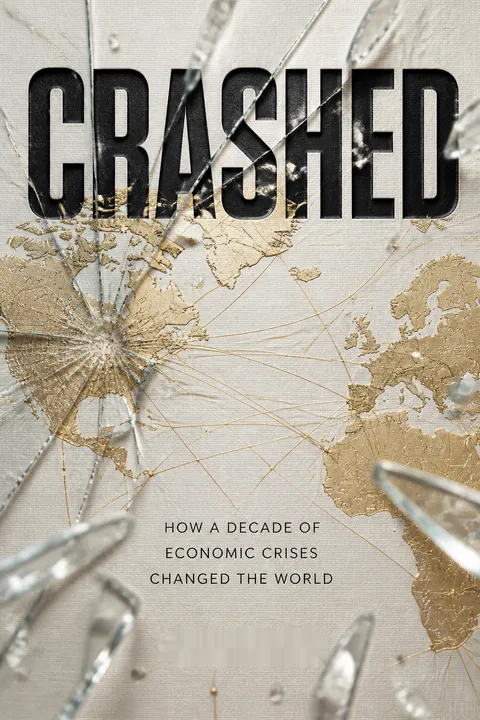


Key Takeaways
Follow bank balance sheets, not trade deficits, to locate systemic danger
The forecast missed the plumbing. Before 2008, many experts feared that US budget and trade deficits would trigger a dollar crisis, perhaps after China stopped buying American debt. Instead, the crisis began in US housing and spread through banks that borrowed and lent across borders. European banks were among the largest foreign lenders to the United States, even though Europe’s trade relationship with America looked modest by comparison.
Track connections, not averages. Tooze calls the needed lens macrofinance: studying the interlocking balance sheets of banks and other financial firms, rather than treating countries as separate economic islands. Net trade figures can conceal enormous borrowing and lending in both directions. A sudden funding shortage among banks can move faster than national deficits or trade balances suggest.
What's striking is how a change in the unit of analysis changes the story. National accounts are useful for trade and employment, but they can obscure who owes dollars to whom, and when those debts must be refinanced. Network analysis offers a useful parallel: a system's vulnerability depends not only on the size of each node, but on its connections and dependence on key hubs. That does not make national policy irrelevant. It shows why a country can look fiscally sound while its banks remain exposed to a crisis generated elsewhere.
Short-term funding turned ordinary mortgages into a worldwide bank run
Risk moved through funding. Securitization packaged mortgages into securities that could be sold to investors. In the 2000s, private lenders expanded this system into riskier loans, while banks increasingly held mortgage securities themselves. By 2006, about 70 percent of new US mortgages were subprime or otherwise unconventional. Their risks were magnified when banks funded long-term assets with short-term borrowing.
The run had no queue. Shadow banking means credit created through market-based channels outside ordinary, deposit-funded banking. Banks used asset-backed commercial paper, or ABCP, to borrow for a few months against pools of securities, and repo, short-term loans secured by collateral, to borrow overnight. When lenders stopped renewing that funding, firms could fail even without retail depositors withdrawing cash. The housing bust became a global crisis because funding vanished before the loans could slowly default.
This is a classic maturity mismatch: an institution owns assets that pay out over years but depends on lenders who can demand repayment tomorrow. Deposit insurance and a central bank can limit traditional bank runs, but market-funded institutions can face the same panic without a line of anxious customers. Securitization can distribute risk, yet it can also make chains of responsibility harder to see. The key question is not simply whether risk has moved, but whether anyone can identify and absorb it when short-term funding disappears.
The Fed stabilized a global dollar system it did not publicly own
Europe needed dollars. European banks had built large dollar businesses without matching dollar deposits or central-bank reserves. Before the crisis, their short-term dollar funding needs exceeded $2 trillion. When private markets froze, the ECB and Bank of England could supply euros and pounds, but not dollars on the scale required.
The Fed filled the gap. Liquidity swap lines are arrangements in which the Federal Reserve provides dollars to another central bank in exchange for that bank's currency, so it can lend dollars to local banks. At the crisis peak, about $580 billion was outstanding through the lines. Cumulative lending and repayment reached roughly $10 trillion, and the loans were repaid. The Fed had become the global lender of last resort, stabilizing foreign banks as well as American ones, largely outside public debate.
The swap lines reveal how monetary power follows the currency used in private contracts, not merely the borders of a state. The Fed acted because a collapse abroad threatened US institutions and markets too, so the intervention was self-protective as well as internationalist. Yet access was selective, based partly on judgments about which countries were prudent and significant. The episode therefore raises a lasting governance question: when a national central bank quietly protects a global system, who gets to decide the terms, and who is accountable for that choice?
Emergency rescues reveal whose losses governments treat as systemic
Intervention was unavoidable, but not neutral. Across the Atlantic, governments committed more than $7 trillion in loans, guarantees, asset purchases, and capital injections. In the United States, the Treasury sought $700 billion for TARP, and the state took control of Fannie Mae and Freddie Mac. After Lehman failed, the authorities rescued AIG, whose collapse threatened a web of financial contracts and counterparties.
Protection was uneven. The immediate priority was keeping banks and credit markets functioning, not preventing millions of home foreclosures. The rescues helped stabilize the system, but they also protected financial institutions and their creditors while households absorbed enormous losses. The crisis response was therefore both emergency management and a political decision about which failures counted as threats to everyone.
The strongest defense of the rescues is that a general financial collapse would have harmed workers and firms far beyond Wall Street. That systemic danger was real, not just a convenient slogan. The harder criticism concerns the distribution of protection and the limited demands placed on rescued institutions. Emergency policy can preserve a system while weakening trust in it. In this case, the public saw a state capable of acting at extraordinary speed for banks, but far less willing to offer comparable relief to distressed borrowers.
Europe shifted private bank losses onto sovereigns, then demanded austerity
A lender crisis became a borrower crisis. The wider eurozone disaster was not simply caused by governments spending too much. Banks had expanded private lending across borders, especially into property booms in Ireland and Spain. When the crisis hit, Ireland guaranteed 440 billion euros in bank liabilities, transferring private risks onto the state. Greece entered the crisis with serious public debt problems, but its debts were not the common cause of every country's distress.
Official loans often repaid creditors. In 2010, Greece received emergency financing while restructuring was ruled out. From May 2010 through 2014, Greece received 226.7 billion euros in European and IMF loans, but only about 11 percent went toward the government's own deficit. Much of the rest serviced debt or recapitalized banks. This pattern became known as extend-and-pretend: lending more to postpone recognition of losses that cannot be avoided.
The shift from private to public debt can be understood as a transfer of risk across balance sheets, but the transfer also changes who has power. A bank can negotiate commercially; a state under a loan program faces conditions that shape budgets, wages, and public services. Greece's own fiscal failures mattered, so the story is not one of an innocent borrower. Still, treating every crisis as a morality tale about government overspending obscures the private lending boom and the choices that made taxpayers responsible for its aftermath.
Build a banking union before a cross-border bank run tests sovereignty
The euro joined money before responsibility. Member states shared a currency and integrated financial markets, but lacked a common system for supervising, resolving, and insuring banks. Before the crisis, bank liabilities in several European countries were several times the size of national output. In Ireland, they reached about 700 percent of GDP. A national government could not credibly guarantee banks that large without risking its own solvency.
Banks and states pulled each other down. Tooze calls this feedback a doom loop: weak banks burden governments with rescue costs, while weak governments damage banks holding their debt. In 2012, ECB president Mario Draghi announced Outright Monetary Transactions, a conditional promise to buy government bonds if a country accepted an adjustment program. The promise calmed markets, but did not itself repair the economy or complete a banking union.
A currency union is a political arrangement, even when it is presented as a technical one. Shared money encourages cross-border lending, but when losses arrive, voters still expect national governments to protect them. The gap between integrated markets and national responsibility is therefore a design problem, not a temporary communications failure. Joint supervision and resolution can reduce that mismatch, but they also require agreement about shared liabilities. Fiscal rules alone cannot insure a banking system against a panic.
China's crisis response shifted economic weight east without displacing dollar power
Beijing moved fast. After exports collapsed and tens of millions of Chinese workers faced unemployment, the government announced a 4 trillion yuan stimulus, then about $586 billion. The full response also relied on a sharp expansion of bank lending. Combined fiscal measures and lending beyond the previous growth trend amounted to roughly 19 percent of GDP in 2009. China still grew by 9.1 percent that year, helping support demand around the world.
Multipolarity did not mean equal power. Asian economies and other emerging states also used reserves, stimulus, and, in South Korea's case, a Federal Reserve dollar swap line. Their responses showed greater capacity than during the 1990s crises. But the Fed's support reinforced the dollar's central role, even as China's economic weight grew. The system had more centers of action, but not a level playing field.
China's response demonstrates that state capacity can blunt a shock when officials control banks, investment priorities, and local administrations. It also shows the costs of a rapid response built heavily on credit and construction, including renewed dependence on investment-led growth. The episode complicates the familiar choice between markets and states: China used state direction to stabilize a market economy deeply connected to global trade. Its rise strengthened multipolarity, while dependence on dollar finance kept American monetary power central.
Treat financial agreements as geopolitical acts, not neutral paperwork
Economic integration carried strategic weight. In 2008, Russia's war with Georgia unfolded as NATO membership for Georgia and Ukraine was being debated. Years later, the EU's proposed Association Agreement with Ukraine promised regulatory and trade integration, but also closer cooperation on foreign and security policy. It conflicted with Russia's Eurasian Customs Union, making a technical trade agreement part of a geopolitical contest.
The financing terms mattered. In late 2013, the EU and IMF offered Ukraine 610 million euros alongside demands for steep cuts, higher gas prices, and currency devaluation. Russia offered a $15 billion loan and cheaper gas. President Yanukovych chose the Russian offer, protests followed, and he fled after a violent confrontation. Russia then seized Crimea and backed separatists in eastern Ukraine. The crisis cannot be reduced to economics, but financial terms shaped the choices available.
Conditional loans and trade agreements are often described as technical packages, yet they can shift a country's alliances and narrow its domestic choices. In Ukraine, the EU's offer did not match the urgent scale of the financing problem, while Russia could offer immediate support with strategic strings attached. That does not make outside powers the sole authors of Ukrainian politics. Ukrainian divisions, protest, and political agency were central. The episode shows how financial leverage becomes geopolitical when institutions and security commitments overlap.
When bank balance sheets heal before households, populist challengers gain ground
Recovery did not reach everyone. Between 2007 and 2010, the median US household's wealth fell from about $107,000 to $57,800, and 9.3 million families eventually lost homes through foreclosure, surrender, or distress sale. Banks stabilized sooner than many households. In Europe, austerity prolonged economic pain, with youth unemployment exceeding 50 percent in Greece and Spain at the crisis peak.
Political anger found different outlets. The crisis helped create space for movements on the Left, such as Syriza and Podemos, and on the Right, including Brexit's advocates and Donald Trump. These movements drew on more than economic hardship: immigration, national identity, and distrust of political elites also mattered. The central lesson is not that financial distress mechanically produces one ideology, but that unequal recovery makes established parties easier to reject.
Economic losses matter politically through stories about fairness, identity, and who receives help. A foreclosure, an insecure job, or a shrinking public service can become evidence that the rules favor someone else. That mechanism helps explain why post-crisis movements differed sharply across countries rather than forming one unified revolt. It also cautions against treating populism as either pure economic grievance or mere irrationality. Material insecurity can intensify cultural conflict, while political entrepreneurs decide how that anger is named and directed.
Analysis
Crashed argues that 2008 was not a national housing mishap that happened to spread. It was a failure in a dollar-centered network of banks whose cross-border balance sheets had grown faster than the institutions meant to govern them. That shift in perspective is the book's strongest contribution: it explains why a US mortgage shock threatened European banks, why the Fed became a global backstop, and why trade balances alone could not reveal where the danger lay.
The narrative then turns crisis management into political history. The United States contained the immediate collapse through rapid, large-scale action, but its support flowed first to financial institutions, while households absorbed foreclosure and unemployment. Europe faced the same interconnected banking shock without a common crisis authority. Its leaders delayed loss recognition, converted private liabilities into public obligations, and imposed austerity that made recovery harder. The result was not simply a contest between Keynesian and conservative doctrines. It was a struggle over who would bear losses, who could make binding decisions, and whether voters could change economic policy.
Tooze's account is especially useful because it holds structure and contingency together. Dollar dependence, bank leverage, and the euro's incomplete design constrained policy, but they did not dictate each outcome. Lehman's failure, the refusal of common European support, and Draghi's bond-market commitment were consequential choices. One limit is that a narrative centered on elite decision makers can make mass experience feel like consequence rather than cause. The book does address foreclosures, unemployment, protest, and electoral revolt, but the machinery of finance receives more analytical attention than household political organization. Its larger warning remains persuasive: financial stability can be restored without restoring legitimacy, and a system that repeatedly asks the public to absorb private losses should not be surprised when its political foundations weaken.
Review Summary
Crashed: How a Decade of Financial Crises Changed the World is praised as a comprehensive, insightful analysis of the 2008 financial crisis and its global repercussions. Readers appreciate Tooze's detailed examination of economic, political, and geopolitical factors, though some find the technical jargon challenging. The book's global perspective and exploration of interconnected markets are highlighted as strengths. While some reviewers note its density and length, many consider it essential reading for understanding contemporary political economy and the events that shaped the past decade.
People Also Read

Glossary
Macrofinance
Bank balance sheets at scaleAn approach to international economics that examines the connected balance sheets, funding, and leverage of financial firms, rather than focusing mainly on national trade and budget totals. It helps explain how a shortage of funding can travel rapidly between banks and across borders, even when a country's trade figures appear healthy.
Shadow banking
Market-funded credit outside depositsCredit creation through market-based channels that do not rely on ordinary insured bank deposits. In the crisis, these channels included securities, money market funds, asset-backed commercial paper, and repo borrowing. They could fund large portfolios with short-term money, making them vulnerable to runs when lenders refused to renew funding.
Asset-backed commercial paper (ABCP)
Short-term asset-backed borrowingA short-term debt instrument issued by a bank-sponsored vehicle and backed by assets such as mortgages, car loans, or credit card debt. Investors bought ABCP as a place to hold cash, often expecting repayment within months. When confidence in the underlying assets or sponsoring bank weakened, investors stopped rolling over the paper, rapidly cutting off funding.
Repo
Short-term collateralized borrowingA repurchase agreement is a short-term loan secured by a security. A borrower sells collateral for cash and agrees to buy it back later at a slightly higher price. Banks used repo to finance large portfolios, sometimes overnight. If lenders increased the required collateral or refused to renew the loan, the borrower could face a sudden funding crisis.
Liquidity swap lines
Central-bank currency exchangesAgreements through which one central bank provides its currency to another central bank in exchange for the recipient's currency, with the transaction later reversed at an agreed exchange rate. During the crisis, the Federal Reserve used swap lines to supply dollars to selected central banks, which then lent those dollars to banks unable to borrow them in private markets.
Global lender of last resort
Emergency dollar backstopA central bank that supplies liquidity when private funding markets seize up, preventing otherwise viable financial institutions from failing for lack of cash. In 2008, the Federal Reserve performed this role beyond the United States by lending dollars directly to some foreign banks and through swap lines to partner central banks.
Extend-and-pretend
Delay recognizing insolvencyA crisis response that provides new loans or extends repayment terms instead of promptly restructuring debts that cannot realistically be repaid. In the eurozone, emergency loans helped governments meet obligations to existing creditors while austerity was imposed on borrowers. The approach postponed recognition of losses and shifted more risk onto public institutions and taxpayers.
Doom loop
Bank-sovereign feedback spiralA reinforcing cycle in which weak banks threaten government finances because the state may need to rescue them, while weak governments damage banks that hold their bonds. The link makes each side less credible and more expensive to fund. In Europe, the absence of shared banking institutions allowed this feedback to intensify across national borders.
Outright Monetary Transactions (OMT)
Conditional ECB bond backstopA European Central Bank program announced in 2012 that offered to buy a eurozone country's government bonds under specified conditions, including acceptance of an adjustment program. The commitment helped calm bond markets by signaling that the ECB could counter destabilizing panic. It did not itself resolve debt burdens or provide a broad fiscal stimulus.
FAQ
What is Crashed: How a Decade of Financial Crises Changed the World by Adam Tooze about?
- Comprehensive global crisis history: The book provides an authoritative narrative of the 2007–2009 global financial crisis, tracing its origins, development, and worldwide consequences across the US, Europe, China, and emerging markets.
- Interconnected financial and political analysis: Adam Tooze explores not just the economic mechanisms but also the political, social, and geopolitical dimensions, showing how the crisis reshaped global power and governance.
- Long-term impact: The book situates the crisis within a broader historical context, examining its effects on inequality, political polarization, and the rise of populism and nationalism.
Why should I read Crashed by Adam Tooze?
- In-depth, interdisciplinary insight: Tooze combines economics, history, and political science to offer a nuanced understanding of the crisis and its aftermath, making it valuable for both experts and general readers.
- Global perspective: Unlike many accounts, the book treats the crisis as a worldwide event, connecting developments in the US, Europe, China, and beyond.
- Relevance to current events: The analysis helps readers understand ongoing issues like Brexit, the rise of Trump, and the challenges facing global economic governance.
What are the key takeaways of Crashed by Adam Tooze?
- Financial crises are global: The 2007–2009 crisis was a systemic failure involving interconnected financial systems, not just a US housing bubble.
- Political choices matter: Crisis management depended on political leadership and coalitions, with decisions like bailouts and ECB interventions shaping outcomes.
- Inequality and polarization: The crisis deepened economic disparities and undermined trust in traditional parties, fueling populist movements and challenging democratic capitalism.
- Limits of global governance: The crisis exposed the fragility of international institutions and the difficulties of coordinated responses in a multipolar world.
How does Adam Tooze explain the causes and unfolding of the 2007–2009 financial crisis in Crashed?
- Shadow banking collapse: The failure of key components like repo markets, asset-backed commercial paper, and credit default swaps triggered a loss of confidence and liquidity.
- Excessive leverage and risky bets: Investment banks and European institutions took on huge risks, relying on short-term funding that evaporated during the crisis.
- Global dollar shortage: European banks faced severe dollar funding shortages, which the Federal Reserve addressed through unprecedented swap lines.
- Systemic interconnectedness: The crisis quickly spread across borders due to the deep integration of global finance.
What role did the Federal Reserve play during the global financial crisis according to Crashed by Adam Tooze?
- Global lender of last resort: The Fed provided trillions in liquidity to both US and foreign banks via currency swap lines, stabilizing the dollar-based global system.
- Innovative crisis management: It created emergency facilities and implemented unconventional policies like quantitative easing to prevent systemic collapse.
- Political and legitimacy challenges: The Fed’s actions, often conducted with limited transparency, raised questions about democratic accountability and the concentration of financial power.
How does Crashed by Adam Tooze describe the eurozone crisis and its connection to the 2008 financial crisis?
- Direct aftershock: The eurozone crisis was a delayed consequence of the 2008 meltdown, rooted in the fragility of European banks and their funding structures.
- Structural weaknesses: The eurozone’s design lacked mechanisms to handle banking and sovereign debt crises, leading to a “doom loop” between banks and states.
- Austerity and political fallout: The response emphasized fiscal discipline, deepening recessions in peripheral countries and fueling political unrest and populism.
What is the significance of the dollar and the global financial system in Crashed by Adam Tooze?
- Dollar as global anchor: The US dollar remains central to global trade and finance, with many currencies pegged to it and international transactions denominated in dollars.
- Fed’s pivotal role: The Federal Reserve’s willingness to provide dollar liquidity worldwide was crucial in containing the crisis and stabilizing markets.
- Political implications: The book highlights the political nature of global finance, as the Fed’s actions had far-reaching consequences for democratic accountability and international relations.
How does Adam Tooze explain the rise of political populism and nationalism after the financial crisis in Crashed?
- Economic dislocation and inequality: The crisis exposed and worsened deep inequalities, especially among working-class and rural populations, fueling social despair.
- Political realignment: Disillusionment with traditional parties led to the rise of populist and nationalist movements in the US and Europe, challenging the established order.
- Crisis of governance: Dysfunctional institutions and partisan deadlock undermined trust in democracy and contributed to anti-establishment sentiments.
What is the “secular stagnation” thesis discussed in Crashed by Adam Tooze?
- Chronic demand shortfall: Larry Summers’ “secular stagnation” thesis argues that the US and other advanced economies face persistently low growth due to insufficient demand for investment relative to savings.
- Policy implications: Traditional monetary policy and short-term stimulus are inadequate; sustained public investment and government activism are needed to boost growth.
- Historical context: The thesis challenges the assumption of natural economic rebound, suggesting that recent growth depended on financial bubbles rather than healthy fundamentals.
How does Crashed by Adam Tooze analyze the role of China in the global economy post-2008?
- Anchor of globalization: China emerged as a stabilizing force and major voice in global economic governance, especially after its massive stimulus in 2008–2009.
- Financial vulnerabilities: Despite growth, China faced internal risks like overcapacity, shadow banking, and capital flight, culminating in the 2015 yuan panic.
- Interdependence with the US: China’s financial stability became increasingly tied to US monetary policy, with Fed decisions impacting China’s currency and capital flows.
What are the main critiques of economic policy and regulation in Crashed by Adam Tooze?
- Regulatory failures: Policymakers and regulators failed to recognize the risks in the new market-based banking model and shadow banking system.
- Deregulation and oversight gaps: Deregulation, reliance on private risk models, and inadequate supervision encouraged excessive leverage and risk-taking.
- Political taboos: There was reluctance to confront the dangers of financial innovation, with warnings dismissed as politically inconvenient or “Luddite.”
What are some of the best quotes from Crashed by Adam Tooze and what do they mean?
- “We do regime change better than the Americans.” Reflects the view that Germany orchestrated political changes in Greece and Italy to enforce fiscal discipline, highlighting the political nature of the crisis.
- “The crisis will not be solved all in one go, [and] it is certain that it will take us a decade to get back to a better position.” Angela Merkel’s statement underscores the long-term, incremental approach to the eurozone crisis.
- “Within our mandate, the ECB is ready to do whatever it takes to preserve the euro.” Mario Draghi’s pledge marked a turning point, signaling the ECB’s commitment to maintaining the eurozone’s integrity and calming markets.
About the Author
Other books by Adam Tooze
Download PDF
Download EPUB
.epub digital book format is ideal for reading ebooks on phones, tablets, and e-readers.








