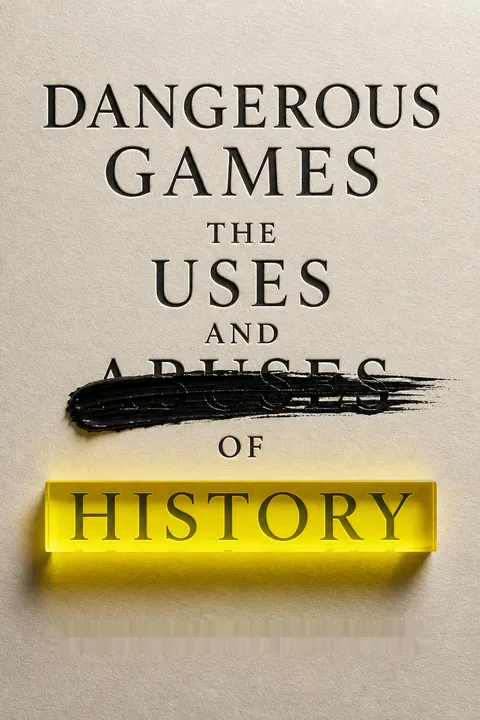


Key Takeaways
Treat the past as an active force, not a sealed archive.
The present has layers. History shapes more than personal identity. It influences institutions, loyalties, fears, and the assumptions people bring to political choices. Leaders who claim to start from scratch often reproduce familiar patterns: Napoleon built a court modeled on the Bourbons, while Soviet leaders occupied the Kremlin, once home to the czars.
Old conflicts can thaw. During the Cold War, tensions among groups and nations appeared frozen beneath the larger superpower conflict. After it ended, suppressed national ambitions and grievances resurfaced, especially in the breakup of Yugoslavia. Calling the violence there the result of ancient hatred made it seem inevitable and obscured the role of leaders such as Slobodan Milošević.
The distinction between explaining a conflict and excusing it is essential. History can show why a grievance feels urgent without making violence unavoidable or morally justified. The book’s image of old pressures reappearing also points to institutional continuity: new leaders inherit arrangements and habits they did not choose, but they remain responsible for what they do with them. The past constrains the present; it does not write its script.
Notice when nostalgia turns history into an escape from uncertainty.
Comfort edits complexity. When the present feels unstable, people often imagine an earlier world as simpler and more virtuous. The nostalgic small town has no hunger or conflict; the remembered past becomes a refuge rather than an account of what happened. Different political camps can idealize different eras, from traditional community life to the days of powerful labor movements.
Heroes get cropped, too. Many people remember Winston Churchill chiefly as the leader who stood against the Axis powers. That image leaves out his disastrous Gallipoli campaign and other failures. In North America, politicians have invoked the heroic Churchill while avoiding the less flattering parts of his record. Such selective remembrance reveals what people want from the past, as much as what the past contained.
Nostalgia is not simply a mistake about dates or details. It is a way of managing present anxiety by making yesterday feel coherent. That emotional function deserves recognition, but it also makes nostalgia politically useful: a leader can borrow the authority of a celebrated figure while quietly discarding inconvenient parts of the comparison. The practical test is to ask what has been omitted, and whose losses disappear inside the appealing version.
Ask who belongs in the story before accepting a shared identity.
Groups tell themselves into being. Benedict Anderson’s term “imagined communities” describes large groups, such as nations, whose members will never all meet but still feel connected. Shared history helps create that bond. The familiar story of Paul Revere’s midnight ride, for example, often presents a lone hero. The fuller account shows Revere working within a coordinated network of messengers.
Inclusion changes the picture. After the Civil War, white Southern institutions promoted a version of the past that minimized slavery and celebrated the Confederacy. Black teachers and historians challenged that account, and later public museums and commemorations began acknowledging Black history. A shared story can build belonging, but it can also enforce boundaries around who counts and whose experience matters.
The idea of a shared past is not inherently fraudulent. Communities can preserve genuine memories of achievement, loss, and injustice. The danger lies in treating one account as natural and complete, especially when institutions decide which stories enter textbooks, monuments, or museums. Asking who is missing is more useful than simply labeling a national story true or invented. It turns identity from a fixed inheritance into a question open to evidence and revision.
Treat historical claims as arguments, not title deeds.
The past can mobilize claims. Nationalists often reach backward to make present-day borders seem ancient and inevitable. In Greece, supporters of the “megali idea” imagined a restored Greek realm based on earlier maps. In 1919, Greek forces entered Asia Minor to assert those claims. The campaign ended in disaster, driving hundreds of thousands of Greeks from their homes and contributing to the displacement of Turks in the opposite direction.
Old maps rarely settle disputes. Serbian nationalists also drew on the medieval Battle of Kosovo, presenting it as proof of a continuing struggle and a future national destiny. Yet the battle’s original meaning was less clear-cut than later accounts suggested. Since populations, rulers, and borders have changed repeatedly, historical presence alone cannot decide who has a rightful claim today.
Historical evidence can matter greatly in disputes over land, especially where treaties, forced transfers, or suppressed communities are involved. But evidence of past presence is not the same thing as an uncontested modern entitlement. Once every side searches for its most expansive historical boundary, older maps become weapons rather than explanations. A sound argument has to say which period counts, why it counts, and how the rights and lives of people living there now enter the decision.
Pair historical apologies with concrete repair in the present.
Responsibility needs a link. MacMillan distinguishes cases where the connection between harm and remedy is direct from apologies that mainly serve current politics. Swiss banks profiting from wealth seized from Jews, or governments compensating Japanese Canadians and Japanese Americans whose property was taken during World War II, present clear grounds for redress.
Words can substitute for action. South Africa’s Truth and Reconciliation Commission gathered testimony about apartheid and could grant amnesty to witnesses. It exposed abuses and helped the country face its record, though reparations remained slow and amnesty remained unpopular with many victims. Australia’s 2008 apology to Aboriginal people acknowledged deep harm but offered few specifics for addressing present inequalities. An apology matters most when it accompanies meaningful change.
An apology can recognize victims in public, establish responsibility, and make previously suppressed experience part of a society’s account of itself. It can also provide political closure without changing the conditions that carry an injustice forward. The book’s examples suggest a useful distinction: symbolic recognition has value, but it is not a substitute for restitution, institutional reform, or material support where those are warranted. The remedy must fit the harm, rather than merely satisfy the audience watching the apology.
Treat vivid memories as testimony to test, not verdicts.
Memory is not a recording. People can remember an event vividly and still get important details wrong. The American statesman Dean Acheson recalled being in President Franklin Roosevelt’s office on the day the United States froze Japanese assets. His secretary checked the records and found that the other official Acheson remembered being there had not even been in Washington.
Groups edit their memories, too. Public understanding of World War I shifted from honoring the dead as defenders of civilization to remembering them as victims of a futile struggle. Maurice Halbwachs called shared beliefs about a group’s past “collective memory.” Such memories can be rooted in real events, but present concerns shape what communities emphasize, revise, or forget.
Memory is indispensable because records are incomplete and many experiences leave no official paper trail. But vividness alone cannot establish accuracy, and repeated retelling can make a version feel more settled than the evidence warrants. The answer is not to discard witnesses, but to compare testimony with documents, other accounts, and context. This approach respects personal experience while avoiding the opposite error of treating recollection as either infallible or worthless.
Demand evidence, sequence, and inconvenient context from history.
Simple causes can mislead. A once-common account blamed the Treaty of Versailles for making another world war inevitable. MacMillan argues that this story overlooks facts: Germany’s reparations burden was less crushing than commonly claimed, and the country paid only part of what was demanded. The Great Depression and a series of political decisions, including the choice by German elites to bring Hitler into power, also mattered.
Good history tests its own story. Professional historians can examine archives, compare evidence, and distinguish what happened from later interpretations. That does not make them infallible: historians have also written national myths. But careful accounts include awkward facts and uncertainty, rather than turning the past into a morality play with one cause and one villain.
The strongest historical account is not necessarily the one with the most qualifications. It is the one that can explain why its evidence supports its claims, while showing what remains uncertain. This standard also guards against a false choice between expert authority and popular memory. Training matters, but credentials do not replace transparent reasoning. Readers should look for clear chronology, evidence that could challenge the argument, and a serious account of competing causes.
Use historical analogies to ask questions, not dictate answers.
Analogies focus attention. Before the 2003 invasion of Iraq, leaders often invoked the successful occupations of Germany and Japan after World War II. But those cases involved defeated enemies, extensive planning, and large forces on the ground. The earlier British occupation of Iraq offered a more cautionary comparison: British officials expected an easy task, yet faced widespread revolt in 1920 and years of difficulty.
A comparison can mislead. The Munich agreement of 1938 became shorthand for appeasement, but applying that label does not prove that talking to a current adversary is weakness. Historical analogies help identify possible risks and relevant questions. They become dangerous when decision-makers select only the past that supports a policy they have already chosen.
An analogy is a tool for sorting a complicated situation, not a prediction machine. Its value depends on naming both similarities and differences. The Iraq example shows how a comforting comparison can hide the conditions that made an earlier outcome possible. Decision-makers should ask what the analogy leaves out, what evidence would weaken it, and whether another historical case points in a different direction. Competing comparisons are a safeguard against false certainty.
Use history to cultivate humility, not certainty.
Authority can fail spectacularly. In 1893, British Vice Admiral George Tryon ordered two lines of ships to turn toward each other. Officers warned that the maneuver would cause a collision, but Tryon did not accept the warning. His flagship sank, killing him and 357 sailors. The story is not only about one commander’s error; it also asks how a system permits confidence to silence calculation.
The past unsettles assumptions. Studying other societies and earlier eras shows that people have organized families, politics, and values differently. That does not mean every value is equally defensible. It does mean that present beliefs should be examined rather than assumed to be timeless. History offers no automatic blueprint, but it can teach readers to question sweeping claims, test evidence, and consider alternatives.
Historical humility is not indecision. It is a disciplined awareness that leaders can be wrong, that familiar values have changed, and that a confident narrative may omit crucial evidence. The Tryon disaster makes the institutional point especially clearly: dissent only helps when a system allows warnings to be heard and acted upon. Understanding past societies also need not collapse into moral relativism. Context can clarify why people acted as they did without removing the responsibility to judge the consequences.
Analysis
MacMillan’s central argument is that history is not a neutral storehouse from which the present retrieves facts. It is an active relationship between evidence, memory, identity, and power. Communities use the past to explain who belongs, justify claims, mourn losses, and imagine futures. Those uses are not automatically abuses. Acknowledging the history of dispossession or exclusion can correct omissions and support legitimate redress. The danger begins when a partial story is presented as complete, or when a claim of ancient continuity is used to make present political choices appear inevitable.
The book’s most useful distinction is between historical explanation and historical instruction. The past can reveal how a conflict developed, expose assumptions, and suggest questions about likely consequences. It cannot supply a ready-made answer, because comparisons depend on which features are selected and which are ignored. Invoking Munich, Versailles, or postwar Germany may clarify an argument, but none can decide a new policy without analysis of the differences.
MacMillan also makes a case for accessible professional history, while recognizing that historians themselves have helped construct national myths. Expertise is valuable not as a monopoly on interpretation, but as a practice: checking sequence, weighing sources, and resisting evidence that flatters a preferred story. This standard should apply equally to official accounts, eyewitness memories, popular histories, and scholarly claims. The book’s emphasis on complexity should not be mistaken for moral neutrality. A fuller account can distinguish context from excuse, and recognize victims without making inherited guilt limitless. Its civic purpose is more demanding than either patriotic reassurance or automatic condemnation. It asks readers to notice how stories serve the present, examine what they leave out, and remain alert to leaders who claim that history has already settled what must be done.
Review Summary
Dangerous Games receives mixed reviews, with readers appreciating MacMillan's exploration of history's uses and abuses. Many find the book accessible and thought-provoking, praising its diverse examples and emphasis on critical thinking. However, some criticize its superficiality and repetitiveness. Readers value MacMillan's insights on how history shapes identity and nationalism, and her warnings against misusing historical narratives. The book is seen as a useful introduction to historiography, though some desire more in-depth analysis of specific cases.
People Also Read




Glossary
collective memory
shared account of the pastA community’s shared understanding of its past, shaped by the events it remembers and the meanings it assigns to them. The term is associated in the book with sociologist Maurice Halbwachs. Collective memory is often grounded in real events, but its emphasis can change as a group’s present identity and concerns change.
imagined communities
large groups felt as connectedBenedict Anderson’s term for large communities, especially nations, whose members will never all know one another personally but nevertheless imagine themselves as part of a shared group. Symbols and accounts of common history help create that bond. The term highlights how national belonging is socially formed, rather than simply inherited as an eternal fact.
megali idea
vision of expanded Greek nationhoodThe Greek nationalist vision of restoring a larger Greek realm based on the reach of earlier Greek power. In the book, the idea informed claims to territory beyond modern Greece, including parts of Asia Minor. Its influence helped motivate the 1919 Greek military campaign there, which ended in defeat and contributed to mass displacement.
pacto del olvido
agreement to set conflict asideA Spanish phrase meaning “pact of forgetting,” used for the unspoken understanding during Spain’s transition to democracy after Franco’s death that the trauma of the Civil War and the repression that followed would not be reopened. The later public investigation of mass graves and dictatorship shows how such silence can preserve stability for a time while leaving difficult histories unresolved.
FAQ
What is "The Uses and Abuses of History" by Margaret MacMillan about?
- Explores history’s dual role: The book examines how history is both used and misused in personal, national, and international contexts.
- Analyzes history’s influence: MacMillan discusses how history shapes identities, justifies actions, and influences political decisions.
- Warns against distortion: The author highlights the dangers of manipulating or oversimplifying history for ideological or political gain.
- Encourages critical engagement: The book advocates for a careful, skeptical, and nuanced approach to understanding and applying history.
Why should I read "The Uses and Abuses of History" by Margaret MacMillan?
- Understand history’s relevance: The book demonstrates why history matters in contemporary society, politics, and personal identity.
- Learn to spot manipulation: It equips readers to recognize when history is being distorted or weaponized for present-day agendas.
- Gain critical thinking tools: MacMillan provides frameworks for evaluating historical claims and encourages skepticism toward grand narratives.
- Applicable to current events: The book’s insights help readers interpret ongoing debates about memory, identity, and national myths.
What are the key takeaways from "The Uses and Abuses of History" by Margaret MacMillan?
- History is powerful and dangerous: It can unite or divide, justify or condemn, depending on how it’s used.
- Memory is selective and malleable: Both personal and collective memories are shaped by present needs and can be unreliable.
- National myths are constructed: Nations often invent or embellish histories to foster unity or support political claims.
- Critical engagement is essential: Readers should question sources, seek multiple perspectives, and be wary of simplistic historical analogies.
How does Margaret MacMillan define the "uses" and "abuses" of history?
- Uses of history: History can provide understanding, context, and lessons for the present, helping societies and individuals make sense of themselves and others.
- Abuses of history: History is abused when it is manipulated, oversimplified, or falsified to serve political, ideological, or personal interests.
- Examples of abuse: The book details cases where history has been used to justify violence, exclusion, or territorial claims.
- Call for responsibility: MacMillan urges historians and the public to handle history with care, skepticism, and humility.
What are some major concepts or themes in "The Uses and Abuses of History" by Margaret MacMillan?
- Collective memory vs. history: The distinction between what societies remember and what actually happened.
- Nationalism and identity: How history is used to build or reinforce national and group identities.
- Historical analogies: The risks and limitations of using past events as direct comparisons for current situations.
- Truth and reconciliation: The role of history in addressing past injustices and fostering societal healing.
How does "The Uses and Abuses of History" by Margaret MacMillan address the role of historians and amateurs?
- Professional historians’ responsibility: MacMillan argues that historians must engage the public and challenge false or one-sided narratives.
- Rise of amateur history: The book notes the increasing influence of non-professional historians and the risks of poorly researched or biased accounts.
- Communication matters: Historians should strive to make their work accessible and relevant without sacrificing complexity or accuracy.
- Guarding against misuse: The profession must actively contest the misuse of history in public discourse.
How does Margaret MacMillan explain the relationship between history, identity, and nationalism?
- History as identity’s foundation: National and group identities are often built on shared historical narratives, real or imagined.
- Myth-making and unity: Leaders and movements use selective or embellished histories to foster unity and justify claims.
- Dangers of exclusion: Such narratives can marginalize minorities or justify aggression against others.
- Fluid and contested identities: MacMillan emphasizes that identities and their histories are dynamic, not fixed.
What examples does "The Uses and Abuses of History" by Margaret MacMillan give of history being manipulated for political purposes?
- Nationalist myth-making: The book discusses how Serbian, Greek, and Hindu nationalists have rewritten history to support territorial or cultural claims.
- State-sponsored narratives: Authoritarian regimes like China and Russia control historical narratives to legitimize their rule.
- Selective commemoration: Examples include debates over war memorials, textbooks, and public holidays that reflect current political priorities.
- International disputes: Historical claims are used to justify land disputes, such as between Israelis and Palestinians or in the Balkans.
How does "The Uses and Abuses of History" by Margaret MacMillan discuss the role of memory and forgetting in history?
- Memory is constructed: Both individual and collective memories are shaped by current needs and can be unreliable or selective.
- Forgetting as political strategy: Societies may choose to forget uncomfortable pasts, as seen in postwar Austria, Spain, or Russia.
- Commemoration and controversy: The book explores how public memory is contested in museums, monuments, and anniversaries.
- Healing and reconciliation: Truth and reconciliation processes rely on confronting, not erasing, difficult histories.
What advice does Margaret MacMillan give for using history responsibly?
- Be skeptical and critical: Question sources, motives, and the completeness of historical accounts.
- Seek multiple perspectives: Avoid one-sided or simplistic narratives; consider the complexity of past events.
- Beware of analogies: Use historical comparisons cautiously, recognizing differences as well as similarities.
- Value humility: Accept that history is complex, often ambiguous, and that our understanding is always partial.
What are some of the best quotes from "The Uses and Abuses of History" by Margaret MacMillan, and what do they mean?
- “History should not be written to make the present generation feel good but to remind us that human affairs are complicated.” – Emphasizes the need for honest, nuanced history over comforting myths.
- “If the study of history does nothing more than teach us humility, skepticism, and awareness of ourselves, then it has done something useful.” – Highlights the virtues history can instill.
- “We must always be prepared to consider alternatives and to raise objections.” – Encourages critical thinking and openness to different interpretations.
- “History is about remembering the past, but it is also about choosing to forget.” – Points to the selective nature of collective memory and its political uses.
What is Margaret MacMillan’s overall conclusion in "The Uses and Abuses of History"?
- History is essential but dangerous: It is a powerful tool that can enlighten or mislead, depending on how it is used.
- Critical engagement is vital: Societies and individuals must approach history with skepticism, humility, and a willingness to question.
- No single truth: History is a process of inquiry, not a fixed set of answers; multiple perspectives and interpretations are necessary.
- Handle with care: MacMillan’s final advice is to use, enjoy, and learn from history—but always handle it with care.
About the Author
Other books by Margaret MacMillan
Download PDF
Download EPUB
.epub digital book format is ideal for reading ebooks on phones, tablets, and e-readers.








