

Key Takeaways
Treat repeated behavior as evidence, not charm as proof of character.
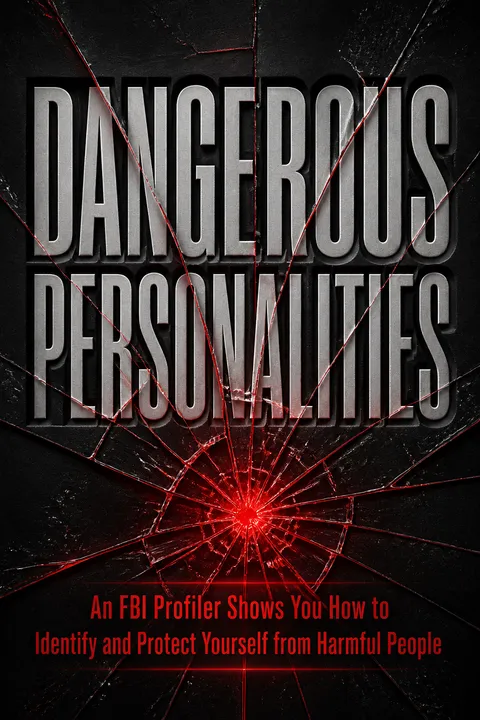
A familiar face can hide danger. Joe Navarro opens with the disappearance of 15-year-old Sue Curtis from a Utah campus he patrolled as a young officer. Years later, he learned that Ted Bundy had abducted and killed her. Bundy did not look like a warning sign; he seemed ordinary enough to move through a busy campus unnoticed. The case shaped Navarro’s central concern: harmful people may be charming, successful, or trusted, while their victims and the people around them miss what their behavior reveals.
Patterns matter more than appearances. The book focuses on recurring conduct that exploits, intimidates, or harms others, rather than on a person’s polish or social standing. Its aim is prevention and recognition, not explaining why someone became dangerous or offering a clinical diagnosis.
The opening case exposes a difficult asymmetry: people are often judged by how they present themselves, while harm is visible only after it occurs. Trust is essential to social life, but it becomes risky when warmth is mistaken for evidence of reliability. The book’s emphasis on repeated conduct offers a practical corrective. Still, a single disturbing impression cannot establish character or forecast violence. A sound assessment needs time, context, and corroboration, especially when the consequences of a mistaken accusation are serious.
Assess harmful patterns, not a stranger's supposed diagnosis.
Four behavior clusters organize the book. Navarro uses accessible, nonclinical labels for recurring patterns he encountered in law enforcement: narcissistic, emotionally unstable, paranoid, and predatory. In brief, these describe entitlement and self-importance; intense emotional volatility; persistent distrust and threat-focused thinking; and exploitation with little regard for others. People can show traits from more than one cluster, and the labels are not formal diagnoses.
The tool is descriptive. The book’s checklists ask readers to notice what someone repeatedly does, how it affects others, and whether the behavior is escalating. Navarro explicitly warns that the lists are not clinical instruments. The distinction matters: identifying a dangerous behavior can help someone respond, but assigning a psychiatric label to a person without proper training can mislead, stigmatize, or distract from the concrete problem.
The behavior-first approach has a practical advantage shared with safety engineering: it asks what is observable and actionable rather than requiring certainty about hidden causes. That can help people name coercion or repeated boundary violations without pretending to diagnose. The categories also simplify a complex subject, which makes them memorable but risks turning a heuristic into a verdict. A useful application treats the labels as prompts for closer observation, not as fixed identities or proof that a person will become violent.
Notice when entitlement turns other people into tools.
Grandiosity becomes dangerous through its effects. Navarro’s narcissistic personality is not simply someone who enjoys attention or feels confident. The more concerning pattern combines exaggerated self-importance with entitlement, low empathy, blame-shifting, and a willingness to bend rules or exploit others. The person expects others to serve personal needs, then reacts with contempt or rage when denied.
Control can start quietly. One woman described a partner who managed all the family money and gradually left her without access to accounts, credit, or savings. In workplaces, similar entitlement can appear as bullying, misuse of authority, or treating company resources as personal property. Navarro advises paying attention to repeated humiliation, boundary violations, and refusal to accept responsibility, rather than being reassured by charm or early attentiveness.
The key distinction is not ambition versus modesty, but ambition bounded by reciprocity versus ambition that treats others as expendable. Organizational research and everyday experience both suggest that power can magnify existing habits: a controlling person with authority can impose costs on many people at once. Yet confidence, status, or self-promotion alone do not establish a harmful personality. The strongest signals are patterned conduct, especially exploitation, retaliation, and refusal to respect other people’s autonomy.
Treat emotional volatility as a pattern, not a passing storm.
Unpredictability can reorganize a household. Navarro describes emotionally unstable personalities as shifting rapidly between affection, distress, anger, and perceived victimhood. They may fear abandonment, seek constant reassurance, and push for intense closeness, then lash out when others need space or set limits. Some become impulsive or threatening; others create chronic conflict without physical violence.
Everyone else adapts. In one account, three adult daughters were frozen out by their mother for going to a movie without her. They tried to reassure her, but the sulking continued. In families and workplaces, people may start monitoring the person’s mood, avoiding ordinary disagreement, or walking on eggshells. Navarro urges firm boundaries and professional help when appropriate, especially when self-harm is threatened. Such threats should be referred to emergency professionals rather than handled alone.
The account makes visible a relational effect often missed when attention stays on the volatile person: everyone nearby begins organizing life around preventing the next outburst. That adaptation can shrink autonomy even without a dramatic incident. At the same time, emotional distress is not synonymous with dangerousness, and many people with mental health conditions are not abusive. A fair assessment focuses on specific repeated acts, coercion, threats, and impact, while leaving diagnosis and treatment to qualified clinicians.
Take persistent suspicion seriously when it becomes control or threat.
Distrust can become a closed world. Navarro’s paranoid personality is marked by persistent suspicion, rigid beliefs, sensitivity to perceived insults, and a tendency to collect grievances. A neighbor from his childhood, Mr. P, watched the street, restricted his wife’s contact with neighbors, and treated ordinary visitors as threats. To outsiders he seemed merely eccentric, but his suspicion shaped everyone’s behavior at home.
Arguments rarely loosen the grip. Navarro recounts learning that presenting contrary evidence often wasted time and could deepen mistrust. The more useful distinction is between ordinary caution or disagreement and a persistent pattern of accusing, monitoring, isolating, or threatening others. The book also describes extreme cases in which grievance and fear fed violence. It recommends leaving dangerous situations and warning others when a credible threat is present.
This section is most useful when it distinguishes a pattern of coercive suspicion from skepticism itself. Distrust can be reasonable in response to real betrayal, discrimination, or institutional failure; dissent and unconventional beliefs should not be treated as pathology. Concern rises when suspicion repeatedly justifies surveillance, isolation, intimidation, or preparation for violence. The relevant question is not whether a belief seems strange to an observer, but whether the person’s conduct restricts others or creates a concrete threat.
Assume predators can look ordinary, respected, and genuinely kind.
Predation is exploitation, not a particular appearance. Navarro uses predator for people who repeatedly manipulate, deceive, or violate others for personal gain, often with little remorse. Some commit violent crimes; others exploit people financially, sexually, or through positions of trust. Their ability to seem friendly or respectable can provide access and cover.
Status is not a safety test. Dennis Rader, the book notes, held community roles while concealing serial murders. A different example is Bernard Madoff, whose financial fraud harmed investors who trusted him. These cases illustrate why Navarro urges scrutiny of conduct and verification of claims, not reliance on reputation, credentials, or kindness. The warning is not that everyone charming is dangerous, but that charm alone cannot establish trustworthiness.
The insight has particular force wherever access is granted on reputation: caregiving, finance, youth programs, and professional leadership. Institutions often rely on social trust because constant suspicion is costly, but that trust needs safeguards such as references, oversight, and transparent procedures. The book’s severe examples make the point memorable, though they can also skew perception toward spectacular villains. In ordinary life, repeated deception, exploitation, and disregard for consent are more useful signals than an uncanny feeling or a polished public image.
When risk patterns combine, prioritize safety over perfect labels.
Traits can compound. Navarro argues that one person may show features associated with several of the four categories. The behaviors can overlap, and a person’s presentation may change with circumstances. His example of Susan Powell is especially stark: her writings and reported experiences described a controlling husband whose behavior included suspicion, cruelty, and escalating violence. The precise mix of traits mattered less than recognizing that she was unsafe.
Use the pattern, not a single box. The book advises comparing observed conduct across its checklists rather than deciding too early that someone belongs to only one category. It also asks whether the person manipulates, behaves dangerously, disregards norms, or repeatedly causes distress. These observations cannot predict an exact act, but they can help identify a worsening trajectory and prompt protective action before certainty arrives.
The idea resembles risk assessment in medicine: several moderate warning signs can matter more in combination than any one symptom viewed alone. It also counters the human tendency to settle on an early explanation and ignore later evidence. However, overlapping categories and long checklists can create an illusion of precision. The most defensible conclusion is usually narrower: certain behaviors are recurring, harmful, and escalating. That is enough to justify safeguards without claiming certainty about someone’s inner personality or future.
Observe deliberately, slow pressure, and verify before granting access.
Attention is a safety skill. Navarro distinguishes seeing from observing: information is missed when people are unprepared to recognize it. As a child, he saw an adult photographing children at the beach but did not understand the possible risk. He later argues for noticing context, repeated behavior, and one’s own physical response, such as unease or tension. These reactions can be useful alerts, not verdicts.
Buy time and check claims. The book recommends slowing decisions when someone creates urgency around money, commitment, access to a home, or trust. Verify identity, employment, references, and relevant history before handing over responsibility for children, finances, or property. Distance, barriers, and attention to surroundings can reduce opportunity for harm. When circumstances are complex, professional advice is safer than relying on a checklist alone.
The combination of attention and delay is powerful because pressure narrows judgment. In fraud prevention, independent verification interrupts the social impulse to comply simply because a request feels urgent or comes from a familiar person. Bodily unease can also prompt useful caution, but it is shaped by past experience and can generate false alarms. The strongest method combines intuition with observable facts: pause, check independently, and consult someone outside the relationship before making an irreversible decision.
When danger escalates, document, enlist support, and create distance.
Do not manage serious danger alone. Navarro recommends recording dates, actions, and exact circumstances when harassment, threats, abuse, or financial misconduct recur. A written record can clarify a pattern for trusted supporters, employers, attorneys, or authorities, especially when memory is contested. He also urges people to tell allies what is happening, because isolation makes it harder to get help and easier for another person to control the situation.
Safety outranks reconciliation. If threats or violence are escalating, the book advises planning an exit, contacting relevant professionals or emergency services, and avoiding a risky confrontation alone. A partner, boss, or relative may not change simply because someone waits or explains more carefully. Leaving can be complicated by children, money, or work, so practical assistance from local support services may be essential.
Documentation and social support turn a private, confusing experience into information others can evaluate and act on. This matters in workplaces as much as in intimate relationships, where isolated complaints are easily minimized. The advice to create distance is strongest when coercion or violence is present, but exit decisions can increase risk in some abusive situations. A tailored safety plan with trained advocates or emergency professionals is often more appropriate than a sudden confrontation or a universal instruction to leave immediately.
Analysis
Dangerous Personalities is a practical guide built from criminal profiling, victim accounts, and cautionary cases. Its most useful move is to shift attention from motive and appearance to repeated behavior: who violates boundaries, exploits trust, retaliates against limits, or makes others feel unsafe? The opening story of Sue Curtis gives that advice emotional weight. A dangerous person may not announce himself as one, and social status, charm, or familiarity are weak guarantees of character.
The four categories make a complicated subject easier to notice: entitlement and self-focus, volatile emotional demands, persistent suspicion, and predatory exploitation. The discussion of combinations improves the model by resisting rigid classification. For someone facing an unsafe partner or colleague, knowing the exact label may matter less than recognizing escalation and finding help.
The book also has important limits. Its checklists are extensive, overlap substantially, and assign numerical thresholds without establishing that those scores predict harm. They are best treated as prompts for observation, not as validated diagnostic or forecasting instruments. Several examples concern notorious criminals and mass atrocities, which demonstrate possible consequences but can make everyday risk seem more uniformly catastrophic. The book’s emphasis on behavior helps counter that effect, yet its language sometimes blurs personality traits, criminality, and mental illness. Those are not interchangeable. Emotional instability or unusual beliefs alone do not make a person dangerous.
A careful reading therefore keeps the practical safeguards and rejects amateur diagnosis. Track specific actions, frequency, context, escalation, and impact. Verify claims before granting access to money, children, or private spaces. Seek professional guidance when the stakes are high, and contact emergency services when there is an immediate threat. The book’s strongest contribution is not a method for identifying villains with certainty. It is a reminder that personal safety can require taking observable harm seriously before a definitive explanation is available.
Review Summary
Dangerous Personalities receives mostly positive reviews, with readers praising its practical advice on identifying and protecting oneself from dangerous individuals. Many find it accessible and informative, particularly for beginners. The book covers four types of dangerous personalities: narcissistic, emotionally unstable, paranoid, and predatory. Some criticize its simplicity and repetitiveness, while others appreciate its real-world examples and checklists. Several reviewers recommend it as an essential read for personal safety, though a few suggest more in-depth resources for those seeking advanced knowledge.
People Also Read



Glossary
Dangerous Personalities Checklists
Behavior-based warning promptsNavarro’s informal lists of behaviors associated with narcissistic, emotionally unstable, paranoid, and predatory patterns. They are intended to help lay readers notice repeated conduct and consider its effects, not to diagnose a mental disorder or reliably predict a specific act. The book advises using direct observations and context rather than guessing from a few isolated traits.
safety radar
Attention to warning behaviorsNavarro’s informal name for a person’s developing awareness of behaviors that may signal risk. It involves noticing repeated boundary violations, manipulation, intimidation, or escalating conduct, along with one’s reactions and the surrounding context. It is a cue to pause, gather information, or seek help, not a substitute for evidence or professional assessment.
wound collectors
People who preserve grievancesA term Navarro applies to people who retain perceived insults, slights, and wrongs, sometimes for years, and repeatedly use them to justify resentment or attack others. The supposed injury may be minor, mistaken, or long past. In the book, the pattern appears in both emotionally unstable and paranoid personalities, though the term itself does not establish a diagnosis.
combination personalities
Overlapping harmful patternsNavarro’s term for people who display substantial behaviors associated with more than one of the book’s four dangerous personality categories. He argues that overlapping patterns can make someone more difficult to assess and potentially more harmful. The practical focus is on the total pattern and its effect, rather than deciding which category is the dominant one.
Great Awakening
Recognition that change is unlikelyNavarro’s name for the moment when someone involved with a harmful person recognizes that continued hope or effort is not resolving the situation, while their own well-being is deteriorating. He presents this recognition as a prompt to stop trying to repair the other person and consider letting go, seeking support, or creating distance.
FAQ
What's Dangerous Personalities about?
- Identifying harmful individuals: Dangerous Personalities by Joe Navarro focuses on recognizing and understanding various dangerous personality types, such as narcissists, emotionally unstable individuals, paranoid personalities, and predators.
- FBI insights: Written by a former FBI profiler, the book combines personal experiences with psychological research to help readers identify these personalities in everyday life.
- Protection strategies: It provides practical advice on how to protect oneself from these harmful individuals, emphasizing the importance of awareness and vigilance.
Why should I read Dangerous Personalities?
- Awareness and prevention: The book helps you become more aware of the signs of dangerous personalities, potentially preventing harmful encounters in your personal and professional life.
- Expert insights: Joe Navarro shares insights from his extensive experience dealing with criminals and profiling dangerous individuals, offering a unique perspective.
- Empowerment through knowledge: By understanding the traits of dangerous personalities, readers can better protect themselves and their loved ones from potential harm.
What are the key takeaways of Dangerous Personalities?
- Recognize warning signs: The book emphasizes the importance of being aware of specific behaviors that indicate a dangerous personality, such as manipulation, deceit, and lack of empathy.
- Use checklists: Navarro provides detailed checklists for identifying different personality types, which can help readers assess individuals in their lives.
- Take immediate action: The book stresses the need for prompt action when encountering dangerous personalities, advising readers to distance themselves if they feel threatened.
What are the best quotes from Dangerous Personalities and what do they mean?
- “There are two kinds of people in this world: those who fill your cup, and those who drain it.” This quote highlights the importance of recognizing individuals who contribute positively to your life versus those who take away your energy and well-being.
- “Safety is our responsibility. It cannot be outsourced.” This emphasizes that individuals must take proactive steps to ensure their own safety and well-being, rather than relying solely on external authorities or systems.
- “The best predictor of future behavior is past behavior.” This quote serves as a reminder that understanding someone's history and patterns of behavior is crucial in assessing their potential danger.
What types of dangerous personalities are discussed in Dangerous Personalities?
- Narcissistic personalities: These individuals often exhibit grandiosity, a need for admiration, and a lack of empathy, making them difficult to deal with in relationships.
- Emotionally unstable personalities: Marked by emotional volatility and impulsivity, these individuals struggle to maintain stable relationships and often exhibit needy behavior.
- Paranoid personalities: Defined by irrational mistrust and hypersensitivity, paranoid individuals are quick to perceive threats and may engage in combative behavior.
- Predatory personalities: Characterized by manipulative and exploitative behavior, predators seek to take advantage of others for personal gain, often without remorse.
How does Dangerous Personalities define a narcissistic personality?
- Self-centeredness: Narcissistic individuals are primarily focused on their own needs and desires, often at the expense of others. They crave admiration and manipulate situations to ensure they remain the center of attention.
- Lack of empathy: They struggle to empathize with others, often viewing others as inferior or as tools to fulfill their own needs. This lack of understanding can lead to emotional harm for those around them.
- Entitlement and arrogance: Narcissists often feel entitled to special treatment and may react with anger or aggression when they don’t receive it. Their grandiosity can lead to destructive behaviors and relationships.
How can I identify a dangerous personality using Dangerous Personalities?
- Utilize checklists: Navarro provides specific checklists for each personality type, allowing readers to assess individuals based on observable behaviors and traits.
- Look for patterns: Pay attention to recurring behaviors that align with the characteristics of dangerous personalities, such as manipulation, deceit, and aggression.
- Trust your instincts: The book encourages readers to listen to their gut feelings when interacting with others, as these instincts can often signal danger.
What immediate actions should I take if I encounter a dangerous personality?
- Distance yourself: If you feel threatened, the book advises taking immediate steps to remove yourself from the situation, prioritizing your safety.
- Document behaviors: Keeping a record of any concerning actions can be helpful if you need to seek assistance or legal protection later.
- Alert your support network: Inform trusted friends or family members about the situation so they can provide support and help monitor your safety.
How does Dangerous Personalities suggest dealing with emotional manipulation?
- Recognize manipulation tactics: The book outlines common strategies used by dangerous personalities to manipulate others, such as guilt-tripping or emotional blackmail.
- Set firm boundaries: Establish clear limits on what behaviors you will tolerate, and be consistent in enforcing those boundaries.
- Seek support: Engaging with a trusted friend or mental health professional can provide guidance and help you navigate manipulative relationships.
How can I protect myself from dangerous personalities as suggested in Dangerous Personalities?
- Set boundaries: Establish clear boundaries with individuals who exhibit dangerous traits, and be prepared to enforce them consistently. This helps to minimize their impact on your life.
- Trust your instincts: Pay attention to your gut feelings when interacting with others. If something feels off, it’s essential to take those feelings seriously and reassess the relationship.
- Educate yourself: Use the checklists and insights provided in the book to identify potential red flags in your relationships. Knowledge is a powerful tool in protecting yourself from harm.
How can I protect my children from dangerous personalities according to Dangerous Personalities?
- Educate about boundaries: Teach children the importance of personal space and how to recognize when someone is crossing those boundaries.
- Encourage open communication: Create an environment where children feel safe discussing their feelings and experiences, especially if they feel uncomfortable around someone.
- Provide positive outlets: Engage children in activities that promote self-esteem and resilience, helping them build a strong sense of self that can protect them from manipulation.
About the Author
Other books by Joe Navarro


Download PDF
Download EPUB
.epub digital book format is ideal for reading ebooks on phones, tablets, and e-readers.








