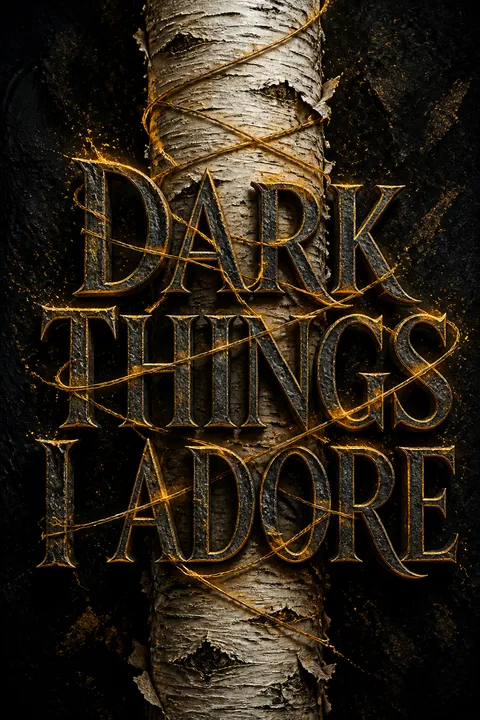


Plot Summary
Prologue
In March 2018, Audra waits outside a faculty meeting while her professor and mentor, Max Durant, argues with Boston Institute president Dana Switzer for the gallery space reserved for a departing Warhol. Max threatens his longtime friend, then abruptly softens when he sees Audra watching.
Once she is alone with him, his charm drops again: he slams a table hard enough to injure his hand. Audra has a sealed letter in her pocket, addressed to someone back home, and she watches Max as closely as he watches her.
The opening gives the reader two kinds of evidence before the larger case begins: Max’s public appetite for recognition and Audra’s private attention to his shifts in temperament. His quick return to charm does not erase the violence; it shows how readily he uses composure as a mask. Audra’s position as witness is equally important. She is not simply dazzled by her mentor, as he assumes, but studying him. The unopened letter quietly establishes another line of action beyond the institute, making her watchfulness feel purposeful without explaining it yet.
The Trading Post Knife
In October, Max drives north with Audra Colfax, his gifted MFA student, believing her invitation to her remote Maine home signals that she may finally become his lover. At the Dirigo Hill Trading Post, Audra unexpectedly meets Lance Peters, a childhood friend who is with her violent uncle Marc. She asks Lance not to tell Marc he saw her.
Max, meanwhile, buys an expensive hunting knife, ignoring Audra’s advice to choose a cheaper one, and keeps flicking it open in the car. The blade makes Audra wary, but she smooths over her irritation. Max mistakes her careful management of him for flirtation, while Audra leads him farther from the town and toward a weekend she has planned.
The knife immediately unsettles the balance between the two travelers. Max buys it as a status object and a souvenir, but Audra recognizes that a weapon in his hands changes the terms of their isolation. Their misunderstandings are not symmetrical: Max interprets access as consent, while Audra performs warmth to preserve control over the encounter. Lance’s appearance also places a second threat in the frame. Audra’s request for secrecy shows that her Maine life contains old violence of its own, though Max is too absorbed in his fantasy to ask what she is protecting herself from.
The Moose at Dusk
At Audra’s large ancestral home, Max finds a carefully prepared guest room, a personal note, and signs that she has arranged the setting for him. He takes these gestures as proof that she is ready to yield. During a walk, he twists his ankle; Audra helps him back but still takes him on a dusk drive.
On a logging road, she tells him how she once got lost in the woods and cut her palm while trying to signal for help. They find a moose calf beside its badly injured mother. Audra takes a pistol from the car and shoots the suffering animal. Max watches, shaken by her steadiness and by the calf left alive beside its dead mother.
Audra’s story about getting lost gives the landscape personal meaning, while the wounded moose turns that setting into a test of action. Max sees the animal through the lens of his art, converting its pain into possible material; Audra sees an immediate decision and makes it. Her practiced use of the gun contradicts the helplessness he expects from the woman he has idealized. The calf’s presence sharpens the scene without offering comfort: an act of mercy for one creature leaves another exposed. Max is forced to register Audra as someone with agency beyond the role he has assigned her.
Juniper Finds Lupine Valley
In May 1988, painter Juniper drives to the Lupine Valley Arts Collective after her girlfriend ends their relationship and leaves her without a home. The Maine art colony, where she has returned for years, gives her both shelter and a new name.
Old Gus, its photographer-director, welcomes her into a private cabin. Juniper reconnects with Moss, a young painter who has stayed through several sessions, and with Mantis, a local staffer. Their circle includes artists Zephyr, Ash, Barley, and Trillium.
Juniper soon notices that Moss is spending time with Coral, a quiet cleaner who draws birds and wants to become an artist. Coral’s scars and withdrawn moments suggest that the colony’s warm communal life does not make her safe from her own distress.
Lupine Valley offers Juniper a real refuge, but its chosen names and closed routines also let people postpone life beyond its boundaries. Her return after a breakup makes belonging feel restorative, while Moss’s year-round presence hints that refuge can become avoidance. Coral occupies a more precarious position: she works among artists but is not yet accepted as one, and her visible scars point to suffering that the group cannot interpret simply by gathering around her. Juniper notices, yet friendship and aesthetic admiration begin to shape what she sees. The colony’s intimacy will make intervention feel both possible and socially dangerous.
Coral Goes Under
As Juniper’s painters become a tight social circle, Moss offers to mentor Coral and grows fascinated by her emotional lows. Coral already has a boyfriend, Brady Bouchard, but keeps much of her life separate from the camp. During a canoe trip on Moosehead Lake, Coral argues with Moss, then deliberately falls into the water and stops fighting when she resurfaces.
Mantis dives in and pulls her out. At the shore, Coral reveals she is pregnant, leaving her friends struggling to reconcile the news with her attempt to drown. She soon abandons her plan to attend art school and moves in with Brady. For a time, she tries to manage her distress with therapy, medication, and support from the group.
The lake episode exposes a dangerous gap between rescue and care. Mantis saves Coral’s body, but the group cannot agree on what her deliberate surrender means or what support she needs afterward. Pregnancy then narrows her choices in concrete ways: she gives up school and moves into a conventional domestic future she did not freely seek. Moss’s attention can feel like recognition because he takes her art seriously, yet his fascination with her distress makes that recognition ethically unstable. Juniper’s concern is genuine, but she has no framework for separating artistic intensity from a worsening crisis.
The Clearing Turns Hostile
Mantis tells the painters about Old Gus’s lost love, Autumn, who helped build the colony before dementia took her memory and her life. The story leaves Coral crying. Later, when Mantis and Juniper go shooting, Coral arrives and turns a gun toward him during a volatile exchange. Mantis disarms her, then grips her wrists hard enough to leave bruises.
Juniper reports what she saw to Gus, who fires Mantis the next day. Coral blames Juniper and retreats further into Moss’s orbit. She begins leaving cryptic handwritten notes around the grounds, while Juniper finds her photograph defaced. Juniper worries, but she cannot tell whether Coral is warning the community, asking for help, or simply becoming more isolated.
Juniper’s intervention is understandable, but the evidence she reports is incomplete, and its consequences are immediate: Mantis loses his job, while Coral loses trust in Juniper. That fracture does not make Juniper wrong to act; it shows how difficult it is to respond safely when a person’s relationships are tangled with fear, care, and coercion. Coral’s notes become a substitute for speech, but the community treats them as puzzles rather than urgent communication. Meanwhile, the Autumn story recasts the colony’s benevolent founder as a place where people can disappear from ordinary scrutiny. Juniper sees danger, yet keeps trying to interpret it alone.
A Mother Leaves Evidence
After Coral gives birth to Eveline, Brady leaves, and Coral returns to Lupine Valley in secret to see Moss. Juniper finds a note directing her to investigate the 1982 death of Ashley Pelletier, a local teenager shot by her boyfriend while wearing white gloves.
Library records identify the boyfriend as Mantis. Juniper tells Coral what she has learned, but Coral asks her to keep quiet. Months later, Juniper finds Gus’s photograph wall vandalized and spelled into a message; soon after, she discovers Coral hanging in the clearing.
Moss tells her Coral is where she chose to be, and Juniper cannot make herself tell Gus what she suspects about either man. Max, known at camp as Moss, leaves the colony and turns Coral’s suffering into the career-making painting Animus.
The past’s most consequential evidence arrives in fragments: a note, a newspaper account, a ruined photograph wall, and a body. Juniper’s discovery of Ashley’s death gives Coral’s warnings a factual basis, but the request for silence binds Juniper to the same secrecy that has protected Mantis. Coral’s death then leaves interpretation to the men and to Juniper, who is unable to challenge their accounts. Max’s later success with Animus transforms private harm into public prestige. Art preserves an image of Coral, but it also obscures who benefited from her deterioration and who could have interrupted it.
The Thesis Turns Violent
Back in 2018, Max receives an anonymous email addressed to his old camp identity, Moss, asking who he is painting. He is already rattled by Audra’s home, its old photograph of Gus, and its familiar objects. When he finally enters her studio, he sees her thesis series, Her Dark Things, built from enlarged objects and layered scraps of writing.
He calls the work excessive and then reveals that it has confronted him with his own stalled career and dependence on damaged muses. Drunk and furious, he smashes a wine bottle into one of Audra’s paintings and tears the canvas apart with the jagged glass. Audra records the destruction and keeps her distance as he threatens himself before abruptly regaining composure.
Max’s outburst makes visible the violence his artistic language has concealed. He has treated other people’s pain as a resource, yet Audra’s work puts that history back in front of him as material he cannot control. His critique of excess is especially revealing: he condemns the very layering that gives the notes their persistence, as if obscurity were the problem rather than what the evidence says. Audra’s documentation is a practical counter to his power. She does not need to persuade him that he is dangerous; she needs a record that can survive his efforts to recast the event.
Lupine Valley Returns
The next day, Audra takes Max hiking to the Ledge above Moosehead Lake. Carvings on the Lovers’ Tree include Max’s initials beside those of a woman from 1989, and he recognizes the date. Audra leads him down to the abandoned Lupine Valley property, where the old cabins and commons remain beneath peeling paint and overgrowth.
Max’s memories return in vivid pieces: his years there, his cabin, and the woman he knew as Coral. He also recognizes Gus in the photograph at Audra’s house. Max understands that Audra has deliberately brought him back to the place where his past is buried, but he still cannot tell how much she knows or what she intends to do with him.
The return to Lupine Valley converts Max’s private memory into geography. The initials are an early breach in his self-protective story, and the abandoned cabins make his former home look less like a source of artistic rebirth than a neglected crime scene. Audra’s knowledge remains strategically partial: she guides him toward recognition without yet naming her connection to Coral. That delay gives Max space to experience the past as threat before he can control it through explanation. The landscape functions as a witness that neither charm nor professional reputation can persuade to forget.
Coral's Daughter Steps Forward
Audra takes Max from the camp to Kress Beach and gives him spiked cider. He falls asleep in a drifting rowboat; when he wakes alone, a print of Animus and a note addressed to Moss wait on shore. He finds Coral’s old messages and drawings pinned beside the trail lights, then follows them through the dark as a hidden gunman fires and misses him.
At the clearing’s birch tree, Audra appears in Coral’s yellow dress and tells him that Coral was her mother. Max recognizes the objects and images she has used to guide him, but he is still trying to understand what happened to Coral and why Audra has brought him to this place.
The trail turns Max’s own method of looking against him. He once searched people for vivid details he could carry into a painting; now Coral’s drawings force him to move through the landscape of her experience, one painful fragment at a time. The missed shots create danger without resolving it, keeping his attention fixed on the evidence rather than allowing escape. Audra’s reveal answers the central question of her personal stake, but not the full question of responsibility. She stands before Max both as his former student and as the child whose life was shaped by the history he concealed.
Max Chooses His Legacy
At the clearing, Max admits that young Coral told him she expected to die after giving birth, while Mantis confessed to killing Ashley Pelletier. Max says the men agreed to keep both confessions secret. He insists Mantis drove Coral toward her death, but also acknowledges that he used her distress for his art and did not intervene when Mantis returned.
Audra rejects his attempt to shift blame and offers a choice: public exposure and the ruin of his reputation, or suicide that would leave his career intact. Max chooses the latter. He hangs himself from the birch. Lance arrives afterward, removes the staged trail evidence with Audra, and helps her arrange the scene so that Max’s death appears to be suicide.
Max’s confession complicates culpability without absolving him. Mantis used force and threat; Max used intimacy, artistic authority, and silence. His final choice repeats the same governing impulse that shaped his career: protect the image of the self, even at the cost of another person’s life. Audra’s offer is revenge designed around the currency Max values most, his legacy. Yet her control of the scene also shows how easily justice becomes another act of manipulation. The novel does not let the reader confuse exposure with repair; Coral is dead, and Max’s death cannot restore the life she was denied.
The Second Hunting Death
Audra tells police that Max died by suicide and shows them photographs of the studio destruction, while concealing the night’s staged trail and Lance’s help. At Max’s funeral, she stays outside in the rain. Months later, Juniper, now President Dana Switzer, conducts Audra’s private thesis defense. Audra’s new paintings transform rope into Max, then white gloves into a deer and a praying mantis.
She gives Juniper an obituary for Marcus Peters, Mantis’s real name, who has died in a hunting accident while wearing white gloves. Juniper recognizes the pattern behind both deaths and understands that Audra has avenged Coral. She nevertheless approves the thesis and agrees to let the story end there.
Juniper’s final choice echoes her earlier silence, but it is no longer merely passivity. She understands the pattern and chooses not to expose Audra, whose revenge has adopted the language of the deaths it answers. The thesis defense turns aesthetic judgment into an ethical encounter: the paintings are evidence, accusation, and a test of whether Juniper will speak. Her decision protects Audra and also protects herself from reopening the failures of 1988. The ending leaves her moral position compromised rather than purified. Knowing the truth does not automatically make her brave, and withholding it does not undo what has happened.
Epilogue
In July, Audra and Lance cut down the birch where Coral died. While clearing its roots, Audra finds one final hidden note from her mother. It reveals that Brady was not Audra’s biological father: Max was.
Coral had concealed this truth, and Audra’s revenge was aimed at the man who had fathered her as well as the man who helped destroy her mother. Audra keeps Max’s knife instead of throwing it into the lake. She plans to reclaim the name Evie, but she cannot discard the object or the evidence. The tree is gone; the record of Coral’s life remains.
The last note changes the emotional meaning of Audra’s pursuit without cancelling what she believed or what she did. Her revenge was directed at a man whose harm to Coral was real, but the discovery makes Max’s role intimate in a way she had not known: he was also her father. The knife becomes a compact emblem of that inheritance, a useful object she cannot separate from its violence. Cutting down the tree alters the landscape, but Audra refuses to destroy the notes. The ending distinguishes removal from erasure: she can clear the site while preserving the imperfect record that lets Coral remain more than the image Max made of her.
Analysis
The novel’s central conflict concerns the conversion of suffering into cultural value. Max describes his artistic attention as a form of recognition, but his practice depends on other people becoming vulnerable in ways he can exploit. His paintings can preserve an image of a person while erasing that person’s agency. Coral’s notes resist that erasure because they record her own shifting account, including desire, fear, ambition, and confusion, rather than reducing her to a single muse or diagnosis.
Juniper provides a crucial counterpoint. She sees warning signs, loves the people involved, and repeatedly hesitates because she fears misreading the situation or damaging the community that sustains her. Her failures are not equivalent to Max’s deliberate exploitation or Mantis’s violence, but her silence helps show how abuse survives through ordinary social calculations. The book makes moral responsibility cumulative: an individual may not cause the first harm, yet may still help preserve the conditions that allow it to continue.
Audra’s revenge answers the old silence with a carefully designed spectacle. She makes Max walk through evidence, then uses his devotion to reputation to shape his final choice. The strategy is effective, but it reproduces the coercion she condemns. She controls what Max sees, what he can say, and what version of his death will reach the public. The revenge does not restore Coral or produce clean justice; it transfers power and leaves Audra with new complicity.
The final paternity note sharpens that contradiction. Max’s role was not only artistic or historical. He was part of Audra’s own origin, a fact concealed from her until after she has acted. Her work and the surviving fragments preserve Coral’s voice, but no archive can make the past harmless. The book’s difficult insight is that remembering is necessary and ethically incomplete: truth can expose violence, yet the choices made in its name still have consequences.
Review Summary
People Also Read







Characters
Audra Colfax
The watchful art studentAudra is a talented, self-contained painter studying under Max Durant at the Boston Institute for the Visual Arts. She is difficult for classmates and mentors to read because she reveals herself selectively, but her reserve is not passivity. She observes people closely, remembers what they overlook, and understands how setting and gesture can influence a viewer. Her work enlarges ordinary objects until they carry emotional weight, often incorporating found material. Raised in rural Maine, she is at ease in the woods and in the inherited home she is making her own. Her ambition is serious, though it is tied to private questions about art, family, and what a person owes the past.
Max Durant
The celebrated, hungry mentorMax is a famous painter and professor whose confidence once helped establish his reputation. He is charming, articulate, and skilled at making others feel seen, especially students and lovers who are in pain. That sensitivity has a predatory side: he can turn another person’s vulnerability into both intimacy and artistic material. Max wants recognition as much as he wants to believe his influence makes others greater. He compares himself to gifted young artists, and their promise can threaten the image he has built of his own talent. At Lupine Valley, he used the name Moss. His account of events is shaped by self-interest, so his memories require scrutiny.
Juniper
The reluctant witnessJuniper is a painter who returns to the Lupine Valley Arts Collective whenever life outside it becomes difficult. The camp gives her a chosen identity, close friendships, and the freedom to make art, but she is also wary of conflict that might fracture those bonds. She cares about Coral and sees warning signs in the relationships around her, yet often doubts her own interpretation or waits for someone else to act. Juniper’s attention is precise; she notices gestures, bruises, and shifts in group behavior. Her weakness is not a lack of empathy but the ease with which empathy becomes observation instead of intervention. As an adult, she is known as Dana Switzer.
Coral Dunn
The gifted, troubled artistCoral, who also goes by Cindy, is a young local woman working as a cleaner at Lupine Valley while pursuing her interest in drawing. She is especially absorbed by birds and their intricate structures. Her mental health brings periods of intense distress, and she has a history of self-harm, but she is more than the suffering that others notice or use. She wants an artistic life and a future beyond the small town, even as family expectations and pregnancy complicate those hopes. Coral is observant, imaginative, and capable of deep attachment. Her notes and drawings reveal a mind that can express what she struggles to say aloud.
Mantis, Marcus Peters
The volatile local insiderMantis is a local staff member at Lupine Valley, physically imposing, blunt, and uncomfortable with the camp’s playful nicknames and class boundaries. He is close to Coral and protective of her, but his protectiveness can become controlling. He has a complicated history with the town and with the artists who pass through, whom he sometimes regards as temporary visitors treating local people as entertainment. His attachment to Coral is intense, and he can shift abruptly between anger and care. He is also connected to Lance Peters, a younger relative, which draws family obligations into the story’s already crowded web of loyalties.
Lance Peters
The childhood confidantLance grew up with Audra in Maine and shares a history of adolescent adventures, family knowledge, and renewed adult intimacy with her. He is steady and physically capable, with a gentleness that makes him a source of comfort when Audra is overwhelmed. His loyalty is complicated by his connection to Marcus Peters and by a family habit of asking him to check on people who have caused harm. Lance does not rush to judge Audra’s difficult disclosures. He listens, weighs what she needs, and is willing to act when he believes she has been wronged.
Brady Bouchard
The conventional boyfriendBrady is Coral’s longtime boyfriend, a high-school football player turned timber worker from a locally rooted family. He is practical and values stability, a quality that can make him dependable but also narrow in his understanding of Coral’s ambitions and illness. He wants a conventional home life and believes structure will help her, while Coral experiences those expectations as a shrinking of her choices. Brady’s ties to Mantis connect him to the town’s private history. He is neither an artist nor part of the camp’s chosen community, and that difference makes him an outsider to many of Coral’s most intense experiences.
Zephyr
The generous painterZephyr is an experienced painter at Lupine Valley, known for abstract work assembled from small painted tiles. Warm, playful, and emotionally perceptive, she helps make Juniper’s circle feel welcoming to newcomers. She is willing to take relational risks where Juniper hesitates, and the two share a deep creative and romantic connection. Zephyr has lived in many places and is still deciding where home belongs. Her history at the colony shows that a person can find genuine community there without being certain that it should become a permanent refuge.
Old Gus McCue
The camp's keeperGus is the longtime director of Lupine Valley, a practical caretaker and photographer who records each season’s artists. He gives newcomers nature names and makes the camp feel like a community with its own rituals. His photographs preserve people as they pass through, though his impulse to document can become intrusive. Gus is devoted to the place and to the people who depend on it, and he tries to handle conflict with patience. His history with the camp’s founders gives the grounds an emotional past that the younger artists do not initially understand.
Eveline, called Evie
Coral's infant daughterEvie is Coral’s infant daughter, born early and cared for largely by Coral’s family. Her presence intensifies the pressures already shaping Coral’s life and gives the adults around her another reason to argue over what Coral needs. As a baby, she cannot explain what she witnesses or requires, but her dependence makes the cost of the adults’ choices concrete.
Ashley Pelletier
A local girl rememberedAshley is a local high-school student whose history surfaces in old newspaper records and unsettles the community around Lupine Valley. She is known through the circumstances of a hunting accident and through what other people chose to say or conceal about it. Her brief presence in the narrative demonstrates how a town’s official account can outlast the truth it leaves out.
Misha
The former partnerMisha is Max’s former girlfriend, an architect whose relationship with him supplied material for a body of paintings. Max remembers her through colors, gestures, and emotional damage, a way of seeing that reveals how readily he turns a partner into an image.
Francesca
The former student museFrancesca, called Chess, was one of Max’s former students and lovers. Max describes her through vivid physical and emotional qualities, while her presence among his past muses helps establish that his private conduct with students is not an isolated event.
Tanya
The grieving studentTanya is a painting student whose grief over her father’s illness becomes an opportunity for Max to demonstrate his uncanny ability to draw out personal pain. Her experience shows how his apparently empathetic attention can blur the boundary between mentorship and extraction.
Plot Devices
Her Dark Things
Art as buried evidenceAudra’s thesis paintings magnify familiar objects such as a lantern, scarf, apple, and rope, then layer them with scraps of writing and found material. The images initially appear to be formal experiments in scale and texture. As Max studies them, he recognizes details connected to a past he has kept sealed away. The thesis therefore serves two purposes: it advances Audra’s artistic work and makes her mother’s scattered records visible without presenting them as a conventional archive. Its beauty draws the viewer close, while its embedded evidence changes what that beauty means.
Coral's Notes and Drawings
A fragmented testimonyCoral writes on scraps of paper and hides them in books, walls, containers, and the grounds at Lupine Valley. Her notes record her ambitions, relationships, distress, and observations, while her drawings shift from birds to disturbing images of mothers and babies. Because no single fragment gives the whole account, Juniper and Audra must assemble a chronology from scattered evidence. The scraps preserve Coral’s voice, but their fragmented form also reflects how little anyone around her understood or chose to acknowledge at the time.
Lupine Valley
A refuge and blind spotThe remote arts colony offers artists a place to work, adopt new names, and belong to a close community. Its isolation also lets people avoid outside scrutiny and remain in unhealthy patterns long after the original refuge has become a trap. For Juniper, Lupine Valley is a home she returns to; for Max, it is the site of his formative years and concealed history; for Coral, it is both an artistic community and a place where her crisis goes unaddressed. The camp’s changing condition in the present mirrors the decay of its remembered past.
Goldenrod Objects
A color that identifiesYellow objects recur as practical protections and personal markers: ribbons warn hunters about Audra’s home, while a scarf, dress, and other belongings connect her present to Coral’s past. Max has already used golden tones in a painting based on Coral. As these objects accumulate, a color that once seemed decorative becomes a clue that the scenes and images are linked. It lets Audra construct a visual route through the story and makes Max confront a signature he thought belonged only to his art.
The Hunting Knife
A souvenir turned symbolMax buys the knife at the trading post as an expensive keepsake, then handles it restlessly during the drive. Its presence unsettles Audra and foreshadows the story’s repeated use of weapons, hunting, and apparent accidents. The knife also connects Max’s cultivated identity as an artist to a landscape where practical tools can injure or save. After his death, it passes through several hands and remains with Audra, carrying both its original purpose as a souvenir and the weight of the history he tried to leave behind.
Download PDF
Download EPUB
.epub digital book format is ideal for reading ebooks on phones, tablets, and e-readers.








